
Why This IT Sell-Off and AI Shift Matter Today
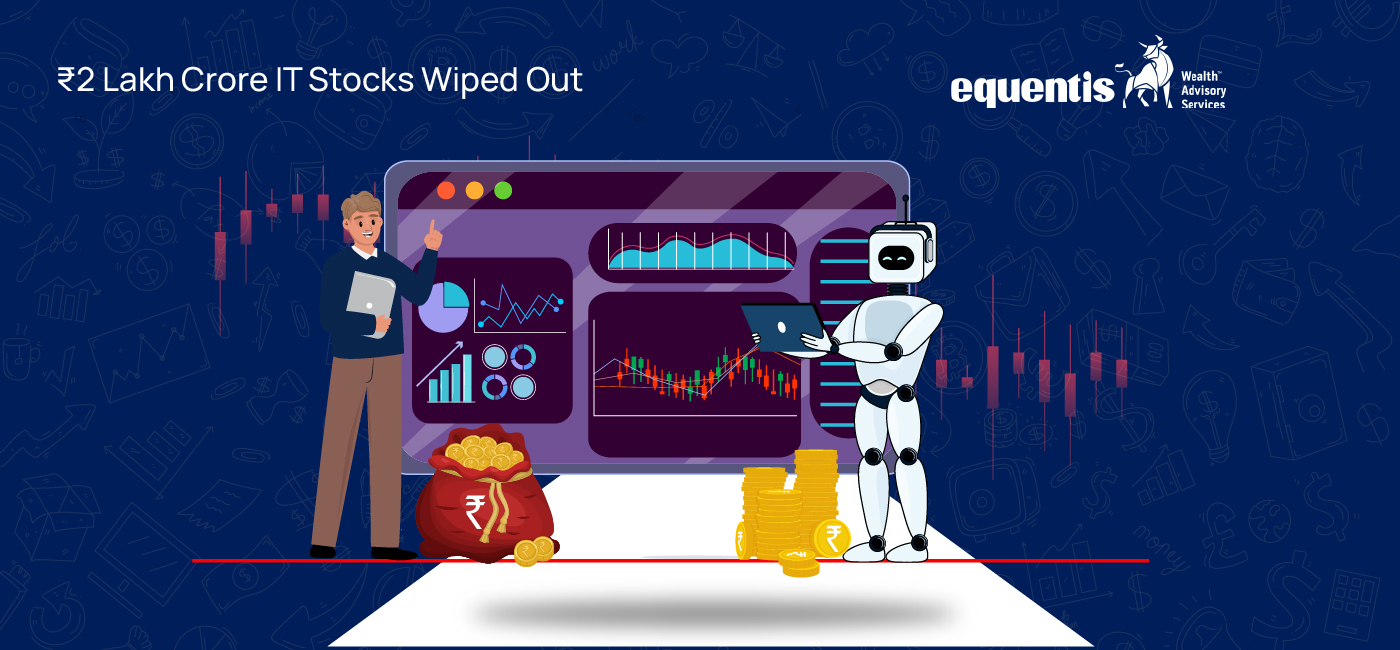
Indian IT stocks recently witnessed a sharp sell-off, with nearly ₹2 lakh crore in market value wiped out over a short period. For a sector that has long been seen as a steady compounder, this sudden correction has unsettled investors. At the same time, global attention has shifted to Anthropic, which has introduced new AI plugin-style tools that expand what advanced artificial intelligence systems can do.
These two developments may appear unrelated at first glance. But beneath the surface, they are closely connected. Rapid advances in AI capabilities are forcing markets to rethink how traditional IT services companies will grow, adapt, and defend their margins in the years ahead.
The Bigger Picture Behind the IT Stock Correction
Indian IT companies have benefited for decades from global outsourcing, enterprise software services, and digital transformation projects. However, the sector has faced pressure recently due to slowing global tech spending, cautious client budgets, and concerns around pricing power.
The latest market correction reflects growing uncertainty rather than a collapse in fundamentals. Investors are asking whether the next wave of technology, driven by artificial intelligence, will reduce the need for large teams of developers and support staff. When such questions gain momentum, valuations tend to reset quickly, especially in a sector as widely owned as IT.
This is where developments from global AI players like Anthropic become relevant to Indian markets.
What Are Anthropic’s New AI Plugin Tools
Anthropic is known for building advanced AI systems designed to be more controllable and enterprise-friendly. Its new plugin tools allow AI models to interact with external software, data sources, and applications in a more structured way.
In simple terms, these tools enable AI to move beyond answering questions. They can now fetch data, run tasks, integrate with business software, and assist in workflows that previously required human intervention. For enterprises, this means faster automation, fewer manual steps, and potentially lower operational costs.
Unlike basic chatbots, these tools are aimed at real-world business use cases such as analytics, customer support, coding assistance, and internal operations. This shift is what has caught the attention of markets globally.
Why AI Plugins Are Making Investors Nervous
The concern for Indian IT companies is not that AI will eliminate services overnight. Instead, it is the possibility that revenue per employee could come under pressure. If AI tools can handle routine coding, testing, or support tasks, clients may demand lower pricing or faster delivery.
Markets tend to react to future risks well before they show up in earnings. The recent ₹2 lakh crore erosion in IT stocks reflects fears that traditional billing models may face disruption. Even companies with strong client relationships may need to rethink how they price and deliver services in an AI-first world.
At the same time, the speed at which AI tools are evolving has surprised many. What once seemed like a long-term transition is now being priced in much earlier.
Implications for Investors, Businesses, and Employees
For investors, this phase calls for a more nuanced view of IT stocks. Not all companies are equally exposed to AI disruption. Firms that invest in upskilling, build AI-driven platforms, and move up the value chain may adapt better than those relying heavily on volume-based services.
Businesses that consume IT services may benefit from lower costs and faster turnaround times as AI adoption increases. However, integration and data security will remain critical, ensuring that human oversight is not completely removed from core processes.
For employees, the message is clear but not alarming. Roles will evolve rather than disappear overnight. Skills related to AI integration, system design, and domain expertise are likely to gain importance, while repetitive tasks may see reduced demand.
Opportunities and Risks Going Forward
There are clear opportunities in this transition. Indian IT firms have scale, global trust, and decades of enterprise experience. By combining AI tools with consulting, customization, and long-term support, they can remain relevant and competitive.
However, risks cannot be ignored. Margins may face pressure during the transition phase. Companies that fail to adapt quickly could lose market share. From an investment perspective, volatility may persist as markets reassess growth visibility and earnings durability.
Investors should focus on balance sheets, client diversification, and management commentary around AI strategy rather than reacting to short term price movements.
Conclusion: A Turning Point, Not the End of the Story
The ₹2 lakh crore wipeout in IT stocks and the rise of Anthropic’s AI plugin tools mark an important turning point for the sector. This is not a signal that Indian IT is becoming irrelevant, but it is a reminder that the rules of growth are changing.
Artificial intelligence is reshaping how technology services are delivered, and markets are adjusting expectations accordingly. For long term investors, the key lies in identifying companies that can evolve with this shift rather than resist it.
As AI tools become more embedded in enterprise workflows, the IT sector will likely look different from what it was a decade ago. Those who understand this transition early may be better positioned for the next phase of value creation.
Disclaimer Note: The securities quoted, if any, are for illustration only and are not recommendatory. This article is for education purposes only and shall not be considered as a recommendation or investment advice by Equentis – Research & Ranking. We will not be liable for any losses that may occur. Investments in the securities market are subject to market risks. Read all the related documents carefully before investing. Registration granted by SEBI, membership of BASL & certification from NISM in no way guarantee the performance of the intermediary or provide any assurance of returns to investors.

Parvati Rai is the Vice President of the Research team at Equentis. She has over 15 years of equity-research and strategy-consulting experience. A specialist in deep-dive valuations, financial modelling, and forecasting, she has built research desks from the ground up, by steering buy-side, sell-side, and independent coverage across sectors. When she isn’t fine-tuning models, Parvati unwinds on nature treks and mentors aspiring analysts.