
Summary
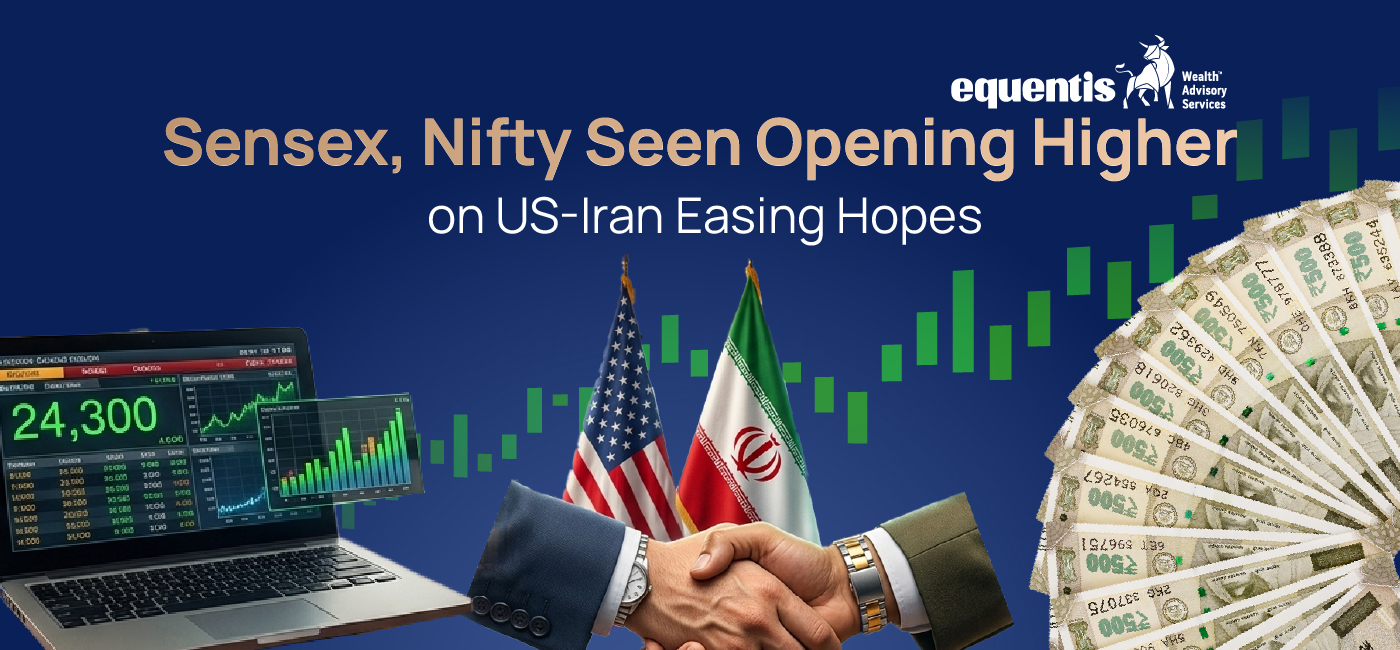
Indian stock markets are expected to open higher today as easing geopolitical tensions between the United States and Iran lift global investor sentiment. Lower crude oil prices, improved risk appetite, and positive global cues are driving optimism, which is likely to reflect in gains for the Sensex and Nifty. For Indian investors, this matters because reduced geopolitical risk can stabilize inflation, support corporate margins, and attract foreign investment flows.
Introduction: Why This Matters Today
Markets don’t move in isolation. What happens thousands of kilometers away can shape how Indian stocks open the next morning.
Today’s expected positive opening for the Sensex and Nifty is being driven by one key factor: easing tensions between the United States and Iran. Over the past few weeks, concerns around escalation had pushed oil prices higher and made investors cautious. Now, signs of de-escalation are reversing that sentiment.
For India, a country heavily dependent on oil imports, even a small shift in global crude prices can ripple through inflation, corporate earnings, and market direction. That’s why today’s market mood is not just about a single day’s rally, but about what it signals for the near-term outlook.
The Bigger Picture: Global Cues Driving Indian Markets
Geopolitics and Market Sensitivity
Geopolitical tensions have always been a major driver of global markets. The US-Iran situation is particularly serious because:
- The Middle East controls a large portion of the global oil supply
- Any disruption can push crude prices sharply higher
- Higher oil prices impact inflation globally
Recently, signs of diplomatic progress and reduced military tensions have helped calm markets. This has led to:
- Decline in crude oil prices
- Improved investor confidence
- Increased risk appetite across global equities
Why Oil Prices Matter for India
India imports more than 80 percent of its crude oil requirements. So when oil prices fall:
- Inflation pressures ease
- The government fiscal burden reduces
- Companies see better margins
- Consumers benefit from stable fuel costs
This creates a favorable environment for equities, especially sectors like banking, auto, FMCG, and aviation.
What Is Driving Today’s Positive Market Opening
1. Cooling Crude Oil Prices
Crude oil had surged earlier due to geopolitical concerns. Now, with tensions easing:
- Oil prices are stabilizing
- Import costs for India are expected to decline
- Inflation expectations are softening
This is a direct positive trigger for Indian equities.
2. Strong Global Market Cues
Asian and US markets have shown resilience, reflecting:
- Reduced geopolitical risks
- Stable economic outlook
- Continued liquidity support
Global investors are returning to equities, and India is often a key beneficiary of such flows.
3. Foreign Institutional Investor (FII) Sentiment
When global uncertainty declines, FIIs tend to increase exposure to emerging markets like India.
Positive signals include:
- Increased equity inflows
- Strength in large-cap stocks
- Support for benchmark indices
This is one of the biggest drivers behind Nifty and Sensex movements.
4. Currency Stability
Lower oil prices also support the Indian Rupee:
- Reduced import bills
- Lower current account deficit concerns
- Better macro stability
A stable currency further boosts investor confidence.
5. Domestic Economic Strength
India’s economy continues to show resilience through:
- Strong GDP growth outlook
- Stable banking system
- Increasing capital expenditure
When global risks reduce, these domestic strengths come into sharper focus.
Sector-Wise Impact: Who Gains the Most
Here’s how different sectors typically react to easing geopolitical tensions and lower oil prices:
| Sector | Impact | Reason |
| Banking | Positive | Better liquidity and credit demand |
| Auto | Positive | Lower fuel costs boost demand |
| FMCG | Positive | Reduced input costs |
| Aviation | Strong Positive | Fuel cost is a major expense |
| Oil & Gas | Mixed | Lower prices impact upstream players |
| IT | Neutral to Positive | Depends more on US demand |
Key Insights Investors Should Watch
Market Momentum Is Sentiment-Driven
Short-term rallies like this are often driven by sentiment rather than fundamentals alone. While the trigger is external, sustainability depends on:
- Corporate earnings
- Economic data
- Policy signals
Volatility Can Return Quickly
Geopolitical situations can change rapidly. What looks stable today may shift tomorrow.
Investors should keep in mind:
- News flow can impact markets instantly
- Oil prices remain sensitive
- Global cues can reverse
Earnings Season Matters
Even as global cues improve, domestic earnings will play a critical role.
Key things to track:
- Profit growth trends
- Margin improvements
- Management commentary
Implications for Investors
For Short-Term Traders
- Positive opening may create intraday opportunities
- Momentum stocks could see buying interest
- Watch global cues closely
However, chasing rallies without risk management can be risky.
For Long-Term Investors
This development reinforces a broader trend:
- India remains a strong long-term growth story
- Global uncertainties create entry opportunities
- Corrections should be used selectively
Long-term investors should focus on:
- Quality businesses
- Strong balance sheets
- Consistent earnings growth
For Retail Investors
If you are investing through SIPs or systematic strategies:
- Continue your investments
- Avoid reacting to daily market movements
- Focus on long-term goals
Market openings are important, but they are not the full story.
Opportunities Emerging from Current Scenario
1. Consumption-Led Growth
Lower fuel costs can boost disposable income, leading to:
- Higher spending
- Strong FMCG demand
- Growth in discretionary sectors
2. Infrastructure and Capex
Stable macro conditions encourage:
- Government spending
- Private sector investment
- Infrastructure development
3. Banking Sector Strength
Banks benefit from:
- Lower inflation
- Stable interest rates
- Strong credit demand
4. Export Stability
Reduced geopolitical risk supports:
- Global trade flows
- Export-oriented sectors
- IT and pharma companies
Risks Investors Should Not Ignore
1. Geopolitical Uncertainty Is Not Fully Gone
Even if tensions ease, risks remain:
- Unexpected escalations
- Policy changes
- Regional conflicts
2. Oil Price Volatility
Oil remains a key variable:
- Supply disruptions can push prices up again
- Demand fluctuations impact pricing
3. Global Economic Slowdown
If major economies slow down:
- Export demand may weaken
- IT sector could face pressure
- Market sentiment may turn cautious
4. Inflation and Interest Rates
If inflation rises again:
- Central banks may tighten policies
- Borrowing costs may increase
- Market valuations may get impacted
Practical Takeaways for Investors
- Do not overreact to a single day’s market move
- Use positive openings to rebalance portfolios if needed
- Focus on sectors benefiting from lower oil prices
- Stay diversified across asset classes
- Keep an eye on global developments
Conclusion: A Positive Start, But Stay Grounded
Today’s expected higher opening for Sensex and Nifty reflects a broader shift in global sentiment driven by easing US-Iran tensions. Lower oil prices, stable macro conditions, and improved investor confidence are all supportive factors.
However, markets are dynamic. While the immediate outlook looks positive, sustainability will depend on a combination of global stability and domestic fundamentals.
For investors, the key is balance. Participate in the upside, but remain cautious about risks. Markets reward patience and discipline more than short-term reactions.
FAQs: Sensex, Nifty and Global Market Impact
1. Why are Sensex and Nifty expected to open higher today?
Due to easing US-Iran tensions, falling oil prices, and positive global cues.
2. How do US-Iran relations impact Indian markets?
They influence oil prices, which affect inflation and economic stability in India.
3. Why are oil prices important for Indian stocks?
India imports most of its oil, so price changes impact inflation and company margins.
4. Which sectors benefit from falling oil prices?
Auto, aviation, FMCG, and banking sectors typically benefit.
5. Are oil companies affected negatively?
Upstream companies may face pressure, while downstream companies may benefit.
6. Should investors buy during such market openings?
It depends on individual strategy. Avoid impulsive decisions based on short-term moves.
7. What role do FIIs play in market movements?
They bring large capital flows, significantly influencing market direction.
8. Is this rally sustainable?
It depends on earnings, global stability, and economic data.
9. How does currency stability affect markets?
A stable rupee boosts investor confidence and reduces import costs.
10. What risks remain despite easing tensions?
Geopolitical uncertainty, oil volatility, and global economic slowdown.
11. Should long-term investors change strategy?
No. Focus should remain on long-term goals and quality investments.
12. How do global markets affect Indian indices?
India is interconnected with global markets through trade and capital flows.
13. What is the impact on inflation?
Lower oil prices help reduce inflation.
14. Can oil prices rise again quickly?
Yes, geopolitical developments can cause sudden spikes.
15. How should traders approach such days?
With caution, focusing on risk management.
16. Does this impact SIP investors?
Not significantly. SIP investors should stay consistent.
17. What indicators should investors track now?
Oil prices, global news, earnings, and FII activity.
18. Is this a good time for sector rotation?
Possibly, especially towards the consumption and banking sectors.
19. How does global sentiment influence markets?
Positive sentiment increases risk appetite and equity investments.
20. What is the key takeaway for investors today?
Stay informed, stay disciplined, and avoid overreacting to short-term market moves.
Disclaimer Note: The securities quoted, if any, are for illustration only and are not recommendatory. This article is for education purposes only and shall not be considered as a recommendation or investment advice by Equentis. We will not be liable for any losses that may occur. Investments in the securities market are subject to market risks. Read all the related documents carefully before investing. Registration granted by SEBI, membership of BASL & certification from NISM in no way guarantee the performance of the intermediary or provide any assurance of returns to investors.

Parvati Rai is the Vice President of the Research team at Equentis. She has over 15 years of equity-research and strategy-consulting experience. A specialist in deep-dive valuations, financial modelling, and forecasting, she has built research desks from the ground up, by steering buy-side, sell-side, and independent coverage across sectors. When she isn’t fine-tuning models, Parvati unwinds on nature treks and mentors aspiring analysts.