
Summary
Higher ethanol blending levels in petrol could significantly influence the future of India’s automotive sector, particularly for E20-compatible vehicles designed to run on fuel containing up to 20% ethanol. Increased ethanol blending can help reduce crude oil imports, lower carbon emissions, and support India’s energy security goals. However, it may also bring changes in vehicle performance, fuel efficiency, maintenance requirements, and fuel infrastructure. For consumers, automakers, fuel retailers, and investors, understanding the implications of higher ethanol blending is becoming increasingly important as India advances its clean energy and sustainable mobility initiatives.
Introduction
India’s journey toward cleaner fuels and greater energy independence is entering a new phase. One of the key pillars of this transition is ethanol blending, a policy initiative that seeks to reduce dependence on imported crude oil while promoting the use of domestically produced biofuels.
Over the past few years, the government has accelerated efforts to increase ethanol blending in petrol, with E20 fuel becoming a central focus. Automakers have responded by introducing E20-compatible vehicles capable of operating efficiently with petrol containing up to 20% ethanol.
Now, discussions around higher ethanol blending levels are attracting attention across the automotive and energy sectors. For vehicle owners, manufacturers, fuel suppliers, and investors, the question is no longer whether ethanol blending will increase, but what its long-term implications will be.
Understanding these implications is important because the shift affects not only environmental goals but also vehicle technology, fuel economics, agricultural demand, and future mobility trends.
Understanding Ethanol Blending
Ethanol is an alcohol-based biofuel typically produced from agricultural feedstocks such as sugarcane, corn, and other biomass sources.
When blended with petrol, ethanol can help reduce fossil fuel consumption and lower greenhouse gas emissions.
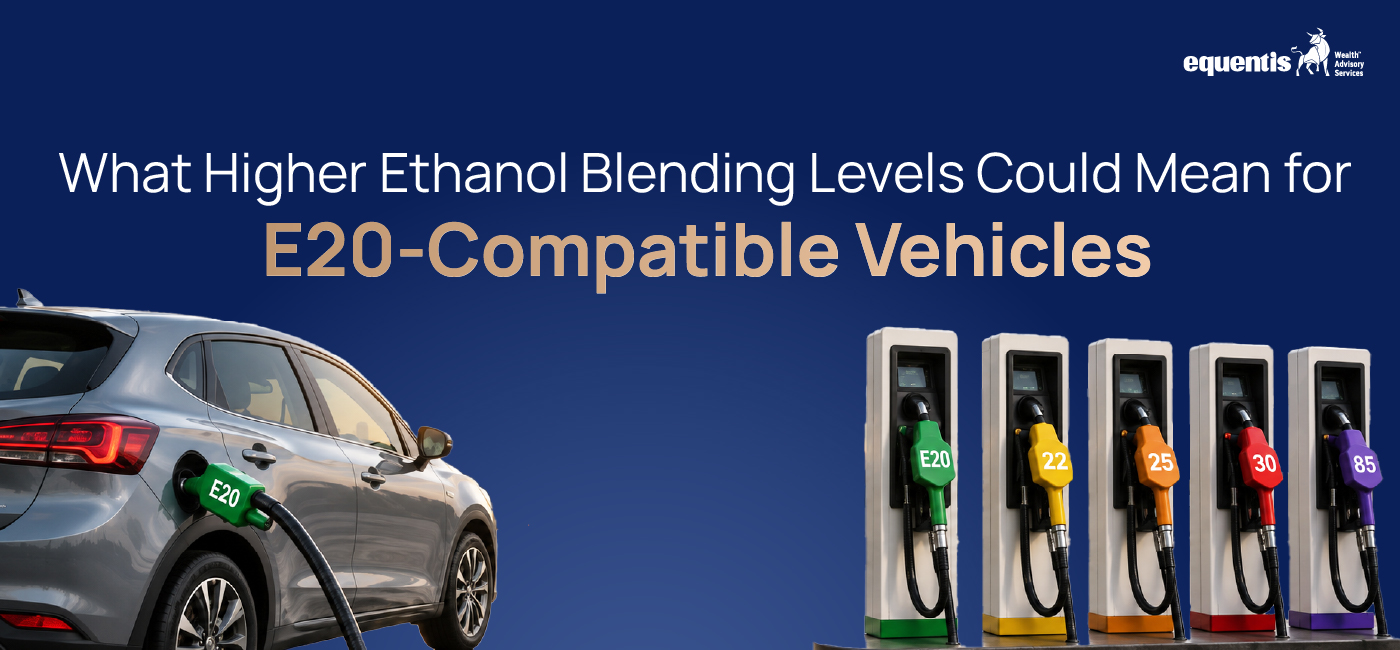
Fuel blends are identified using the letter “E” followed by a number representing the ethanol percentage.
Examples include:
- E10: 10% ethanol and 90% petrol
- E20: 20% ethanol and 80% petrol
- E85: 85% ethanol and 15% petrol
India’s ethanol blending program has steadily progressed from lower blends toward E20 as part of broader energy and environmental objectives.
Why India Is Increasing Ethanol Blending
Several strategic reasons are driving the country’s ethanol adoption efforts.
Reducing Crude Oil Imports
India imports a significant portion of its crude oil requirements.
Higher ethanol blending can reduce dependence on imported petroleum products, improving energy security and reducing exposure to global oil price fluctuations.
Supporting Farmers and Agriculture
Ethanol production creates additional demand for agricultural products.
This can provide supplementary income opportunities for farmers and strengthen rural economies.
Lowering Carbon Emissions
Biofuels are often viewed as a cleaner alternative to traditional fossil fuels.
Higher ethanol blending may contribute to emission reduction targets by lowering the overall carbon footprint of transportation fuels.
Enhancing Energy Diversification
Diversifying fuel sources helps create a more resilient energy system.
Ethanol becomes one component of a broader strategy that includes electric vehicles, hydrogen technologies, and renewable energy.
What Are E20-Compatible Vehicles?
E20-compatible vehicles are specifically designed or modified to operate efficiently using petrol blended with up to 20% ethanol.
These vehicles typically feature:
- Ethanol-resistant fuel system components
- Modified engine calibration
- Improved fuel injection systems
- Compatible rubber and plastic materials
- Enhanced engine management software
Such modifications help ensure durability and performance when exposed to higher ethanol concentrations.
Many manufacturers have already begun introducing E20-ready models in anticipation of future fuel standards.
How Higher Ethanol Blending Affects Vehicle Performance
One of the most frequently discussed aspects of ethanol blending is its impact on vehicle performance.
Engine Compatibility
E20-compatible vehicles are designed to operate safely on higher ethanol blends.
For these vehicles, higher ethanol content generally does not pose significant engine durability concerns when manufacturers’ specifications are followed.
However, older vehicles not designed for higher ethanol blends may face compatibility challenges.
Combustion Characteristics
Ethanol has different combustion properties compared to petrol.
It contains oxygen, which can promote cleaner combustion and potentially reduce certain emissions.
This characteristic can support more efficient fuel burning under appropriate engine conditions.
Power Output
In some situations, ethanol’s higher octane rating may help improve combustion efficiency.
Modern engine management systems can optimize performance based on fuel characteristics.
However, outcomes vary depending on vehicle design and operating conditions.
Fuel Efficiency Considerations
Fuel efficiency remains one of the biggest concerns among consumers.
Lower Energy Content
Ethanol contains less energy per litre compared to petrol.
As a result, vehicles using higher ethanol blends may experience a slight reduction in fuel economy.
For consumers, this means fuel consumption could increase marginally under certain driving conditions.
Real-World Impact
The actual impact depends on:
- Vehicle design
- Engine calibration
- Driving habits
- Road conditions
- Fuel quality
Manufacturers are continuously refining engines to minimize efficiency losses associated with ethanol blends.
Impact on Vehicle Maintenance
Higher ethanol blending can influence maintenance requirements.
Material Compatibility
Ethanol can interact differently with fuel system components than conventional petrol.
E20-compatible vehicles use specially designed materials that resist corrosion and degradation.
Fuel System Health
Properly designed vehicles should experience normal fuel system performance.
However, owners of older vehicles may need to consult manufacturers regarding compatibility before using higher ethanol blends.
Long-Term Durability
Automakers conduct extensive testing to ensure that E20-compatible vehicles maintain durability standards over their expected lifespan.
As technology improves, durability concerns are expected to decline further.
Benefits for Consumers
While some concerns exist, higher ethanol blending also offers potential advantages.
Reduced Dependence on Imported Fuel
Greater domestic fuel production can contribute to long-term energy security and potentially reduce vulnerability to international supply disruptions.
Environmental Benefits
Lower emissions support cleaner air and broader sustainability objectives.
Environmentally conscious consumers may view ethanol blending positively.
Improved Fuel Availability
As infrastructure expands, consumers may gain access to a wider range of fuel options tailored to evolving vehicle technologies.
Impact on Automobile Manufacturers
The transition to higher ethanol blending is reshaping vehicle development strategies.
Investment in New Technologies
Automakers must invest in:
- Engine redesign
- Fuel system modifications
- Testing programs
- Certification processes
These investments support compliance with evolving fuel standards.
Product Portfolio Changes
Manufacturers are increasingly marketing E20-compatible models as part of their future-ready product strategies.
This trend may accelerate as ethanol blending targets advance.
Competitive Positioning
Companies that adapt quickly may gain advantages in markets prioritizing cleaner and more sustainable mobility solutions.
Implications for Fuel Retailers
Fuel infrastructure is a critical component of successful ethanol adoption.
Storage and Distribution Upgrades
Fuel retailers may need investments in:
- Storage facilities
- Distribution systems
- Quality monitoring equipment
These upgrades ensure consistent fuel quality across the network.
Consumer Awareness
Retailers will play an important role in educating consumers about fuel compatibility and vehicle requirements.
Clear communication can help avoid confusion during the transition period.
Opportunities for Investors
Higher ethanol blending creates opportunities across multiple industries.
Biofuel Producers
Growing ethanol demand can support expansion among biofuel manufacturers and processing companies.
Agricultural Sector
Increased demand for ethanol feedstocks may benefit certain agricultural value chains.
Automotive Suppliers
Suppliers producing fuel system components, engine technologies, and compatible materials may see increased demand.
Infrastructure Companies
Storage, logistics, transportation, and fuel distribution businesses may benefit from network expansion initiatives.
Risks and Challenges
Despite the opportunities, several challenges remain.
Agricultural Supply Constraints
Expanding ethanol production requires reliable feedstock availability.
Balancing fuel production with food security considerations remains important.
Infrastructure Costs
Developing nationwide ethanol distribution infrastructure requires significant investment.
Consumer Adaptation
Vehicle owners may need education regarding compatibility, maintenance, and fuel usage practices.
Fuel Efficiency Concerns
Even modest reductions in fuel economy can influence consumer perceptions and adoption rates.
Regional Availability
Uniform fuel availability across all regions may take time to achieve.
The Global Perspective
India is not alone in pursuing ethanol blending.
Several countries have adopted similar strategies.
Brazil
Brazil is widely recognized for its extensive ethanol program and widespread use of flexible-fuel vehicles.
United States
The US has long supported ethanol blending through biofuel policies and infrastructure investments.
Lessons for India
Global experiences demonstrate that successful implementation requires:
- Strong policy support
- Reliable supply chains
- Vehicle compatibility
- Consumer awareness
- Infrastructure readiness
India can leverage these lessons while adapting solutions to local conditions.
What the Future Could Look Like
The future of ethanol blending in India will likely depend on multiple factors.
These include:
- Technological advancements
- Agricultural productivity
- Fuel infrastructure development
- Consumer acceptance
- Regulatory support
Higher ethanol blends may gradually become more common as vehicle technology evolves.
At the same time, ethanol will likely complement rather than replace other clean mobility solutions such as electric vehicles and alternative fuels.
The transportation ecosystem of the future may include a mix of technologies working together to achieve sustainability goals.
Conclusion
Higher ethanol blending levels represent a significant development in India’s evolving energy and transportation strategy. For E20-compatible vehicles, the transition offers opportunities to support energy security, reduce emissions, and strengthen domestic biofuel production.
While consumers may encounter changes related to fuel efficiency and vehicle technology, manufacturers have been preparing for this shift through extensive engineering and testing efforts. The transition also creates opportunities across agriculture, biofuels, automotive manufacturing, and infrastructure development.
However, challenges remain, including infrastructure investments, supply chain management, consumer education, and balancing economic considerations with environmental objectives.
As India moves toward a more diversified and sustainable energy future, higher ethanol blending is likely to remain an important part of the country’s mobility roadmap. The success of this transition will depend on collaboration among policymakers, industry participants, investors, and consumers, ensuring that environmental goals and economic priorities move forward together.
FAQs
1. What is an E20-compatible vehicle?
An E20-compatible vehicle is designed to operate safely and efficiently using petrol blended with up to 20% ethanol.
2. Why is India promoting higher ethanol blending?
India aims to reduce crude oil imports, improve energy security, support farmers, and lower transportation-related emissions.
3. Will E20 fuel damage my vehicle?
E20-compatible vehicles are specifically engineered for E20 fuel. Owners of older vehicles should consult manufacturers regarding compatibility.
4. Does ethanol-blended fuel reduce fuel efficiency?
Ethanol contains less energy than petrol, which may result in a slight reduction in fuel economy under certain conditions.
5. What are the environmental benefits of ethanol blending?
Ethanol blending can help reduce fossil fuel consumption and lower greenhouse gas emissions from transportation.
6. How does higher ethanol blending affect engine performance?
Modern E20-compatible vehicles are designed to maintain performance through optimized engine calibration and fuel system design.
7. Which industries could benefit from increased ethanol blending?
Biofuel producers, agriculture companies, automotive suppliers, fuel infrastructure providers, and logistics firms may benefit.
8. Is ethanol blending common in other countries?
Yes. Countries such as Brazil and the United States have extensive ethanol blending programs and supporting infrastructure.
9. What challenges does higher ethanol blending create?
Challenges include infrastructure costs, feedstock availability, consumer awareness, and maintaining fuel efficiency.
10. Will higher ethanol blending replace electric vehicles?
No. Ethanol blending and electric vehicles are likely to coexist as part of a broader strategy to reduce emissions and diversify energy sources.
Disclaimer Note: The securities quoted, if any, are for illustration only and are not recommendatory. This article is for education purposes only and shall not be considered as a recommendation or investment advice by Equentis. We will not be liable for any losses that may occur. Investments in the securities market are subject to market risks. Read all the related documents carefully before investing. Registration granted by SEBI, membership of BASL & certification from NISM in no way guarantee the performance of the intermediary or provide any assurance of returns to investors.

Jaspreet Singh Arora is the Chief Investment Officer at Equentis, where he heads a seasoned team of equity analysts and turns two decades of market experience into portfolios that consistently beat the benchmark. A go-to voice on cement, building-materials, real-estate, and construction stocks, Jaspreet previously ran research desks at leading brokerages, honing an eye for the metrics that truly move share prices. His plain-spoken analysis helps investors cut through noise and act with conviction. When he’s not deep-diving into earnings calls, you’ll find him unwinding over sports, weekend cricket or a good history podcast.