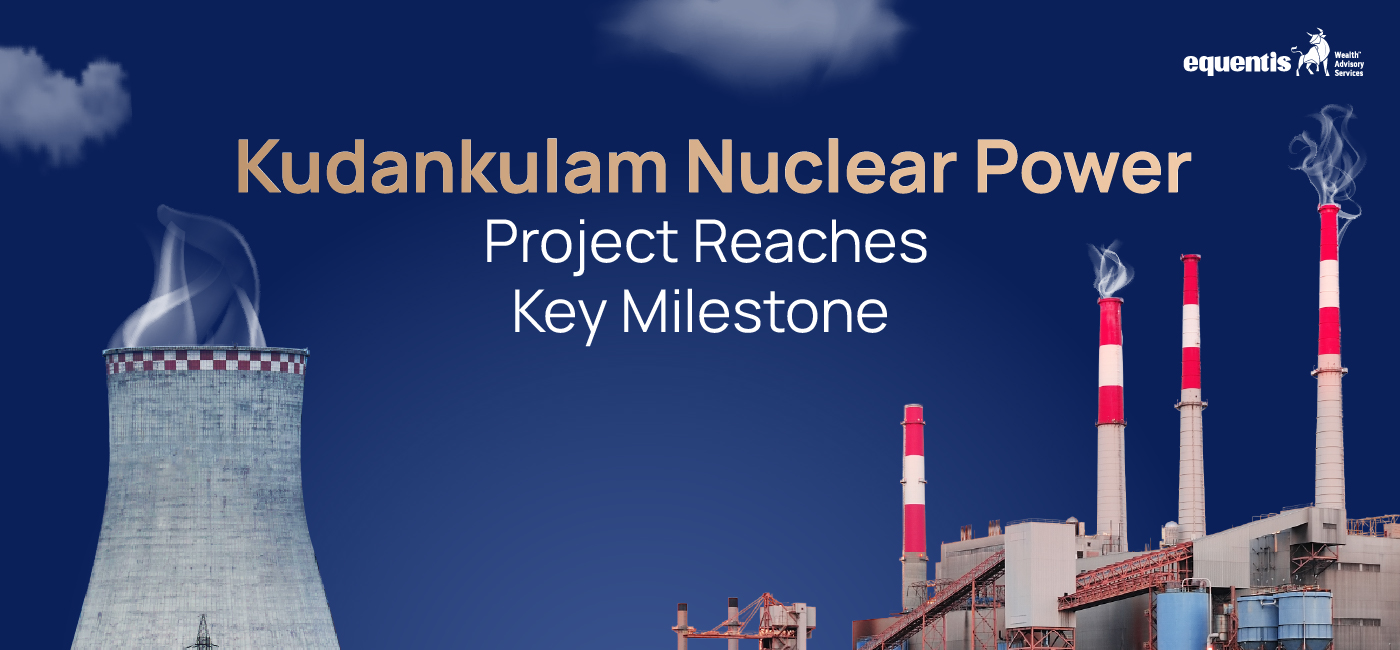
The dawn of a new era in Indian energy security has arrived as the Kudankulam Nuclear Power Project (KKNPP) achieves a monumental structural milestone in the construction of its fifth unit.
As the global community pivots toward decarbonization and sustainable development, India’s nuclear energy sector is emerging as a cornerstone of its “Net Zero by 2070” strategy. The successful installation of key equipment in Unit-5 of the Kudankulam Nuclear Power Project (KKNPP) is not just a victory for engineering; it is a significant leap forward for India’s power independence and its strategic partnership with Russia.
The Milestone: Precision Engineering at Its Peak
The latest milestone at the Kudankulam site involves the successful installation of the Reactor Pressure Vessel (RPV) for Unit-5. This operation, a masterclass in heavy-duty logistics and precision engineering, marks the transition from civil construction to the intensive mechanical installation phase of the reactor core.
The RPV is the heart of the nuclear power plant. Weighing several hundred tonnes and forged from specialized high-strength steel, this component is designed to house the nuclear fuel and withstand extreme temperatures and pressures for a lifespan exceeding 60 years. Its installation requires sub-millimeter accuracy, often performed under the watchful eyes of international inspectors and technical experts from both the Nuclear Power Corporation of India Limited (NPCIL) and Rosatom, the Russian state atomic energy corporation.
Why This Milestone Matters
- Civil to Mechanical Transition: This phase signifies that the primary containment structure is ready to receive its most critical components.
- Timeline Acceleration: Completing this installation ahead of or on schedule provides a buffer for the complex piping and instrumentation phases that follow.
- Technological Validation: It demonstrates the seamless integration of Russian design with Indian site execution capabilities.
Technical Specifications: The VVER-1000 Advantage
The Kudankulam project utilizes the VVER-1000 (V-412) pressurized water reactors. These are Generation III+ reactors, renowned globally for their safety profiles and operational efficiency.
| Feature | Specification |
|---|---|
| Reactor Type | VVER-1000 (Pressurized Water Reactor) |
| Thermal Power | 3000 MWt |
| Electric Power | 1000 MWe |
| Design Life | 60 Years (extendable) |
| Fuel | Low Enriched Uranium (UO2) |
| Safety Generation | III+ with Passive Safety Systems |
Passive Safety Systems
One of the most remarkable aspects of Unit-5 is the inclusion of “passive” safety systems. Unlike traditional reactors that require active electricity and pumps to cool the core during a shutdown, the VVER-1000 features systems that rely on natural physical laws like gravity and convection. These include:
- Passive Heat Removal System (PHRS): Ensures the reactor stays cool even in the event of a total station blackout.
- Core Catcher: A unique “melt trap” located beneath the reactor vessel designed to contain and cool molten core material in the highly unlikely event of a meltdown.
The Strategic Partnership: India and Russia
The Kudankulam Nuclear Power Project is the flagship project of the Indo-Russian strategic partnership. Governed by an Inter-Governmental Agreement (IGA) signed in 1988 and supplemented in 2008, the collaboration has survived shifting global geopolitics.
Rosatom provides the technology, design, and critical equipment, while NPCIL manages the construction, commissioning, and eventual operation. This partnership has also evolved to include a high degree of “Localization.” In Unit-5 and the upcoming Unit-6, an increasing number of components are being manufactured in India, supporting the “Atmanirbhar Bharat” (Self-Reliant India) initiative.
Powering the Southern Grid: Economic and Social Impact
Once operational, Unit-5 will add another 1,000 MW to the national grid, with a primary focus on the power-hungry industrial hubs of Tamil Nadu, Karnataka, Kerala, and Andhra Pradesh.
Energy Security and Baseload Power
While renewable energy like solar and wind are growing rapidly, they are intermittent. Nuclear power provides the “baseload”—steady, reliable electricity that runs 24/7. This is crucial for industries such as semiconductor manufacturing, textile mills, and heavy metallurgy that cannot afford power fluctuations.
Environmental Stewardship
Nuclear energy remains one of the cleanest sources of power in terms of carbon emissions per kilowatt-hour. The operation of Kudankulam Units 1 through 5 will prevent the emission of millions of tonnes of CO2 annually that would otherwise have been generated by coal-fired power plants.
The Roadmap to Completion
The journey for KKNPP does not end with Unit-5. The site is designed to eventually house six units, creating a massive nuclear energy park with a total capacity of 6,000 MW.
- Units 1 & 2: Already operational and feeding the grid.
- Units 3 & 4: In advanced stages of construction and commissioning.
- Units 5 & 6: Currently the focus of major mechanical milestones, like the one celebrated today.
The logistical challenge of managing such a large-scale project is immense. The site employs thousands of skilled engineers, technicians, and laborers, creating a micro-economy in the Tirunelveli district of Tamil Nadu.
Overcoming Challenges: Logistics and Global Supply Chains
The construction of Unit-5 has not been without its hurdles. The global supply chain disruptions of recent years and the complexities of transporting massive components from Russian factories to the southern tip of India required innovative solutions.
Specialized heavy-lift ships and modular transporters were used to move the RPV and steam generators from the port to the construction site. Furthermore, the collaboration involves translating complex technical documentation and ensuring that every weld and bolt meets both Indian and Russian regulatory standards.
The Global Context: Nuclear Renaissance
India’s success at Kudankulam is part of a broader global “nuclear renaissance.” Countries from Europe to Asia are revisiting nuclear energy as a viable solution to the dual challenges of energy security and climate change. By mastering the VVER-1000 technology and moving toward the domestic Integrated Pressurized Water Reactor (IPWR) and Fast Breeder Reactor (FBR) programs, India is positioning itself as a global leader in nuclear technology.
Conclusion: A Future Forged in Steel and Science
The successful installation at KKNPP Unit-5 is a testament to the resilience of Indian engineers and the depth of international cooperation. It brings India one step closer to a future where clean, reliable, and affordable power is available to every citizen.
As we look toward the commissioning of Unit-5, the milestone serves as a reminder that large-scale infrastructure projects, though time-consuming and technically demanding, are the bedrock of a nation’s progress. Kudankulam is more than just a power plant; it is a symbol of India’s scientific ambition and its commitment to a greener planet.
Disclaimer Note: The securities quoted, if any, are for illustration only and are not recommendatory. This article is for education purposes only and shall not be considered as a recommendation or investment advice by Equentis. We will not be liable for any losses that may occur. Investments in the securities market are subject to market risks. Read all the related documents carefully before investing. Registration granted by SEBI, membership of BASL & certification from NISM in no way guarantee the performance of the intermediary or provide any assurance of returns to investors.

Jaspreet Singh Arora is the Chief Investment Officer at Equentis, where he heads a seasoned team of equity analysts and turns two decades of market experience into portfolios that consistently beat the benchmark. A go-to voice on cement, building-materials, real-estate, and construction stocks, Jaspreet previously ran research desks at leading brokerages, honing an eye for the metrics that truly move share prices. His plain-spoken analysis helps investors cut through noise and act with conviction. When he’s not deep-diving into earnings calls, you’ll find him unwinding over sports, weekend cricket or a good history podcast.