

Summary
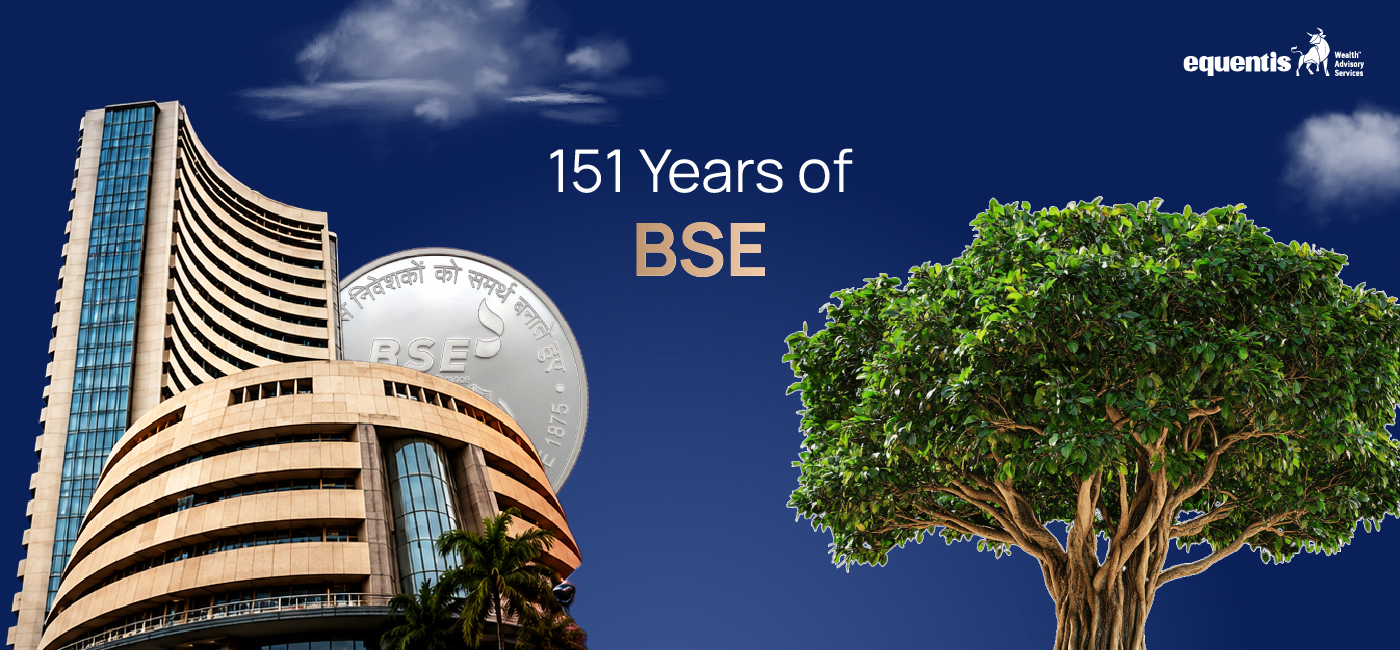
As the Bombay Stock Exchange (BSE) completes 151 years, it remains a cornerstone of India’s financial system, connecting companies with investors and supporting the country’s economic growth. From its humble beginnings under a banyan tree in Mumbai to becoming a technology-driven stock exchange serving millions of investors, BSE’s journey reflects the evolution of India’s capital markets. Today, it continues to play a vital role in equity trading, SME listings, mutual fund platforms, and market innovation while adapting to changing investor needs and technological advancements.
151 Years of BSE: How India’s Oldest Stock Exchange Continues to Shape the Capital Markets
Why BSE’s 151-Year Journey Matters Today
India’s financial markets have transformed significantly over the past century, but few institutions have witnessed this evolution as closely as the Bombay Stock Exchange (BSE). Celebrating 151 years, BSE represents more than just a marketplace for buying and selling shares. It has grown alongside India’s economy, helping businesses raise capital while providing investors with opportunities to participate in the country’s growth story.
As India’s investor base continues to expand, driven by digital investing and increasing financial awareness, BSE’s long history offers valuable insights into how the country’s capital markets have matured and where they may be headed next.
The Beginning of BSE
The Bombay Stock Exchange traces its origins to 1875, when a group of stockbrokers came together to establish what became India’s first organised stock exchange.
In its early years, trading took place in informal settings before the exchange developed into a structured institution with defined trading practices and regulations. Over time, BSE became an important platform for companies seeking capital and investors looking to build long-term wealth.
Its establishment laid the foundation for organised securities trading in India and helped create greater transparency in financial markets.
From Traditional Trading to Digital Markets
One of the defining aspects of BSE’s journey has been its ability to adapt to changing technology.
Trading has evolved from open outcry systems on the trading floor to fully electronic platforms capable of processing large volumes of transactions within seconds.
Technology has transformed several aspects of investing, including:
- Faster trade execution
- Online investing
- Improved price transparency
- Better risk management
- Wider investor participation
Digital platforms have also enabled retail investors from across India to access the stock market without being physically present in Mumbai.
BSE’s Role in India’s Economic Growth
Stock exchanges perform an essential function in any economy by connecting businesses with investors.
Companies use stock exchanges to raise capital for expansion, research, infrastructure, acquisitions, and innovation. Investors, in turn, gain an opportunity to participate in the growth of these businesses through equity ownership.
Over the years, BSE has supported companies across multiple sectors, including:
- Banking and financial services
- Information technology
- Manufacturing
- Pharmaceuticals
- Consumer goods
- Energy
- Infrastructure
As India’s economy has diversified, the exchange has continued to evolve alongside changing business needs.
Expanding Beyond Equity Trading
While equity trading remains one of its core functions, BSE today offers much more than buying and selling shares.
Its ecosystem includes:
Equity Markets
Investors can trade shares of listed companies across various industries.
SME Platform
BSE’s Small and Medium Enterprise (SME) platform has enabled smaller businesses to access capital markets, offering an alternative source of funding beyond traditional bank loans.
Mutual Fund Distribution
BSE provides electronic platforms that simplify mutual fund transactions for investors and distributors.
Debt Securities
The exchange also facilitates the listing and trading of debt instruments, supporting corporate and government fundraising.
Market Data and Technology Services
Technology solutions and market data services have become increasingly important as financial markets become more digital and data-driven.
How BSE Has Changed Investing in India
The Indian investor landscape has evolved considerably.
A decade ago, investing in stocks was often viewed as limited to experienced market participants. Today, mobile trading applications, digital KYC processes, and improved financial literacy have made investing more accessible.
BSE has supported this transition by embracing technology and expanding market infrastructure.
The growing number of demat accounts and increasing retail participation demonstrate how India’s investment culture continues to evolve.
What BSE’s Growth Means for Investors
For investors, BSE provides access to companies across market capitalisations and sectors.
Its broad listing base enables investors to build diversified portfolios aligned with different financial goals and risk profiles.
The exchange also contributes to:
- Transparent price discovery
- Regulated trading environment
- Efficient settlement systems
- Access to public offerings
- Improved market liquidity
However, investing in equities continues to involve market risk, and investors should base decisions on financial research rather than short-term market movements.
Opportunities and Challenges Ahead
Opportunities
As India’s economy expands, BSE is well positioned to benefit from several long-term trends:
- Growing retail investor participation
- Increasing digital adoption
- Rising number of IPOs
- Expansion of SME listings
- Greater use of financial technology
- Higher participation from domestic investors
India’s economic growth and increasing financial inclusion could support continued activity in the capital markets over the coming years.
Challenges
Despite these opportunities, certain challenges remain.
These include:
- Global market volatility
- Geopolitical uncertainties
- Regulatory changes
- Cybersecurity risks
- Competition within the financial market ecosystem
- Changing investor expectations
Successfully addressing these challenges will require continuous technological investment and operational resilience.
BSE’s Contribution Beyond Trading
The exchange plays an important role beyond facilitating market transactions.
It contributes to:
- Financial market development
- Corporate governance standards
- Investor education initiatives
- Capital formation
- Economic transparency
As more Indian businesses access capital markets, institutions like BSE continue to support entrepreneurship, innovation, and long-term wealth creation.
Looking Ahead
The future of India’s capital markets is likely to be shaped by digital innovation, increasing retail participation, sustainable investing, artificial intelligence, and evolving regulatory frameworks.
With more businesses considering public listings and a growing population of first-time investors entering the markets, exchanges will continue to play a central role in India’s financial ecosystem.
BSE’s ability to adapt to changing technologies and investor needs will remain an important factor in its continued relevance.
Conclusion
The completion of 151 years of BSE marks an important milestone in India’s financial history. From its origins in 1875 to becoming a modern electronic exchange, BSE has played a significant role in supporting capital formation, market transparency, and investor participation.
Its evolution mirrors India’s own economic journey—from a developing economy with limited financial infrastructure to one with one of the world’s largest and most dynamic capital markets. While future challenges will continue to emerge, BSE’s long history of adaptation and innovation positions it to remain an integral part of India’s financial system for years to come.
Frequently Asked Questions (FAQs)
1. What is BSE?
BSE, or the Bombay Stock Exchange, is India’s oldest stock exchange, established in 1875, where investors buy and sell shares and other securities.
2. Why is BSE celebrating 151 years?
BSE has completed 151 years since its establishment in 1875, marking over a century and a half of contribution to India’s capital markets.
3. Why is BSE important for India’s economy?
BSE helps companies raise capital, supports investment, enables price discovery, and contributes to economic growth through efficient capital markets.
4. What products are available on BSE?
BSE offers equity trading, SME listings, debt securities, mutual fund platforms, exchange-traded products, and various market data services.
5. How has technology changed BSE?
Technology has enabled electronic trading, faster settlements, improved transparency, online investing, and wider investor participation across India.
6. What is the BSE SME platform?
The BSE SME platform allows small and medium-sized enterprises to raise capital from public markets while giving investors access to emerging businesses.
7. How does BSE benefit retail investors?
BSE provides a regulated trading platform, transparent pricing, diversified investment options, and access to public offerings and listed companies.
8. What challenges does BSE face in the future?
Key challenges include market volatility, cybersecurity risks, regulatory changes, technological upgrades, and evolving investor expectations.
9. How has BSE contributed to financial inclusion?
By supporting digital investing, online trading platforms, and investor education, BSE has helped make investing more accessible to individuals across India.
10. What is the future outlook for BSE?
The exchange is expected to benefit from increasing retail participation, more IPOs, technological innovation, expanding SME listings, and continued growth in India’s capital markets.
Disclaimer Note: The securities quoted, if any, are for illustration only and are not recommendatory. This article is for education purposes only and shall not be considered as a recommendation or investment advice by Equentis. We will not be liable for any losses that may occur. Investments in the securities market are subject to market risks. Read all the related documents carefully before investing. Registration granted by SEBI, membership of BASL & certification from NISM in no way guarantee the performance of the intermediary or provide any assurance of returns to investors.

Jaspreet Singh Arora is the Chief Investment Officer at Equentis, where he heads a seasoned team of equity analysts and turns two decades of market experience into portfolios that consistently beat the benchmark. A go-to voice on cement, building-materials, real-estate, and construction stocks, Jaspreet previously ran research desks at leading brokerages, honing an eye for the metrics that truly move share prices. His plain-spoken analysis helps investors cut through noise and act with conviction. When he’s not deep-diving into earnings calls, you’ll find him unwinding over sports, weekend cricket or a good history podcast.










