
Summary
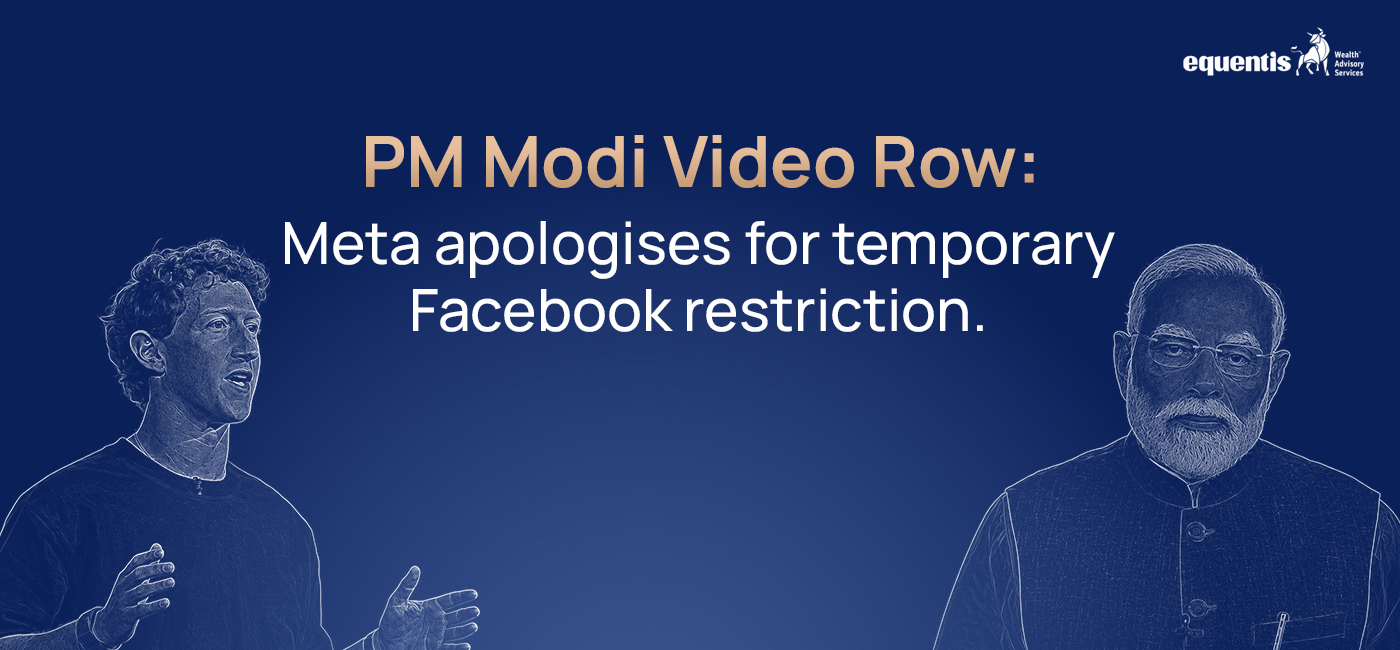
Meta has apologised to the Indian government after Facebook temporarily restricted a video post by Prime Minister Narendra Modi. The company described the incident as an operational error and restored the content shortly after it was restricted. The episode sparked discussions around social media content moderation, platform accountability, algorithmic decision-making, and the responsibilities of global technology companies operating in India. While Meta has acknowledged the mistake and promised stronger internal checks, the controversy has reignited debates about how platforms handle high-profile political content and comply with local regulations.
Introduction
Social media platforms have become one of the most important channels for political communication, public engagement, and information sharing. When content from a prominent public figure is restricted, even temporarily, it often attracts widespread attention and raises questions about how digital platforms manage content moderation.
That is exactly what happened when a video posted by Prime Minister Narendra Modi on Facebook was briefly restricted before being restored. The incident led to scrutiny from government officials and parliamentary bodies, eventually prompting Meta to issue an apology and explain that the restriction resulted from an error.
The controversy highlights a growing global conversation about balancing automated content moderation, platform accountability, and freedom of expression in the digital age.
What Happened in the PM Modi Video Row?
The controversy began when a Facebook post containing a video message from Prime Minister Narendra Modi was temporarily restricted on the platform.
According to Meta, the restriction was applied in error and was later reversed after the issue was identified. The company restored the content and apologised to the Indian government for the mistake. Meta’s Chief Global Affairs Officer Joel Kaplan personally conveyed the apology during discussions with Indian officials.
The video reportedly related to issues affecting students and examination paper leaks, making the temporary restriction particularly sensitive given the public attention surrounding the topic.
Why Did the Incident Gain So Much Attention?
Importance of Political Communication
Public leaders increasingly use social media platforms to communicate directly with citizens.
When a post from a serving Prime Minister becomes unavailable, even briefly, questions naturally arise about the processes behind content moderation and platform governance.
Concerns About Automated Systems
Meta stated that the restriction was the result of an operational or system error.
This has brought renewed attention to the role of artificial intelligence and automated moderation systems that review billions of posts across platforms every day. While automation helps platforms manage massive volumes of content, occasional mistakes can occur.
Regulatory Scrutiny
The incident also attracted attention because it occurred amid broader discussions about the accountability of large technology companies operating in India.
Government officials sought explanations regarding how the restriction occurred and what measures would be taken to prevent similar incidents in the future.
Meta’s Response to the Controversy
Public Apology
Meta apologised for the temporary restriction and clarified that the action was not intentional.
Joel Kaplan stated that the company regretted the error and acknowledged the concerns raised by Indian authorities.
Strengthening Internal Processes
The company has indicated that it is reviewing its systems and internal controls to reduce the likelihood of similar incidents.
Reports suggest Meta is also examining additional safeguards for high-profile or public-interest accounts.
Continued Engagement with Authorities
The incident has led to further discussions between Meta and Indian officials regarding content moderation practices, platform accountability, and compliance with Indian regulations.
The Bigger Picture: Content Moderation in the Digital Age
A Difficult Balancing Act
Social media platforms face a complex challenge.
On one hand, they must remove harmful, illegal, or misleading content. On the other hand, they must ensure that legitimate content is not incorrectly restricted.
With billions of posts published daily, platforms rely heavily on algorithms and automated systems. While these systems improve efficiency, they can occasionally make mistakes.
Global Debate Around Platform Responsibility
The PM Modi video controversy is part of a broader global discussion about the responsibilities of large technology companies.
Questions often arise regarding:
- How content moderation decisions are made
- The transparency of algorithms
- Accountability for moderation errors
- Compliance with local laws
- Protection of free expression
These issues are increasingly relevant as social media platforms play a larger role in public discourse.
What Does This Mean for Users and Businesses?
For Social Media Users
The incident demonstrates how moderation systems can sometimes affect content visibility unexpectedly.
It also highlights the importance of transparency and timely corrections when mistakes occur.
For Businesses and Content Creators
Brands, businesses, and creators depend heavily on social media visibility.
Cases involving content restrictions reinforce the need for platforms to provide clear communication and reliable mechanisms for resolving moderation disputes.
For Technology Companies
The controversy serves as a reminder that maintaining user trust requires both effective moderation and accountability when errors occur.
Companies operating globally must balance platform safety with compliance requirements across different jurisdictions.
Opportunities and Risks
Potential Opportunities
Improved Platform Transparency
Public scrutiny often encourages platforms to improve reporting, communication, and moderation processes.
Better Content Review Systems
The incident could accelerate investments in more accurate AI moderation tools and human oversight.
Stronger Regulatory Dialogue
Ongoing discussions between governments and technology firms may help establish clearer guidelines for platform accountability.
Key Risks
Reputational Challenges
Even temporary moderation errors can affect public trust in digital platforms.
Regulatory Pressure
Increased scrutiny could lead to tighter compliance requirements for technology companies.
Algorithmic Errors
As platforms continue to rely on automation, ensuring accuracy remains a significant challenge.
Conclusion
Meta’s apology over the temporary restriction of Prime Minister Narendra Modi’s Facebook video has brought attention to the complex world of content moderation and platform accountability. While the company has described the incident as an operational error and restored the content, the episode has sparked broader discussions about how social media platforms manage high-profile content and interact with regulators.
As digital platforms continue to influence communication, politics, and public discourse, transparency, accountability, and effective moderation systems will remain essential. The controversy may ultimately encourage stronger safeguards, clearer policies, and improved trust between technology companies, governments, and users.
FAQs
1. Why did Meta apologise to the Indian government?
Meta apologised after Facebook temporarily restricted a video post by Prime Minister Narendra Modi and later restored it, describing the incident as an error.
2. What was the PM Modi video controversy?
The controversy involved the temporary restriction of a Facebook video posted by Prime Minister Narendra Modi before it was restored by Meta.
3. Did Meta intentionally remove the video?
Meta stated that the restriction occurred due to an operational error and was not intentional.
4. Who issued the apology on behalf of Meta?
Meta’s Chief Global Affairs Officer Joel Kaplan conveyed the apology to Indian authorities.
5. What is content moderation on social media?
Content moderation refers to the process of reviewing and managing content to enforce platform policies and legal requirements.
6. Why are content moderation errors important?
Errors can affect public trust, limit access to legitimate information, and create concerns about platform accountability.
7. How do social media platforms moderate content?
Platforms use a combination of artificial intelligence, automated systems, and human reviewers to identify content that may violate policies.
8. What impact could this incident have on Meta?
The controversy may lead to greater scrutiny of Meta’s moderation practices and stronger internal controls.
9. How does this affect ordinary users?
It highlights the importance of transparent moderation processes and effective appeal mechanisms for users whose content may be restricted.
10. What lessons can technology companies learn from this incident?
Companies can improve moderation accuracy, strengthen oversight, increase transparency, and respond quickly when errors occur.
Disclaimer Note: The securities quoted, if any, are for illustration only and are not recommendatory. This article is for education purposes only and shall not be considered as a recommendation or investment advice by Equentis. We will not be liable for any losses that may occur. Investments in the securities market are subject to market risks. Read all the related documents carefully before investing. Registration granted by SEBI, membership of BASL & certification from NISM in no way guarantee the performance of the intermediary or provide any assurance of returns to investors.

Parvati Rai is the Vice President of the Research team at Equentis. She has over 15 years of equity-research and strategy-consulting experience. A specialist in deep-dive valuations, financial modelling, and forecasting, she has built research desks from the ground up, by steering buy-side, sell-side, and independent coverage across sectors. When she isn’t fine-tuning models, Parvati unwinds on nature treks and mentors aspiring analysts.