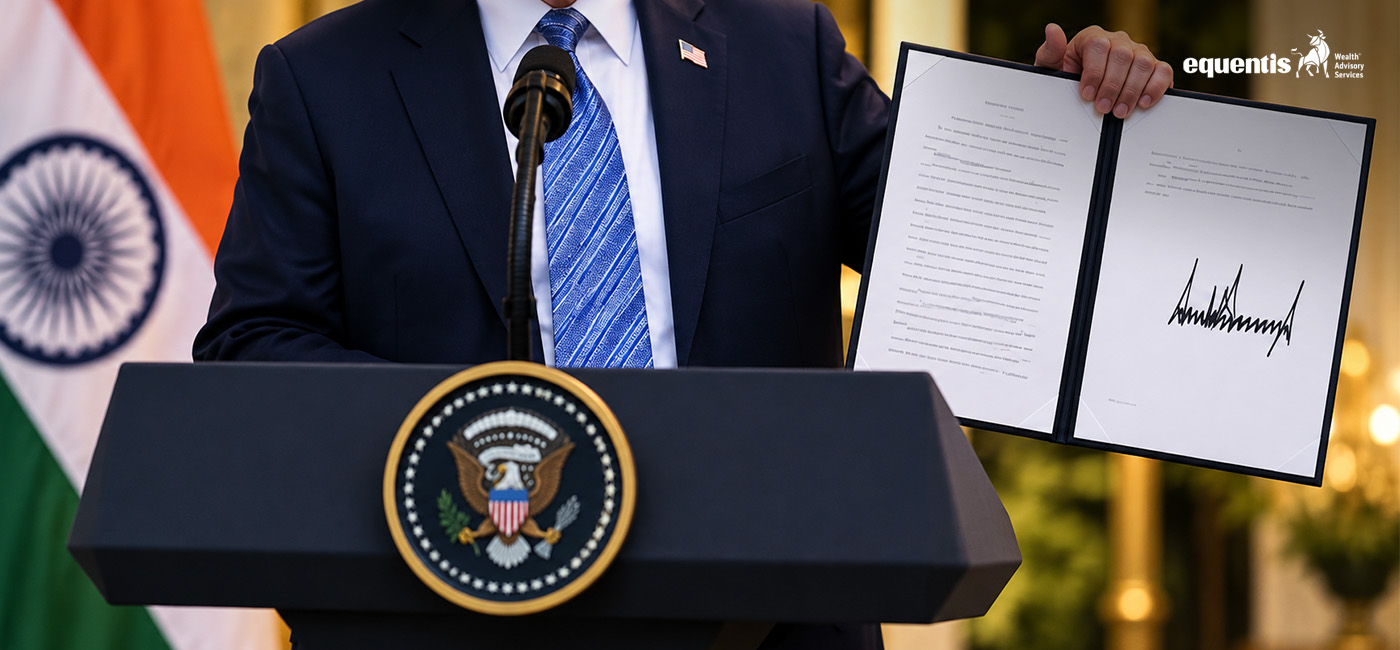

The Lindsey O. Graham Act, signed into law by US President Donald Trump on September 18, 2026, expands American sanctions against Russia and Iran and gives the US administration authority to impose tariffs of up to 100% on imports from major buyers of Russian energy. India matters in this equation because it remains a major purchaser of Russian crude. Crucially, the law does not automatically impose a 100% tariff on Indian goods. It creates a legal mechanism through which Washington can apply additional tariffs under specified conditions, making Russian oil purchases, India US trade and export competitiveness important areas to watch.
What Is the Lindsey O. Graham Act?
Officially called the Lindsey O. Graham Sanctioning Russia and Iran Act of 2026, the legislation strengthens statutory sanctions, tariffs and prohibitions targeting Russia while extending existing sanctions on Iran. The US House passed the legislation by 262 votes to 159 after the Senate approved it 86 to 11 in August.
The legislation is designed primarily to increase economic pressure on Russia over the war in Ukraine. It targets Russian officials, financial institutions, defence related networks, energy trade and vessels associated with efforts to circumvent existing sanctions.
Its impact, however, extends beyond Russia.
The law gives the US President authority to impose tariffs of up to 100% on imports from major countries purchasing Russian oil and gas. India is among the countries potentially exposed because of its substantial Russian energy purchases.
Why Does the Lindsey O. Graham Act Matter for India?
The immediate concern for India is the connection between Russian crude oil purchases and access to the US market.
Since the Russia Ukraine conflict began, discounted Russian crude became an important part of India’s energy sourcing strategy. Indian refiners benefited from access to Russian supplies while India continued importing oil from several other producers.
The new US legislation potentially changes the economic calculation. Instead of targeting only Russian companies and institutions, Washington now has an additional mechanism to put pressure on countries buying Russian energy.
India is currently among the largest buyers of Russian crude, placing it within the group potentially affected by the law.
However, there is an important distinction: India has not automatically been hit with a new 100% tariff simply because Trump signed the legislation. The Act provides authority to impose tariffs, meaning the eventual impact depends on how the US administration uses those powers.
Could India Really Face a 100% US Tariff?
The law permits tariffs of up to 100%, but that figure should not be interpreted as an immediate blanket tariff on everything India exports to the United States.
The actual consequences would depend on decisions taken by the Trump administration, including the tariff rate, products covered, timing, exemptions and implementation conditions.
Indian exporters are therefore watching Washington closely. Trade analysts have noted that the full impact can only be assessed once the US provides clarity on specific tariff rates, affected products and implementation timelines.
The legislation also contains provisions relating to exemptions and presidential discretion, making implementation more complicated than the headline 100% figure might suggest.
How Could the Russia Sanctions Law Affect Indian Exports?
If substantial additional tariffs are eventually imposed on Indian goods, exporters selling heavily into the US could face higher costs and reduced price competitiveness.
The textile and apparel industry is one sector already expressing concern. The Confederation of Indian Textile Industry has warned about the possible impact because the United States is an important export destination for Indian textile and apparel products.
The broader effect would depend heavily on which products are covered.
Businesses with significant US revenue exposure may need to monitor tariff announcements, customer negotiations and supply chain arrangements. Exporters could also explore greater geographic diversification if trade uncertainty persists.
At the same time, businesses should avoid assuming that the maximum tariff permitted under the legislation will necessarily become the actual tariff applied.
What Does the Act Mean for India’s Russian Oil Strategy?
India now faces a more complicated balance between energy security and trade exposure.
Russian crude has helped Indian refiners diversify their supply sources. Reducing purchases rapidly could require greater sourcing from the Middle East, the Americas or other producers, potentially affecting procurement costs depending on global oil prices and freight conditions.
Continuing large Russian purchases, however, could increase India’s exposure to US trade measures if Washington decides to exercise the new powers.
That leaves policymakers weighing multiple considerations: affordable energy, refinery requirements, relations with Russia, economic ties with the United States and India’s broader approach to strategic autonomy.
Impact on Indian Investors and Markets
For Indian investors, the Lindsey O. Graham Act is relevant primarily through its potential effects on oil prices, exports, inflation, the rupee and corporate earnings.
India imports a large portion of its crude requirements, making global energy prices an important macroeconomic variable. Any disruption in sourcing arrangements or increase in procurement costs can have broader consequences for businesses and consumers.
Export oriented sectors could face a different challenge if additional US tariffs are introduced. Companies with substantial US exposure may have to absorb some costs, negotiate with customers or adjust supply chains.
Investors should therefore distinguish between the law itself and subsequent implementation decisions. The latter will determine the actual financial impact.
Opportunities and Risks for India
One possible response to increased trade uncertainty is greater diversification. Indian companies may look more closely at markets in Europe, the Middle East, Africa and Asia, while policymakers could continue expanding trade partnerships.
Changes in oil sourcing could similarly encourage diversification across suppliers.
The risks are more immediate if significant tariffs are implemented. Higher duties could reduce the competitiveness of Indian exports in the US market, while changes in crude sourcing could increase energy costs.
There is also a diplomatic dimension. The legislation adds another point of negotiation to India US relations while putting pressure on India’s longstanding energy and strategic relationship with Russia.
What Should India Watch Next?
The most important development now is implementation.
Investors and businesses should watch for announcements from Washington specifying whether tariffs will be imposed on India, their magnitude, affected product categories, exemptions and effective dates.
India’s response will also matter. Changes in Russian crude purchases, trade negotiations with Washington and efforts to diversify export markets could determine how significant the longer term economic impact becomes.
Conclusion
The Lindsey O. Graham Act matters for India because it connects Russian energy purchases with potential US trade penalties. President Trump now has expanded statutory authority to impose tariffs of up to 100% on major purchasers of Russian energy, including countries such as India.
But the headline number requires context. A 100% tariff has not automatically been imposed on Indian goods simply because the legislation became law. The key questions are how Washington implements the Act, whether India becomes subject to additional tariffs, which exports are affected and how New Delhi adjusts its energy and trade strategy.
Frequently Asked Questions
1. What is the Lindsey O. Graham Act?
The Lindsey O. Graham Sanctioning Russia and Iran Act of 2026 is a US law that expands sanctions and other economic measures targeting Russia and extends existing sanctions on Iran. It also gives the US President authority to impose tariffs of up to 100% on major purchasers of Russian energy.
2. When did Donald Trump sign the Lindsey O. Graham Act?
US President Donald Trump signed the legislation into law on September 18, 2026. The US House had passed it by a 262 to 159 vote after the Senate approved the legislation 86 to 11 in August.
3. Why does the Lindsey O. Graham Act affect India?
India could be affected because it is among the major purchasers of Russian crude oil. The legislation gives the US administration authority to impose additional tariffs on major Russian energy buyers, potentially connecting India’s energy relationship with Russia to its trade relationship with the United States.
4. Has the US imposed a 100% tariff on India under the new law?
No. The legislation does not automatically impose a 100% tariff on Indian goods. Instead, it gives the US President authority to impose tariffs of up to that level under specified conditions. The actual impact depends on how the administration implements the legislation.
5. Why does India buy Russian crude oil?
Russian crude has become an important component of India’s diversified oil sourcing strategy. Refiners make procurement decisions based on factors including price, availability, quality, freight costs and refinery requirements. Any change in Russian supplies therefore needs to be considered alongside alternative sources and prevailing international crude prices.
6. Which Indian sectors could be affected by additional US tariffs?
The impact would depend on which products Washington covers. Export oriented industries with significant exposure to the US would be particularly relevant. India’s textile industry has already raised concerns about possible additional tariffs because the United States is an important market for Indian textile and apparel exports.
7. Could the new US law affect petrol and diesel prices in India?
Not directly. However, if the legislation influences India’s crude sourcing or contributes to changes in global oil markets, India’s crude procurement costs could be affected. Domestic petrol and diesel prices depend on several additional factors, including international product prices, exchange rates, taxes and pricing decisions.
8. Could India stop buying Russian oil because of the Act?
India’s future Russian oil purchases will depend on commercial, energy security and diplomatic considerations. The legislation increases potential trade costs associated with continued purchases, but it does not itself require India to stop importing Russian crude. Future procurement patterns will depend on government policy and refinery economics.
9. What does the law mean for Indian investors?
Investors may need to monitor companies exposed to US exports, energy intensive industries and sectors sensitive to crude prices. Potential changes in tariffs or oil sourcing could influence costs, margins and trade flows. However, the impact cannot be determined from the legislation alone because implementation details remain critical.
10. What should businesses and investors watch next?
The key developments are US announcements on tariff rates, covered products, exemptions and implementation dates. India’s Russian crude purchases and its trade discussions with Washington will also be important. Until these details emerge, the maximum 100% tariff permitted by the Act should not be treated as an automatic tariff on India.
Disclaimer Note: The securities quoted, if any, are for illustration only and are not recommendatory. This article is for education purposes only and shall not be considered as a recommendation or investment advice by Equentis. We will not be liable for any losses that may occur. Investments in the securities market are subject to market risks. Read all the related documents carefully before investing. Registration granted by SEBI, membership of BASL & certification from NISM in no way guarantee the performance of the intermediary or provide any assurance of returns to investors.

Parvati Rai is the Vice President of the Research team at Equentis. She has over 15 years of equity-research and strategy-consulting experience. A specialist in deep-dive valuations, financial modelling, and forecasting, she has built research desks from the ground up, by steering buy-side, sell-side, and independent coverage across sectors. When she isn’t fine-tuning models, Parvati unwinds on nature treks and mentors aspiring analysts.