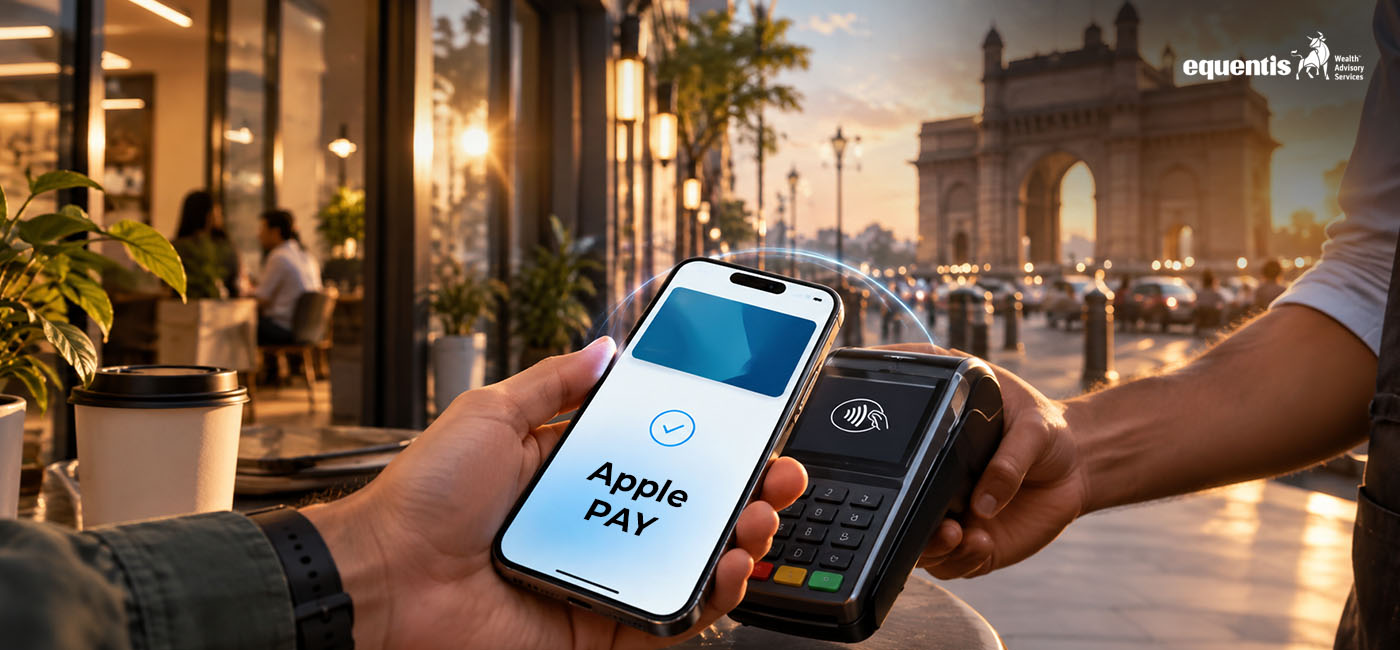

Apple Pay has officially launched in India on September 30, 2026, giving iPhone, iPad and Apple Watch users a new way to make contactless card payments. At launch, the service supports eligible Axis Bank Visa and Mastercard credit cards, which can be added to Apple Wallet and used at supported stores, apps and websites. Mac support is expected to follow.
The launch is significant because Apple Pay enters a market where UPI already dominates digital payments. However, Apple Pay works differently from UPI: it uses an eligible credit or debit card stored in Apple Wallet rather than directly transferring money between bank accounts.
Apple Pay in India: What Has Changed?
Apple Pay has been available internationally for more than a decade, but India had remained outside its supported markets. That changed on September 30, when Apple introduced the service with Axis Bank as its first banking partner.
At launch, eligible Axis Bank Visa and Mastercard credit cardholders can add their cards to Apple Wallet. The service is available on compatible iPhone, iPad and Apple Watch devices. Apple says customers can use Apple Pay at stores, within apps and on websites wherever the service is supported.
For Indian consumers, the biggest difference is that Apple Pay does not require users to enter their card number, PIN or OTP every time they make a supported payment.
Which Axis Bank Cards Support Apple Pay?
The initial rollout is limited to Axis Bank issued Visa and Mastercard credit cards.
This means not every Axis Bank card is automatically eligible. Cardholders need to check whether their particular card can be added to Apple Wallet.
At launch, RuPay cards are not supported, while other major Indian banks have not yet joined Apple Pay. Apple has indicated that it intends to expand the service to additional issuers over time.
This makes the initial rollout relatively narrow compared with Apple’s broader global network, which includes thousands of banks and financial partners.
How to Set Up Apple Pay on an iPhone
Eligible users can add their supported Axis Bank card through Apple Wallet. The setup generally involves selecting the card addition option, entering or scanning the card details and completing the verification process required by the bank.
Users should make sure their iPhone is running a supported version of iOS and that their device has Face ID, Touch ID or a passcode configured.
Apple Pay support starts with iPhone XR and later models running iOS 18 or later, according to launch information. Apple Watch support begins with Series 6 and later models running watchOS 11 or later.
How to Make Payments Using Apple Pay
Making an in-store payment is designed to be straightforward.
On an iPhone with Face ID, users can double-click the side button, authenticate using Face ID or the device passcode and then hold the top of the iPhone near a contactless payment terminal.
On supported devices with Touch ID, authentication can be completed using the fingerprint sensor.
The payment terminal needs to support NFC contactless transactions. Users should look for the contactless payment symbol at the checkout.
One important point is that Apple Pay does not replace the merchant’s payment terminal. The store still needs compatible contactless acceptance infrastructure.
Where Can Apple Pay Be Used in India?
Apple says Apple Pay can be used at thousands of in-store and online merchants at launch.
Reported participating brands include Tata and Reliance brands, Chaayos, Interflora, Le15, Comet, House of Masaba and Apple Stores. On the app and online side, supported services include Blinkit, Ixigo, MakeMyTrip, Zepto and Zomato.
Availability can vary by merchant, payment terminal and checkout implementation. Therefore, having an eligible card does not necessarily mean Apple Pay will work at every location that accepts cards.
Apple Pay vs UPI: What Is the Difference?
Apple Pay and UPI serve different purposes.
UPI allows users to transfer money directly from a bank account using a UPI-enabled application. Apple Pay, in India, is initially focused on allowing users to make payments using supported cards stored in Apple Wallet.
This means an iPhone user can continue using UPI apps for bank-account payments while using Apple Pay for eligible card transactions. Apple has described the two systems as complementary rather than direct substitutes.
For users who prefer credit cards because of rewards, billing cycles or other card benefits, Apple Pay provides a way to use those cards without physically carrying them.
Is Apple Pay Safe?
Security is one of Apple’s main selling points for Apple Pay. Instead of sharing the actual card number with a merchant, Apple Pay uses a Device Account Number and transaction-specific security mechanisms.
Payments are authenticated through Face ID, Touch ID or the device passcode. Apple says actual card numbers are not stored on the device or its servers in the conventional form used for transactions.
Users should still follow basic precautions, including keeping their device passcode private and reporting a lost card or device promptly.
Opportunities and Limitations for Indian Users
Apple Pay could make card payments more convenient for iPhone and Apple Watch users, particularly at contactless terminals and supported online checkouts. It also gives eligible Axis Bank customers another way to access their existing card benefits.
However, the initial rollout has clear limitations. Support is currently restricted to eligible Axis Bank Visa and Mastercard credit cards, while RuPay and cards from several other major banks are not yet supported. Merchant acceptance may also vary.
The expansion of Apple Pay in India will therefore depend significantly on additional bank partnerships and wider merchant adoption.
What Should iPhone Users Watch Next?
The biggest development to watch is the expansion of Apple Pay to additional Indian banks and card networks. Apple has said it intends to work with more issuers as their technical readiness and card portfolios allow.
Mac support is also expected to be introduced later, expanding the number of Apple devices that can participate in the payment ecosystem.
Conclusion
The Apple Pay India launch gives eligible iPhone, iPad and Apple Watch users a new option for contactless card payments. At launch, Axis Bank Visa and Mastercard credit cards are supported, while RuPay and cards from other banks are not yet part of the service.
For consumers, Apple Pay is best understood as a card-based payment option rather than an alternative version of UPI. Its usefulness will depend on three factors: supported cards, compatible merchants and the expansion of Apple’s banking partnerships in India.
Frequently Asked Questions
1. Has Apple Pay launched in India?
Yes. Apple Pay launched in India on September 30, 2026. It is initially available on iPhone, iPad and Apple Watch, with Mac support expected later. The launch has begun with eligible Axis Bank Visa and Mastercard credit cards.
2. Which bank cards support Apple Pay in India?
At launch, Apple Pay supports eligible Axis Bank-issued Visa and Mastercard credit cards. Support is not currently available for all Indian banks or card networks. RuPay cards are not supported at launch, while Apple has indicated that additional issuers may be added over time.
3. Can I use my Axis Bank RuPay card with Apple Pay?
No. Apple Pay’s initial Indian rollout supports eligible Axis Bank Visa and Mastercard credit cards, not RuPay cards. Users with an Axis Bank RuPay card will need another supported payment method unless and until Apple and the relevant card network introduce support.
4. How do I add an Axis Bank card to Apple Pay?
An eligible Axis Bank card can be added through the Apple Wallet setup process. Users need to follow the verification steps provided during card activation. Depending on the card and bank requirements, additional authentication may be required before the card becomes available for Apple Pay transactions.
5. How do I pay with Apple Pay in a store?
On a compatible iPhone, double-click the side button, authenticate with Face ID or the device passcode and hold the top of the iPhone near an NFC-enabled contactless payment terminal. On supported Apple Watch models, users can authenticate and bring the watch close to the terminal.
6. Can Apple Pay be used on Zomato and Blinkit?
Yes. At launch, Apple has listed several apps and online services that support Apple Pay, including Zomato and Blinkit. Other reported participating platforms include Ixigo, MakeMyTrip and Zepto. Availability can depend on the specific checkout and merchant implementation.
7. Can Apple Pay replace UPI in India?
Apple Pay does not directly replace UPI because the two systems work differently. UPI transfers money from a bank account, while Apple Pay initially allows users to make payments using eligible cards stored in Apple Wallet. Indian users can continue using both depending on the payment method accepted.
8. Is Apple Pay available on Apple Watch in India?
Yes. Apple Pay is available on compatible Apple Watch models in India. Support begins with Apple Watch Series 6 and later, subject to the required software version and an eligible payment card. This allows users to make supported contactless payments without taking their iPhone out.
9. Does Apple Pay require an OTP or PIN for every payment?
Apple Pay is designed to authenticate transactions through Face ID, Touch ID or the device passcode rather than requiring users to enter their card PIN or an OTP at every supported checkout. However, specific transaction or bank requirements can vary, so users should follow any additional authentication prompts when displayed.
10. Will more Indian banks support Apple Pay?
Apple has indicated that it plans to expand Apple Pay to additional issuers over time. The timing for each bank depends on factors including technical readiness and its card portfolio. Users should therefore watch for announcements from Apple and individual banks regarding future Apple Pay support.
Disclaimer Note: The securities quoted, if any, are for illustration only and are not recommendatory. This article is for education purposes only and shall not be considered as a recommendation or investment advice by Equentis – Research & Ranking. We will not be liable for any losses that may occur. Investments in the securities market are subject to market risks. Read all the related documents carefully before investing. Registration granted by SEBI, membership of BASL & certification from NISM in no way guarantee the performance of the intermediary or provide any assurance of returns to investors.

Parvati Rai is the Vice President of the Research team at Equentis. She has over 15 years of equity-research and strategy-consulting experience. A specialist in deep-dive valuations, financial modelling, and forecasting, she has built research desks from the ground up, by steering buy-side, sell-side, and independent coverage across sectors. When she isn’t fine-tuning models, Parvati unwinds on nature treks and mentors aspiring analysts.