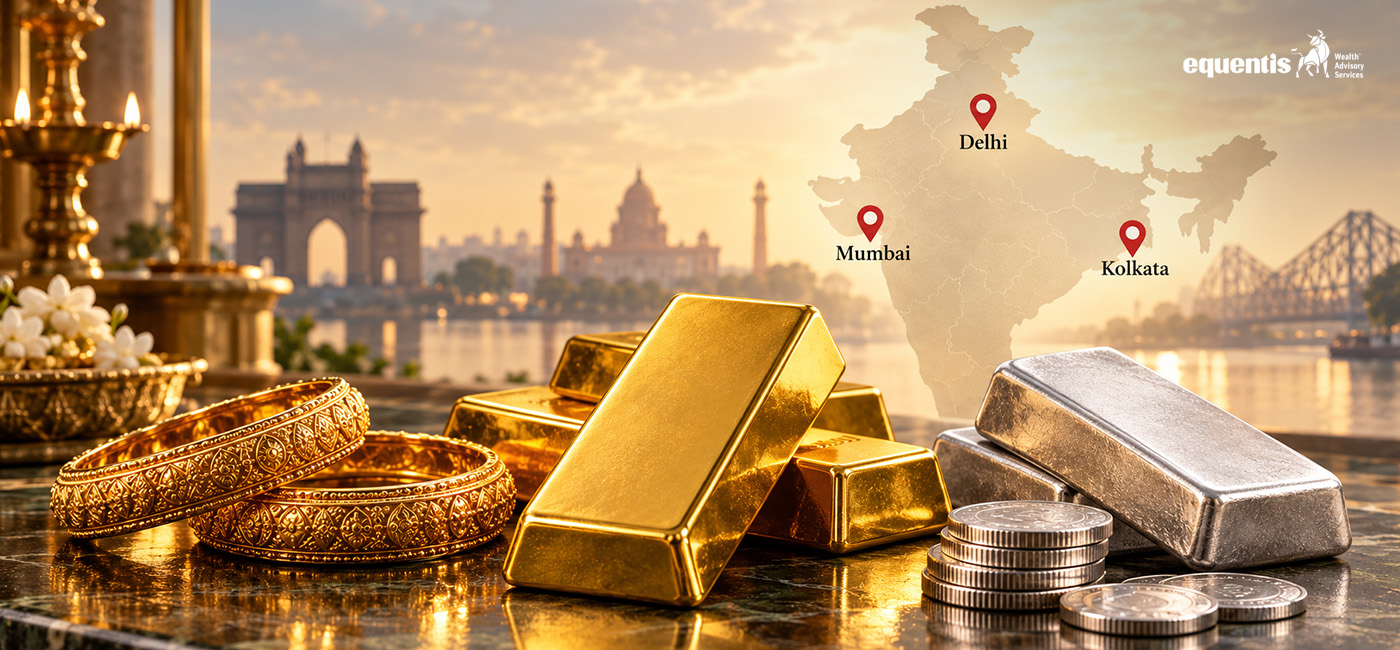

Gold and silver prices moved higher on Friday, October 9, 2026, as precious metals recovered amid a weaker US dollar and changing expectations around interest rates. The benchmark gold price was reported at around ₹1,49,910 per 10 grams in early trading, while silver stood at approximately ₹2,21,470 per kilogram. Retail rates vary across cities and jewellery retailers, so buyers in Delhi, Mumbai, Kolkata and other cities should check local prices before making festive or investment purchases.
Gold Rate Today: What Is Driving the Rise?
Gold prices in India are influenced by international bullion prices, the rupee’s exchange rate against the US dollar, import costs and domestic demand. A rise in global gold prices can push Indian rates higher, particularly when the rupee weakens against the dollar.
International gold prices gained on October 9 as the US dollar weakened and bond yields eased. Investors were also assessing inflation risks and the outlook for Federal Reserve interest rates. Lower yields can improve gold’s appeal because the metal does not pay interest like bonds or bank deposits. However, changes in interest rate expectations can quickly reverse market sentiment.
Festive and wedding season demand can also influence retail buying in India. Even when international prices fluctuate, local jewellery purchases depend on household budgets, wedding requirements and consumer preferences.
Gold Rate Today in Major Indian Cities
The following indicative retail prices were reported on October 9, 2026. Actual jewellery bills may differ by retailer, purity, taxes and making charges.
| City | 24K gold per 10g | 22K gold per 10g |
|---|---|---|
| Delhi | ₹1,50,750 | ₹1,38,188 |
| Mumbai | ₹1,51,010 | ₹1,38,426 |
| Kolkata | ₹1,50,810 | ₹1,38,243 |
| Bengaluru | ₹1,51,130 | ₹1,38,536 |
| Hyderabad | ₹1,51,250 | ₹1,38,646 |
| Chennai | ₹1,51,740 | ₹1,39,095 |
Source: Reported city-wise retail rates on October 9, 2026. These are indicative prices, not guaranteed jeweller quotations.
The differences between cities can reflect local pricing practices, logistics and market conditions. Buyers should confirm the rate applicable at their chosen store before placing an order.
Silver Rate Today: Check Prices Across Cities
Silver prices also strengthened on October 9, supported by gains in international precious metals markets. According to reported retail rates, silver was priced at approximately ₹2,24,650 per kilogram in several major Indian cities.
| City | Silver per 100g | Silver per kg |
|---|---|---|
| Delhi | ₹22,465 | ₹2,24,650 |
| Mumbai | ₹22,465 | ₹2,24,650 |
| Kolkata | ₹22,465 | ₹2,24,650 |
| Bengaluru | ₹22,465 | ₹2,24,650 |
| Hyderabad | ₹22,465 | ₹2,24,650 |
| Chennai | ₹22,465 | ₹2,24,650 |
Silver has two important sources of demand: investment and industrial use. It is used in electronics, solar panels and other applications, meaning its price can respond to industrial activity as well as investor sentiment.
This dual demand profile can make silver more volatile than gold. Buyers planning to purchase silver coins, utensils or bars should compare the quoted rate and purity before completing a transaction.
22K vs 24K Gold: Which Should Buyers Check?
The main difference between 22-carat and 24-carat gold is purity.
24K gold is approximately 99.9% pure and is commonly used for investment products such as coins and bars. Its softness makes it less suitable for many types of everyday jewellery.
22K gold contains approximately 91.6% gold, with other metals added to improve durability. It is widely used for Indian jewellery, including necklaces, bangles and earrings.
The appropriate option depends on the purpose of the purchase. Jewellery buyers should focus on purity, hallmarking and the final bill, while investors buying gold bars or coins should compare product premiums and resale conditions.
What Should Buyers Know Before Purchasing Gold or Silver?
A rise in bullion prices does not mean buyers must rush into a purchase. The final cost of jewellery includes more than the quoted gold rate.
Before buying, check:
- Purity and hallmarking: Confirm the declared purity and applicable hallmark details.
- Making charges: These vary by design, retailer and product.
- GST: Physical gold and silver purchases generally attract 3% GST on the metal value. Jewellery making charges may attract 5% GST.
- Buyback policy: Understand deductions and conditions applicable when reselling.
- Final invoice: Check the weight, purity, rate, charges and taxes.
Investors should also recognise that precious metals can experience sharp price swings. Gold may help diversify a portfolio, but neither gold nor silver guarantees returns or protects against losses over every investment period.
Gold and Silver Outlook: What Could Move Prices Next?
The next direction for gold and silver will depend on international prices, the US dollar, bond yields, central bank policy expectations and geopolitical developments. Domestic demand and rupee movements will also influence Indian retail prices.
Gold may benefit when investors seek protection during uncertainty, while silver can receive additional support from industrial demand. However, both metals can decline if market conditions change or investors take profits after a rally.
For households planning festive purchases, comparing local rates and the total bill is more useful than relying on a single national benchmark.
Conclusion
Gold and silver prices rose on October 9, 2026, as global market conditions supported a recovery in precious metals. Indicative rates placed 24K gold around ₹1.51 lakh per 10 grams in several major cities, while silver was quoted at approximately ₹2.25 lakh per kilogram.
Buyers should verify current local prices, purity, making charges and taxes before purchasing. Investors should consider their financial goals, time horizon and risk tolerance rather than treating a one-day price increase as a guarantee of further gains.
Frequently Asked Questions
1. What is the gold rate today, October 9, 2026?
Reported retail rates placed 24K gold at approximately ₹1,50,750 per 10 grams in Delhi and ₹1,51,010 in Mumbai. Kolkata’s indicative rate was ₹1,50,810. Actual prices vary by jeweller, purity, local conditions and applicable charges, so buyers should confirm the latest quotation before purchasing.
2. What is the 22K gold rate today in Mumbai?
The indicative 22K gold rate in Mumbai was approximately ₹1,38,426 per 10 grams on October 9, 2026. The final price of jewellery can be higher because of making charges and applicable taxes. Buyers should also verify purity and hallmark details before completing a transaction.
3. What is the 24K gold price today in Delhi?
The reported 24K gold rate in Delhi was approximately ₹1,50,750 per 10 grams on October 9, 2026. This is an indicative retail rate, not a guaranteed quotation from every jeweller. The final amount can vary depending on the retailer, product type and applicable charges.
4. What is the silver price today in India?
Reported retail rates on October 9, 2026, placed silver at approximately ₹2,24,650 per kilogram in major cities including Delhi, Mumbai and Kolkata. Prices can differ by retailer and product purity. Buyers should confirm whether the quoted price includes applicable taxes and other charges.
5. Why are gold and silver prices rising today?
Gold and silver gained as international precious metals markets strengthened. A weaker US dollar and easing bond yields supported gold, while changing interest rate expectations influenced investor demand. Domestic prices also respond to currency movements, import costs and local buying demand, so international gains may not translate identically into Indian retail prices.
6. Why do gold prices differ between Indian cities?
Gold prices can vary because of local market conditions, retailer pricing, logistics and other regional costs. The purity of the product also matters. Even when two jewellers quote similar rates for gold, their making charges, product premiums and other costs may produce different final bills.
7. Is 22K or 24K gold better for jewellery?
22K gold is commonly used for jewellery because its alloy composition makes it more durable than pure gold. 24K gold is generally preferred for investment products such as bars and coins. The right choice depends on whether the buyer prioritises jewellery design and durability or high gold purity.
8. Does the gold rate include GST and making charges?
Published gold rates generally refer to the metal price and may exclude jewellery making charges and applicable taxes. Physical gold purchases generally attract 3% GST on the metal value, while jewellery making charges may attract 5% GST. Buyers should examine the final invoice to understand the total cost.
9. Is silver a good investment when prices rise?
A rising silver price does not automatically make it a suitable investment. Silver can offer exposure to both precious metal demand and industrial uses, but its price can be volatile. Investors should consider their time horizon, diversification needs, transaction costs and ability to tolerate losses before investing.
10. Will gold prices increase further in October 2026?
Gold prices will depend on factors such as US interest rate expectations, the dollar, bond yields, geopolitical developments and the rupee’s movement. These factors can change quickly, making short term price forecasts uncertain. Buyers and investors should avoid assuming that a rise on one day guarantees further increases.
Disclaimer Note: The securities quoted, if any, are for illustration only and are not recommendatory. This article is for education purposes only and shall not be considered as a recommendation or investment advice by Equentis – Research & Ranking. We will not be liable for any losses that may occur. Investments in the securities market are subject to market risks. Read all the related documents carefully before investing. Registration granted by SEBI, membership of BASL & certification from NISM in no way guarantee the performance of the intermediary or provide any assurance of returns to investors.

Parvati Rai is the Vice President of the Research team at Equentis. She has over 15 years of equity-research and strategy-consulting experience. A specialist in deep-dive valuations, financial modelling, and forecasting, she has built research desks from the ground up, by steering buy-side, sell-side, and independent coverage across sectors. When she isn’t fine-tuning models, Parvati unwinds on nature treks and mentors aspiring analysts.