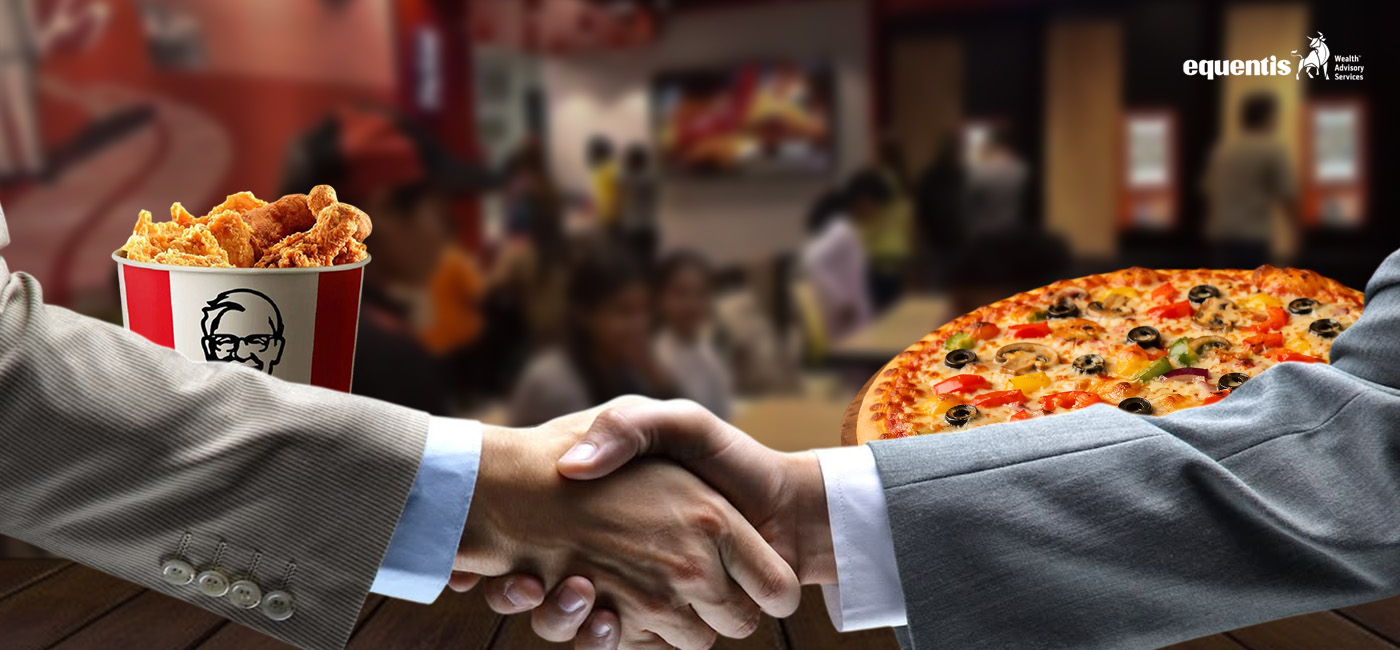

The Competition Commission of India (CCI) has approved the proposed merger of Sapphire Foods India Limited with Devyani International Limited, bringing two major KFC and Pizza Hut franchise operators under one corporate entity. Announced on October 30, 2026, the approval marks an important step towards consolidating India’s quick-service restaurant (QSR) industry. The merger could help the combined business improve operational efficiency, strengthen its restaurant network and create a larger platform for growth.
Introduction
India’s fast-food industry is witnessing a significant corporate development as Sapphire Foods and Devyani International move closer to combining their businesses. Both companies operate popular international restaurant brands, including KFC and Pizza Hut, under franchise arrangements with Yum! Brands.
The CCI’s approval removes an important regulatory hurdle for the proposed transaction. For investors, the development is worth watching because it could reshape the competitive landscape of India’s organised food services market. However, the approval does not mean the merger has been fully completed, as other regulatory and procedural requirements remain.
Context and Background: Why Are Sapphire Foods and Devyani Merging?
Sapphire Foods India and Devyani International are among India’s major quick-service restaurant operators. Although they operate the same international brands, their businesses have historically functioned independently across different territories.
Devyani International operates KFC and Pizza Hut outlets in India. It also has franchise rights for Costa Coffee, New York Fries and Sanook Kitchen, alongside its own restaurant brands.
Sapphire Foods operates KFC and Pizza Hut restaurants in India and has a presence in select international markets.
The two companies announced their merger plan on January 1, 2026. The proposed arrangement involves Sapphire Foods merging into Devyani International through a share-swap mechanism.
The consolidation is intended to bring their restaurant operations together, allowing the combined business to benefit from greater scale, coordinated decision-making and improved resource utilisation.
The QSR industry faces several challenges, including rising food and employee costs, rental expenses, intense competition and changing consumer spending patterns. A larger operating structure could help the companies address some of these pressures.
Key Details of the Sapphire Foods and Devyani Merger
1. CCI gives regulatory approval
On October 30, 2026, the Competition Commission of India announced that it had approved the merger of Sapphire Foods India with and into Devyani International, along with related transactions.
The CCI examines combinations to assess whether they could significantly harm competition in the market. Its approval is an important milestone, although the detailed order is expected to follow.
2. Understanding the share-swap arrangement
Under the proposed merger scheme, Devyani International will issue 177 equity shares for every 100 equity shares held in Sapphire Foods.
A share-swap arrangement allows shareholders of the company being merged to receive shares in the surviving company instead of receiving an equivalent cash payment.
Once the merger becomes effective, eligible Sapphire Foods shareholders will hold shares in Devyani International according to the approved exchange ratio.
3. A larger restaurant network
The combined business is expected to operate more than 3,000 stores globally, with an annualised turnover of approximately ₹8,000 crore, according to the companies’ merger-related disclosures.
This scale could strengthen its position in India’s organised restaurant market and provide a broader operating network across different locations.
4. Focus on KFC and Pizza Hut growth
The merger has three broad strategic priorities:
- KFC expansion: Accelerating the growth of KFC restaurants across relevant markets.
- Pizza Hut revival: Strengthening the brand through marketing, innovation, technology and supply chain improvements.
- Emerging brands: Expanding Devyani’s portfolio of other restaurant businesses.
These priorities indicate that the transaction is not simply about combining restaurant outlets. It also aims to improve how the brands are managed and developed.
Impact and Implications of the Merger
What does the merger mean for investors?
For shareholders of both listed companies, the merger could have several implications.
Devyani International may benefit from a larger business network, better purchasing power and opportunities to reduce overlapping operational costs. Sapphire Foods shareholders, meanwhile, will receive Devyani International shares according to the agreed share-swap ratio once the scheme becomes effective.
The companies have indicated estimated annual merger synergies of approximately ₹210 crore to ₹225 crore from the second full year after completion. Synergies refer to cost savings and operational benefits generated by combining two businesses.
However, investors should remember that projected savings are not guaranteed. Their actual impact will depend on execution, integration costs and the performance of individual restaurant brands.
What could change for customers?
For customers, the immediate impact is likely to be limited. KFC and Pizza Hut outlets are expected to continue serving customers under their existing brand identities.
Over time, the combined business could improve supply chain management, technology, marketing and restaurant operations. These improvements may support more consistent customer experiences.
However, the merger does not automatically mean lower food prices, new menus or changes to ongoing promotional offers.
What does it mean for the QSR industry?
The consolidation could increase competition among organised restaurant operators in India.
The combined business will compete with established players such as Domino’s operator Jubilant FoodWorks, McDonald’s franchise operators and other domestic food service brands.
A larger network could provide better negotiating power with suppliers and improve the economics of restaurant expansion. At the same time, competitors may respond through pricing, product innovation and expansion strategies.
Opportunities and Risks: What Should Investors Watch?
The merger offers potential benefits, but its success will depend on how effectively both businesses are integrated.
Potential opportunities
- Cost efficiencies: Combining procurement, logistics and supply chain operations could reduce certain operating expenses.
- Stronger distribution: A wider restaurant network could improve brand reach across Indian cities.
- Better resource utilisation: Shared technology, marketing and operational systems could support efficiency.
- Brand development: Greater focus on KFC expansion and Pizza Hut’s business performance could support long-term growth.
Key risks
- Integration challenges: Combining employees, systems, supply chains and operating processes can take time.
- High operating costs: Rent, salaries, raw materials and delivery expenses can continue to affect profitability.
- Consumer demand: Restaurant spending depends on disposable income, affordability and changing consumption preferences.
- Brand-specific performance: Strong performance from one restaurant brand may not necessarily offset weakness in another.
Investors should also monitor the final regulatory approvals, implementation timeline, financial performance and actual cost savings after the merger.
What Happens Next After CCI Approval?
The CCI approval is an important milestone, but the merger process is not yet complete.
The proposed scheme must move through the remaining statutory and regulatory procedures, including the National Company Law Tribunal (NCLT) process and applicable shareholder and creditor approvals.
Once the necessary requirements are fulfilled and the scheme becomes effective, Sapphire Foods will merge into Devyani International.
The companies will then need to work towards integrating their operations and implementing the planned business strategy.
Conclusion
The CCI’s approval of the Sapphire Foods and Devyani International merger marks a significant development for India’s quick-service restaurant industry. Bringing two major KFC and Pizza Hut franchise operators under one corporate structure could create a larger business with greater operational scale and potential cost efficiencies.
For investors, the key factors to monitor will be the completion of the merger, integration progress, profitability and the realisation of projected synergies. While the transaction creates possibilities for business growth, its long-term success will depend on execution and the ability to manage competition and operating costs.
Frequently Asked Questions
1. Why did CCI approve the Sapphire Foods and Devyani International merger?
The Competition Commission of India approved the proposed merger after reviewing the combination. The approval is an important regulatory step towards consolidating the two restaurant operators. The detailed CCI order is expected to provide further information about the Commission’s assessment.
2. When did CCI approve the Sapphire Foods and Devyani merger?
The Competition Commission of India announced its approval on October 30, 2026. The decision allows the proposed merger to proceed through the remaining regulatory and statutory procedures.
3. Which company will acquire Sapphire Foods?
Devyani International Limited will be the surviving company. Under the proposed scheme, Sapphire Foods India Limited will merge into Devyani International, subject to completion of the required approvals and procedures.
4. What is the share-swap ratio for the Sapphire Foods merger?
Under the proposed arrangement, Devyani International will issue 177 equity shares for every 100 equity shares held in Sapphire Foods. This means eligible Sapphire shareholders will receive Devyani shares instead of retaining their existing Sapphire shares after the merger becomes effective.
5. Will KFC and Pizza Hut have the same owner after the merger?
Their Indian franchise operations currently managed by Sapphire Foods and Devyani International will come under one corporate entity after the merger. Both brands will continue to operate under Yum! Brands, their global brand owner.
6. How many stores will the merged company operate?
The combined business is expected to operate more than 3,000 stores globally. Its portfolio will include KFC, Pizza Hut, Costa Coffee and other restaurant brands operated by Devyani International.
7. How much financial benefit is expected from the merger?
The companies have indicated estimated annual merger synergies of approximately ₹210 crore to ₹225 crore from the second full year after completion. These benefits are expected mainly from operational efficiencies, cost optimisation and improved resource utilisation.
8. Will the merger affect KFC and Pizza Hut customers in India?
Customers are unlikely to experience immediate changes to the brands or their restaurant offerings. Over time, the combined business may introduce operational improvements in supply chains, technology, marketing and customer service.
9. Is the Sapphire Foods and Devyani merger completed?
No. CCI approval is one of the important milestones, but the transaction still requires the remaining applicable regulatory and statutory procedures, including the NCLT process. The merger will become effective only after the necessary conditions are fulfilled.
10. What should investors watch after the merger approval?
Investors should monitor the NCLT proceedings, the final merger timeline, share-swap implementation, quarterly financial results and integration progress. Actual cost savings, restaurant expansion and profitability will be important indicators of whether the merger delivers its expected benefits.
Disclaimer Note: The securities quoted, if any, are for illustration only and are not recommendatory. This article is for education purposes only and shall not be considered as a recommendation or investment advice by Equentis . We will not be liable for any losses that may occur. Investments in the securities market are subject to market risks. Read all the related documents carefully before investing. Registration granted by SEBI, membership of BASL & certification from NISM in no way guarantee the performance of the intermediary or provide any assurance of returns to investors.

Jaspreet Singh Arora is the Chief Investment Officer at Equentis, where he heads a seasoned team of equity analysts and turns two decades of market experience into portfolios that consistently beat the benchmark. A go-to voice on cement, building-materials, real-estate, and construction stocks, Jaspreet previously ran research desks at leading brokerages, honing an eye for the metrics that truly move share prices. His plain-spoken analysis helps investors cut through noise and act with conviction. When he’s not deep-diving into earnings calls, you’ll find him unwinding over sports, weekend cricket or a good history podcast.