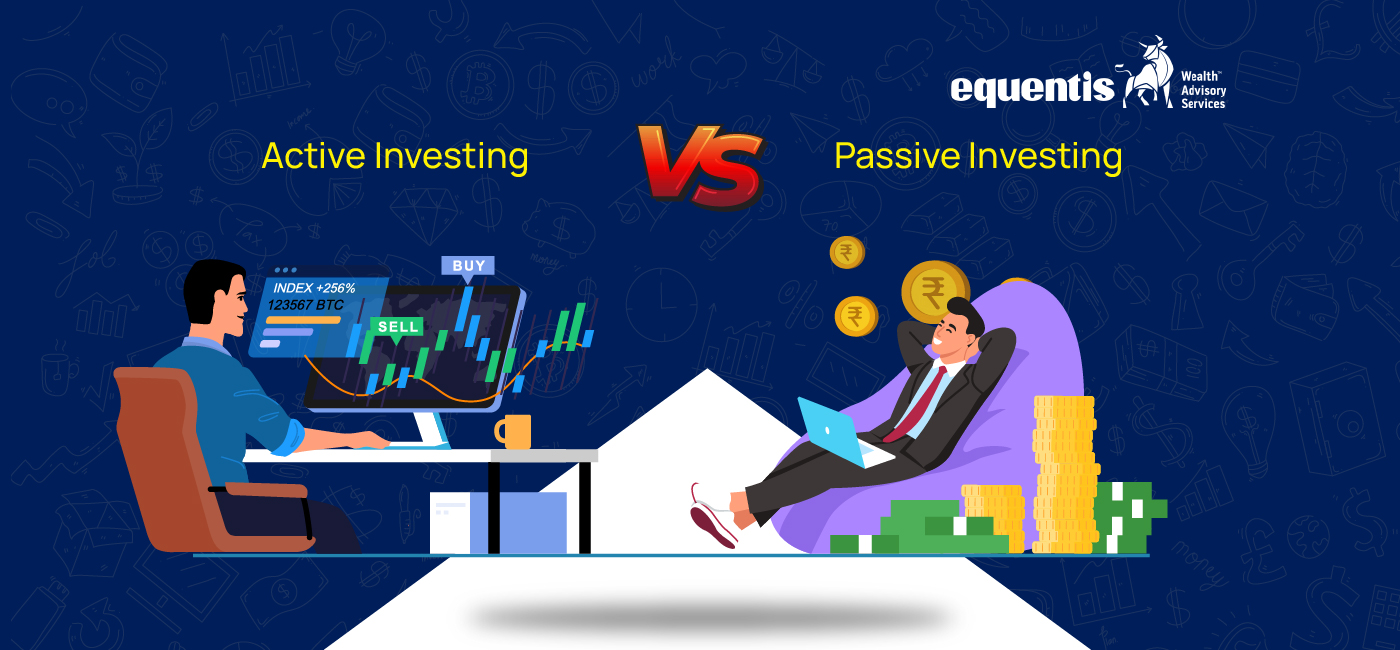

Understanding active vs passive investing requires looking beyond returns. Cost, risk management, flexibility, and behavioral discipline play equally important roles.
Returns Potential
Active investing aims to outperform the market, especially during volatile or sideways phases. Passive investing delivers market-average returns over the long term.
Cost Structure
Active strategies usually involve higher costs due to research and management fees. Passive strategies are cost-efficient and ideal for cost-conscious investors.
Risk Management
Active investing allows dynamic risk management by shifting allocations or exiting overvalued stocks. Passive investing remains fully invested regardless of market conditions.
Flexibility
Active investing adapts to changing economic and sectoral trends. Passive investing follows a fixed index composition.
Top Investment Styles Explained
When discussing top investment styles, both active and passive strategies fall under broader categories:
- Growth investing
- Value investing
- Dividend investing
- Momentum investing
- Index investing
- Factor-based investing
Stock market advisors often combine multiple investment styles to create a balanced portfolio aligned with an investor’s goals.
Where Stock Market Advisors Add Real Value
The debate around active vs passive investing becomes more nuanced when professional advisory comes into the picture. Here is where advisors truly make a difference.
Portfolio Customization
Unlike one-size-fits-all index funds, advisors design portfolios based on:
- Risk appetite
- Time horizon
- Income needs
- Market conditions
Asset Allocation
A strong investments advisory focuses not just on stock selection but also on allocating capital across equity, debt, and other asset classes to manage risk effectively.
Behavioral Guidance
One of the biggest reasons investors underperform is emotional decision-making. Advisors help investors stay disciplined during market corrections and rallies.
Tactical Adjustments
In volatile markets, active advisory strategies can shift exposure, protect capital, and identify opportunities that passive strategies cannot.
Tax Efficiency
Advisors help optimize taxes through harvesting losses, timing exits, and choosing tax-efficient instruments.
Active vs Passive Investing for Beginners
For beginners, the choice between active and passive investing depends on:
- Knowledge level
- Time commitment
- Risk tolerance
- Investment goals
Many advisors recommend a hybrid approach, where passive funds form the core portfolio while active strategies generate additional returns.
Is One Strategy Better Than the Other?
There is no universal winner in the active vs passive investing debate. Each strategy performs differently across market cycles.
- Bull markets often favor passive investing
- Volatile or sideways markets create opportunities for active investing
- Long-term wealth creation often benefits from combining both
This is where experienced investment advisory firms provide clarity and structure.
How Advisors Blend Active and Passive Strategies
Modern stock market advisors do not follow extremes. They:
- Use passive funds for core exposure
- Use active strategies for alpha generation
- Rebalance portfolios periodically
- Align investments with financial goals
This blended approach delivers consistency, risk control, and long-term growth.
Common Myths Around Active and Passive Investing
Many investors believe passive investing always wins or that active investing is only for experts. In reality, success depends on execution, discipline, and guidance.
Professional advisory services help cut through these myths with data-driven insights.
Final Thoughts: Choosing the Right Approach
The real value in the active vs passive investing debate lies not in choosing one over the other, but in understanding when and how to use each strategy. With the right stock market advisor and a structured investments advisory framework, investors can navigate market volatility, manage risk, and build sustainable wealth.
Frequently Asked Questions (FAQs)
1. What is active vs passive investing?
Active vs passive investing refers to two different strategies where active investing aims to beat the market, while passive investing aims to match market returns.
2. Which is better, active or passive investing?
Neither is universally better. The choice depends on market conditions, investor goals, and risk tolerance.
3. Is passive investing safer than active investing?
Passive investing has lower costs and market-level risk, but it does not protect against market downturns.
4. Can active investing outperform passive investing?
Yes, especially during volatile or sideways markets, active investing can outperform indices.
5. Are advisors necessary for passive investing?
While passive investing is simple, advisors add value through asset allocation, rebalancing, and goal planning.
6. What role does investment advisory play?
An investment advisory helps align investment strategies with financial goals and risk appetite.
7. Is active investing suitable for beginners?
Beginners can try active investing with professional guidance to avoid costly mistakes.
8. What are the costs involved in active investing?
Active investing generally involves higher management and research costs.
9. Why is passive investing popular?
Passive investing is popular due to low costs, simplicity, and long-term market returns.
10. Can I combine active and passive investing?
Yes, a hybrid approach is widely recommended by advisors.
11. How do stock market advisors manage risk?
They use diversification, asset allocation, and tactical adjustments.
12. What are top investment styles used by advisors?
Growth, value, dividend, index, and momentum investing are commonly used.
13. Does passive investing work in all markets?
Passive investing performs well over long periods but struggles during prolonged market declines.
14. Is timing important in active investing?
Yes, timing and stock selection are critical in active strategies.
15. Do passive funds need monitoring?
Yes, portfolios still need periodic review and rebalancing.
16. How often should portfolios be reviewed?
Most advisors recommend reviewing portfolios at least once or twice a year.
17. Can active investing reduce losses?
Active investing can limit downside risk through timely exits.
18. Is active investing risky?
It can be riskier if done without proper research or discipline.
19. Are advisors biased toward active investing?
Good advisors recommend strategies based on suitability, not bias.
20. What is the best approach for long-term wealth creation?
A balanced mix of active and passive investing guided by a professional advisor works best.
Disclaimer Note: The securities quoted, if any, are for illustration only and are not recommendatory. This article is for education purposes only and shall not be considered as a recommendation or investment advice by Equentis – Research & Ranking. We will not be liable for any losses that may occur. Investments in the securities market are subject to market risks. Read all the related documents carefully before investing. Registration granted by SEBI, membership of BASL & certification from NISM in no way guarantee the performance of the intermediary or provide any assurance of returns to investors.

Parvati Rai is the Vice President of the Research team at Equentis. She has over 15 years of equity-research and strategy-consulting experience. A specialist in deep-dive valuations, financial modelling, and forecasting, she has built research desks from the ground up, by steering buy-side, sell-side, and independent coverage across sectors. When she isn’t fine-tuning models, Parvati unwinds on nature treks and mentors aspiring analysts.