


In the early 1990s, when owning a mobile phone in India was a status symbol reserved for a few, Bharti Airtel was built on the belief that connectivity would one day become a basic necessity. Sunil Bharti Mittal didn’t just see telecom as a business; he saw it as infrastructure for a new India. What followed over the next three decades is one of the most compelling brand journeys in Indian corporate history.
The Early Days: Betting on an Uncertain Market
Airtel launched its mobile services in 1995 in Delhi, entering a market that was still undefined and highly capital-intensive. Call rates were expensive, devices were bulky, and demand was limited. But Airtel focused on long-term scale rather than short-term profitability.
The company’s early strategy was built around outsourcing network operations, a move considered unconventional at the time. This asset-light model allowed Airtel to scale faster while keeping costs under control. As tariffs gradually fell, mobile services became more accessible, and Airtel positioned itself at the center of this shift.
Within a few years, Airtel became one of the fastest-growing telecom operators in India, crossing key subscriber milestones and establishing a strong brand recall.
Scaling the Brand: From Circles to a National Identity
The early 2000s marked a turning point. Airtel expanded aggressively across telecom circles through acquisitions and license wins, creating a nationwide footprint. But expansion alone was not enough.
In 2003, the company unified all its services under the Airtel brand. This created a consistent consumer experience across regions, something that was rare in India at the time. Airtel was no longer just a service provider; it was becoming a recognizable household name.
The brand also innovated with value-added services like caller tunes, which transformed telecom into a medium of personal expression. These small innovations helped Airtel connect emotionally with users, especially younger audiences.
Marketing That Built Emotional Equity
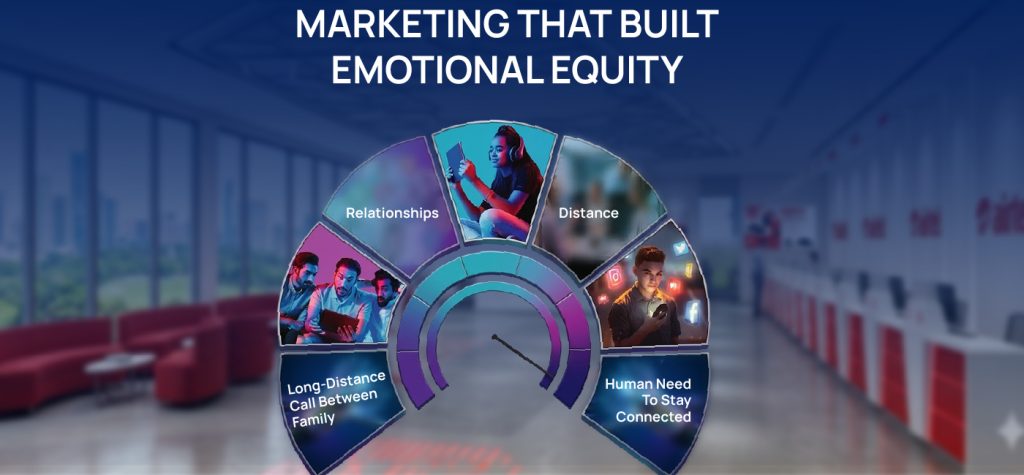
Airtel’s marketing strategy played a defining role in its rise. Instead of focusing only on pricing or features, the brand leaned into storytelling. Campaigns highlighted relationships, distance, and the human need to stay connected.
The iconic Airtel tune composed by A. R. Rahman became instantly recognizable, reinforcing brand recall across demographics. Airtel positioned itself as an enabler of moments, whether it was a long-distance call between family members or a message that mattered.
This emotional positioning helped Airtel stand out in a highly competitive and commoditized industry.

Going Global: The Africa Expansion
In 2010, Airtel made headlines with its $10.7 billion acquisition of Zain’s African operations. This bold move expanded its footprint across 15+ countries and turned it into a global telecom player.
The integration was not easy. Airtel faced challenges related to different regulatory environments, operational inefficiencies, and currency fluctuations. However, over time, Africa became a significant contributor to Airtel’s revenue and subscriber base.
This phase demonstrated Airtel’s ambition to scale beyond India and build a diversified global business.
Facing Disruption: The Jio Moment
The Indian telecom industry underwent a massive shift in 2016 with the entry of Reliance Jio. Free voice calls and ultra-low data prices disrupted the entire pricing structure.
For Airtel, this was a defining moment. Revenues came under pressure, margins shrank, and the competitive landscape changed overnight. Instead of engaging in a prolonged price war, Airtel chose to reposition itself.
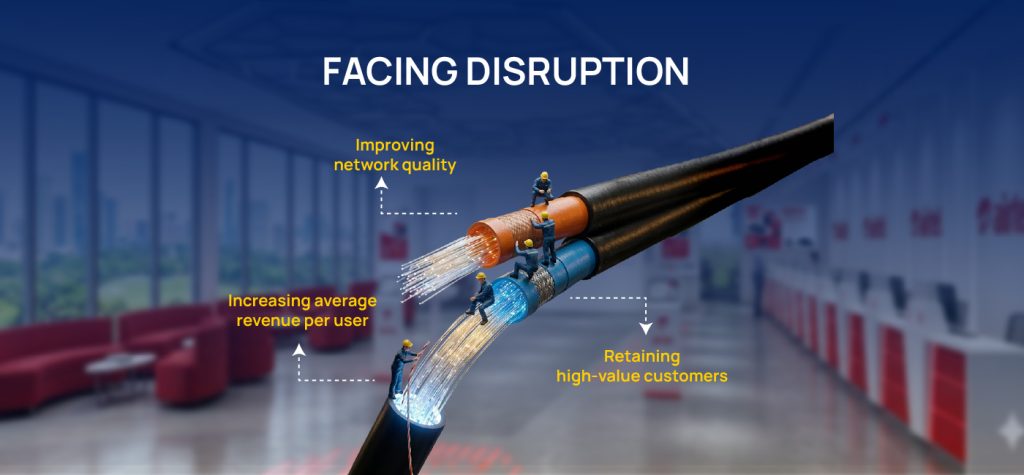
The company focused on improving network quality, retaining high-value customers, and increasing average revenue per user. It also accelerated investments in 4G infrastructure and digital services.
This strategic pivot helped Airtel survive one of the toughest phases in the industry and emerge stronger.

Reinvention: From Telecom to Digital Ecosystem
Over the last decade, Airtel has transformed from a telecom operator into a digital services company. It has invested heavily in data networks, cloud infrastructure, and enterprise solutions.
Partnerships with global technology players have enabled Airtel to offer advanced services in cloud computing, cybersecurity, and IoT. The launch of Airtel Payments Bank further expanded its presence into financial services, targeting India’s growing digital economy.
With the rollout of 5G services, Airtel is now positioning itself at the forefront of next-generation connectivity.
Financial Growth: A Story of Consistent Expansion
Airtel’s financial performance reflects its strategic evolution.
In FY24, the company reported revenues of around ₹1.49 trillion. This grew to approximately ₹1.72 trillion in FY25, marking a year-on-year growth of over 15 percent. Recent trailing revenues are estimated to be nearing the ₹2 trillion mark.
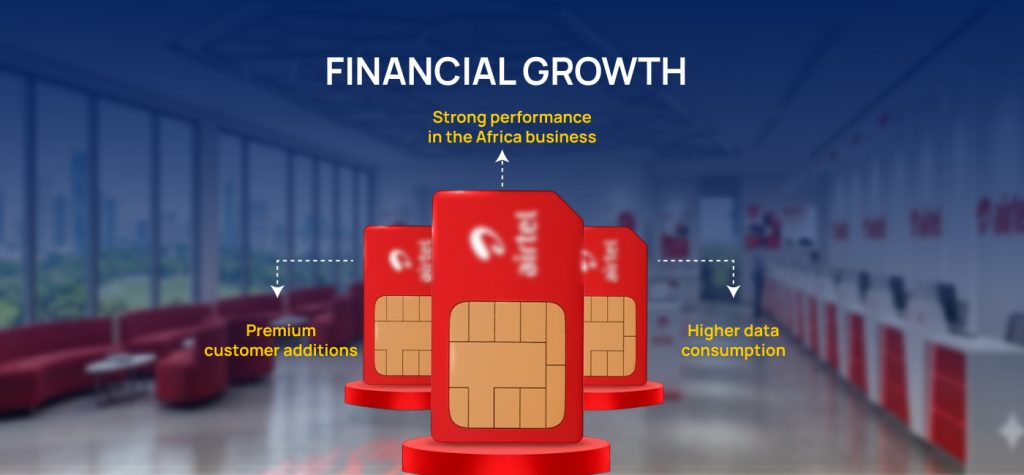
This growth has been driven by higher data consumption, premium customer additions, and strong performance in the Africa business. Airtel’s ability to improve ARPU while expanding its user base has been a key factor behind its sustained financial momentum.
The company also commands a significant share of industry revenues, reinforcing its leadership position in the Indian telecom sector.
Airtel Today: Scale, Reach, and Influence
Today, Airtel serves over 600 million customers globally, with a strong presence in India, Africa, and South Asia. It is one of the largest telecom operators in the world by subscriber base.
Its offerings now span mobile services, broadband, enterprise solutions, and digital platforms. This diversification has reduced dependence on traditional voice revenues and created multiple growth engines.
More importantly, Airtel has become an integral part of India’s digital infrastructure, enabling everything from online education to digital payments and remote work.

Conclusion: A Brand Built on Vision and Adaptability
Airtel’s journey is not just about scale; it is about staying relevant through constant change. From introducing affordable mobile services to building a global digital ecosystem, the company has consistently anticipated market shifts.
Its success lies in three key factors. A long-term vision that prioritized scale over short-term gains. A strong emotional connection with consumers through storytelling. And the ability to adapt quickly in the face of disruption.
As India continues its digital transformation, Airtel remains at the center of this evolution. Not just as a telecom operator, but as a brand that helped connect a nation and continues to shape its future.

Jaspreet Singh Arora is the Chief Investment Officer at Equentis, where he heads a seasoned team of equity analysts and turns two decades of market experience into portfolios that consistently beat the benchmark. A go-to voice on cement, building-materials, real-estate, and construction stocks, Jaspreet previously ran research desks at leading brokerages, honing an eye for the metrics that truly move share prices. His plain-spoken analysis helps investors cut through noise and act with conviction. When he’s not deep-diving into earnings calls, you’ll find him unwinding over sports, weekend cricket or a good history podcast.










