
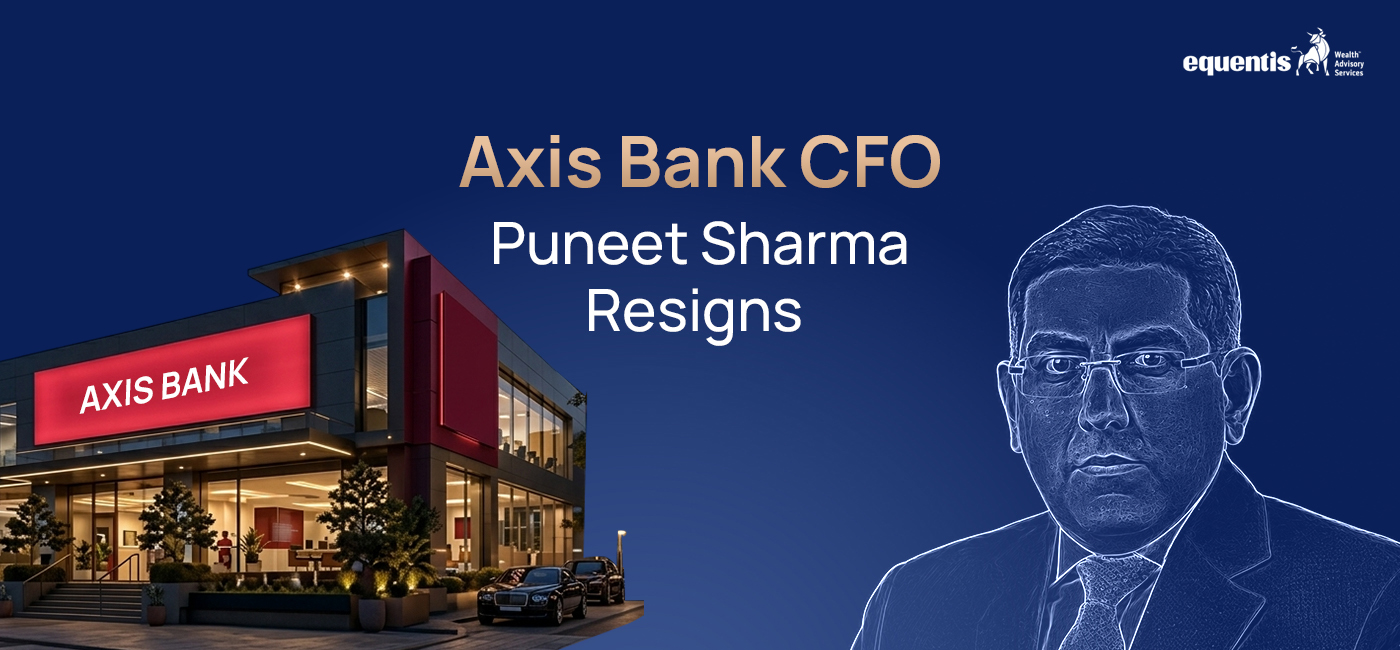

Summary:
Axis Bank Chief Financial Officer (CFO) Puneet Sharma has resigned, marking a notable leadership change at one of India’s largest private sector banks. While senior executive exits often attract market attention, a CFO transition does not necessarily indicate a change in the bank’s financial health or long-term strategy. Instead, investors should focus on the bank’s succession plan, financial performance, corporate governance, and future business outlook to understand the broader implications of this development.
Axis Bank CFO Puneet Sharma Resigns: Understanding the Impact of the Leadership Transition
Leadership changes at major financial institutions are closely watched by investors because they can influence market sentiment and corporate governance. The resignation of Axis Bank CFO Puneet Sharma has therefore become an important development for shareholders, analysts, and the banking sector.
The Chief Financial Officer plays a key role in managing financial strategy, capital allocation, regulatory reporting, investor communication, and risk management. While the resignation of a senior executive may create short-term uncertainty, it is important to evaluate the broader business context before drawing conclusions.
For one of India’s leading private banks, the focus now shifts to ensuring a smooth leadership transition while maintaining operational and financial stability.
Why Is the CFO Role Important in a Bank?
The Chief Financial Officer is responsible for overseeing the financial management of the institution.
Key responsibilities typically include:
- Financial planning and analysis
- Capital management
- Regulatory compliance
- Budgeting and forecasting
- Financial reporting
- Investor relations
- Cost management
- Supporting long-term business strategy
Although the CFO is a critical member of the leadership team, the overall performance of a large bank depends on its broader management structure, governance framework, and operational execution.
What Does Puneet Sharma’s Resignation Mean?
The resignation primarily represents a leadership transition rather than an immediate change in Axis Bank’s business operations.
Large financial institutions usually have succession planning processes designed to ensure continuity during senior management changes.
The bank is expected to appoint an interim or permanent successor while continuing its regular operations.
Investors often pay attention to:
- The stated reason for the resignation
- The transition timeline
- The appointment of a new CFO
- Management’s communication with shareholders
- Continuity of financial strategy
These factors help determine whether the transition is likely to have any long-term implications.
The Bigger Picture: Axis Bank’s Growth Journey
Over the past several years, Axis Bank has focused on expanding its retail banking franchise, strengthening digital banking capabilities, improving asset quality, and increasing profitability.
The bank has also undertaken strategic initiatives such as:
- Expanding retail lending
- Growing digital banking services
- Enhancing customer experience
- Improving operational efficiency
- Strengthening risk management
These long-term initiatives continue to be driven by the broader leadership team and board rather than any single executive.
How Do Markets Typically React to CFO Resignations?
Leadership transitions often influence short-term investor sentiment.
Market participants may initially react with caution because senior executives play an important role in financial decision-making.
However, long-term market performance generally depends on factors such as:
- Earnings growth
- Loan growth
- Asset quality
- Capital adequacy
- Profitability
- Business strategy
- Corporate governance
If the transition is managed smoothly, the long-term impact may be limited.
What Should Investors Watch Next?
Following the resignation, investors are likely to monitor several important developments.
Appointment of the New CFO
A timely appointment provides clarity and helps maintain investor confidence.
Financial Performance
Quarterly earnings, profitability, and business growth remain more significant than leadership changes alone.
Capital Position
Banks must maintain adequate capital to support future lending and regulatory requirements.
Investor Communication
Transparent communication regarding succession planning and business continuity often helps reduce uncertainty.
Business Strategy
Investors will continue tracking whether the bank maintains its existing growth priorities and financial objectives.
Impact on Customers
For retail and corporate customers, the resignation is unlikely to affect everyday banking services.
Customers can continue using:
- Savings accounts
- Loans
- Credit cards
- Digital banking
- Investment products
- Corporate banking services
Leadership transitions generally occur without disrupting customer-facing operations.
Opportunities Emerging from Leadership Transition
A change in senior leadership can also create opportunities for the organization.
Fresh Financial Perspective
New leadership may introduce updated financial strategies or operational improvements.
Enhanced Governance
Leadership transitions often encourage companies to review governance practices and succession planning.
Focus on Innovation
New executives may accelerate investments in technology, digital banking, and operational efficiency.
Strengthened Investor Engagement
The appointment process provides an opportunity for management to reinforce long-term strategic priorities through transparent communication.
Risks Investors Should Consider
While leadership changes are common, investors should remain aware of certain risks.
Transition Risk
Replacing a senior executive requires careful planning to ensure operational continuity.
Market Sentiment
Unexpected resignations can temporarily affect investor confidence.
Execution Challenges
The incoming CFO will need time to understand ongoing projects, financial priorities, and regulatory requirements.
Regulatory Expectations
Banks operate in a highly regulated environment where financial leadership plays an important oversight role.
These risks are generally manageable when succession planning is executed effectively.
What Could Happen Going Forward?
The next phase will likely focus on leadership continuity and maintaining business momentum.
Investors should monitor:
- Successor appointment
- Quarterly financial results
- Loan and deposit growth
- Asset quality trends
- Digital banking expansion
- Management commentary
- Strategic initiatives
These indicators provide a more comprehensive view of the bank’s future than leadership changes alone.
Conclusion
The resignation of Axis Bank CFO Puneet Sharma marks an important leadership transition, but it does not automatically signal changes in the bank’s financial strength or long-term strategy. As one of India’s leading private sector banks, Axis Bank has established governance processes designed to manage executive succession while maintaining operational stability.
For investors, the key focus should remain on the bank’s financial performance, asset quality, capital position, growth strategy, and the appointment of a capable successor. Leadership transitions are a normal part of corporate evolution, and their long-term impact depends largely on how effectively the organization manages continuity and executes its strategic objectives.
Frequently Asked Questions (FAQs)
1. Why did Axis Bank CFO Puneet Sharma resign?
Axis Bank announced Puneet Sharma’s resignation. Investors should refer to the bank’s official disclosures for the stated reason and transition details.
2. What does a CFO do in a bank?
A Chief Financial Officer oversees financial planning, reporting, capital management, budgeting, regulatory compliance, and investor relations.
3. Will Puneet Sharma’s resignation affect Axis Bank customers?
No. Customers are unlikely to experience any disruption, as daily banking operations continue under the existing management structure.
4. Does a CFO resignation impact a bank’s stock price?
Leadership changes may influence short-term market sentiment, but long-term stock performance depends on business fundamentals and financial results.
5. Who will replace Puneet Sharma as Axis Bank CFO?
The bank is expected to announce an interim or permanent successor through official regulatory filings and corporate communications.
6. Should investors be concerned about the resignation?
Investors should assess the bank’s succession plan, financial performance, governance standards, and strategic direction rather than reacting solely to the leadership change.
7. How important is the CFO’s role in a private sector bank?
The CFO plays a critical role in managing financial strategy, capital allocation, compliance, and investor communication, making it one of the bank’s key leadership positions.
8. What factors should investors monitor after the resignation?
Investors should track the appointment of a new CFO, quarterly earnings, asset quality, loan growth, capital adequacy, and management guidance.
9. Can leadership changes affect investor confidence?
Yes. Leadership transitions can influence market sentiment temporarily, especially until succession plans and future strategies become clear.
10. What is the long-term outlook for Axis Bank after this leadership change?
The long-term outlook will depend on the bank’s operational performance, financial health, governance, and successful execution of its growth strategy rather than on a single executive transition.

Jaspreet Singh Arora is the Chief Investment Officer at Equentis, where he heads a seasoned team of equity analysts and turns two decades of market experience into portfolios that consistently beat the benchmark. A go-to voice on cement, building-materials, real-estate, and construction stocks, Jaspreet previously ran research desks at leading brokerages, honing an eye for the metrics that truly move share prices. His plain-spoken analysis helps investors cut through noise and act with conviction. When he’s not deep-diving into earnings calls, you’ll find him unwinding over sports, weekend cricket or a good history podcast.










