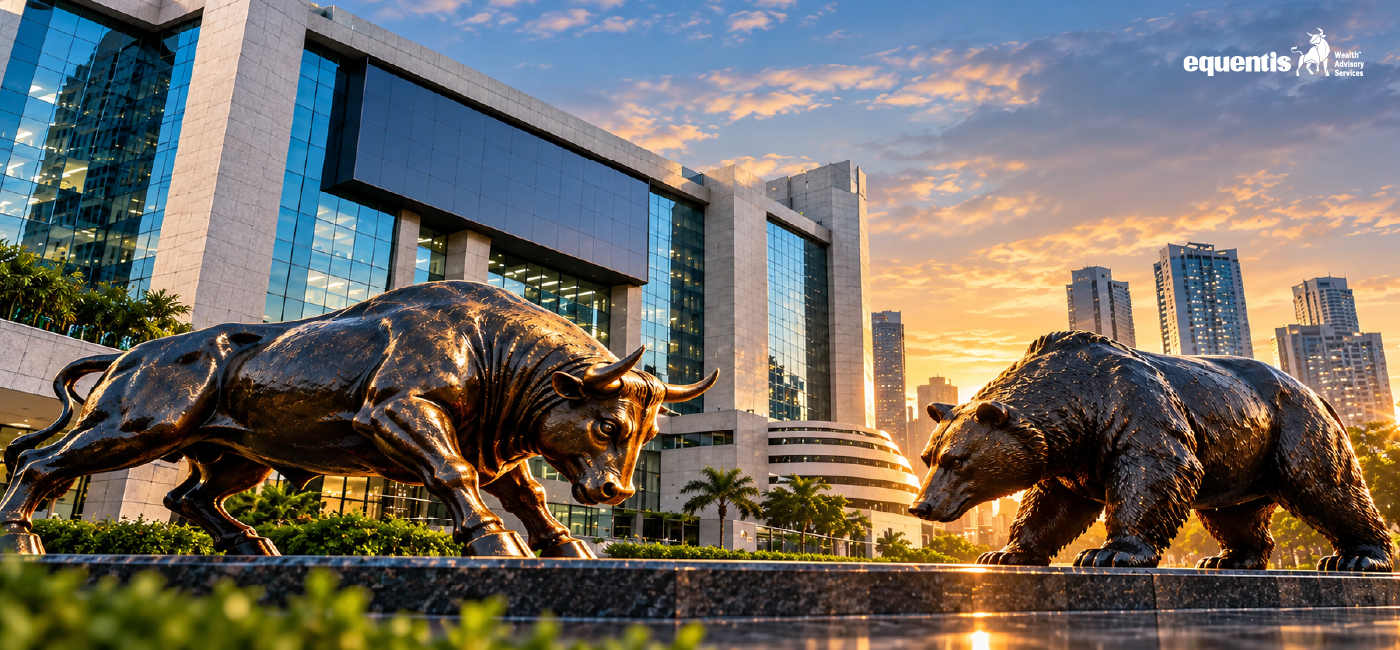

The Indian stock market came under renewed selling pressure as the Sensex fell around 1% and the Nifty 50 slipped below the 22,600 mark. The decline reflects continued investor caution amid global uncertainty, elevated crude oil prices and concerns about corporate earnings and economic conditions. Whether the market rebounds or extends its losses will depend on global cues, institutional investor activity and buying interest in heavyweight banking, IT and energy stocks.
Why Is the Indian Stock Market Falling?
The Sensex and Nifty 50 are India’s key equity benchmarks, tracking the performance of major listed companies on the BSE and NSE, respectively. When these indices fall sharply, the impact extends beyond traders, affecting mutual fund portfolios, retirement savings and investor confidence.
Several factors can contribute to a broad market decline. Rising crude oil prices can increase India’s import bill and inflationary pressures, while geopolitical tensions can push investors towards safer assets. Weak global markets and uncertainty about interest rates can also reduce appetite for equities.
The precise reasons behind a particular trading session’s decline should be assessed using verified market data. Without confirmation of the day’s sector-wise movements and institutional flows, it would be inaccurate to attribute the entire fall to a single development.
Key Factors Putting Pressure on Dalal Street
1. Rising crude oil prices
India imports a substantial share of its crude oil requirements. When international oil prices rise, the cost of imports can increase, putting pressure on the current account balance and the rupee.
Higher fuel and transportation costs can also affect businesses in sectors such as aviation, paints, chemicals and logistics. If companies struggle to pass on these costs to customers, their profit margins may come under pressure.
2. Global uncertainty and geopolitical tensions
International conflicts and uncertainty about global economic growth can make investors more cautious. Foreign portfolio investors may reduce their exposure to emerging markets when risk appetite weakens, adding selling pressure to Indian equities.
Global technology earnings, bond yields and movements in US markets can also influence sentiment on Dalal Street. However, the effect varies across sectors and depends on the underlying cause of the market weakness.
3. Selling in heavyweight stocks
The Nifty 50 is weighted by free-float market capitalisation, meaning larger companies have a greater influence on the index. Heavy selling in major banks, information technology companies or energy stocks can pull the benchmark lower even when some smaller stocks remain stable.
Investors should therefore examine sector performance and market breadth, which measures how many stocks are advancing compared with those declining. Widespread selling generally indicates broader weakness than a fall concentrated in a handful of large companies.
Can the Nifty 50 Recover Above 22,600?
A recovery is possible, but a sustained rebound requires stronger buying interest and improving market conditions. The 22,600 level may act as a reference point for traders, but it should not automatically be considered firm support.
If the index moves back above this level and sustains the recovery with healthy trading volumes, sentiment may improve. Stability in banking and IT stocks, moderating crude oil prices and supportive global markets could also help the benchmark recover.
On the other hand, continued selling below recent swing lows could indicate that bearish momentum remains strong. Traders should watch price action rather than assume that a round-number level will prevent further losses.
Technical indicators such as moving averages and the Relative Strength Index (RSI) can help assess momentum. However, no indicator can reliably predict the next market move in isolation.
Which Sectors Should Investors Watch?
Banking stocks are important because of their substantial representation in the benchmark indices. A recovery in major private and public sector banks could support the Nifty, while continued weakness in financial stocks may limit any rebound.
Information technology companies can respond to changes in global technology spending, US economic conditions and currency movements. Energy stocks, meanwhile, may react differently to crude oil prices depending on whether they are producers, refiners or fuel-consuming businesses.
Investors should also monitor consumer goods, automobiles and pharmaceutical stocks to determine whether selling is broad-based or concentrated in cyclical sectors.
What Does the Market Decline Mean for Retail Investors?
A market correction can reduce the value of equity portfolios in the short term, but it does not necessarily mean that every company’s long-term business prospects have deteriorated.
Retail investors should review their asset allocation, investment horizon and exposure to individual stocks. Companies with sound balance sheets and sustainable earnings may warrant a different assessment from businesses facing rising debt or weakening demand.
Investors using systematic investment plans should continue to assess their contributions against their financial goals and ability to tolerate volatility. Short-term traders, meanwhile, should establish position sizes and stop-loss levels rather than trade on headlines alone.
Opportunities and Risks Ahead
Lower share prices can make selected stocks more reasonably valued, but a falling market does not automatically create buying opportunities. Investors need to compare valuations with earnings prospects, debt levels, cash flow and competitive strength.
The main risks include persistent inflation, higher crude oil prices, foreign investor outflows and disappointing corporate results. A positive shift in global sentiment, easing energy costs and stronger domestic buying could help stabilise the market.
Conclusion
The Sensex’s 1% decline and the Nifty’s fall below 22,600 highlight the cautious mood on Dalal Street. Global uncertainty, oil prices and selling in heavyweight stocks remain important factors to monitor, although the exact contribution of each requires session-specific evidence.
A rebound is possible, but investors should look for sustained buying, improved market breadth and supportive global cues before interpreting a recovery as a change in trend. A disciplined focus on fundamentals, valuation and risk management remains more useful than reacting to daily index movements.
Disclaimer Note: The securities quoted, if any, are for illustration only and are not recommendatory. This article is for education purposes only and shall not be considered as a recommendation or investment advice by Equentis . We will not be liable for any losses that may occur. Investments in the securities market are subject to market risks. Read all the related documents carefully before investing. Registration granted by SEBI, membership of BASL & certification from NISM in no way guarantee the performance of the intermediary or provide any assurance of returns to investors.

Parvati Rai is the Vice President of the Research team at Equentis. She has over 15 years of equity-research and strategy-consulting experience. A specialist in deep-dive valuations, financial modelling, and forecasting, she has built research desks from the ground up, by steering buy-side, sell-side, and independent coverage across sectors. When she isn’t fine-tuning models, Parvati unwinds on nature treks and mentors aspiring analysts.