Business

This section offers content on business updates and new rules made by the government which could affect the running of a business.

Introduction

In a bold move to solidify its position in the burgeoning Health & Wellness sector, Tata Consumer Products recently inked definitive agreements to acquire two prominent Indian entities, Capital Foods and Organic India. This strategic maneuver is poised to transform Tata Consumer into a formidable player in the packaged foods category of the FMCG business, marking a significant shift from its traditional focus on salt, tea, and coffee.

How Will Investors Benefit from These Acquisitions?

Tata Consumer Products envisions a substantial addressable market size for the acquired brands, providing a lucrative opportunity for investors. As the company transforms into a major player in the packaged foods category and continues its expansion into high-margin categories, investors may witness significant returns on their investments in the foreseeable future.

The Acquisition Details

Tata Consumer Products has set the stage for a paradigm shift in its business portfolio by acquiring Capital Foods and Organic India. The conglomerate invested a substantial INR 51 billion (approx. $614 million) in Capital Foods and an additional INR 19 billion (approx. $229 million) in Organic India, expanding its reach into diverse markets and product segments.

The Capital Foods Deal

In this strategic move, Tata Consumer secured 75% of the equity shareholding of Capital Foods upfront, with plans to acquire the remaining 25% within the next three years. Capital Foods, a Mumbai-based company with nearly three decades of legacy, boasts popular brands such as Ching’s Secret and Smith & Jones. The acquisition aligns seamlessly with Tata Consumer’s expansion strategy, especially in high-margin categories.

Organic India Acquisition

Simultaneously, Tata Consumer inked definitive agreements to acquire up to 100% of the issued equity share capital of Organic India, a robust brand in the BFY (Better For You) organic space. Founded in 1997, Organic India supplies its products to over 40 markets, including notable US retailers like Whole Foods Market and Sprouts Farmers Markets. This acquisition positions Tata Consumer to tap into the growing Health & Wellness segment.

Strategic Intent and Market Opportunities

Capital Foods Integration

Sunil D’Souza, MD & CEO of Tata Consumer Products, emphasized that the Capital Foods acquisition is a strategic fit, expanding the conglomerate’s market presence. With Capital Foods’ widespread availability in 3.4 lakh outlets, Tata Consumer aims to leverage its extensive distribution network, providing a substantial runway for growth. Analysts estimate the business could reach INR 1,700 crore in FY26 with an EBITDA margin exceeding 25%.

Organic India’s Health & Wellness Platform

Organic India’s strong relationships with farmers and robust organic supply chain will let Tata Consumer accelerate its growth momentum in the Health & Wellness sector. The acquisition creates a platform that aligns seamlessly with Tata Consumer’s objectives, presenting exciting market opportunities in the rapidly growing health and wellness segment.

Financial Snapshot and Industry Positioning

Over the past five years, Tata Consumer Products has witnessed an impressive annual stock price growth of 46%, outperforming FMCG majors ITC and HUL. Analysts believe despite trading at a price-to-earnings (PE) multiple of 83x, considered by many as expensive, Tata Consumer is at a pivotal point in its journey, eyeing a transformation from a traditional FMCG player to a dominant force in the packaged foods category.

The Growth Trajectory

Tata Consumer Products envisions a substantial addressable market size for Capital Foods’ brands, estimating it at around INR 21,400 crore. This positions Capital Foods as a leader in the condiments category of packaged foods. With this acquisition, TCPL will become the sixth Tata Group company to cross a market capitalization of INR 1 lakh crore.

Category Expansion and Future Prospects

With brands like Ching’s Secret and Smith & Jones, Capital Foods opens avenues for Tata Consumer to directly compete with industry giants like Nestlé and ITC. This foray into the fast-growing non-Indian cuisines segment aligns with Tata Consumer’s focus on acquiring fast-growing brands, mirroring ITC’s previous strategy.

Tata Consumer Products’ recent acquisitions of Capital Foods and Organic India mark a pivotal moment in the company’s evolution. With a strategic focus on health and wellness, Tata Consumer is expanding its product portfolio and transforming into a significant player in the fast-paced world of packaged foods. As the company diversifies its offerings and taps into emerging markets, investors may find themselves on the cusp of a lucrative opportunity with Tata Consumer Products.

Know more about EPACK DURABLES LTD IPO

FAQs

  1. What synergies are expected from these acquisitions?

    The acquisitions are anticipated to yield substantial synergy benefits in distribution, logistics, and overheads. Additionally, the move is expected to drive portfolio premiumization and open up new channels and markets for Tata Consumer Products.

  2. How does Tata Consumer plan to integrate Capital Foods into its existing operations?

    Tata Consumer plans to acquire 75% of the equity shareholding of Capital Foods upfront, with the remaining 25% to be acquired within the next three years. The integration aims to leverage Tata Consumer’s distribution strength, multiplying Capital Foods’ business tenfold in distribution in the next two years.

  3. What impact do these acquisitions have on Tata Consumer’s financials?

    While analysts may perceive Tata Consumer Products’ current valuation as relatively high, the acquisitions of Capital Foods and Organic India are potentially significant for the company. The move is expected to add 7% to TCPL’s revenue and 12% to its EBITDA based on FY23 numbers, positively impacting its financial performance.

India, known for its love affair with tea, is witnessing a remarkable surge in coffee consumption, and global coffee giant Starbucks is capitalizing on this trend. In an ambitious move, Starbucks Corp. has unveiled plans to double its stores in India over the next four years.

This expansion plan aims to open a new Tata Starbucks shop every three days, strategically focused on tier-2 and tier-3 cities, where the burgeoning middle class is fuelling a rapid evolution in coffee culture.

Current Coffee Market in India

Traditionally, tea, especially sugary, milky chai, has dominated India’s hot beverage landscape. However, the past decade has witnessed a significant shift, with coffee becoming increasingly popular, especially among aspirational consumers frequenting cafes. Starbucks, other high-end cafes, and local chains like Blue Tokai have contributed to this shift, offering beverages sourced from locally harvested crops.

Starbucks and its Growth Ambitions

Starbucks’ intensified focus on India is part of its broader strategy to strengthen its presence in economically promising markets worldwide. Since entering India in 2012 through a joint venture with Tata Consumer Products Ltd., Starbucks has steadily grown its footprint, boasting 390 stores across 54 cities. The ambitious goal is to reach 1,000 stores by 2028, positioning India as one of Starbucks’ major overseas markets.

Starbuck’s Current Presence in India

The joint venture with Tata Consumer Products has been instrumental in Starbucks’ Indian journey, and the partnership aims to deepen its roots, focusing on tier-2 and tier-3 cities, marking a strategic departure from its initial focus on major metropolises. With 390 stores and a net addition of 22 outlets in the last quarter alone, Starbucks’ presence in India is significant, albeit dwarfed by its expansive presence in mainland China.

Starbucks and its Competition

Starbucks faces stiff competition from local chains like Cafe Coffee Day and foreign entrants such as Barista. Emerging players like Third Wave and Blue Tokai, backed by private equity, have added about 150 stores in the last three years, intensifying the competition for market share.

Revenue Growth and Challenges

Tata Starbucks reported a 14% year-on-year revenue growth in the Sept. 30, 2023 quarter. Despite this positive performance, it marked the slowest growth since the March quarter of 2020. The challenges were attributed to the lingering impact of the COVID-19 pandemic, underlining the resilience required in the ever-evolving market.

Revamping On the Cards

Recognizing the dominance of instant coffee consumption at home, Starbucks has revamped its strategy in India. Initiatives include introducing smaller-sized drinks starting at $2.24 and milkshakes, a tactical move to appeal to the diverse preferences of the tea-loving population.

Starbucks acknowledges the importance of local partners in its success, so it plans to skill these partners for various roles, opening new stores to provide an elevated customer experience and promoting Indian-origin coffee globally.

Strategic Importance of India

As India becomes the world’s third-largest economy by 2030, Starbucks believes the country will be a focal point for its growth. With a thriving middle class and evolving consumer preferences, Starbucks is doubling its presence in India.

The 50:50 joint venture between Starbucks Coffee Company and Tata Consumer Products Limited has been the cornerstone of Starbucks’ operations in India since 2012. The collaboration has not only let Starbucks navigate the intricate Indian market but has also provided a platform for mutual growth.

To achieve the ambitious target of 1,000 stores by 2028, Starbucks plans to double its workforce to ~ 8,600 partners and expand drive-thrust, airports, and its 24-hour store footprint to serve customers where they are.

Upskilling and Empowering Women

Tata Starbucks’ expansion strategy in India includes its commitment to women’s empowerment and upskilling initiatives. Recognizing the need for diversity and inclusivity, the company will help to empower underserved young women in the F&B retail industries through vocational skills training.

In collaboration with The Starbucks Foundation, Tata Starbucks will offer workforce development training, skills building, and mentoring for 2,000 young women by 2024. The grant awarded to Trust for Retailers & Retail Associates of India (TRRAIN) will provide on-the-job learning options for program participants in critical cities, contributing to the socio-economic development of women in India.

Tata Starbucks has extended its on-the-job learning program for participants in stores across Bengaluru, Chennai, Delhi, Hyderabad, and Mumbai. This initiative contributes to skill development and strengthens Starbucks’ commitment to fostering inclusive growth at a grassroots level.

Tata Starbucks’ plans to double its stores in India reflect its confidence in the country’s economic trajectory and evolving consumer preferences. The company’s strategic approach and initiatives to empower local partners and contribute to skill development could position Starbucks for sustained success in one of its fastest-growing markets.

FAQs

  1. Is Starbucks the first foreign coffee brand in India?

    No, Starbucks was among the first foreign coffee brands to enter India in 2012.

  2. How does Starbucks plan to appeal to the tea-loving population in India?

    Starbucks is introducing smaller-sized drinks and milkshakes to cater to diverse preferences.

  3. What challenges did Tata Starbucks face in recent quarters?

    As of now, Starbucks operates 390 stores across 54 cities in India.

  4. What is Starbucks’ workforce expansion goal in India?

    Starbucks plans to double its workforce to approximately 8,600 partners, reflecting its commitment to the Indian market and fostering inclusive growth.

At the beginning of 2023, Indian conglomerate ITC spun off its hotel business at a 10:1 ratio. If you wonder what a spin off company means, this article is a must-read.

What is a Company Spin Off?

Simply put, a company spin off means selling a business segment of a parent company to build a new company (standalone) out of it. Let us take the example of ITC. ITC has multiple business segments, from hotels to FMCG products and more. However, ITC Hotels became a new entity after ITC spun out its hotel segment.

The parent company’s shareholders are usually given a particular ratio of shares in the new company. In the case of ITC, shareholders of the ITC (parent company) were allotted one share of ITC hotels for every ten shares held in the parent company.

Spin Off vs. DivestitureWhile both strategies involve shedding part of a business, they differ fundamentally. A divestiture involves selling a business unit to an external buyer, generating immediate cash for the parent company. A spin off, however, distributes shares of the new company to existing shareholders, and no cash changes hands. The goal of a spin off company is typically long-term value creation rather than short-term liquidity.

How Does Company Spin off Work?

The parent company sells the entire stake of the spin off company to the shareholders, and the newly formed company gets a new management and name. However, the spin off company’s assets, human resources, and intellectual properties may remain unchanged. In addition, the parent company often offers financial and technological support to the newly formed company.

Reasons for Spin offs

If you want to invest in a spin off company, you must first understand and analyze the reasons behind the spin off. The most usual reasons for spinning a company are –

  1. To focus on a business segment with higher potential in the long run. When a company has multiple business segments, the focus is divided. Thus, if a business segment has more potential, the parent company may spin it off as a new company with new management to optimize its potential.
  2. Another reason for the spin-off is the growth prospects between novice and mature businesses. For instance, if company A (parent company) has four business segments, out of which one has been its primary business since the beginning, the segment has now reached its peak and thus offers little growth. The company has entered the other three segments in the past few years, and these segments are offering higher growth prospects. Therefore, it may spin off the first business segment from its remaining three businesses.
  3. Spin-off also happens when the strategic needs of businesses start deviating from each other. An FMCG and a construction business may not have the exact strategic requirements, right? Therefore, the parent company can spin one of the businesses off.
  4. Finally, suppose a parent company wants to sell off one of its business segments but cannot find investors. In that case, it may spin off that segment into a new entity, increasing the potential and getting investors.

While there could be different reasons for a spin-off, the basis is the same: it makes the businesses more profitable.

Though legally separate, the parent company may maintain certain transitional service agreements with the spin off company. These could include shared services, licensing agreements, or logistical support, especially in the early stages of the spin off company’s operations.

Effects of Spin-off

A company spin-off has effects on both investors and the parent company.

For Investors: Investors or shareholders tend to get better returns after the spin-off as both the parent and the spin-off company get to focus on their independent businesses, which often helps generate better returns. However, the share prices of the new company can become volatile or sluggish, as there is no independent financial performance data from the company’s past.

For Parent Company: The parent company’s stock price usually drops initially as the assets, intellectual properties, and other resources that go to the spin-off company get reduced from the parent company’s books. However, if the spin-off goes right in the long run, the parent company will also benefit, which can be transferred to its shareholders.

Risks of Company Spin Off

Shareholders of the parent company get shares of the spin-off company automatically. However, the stock of this new company may not suit any investors’ portfolio. Thus, the investors need to evaluate whether the prospects and nature of the new company match their investment criteria. If not, then they should drop those shares from their portfolio. This makes the share price of the spin-off company volatile in the initial days of the spin-off.

Recent examples of Company Spin offs in India

There have been some significant spin-offs in 2023. Let’s see the parent and the spin-off company.

ITC Spin-off
Parent CompanyITC
Spin-off CompanyITC Hotels
Reliance –Jio Financial Spin-off
Parent CompanyReliance Industries
Spin-off CompanyJio Financial Services

Apart from recent spin offs, if we go back in time, then Bajaj Auto spinning off Bajaj Finance and Bajaj Finserv has churned a lot of wealth. Similarly, Reliance spun off its subsidiaries earlier as well.

Independence is crucial for growth and prosperity, and that is what companies strive for when they think of spin offs. While not all spin-offs become successful, the idea is to generate better profits by focusing more on potential businesses.

Recent Examples of Company Spin Offs in India

India has witnessed a surge in spin off activity, especially in the last decade. Here are some notable examples of spin off company:

Adani Enterprises & Adani Wilmar
Adani Enterprises spun off its edible oil and food processing division to form Adani Wilmar, a consumer-focused entity.

ITC Hotels Demerger
In 2023, ITC separated its hospitality business. ITC Hotels became an independent company, providing clearer visibility to investors focused on the tourism and hospitality industry. [See: ITC Hotels Demerger]

Jindal Stainless
Part of the Jindal group restructuring, the spin off created a more focused stainless-steel entity catering to global industrial clients.

Reliance Industries & Jio Financial Services
Reliance carved out its financial services arm, creating a pure-play finance company to cater to emerging fintech opportunities.Bajaj Auto & Bajaj Finserv
One of the most successful examples of spin offs in India, leading to immense value creation in the Indian stock market.

FAQs

  1. What is a company spin off?

    Company spin off means separating a business segment of a parent company to make a new company out of it. This is usually done to focus more on potential segments and generate better returns.

  2. What are examples of spin offs?

    Recent spin-off examples include Reliance Industries and Jio Financial Services or ITC and ITC Hotels spinoff.

  3. What is an example of a spin-out company?

    Often, spin out is referred to as spin, and a recent example could be the ITC, where ITC Hotel was spun out of ITC Group to become an independent entity.

  4. What is an example of a spin-off business?

    ITC Hotels, recently spun off from ITC Ltd., is a prime example of a spin-off business, offering investors a direct stake in the hospitality sector.

  5. What is the meaning of company spin?

    A company spin off refers to the process where a parent company forms a new, independent company by separating one of its business units.

  6. What are examples of spin offs?

    Examples include Jio Financial Services, ITC Hotels, Adani Wilmar, and Bajaj Finserv.

  7. Why spin off a company?

    Companies spin off business units to focus better, reduce complexity, improve valuations, address regulatory differences, or pursue independent strategies.

Introduction: What is Social Media Income?

India has an active social media penetration of 32.8%. This raging trend looks unstoppable as social media network users are expected to reach 1529.8 million by 2040. Doesn’t this sound crazy?

Making digital content, whether it’s videos or reels on YouTube, images on Instagram, tweets on X, or blogs on other comparable sites, has become popular these days with a massive untapped potential to earn money from the audience’s views, likes, comments, and subscriptions. Have a look at the data below to visualize how big this industry is turning out to be

image 96
Source: Statista

However, making money on social media is not as easy as it sounds. There are income tax duties wherever there is earning. As a result, it is necessary to be aware of and comply with numerous income tax rules that govern income from various social networking platforms.

If you are an influencer worried about paying income tax, we have you covered. This article will discuss how the income tax law in India treats revenue generated through social networking sites and the deductions and exemptions available for such income. We will also provide some pointers on preparing your return and avoiding penalties or letters from the tax authorities. You can also learn more about concept of taxation with our blog.

Why Social Media Income is Taxable

  1. Legal Obligations for Declaring Income in India – Any income earned in India, including from social media, must be reported to the Income Tax Department.
  2. How the Income Tax Department Tracks Social Media Earnings – The tax authorities use banking and digital transaction records to track income sources, ensuring that influencers pay the applicable social media tax.

Tax Rules for Social Media Influencers in India

  1. Categorization of Social Media Income Under “Profits and Gains from Business or Profession” – Earnings from social media activities are taxed as business or professional income.
  2. Applicability of GST for Influencers Earning Over ₹20 Lakhs Annually – GST registration is mandatory if total earnings exceed ₹20 lakh in a financial year.
  3. TDS Deduction on Payments Received by Influencers – Payments exceeding ₹20,000 in a year attract a 10% TDS deduction under Section 194R.

How to Calculate Tax on Social Media Income

  1. Total Income = Gross Earnings – Allowable Expenses – Deduct all legitimate business expenses from gross earnings to calculate taxable income.
  2. Deducting Expenses Related to Content Creation: Eligible deductions include costs for equipment, internet access, advertising, software subscriptions, and travel.
  3. Example Calculation for Tax on Influencer Income
    • Total Earnings: ₹5,00,000
    • Deductible Expenses: ₹1,50,000
    • Taxable Income: ₹3,50,000 (subject to applicable tax slab rates)

Tax Filing Process for Social Media Income

  1. Maintaining Proper Records of Income and Expenses – Keep a record of invoices, bank statements, and business-related expenses.
  2. Choosing the Appropriate ITR Form for Filing – Most influencers file under ITR-3 (for business income).
  3. Steps to File Income Tax for Social Media Earnings
    • Register on the Income Tax e-filing portal.
    • Declare all income sources.
    • Deduct expenses and apply exemptions.
    • Pay tax and submit the return before the due date.

Common Mistakes to Avoid When Filing Taxes as an Influencer: Understanding the Growing Need for Compliance Among Influencers

  1. Failing to Declare Bartered Payments as Income – Free products received in exchange for promotions are taxable.
  2. Ignoring GST Compliance for High Earnings – Failing to register for GST when required can attract penalties.
  3. Missing Out on Legitimate Deductions – Not claiming allowable expenses can lead to higher tax liability.

Income Tax Slabs for Earning Through Social Media Sites

If social media earning is your regular source of income, then your income tax slab will align with the individual taxpayer in India – (In this case, we have considered Old Tax Slabs.)

Annual IncomeIncome Tax Rate
Upto Rs. 2.5 LacsNil
Rs. 2.5 Lacs – Rs. 5 Lacs5%
Rs. 5 Lacs- Rs. 10 Lacs20%
Above Rs. 10 Lacs30%

You must get your books of accounts audited if your yearly gross revenue from social networking sites surpasses Rs. 1 crore. This ceiling, however, has since been lifted to Rs. 10 crore, providing no more than 5% of total transactions or payments are made in cash.

Types of Social Media Income and Their Tax Treatment

Social media platforms offer various ways for content creators to earn money from their online presence. However, the income tax rules for all types of social media income are not the same.

Depending on the source and nature of the income, it may fall under different heads of income and be subject to different income tax rates and rules. Here are some common types of social media income and their tax treatment in India:

  • Advertising revenue: This is the income earned from displaying ads on the content or website of the social media influencer.  For example, YouTube pays a certain amount to the content creator based on the number of views, clicks, or impressions of the ads shown on their videos.
Type of IncomeIncome from Business or Profession
Income Tax TreatmentTaxed as per applicable slab (Profits after deducting the expenses related to the business activity)
Deductionsfor the expenses incurred for creating and maintaining the content, such as internet charges, equipment costs, editing software, etc.  
  • Sponsored posts: This is the income earned from promoting a product or service of a brand or company on the social media platform. For example, an Instagram influencer may post a picture or video featuring a product or service of a specific brand and get paid for it.
Type of IncomeIncome from Business or Profession
Income Tax TreatmentTaxed as per applicable slab (Profits after deducting the expenses related to the business activity)
Deductionsfor the expenses incurred for promoting the product or service, such as travel, photography, etc.
  • Affiliate marketing: This is the income earned from referring or recommending a product or service of a brand or company to the audience and getting a commission for each sale or action. For example, a blogger may provide a link to an e-commerce website where the audience can buy a product or service that the blogger has reviewed or endorsed. The blogger earns a share of the sales through a commission on every sale through the link.
Type of IncomeIncome from Business or Profession
Income Tax TreatmentTaxed as per applicable slab (Profits after deducting the expenses related to the business activity)
Deductionsfor the expenses incurred for creating and maintaining the content, such as hosting charges, domain charges, etc.
  • Donations: This is the income earned from receiving voluntary contributions from the audience in appreciation of the content. For example, an X streamer may receive donations from viewers who like their live stream or chat.
Type of IncomeIncome from other sources
Income Tax TreatmentTaxed as per applicable slab (Profits after deducting the expenses related to the business activity)
DeductionsNo permissible deductions

Income Tax Deductions and Exemptions Available for Social Media Income

Before we proceed with eligible deductions, be clear about which income category you fall into. If you are an occasional influencer, your earnings will fall under “Income from Other Sources”.

Whether your deductions will be considered by the IT Authorities will depend on the nature and quantum of your expenses. Eligible deductions in the “Income From Other Sources” case will be those “directly and wholly” incurred for content creation.

Conversely, claiming deductions in the case of “Income from business/profession” is much easier as you can consider all the operational expenses to claim deductions.

Let’s take different  cases to understand this concept better:

  • Expenses incurred for creating and maintaining the content

These include the costs of internet, equipment, software, editing, photography, travel, etc., necessary for producing and uploading the content on social media platforms. These expenses can be claimed as deductions under the head of income from a business or profession, subject to certain conditions and limits.

  • Depreciation of assets used for the content

These include the wear and tear of the assets, such as computers, cameras, phones, etc., used for creating and maintaining the content. The depreciation can be claimed as a deduction under the head of income from a business or profession, per the prescribed rates and methods.

Other Income Tax Implications For Social Media Earners

Goods and Service Tax (GST)

In the dictionary of Income tax laws, services offered by social media influencers, YouTubers, Bloggers, Twitteratis, and other individuals making earnings through social media websites are called Online Information and Database Access or Retrieval Services (OIDAR).

The plausible explanation is that such individuals employ information technology to spread data on the internet or any other electronic network.

Under income tax regulations, if an individual earns more than Rs. 20 lacs per year or Rs. 10 lacs in special category states, he or she must register for GST. Furthermore, regardless of annual turnover/sales, any influencer/blogger/social media earner who provides services to states other than his or her home state must register for GST.

The applicable GST rate will be 18% (i.e. 9% SGST and 9% CGST or 18% IGST, depending on whether the services delivered are interstate or intrastate).

Income Tax Rules for TDS on Social Media Income

According to Section 194 R of the IT Act, every individual receiving rewards or bonuses (in cash or kind) for a value exceeding Rs.20,000/- must pay TDS at 10% from July 1, 2022.

Let us look at a real-world example to better grasp this concept of income tax. Assume that your favorite movie star “Ranbir” sponsors a chocolate company, “A,” while another actor “Salman” endorses a watch brand, “B.”

Assume Ranbir charges Rs. 10,000/- for brand endorsement fees and receives Rs. 5000/- in chocolates from A as an incentive. On the other hand, Salman charges no fees as a nice gesture but receives watches worth Rs. 50,000/- (excl. GST) as a token giveaway. 

In this situation, Ranbir’s total earnings (including fees and chocolates) are less than Rs. 20,000. So, he is not required to pay TDS, whereas Salman receives presents of Rs. 50,000/-, he is required to pay TDS at 10%, or Rs. 5000/.

Key Takeaways

You’ve learned how to earn money from social media platforms like Twitter, Instagram, and YouTube. However, before you start celebrating your success, it’s important to understand the tax implications of your online income.

The amount and type of income you receive will determine the tax rate you must pay. Keeping track of your expenses and deductions is essential, as they can help reduce your taxable income and save you money. Filing your tax returns on time is crucial, and reporting your income accurately is crucial to avoid penalties or audits.

FAQs about Social Media Taxing

  1. How can social media influencers file their income tax and GST returns in India?

    Social media influencers can file their income tax and GST returns online using the e-filing portal of the Income Tax Department and the GST portal, respectively.

  2. What are the penalties and consequences for not reporting or underreporting income from social media platforms in India?

    Income from social media sites that is not reported or is underreported may result in penalties and legal implications from the Income Tax Department and the GST authorities. Penalties can range from 50% to 200% of the amount of tax evaded, plus interest and prosecution.

  3. How do social media influencers file their income tax returns and GST reports in India?

    Social media influencers can file their income tax returns and GST returns online through the Income Tax Department’s e-filing portal and the GST portal, respectively.

Read more:  How Long-term investing helps create life-changing wealth – TOI

Published Date: [post_published]

Just as you work hard for your money, your money should work hard for you (while you invest). In the current scenario, developing effective long-term investing strategies can pave the way for a secure future.

Like other investors, small business owners strive to make it big and invest with their limited budget/savings. Developing long-term investment strategies for small business owners is different, as they have other goals, long-term plans, risks, uncertainties, etc.

Investment Challenges Small Business Owners Face

One of the biggest challenges for small business owners is the money they can park from their businesses and invest for the future. Therefore, one should invest capital wisely and ensure that greed, emotions, and unrealistic growth expectations do not determine long-term investing strategies. With the right approach, long-term investments can yield valuable returns. An ideal long-term investing strategy should help you navigate the difficult times ahead for you and your business.

Formulating long-term investing strategies is rarely straightforward. This blog presents long-term investing strategies for Small Business Owners to create a financial cushion for themselves and their businesses.

7 Long-Term Investing Strategies

1. Set Your Goals:

The first step to setting up any long-term investing strategy is to have a definite goal. Whether it is about higher education, wedding expenses, retirement, or buying a house/car, one should clearly define their financial goals in the long and short term. Setting them would help you determine how much money you want to invest and what investment option you should choose to reach there, considering all the risk factors involved.

2. Diversify Your Portfolio

Small business owners should spread their investments across different industries. Instead of focusing on just one sector, it is better to focus on multiple sectors simultaneously. Similar investment asset classes are prone to suffer huge losses all at once during times of contingencies. With diversification in your portfolio, one can also spread investment risks that ride along with it. It prevents significant losses and helps prevent averse to experiencing significant dents on your investment returns.

3. Invest in Index Funds

There are instances where small business owners have the money to invest but not the adequate expertise to invest on their own. Index funds like Exchange Traded Funds (ETFs), Mutual Funds, etc., provide many options like stocks, bonds, etc., to individuals who seek investment options. The index funds are managed by experienced fund managers. Many investors who do not have the time to track the market consistently do their investing in index funds.

4. Work With a Financial Advisor/Expert

An expert financial advisor can help you devise an investment strategy that suits your risk appetite and long-term financial goals. You will benefit immensely from their expertise and experience. While investing your hard-earned money, it is always better to have expert assistance. Financial advisors not only offer you about investment planning but can also help with financial planning, debt management, and tax planning as well.

5. Explore Growth Opportunities

Doing fundamental research, analyzing, forecasting different sectors, and understanding their growth opportunities before investing your hard-earned money is vital in your financial growth journey. Consider analyzing the current market affairs and use it to determine the best possible option that suits your risk tolerance. While investing your money in different funds, investment classes, and sectors, it is crucial to understand all the options and which would suit you the best.

6. Consider Alternate Investment Opportunities

No investment is a safe investment, ever. The next time you consider investing in a safe asset class, think again. Instead, consider how to invest in alternative opportunities like ETFs, Real Estate Investment Trust (REITs), Sovereign Gold Bonds (SGBs), Real Estate, etc., and mitigate the risk factor. Many investment options are available in the market that any investor can target and achieve significant financial returns. A good portfolio is always a well-diversified one.

7. Create an Ample Retirement Corpus

In this fast-changing dynamic and times of high inflation, one cannot estimate the kind of financial security one would need during retirement. It is only advisable that one should have an ample retirement corpus before they hang their boots. Also, several retirement plans help you avail of tax benefits. Another option is to invest in a fundamentally strong stock and think long-term. For small business owners, opting to invest for their retirement should be one of their investment goals when beginning their investing journey.

Due to their limited scope of finance, small business owners need to know that any amount they think of investing should be taken after considering many factors like emergency funds, retirement, business growth, etc. The bottom line to frame any long-term investing strategies is that they should invest after securing funds for their business and personal financial goals.

On the other hand, small business owners should not feel hesitant while parking money for investments. Because it is due to adopting a proper long-term investing strategy, business owners can drive revenue growth.

FAQs

As a small business owner, what long-term investing strategy should I adopt?

As a small business owner, you should prioritize setting clear goals, aiming to achieve stability, and disciplined diversification as your long-term investing strategies. Follow a balanced approach that considers conservative and growth-oriented investment methods. Also, review and adjust your portfolio regularly to maintain a balance between long-term risks and rewards. Seek advice from financial professionals who can provide tailored guidance.

How can small business owner start their investing journey?

Small business owners can begin investing by defining investment goals and considering their short and long-term needs and aspirations. You can start with small investments and gradually increase as your confidence grows. Remember, patience is vital; long-term investing is a long game. With careful planning and a disciplined approach, small business owner can start their investing journey.

Introduction

The Indian wearables market is set to claim the top spot by the end of 2023, supporting the global demand for smartwatches and wearables. This comes at a time when North America and China face saturation challenges due to macroeconomic headwinds.

According to Jitesh Ubrani, research manager for IDC Mobility and Consumer Device Trackers, mature markets like North America and Europe will see growth driven by replacement purchases. In contrast, emerging markets will contribute to continuous growth with a focus on first-time buyers.

Ubrani highlights India’s remarkable performance, surpassing the United States and China to become the largest market, thanks to the availability of affordable yet feature-rich devices from local vendors. Additionally, Ubrani mentions that other Asian countries, the Middle East, and Africa will lead in shipment growth. At the same time, China and the USA will remain the second and third largest markets, respectively.

According to market research firms International Data Corporation  India, of the estimated 504.1 million wearables to be shipped globally this year, India is expected to account for around 130-135 million units, approximately 26% of the total.

In 2022, India shipped nearly 100 million units, constituting nearly one-fifth of the global shipments of 492 million units, placing it behind China and North America. IDC India and Counterpoint Research report that the quarterly wearables market in India surpassed all other regions, accounting for 26% and 27% of global shipments, respectively, during January-March 2023.

Quantitative factors supporting Indian Wearable Market

  1. Lower Penetration and Affordability: The Indian wearables market has substantial untapped potential due to its lower penetration rate. This implies that a large portion of the population has yet to embrace wearables, presenting significant growth opportunities.  Additionally, the affordability of wearable devices makes them accessible to a broader consumer base.
  2. Increasing Smartphone Usage: India’s rapidly growing number of smartphone users will act as a catalyst for the adoption of wearables. The seamless integration and compatibility between smartphones and wearable devices drive the demand for these technologies.
  3. Emerging Local Brands: Local brands such as Noise, boAt, and Fire-Boltt have witnessed impressive growth in the Indian market. Their success can be attributed to their ability to cater to the specific needs and preferences of Indian consumers, offering feature-rich and competitively priced wearables.

Trends in Wearables: Earwear, Smartwatches, Wristbands, and Beyond

International Data Corporation (IDC) India reported that earwear is projected to be the largest product category, driven by new users and current users upgrading from devices purchased in 2020 and 2021. Smartwatches will experience strong growth as users shift from wristbands to more advanced smartwatches.

While smartwatches may impact wristbands, wristbands will still have a presence in the market, appealing to users seeking simpler solutions. Other wearable categories like clothing, rings, and non-augmented/virtual reality glasses will also show positive growth, albeit from a smaller base.

Top 4 Wearable Device Product Categories by Shipment Volume, Market Share, and 2022-2027 CAGR (shipments in millions)

ProductShipment 2023Market Share 2023(%) Expected Shipments 2027 Expected Market Share 2027(%)CAGR 2022-2027 (%)
Earwear31362.10390.662.104.90
Smartwatch157.331.20206.232.806.80
Wristband 32.16.4030.14.80-3.00
Others1.70.302.50.408.40
Total504.1100629.41005.00
Source: IDC

Reports from Counterpoint Highlighted:

Apple’s Market Share Declines. In Q1 2023, Apple experienced a 20% YoY decline in shipment volume, marking the first time it fell below 10 million units in three years. This led to a decline in market share from 32% to 26%. The macroeconomic crisis affected accessibility to higher-priced Apple Watches, impacting their success.

Fire-Boltt’s Rise, Indian brand Fire-Boltt surpassed Samsung, becoming the second-largest global market player. Its shipments tripled YoY with a 57% growth compared to the previous quarter, reflecting the rapid growth of the Indian market along with other local brands like Noise and boAt.

Samsung’s Mixed Performance. Samsung saw a 15% increase in North American shipments but experienced declines in other major markets. Global shipments declined by 15% YoY and 21% compared to the previous quarter.

Huawei’s Moderated Decline. Huawei faced a 14% YoY decline in Chinese market shipments, its key market. However, increased shipments in India, LATAM, and MEA regions limited the global decline to 9%. Huawei’s strategy of relaunching previous models from the Chinese market internationally supported its global presence.

Take a look at this smartwatch shipping share by region.

image 57
Source: Counterpoint

Key Factors Driving the Indian Wearable Market Growth

  • Technological advancements: Integration with smartphones and other devices drives the growth of the Indian wearable market.
  • Enhanced features and functionalities: Wearable devices offer a wide range of capabilities, such as fitness tracking, heart rate monitoring, and sleep tracking, enhancing their appeal to consumers.
  • Increasing health and fitness consciousness: Wearables provide valuable tools for monitoring physical activity, setting goals, and receiving real-time feedback, aligning with the growing focus on health and fitness.
  • Growing adoption of smartwatches as fashion accessories: The combination of functionality and style makes smartwatches desirable fashion statements, driving their popularity in the Indian market.

Challenges and Opportunities in the Indian Wearable Market

  1. Competition from international brands: The Indian wearable market faces tough competition from global brands, which requires local players to innovate and establish a strong market presence.
  2. Addressing consumer concerns: Battery life and data privacy are important concerns for Indian consumers. Manufacturers need to focus on longer battery life and robust data privacy measures to meet customer expectations.
  3. Potential for innovation and customization: The Indian wearable market offers unique features and customization opportunities. Manufacturers can tailor their devices to cater to the specific needs and preferences of Indian consumers.

Final Words

The Indian wearable market shows strong growth potential with lower penetration, affordability, emerging local brands, and technological advancements. Challenges include competition, and consumer concerns lie in innovation and customization.

FAQs

What is the future of wearables in 2023?

In 2023, anticipate the rise of trending wearables equipped with biometrics, proximity, movement, and other sensors. These advanced features enable them to gather contextual information and perform functions like heart rate tracking, complemented by voice-based personal assistants.

Which brands are the most popular in the Indian wearable market?

The most popular brands in the Indian wearable market are boAt, Noise, Fire-Boltt, and Xiaomi. These brands offer a wide range of affordable and stylish wearable devices that are tailored to the needs of Indian consumers.

Bank failures can significantly impact depositors, so it’s crucial to understand how to safeguard your savings. Recent news and the experiences of Silicon Valley Bank and Signature Bank failures serve as a reminder of the importance of being prepared.

In this article, we’ll explore tips for protecting your savings from bank failures, including choosing a reputable bank, diversifying your accounts, and monitoring them regularly. We’ll also discuss the role of the FDIC and the benefits of FDIC insurance. Don’t let a bank failure catch you off guard; read on to learn how to keep your money safe.

Bank Failures: Causes and Help Available To Depositors

Understanding bank failures is crucial in protecting your savings. It refers to the inability of a bank to meet its financial obligations to depositors.

Causes of failures include

  • Poor management,
  • Economic downturns, and
  • Fraud

When a bank fails, depositors may lose access to their funds, significantly impacting their finances. In such cases, it may not have sufficient funds to repay all of its depositors, leading to losses for those with uninsured deposits. In the US, the FDIC (Federal Deposit Insurance Corporation) plays a crucial role in protecting depositors. The FDIC provides deposit insurance to protect depositors’ funds in case of failures.

However, in India, the State owns a majority of bank assets which works as an implicit assurance of safety for their depositors. For other banks, the government has willingly and compulsively bailed out troubled banks and FIs via forced mergers or regulatory forbearance and unconventional regulatory engineering. It happened in the case of the Punjab and Maharashtra Cooperative (PMC) Bank bailout too.

India has managed to protect the interests of depositors in the three instances of bank failures that occurred within the past three years, namely PMC Bank, YES Bank, and Laxmi Vilas Bank. The regulatory body has succeeded in doing so with the government’s support. Moreover, software companies have also been prevented from failing in response to the public’s demands.

History of Bank Failures in the US

Bank failures have been a recurring issue in US history, as illustrated by a graph depicting the number between 1984-2023.

image 59
Source: Business Insider

Bank Failures: Consequences and Impact on Depositors

Inaccessible Funds: The moratorium that suspends bank operations for an uncertain period can be challenging for customers, especially small depositors, as their funds become inaccessible, despite deposit insurance guaranteeing eventual repayment. Though the proposed Banking Resolution Corporation aims to provide formal mechanisms for quickly liquidating banks, it has yet to become a reality.  

Increase in Fees & Interest: Bank failures can have severe consequences beyond just hurting depositors and investors. They can also result in increased fees and interest rates as banks attempt to make up for their losses.

Slow-down in Lending: One bank’s failure can trigger a chain reaction of other failures, causing a significant slowdown in lending and negatively impacting the economy. So the central banks would want to avoid dealing with such a crisis.

DICGCI: The Key Player in Protecting Your Savings in India

Deposit insurance, an instrument that helps to minimize the impact of bank failure, has been used sparingly in India. The banks themselves have long funded deposit insurance in India. Banks’ contributions are, however, not ‘risk-priced.’ 

Under the Deposit Insurance and Credit Guarantee Corporation of India Act, all banks must pay the same premium to insure their deposits, regardless of their financial health or asset quality. However, a few strong banks have been reluctant to fulfill this requirement.

FDIC: The Key Player in Protecting Your Savings from Bank Failures

The Federal Deposit Insurance Corporation is an independent government agency that provides deposit insurance to protect depositors in case of bank failures. FDIC insurance coverage applies to deposits in savings accounts, checking accounts, money market accounts, and certificates of deposit (CDs) at FDIC-insured banks.

The coverage limit is currently $250,000 per depositor per insured bank, and it covers both principal and any interest earned. The primary benefit of FDIC insurance is that it protects depositors against the risk of losing their money if their bank fails.

If a bank fails, the FDIC takes over it and ensures that depositors receive their insured funds, usually within a few business days. The U.S. government fully backs FDIC-insured deposits, making them one of the safest places to keep your money.

It means that even if your bank fails, you can still recover your insured funds up to the coverage limit. It’s important to note that not all banks are FDIC-insured, and depositors should always check to ensure their bank is FDIC-insured before opening an account.

The FDIC maintains a database of FDIC-insured institutions on its website, and depositors can also look for the FDIC logo on bank websites, statements, and marketing materials. By choosing an FDIC-insured bank and understanding the benefits of FDIC insurance, depositors can safeguard their savings from bank failures and other financial risks.

Silicon Valley and Signature Bank: Lessons from Their Failures

Silicon Valley Bank and Signature Bank are two examples of banks that have experienced significant failures, leading to financial losses for their customers. These failures highlight the importance of safeguarding savings from bank failures.

In the case of Silicon Valley Bank, the bank’s failure was due to a combination of factors, including poor risk management and the bank’s exposure to high-risk loans. The failure of Signature Bank, on the other hand, was due to the bank’s heavy reliance on volatile funding sources.

These cases offer valuable lessons for customers of any bank.

It’s essential to understand the potential risks and to safeguard savings, including diversifying accounts, choosing a reputable bank, monitoring accounts regularly, and being aware of FDIC coverage limits.

By taking these steps, customers can better protect themselves from the impact of any future bank failures.

Bank Failures: Safeguarding Your Savings

  • To safeguard savings, it is important to diversify your accounts, choose a reputable bank, monitor your account regularly, and be aware of FDIC coverage limits.
  • Diversification of accounts is one of the most effective ways to protect your savings. Instead of keeping all your funds in a single bank account, consider spreading them across multiple banks or financial institutions.
  • Choosing a reputable bank is crucial to safeguarding your savings. Look for banks with a solid financial standing and a proven stability and reliability track record.

It’s also important to monitor your account regularly to detect any suspicious activity or errors. Be sure to review your account statements and balance frequently and report any discrepancies to your bank immediately. By following these tips and being aware of FDIC coverage limits, depositors can minimize the risks of financial losses in the event of a bank failure.

Final Words

Safeguarding savings from bank failures is crucial to prevent financial losses. Recent examples of bank failures are a reminder to diversify accounts, choose reputable banks, monitor accounts regularly, and depositor insurance coverage limits.

FAQs

How to confirm if my bank is FDIC-insured?

You can check if your bank is FDIC-insured by looking for the FDIC logo or using the FDIC’s BankFind tool on their website.

What happens to my money if my bank fails and is not insured?

If your bank is not insured and it fails, there is no guarantee that you will get your money back. You should always make sure your bank has appropriate insurance to protect your savings.

Tata Capital plans to consolidate its subsidiaries with an eye on its potential listing. Focusing on efficiency, cost reduction, and regulatory compliance, it aims to streamline its operations and strengthen its position in the Indian financial services market.

This move involves merging some subsidiaries, divesting non-core subsidiaries, and reducing the number of subsidiaries to achieve a streamlined business structure.

Let’s understand more about this consolidation.

Streamlining Operations: Tata Capital to consolidate 19 subsidiaries

Tata Capital, the financial services arm of the Tata Group, recently announced plans to consolidate its 19 subsidiaries to simplify its business structure, improve compliance, and meet regulatory requirements.

It is the holding company for six businesses:

  • Three financing companies – Tata Capital Housing Finance, Tata Financial Services, and Tata Cleantech Capital, and
  • Three investing and advisory companies – Tata Securities, Tata Capital Singapore, and Private Equity.

The central bank recognizes Tata Capital Financial Services as a systemically important non-deposit accepting non-banking financial company. It intends to enhance its ability to serve its customers more effectively and efficiently by streamlining its operations.

Consolidating its subsidiaries aligns with the company’s strategic objective of becoming a more focused and agile financial services provider. It intends to leverage its strong brand and reputation to expand its market presence and offer its customers a broader range of products and services.

Tata Capital Consolidation Plan

What It Involves and How It Will Streamline the Business?

The consolidation plan involves merging some of its subsidiaries, such as the housing finance and affordable housing units, to create more efficient operations. In addition, the company is exploring options to divest non-core subsidiaries, such as Tata Capital Forex and Tata Cleantech, which are unrelated to its core businesses. The aim is to streamline its business structure and focus on core businesses that offer high-growth potential. This consolidation plan will reduce the number of subsidiaries from 19 to a smaller number.

image 14
Source: ET

In FY22, the company’s consolidated income was ₹10,253 crore, up from ₹9,988 crores in the previous year, and its profit after tax on a consolidated basis increased by about 46% year-on-year to ₹1,648 crores.

The consolidated return on assets for FY22 was 2%, and the return on equity was 15.6%. These impressive financial results show the company is in a strong position to implement its consolidation plan successfully and capitalize on future growth opportunities.

Through this move, the company expects to enhance its competitiveness while allowing it to respond more quickly to changing market dynamics and customer needs. Industry experts believe the consolidation is a step in the right direction. ICRA, a rating agency, has assigned a positive outlook to the company’s long-term rating, citing its efforts to improve its business structure and reduce costs.

Let’s take a closer look at the benefits of the consolidation plan.

Maximizing Growth: Benefits of Consolidation Plan

  • Consolidating subsidiaries will improve efficiency and coordination among businesses under the holding company.
  • Reduced duplication of functions and resources will result in significant cost savings.
  • The company will position itself for potential future growth by focusing on core businesses.
  • The consolidation will ensure better compliance with regulatory requirements and reduce the risk of penalties and other sanctions.

Reserve Bank of India and Tata’s consolidation plan

Tata Capital is consolidating its subsidiaries to meet the Reserve Bank of India’s regulatory framework, which mandates non-banking finance companies to maintain a certain level of net-owned funds. It plans to improve its financial position by streamlining its business structure and meeting the NOF requirements.

Tata Capital’s Consolidation Timeline

The company has already begun the consolidation process aiming to complete it by the end of the financial year 2022-23. However, they haven’t announced a timeline for a potential listing. Analysts expect that this move will prepare the company for a successful IPO in the future.

Impact of Consolidation on Tata Capital Services

Considering the consolidation aims at improving efficiency and focusing on core businesses, there will be no impact on the services the company offers.

Final Words

The consolidation plan is a strategic move expected to benefit the company in the long run. Streamlining its business structure and focusing on core businesses will help the company position itself for future growth and success in the Indian financial services market.

The potential for a future IPO is an added incentive, allowing the company to raise capital and expand its operations further. Overall, the consolidation plan is a positive development that could be worth watching in the next few months.

FAQs

What companies are being considered for consolidation by Tata Capital?

The company is considering the consolidation of Tata Capital Ltd., Tata Capital Financial Services Ltd., Tata Cleantech Capital Ltd., Tata Capital Housing Finance Ltd., Tata Securities Ltd., and Tata Capital Pte Ltd., Singapore, and its subsidiaries.

What extent of consolidation is Tata Capital considering for these companies?  

The company plans for a full consolidation, with Tata Capital Ltd. as the holding company and all other companies as its subsidiaries.

Why is Tata Capital consolidating its subsidiaries?

The consolidation is to prepare the company for future growth and a potential listing. With a more streamlined business structure, focus on core businesses, and meet the regulatory framework of the Reserve Bank of India. Doing so will position the company for success in the Indian financial services market.

Will the consolidation have any impact on the customers of Tata Capital?

The consolidation will not impact the consolidated entities’ day-to-day operations, and customer service will continue uninterrupted.

Will Tata Capital’s consolidation plan lead to any job cuts?

The company has not announced any job cuts due to the consolidation plan. The focus is to streamline the business structure and improve efficiency.

As we speak, a huge crisis-like situation in the US banking sector that started with SVB (Silicon Valley Bank) has brought the entire US banking sector under the scanner. One of the reasons that led to SVB’s collapse was Moody’s downgrading their credit ratings for the US from ‘stable’ to ‘negative’.

Whenever there is a financial crisis, you will invariably see a mention of the Credit ratings and the role these ratings play in propagating or advancing the problem. So let us understand these ratings and how they affect you as investors.

What is a Credit Rating?

A credit rating evaluates a borrower’s creditworthiness, whether it’s a company or even a country. It’s an evaluation of the borrower’s ability to repay its debts based on multiple factors such as financial stability, past payment history, and other financial indicators.

The same evaluation is called a Credit Score when done for an individual. You would have heard about this term if you ever applied for a Home loan, Car loan, or even a credit card. So what is called credit score for an individual is called the credit rating for a company or country.

Who Issues These Credit Ratings?

A handful of rating agencies issue credit ratings; for example, we have Crisil, Care Ratings & ICRA issuing most of the credit ratings in India. Similarly, in the US, we have S&P (Standard and Poor’s), Moody’s, and Fitch control more than 95% of the market for credit rating agencies.

Three Types of Credit Ratings

Credit rating companies typically assign three broad buckets of ratings based on the creditworthiness of the borrower:

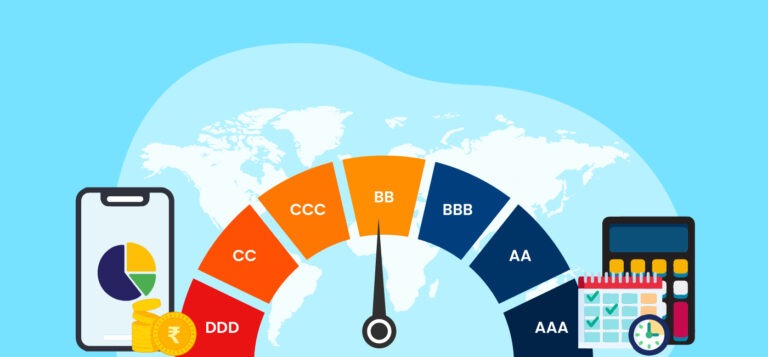
  1. Investment Grade: This bucket has borrowers with the highest credit rating, indicating a low risk of default. These instruments typically have a rating of BBB- or higher by Standard & Poor and Fitch Ratings or Baa3 or higher by Moody’s.
  2. Speculative Grade: These are debt instruments with a high risk of default. They are also called “Junk” or “high yield” debt. Debt instruments rated BB+ or lower by Standard & Poor’s and Fitch Ratings, or Ba1 or lower by Moody’s, are considered speculative-grade.
  3. Default of Distressed: These are debt instruments that have already defaulted or are on the verge of defaulting. These instruments are typically rated D or C by rating agencies. Some credit rating agencies treat this as part of a Speculative grade only.
image 1
Source: S&P, Moody’s & Fitch

Various Advantages of Credit Ratings

A wide range of instruments starting from corporate bonds, Government bonds up to complex financial products like mortgage-backed securities and collateralized debt obligations, are rated by Credit Rating agencies.

  • These ratings are meant to guide prospective investors on the riskiness of these instruments and price these products accordingly.
  • Investors can demand higher interest rates for lower-rated debt instruments to compensate for the increased risk of default.
  • For organizations/companies looking to raise debt, their credit rating significantly impacts their ability to access the capital markets.
  • A better credit rating can make it easier and less expensive for an issuer to issue debt and attract investors, while a lower rating can make it more difficult and expensive to raise funds.

Important Factors That Decide A Credit Rating

If you read through a typical credit rating report, it will try to evaluate the following factors:

  • Previous payment history of the borrower
  • Quality of income streams or sources of funds that will be used to repay the loans
  • Usage of the borrowed money itself
  • Various financial ratios include solvency, interest coverage, debt to equity, etc.

The end rating results from all of these factors, and it is essential to note that it is an “Opinion” on the company’s current financial situation.

Can We Blindly Trust Credit Ratings?

The fact that the end credit rating issued by a rating agency is an “Opinion” makes this subjective. It is also relevant to understand how the credit rating operates and who pays for these ratings to understand further if there is scope for manipulation in these ratings.  

Credit ratings are paid for by the entities that seek to obtain them. Generally, the issuer of the debt instrument, such as a company issuing bonds, will pay a credit rating agency to evaluate and assign a credit rating to their debt securities. Therefore, rating agencies may be reluctant to give very low ratings to securities issued by companies that pay their salaries.

So even if the rating is not entirely incorrect, there is still a chance that the issuer is biased in favor of his client, and hence the rating may not be completely objective.

Let us now look at some of the past famous examples where these credit rating agencies have gone wrong:

  • IL&FS crisis: You would remember that in 2018 IL&FS had severe credit rating issues. IL&FS had a high credit rating before its default, and the situation led to a crisis in India’s financial markets.
  • Lehman Brothers: Before its collapse in 2008, credit rating agencies rated Lehman Brothers as investment-grade. However, its credit rating was downgraded to junk status just days before its bankruptcy.
  • Argentina: In 2002, Argentina defaulted on its Sovereign debt despite having a high credit rating from credit rating agencies.

Final Words

Does this mean credit ratings are not important? No, they are important. Having looked at all the aspects of credit rating, you should look at credit rating as one of the factors for making an investment decision. However, a credit rating report should never be considered as a final recommendation to buy, hold or sell any debt instrument.

You must assess the entity’s or the instrument’s financial situation independently before investing and use credit rating reports as a supporting tool.

FAQs

What are the key factors of credit rating?

The payment history of the borrower, debt-to-equity ratio, length of credit history, etc., all play a role in arriving at the credit rating or credit score.

What are the problems with credit rating?

The biggest problem is poor rating quality. This could be because of insufficient information or because the ratings may be biased.

What is the validity of credit rating?

A rating is valid until withdrawn, usually when the rated debt obligation is fully paid.

Read more:  How Long-term investing helps create life-changing wealth – TOI.

Recent Events in the stock market prompted SEBI to act against seven entities for violating market regulations. These entities have engaged in fraudulent and manipulative trading activities, undermining the securities market’s integrity. Its actions demonstrate its commitment to enforcing market regulations and promoting transparency and fairness in the securities market.

Entities Fined By SEBI For Violating Market Regulations

SEBI imposed a fine of Rs. 62 lakhs on six entities for fraudulent trading practices. The six entities are Riddhi Siddhi Bullions, Riddhi Siddhi Bullions (India), Riddhi Siddhi Jewellers, Akash Agro Industries, Royal Tradelinks, and Royal Tradelink (India).

According to the regulatory body, these entities engaged in coordinated trading activities that manipulated the market price of shares of BSL Ltd. The watchdog found that the entities had placed buy and sell orders pre-determined to create an artificial volume in the market and influence the price of the shares.

This practice is known as “wash trading” and is illegal under Indian securities laws. The watchdog investigated the matter and found that the entities had violated several provisions of the SEBI (Prohibition of Fraudulent and Unfair Trade Practices relating to Securities Market) Regulations, 2003.

The regulator concluded that the entities had engaged in fraudulent and manipulative practices that harmed investors’ interests and undermined the securities market’s integrity.

SEBI imposed a fine of Rs. 62 lakhs on the six entities, fining each entity Rs. 10 lakhs as a penalty. The regulator also directed them to disgorge the unlawful gains made through fraudulent trading activities. They also barred the entities from accessing the securities market for six months.

In this case, the capital market regulator imposed a penalty to deter others who may engage in similar fraudulent trading practices. Moreover, it highlights the regulator’s commitment to maintaining the integrity of the Indian securities market and protecting the interests of investors.

What is the LODR violation?

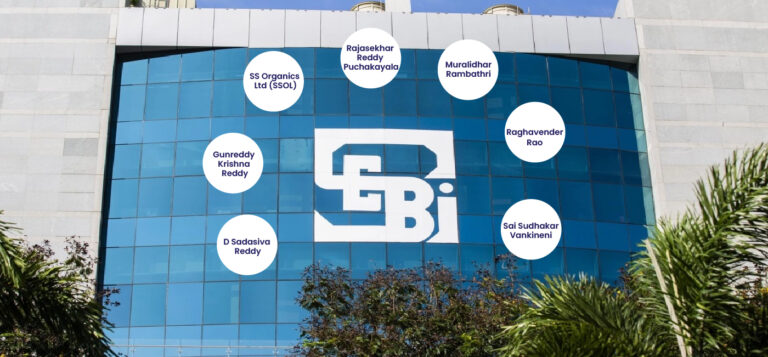
Continue reading to learn more. The watchdog levied fines of Rs 11 lakhs on seven entities for violating regulatory norms to SS Organics Ltd (now known as Oxygenta Pharmaceutical Ltd).

SEBI found that a loan transaction of Rs 15 crore between ARR Capital Investment Pvt Ltd and SS Organics Ltd exceeded the firm’s turnover for FY2019-20, exceeding the limit of material transactions.

It also found that ARR was the related party of SS Organics Ltd, and the three directors of ARR held directorship at SS Organics Ltd on the loan transaction date. Despite this, SS Organics Ltd did not take shareholders’ approval for the loan transaction, nor did they consider ARR as a related party and obtain consent from the audit committee under the Listing Obligations and Disclosure Requirements (LODR) regulations.

Additionally, SS Organics Ltd did not make subsequent disclosures of related party transactions as required under the norms. Sai Sudhakar Vankineni, D Sadasiva Reddy, Gunreddy Krishna Reddy, Muralidhar Rambathri, Rajasekhar Reddy Puchakayala, and Raghavender Rao each paid fines of Rs 5 lakh and Rs 6 lakh to SS Organics Ltd., which the SEBI imposed.

This incident highlights the importance of adhering to regulatory norms and obtaining proper transaction approval. Failure to do so can result in hefty fines and damage to the reputation of the company and its directors. It also emphasizes transparency in related party transactions and the importance of avoiding conflicts of interest. Companies should ensure that they comply with all applicable regulations and seek proper approvals to avoid facing similar penalties in the future.

SEBI’s Preventive Actions to Curb Market Violations

SEBI’s actions against these entities are a part of its efforts to prevent fraudulent trading and market manipulations. They have taken several preventive actions to maintain a solid and regulated Indian market.

SEBI has implemented strict regulations against wash trading, including rules prohibiting market manipulation, fraudulent and unfair trade practices, and insider trading. The regulator has also established a comprehensive surveillance system that monitors trading activities to detect and deter wash trading.

Furthermore, SEBI has mandated that brokers and trading members maintain proper documentation and records of their trading activities to ensure compliance with the regulations. It also encouraged market participants to promptly report any suspicious activities.

The regulator takes active actions to implement the Listing Obligations and Disclosure Requirements regulations, which ensure that companies listed on the Indian stock exchanges comply with specific standards of corporate governance, financial reporting, and disclosure.

SEBI has also been enhancing transparency and investor protection in the Indian market. They have implemented several measures to increase the flow of information to investors, including the requirement for companies to disclose material events and related-party transactions. SEBI has also implemented regulations to prevent insider trading and other market manipulations.

Final Words

SEBI’s recent actions against entities violating market regulations strongly indicate that the watchdog will not tolerate companies and individuals flouting regulatory norms. By imposing fines on the violators, SEBI has taken a step towards ensuring a level playing field for all participants in the capital market, promoting investor protection, and maintaining the integrity of the securities market.

It remains to be seen whether SEBI registered advisory will successfully implement the proposed scheme. In the meantime, it’s essential to emphasize the importance of conducting thorough due diligence before selecting any stock market investments advisory

FAQs

What is the penalty for violating SEBI’s regulations?

The penalty for violating SEBI’s regulations can range from a warning or a monetary fine to suspension of trading privileges or even criminal charges. The exact sentence depends on the nature and severity of the violation.

What can investors do to ensure compliance with SEBI’s regulations?

Investors can ensure compliance with SEBI’s regulations by staying informed about the latest rules and guidelines, conducting due diligence before investing in any security, and reporting suspicious activity to it or other relevant authorities. Investors can also consult with financial advisors or seek guidance to ensure compliance with its regulations.

What is the penalty for violating SEBI’s regulations?

The penalty for violating SEBI’s regulations can range from a warning or a monetary fine to suspension of trading privileges or even criminal charges. The exact penalty depends on the nature and severity of the violation.

Read more:  How Long-term investing helps create life-changing wealth – TOI.

Frequently asked questions

Get answers to the most pertinent questions on your mind now.

[faq_listing]
What is an Investment Advisory Firm?

An investment advisory firm is a company that helps investors make decisions about buying and selling securities (like stocks) in exchange for a fee. They can advise clients directly or provide advisory reports and other publications about specific securities, such as high growth stock recommendations. Some firms use both methods, like Research & Ranking, India’s leading stock advisory company, specializing in smart investments and long-term stocks since 2015.

An investment advisory firm is a company that helps investors make decisions about buying and selling securities (like stocks) in exchange for a fee. They can advise clients directly or provide advisory reports and other publications about specific securities, such as high growth stock recommendations. Some firms use both methods, like Research & Ranking, India’s leading stock advisory company, specializing in smart investments and long-term stocks since 2015.

An investment advisory firm is a company that helps investors make decisions about buying and selling securities (like stocks) in exchange for a fee. They can advise clients directly or provide advisory reports and other publications about specific securities, such as high growth stock recommendations. Some firms use both methods, like Research & Ranking, India’s leading stock advisory company, specializing in smart investments and long-term stocks since 2015.

An investment advisory firm is a company that helps investors make decisions about buying and selling securities (like stocks) in exchange for a fee. They can advise clients directly or provide advisory reports and other publications about specific securities, such as high growth stock recommendations. Some firms use both methods, like Research & Ranking, India’s leading stock advisory company, specializing in smart investments and long-term stocks since 2015.