Business

This section offers content on business updates and new rules made by the government which could affect the running of a business.

Yesterday we spoke of the rapid changes in the Renewable Energy sector and how Billionaire Barons in India are racing to add the best clean energy businesses to their portfolio.

Here is a deep dive into Reliance’s foray into green energy.

Reliance Industries Ltd (RIL) AGM’s have become synonymous with surprise announcements, and the 44th meeting on 25th June 2021 was no exception.

The AGM agenda had several initiatives like the JV with Google for its Android phone launch in September, the retail expansion plan, and the surprising Rs.75000cr allocation for green energy investments in the next three years.

This ambitious move to green energy from fossil fuels may have surprised Reliance shareholders. But it is in line with the Prime Minister’s vision to accelerate India’s venture into renewable energy production and use.

Experts believe Reliance foraying into green energy will spur others into taking action in this sector. The company’s ability to build cost-efficient end-to-end chains in O2C and retail may help to make their solar and energy storage businesses a success.

Mukesh Ambani unveiled his ambitious renewable energy dream. Let us understand the steps taken:

download 2025 11 12T112345.910

Creating the Council of nine: Mukesh Ambani has enlisted eight global technocrats to his nine-member New Energy Council. This council of advisers to governments will help the oil-to-gas business become a green energy giant.

The national research professor and independent director at RIL, R Mashelkar heads the council. Alan Finkel, special adviser to Australia on low emission technologies and national hydrogen strategy; Draper Prize winner for engineering, Rachid Yazami; Director of MIT’s energy initiative, Robert Armstrong; the father of photovoltaic, Martin Green; David Milstein, an expert at splitting water,  innovative energy storage systems, and carbon capture, utilization, and storage; Professor of energy engineering, Imperial College, Geoffrey Maitland and the pioneer of modern wind industry Henrik Stiesdal make up the council with Mukesh Ambani. 

The council will validate RIL’s plans for a tech-based system to make clean and affordable energy in 5-15 years. They guide on technical plans, ascertain opportunities, and counsel on partnerships worldwide.

RIL’s Partnerships: Reliance has partnered with green energy businesses in solar, battery, and hydrogen, which could contribute around 10% of the company’s pre-tax profits in five years.

  • REC: Reliance New Energy Solar Ltd (RNESL), the new subsidiary, acquired a stake in Norway-based REC Solar Holdings AS for 5782cr. REC manufactures polysilicon, PV cells, and modules with plants in Norway and Singapore.
  • Sterling & Wilson: RIL bought a 40% stake in Sterling & Wilson Solar Ltd, a leading EPC and O&M firm in renewables for 2850cr. They provide a comprehensive range of solar energy turnkey solutions. The solutions include design, procurement, building, project supervision, processes, and administration.
  • NexWafe: RNESL invested 337cr is a Germany-based firm NexWafe. It will give the Ambani’s access to NexWafe’s methods and expertise to manufacture solar wafers. RNESL will support NexWafe in completing the commercial development of its PV products on prototype lines in Freiburg. RNESL and NexWafe together will develop technologies and commercialize mono-crystalline ‘green solar wafers’ in India.
  • Stiesdal A/S: RNESL signed a cooperation agreement with Denmark-based Stiesdal A/S to develop technology, manufacture HydroGen Electrolyzers. They will collaborate on the development and implementation of new climate change technologies such as offshore wind energy, next-generation fuel cells to convert hydrogen to electricity for mobile and static generation, long-duration energy storage, and carbon-negative fuels.
  • Ambri: RNESL will invest around 371cr to acquire 42.3 million preference shares in Ambri, the Massachusetts-based company. The investment will help Ambri monetize and grow its liquid metal batteries for energy storage globally.

Dhirubhai Ambani Green Energy Giga Complex: RIL will develop a 5000-acre DAGEGC in Jamnagar, Gujarat. This complex will house the green energy factories manufacturing solar-grade polysilicon, solar panels, and modules, metallic silicon. These acquisitions and partnerships will help RIL expand its capacity to 10 GW from 4 GW and aid in Reliance’s goal to produce 100 GW of green energy before the end of 2030. 

The commitments and steps taken will tell you RIL is building a fully-integrated end-to-end renewable energy ecosystem for customers through solar, batteries, and hydrogen. No other company is financing the complete new energy value chain like Reliance. If Ambani’s pull-of their ambitious plan for green energy then the earnings will be significant.

Of course, like all plans, there could be several issues. Fossil fuel companies across the globe have not been able to transition to renewables.

Technologies for advanced storage and fuel cells are a work-in-progress. Despite considerable investment in the development of new energy technologies, the US government had modest results. Materials science in India is under-developed, while advanced technologies like Cobalt, lithium, and nickel are not available commercially.

RIL forays into a market with a thorough study and detailed roadmap. It could mean a complete disruption in the green energy sector or a disaster in the making. We will have to wait for the results and the impact of its decisions on the industry.

If you have liked this article, please share it. Look for our next on Adani’s ambitions for green energy.

Read more: Renewable Energy – The World’s Favorite Energy Source Today!

Read more:  How Long-term investing helps create life-changing wealth – TOI

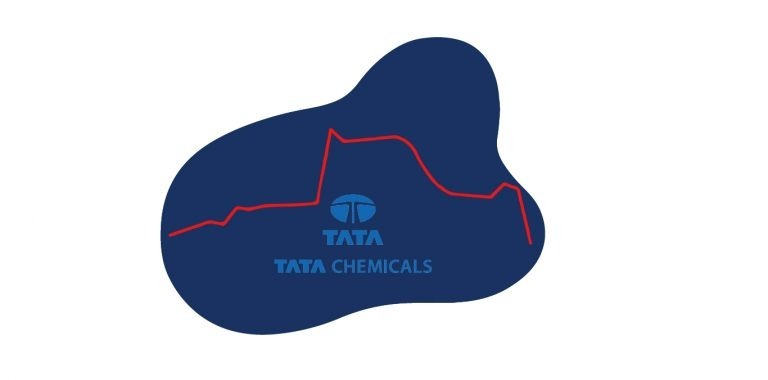
Tata Chemicals Fall in 2021 – The result season is on and looks like the markets are in correction mode. Is it a matter of concern? You will hear different answers from different people. Here is what we have to say and perhaps it is a right answer.  

Sure, the market’s corrected today. Both NIFTY and SENSEX were down ~2%. NIFTY Midcap 100 and NIFTY Small Cap 100 were also down ~2%. Several investors’ favorites like Tata Chemicals, Nalco etc. tumbled 10%-30% in October.

Why Did Tata Chemicals Fall in 2021?

But why did that happen?

There are several factors bothering the stock markets and fundamentally sound companies. For instance, look at Tata Chemicals.

download 2025 11 12T112106.676

Tata Chemicals announced its quarterly results yesterday and the next day stock plunged ~10%.

The company posted 88% jump in its Q2FY22 consolidated net profit to Rs. 248crore, while the net profit stood at Rs. 132crore the same quarter last year. A rebound in soda ash volumes in the U.S. and India predominantly aided the jump in profit.

The expenses rose to Rs, 2,805.45 crore from Rs. 2,499.16 crore in the year ago period due to rising raw material and power cost, which is an industry wide pain point.

Thus, companies from the chemical industry are experiencing high-pressure at operating margin or EBITDA level.

Tata Chemicals MD, R Mukundan said, “With the re-opening of businesses in all markets, the overall demand environment continues to be positive. While this positive momentum is expected to continue, the supply-side environment especially on energy costs and supply chain poses a challenge.”

The problem will continue to bother the industry in the near term. However, we feel that the disruption that the company is facing currently is more temporary in nature and in the long term Tata Chemicals could be a beneficiary of the structural shift that is happening in China due to stringent environmental norms.

Why did Nalco fall?

download 2025 11 12T112041.268

Second in the list is the National Aluminum Company Ltd. (Nalco). The internet is abuzz with queries like “why did Nalco fall, “the reason behind Nalco’s fall” etc.

Today the stock ended ~24% lower from the month’s high of Rs. 127.

Sharp increase in input costs (raw material) is one of the reasons for the fall in the Nalco’s stock price

The monsoon season has not been kind to coal miners impacting the production in several states of India especially in the Eastern region.

The steep increase in input costs is expected to dent margins in the near term. Though Nalco has captive mines and enough sourcing from Coal India, the increased demand and global demand supply gap for coal has impacted Nalco.

So, the management stated they would import some amounts of coal in order to continue their production. The import cost can increase the total cost of production in the near term.

Apart from input costs, the logistics/freight costs are also rising, which will impact the profitability of the likes of Nalco.

The question is how should you look at this correction of Tata Chemicals?

Wise investors would look at this correction in fundamentally sound companies as an opportunity to buy as these stocks are cheaper now. Ordinary investors, on the other hand, would believe it is a bad time to invest. He/she would wait till the stocks return to their pre-correction levels.

A wise investor looks at a dip in price as an opportunity while an ordinary investor looks at a rise in price as an opportunity.

So, you must decide, which one do you want to be.

The country has undergone tremendous positive changes over the last few months. These developments and key policy reforms mean India is poised for growth.

Here are a few major developments-

Big Trillion Plan- Last month, the Government unveiled a four-year National Monetization Pipeline (NMP Vol 1 & 2) worth an estimated Rs. 6 lakh-crore. This plan aims to unlock value in the Infrastructure Line Ministries’ assets. The Creation through Monetization philosophy is directed at tapping private sector investment for new infrastructure.

Retails investors contribute to the rally– 15.2 Million Retail investors have added to the investor base since April 1. This implies retail investors are no more riding pillion but are major contributors to the recent rally.

The sixth largest stock market- India became the world’s sixth largest stock market, overtaking France for the first time in market capitalization.

FIIs Continue the Buying Spree- The fear of taper tantrum has reduced. Irrespective of negative comments from the bankers around the world, the Foreign Institutional Investors (FII) continue their buying spree. The NSDL data says, FIIs buying stood at Rs. 2.28 trillion in September.

PLI Scheme- The government approved a Production-linked incentive (PLI) scheme for the textile sector worth Rs. 10,683 crore. The automobiles and auto components industry is set to receive an outlay of Rs. 25,983 crore under the PLI scheme.

NBFCs loosen their Purses- After a brief pause during the COVID-19 pandemic, the NBFCs and Banks have begun filling creditors’ pockets as the demand for loans picks up. Edelweiss and IIFL are now lending Rs.4, 000crores a month. The country’s largest mortgage lender HDFC Ltd. is witnessing a remarkable rise in home loan demand similar to pre-COVID levels. 

Bad Bank to tame the Worsts: After its announcement in the FY22 Budget, the Union Cabinet approved 30,600core government guarantee for the National Asset Reconstruction Company (NARCL), facilitating the formation of Bad Bank.

With all these and other developments happening in the periphery, you must look at the bigger picture instead of fearing short-term corrections in the stock market and waiting for the right time to invest.

Today, the Sensex is above 60,000. Sure, it’s a big number. But can you imagine how high the stock market will be, if all things fall in place as planned.

Nick Murray’s quote says it for us

“Timing the market is a fool’s game, whereas time in the markets is your greatest natural advantage.”

Need sound advice on where to invest, how much to invest, for how long to invest in the stock market? Subscribe to 5 in 5 Wealth Creation Strategy and get a portfolio of 20-25 fundamentally strong stocks tailored to your goals and risk taking ability.

*Disclaimer: Information mentioned in this email is for educational purposes only. Please do not consider it a recommendation to buy/sell/hold from Research & Ranking.

Read more:Timing The Market Is A Fool’s Game – Look At The Big Picture

Read more: About Research and Ranking.

Have you heard of the mills that became defunct and had to close down? What about companies that set up operations and then suddenly disappeared? Well, if you asked someone a few decades ago what happened to XYZ Company – the pet   buzzword would have been Woh company ka deewala nikal gaya.

Did we not have laws governing insolvency, bankruptcy before the IBC code in 2016?

We did have several provisions such as

  • The Sick Industrial Companies (Special Provisions), Act 1985,
  • The Provincial Insolvency Act 1920,
  • The Presidency Towns Insolvency Act, 1909,
  • The Code of Civil Procedure, 1908, and the SARFAESI Act, 2002.

With so many provisions and changes, why then did we need a new IBC code?

download 2025 11 12T111953.313

India has several provisions and laws for liquidation and bankruptcy, yet, these laws did not solve complex issues while NPA kept rising.  These disparate provisions did not fulfill the purpose they were established for. What companies needed was a one-stop solution for insolvency, which was missing.

What went wrong with the previous provisions?

  • The Sick Industrial Companies Act, 1985 failed as it considered the final balance sheet to detect insolvency instead of looking at the sick company’s future cash flow.
  • Section 424A and 424L introduced in the Indian Companies Act, 1956, to deal with revival were never enforced.
  • The Recovery of Debts due to Banks and Financial Institutions Act, 1993, planned special Debt Recovery Tribunals and the Debt Recovery Appellate Tribunals to unlock the public money and use it to develop the country. However, this act did not apply to those banks and Financial Institutions (FIs), which had less than Rs. 10lakh in dues.
  • The SARFAESI Act, 2002, considered the interests of only secured creditors to act against the borrowers. However, this act failed to consider unsecured creditors’ rights while taking action.
  • The corporate debt restructuring mechanism (CDR) in 2001 was for banks and FIs with exposure, not more than Rs. 10cr. CDR was non-statutory and voluntary or based on an agreement between the creditors and borrowers to restructure debt.
  • RBI announced the Strategic Debt Restructuring in 2015 to change the company management to deal with stressed assets. SDR did not solve as many cases as expected.

In 2016, the Government enacted the Insolvency and Bankruptcy Code (IBC) after the previous laws were either time consuming, using the wrong approach or indicator to detect bankruptcy. With several merger and acquisition cases coming to the surface, Insolvency and Bankruptcy Code, 2016 has become a talk of the town. So, this week we take a deep dive into recent cases of   IBC one at a time.

Read more:  How Long-term investing helps create life-changing wealth – TOI

Ratan Tata’s tweet “Welcome home, Air India,” says it all. Not only did the Tatas rejoice, but so did the country. It was a landmark victory for the salt to automotive conglomerate. If you are like us; then, you had several questions in your mind as soon as you heard the news.

The topmost would be –How will the Tatas revamp Air India? Do they have a plan of action in the works?

Yes, they most certainly do have a plan.

The final chapter in our Maharaja’s Flight Back Home series takes a deep dive into the plans and the changes that may follow to revamp Air India’s fleet, operations, and reputation.

What the Tata’s get from the Government

The Tata’s get access to aviation assets, which take years and tons of money to build. The Group will get 118 from the 141 planes in Air India’s fleet. This lineup will include 58 Airbus A320 family planes, 14 Boeing 777, 22 B787 Dreamliner of AI, and 24 B737 of AI Express in flight-worthy condition. A good mix of narrow and wide-body airplanes and a trained workforce will make the Tata group tough contenders in the aviation space.

According to a Reuters report, the Tatas will now have entrees to slots at hectic foreign airports, profitable destinations such as the Gulf due to bilateral flying rights between foreign nations. The Tatas can now make the most of India’s Star Alliance Global Network membership.

The deal includes 100% of Air India’s money-making low-cost arm Air India Express, 50 percent of AISATS that offers cargo and ground handling services at major Indian airports. Tata Sons will control Air India’s 4,400 domestic, 1,800 international landing and parking slots at domestic airports, and 900 slots at overseas airports.

Adding Air India’s 100% stake to the majority stakes in budget airline Air Asia India and full-service carrier Vistara gives Tata Sons an unmatched advantage.

Now you know what’s in Tata’s basket. Here is a look at the SWOT Analysis for Air India.

download 2025 11 12T111741.862

Tata’s plan for revival and turnaround.

The turnaround of the loss-making behemoth Air India will not be easy, but the Tatas have a plan. The group intends to make extensive changes at the former national carrier to cut costs and streamline operations ensuring a better position among competitors. Some of the changes planned are:

  • Appointing a new Board once the government transfers the carrier to Tata Sons by December 2021.
  • The holding company, SPV M/s Talace, and Tata Sons plan to put a new leadership team for the carrier.
  • The company plans to tap into TCS and TajSATS capabilities to change Air India’s existing operating model and cost structure. In the words of a Tata group executive, Did you know TCS runs the IT systems and applications of most national carriers of other countries, except India? Once the deal concludes, TCS will step in to manage A to Z of Air India’s IT and digital operations.”
  • Doing so would improve the carrier’s efficiency reducing operational and maintenance costs. TCS manages Vistara’s technology and IT and digital systems for Singapore Airlines, the second-best carrier globally.
  • A new CEO will be appointed, while the finance team will work to fix the commercial issues like reducing lease liabilities, renegotiating vendor contracts, and refinancing expensive debt. They will also leverage their relationship with Boeing and Airbus to get better aircraft replacement deals.

These changes are just the beginning. We now have to wait to see how things shape up and if Air India regains its standing and reputation.

Liked this article? Share with your friends. In the meanwhile check our 5 in 5 Wealth Creation Strategy and subscribe.

Read more:

The Maharajah Finds Its Way Back Home To TATAs

What Will Tata Do With Three Airlines In Its Stable Now?

Read more:  How Long-term investing helps create life-changing wealth – TOI

What Will Tata Do With Three Airlines In Its Stable Now?

The Prime Minister Narendra Modi said, “The government has no business to be in business,” earlier this year. It was an announcement of the Government’s ambitious disinvestment and privatization plan, and Air India’s sale is the beginning of it.

In the previous article we saw, the government deplaned the national carrier and sent it back to who it belonged to – the Tatas. However, the question now is “What will the Tatas do with Three airlines in their stable?”

Yes, THREE Airlines! Besides Air India, Tata has holdings in two major airlines. The group has Vistara, a joint venture with Singapore Airlines Ltd. for full service domestic and international flights. They also hold a majority stake in a low-cost carrier Air Asia with serious Malaysian entrepreneur Tony Fernandez.

For starters, here is a bit about Vistara, Air Asia and Air India.

Air Asia (India)

Headquartered in Bangalore, Air Asia (India) is a joint venture (JV) between Tata Sons and Malaysian entrepreneur Tony Fernandez’s Air Asia Investment. Air Asia is the first foreign company to set-up a subsidiary on the Indian soil.

After the government nationalized Tata Airlines to form Air India, Tatas bade goodbye to the skies. It is Air Asia that brought the salt to automotive conglomerate back to the flying business after 60 years. Air Asia (India) began operations on June 12, 2014 with Tatas owning 51% stake. In December 2020, Tata Group increased its initial stake to about 84% from 51%.

Currently, Air Asia (India) has 28 aircrafts covering 17 destinations across the country with 240 direct and indirect flights. 

Tata SIA Airlines

Tata SIA Airlines, a joint venture between Tata Sons and Singapore Airlines, operates under the brand name Vistara, a domestic and international full-service carrier. Tata sons holds 51% stake in the JV while Singapore Airlines owns the remaining 49% stake.

The company was formed on November 5, 2013. Vistara took its first flight on January 9, 2015 from Delhi to Mumbai. In the last six years, Vistara has rapidly expanded its standing, both in terms of network and service proposition. Currently, the airline has a fleet of 45 aircrafts – 

  • 35 Airbus A320,
  • 6 Boeing 737-800NG,
  • 2 Airbus A321neo
  • 2 Boeing B787-9 Dreamliner.

Air India

Tata won back Air India from the government after a decade-long bidding. Post-acquisition, TATAs will own 100% stake in Air India and its subsidiary Air India Express. It is a low-cost carrier airline that focuses on short-haul international operations, especially in Middle East. TATAs will own 50% stake in the Air India SATS that offers on ground and cargo handling services. Besides, it will get a large pool of 13,500 permanent and contractual human resource.

Brands like Air India, Indian Airlines and the Maharaja will come under the TATAs ownership. Currently, Air India has a fleet of 118 wide-body and narrow body aircrafts and AIXL has a fleet of 24 narrow body aircrafts.

Race to gain Market Share

It’s an opportunity for the Tata group to gain a noteworthy market share in the Indian aviation industry. Indigo dominates the industry with 57% market share as of August 2021. Spicejet that sits on the 2nd spot lost its market share from 16.8% in June 2020 to 9.1% in June 2021 because of the pandemic.

With Air India, Vistara, and Air Asia having a current combined market share of 26.9%, the salt to airline conglomerate will emerge as the second-largest domestic airline after Indigo once all three airlines consolidate operations.

Image

Final Words

We think consolidation is the way forward for the Tata Group. Tatas love for the flying business is not new. However, despite flying major airlines, the Tatas flying affair has not brought them much business success. As the COVID-19 pandemic marred air travel, Air Asia booked a loss of Rs. 1533cr in FY21 while Vistara recorded Rs. 1,612cr in loss.

Only time can answer how things turn out for both Air India and its former parent.

Look out for the next article, where we delve more into Tata’s plan for Air India’s turnaround.

Meanwhile, subscribe to our 5 in 5 Wealth Creation Strategy and start your wealth creation journey today.

Read more: The Maharajah Finds Its Way Back Home To TATAs

Read more:  How Long-term investing helps create life-changing wealth – TOI

68 years after Government nationalization the Maharajah finds its way back to the TATAs making 8th October 2021 a landmark day for the TATA Group.

The TATAs won the bid for 100% share in the national carrier last week. Tata’s SPV Talace submitted the winning bid of 18000cr, beating Ajay Singh’s offer of 15100cr enterprise value. This successful sale of the national carrier is the beginning of the Centre’s privatization plan bringing an end to its 10-year quest for a buyer.

The Beginning

Air India story began in a tiny airfield in Karachi. Then Karachi was still a part of India.  On a balmy morning of October 15, 1932 JRD Tata took off for Chennai in a single-engine Puss Moth plane. It was India’s first-ever private weekly mail service.

1946 saw JRD Tata’s fledgling airline carrying one of three passengers in India while it owned nearly half the 50 plane fleet by that time.

1948, Air India went international, and then it grew, getting a worldwide reputation and recognition.


The Government Bungle

The government took over Air India in June 1953 despite India’s debt-ridden aviation industry that had too many airplanes and airlines shutting down. The government merged about a dozen airlines of which Air India was the best operator. 75% of foreigners visiting India traveled in Air India by 1968 and it continued to shine till the 90s. Come the 90s and things with the carrier went downhill. Brutal competition and the merger with domestic Indian Airlines in 2007 were further reasons for the downfall.

Since 2008, the carrier has banked on taxpayer-funded bailouts to stay operational. Air India had losses to the tune of ~$ 2.6mn per day with a debt of more than $8bn. Its on-time performance and service deteriorated though it had some of the best pilots in the industry. The carrier has come a full circle and is now back with Tata.

The decade-long Buyer hunt

The national carrier was making losses every day and racking up debt since its merger with Indian Airlines in 2007. The government had no option but to sell its stake, which took two decades and three attempts for the carrier to change hands.

Here is a look at the disinvestment plan over the years

2000 -2001: NDA government tried to sell 40% of its stake

Under the Atal Bihari Vajpayee, the NDA government tried to sell a minority stake, i.e., 40% in Air India. Singapore Airlines with the Tata Group were interested in buying the stake. However, they pulled out due to the trade union’s objections to privatization halted the government’s disinvestment plan.

2012: Financial restructuring plan

The UPA regime approved a turnaround plan (TAP) and a financial restructuring plan (FRP) for Air India to mitigate the losses.

2018 March: Government invites EoI to sell 76% of its stake

The Cabinet Committee on Economic Affairs gave in-principle approval for the strategic disinvestment of Air India and five of its subsidiaries. The Centre invited expressions of interest (EoI) to buy 76% of its stake. The buyer would have to take over ~70% of the debts amounting to 33,392cr.

The deal included a 100% stake in Air India Express, Air India’s low-cost subsidiary, and a 50% stake in the ground handling arm AISATS. However, till the end of May 2018, the government did not receive any bids. The chief reasons for no EoIs were the Centre’s retention of 24% of Air India’s stake and too high a debt takeover amount. 

The final Buy-out

2020 January: Government invites EoI for 100% stake in Air India.

The Centre invited fresh EoIs to acquire the airline in Jan 2020 for 100% stake unlike its attempts to sell before. The new deal included 100% stake in Air India Express and 50% in ground arm AISATS.

The Centre lowered the debt. The buyer would takeover to Rs. 23, 286cr from its total debt of Rs. 60,074cr in March 2019.

October 2020 saw a further relaxation in the terms. The government let the buyers decide on the amount of debt they were willing to absorb. The Centre received multiple offers, but they extended the deadline five times till 14th December 2020. The pandemic added to the delay in the process.

The government invited financial bids in April fixing 15th September 2021 as the last date for bid submission. The government received 7 bids. But the government disqualified five bidders as they didn’t meet the requests the PIM/EoI set out despite giving the bidders a chance to clarify.

The Centre received two sealed bids on the due date with non-financial bid documents and bid security from the two qualified bidders – M/s Talace Pvt Ltd, and SpiceJet promoter Ajay Singh-led consortium. The government fixed a final reserve price of Rs. 12,906cr after receiving the sealed bids. The Tatas quoted

Rs. 18000cr while Ajay Singh consortium bid Rs. 15100cr. The Tatas won the bid.

The Bid Details

The reserve price was Rs. 12906cr. Tatas quoted 18000cr higher than the reserve price to win the bid. The government will receive Rs. 2700cr in cash while Rs. 15,300 is debt. The Centre will hand over Air India to the Tatas by the year 2021.

download 2025 11 12T111634.205

The Tatas now have three airlines under their umbrella. The wait begins to see what happens next to the white elephant –Air India. Keep an eye out for our next email in this series. While you peruse this article, consider signing up for the 5 in 5 Wealth Creation Strategy.

Read more:  How Long-term investing helps create life-changing wealth – TOI

Electric Vehicles or EVs, as they are commonly called, are vehicles that run on electric power, either partly or fully. EVs are environment-friendly and have low running costs due to lesser moving parts.

As the chants for electrification get louder and louder across the world, it makes sense to examine the topic a bit more closely. We shall see what is the EV situation in India and globally.

Vehicle electrification: A brief history

The concept of EVs is older than International Combustion Engines (ICEs). Scottish inventor Robert Anderson created the first electric carriage in the 1830s. Its battery was not rechargeable and required replacement every time it ran out. However, electric-powered vehicles continued to be in use in the USA and some parts of Europe. New York had a fleet of electric taxis in the 19th century and battery swapping stations.

With the advent of ICEs, a major roadblock of frequent battery charging/swapping was removed and ICEs gained popularity the world over. Thereafter, there was sporadic research on EVs whenever crude oil flared or geo-political tensions mounted. However, for a large part, ICEs rule the roost.

It was not until the turn of the century that EV development found serious interest from companies and Governments. Companies such as Toyota (Prius), Nissan (LEAF), and Tesla (Model S) took the EV chapter ahead and “glamorized” EVs. Here’s a look at the EV evolution:

Advantage EVs

So why has the world started looking at EVs as the technology of the future? Aren’t we happy driving petrol/diesel-driven vehicles? Following are some reasons:

Reduces climate change 

Effects of fossil fuels such as global warming, mass extinction of species, and growing weather calamities have forced lawmakers across the globe to look at cleaner alternatives

Lowers import bill

Countries such as India don’t have any significant crude reserves and have to import fossil fuel for their energy requirements. India incurred a crude import bill of $101bn in FY20 requiring to import 82% of its total crude needs. Hence, there is growing interest in technologies that look away from crude oil dependency – electric vehicles being one of them.

Reduces pollution levels

According to WHO, India is home to 14 of the world’s 20 most polluted cities. A major reason for high pollution levels is fuel emissions.

Advancing renewable energy technology
Over the past few years, strong advancements in wind and solar energy have brought down the cost of these forms of energy. This has stirred interest in EVs.

Low maintenance
While an IC vehicle has hundreds of moving parts, an EV has less than 30. This means less wear and tear and a low cost of ownership.

Quieter operation
EVs make much lower noise compared to conventional vehicles since there’s lower friction between moving parts. In fact, EVs are so silent that some OEMs add false sounds to make them safe for pedestrians!

Incentives for buyers
Governments in India (State and Central) are looking at ways to incentivize buyers to go in for EVs. They are offering lower vehicle tax, tax incentives, buyback

India’s EV Policy

The NITI Aayog, India’s policy think-tank, has given several suggestions to the Government of India for EVs. Accordingly, the following policy has been enacted:

    • Reduce primary oil consumption in transportation.
    • Facilitate customer adoption of electric and clean energy vehicles.
    • Encourage cutting-edge technology in India through adoption, adaptation, and research and development.
    • Improve transportation used by the common man for personal and goods transportation.
    • Reduce pollution in cities.
    • Create EV manufacturing capacity that is of global scale and competitiveness.
    • Facilitate employment growth in a sun-rise sector

The government adopted the Faster Adoption and Manufacturing of Hybrid and EV (FAME) scheme in 2015, with an allocation of Rs. 895cr, which provided subsidies for e-2Ws, e-3Ws, hybrid and e-cars, and buses.

The FAME II scheme, which came into effect from April 2019, had proposed spending of Rs. 10,000cr. It was to be used for upfront incentives on the purchase of EVs (to the extent of Rs. 8,600cr and for supporting the deployment of charging infrastructure (Rs. 1,000cr).

bXb7RHmWZCAAAAAElFTkSuQmCC

Source: Department of Heavy Industries, Ministry of Heavy Industries and Public Enterprises, Government of India

THE EV Ecosystem

Source: Avendus Capital Pvt Ltd

    1. Policy: The FAME II policy is India’s first step towards boosting EV penetration in India, though a lot needs to be done. The Government has taken baby steps by introducing e-buses for public transport in some cities. EVs for private use will go up once there are incentives, subsidies, and other such measures.
    1. Batteries: Battery cost is nearly 40% of the cost of the vehicle, hence reducing the same is key to increasing EV adoption. Raw materials for battery manufacturing – mainly Lithium and Cobalt – are not available in India, hence raw material dependency will continue (currently India imports crude). Currently, Indian companies only assemble imported battery packs, do not manufacture batteries.


The Lithium-Ion Situation in India

XzPZbYAAAAASUVORK5CYII=

Source: Times of India


    1. OEM: Most OEMs are focused on specific sub-segment of the automobile space. 2Ws have seen the most momentum, given that nearly 79% of the Indian auto market (by volumes) comprises of 2Ws. E-3Ws have started by way of e-Rickshaws while e-4Ws are gaining prominence in shared mobility.
    1. Grid: There are two major issues that grids have to address
      1. Ability to handle peak load
      2. Grid composition must be ideally dependent on renewable generation rather than coal-dependent generation.
    1. Charging Infrastructure: India will need to simultaneously develop home charging and public charging infrastructure to boost EV adoption.


FAME I added 314 charging stations in India, FAME II 2,867

Source: FADA 

    1. Customers: EV adoption in India is highest in public transport (buses) and shared mobility. E-2Ws have been the next ones to begin adopt since the cost differential between ICE 2Ws and EV 2Ws is lower than 4Ws.

Lithium-ion price reduction – The biggest enabler

While demand for Lithium is expected to increase with growing EV adoption, prices, surprisingly, have continued to fall continuously. Over the past ten years (2010 – 2020), Lithium prices have dropped 88%. This is due to the following reasons:

    • The annual supply of Lithium is expected to grow from 2,15,000 tonnes in 2019 to 7,15,000 tonnes in 2025. This will be led by fresh supplies from Argentina, Australia, and Chile.
    • Three new mines will come up in North America in the next couple of years, taking its share in global supply to 5% by 2025.
    • New mines and increased production have brought an enormous quantity of material to market, hammering lithium prices.


Volume Weighted average of lithium-ion battery price (USD)

Source: Statista

Lithium production to triple between 2019 and 2025

Source: S&P Global

While lower Lithium prices are music to the ears of Auto OEMs, it is bad news for miners of the metal. Lower prices mean that investments in mining may become less profitable, reducing the pace of new investments. The pandemic reduced demand for EVs, thereby depressing prices further.

However, the freefall in Lithium prices is expected to get arrested by 2022. Several global companies have delayed or postponed expansion plans because of depressed demand currently. Some examples of postponed projects are:

    • Chile’s SQM, the world’s second-largest Lithium producer, postponed key expansion at its Atacama salt flat operations from the end of 2020 to late 2021.
    • Australian company Wesfarmers delayed its investment decision on the Mount Holland project in Western Australia by a year, to early 2021.
    • World leader Albemarle postponed its project to buy 1,25,000 tonnes of processing capacity. It also revised a deal to buy into Australia’s Mineral Resources Wodgina lithium mine and said it would delay building 75,000 tonnes of processing capacity at Kemerton, also in Australia. (Source: Mining.com)
    • China’s Tianqi Lithium Corp., the country’s top producer of the battery metal, also postponed commissioning the first phase of its flagship plant in Kwinana, as it struggles to pay back debt. (Source: Mining.com)

Snapshot of Global EV industry

Country-wise EV sales and penetration

Source: IEA


Country

Comments

China


EV sales have grown fastest in the world at 61% CAGR over the past 7 years

The government offered subsidies worth $60bn into the EV eco-system over the past decade to push sales

Was planning to phase out subsidies in 2020; however, declining sales due to lower subsidies in 2019 forced the Government to keep subsidies unchanged in 2020

While China issues only a fixed number of ICE license plates every month, there is no restriction on EV license plates

The Government made it mandatory for Chinese OEMs to make or import at least 10% EVs out of their total vehicle production in 2019 and 12% in 2020

The Chinese government exempts electric vehicles from consumption and sales taxes, it also waives 50% of vehicle registration fees for EVs

By 2030, 40% of all vehicles manufactured by Chinese Auto OEMs will have to be electric

USA

EV adoption in the USA has been slower than in China and Europe since gasoline prices in the USA are lower than those in China and Europe

Passenger car in the market in the USA has a large proportion of trucks, SUVs, etc. were achieving lower TCO vis-à-vis ICE is difficult

California is the largest EV market in the USA since it offers the highest incentives ($2,500 – $7,000), discounts on recharging, and tax credits

The US EV market is dominated by Tesla which controls nearly half the market

EV growth slowed in 2019 because of the Trump administration’s phaseout of the federal tax credit and loosening of fuel economy standards

As the Biden administration is undertaking to electrify the entire fleet and more and more companies implement sustainability targets, the EV share will only continue to go up

Europe

Europe has countries with some of the highest EV penetration — Norway (56%), Iceland (25%), and Netherlands (14%).

Several European countries have created a difference between ICE and EVs to taxes, fees, tolls, and parking fees

Most countries in Europe like Norway, the UK, France, the Netherlands, and a few others have set dates (in the next two decades) to ban conventional ICE vehicles

In 2019, France set a carbon-neutral target year of 2050, with the UK following suit

2020 was the target year for the European Union’s CO2 emissions standards that limit the average carbon dioxide (CO2) emissions per kilometer driven for new cars

Many European governments increased subsidy schemes for EVs as part of stimulus packages to counter the effects of the pandemic.

Japan

Japan adopted EVs ahead of other countries, because of a dearth of oil

The Japanese dominated the electric hybrid car market with Toyota Prius, the highest-selling low-emission car till today.

Japan is promoting the Hydrogen economy in a big way. Availability of non-fossil electricity makes the proposition very attractive for Japan.

Japan’s network of EV-charging infrastructure is far superior to other EV markets — there are more battery recharge points than petrol stations across the country

Japan has pledged to switch to emission-free vehicles completely by 2050.

India

Although the current market share of EVs in India is less than 1%10, India’s commitment to the EV30@30 global initiative targets a 30% new sales share for EVs by 2030

This translates to an addition of about 24 million two-wheelers, 2.9 million three-wheelers, and 5.4 million four-wheelers to its fleet in the next 10 years

India’s EV market faces roadblocks because of a preference for mass and low-cost mobility since these are highly price-sensitive

India is experimenting with e-Mobility for public transport and has deployed electric inter-city buses across some of the major cities.

Going forward, the industry believes that the market will grow very rapidly in the upcoming years as many state governments are planning to convert the existing fleet of autos into electric under their EV policies

A look at the future for electric vehicles

Several nations around the world have pledged to convert a majority of their fleet to electric over the next few decades. To date, over 20 countries have announced the full phase-out of internal combustion engine (ICE) car sales over the next 10‑30 years, including emerging economies such as Cabo Verde, Costa Rica, and Sri Lanka. More than 120 countries (accounting for around 85% of the global road vehicle fleet, excluding two/three-wheelers) have announced economy-wide net-zero emissions pledges that aim to reach net zero in the coming few decades.


Over 20 countries have electrification targets or ICE bans for cars, and 8 countries plus the European Union have announced net-zero pledges

Source: International Energy Agency

The way to look at the future of EVs is through two policy targets

    • Stated Policies Scenario 

In the Stated Policies Scenario, the global EV stock across all transport modes (excluding two/three-wheelers) expands from over 11 million in 2020 to almost 145 million vehicles by 2030, an annual average growth rate of nearly 30%.

    • Sustainable Development Scenario 

In the Sustainable Development Scenario, the global EV stock reaches almost 70 million vehicles in 2025 and 230 million vehicles in 2030 (excluding two/three-wheelers).


Global EV sales by scenario, 2020-2030 – Sales in Millions

Stated Policies Scenario

Source: International Energy Agency

The coming years are expected to usher in recent developments for EVs on a global scale. Some key areas of focus could be:

    • Cheaper and more efficient batteries with a longer range.
    • Greater Government support to reward EV buying vis-à-vis ICEs.
    • Safety issues getting addressed (Lithium batteries)
    • Penetration of electrification of vehicles to CVs like heavy-duty trucks (where EV penetration is currently the least)
    • Favorable investments from companies as profitability goes higher
    • Better charging infrastructure involving a combination of home charging and public charging
    • Lower TCO for EVs compared to ICEs
    • For India, supply chain localization is crucial to bring down the cost of batteries
    • Battery disposal/recycling is an issue that will have to be taken care of, given that Lithium is a poisonous element that can affect soil, water, and the environment if disposed of incorrectly.

Given the current scenario of EV adoption, the following is the extent to which vehicles of different countries will get electrified:

Share of EVs to total vehicles by segment 2030 – China

Share of EVs to total vehicles by segment 2030 – Europe

Share of EVs to total vehicles by segment 2030 – India

Share of EVs to total vehicles by segment 2030 – Japan

Share of EVs to total vehicles by segment 2030 – the USA

Share of EVs to total vehicles by segment 2030 – Rest of the World

Source: International Energy Agency

Top EV stocks in India

Maruti Suzuki

Maruti Suzuki the undisputed market leader in the passenger vehicles segment in India is all set to launch its Maruti Suzuki WagonR electric vehicle in the latter half of 2021. The vehicle which is currently in advanced testing stages in actual road conditions may turn out to be a mass-seller with the right pricing strategy as has been the case with most passenger cars launched by the company in the past.

Minda Industries

Minda Industries is a leading manufacturer of automotive components and solutions with a formidable global presence. As many of its product offerings like electronic components, switches, lights, sensors can be used on both EVs and conventional vehicles the company enjoys a huge advantage.

Amar Raja Batteries

Battery is a major component of the electric vehicles. Amara Raja a leading player in the battery segment is currently building a Lithium-ion assembly plant. The company has tied up with several state governements for setting up battery charging stations for EV’s.

Motherson Sumi

Established in the year 1986, Motherson Sumi Systems Limited (MSSL) is a leading specialized OEM automotive component manufcaturer globally. As most of its product offerings like wiring harnesses, mirrors. moulded plastic interior and exterior parts, bumpers, dashboards and door trims and rubber parts are compatible with EVs the company enjoys a significant advantage.

Tata Motors

Tata Motors has taken a huge lead in the EV segment in India with its Nexon SUV being the largest selling car in the segment since launch. The company has made significant investments to increase its offerings in the EV segment. 

Bottom line

With depleting fossil fuels and rising concerns of pollution caused by conventional vehicles, there is absolutely no doubt that EVs are the future of road transportation. However as in the case of any industry, not all companies in this segment will create wealth for investors. Hence it is important to invest carefully after detailed research. Click here for expert help.

As we saw yesterday, the banking sector is going through revolutionary changes led by privatization initiatives of the Government. Among other changes, privatization will lead to faster technology adoption for banks. And technology is something that will differentiate banks going ahead.

Till recently, physical presence (through branches or agents) was the key for banks to perform their activities. One with the largest physical presence dominated. Customers had to reach out to banks. That was true for an extremely under-banked India prior to two decades. While we are still under-banked, the gap is reducing. Banks are reaching out to customers and are finding new ways to reach out.

download 2025 11 12T103713.708

In a country as under-banked and geographically vast as India, technology can only be the way forward for enhancing banking presence. Let us take a look at what are the technology trends till now:

  • Migration of off-line transactions to online – Several functions such as payments, fund transfers, loan disbursal, and passbook updates are done without stepping into a branch.
  • Online KYC – KYC verification is done online by submitting scanned copies of key documents.
  • Spoilt for choices – Previously, the choice of a bank was decided by how close by the branch is. With digital banking, proximity is no longer a constraint, especially in urban areas. The choice of a bank is decided by speed, the accuracy of services, and customer relationship management.
  • Bank credit growth – The right emphasis on banking penetration, easy money policies by the government and RBI, and readiness of consumers to avail bank credit has led to the growth of the sector. Bank credit to the private sector has grown from just 8% of GDP in 1960 to 50% of GDP in 2020, according to data from World Bank.
download 2025 11 12T103646.113
  • Tie-ups with Fin-Tech – Banks are increasingly tying up with FinTech’s to serve a particular need of their customers. For FinTech’s, it opens up a new avenue for growth by getting access to a ready pool of customers.

For banks, it gives them a new way of serving customers without investing too much into the concerned technology and letting the specialists do the job. Fin-Techs essentially build on top of what banks are already doing. Some banks even buy a stake in some of the start-ups to hasten their growth. Some challenges remain such as tech stack integration, data field matching, API matching, revenue/profit sharing, etc. With faster technology adoption, these wrinkles could get ironed out in the coming years, as both parties realize that collaboration is the way ahead.

An illustration – Bank of Baroda’s various Fin-Tech tie-ups

Product / Segment

Tie up with FinTech

What the FinTech does

Low ticket loans to SMEs

CreditMantri

Site for Credit Analysis and Free Credit Score Online

Vehicle Financing

Uber

Personal Mobility Aggregator

Housing Loan (Poaching customers from other lenders)

Switchme

Helps consumers switch their home loan interest rates to a lower percent

Education Loans

Gyandhan

Education Financing Marketplace

MF Investment

Fisdom

An automated investment service provider that manages a personalized online investment account.

Payment Gateway

RazorPay

Payments Solution

Product / Segment

Tie up with FinTech

What the FinTech does

Low ticket loans to SMEs

CreditMantri

Site for Credit Analysis and Free Credit Score Online

Vehicle Financing

Uber

Personal Mobility Aggregator

Housing Loan (Poaching customers from other lenders)

Switchme

Helps consumers switch their home loan interest rates to a lower percent

Education Loans

Gyandhan

Education Financing Marketplace

MF Investment

Fisdom

An automated investment service provider that manages a personalized online investment account.

Payment Gateway

RazorPay

Payments Solution

Product / Segment

Tie up with FinTech

What the FinTech does

Low ticket loans to SMEs

CreditMantri

Site for Credit Analysis and Free Credit Score Online

Vehicle Financing

Uber

Personal Mobility Aggregator

Housing Loan (Poaching customers from other lenders)

Switchme

Helps consumers switch their home loan interest rates to a lower percent

Education Loans

Gyandhan

Education Financing Marketplace

MF Investment

Fisdom

An automated investment service provider that manages a personalized online investment account.

Payment Gateway

RazorPay

Payments Solution

Source: Bank of Baroda Website

  • Competitive rates – Technology adoption has helped banks to save operating expenses, allowing them to pass on rates to their customers. Banks have become extremely aggressive in acquiring clients from competitors by luring them with lower (loan) or higher (deposit) rates. Online loan market places such as Bank Bazaar help customers compare loan rates so that they can make the appropriate choice. The same is true of deposits.
  • Client Segmentation – Data analytics helps banks to identify and segment clients according to their age, risk profile, credit profile, profession, etc. This helps them to pitch products tailor-made for each category of customers, leading to better conversions. For instance, Google Pay is an India-centric initiative that does not exist in the USA.
download 2025 11 12T103619.975

These are the existing ways in which banks have used technology to do business in a better way. However, the future holds even bigger and more exciting opportunities for banks.

Some of the ways in which future banking could use technology are as follows. Some of these categories could overlap and we might see a combination of two or more technologies being used:

  • Completely Virtual Banks – According to the Bill and Melinda Gates Foundation, by 2030, more than 2 billion people will have digital banking accounts. New age banks that come up could be completely virtual, eliminating the need for physical presence or keeping it to a bare minimum. An example is Atom Bank based in the UK. It is UK’s first bank built for smartphones or tablets, without any branches, and the first digital-only challenger bank to be granted a full UK regulatory license. In 2016, DBS became India’s first mobile-only bank, through DigiBank.
download 2025 11 12T103553.639
  • Data Analytics –Based on data collected from your digital presence, banks could collate your shopping habits, your travel and spending habits and map it with your social media interactions to provide exclusive tailor-made services. Loans and services will be available in real-time without the need for a banking executive.
  • Artificial Intelligence – AI can handle a whole set of functions in banking. From robo advisors which can suggest the right financial products tailor-made for you to helping the banking management itself to make decisions. Some popular ways in which AI can be leveraged for making decisions and serving customers are as follows:
    • Predictive analysis can be used for comparing the possible revenue for a bank from opening its branch at allocation “X” vs location “Y”.
    • How to sub-group customers based on certain patterns in their shopping / traveling behavior to launch targeted marketing campaigns
    • The banking interface could be operated through voice commands, as the software can learn the voice of the customer.
download 2025 11 12T103525.134

Source: CB Insights

  • Modification in the way we pay – Few years down the line, cash will no longer be the king, cards could become obsolete and payments could be done through mobile phones, wearables, or even through face recognition. This reduces the hassle of carrying cash or a card, just your mobile phone will be the only required arsenal for your banking and spending needs.

Payment through wearables has already started

Facial recognition could be next ….

wudkTsvsLweUAAAAABJRU5ErkJggg==v5cgp+E1wlXXAAAAAElFTkSuQmCC

Source: Allied Market Research

Source: IdeaQU

  • Block-chain technology in banking – If you thought blockchain was only for crypto-currencies, you are mistaken. Blockchain technology offers a secure, fast, and low-cost technology for carrying out transactions. Transactions that took days or weeks can be done in real-time due to the removal of intermediaries.

A consortium of India’s eleven largest banks including ICICI Bank, Kotak Mahindra Bank, HDFC Bank, Yes Bank, Standard Chartered Bank, RBL Bank, South Indian Bank, and Axis Bank have launched the first-ever blockchain-linked loan system in the country.

Some global banks have gone a step forward and introduced their own crypto-currencies – Citibank, Bank of New York Mellon, Goldman Sachs, and JP Morgan Chase.

download 2025 11 12T103459.045

Source: Tier 3 Silicon Valley

Summing it up,

So it looks like banks are in for a thrilling journey over the next decade or two. Banks of the future could become invisible or less visible, but they would be more intertwined with the lives of their customers than ever before.

Banking will be in the palm of customers’ hands or operable through voice. The currency could become digitized or “crypto-fied”. International money transfer will become easier, cheaper, and instantaneous.

Products will be pitched not just by segmenting customers across categories, but for a given customer. Advisory for products or stocks will be automated through bots and AI and will be personalized.

Traditional banks who get left behind will find it difficult to grow and prosper. No doubt, India still has several years of physical banking ahead of itself. While that will strengthen their presence across the length and breadth of the country, strides in digital banking and technology will help them get more from each customer.

Billionaire and Microsoft co-founder Bill Gates summarized the whole idea very beautifully-

download 2025 11 12T103427.887

Hope you enjoyed this story on technology and banking and how the two are set to revolutionize banking as we know it.

Over the next two days, we shall take a look at the FinTech industry that is emerging within the Banking and Financial Space. FinTechs are giving banks tough competition in some segments and are partnering with them in others. 

Click here for expert help in creating a multibagger portfolio.

Read more:  How Long-term investing helps create life-changing wealth – TOI.

There is a popular joke on social media “If you owe a bank few thousand rupees in loan it is your problem. But if you owe a bank a few hundred crores it is the bank’s problem.”

Jack Ma, the multi-billionaire poster boy of China’s tech dreams, said the same thing differently in his speech on 24th October 2020 at a summit attended by elite in China’s power circles “As the Chinese like to say, if you borrow 100,000 yuan from the bank, you are a bit scared; if you borrow a million, both you & the bank are a little nervous; but if you take a loan of 1 billion yuan , you are not scared at all, the bank is,”

Jack Ma’s blunt words cost him USD 35 billion as in the aftermath, the Chinese government pulled the plug on Ma’s Ant Group IPO and he was reportedly missing from the public domain for over two months.

The Alibaba founder has been all over the news lately for multiple reasons.

Ant Group is a Chinese financial services company co-founded by Jack Ma, which offers a one-stop solution for bill payments, financial investment, loans, and other financial services with over 700 million monthly users. The proposed Ant Group IPO in November 2020 was set to be the largest IPO in history, beating even Saudi Aramco’s USD 29.4 billion IPO.

What went wrong for the Ant Group IPO?

A few weeks before the Ant Group IPO, Jack Ma criticized the Chinese-run banking industry in a summit held in Shanghai on 24th October 2020. In his speech, Jack compared the country’s banking industry to those with a ‘pawn shop mentality\’. With these words, he meant that the government is too risk-averse and slow to innovate.

However, these words did not go too well with the top officials from China’s financial, regulatory and political establishment and set off a chain of events.

A few days later, the government pulled the plug on Jack Ma’s Ant Group’s IPO.

Alibaba Founder, Jack Ma’s rags to riches story

According to Forbes, Jack Ma is one of the wealthiest people in China with a net worth of USD 58.4 billion. But he was not born with a silver spoon in his mouth. He had worked up his way to success and built a colossal empire brick by brick.

Early life, education and career

Born as Ma Yun on 10th September, 1964 in Hangzhou, one of the most populous cities in China’s Zhejiang, province. His interest in studying the English language at an early age helped him work as a guide for foreign tourists. It is believed that one such foreign penpal nicknamed him Jack considering the difficulty in pronouncing his Chinese name.

After completing his graduation, Jack Ma took up teaching English and international trade at Hangzhou Dianzi University. His dream of studying at Harvard Business School, never materialized as was rejected over ten times.

Despite applying for over 30 different jobs, including KFC and the police service, Jack had to face rejection. At KFC, 23 out of 24 applicants who had applied with him got selected. He was the only one who was rejected.

Early rejections had taught him many important business lessons. In a speech at the University of Nairobi, Jack Ma once said: “You have to get used to failure”.

On a trip to America in 1995, when he searched for the word “beer’ online, Jack saw multiple pages in English and even few in other languages in the search results, but no information related to Chinese websites on the same topic. Jack realised the internet’s potential and saw the dearth of domestic web sites as a great business opportunity. After returning back, he founded one of China’s first internet companies that created Chinese businesses websites.

In 1999, Jack Ma co-founded Alibaba with a team of 18 friends and an initial investment USD 60,000 based on his belief that the B2B internet market had much greater potential for growth than the B2C internet market.

To instil greater confidence in online sales, Alipay was created in 2003. The rapid growth of Alibaba was rapid attracted the attention of the American Internet giant Yahoo which bought a 40 percent stake in the company.

Alibaba went public in 2007 by listing on the Hongkong Stock Exchange and raising USD 1.7 billion. Alibaba’s 2014 IPO on the New York Stock Exchange helped the company raise USD 21.8 billion and gave it a steep market valuation of USD 168 billion, which was unprecedented for any internet company.

In the same year, a holding company called Ant Group was formed to serve as the parent company to Alipay and roll out various financial services, like loans and wealth management.

In September 2018 Jack Ma announced that he would step down as chairman of Alibaba in 2019, though he would remain on the board.

Jack Ma’s fallout with the government

The fallout between the government and Alibaba came out in the limelight soon after Chinese regulators pulled the plug on Ant Group’s IPO days before its launch in November 2020 citing lack of compliance with government regulations including fixing capital shortfalls.

After months of intense speculation about the billionaire’s plight after his absence from limelight, Jack Ma recently resurfaced during an annual event he hosts to recognize rural educators.

In the video of the event circulated online, Jack revealed his intentions about spending more time on philanthropic activities.

China’s closed internet space which is highly regulated and censored gave a unique platform to companies like Jack Ma’s Alibaba and technology platforms like Weibo, WeChat and Baidu to grow and prosper quickly.

The Chinese online payment system, is mainly dominated by two players, Ant and WeChat Pay with over 80% market share.

According to an article published by the Nikkei Asia, in the year 2019, Ant controlled 55% of China’s USD 29.9 trillion volume of online payments, whereas its main comeptitor, Tencent’s WeChat Pay’s share stood at 38.9%.

By using big data and dynamic credit risk management, Ant has managed to keep its loan delinquency rate low at approximately 1-2% which is considered significantly lower than that of financial companies and banks in the country.

Ant Group’s Alipay, manages a giant financial ecosystem which includes investment, lending, and insurance products and caters to vast majority of people in China. Due to its mammoth size, Ant Group’s has become an important entity in the Chinese financial industry. However, being a fintech company it was not subject to the stringent regulatory purview applicable to banks in the country. In a country with government owned or controlled model for large financial institutions, Ant’s exceptional success is unusual. Hence a move to oversee large fintech companies by the country’s regulators was probably in the pipeline from a long time.

On one side, while the regulatory action leading to the Ant Group IPO suspension may be aimed at preventing companies like the Ant from dominating the country’s financial sector, on the other side, it may be a message to reign in Jack Ma.

As they say “Be careful with your words. Once they are said, they can be only forgiven, not forgotten”.

But then for a man who is well known to be outspoken and has built a billion-dollar empire from scratch, does it matter?


Read more:  How Long-term investing helps create life-changing wealth – TOI


The maiden issue public issue of Brookfield India Real Estate Trust (REIT), India’s only institutionally managed public, commercial real estate vehicle backed by Canadian asset manager Brookfield Asset Management Inc will be available for subscription from 3rd to 5th of February 2021.

The company intends to use the proceeds of the IPO for repaying its debts and for general corporate purposes.

Price band of the Brookfield India REIT IPO

The price band for the Brookfield India REIT IPO set at Rs. 274 – 275.

Lot size

The minimum lot size is of 200 shares.

Issue size

The issue size for Brookfield India REIT IPO is Rs 3800 crore at the higher price band.

Listing date

Shares of Brookfield India REIT are expected to be listed around 17th February 2021.

Key opportunities and strengths

Strong backing by sponsor, Brookfield Asset Management a company with global expertise

Brookfield India REIT is an affiliate of Brookfield Asset Management, one of the world’s largest alternative asset managers and investors, with assets under management of approximately US$550 billion across real estate, infrastructure, renewable power, private equity and credit, and a global presence of over 150,000 operating employees across more than 30 countries. Listed on the NYSE and TSX, Brookfield Asset Management had a market capitalization of over US$50.51billion, as of September 20, 2020.

High-quality real estate assets

Brookfield India Real Estate Trust (REIT) owns four large campus-format office parks strategically located in markets such as Mumbai, Gurugram, Noida and Kolkata with easy access to mass transportation, high barriers to entry for new supply, limited vacancy and robust historical rental growth rates.  Many of the company’s office parks command premium rents and have higher occupancies than the average rents and occupancies of the broader markets they are located within.

Diversified client base

The company has tenants from diverse industries such as technology, financial services, consulting, analytics, and healthcare. Its clients include multi-national corporations such as RBS, Accenture, Tata Consultancy Services, Barclays, Bank of America Continuum and Cognizant.

Placemaking Capabilities

Placemaking refers to a multi-faceted approach to planning, designing, and managing public spaces to create spaces that promote people’s health, happiness, and well-being.

Due to the size and scale of company’s fully-integrated office parks, the company is well-placed to deliver a unique “service-based experience” to its tenants encompassing workspace ecosystem with modern infrastructure and amenities, including day-care facilities, premium F&B outlets, convenience shopping kiosks, shuttle services, multi-cuisine food courts and sports and fitness facilities.

Increasing growth opportunities in India for technology and corporate services

Over the last two decades, India has become the preferred destination for technology and corporate services due to the easy availability of highly skilled and young workforce and a distinct competitive cost advantage. 

According to estimates, over 90 million people are expected to be added to the workforce by 2030, resulting in increased office absorption, creating many opportunities across India’s commercial real estate market. The global spending on software and Software as a service (SaaS) is expected to grow at a tremendous pace over the next 5 years.

India’s technology sector in also expected to grow at a CAGR of 13% to US$350 billion by FY  2025 from an estimated US$191 billion in FY 2020 due to the huge pool of skilled and talented workforce, competitive price advantage and the country’s favourable demographics.

Key challenges to keep in mind before investing in Brookfield India REIT IPO

The Covid-19 pandemic of 2020 has changed the way we live, travel and work like never before. As a result of the associated lockdowns, many businesses were forced to shut their offices temporarily.

Despite the lifting of lockdown, the re-emergence of the Covid-19 pandemic or similar pandemics in the future may affect tenants’ business and operations, thus affecting their ability to pay rents on time or in full or obtaining new lease commitments due to a general economic slowdown.

Bottom line: Should you invest in the Brookfield India REIT IPO?

Investing in REITs like Brookfield India REIT IPO offers investors an opportunity to earn a portion of the income generated through real estate in the form of dividends or capital appreciation, without the hassles of buying, managing or financing property.

However, pandemics or economic downturns can affect the business of such companies adversely. Two of its peers in the listed space such as Embassy REIT and Mindspace REIT have generated only average returns till date post listing in 2019 and 2020 respectively. Invest wisely after detailed research.

To invest in companies with the potential to multiply your wealth by 4-5 times in 5-6 years, click here.

Read more: About Research and Ranking.

Frequently asked questions

Get answers to the most pertinent questions on your mind now.

[faq_listing]
What is an Investment Advisory Firm?

An investment advisory firm is a company that helps investors make decisions about buying and selling securities (like stocks) in exchange for a fee. They can advise clients directly or provide advisory reports and other publications about specific securities, such as high growth stock recommendations. Some firms use both methods, like Research & Ranking, India’s leading stock advisory company, specializing in smart investments and long-term stocks since 2015.

An investment advisory firm is a company that helps investors make decisions about buying and selling securities (like stocks) in exchange for a fee. They can advise clients directly or provide advisory reports and other publications about specific securities, such as high growth stock recommendations. Some firms use both methods, like Research & Ranking, India’s leading stock advisory company, specializing in smart investments and long-term stocks since 2015.

An investment advisory firm is a company that helps investors make decisions about buying and selling securities (like stocks) in exchange for a fee. They can advise clients directly or provide advisory reports and other publications about specific securities, such as high growth stock recommendations. Some firms use both methods, like Research & Ranking, India’s leading stock advisory company, specializing in smart investments and long-term stocks since 2015.

An investment advisory firm is a company that helps investors make decisions about buying and selling securities (like stocks) in exchange for a fee. They can advise clients directly or provide advisory reports and other publications about specific securities, such as high growth stock recommendations. Some firms use both methods, like Research & Ranking, India’s leading stock advisory company, specializing in smart investments and long-term stocks since 2015.