Economy

This section offers content on things happening in the country. Any news update on India, its GDP, plans and levels globally will be included in this section.

In the past two days, we looked at Retail Direct Scheme. What are government bonds, and how a retail investor will benefit from this initiative? In this article, we explain another customer-centric initiative announced last week – Integrated Ombudsman Scheme.

Before we understand this initiative, know what an Ombudsman means.

An ombudsman is a government elected official who investigates complaints private citizens lodge against businesses, financial institutions, universities, government departments, etc. They attempt to resolve the conflicts or concerns raised, either through mediation or recommendations.

Know the Integrated Ombudsman Scheme

After the government’s “One Nation, One Ration Card,” the Reserve Bank of India (RBI) announced the Integrated Ombudsman Scheme on the concept of “One Nation, One Ombudsman”.

This initiative will help strengthen the complaint redress mechanism for banks, NBFCs, and payments system operators. The scheme will roll out in June.

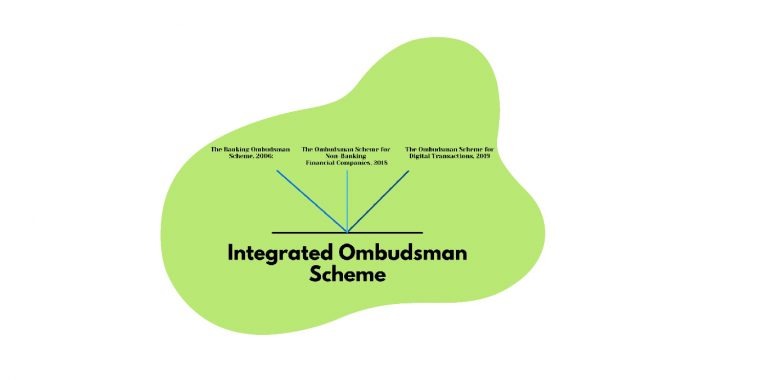
The idea here is to integrate the existing three Ombudsman schemes: (i) The Banking Ombudsman Scheme, 2006: (ii) the Ombudsman Scheme for Non-Banking Financial Companies, 2018; and (iii) the Ombudsman Scheme for Digital Transactions, 2019 into a single Integrated Ombudsman Scheme, 2021.

Think of it like a consumer court, where you file complaints against any fraud and seek redressal. 

The need to integrate three different Ombudsman schemes

Currently, there are three Ombudsman schemes. These three schemes have evolved over different periods with varied grounds of complaints. Each scheme had different compensation structures, so complainants received unequal treatment.

Combining these schemes, streamlining grievance redress, letting the customers file their complaints about deficiency in service under the integrated scheme, with a single centralized reference point was the need of the hour.

Moreover, under RB-IOS, the central bank withdrew the exclusive jurisdiction of each ombudsman’s office under the one nation, one ombudsman initiative. A deputy ombudsman will address certain categories of complaints, giving the ombudsman’s office a greater adjudicating power.

Benefits under the Integrated Ombudsman Scheme

RBI has set up a complaint management system with a centralized receipt and processing center (CRPC) at Chandigarh. It will enable a one-point interface for customers to file complaints, submit documents, track status, and get pertinent information.

There will be a single point of reference with the integration of three schemes into one. Moreover, the RB-IOS allows for better coverage.

Initially, the number of entities covered will go up from 1,091 under the current Ombudsman bodies to 1,975. But, the scheme will cover 11,352 entities in phases. Entities here refer to banks, NBFCs, etc.

The scheme will cover the customers of all scheduled commercial banks, regional rural banks, scheduled urban co-operative banks, other UCB’s with deposits of Rs. 50cr and above, all the NBFCs accepting deposits and those with assets worth Rs. 100 crore and above, and non-bank system participants and complaints about deficiency of service.

An easier way to file complaints

Currently, customers must file their complaints under the correct scheme and with the correct ombudsman’s office, based on the territorial jurisdiction referring to the branch of the entity being complained against.

If a customer files a complaint in the wrong jurisdiction, the complaint gets rejected. The current mechanism has specific options for complaint dispensation. The customer has to ensure that the complaint falls under the specified and limited grounds under the respective schemes. The complaint gets rejected if a complainant fails to choose the correct dispensation.

With the new RB-IOS, customers can file any complaint involving poor service using a single email address or one office -CRPC, RBI, Chandigarh. The team will process each complaint and check if it maintains a few parameters such as first resort complaints, sub judice matters, or repeat complaints before allocation to ombudsman offices based on the residential address.

The CMS portal will have all the communication from/to the customer and the regulated entity, including auto intimations for registration and closure of complaints.

Final Words

A single point Ombudsman will help bring all the information related to the customer, his/her complaint, requests for guidance, and help to allow for greater focus on adjudication. Speeding up the redress process will help the complainant and the regulated entity spend less time finding a solution.

The integrated Ombudsman is a positive step towards better governance; however, there are several issues like the complexity of the cases, the volume of complaints in the offices, delayed submission of documents from the entities, and others. Whether the rejection of complaints reduces or adds to customer woes is to be seen.

Let us wait and see what happens once it goes live.

In the meanwhile, subscribe to 5 in 5 strategy and start your wealth creation journey.

Read more:

Retail Direct Scheme – Democratizing The Ownership Of Sovereign Securities

Bonds –All You Need To Know About Government Bonds And Securities Today!

Read more: About Research and Ranking.

India is opening its $1.1Trillion Bond Market to Retail Buyers – a headline that graced the Bloomberg website a week after Diwali. This initiative garnered plenty of interest as the PM announced the latest reform – RBI’s Retail Direct Scheme (RDS).

The government decided to open up its gold bond, treasury bills, and government securities market to retail buyers through this scheme. This move aims to widen the investor base to finance government borrowing.

The scheme opened on 12th November with 20000+ accounts added till 9 pm on 14th November. The number of accounts indicates people are willing to invest in government bonds.

The bond market has been where large institutions and corporate investors invested their funds, with little retail investment, unlike the equity markets. But this initiative should change this narration. Investors looking for safer investments will find the RDS attractive.

Here’s a look at how the RDS works

Special Platform: The Centre launched a platform; available on retaildirect.org. It offers access to government securities, gold bonds, and treasury bills. As an investor, you must open a Retail Direct Gilt Account to start investing. You can hold the account singly or jointly with another eligible investor.

Eligibility: To invest via RDS, you must have a valid PAN or any other KYC document; and a rupee savings account. In the case of NRIs, the investor must be eligible to invest in G-Secs under FEMA Act 1999.

RDS account: Through the account, you get access to the G-Secs primary market and the order matching system for secondary market transactions in government bonds. You can trade in Government of India treasury bills, govt-dated securities, Sovereign gold bonds, and State development loans.

Fees and Charges: RBI does not charge fees to open and maintain the Retail Direct Gilt account and submit bids in the primary auctions. However, the investor bears the charges for the payment gateway.

Buying in the Primary market: Submit a bid under the non-competitive bidding segment to buy G-Secs in the primary market. On submitting the bid the platform displays the final amount. Set aside funds like you would for secondary market purchase. After the bid is accepted and securities allotted, they are credited to the account on settlement.

Investment: You can start investing with a minimum of Rs. 10000 and a maximum of Rs. 2cr in G-Secs.

Trading in the Secondary Market: If you want to trade in the secondary market for existing G-Secs, you must

  • Use the link provided in the account to access the NDS-OM and select the security you want to buy or sell.
  • Transfer funds to the designated NDS-OM Clearing Corporation account via net banking or UPI-linked account before trading hours or during the day.
  • The platform allocates a funding limit to place a buy order based on the actual amount transferred.
  • Any excess funds are refunded after the trading session ends.
  • The funds in your UPI-linked bank account are blocked when you buy and debited upon settlement.

If you want to sell your securities, then

  • The securities sold will be blocked while placing the order till the trade is settled.
  • The sales proceeds are credited to your account on settlement day.

Before you get to set your RDG account and trade, let us make a note of all things Bond.

download 2025 11 12T112952.797

Understand bonds: Bonds are investments where you lend money to the government or a company for a specific time for regular interest payments. On maturity, the issuer returns the money to the investor. Bonds are also called fixed-income investments.

Coupon rates:  The coupon rate is the fixed rate of interest paid to bondholders. If you invest 1, 00,000 (One-Lakh) and the coupon rate offered is 4% p.a. Then, the bond issuer will pay you 4000 per year until maturity.

Face value: The bond’s face value is the amount it will be worth on maturity. The interest payments depend on the face value.

Yield: The rate of returns on your bond, is yield. Though the coupon rate is fixed, the yield varies. It depends on the bond price in the secondary market and other factors. It is expressed as the current yield, the yield on maturity, and the yield to call.

Price: Bonds traded on the secondary market after issue have two prices. One is the Bid price, and the other is the Ask. The ask, is the lowest price the seller offers, while the bid is the highest price an investor is willing to pay for the securities.

Rating: Credit rating agencies like the CRISIL, ICRA, and CARE rate the creditworthiness of the bond and the bond issuer. Ratings like AAA, AA+, AA-, and BBB indicate the quality of the securities. They depend on the issuer’s financial strength and ability to pay the principal and interest on time. Such ratings allow an investor to pick the correct securities to invest in.

Duration risk: The bond’s price changes based on interest rate fluctuations. They are inversely proportionate. Per experts, the bond price will decrease 1% for every 1% increase in the interest rates. The longer the bond term, the higher its price is prone to interest-based fluctuations.

Types of Bonds: An investor can invest in corporate bonds, Government bonds, State bonds, Municipal bonds, gold bonds, and treasury bills.

Is investing in Government Bonds a good idea?

Yes, investing in G-Secs is a good idea; if you want a steady income with the least risk. These securities offer assured returns and stability as the GOI issues them. Moreover, these bonds may offer a better rate of interest than Bank FD.

We hope you now understand how the RDS account will work. The RBI is looking for tax sops for retail investors buying bonds through RDS. However, whether that happens or not is something we must keep an eye out for.

In the meanwhile, subscribe to 5 in 5 Wealth Creation Strategies and start creating wealth.

Read more:
Retail Direct Scheme – Democratizing The Ownership Of Sovereign Securities
Integrated Ombudsman Scheme: Find What It Means And How It Works Today

The Prime Minister addressing the nation live on TV has become synonymous with new announcements or developments. Last week, he was live on TV announcing two new customer centric initiatives.

However, this time he wasn’t on TV at 8 PM but spoke to the nation during the day.

So, what did he announce that caught everyone’s attention, especially the retail investor community?

  1. RBI Retail Direct Scheme
  2. Integrated Ombudsman Scheme.

In this article we talk about the RBI Retail Direct Scheme in detail.

For the uninitiated, Retail Direct Scheme opens up a $1.1tn government bond market to retail investors. This means that you can now invest in government bonds directly through RBI.   Shaktikanta Das, RBI governor, first spoke about this initiative in a February policy review calling it a major structural reform.

According to RBI website, “Retail Direct Scheme is a one-stop solution to facilitate investment in Government Securities by individual investors. Under this scheme individual retail investors can open a Gilt Securities Account – “Retail Direct Gilt (RDG)” account with RBI. Using this account, retail investors can buy and sell government securities through the online portal – https://rbiretaildirect.org.in

Does this announcement mean you could not invest in G-Secs earlier?

No.

Earlier, a retail investor could only buy G-Secs through non-competitive bidding in primary auctions through stock exchanges. The only way to invest in G-Secs was via debt mutual fund schemes that invested in such securities.

Big institutional investors like Banks, Mutual Fund houses, insurance companies etc. with lot sizes of Rs. 5crores and higher dominated the Government securities market. So, retail participation was rare.

If you are wondering why the government introduced this structural reform now, you are not alone. The Retail Direct Scheme will help the government big time.

It was rather a perfect time to introduce such an initiative. RBI had cut lending rates to battle the covid-19. This gave people access to cheap money. However, the rising inflation is adding pressure on the central bank to lift rates higher. Tighter monetary policy is expected to weaken the demand for bonds, making it hard for the government to fulfill its near-term borrowing..

The Retail Direct Scheme will help the center amass idle money from small investors to meet its financial requirement to fund public expenditure projects. We expect this to result in better price discovery and yield curve for government bonds.

You can invest in four Government Securities

Retail Direct Scheme allows retail investors to buy and sell in the following securities.

  • Government of India Treasury Bills (T-Bills)
  • Government of India dated securities (dated G-Secs)
  • State Development Loans (SDLs)
  • Sovereign Gold Bonds (SGB)

You get access to the Secondary Market

A major plus point of this scheme is that a retail investor now gets access to the secondary G-Secs market. Retail investors can directly access the secondary market portal Negotiated Dealing System-Order Matching Segment (NDS-OM).

Once a retail investor opts to trade his/her G-Secs on the secondary market, CCIL (Clearing Corporation of India Ltd.) will send an ID. These investors can then access the order matching and request for quote (RQE) segment on the platform.

You can invest without worry

One more reason for the retail investors’ happy faces is the safety net the G-Secs come with. Since the government issues these securities G-Secs are extremely safe instruments..

Further, the scheme is based on inclusivity. The PM Narendra Modi, in his speech said, “The Retail Direct Scheme will give strength to the inclusion of everyone in the economy as it will bring in the middle class, employees, small businessmen and senior citizens with their small savings directly and securely in government securities.” 

The retail investors have welcomed this initiative. Per one article in The Economics Times, over 20,000 accounts were opened till 9 pm on Sunday after the Prime Minister announced the scheme.

That’s it from us today. We will cover more about this topic in the next article.

Meanwhile, now that you know how safe and secure Retail Direct Scheme is, will you invest in G-Secs?  

Read more:
Bonds –All You Need To Know About Government Bonds And Securities Today!

Integrated Ombudsman Scheme: Find What It Means And How It Works Today

Read more:  How Long-term investing helps create life-changing wealth – TOI

120 World leaders gathered at Glasgow for the Global Climate Summit. It was one of the most-awaited gatherings. Many considered it the last chance to get world leaders to agree to an emission target to ease climate change after the 2015 Paris Agreement.

Many climate activists believe the COP26 has been a failure with no agreement in sight. There has been no climate action, though several Global North leaders made impressive pledges and goals to lower greenhouse emissions.

The COP26 has failed to meet expectations so far. The richest and most industrialized nations are keen to escape accountability, blame emissions and funds for not fulfilling their promises while looking for ways to shift the burden of their inaction on other developing nations.

In this scenario, India quickly emerged as the beacon of climate change with its willingness to commit to an end date for global greenhouse emissions.

Two weeks ago, the Indian Prime Minister pledged to become carbon net-zero by 2070 at the Global Climate Summit COP26. An announcement that led to frowns and criticism from other world leaders but put a smile on Indian faces.

It is perhaps, for the first time, one of the largest carbon emitters has committed to do away with fossil fuels. This move signifies an end in sight for fossil fuel use, though it is two decades later than other countries.

Renowned economist Lord Nicholas Stern appreciated PM Narendra Modi’s proposed plans, calling them ambitious and path-breaking. He believes India made the most important commitment and will play a major role in fighting climate change.

Let us understand the commitments India made at COP26.

Introducing the concept of Panchamrit at the summit, the PM committed to the following on behalf of India.

  • To be carbon net-zero by 2070.
  • To bring the non-fossil energy capacity to 500 GW by 2030.
  • To bring down the carbon intensity to 45% by 2030.
  • To fulfil 50% of its energy requirement through renewable energy by 2030.
  • To reduce 1bn tonnes of carbon emissions from the total estimated emissions by 2030.

India’s carbon-neutral commitment has received the most attention. But it is the other pledges that are daring in their scope. Like reducing 1bn tonne of the projected emissions by 2030. This goal means absolute emissions must reduce 2-3% in the next nine years.

India’s Plan to meet the targets

India Inc. welcomed the PM’s pledge to be carbon net-zero by 2070. They believe we are on track to achieve these aspirations.

Here’s how Indian businesses plan to contribute to the net-zero mission.

download 2025 11 12T113413.505

Challenges India faces

Fulfilling the pledges may not be a walk in the park. India faces several issues like low-level of human development, shortage of resources. It means improving a lifestyle of billions without access to abundant energy will be troublesome.

Meeting the targets will be particularly difficult as India must balance its ever-increasing development needs with a depleting global carbon budget while finding a way to honor its climate obligations.

India has a growing population of 1.38 billion, and it is the fourth biggest emitter after China, the US, and the European Union. However, India’s per capita CO2 emissions, at 1.9 tonnes per person in 2019, are the lowest compared to 5.5 tonnes in the UK, 16 tonnes in the US.

download 2025 11 12T113444.778

It is a clear case of developed nations not reducing their carbon emissions quickly though they are responsible for the rapidly depleting global carbon budget.  

Unless developed nations lower their carbon emissions, developing countries will find moving to expensive renewable sources with increasing demand for cheaper energy hard. Shifting to green and clean energy requires finance, but Global leaders have not kept their promise of $100Bn in climate financing every year. 

Wealthy countries achieving their carbon net-zero targets is not guaranteed despite their large financial resources and advanced technology. This means emerging markets have a difficult task ahead.

Large emerging markets such as India, China, will need to augment their productivity from low levels of economic development to adopting advancing technologies because of a fall in prices of onshore wind and solar energy.

COP26 ended on 12th November, however the discussions will be on for the next six months. But will the transition to clean energy happen? Will emerging countries like India get the support and finance they seek to meet their targets?

Well, it’s a wait and watch game.

Need sound advice on where to invest, how much to invest, for how long to invest in the stock market? Subscribe to 5 in 5 Wealth Creation Strategy and get a portfolio of 20-25 fundamentally strong stocks tailored for your goals and risk taking ability.

Read more: 
Renewable Energy – The World’s Favorite Energy Source Today!
Ambani’s Reliance On Its Way To Becoming A Major Renewable Player In The Next Decade
Adani’s Race To Triple Its Green Energy Capacity Within The Decade

*Disclaimer: Information mentioned in this email is for educational purposes. Please do not consider it a recommendation to buy/sell/hold from Research & Ranking.

Read more: About Research and Ranking.

The outcry on coal shortage, fuel price rise, and other scarcities across the world last month brought Renewable Energy into the limelight again.

Clean energy derived from natural resources that replenish constantly is Renewable energy. Though considered new-tech, humans have been using nature’s power for transportation, heating, lighting, and more for ages. Examples, wind-powered sailboats, windmills to grind grains, solar energy to cook food, etc. Only in the last 500 years have human beings turned to cheaper, dirtier energy sources like fossil fuels, coal, and fracked gas.

A few decades ago, capturing and retaining solar and wind energy was expensive and cumbersome. Over the years, innovations and cheaper options to capture energy have made renewables a significant power source globally. In the last few years, renewable energy has become popular, with more countries pledging higher investments in renewal sources. China, the United States, and Germany are the largest consumers of renewable energy.

Today, India is among the Top 3 attractive destinations for renewable energy. The biannual Renewable Energy Country Attractiveness Index (RECAI) ranks the top 40 countries on their renewable energy investments and deployment opportunities. The classifications reflect EY’s assessments of global market trends and market desirability.

The infographic below will give you an idea of the change in rankings since 10th May 2019.

download 2025 11 12T112257.504

India’s flourishing renewable energy market conditions, inclusive policy decisions, investment and technology improvements focusing on self-reliant supply chains have pushed the clean energy transition to new heights.

India can generate 1000 GW of solar power on 0.5 percent of the land. India’s renewable power generation capacity has increased with a CAGR of 17.33% from FY16-2020. The Center plans to install 227 GW of renewable energy capacity by 2022, more than its Paris Agreement target of 175 GW.

Top Billionaire Barons race to a Renewable finish line

Prominent business houses like Ambani’s, Tata’s, and Adani are betting big on renewable sources.

Last year, India’s richest man Mukesh Ambani, announced to make Reliance a carbon net-zero company by 2035. He also pledged to invest $10Bn in clean energy and hydrogen fuel in the next three years in June this year, presenting the 5000-acre Dhirubhai Ambani Green Energy Giga Complex in Jamnagar.

Not to be outdone; Gautam Adani, India’s second richest man, announced a $20Bn investment in the next decade. He promised to produce the world’s cheapest green electron, foray into green hydrogen production, use renewable energy to power its data centers, and turn carbon net-zero by 2025.

This week’s we talk of focused interest in the Renewable Energy Sector, the several green company acquisitions, FDI inflows, and more. While we write the next chapter, look at the recent developments in the sector:

  • Smart Power India (SPI), Rockefeller Foundation’s subsidiary, and Deutsche Gesellschaft fur Internationale Zusammenarbeit (GIZ) joined hands with India’s Ministry of New and Renewable Energy to encourage decentralized renewable energy (DRE) for the country through Azadi Ka Amrut Mahotsav.
  • Tata Power inks a three-year commercial contract with the World’s first renewable energy AI (Artificial Intelligence) firm Bluewave-ai. The company is also in talks with a large pension and sovereign asset managers to raise around $500 million ahead of its renewable energy arm’s IPO.
  • State-owned power behemoth NTPC draws Rs. 15,000crore disinvestment plan. NTPC intends to list NTPC Renewable Energy, North Eastern Electric Power Corporation, and NTPC Vidyut Vyapar Nigam.
  • India’s renewable energy generation capacity, excluding large-scale hydro projects, has crossed 100 GW. The country stands fourth in the globe in terms of installed renewable energy capacity.

Read more:Ambani’s Reliance On Its Way To Becoming A Major Renewable Player In The Next Decade

Read more:  How Long-term investing helps create life-changing wealth – TOI

Wondering whether it is the right time to invest in the stock market?

In our honest opinion, yes, it is! In fact, it is the best time to invest in the Indian stock market if you want to become a successful investor. Today we will tell you the difference between a wise and an ordinary investor and how you can become a successful investor.

September was on all account a positive month for the stock market with Sensex crossing a psychological level of 60,000. Then October came and the Blue-chip Index Nifty crossed the 18,000 mark. However, last week the stock market corrected with Nifty Midcap 100 and Nifty Small Cap down 3.53% and 4.60% respectively. Moreover, several fundamentally sound stocks like IRCRC, IRX, Deepak Nitrate, etc. tumbled 10%-35%.

Why did IRCTC fall?

download 2025 11 12T112154.452

Here comes the fascinating bit.

In the last one year, investors’ darling IRCTC gave exuberant returns, growing from 1,000 level to 6,000. Many wanted to buy the stock when it was at 5,000 – 6,000 levels.

However, it fell dramatically last week since the National Stock Exchange (NSE) banned the stock on the Futures & Options (F&O). The reason for the ban was that the stock crossed the 95% threshold of the market wide position limit (MWPL).

What is that, you ask?

The MWPL is set by the stock exchanges, which is the maximum number of contracts that can be open at any time (Open Interest), therefore, the F&O contracts of a stock enters a ban period if the open interest crosses 95% of the MWPL.

Does this fall in price imply weakening of the company’s fundamentals?

No. The company’s fundamentals are intact. Many ordinary investors offloaded IRCTC from their portfolio just because others were selling.

Why did IEX fall?

Similar is the case with Indian Energy Exchange (IEX). Before plunging ~24% last week, IEX had gained over 35% in October alone. The stock rose on the backs of the Energy Crisis buzz, strong second quarter earnings, and a bonus issue announcement.

Today the National Stock Exchange added IEX to the F&O banned list with six other stocks.

Does this fall in price imply weakening of the company’s fundamentals?

No. The company’s fundamentals are intact. Many ordinary investors offloaded IEX from their portfolio just because others were selling.

No. The company’s fundamentals are intact. Many ordinary investors offloaded IEX from their portfolio just because others were selling.

Let us now come back to the difference between a successful and an ordinary investor and why it is the best time to invest in the stock market.

A successful investors would look at this correction in IRCTC, IEX, Deepak Nitrate, etc. as an opportunity to buy as these stocks are available at cheap prices. An ordinary investor, on the other hand, would pursue it as bad time to invest. He/she would wait till stocks return to pre-correction levels.

A wise investor looks at a dip in price as an opportunity and an ordinary investor looks at a rise in price as an opportunity.

So you need to decide, which one you want to be.

Now, why it is the best time to invest. The country has undergone tremendous positive changes over the last few months. These developments and key policy reforms mean India is poised for growth.

Here are a few major developments-

Big Trillion Plan- Last month, the Government unveiled a four-year National Monetization Pipeline (NMP Vol 1 & 2) worth an estimated Rs. 6 lakh-crore. This plan aims to unlock value in the Infrastructure Line Ministries’ assets. The Creation through Monetization philosophy is directed at tapping private sector investment for new infrastructure.

Retails investors contribute to the rally– 15.2 Million Retail investors have added to the investor base since April 1. This implies retail investors are no more riding pillion but are major contributors to the recent rally.

The sixth largest stock market- India became the world’s sixth largest stock market, overtaking France for the first time in market capitalization.

FIIs Continue the Buying Spree- The fear of taper tantrum has reduced. Irrespective of negative comments from the bankers around the world, the Foreign Institutional Investors (FII) continue their buying spree. The NSDL data says FIIs buying stood at Rs. 2.28 trillion in September.

PLI Scheme- The government approved Production-linked incentive (PLI) scheme for the textile sector worth Rs. 10,683crore. Automobile and auto components industry to receive an outlay of Rs. 25,983crore under the PLI scheme.

NBFCs loosen their Purses- After a brief pause during the COVID-19 pandemic, the NBFCs and Banks have begun filling creditors’ pockets as the demand for loans picks up. Edelweiss and IIFL are now lending Rs.4,000 crores a month. The country’s largest mortgage lender HDFC Ltd. is witnessing a remarkable rise in home loan demand similar to pre-COVID levels. 

Bad Bank to tame the Worsts: After its announcement in the FY22 Budget, the Union Cabinet approved 30,600core government guarantee for the National Asset Reconstruction Company (NARCL), facilitating the formation of Bad Bank.

India MSCI Index Premium Soars– The valuation premium of the MSCI India Index reached 55% and 12% by mid-June compared to the MSCI Emerging Markets and MSCI World indices. Moreover, this is much higher than the five year average premium of 45% and 8%.

With all these and other developments happening in the periphery, one should look at the bigger picture instead of fearing short-term corrections in the stock market and waiting for the right time to invest.

Today, the Sensex is above 60,000. Sure, it’s a big number. But can you imagine how high the stock market will be, if all things fall in place as planned.

Nick Murray’s quote says it for us

“Timing the market is a fool’s game, whereas time in the markets is your greatest natural advantage.”

Need sound advice on where to invest, how much to invest, for how long to invest in the stock market? Subscribe to 5 in 5 Wealth Creation Strategy and get a portfolio of 20-25 fundamentally strong stocks tailored for your goals and risk taking ability.

Read more: Why Did Tata Chemicals Fall?

*Disclaimer: Information mentioned in this email is for educational purposes only. Please do not consider it a recommendation to buy/sell/hold from Research & Ranking.

Read more:  How Long-term investing helps create life-changing wealth – TOI

They say Hindsight is 20-20. The phrase means you have a better understanding after the event, and you get stuck in the loop thinking, how did we not see it?

The latest energy crisis the world has been facing is the result of astronomical rise in natural gas prices, the steep hike in the price of coal, a forecast of oil touching $100, and the pandemic-led economic issues.

No country is untouched; the energy consumption continues to increase while the supply dwindles. We are headed for a global energy crisis of epic proportions.

Global Trouble

Britain – No drivers to transport fuel. Soldiers are delivering fuel to gas stations.
Eurozone Inflation was at a 13-yr high while the rest of Europe faces a natural gas crunch.
China – Factories are shutting down due to coal shortage. There is no fuel to light homes or heaters.
South America – Is suffering from blackouts and droughts.
India – Shortage of coal for power generation and rising inflation.

How is it that every country is facing issues of energy at the same time?

The post-pandemic rebound is to blame. During the lockdown, everything shut down –no businesses, no transport, no travel. With no economic activity, the energy demand declined. Large oil producers slashed their output, producing less coal and oil. As soon as vaccines came into the picture, lockdowns lifted. People started going out, traveling, factories reopened, airlines opened up, increasing the energy demand. But, the supply did not increase; it stayed at 2020 levels.

Energy Crunch –Causes 2021

It is not easy to point fingers at one specific industry practice or industry and blame them for the whole energy crunch. There are several causes…

It is not easy to point fingers at one specific industry practice or industry and blame them for the whole energy crunch. There are several causes…

  1. More demand less supply: The energy demands the world over increased as soon as the countries lifted the lockdowns. Power supply and energy production stagnated, which meant a shortage of energy.
  2. Transition to Green Energy hit Fuel supply: World leaders committed to moving from traditional sources of power to clean energy without planning for large-scale transition. They don’t have a specific plan to shift from fossil fuels to renewable resources. They did not invest enough in green energy. Most countries today are scrambling to cut their emissions rapidly. China committed to reduce 65% emissions by 2030. To meet this obligation, the President cut off the coal supply in China, leaving homes and businesses in the dark. Several countries face the same issues, but regional factors play a role too.
  3. Regional Issues: South America gets 65% of its power from hydroelectricity. However, the rivers are running dry while Brazil is facing severe blackouts. India’s coal stores have fallen to levels never seen before. The Center has asked power producers to import 10% of their coal needs to meet the shortage while warning states from selling electricity on power exchanges to profit on surging prices.

While we understand what’s causing the energy crisis, the effects are rippling down globally.

Several countries are facing shortages, rising inflation, economic slowdown. Natural gas prices rose 400% this year in Europe. Brent Crude is trading at $85 a barrel. These surges will affect everyone. With winter around the corner, heating homes, meeting the demand for power during festivals will be difficult.

Is there a way to mitigate the effects of the energy crisis? Yes, there is, but it means increased production of energy to meet demand. However, with world leaders pushing for green energy transition, it will be a waiting game to see what they decide.

Liked this article? Share it with your friends.

In the meanwhile, subscribe to the 5 in 5 Wealth Creating Strategy.

Read more:  How Long-term investing helps create life-changing wealth – TOI

Energy Crisis has been making the rounds for more than a month now.

It is like the 1970s energy crisis once again, though the reasons are not the same today. But there are a few similarities. Here is what happened.   

The 1970s saw America’s consumption of gasoline and other products rise despite a fall in domestic production. The imports of oil increased, so did their dependence on the OPEC nations. Americans were not worried about the falling supply or the rising prices, since policymakers assumed the oil exporters couldn’t afford to lose revenue from the US market.

The Yom Kippur Arab-Israeli war in 1973 broke the USA policymakers’ assumptions. The OPEC nations imposed sanctions on the United States and the Netherlands for helping Israel, which led to fuel shortages and sky-high crude oil prices throughout the decade. The restriction and low production continued even after the end of the War in late October 1973.  Rising oil prices had a far-reaching impact on markets other than the US. Countries like Great Britain, Germany, Switzerland, Norway, and Denmark placed restrictions on driving, boating, and flying while the UK Prime Minister urged citizens to heat only one room in the winter.

The sanctions was lifted in 1974, but oil prices were still high and the effects lingered. Price controls, gasoline regulation, a national speed limit, and daylight saving were some measures the countries adopted to mitigate the effects of the energy crisis. Moreover, the countries made an effort to increase domestic oil production, reduce dependence on fossil fuels, and find other sources of power including renewable energy resources. But, as soon as the crude oil prices collapsed in the mid-80s, the per liter prices of fuel fell to moderate levels, domestic production declined, efforts for energy efficiency slowed while imports increased once again.

Well, its 2021 today and it feels like we haven’t learned our lesson yet. We are on the brink of another Energy Crisis – as supplies of natural gas, coal, and other energy sources fail to meet the rising demand post-pandemic. Let us be clear and state the energy crisis is not an illusion of our imagination; it is the truth.

With the world reeling under the fall in energy supply to meet demand every day, we thought of taking a deep dive into the reasons for the crisis, the effects, and the actions the world economies take; or should take to overcome this energy crunch.

Stay tuned for our next article in the series where we discuss what’s happening in the world.

In the meanwhile, subscribe to our 5 in 5 Wealth Creation Strategy and begin your journey today.

Read more:  How Long-term investing helps create life-changing wealth – TOI

India took the longest time to resolve insolvency compared to other countries, where most bankruptcy resolutions happened in 1-1.5 years. Moreover, several non-performing bank loans were pending with delays in debt resolution. Better and faster resolution of cases was the need of the hour. That’s when the Government introduced the bill in the Lok Sabha in 2015. The Lok Sabha cleared the bill, and the President gave his nod to the Insolvency and Bankruptcy Code in May 2016.

IBC code 2016

The IBC Code 2016 is -an act to combine and modify laws that deal with reorganization and insolvency resolution of the corporate, partnership firms, and individuals in a time-bound manner. The code aims to -maximize the value of assets, promote entrepreneurship, credit availability, balance the interests of all the stakeholders and modify the order of priority of payment of Government dues, establish an Insolvency and Bankruptcy Board of India (IBBI), and deal with any other matters related to insolvency.

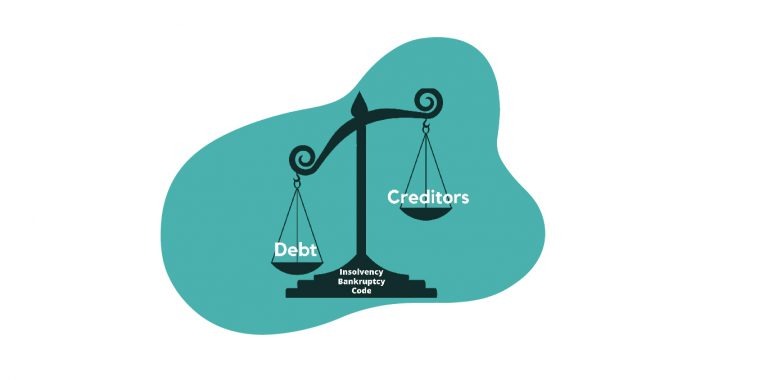
The bankruptcy code 2016 is a one-stop solution to resolving insolvencies now. The resolutions earlier were time-consuming and not economically viable as the creditors gained control over the debtors’ assets in case of a default in repayment. But, the new law aims to protect the interests of small investors to make the process of doing business simple. Under this code, both the creditor and debtor can start the recovery process against each other. The IBC has 255 sections and 11 Schedules to tackle the bad loans issues affecting the banking system.

Meant for

The IBC code 2016 applies to

(a) Any company incorporated under the Companies Act, 2013 or under any previous company law;

(b) Any other company governed by any special Act for the time being in force, as long as the said provisions are inconsistent with the provisions of such special Act;

(c) Any Limited Liability Partnership incorporated under the Limited Liability Partnership Act, 2008;

(d) A body incorporated under any law for the time being in force, as the Central Government may, by notification, specify in this behalf; and

(e) Partnership firms and individuals who are part of the insolvency, liquidation, or bankruptcy, depending on the case.

Time limit for bankruptcy process

As per section 12 of the code, the Companies must complete the resolution process within 180 days of applying for insolvency. The resolution professional can send an application to the Adjudicating Authority to extend the period. This extension is possible only if the creditor’s committee passes a resolution with a 75% majority. The companies can get an extension only once, not exceeding 90 days. Smaller companies and startups with an annual turnover of Rs. 1crore must complete the insolvency process within 90 days. They get a 45-days extension if needed.

Regulators of the code

The Insolvency and Bankruptcy Board of India oversees the bankruptcy cases. The board has its head office in Mumbai. The Board has a Chairperson, three members from Central Government’s Ministry of Finance, Corporate Affairs and Law, one member the RBI nominates, and five members the Central Government nominates.

Facilitator of insolvency

A licensed professional manages the resolution process, the assets of the debtors while sharing information with the creditors to help then decide.

Arbitrators of the process

The National Companies Law Tribunal (NCLT) for companies and Debt Recovery Tribunal (DRT) for individuals are the arbitrators under the IBC 2016 code. The IBBI controls the insolvency professional agencies, the professionals, and the information services under the code.

Changes to the Code

The IBC Code 2016 has undergone several changes and amendments over the year. The most recent amendment was in August 2021. The latest amendment to the code aims to simplify the process, saving time and money for small businesses. The Government introduced an ordinance that offered a pre-packaged or pre-pack resolution scheme. This scheme was an informal way to resolve issues where tribunal approval will be sought later. The August amendment bill aims to replace this ordinance.

Under this amendment

The proprietors or major shareholders of a small business retain operational control of the business instead of creditors once the pre-pack insolvency scheme starts. This feature ensures the business is not disrupted while the insolvency process is on. This amendment aims to provide quick, economic and value-maximizing results for all the stakeholders without disrupting business continuity.

Over 60% of the 13-lakh active companies in India are eligible for the pre-pack bankruptcy resolution scheme. Most functional companies fall under the MSMEs incorporated; however, proprietorship firms are not eligible for this scheme.

The process is simple. An MSME that cannot pay its debt of 10 lakh can initiate the pre-pack bankruptcy resolution scheme with lender approval or lenders with 66% of the debt can start the insolvency process. The promoters can submit their plan for revival, which is exposed to Swiss value maximization challenge. The creditors have the right to ask for another plan from a new investor and promoters till they can’t raise their bid anymore.

Though the demand for the pre-pack insolvency scheme for large companies is increasing, the government may not widen its scope so soon.

While we learnt all about IBC Code let’s look at how the code has fared since it was enacted first in 2016.

  • The code has been able to bring down the average days of resolution from 1500 to 380 days.
  • The IBBI states, the code has helped financial creditors realize 191% compared to the liquidation value.
  • Over 250 companies have been revived till date. Of the 4008 companies that filed for insolvency, 277 have been resolved under CIRPs while 1025 companies were liquidated.
  • The total financial realization was Rs. 1.90 lakh-crore till September 2020.  

However, the best benefit of the code has been the revival of businesses, offering thousands of operational creditors a lifeline. The code has prevented job losses, NPAs, and huge monetary losses to the economy. It has even helped India move up the ranks in the global ease of doing business index from 130th to 63rd in 2020.

That’s it for IBC today. Do read the next in the series where we take up a popular case study for insolvency.

Meanwhile, subscribe to 5 in 5 Wealth Creation Strategy and start your investing journey today.

Read more:
India’s Freedom To Exit Code – Bankrupt Companies Ki Kahani

Read more: About Research and Ranking.

In this article, you will learn how the COVID-19-led pandemic accelerated the adoption of ‘casual online gaming’ in India. Bear in mind, that this trend is creating a conducive environment for the likes of Nazara Technologies, Delta Corp.  Without a further ado, let’s begin.

What is casual gaming?

For starters, there are two broad segments of games – Hardcore and Casual games. The games professional gamers play are called hardcore games and the games regular people play fall under the casual games segment.

The term casual gaming refers to video games that do not demand substantial time investment to play, win, and enjoy. A casual gamer is a player who likes to play video games to pass time and with no time commitments. Examples of casual games are Ludo King, Subway Surf, Temple Run, Hill Climb Racing, Howzat Fantasy Cricket, Candy Crush, and more.

download 2025 11 12T111034.262

COVID-19 – An Opportunity in Disguise

The online gaming industry in India was growing at a rapid pace. The COVID-19-led pandemic added more fuel to it. From ~250mn gamers at the end of FY18, the number of gamers in India grew to ~433mn in FY21. India today has the second largest base of gamers in the world after China.

The industry achieved this growth on the back of technological developments, rising internet penetration, the ready availability of low-cost smartphones, and a rapid expansion in the supply and quality of games. India rapidly moved from merely a service provider to an end-to-end developer of video games.

The pandemic became a tipping point for online gaming in India. The pandemic-led lockdowns forced billions of people to stay indoors, with little to no means of entertainment. These days, people play video games for entertainment or to pass time.

download 2025 11 12T111429.451

The pandemic turned out to be an opportunity in disguise for the likes of the gaming industry. Though there has been some normalization since the early days of the lockdown during Q1FY21, most of the key metrics are operating at a higher new normal when compared to the pre-pandemic era. 

The casual online gaming industry is on a significant growth trajectory across user and monetization metrics. With growing digital penetration and maturity in the Indian gaming industry, it can pose a strong competition to other forms of media and entertainment.

Advantages for companies like Nazara Technologies

Rakesh Jhunjhunwala-backed Nazara Technologies debuted on the Indian stock markets early this year on 17 March. The company is a leading India-based diversified gaming and sports media platform with a presence in India and global markets like South Africa and North America. The game maker and publisher develop two types of games- ‘Free to play and ‘Real money games.’

Nazara Technologies owns some of the most recognized titles, including WCC (World Cricket championship), Carrom Clash, Motu Patlu King of Hill Racing, Halaplay – Sports Fantasy, Qunami (Real money social quizzing), etc.

Casual game developers dominate the online gaming industry in India with ~40% market share. In FY21, casual games brought in Rs. 60.2Bn in revenues followed by real money games (Rs. 49.8Bn), Online Fantasy sports (Rs. 24.3Bn), and Esports (Rs. 1.7Bn).

An interesting fact is that Nazara Technologies develop games that cater to all four segments of the Indian gaming industry. Nazara Technologies is not the only listed gaming company in India. Delta Corp, a company engaged in the Live Casino and hospitality sector, is also listed on the Indian exchanges.

Delta forayed into online gaming through its acquisition of Gauss Networks Pvt. Ltd., which operates the online poker site ‘Adda52.com’. For those who don’t know, Adda52.com is India’s leading poker site, which involves playing with real money.

To Summarize,

The pandemic accelerated the adoption of casual games among Indians. We expect the trend to continue in the future as well. Until now, we had not seen any gaming company being listed on the stock exchange. However, times are changing. 

After Nazara Technologies, Paytm, which also has a gaming subsidiary called Paytm First Games has filed for an IPO. This is proof that the Indian gaming industry is also getting matured.

According to a KPMG India report, the Indian gaming industry is expected to grow to Rs. 290Bn by FY25 with a user base of 653Mn gamers. And the companies to benefit from this growth will be the likes of Nazara Technologies.

We hope you’ve found this deep dive into the Casual Online Gaming industry interesting. If you like our blogs and want to write some more, a Share and Like would be appreciated.

Disclaimer: Information shared in this story is only for educational purposes. One should not consider it as a buy/sell/hold recommendation by Research & Ranking. Giving free recommendations without assessing an investor’s risk is prohibited by SEBI. To know your risk appetite and which companies should you invest in click here.

Frequently asked questions

Get answers to the most pertinent questions on your mind now.

[faq_listing]
What is an Investment Advisory Firm?

An investment advisory firm is a company that helps investors make decisions about buying and selling securities (like stocks) in exchange for a fee. They can advise clients directly or provide advisory reports and other publications about specific securities, such as high growth stock recommendations. Some firms use both methods, like Research & Ranking, India’s leading stock advisory company, specializing in smart investments and long-term stocks since 2015.

An investment advisory firm is a company that helps investors make decisions about buying and selling securities (like stocks) in exchange for a fee. They can advise clients directly or provide advisory reports and other publications about specific securities, such as high growth stock recommendations. Some firms use both methods, like Research & Ranking, India’s leading stock advisory company, specializing in smart investments and long-term stocks since 2015.

An investment advisory firm is a company that helps investors make decisions about buying and selling securities (like stocks) in exchange for a fee. They can advise clients directly or provide advisory reports and other publications about specific securities, such as high growth stock recommendations. Some firms use both methods, like Research & Ranking, India’s leading stock advisory company, specializing in smart investments and long-term stocks since 2015.

An investment advisory firm is a company that helps investors make decisions about buying and selling securities (like stocks) in exchange for a fee. They can advise clients directly or provide advisory reports and other publications about specific securities, such as high growth stock recommendations. Some firms use both methods, like Research & Ranking, India’s leading stock advisory company, specializing in smart investments and long-term stocks since 2015.