Economy

This section offers content on things happening in the country. Any news update on India, its GDP, plans and levels globally will be included in this section.

Many of us play free video games. We install these games from marketplaces like Google Play Store or App Store without paying a single dime. So, did you wonder how these game developers publish their games for free?

Don’t scratch your head. It’s not that difficult to understand how gaming companies generate revenues.

Earlier, when there were no mobile phones and games were available either on PCs or gaming consoles. Game makers made money selling game CDs and cassettes. However, with the advent of technology and the introduction of mobile gaming, developers found new means to generate revenue.

Modes of revenue

download 2025 11 12T110914.218

Currently, the revenue model of gaming companies is divided into two groups – 1) Paid by Ecosystem 2) Paid by Online Gamers

Paid by Ecosystem: This group includes in-app advertisements, in-game products or brand placements, and incentive-based advertisements. Among these three, you must be familiar with In-app advertisements (IAA). In-app and incentive-based advertisements are similar.

While playing games on your phone, you may have watched several ads when progressing from one level to another, i.e. in-app advertisements. These range from ads for different games to insurance company ads. The popularity of free mobile games has given a boost to IAA. Here, third-party developers pay game developers to display their ads.

Game developers also earn money when they endorse products or brands in their games. This model is called In-game product or brand placement. For instance, if you play Asphalt 9, you will see racing cars of brands like Lamborghini, and Mercedes, in the game. Here, the brands pay the game developers to endorse their products.

Paid by Online Gamers: This is a conventional route game developers follow to generate revenue. However, currently, a significant portion of revenue comes from the ‘paid by ecosystem’ model. Here, online gamers pay game makers to get access to their online games. There are four routes, which game makers use to generate revenue.

1) Purchase/pay per download Gamers pay an upfront fee to purchase or download the game.

2) Freemium upgrades A version of a game is available for free, but gamers must spend to access the next version or extra features of the game.

3) In App-purchases (IAP) The game is available for free but gamers spend to purchase virtual objects (skins, new cars) or currency.

4) Subscription Gamers purchase monthly or annual subscriptions to a game.

According to a recent Unity Ads global survey, 54% of the players choose ‘rewarded ads’ as their preferred way to pay for games, whereas ‘paying upfront and ‘IAPs’ account for 18% and 11% respectively.

 Consumer spending is Low but can grow in the future

A majority of the mature gaming markets across the world started with PC and console gaming, which inherently deployed the ‘buy to play’ monetizing model. However, India, being a mobile-first gaming market, has seen the primary deployment of the ‘free to play model’. Thus, we see a relatively low penetration of paid models in online gaming.

The IAP in India is lower than the global average because of low GDP per capita compared to mature markets, gamers’ aversion to paying for online games, and the abundance of free-to-play games.

However, a new trend suggests IAPs are increasing. According to a KPMG report in FY21, the total IAP revenue for online casual gaming was Rs.~24Bn which accounted for ~40% of the total revenue of the casual online gaming segment and is expected to increase to Rs. 70Bn in FY25  at a CAGR of ~30%.

This growth will come when game developers invest in providing an immersive gaming experience, which is likely to attract more gamers.

Case study – How PUBG drove Indian gamers to spend

If not you, your child has played PUBG at least once. This game took the Indian gaming community by storm and got the conservative Indian gamer to spend.

Player Unknown’s Battlegrounds (PUBG) is a hyper-multiplayer game the Chinese tech giant Tencent developed. It was launched in March 2018 in India.

Before the Indian authorities banned the game, PUBG was downloaded on 7 of 10 gamers’ mobile phones. PUBG not only enticed the Indian gamers to spend, but it also became the first mobile game to release a TV commercial. Until its ban, PUBG raked in $40-50Mn through IAP. In 2019, PUBG tournaments accounted for 40% of all Esports tournament prize money.

PUBG employed IAPs to promote spending in the free-to-play game. All app purchases within PUBG were done through its in-game currency, which could be purchased within the game with real money. The virtual products in the game let players create their own individual characters. Players can buy, sell, or trade these products amongst themselves, creating a community market and an in-game economic system.

The sudden popularity of PUBG was an eye-opener for other game designers who suddenly realized the market potential for online gaming in India. 

Did you find this aspect of revenue generation in the gaming industry fascinating? 

As mentioned in the introduction, we take a dive into a new emerging sector – Online Gaming. In today’s chapter, you will learn about how the Indian online gaming industry went from $290Mn in 2016 to ~1.9Bn in 2021. This means a 45.64% compounded annual growth.

For starters, Gaming is a subsector of a larger industry – Media and Entertainment. From the returns perspective, the performance of Nifty Media has been dismal compared to the blue-chip index Nifty. Over the past decade, NIFTY grew 240% while Nifty Media grew only 31%. Looking at these, you may wonder why then are we discussing a sub-sector of an industry with below-average returns.

Your doubt is valid, but did you forget – a stock market is a dynamic place, with new winners and losers every day, month, year, and decade. Nifty Media constitutes stocks like Zee Media, INOX Leisure, PVR, Dish TV, etc. However, with the entry of gaming players like Delta Corp. and Nazara Technologies, you may see a shift in the tide.

We are not talking about the media industry in particular. We are talking about an emerging sub-sector.

What is online gaming?

Online gaming in simple words means a video game played over the internet. According to a KPMG India report, “the term “Online Gaming” has multiple interpretations today, as internet network platforms facilitate procurement or game-play of almost all games. An online game is bought or accessed through online channels and requires internet in the primary game-play experience or monetization. Online games include all genres and can be played across single-player, multi-player, and massively multi-player formats.

When Did Online Gaming pickup?

Online gaming in India can be divided into two time-frames –Pre 2005 and 2005 -10.

The foundation for digital/online gaming in India was laid in the early 2000s. This was the era when console and PC gaming pulled several middle-income Indians on digital gaming platforms. Although the consumption was limited to a niche consumer segment because of expensive PCs and consoles, it highlighted the potential of online gaming in India.

We asked some of our team members who lived through this video game era to share their experiences. Prasad from our team shared,

“I remember urging my father to buy me a gaming console. He bought it on my 10th birthday. It was a thrilling experience playing “Super Mario”, “Contra Strike”, “Adventure Island”, “Racing Car, etc. I truly enjoyed playing those games on my first gaming console.”

During the mid-2000s (2005-10), social media introduced a huge chunk of the Indian population across ages and genders to online gaming. People started exploring, learning, and sharing online games across social media platforms.

“Do you remember playing ‘8 Ball Pool’ with a stranger on Facebook?”

Then global players dominated the supply later. Global gaming companies began setting up local units to tap into the emerging Indian gaming market. The number of local service providers went up from five major gaming companies before 2005 to ~25 companies by 2010.

Soon smartphones entered the Indian market and replaced conventional feature phones. This change paved the way for the inception of new, less capital-intensive opportunities for local gaming companies. Indian gaming companies, which at first acted as service providers began end-to-end development for the Indian market.

Factors Driving the Online Gaming Industry

download 2025 11 12T110809.994

In 2016, KPMG India published a report on the Indian Gaming Industry. According to the report, the Industry was expected to become $1Bn by 2021 from $0.29Bn in 2016. As you can see, they got it right. In FY21, the Indian gaming industry was valued at ~$1.9Bn with a user base of 433 Mm gamers in India.

There are several macro factors that may further push the industry in the future

(i) Increasing smartphone adoption
(ii) Growing internet penetration
(iii) Young Population
(iv) Adoption of digital payment methods

  • Along with the macro factors above, COVID-19 led pandemic also acted as a lever to lift the India Online Gaming industry. People confined to their homes, with limited means of entertainment, turned to online gaming as a means of entertainment and socializing. The monthly active users (MAUs) during the first wave of Coronavirus reached 630-670.
  • Eventually, the number reduced but is still above the pre-COVID level. This shows the increased adoption of gaming witnessed during the lockdown is here to stay and the industry is growing at a faster pace than ever.
  • The Indian Olympic Association recognized E-sports when they established the Esports Federation of India (ESFI) as the leading governing body for e-sports in the country.
  • Various global investment firms have made significant investments in the gaming sector in India. The industry attracted $544 Mn in investments from Aug 20 to Jan 21.

A shift in the mindset of Indian parents

Indian parents are known to refrain their children from playing video games. However, that has been changing now. Indian parents seem to be “OKAY” with their children playing games online with some restrictions.

A recent article in The Free Press Journal states, “Sixty-one percent of the parents agreed online games are beneficial to kids. Sixty percent of parents also believe that online gaming can be a great stress buster for kids, according to a study YourDost conducted.”

In the past video games were a thing for children or youngsters. Switch to today, game developers have got Indian parents, especially women, playing games online. The launch of “Ludo King” attracted new demography of players, i.e. 45 years and older.

We hope you now have a better idea of the Indian gaming sector, which has developed over the years. The next article will be an interesting one where we explain how the gaming industry makes money.

This week, we will shine the light on a new emerging industry in India – Gaming. Why did we pick this industry, you ask? During one of our live webinars, some attendees asked-

“What is your view on the Gaming Industry in India?”

The question did not surprise us.

The Gaming Industry is a hot topic of conversation. Investor conversations revolve around it over breakfast. Cricketers are starring in advertisements that promote online gaming. While the government is issuing guidelines to harness the online gaming industry, the general public, including parents, are busy playing games on their mobiles when free.  

We are sure you played ‘Ludo’, ‘Teen Patti’, ‘Chess’, ‘Candy Crush’, and ‘Carrom’ on your phone. That’s when we decided if everyone is talking about it, we should too.

So let’s dive in.

Before we go further and unfold the content of this series, do you know what Gold Master means?

For starters, Gold Master is a popular term used in gaming parlance to describe “A game that meets all publisher and platform requirements, includes all the assets and features, and is considered ready for launch.”

There can’t be a better reference to describe the gaming industry in India. We describe gaming as

A sector that has met all investor and user requirements, includes all growth drivers and is considered ready for a mega launchin the country.

Through this article, we will unfold how the Indian gaming industry is a Gold Master. We also look at why Indian parents are okay with their children enjoying video games. 

  • The Emergence of Gaming in India

    We’ve all had a tough time preventing our children from playing games on mobile phones. But the tide is shifting. Most Indian parents support their children in enjoying online games. A recent article in The Free Press Journal states, “Sixty-one percent of the parents agreed that online games are beneficial to kids.” “Sixty percent of the parents believe online gaming can be a great stress buster for kids,” according to a study YourDost, a leading online counseling and emotional wellness platform conducted.

  • How Gaming companies make money

    The business model of gaming companies is as simple as any other manufacturing company. Companies develop games and sell them. But what about those who sell games for free on app marketplaces? These developers also make money but through different routes. Our chapter will look at how game developers make money while you play for free.

  • COVID-19 the Tipping Point for Online Gaming in India

    The Indian online gaming industry was on a robust growth trajectory even before COVID-19. However, the developments post coronavirus led to significant growth in the industry. WFH models created a tipping point in how casual online gaming emerged as the key segment both in terms of the gamer base and revenue contribution to the industry. We will take a deep dive into the casual online gaming ecosystem of players that have amassed scale.

While we work on the series, look at a few interesting facts about Indian Gaming.

  • According to a KPMG India report titled “Beyond the tipping point – A primer on online casual gaming in India,” the total online gaming market size was Rs. 136 Bn in FY21 with a user base of 433 mn.
  • The casual gaming segment is the most significant and now accounts for Rs. 160 Bn revenue with the highest user base of ~ 420 Mn gamers in FY21.
  • In FY21, the average revenue per user is Rs. 152/year, expected to grow to Rs. 268/year.
  • India had the highest game downloads in the casual mobile gaming segment globally (excluding China) in CY2020.
  • During Q1-Q3 2020 downloads stood at 7.3 Bn accounting for 17% of the global mobile games downloads (excluding China) during the same period.
  • Major global investment firms have made significant investments in the Indian gaming industry in the last 2-to 3 years, helping gaming companies achieve operating scale. This industry attracted $544 Mn in investment between Aug 20 and Jan 21.

Would you like to know more? We have a few more articles you can read from this series. 

NTPC is an Indian government-owned electric utility company, engaged in the business of generation of electricity and allied activities. The company’s core business is the generation and sale of electricity to state-owned power distribution companies and state electricity boards in India. NTPC also undertakes consultancy and turnkey project contracts that involves engineering, project management, construction management, and operation and management of power plants.

Now let’s look at the journey of NTPC in the last financial year.

FY21 Performance of NTPC Stock

In FY21, NTPC gained 40%, while Nifty gained 71%. Hence, we can imply that despite generating a handsome return in FY21, the stock of NTPC underperformed in comparison with the Nifty.

How NTPC Fared in FY21

2021 was a challenging year for most businesses. However, for NTPC it was an outstanding year where it delivered strong and steady performance. The company’s revenues grew from Rs 1,09,464 crore in FY20 to Rs 1,11,531 crore in FY21. Net profits of NTPC also increased from Rs 11,600 crore in FY20 to Rs 14,635 crore in the last financial year.

Key highlights of NTPC’s performance in FY21

  • The company recorded its highest ever group generation of 314 BU in FY 21, a growth of 8.2% compared to previous year.
  • For the first time in FY21, NTPC realized 100% of the billed amount from the Discoms with the amount of realization exceeding Rs. 1 Lakh Crore.
  • The total installed capacity of NTPC Group increased by 5.96% to 65810 MW with 4160 MW of capacity addition in the last financial year.
  • NTPC’s Singrauli Unit-1 in Uttar Pradesh, Korba Unit-2 in Chhattisgarh achieved more than 100% Plant Load Factor in FY21.

The road ahead for NTPC

NTPC has increased its longer-term capacity target in Renewable Energy (RE) to 60 GW by 2032 as compared to earlier target of 32 GW. With this ambitious target, the firm has taken steps to increase its footprint in the RE sector. Currently, 3 GW of renewable capacities are under construction and likely to be commssioned over the next two years.

On one side while NTPC gradually scales up on its renewables journey, on the other side its continued capitalization for its thermal projects is expected to drive substantial growth for the company over the next few years.

To invest in businesses that are likely to outperform over the next few years, click here.

Read more:  How Long-term investing helps create life-changing wealth – TOI

Hope you enjoyed our earlier insights on the performance of top stocks from different sectors FY21. Today let’s look at the stock of a giant in the Cigarette and FMCG sector – ITC.

ITC is a century old company with a diversified presence across industries such as cigarettes, FMCG, hotels, packaging, paperboards and specialty papers and agribusiness. While ITC is an outstanding market leader in many of its traditional business it is rapidly gaining market share even in its emerging businesses of Packaged Foods & Confectionery, Branded Apparel, Personal Care and Stationery.

Now let’s take a look at the journey of ITC in the last financial year.

FY21 Performance of ITC Stock

In FY21, ITC gained 30%, while Nifty gained 71%. The above graph indicates how the stock performed against the benchmark index Nifty. During the same period the NIFTY FMCG index gained 28% while ITC stock generated a return of 30%. Despite marginally beating the FMCG index by 2%, ITC underperformed in comparison with NIFTY.

How ITC Fared in FY21

ITC’s net profit for FY21 declined by 13.9 per cent to Rs. 13,032 crores from Rs. 15,136 in the previous financial year due to Covid-19 pandemic related disruptions in the first half.

ITC’s cigarette business remained subdued in the H1FY21 after the imposition of lockdown affecting demand. However, with easing of restrictions and better mobility, ITC’s Cigarette volumes reached nearly pre-Covid levels towards the close of the year.

The company’s gross revenue increased by 3.9 percent to Rs. 48,151 crores from Rs. 46,324 while earnings before interest, tax, depreciation and amortization (EBITDA) declined 13.3 per cent to Rs 15,522 crore.

The company’s FMCG business registered a 15.8% YoY growth riding on the strong demand for staples, packaged and ready to eat foods and health & hygiene products.

ITC’s Hotels segment witnessed a gradual recovery from the 2nd half of the year on account of higher occupancy and F&B business.

While agri-business grew 78.5% because of higher demand for wheat, rice, oilseeds, exports of value-added foods the company’s paper business grew 13.5% YoY on strong demand from industrial end-users.

Factors that affected ITC’s performance in FY21

  • Lockdown and mobility restrictions in H1FY21

Factors that boosted ITC’s performance in FY21

  • Removal of lockdowns and easing of restrictions in H2FY21
  • Strong demand for staples, convenience foods and health & hygiene products
  • Robust recovery in the discretionary/out-of-home portfolio
  • Recovery in hotel and F&B business in H2FY21
  • Higher operating leverage
  • Enhanced operational efficiencies
  • Product mix enrichment
  • Aggressive new product launches (120+ new launches in FY21)
  • Reduced distance to market and other structural interventions.

So, is it worth investing in ITC share for the long term?

The pandemic and related lockdowns in the first half of FY21 adversely affected ITC’s cigarette and hotels business. However, despite the several challenges, ITC managed to bounce back due to vigorous growth in its FMCG business.

The company has been slowly reducing its dependence on the cigarette business due to increasing taxes and regulatory norms and focusing on increasing its FMCG and hospitality businesses.

Higher purchasing power among consumers, rising preference for branded packaged foods and significant growth in the non-cigarette business, are some of the key growth drivers for ITC.

Click here to invest in portfolio of 20-25 multibagger stocks.

Read more:  How Long-term investing helps create life-changing wealth – TOI

Have you heard the popular song “What goes up must come down? Falling feels like flying till you hit the ground” by American rock band Hinder.

As an investor, one can probably relate the same to what\’s happening currently with Adani Group stocks.

After a dream run in Adani Group stocks like Adani Power, Adani Total Gas, Adani Enterprises, Adani Ports, and Adani Transmission over the last 12-month period which catapulted chairman and founder of the Adani Group, Gautam Adani to the position of the 2nd richest man in Asia, Adani Group stocks have hit a major roadblock.

Before we proceed to take a look at the reason behind the fall in Adani Group stocks let’s take a brief look at the different companies in the group and their past performance.                       

Adani Enterprises Ltd.

Adani Enterprises is a primary holding company that is mainly engaged in the mining and trading of coal and iron ore on a standalone basis. The company has three main subsidiaries such as Adani Wilmar, Adani Airport Holdings, and Adani Road Transport. While  Adani Wilmar is engaged in the business of manufacturing and distribution of edible oil and food processing, Adani Airport Holdings is into operations, management, and development of airports. Business activities of Adani Road Transport include construction, operations, and maintenance of roads, highways, Expressways, and tollways.                                                                  

Adani Green Energy

Adani Green Energy Limited (AGEL) is one of the largest renewable companies in India specializing in building, operating and maintaining utility-scale grid-connected solar and wind farm projects. The company has entered into long-term purchase agreements for power with central and state government entities and has a presence across 11 states in India.

Adani Power

mnb

Adani Power Ltd. is the largest private producer of thermal power in India with a capacity of 12,450 MW from plants in Gujarat, Maharashtra, Karnataka, Rajasthan, and Chhattisgarh.

Adani Total Gas

uytr 1

Adani Total Gas Ltd. is a leading provider of Piped Natural Gas (PNG) to the customers in residential, industrial, commercial segments and Compressed Natural Gas (CNG) to the transport industry.

The company has a well established city gas distribution network in some cities in Gujarat, Haryana, and Uttar Pradesh. Additionally, the company has also won bids for the development of gas distribution networks in several other cities in a JV with Indian Oil Corporation Ltd.

Adani Transmission

Adani Transmission Ltd. is the largest private transmission company and operates more than 12,350 ckt kms of transmission lines and around 18,000 MVA of power transformation capacity. The company has further set an ambitious target to setting up 20,000 circuit km of transmission lines by 2022.

Adani Ports and SEZ

mnbvc

Adani Ports & Special Economic Zone Ltd. (APSEZ) is the largest commercial ports operator in India with three verticals, i.e. Ports, Logistics, and SEZ presence spread across 12 domestic ports in seven states in the country.

Reasons for the recent fall in Adani Group Stocks

Stocks of Adani Group companies went into a free fall earlier this week after media reports emerged stating that the National Securities Depository Limited (NSDL) had frozen accounts of three foreign portfolio investors (FPIs), who held huge stakes in Adani Group Stocks. The reports also mentioned that FPIs had flouted SEBI’s KYC norms.

According to the media report three foreign funds, Albula Investment Fund, Cresta Fund, and APMS Investment Fund, together owned shares worth Rs. 43,500 crore in some Adani Group Stocks. All 3 entities are registered at the same address in Port Louis, Mauritius, and lack websites. These funds together hold 6.82 percent in Adani Enterprises, 8.03 percent in Adani Transmission, 5.92 percent in Adani Total Gas, and 3.58 percent in Adani Green.

This led to panic among investors leading to a correction in prices of Adani Group Stocks. However, Adani Group was quick to issue a clarification that the accounts had not been frozen.

“We regret to mention that these reports are blatantly erroneous & are done to deliberately mislead the investing community. This is causing irreparable loss of economic value to the investors at large & reputation of the group,” Adani Enterprises said in a statement.

Most Adani Group stocks have risen significantly over the past year. Hoping to cash in on the ride many short-term investors had joined the bandwagon. However, the sudden unexpected news in terms of a freeze on FPI investors holding the group\’s stock affected the prices of Adani Group stocks severely with many hitting lower circuits except Adani Enterprises and Adani Ports. Fearing a further correction in the Adani Group stocks, most investors dumped the stocks leading to a vicious cycle.

What should investors do with Adani Group Stocks?

Four of Adani Group stocks have been moved to the T2T (Trade 2 Trade) category where intraday trading is not permitted. As of now, it would be advisable for investors to remain cautious. Experts are suggesting that investors should avoid bottom fishing or averaging their position in Adani Group stocks as despite the recent correction many stocks in the group are appearing overvalued.

There are many better investment opportunities currently available in the market with the potential to multiply your wealth by 4-5 times over the next 5-6 years. Click here to invest.

Read more: How Long term investing helps create life-changing wealth – TOI 

Introduction

What is a Unicorn Startup?

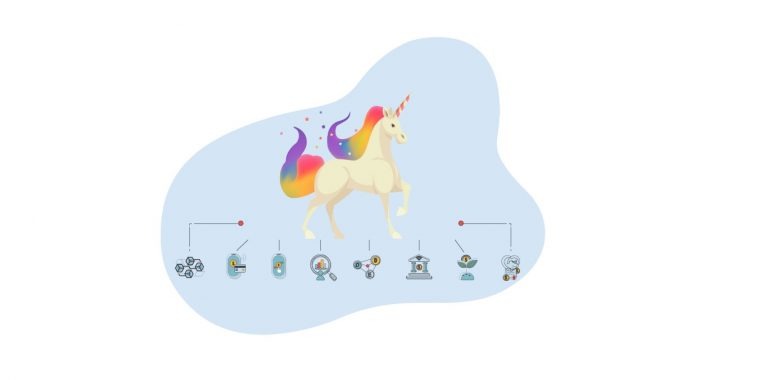
A unicorn startup refers to a privately held company with a valuation exceeding $1 billion. The term was coined by venture capitalist Aileen Lee in 2013 to denote the rarity of such high-valued startups.

Why the Indian Unicorn Ecosystem is Attracting Global Attention

India has emerged as the third-largest hub for unicorn startups, following the US and China. With a thriving digital economy and growing investor confidence, Indian unicorn startups are reshaping industries and attracting global attention.

The Rise of Unicorn Startups in India

How India Became the Third-Largest Unicorn Hub Globally

  • Strong support from government initiatives such as Startup India and Digital India.
  • Increasing smartphone penetration and internet usage.
  • Large consumer market and growing middle-class population.
  • Rise in venture capital investments and funding rounds.

Key Milestones in the Growth of Indian Unicorn Startups

  • 2011-2015: Initial wave of unicorns, led by Flipkart and Paytm.
  • 2016-2019: Rapid increase in unicorn startups due to investor confidence.
  • 2020-2023: Surge in unicorns across fintech, e-commerce, and SaaS sectors.

Major Sectors Contributing to the Unicorn Boom in India

  • Fintech (Paytm, PhonePe, Razorpay).
  • E-commerce (Flipkart, Nykaa, Meesho).
  • EdTech (BYJU’S, Unacademy).
  • SaaS & IT Solutions (Freshworks, Zoho, Postman).

Top Indian Unicorn Startups: Key Players in the Ecosystem

1. Fintech Giants

  • Paytm – Digital payments and financial services.
  • PhonePe – UPI-based digital payments.
  • Razorpay – Online payment solutions for businesses.

2. E-commerce Leaders

  • Flipkart – India’s leading online marketplace.
  • Nykaa – Beauty and fashion e-commerce giant.
  • Meesho – Social commerce platform empowering small businesses.

3. EdTech Innovators

  • BYJU’S – India’s largest online learning platform.
  • Unacademy – E-learning startup focusing on test preparation.

4. SaaS and IT Solutions Companies

  • Freshworks – Global SaaS provider with CRM and IT solutions.
  • Postman – API development and testing platform.

Factors Driving the Growth of Indian Unicorns

1. Rapid Digitalization Across Sectors

  • Increased internet penetration and adoption of digital payments.
  • Growth of e-commerce and digital entertainment.

2. Availability of Venture Capital and Global Investments

  • Investments from Sequoia Capital, SoftBank, Tiger Global.
  • Rise in private equity and international investors backing Indian startups.

3. Government Initiatives Like Startup India and Digital India

  • Startup IndiaTax incentives, funding support, and easier compliance.
  • Digital India – Focus on digital payments, connectivity, and infrastructure.

Challenges Faced by Indian Unicorns

1. High Cash Burn Rates and Profitability Concerns

  • Many startups struggle to achieve profitability despite high valuations.
  • Heavy reliance on venture capital funding.

2. Regulatory Hurdles in Key Sectors

  • Fintech startups face stricter compliance rules from RBI.
  • E-commerce faces regulatory restrictions on foreign investment.

3. Talent Acquisition and Retention in a Competitive Market

  • Increasing demand for skilled tech professionals.
  • Challenges in retaining top talent due to competitive offers.

Opportunities in the Indian Unicorn Ecosystem

1. Expanding Into Tier-2 and Tier-3 Cities

  • Rising internet penetration in smaller cities.
  • Growing disposable income leading to increased consumer spending.

2. Leveraging Emerging Technologies Like AI and Blockchain

  • AI-driven personalization in e-commerce and fintech.
  • Blockchain technology enhancing security and transparency.

3. Building Sustainable and Scalable Business Models

  • Focus on long-term profitability and reducing dependency on external funding.
  • Diversification of revenue streams to ensure stability.

The Future of Indian Unicorns

1. Trends That Will Shape the Ecosystem in the Next Decade

  • More unicorns emerging in healthtech, agritech, and deep tech.
  • Increased collaboration between startups and corporates.

2. Role of IPOs in Unlocking Unicorn Potential

  • Successful IPOs of Zomato, Nykaa, and Paytm setting benchmarks.
  • More unicorns eyeing public listings to raise capital and ensure liquidity.

3. Collaboration Between Startups, Corporates, and Governments

  • Government partnerships for infrastructure and policy support.
  • Corporate investments in startups to drive innovation.

Conclusion

The Significance of the Indian Unicorn Ecosystem in the Global Market

The rise of unicorn startups in India showcases the country’s potential as a startup hub. With continued investment, digital transformation, and government support, India’s unicorn ecosystem is poised for sustained growth, contributing significantly to the global economy.

Also Read:

India ranks 4th globally in the automobile industry and is expected to become the 3rd largest automobile manufacturer by the year 2026. Apart from being the largest tractor manufacturer in the world, India also ranks as the second-largest bus manufacturer and third largest heavy commercial vehicle manufacturer globally. A major contribution to this remarkable achievement of the Indian automobile industry can be attributed to the robust support provided by the auto ancillary companies in India.

In this article let’s take a look at: 

What are auto ancillary companies?

What are the future growth prospects for the auto ancillary sector in India?

Which are the top auto ancillary stocks in India?

What are auto ancillary companies?

Auto Ancillary companies are companies that specialize in manufacturing different types of auto parts equipment used in a vehicle such as a chassis, tyres, wiring systems, lights, battery, brakes, suspension, bearings, pistons, wheels, shock absorbers, gears, headlamps, springs, engine parts, axle shafts, and air conditioning parts, etc.

What are the future growth prospects for the auto ancillary sector in India?

According to the Automobile Component Manufacturers Association (ACMA), Indian exports of components used in the automobile industry are estimated to touch US$ 80 billion by the year 2026 and achieve total revenues of US$ 200 billion.

To meet India\’s electric vehicle (EV) ambitions a total investment of US$ 180 billion in the production of vehicles and creation of infrastructure for charging infrastructure would be necessary until the year 2030. This is a huge opportunity for auto ancillary companies in India.

In November 2020, the government approved a PLI scheme for the auto and auto ancillary industry with an approved financial outlay of US$ 8.1 billion spread over five years.

Which are the top auto ancillary stocks in India?

Let’s take a look at the some of the top auto ancillary stocks in India.

MRF Ltd.

Established in the year 1946, as a small manufacturer of toy balloons, Madras Rubber Factory (MRF) ventured into the manufacturing of tyres in the year 1969 after entering into a technical collaboration with Tire & Rubber company USA. Today MRF ranks as the largest tyre manufacturer in the country and features among the Top 20 Global Manufacturers. With product offerings for categories ranging from 2 wheelers to fighter aircraft, MRF is the country\’s largest OEM to the automobile industry in India.

Bosch Ltd.

Headquartered in Bengaluru, Bosch Ltd is a leading player in the auto ancillary industry with a diverse range of products such as fuel injection systems, aftermarket products for automobiles, auto electricals, car multimedia systems, accessories, starters and body systems.

Motherson Sumi Sytems Ltd.

Motherson Sumi Sytems Ltd. is one of the most promising companies in the auto ancillary sector. It is one of the world\’s top specialized auto component manufacturing companies for Original Equipment Manufacturers (OEMs). With a varied global customer base, the company caters to leading automakers in 36 countries across six continents. Motherson Sumi Systems offers a diverse range of auto components such as wiring harnesses, moulded plastic parts including car exterior and interior parts, rearview mirrors, bumpers, dashboards and door trims, rubber components, and HVAC systems.

Globally many countries are making a gradual effort to move over to electric vehicles to curb pollution and cut down on import bills on fossil fuels. As electric vehicles require more wiring components this would increase the content per vehicle provided by Motherson Sumi Systems by anywhere between 20-30 percent. Besides the shift to electric vehicles means, the demand for the company’s other products such as polymer and mirror-based products would continue.

Balakrishna Industries Ltd.

Established in the year 1961, Balkrishna Industries Limited (BKT) specializes in the business of manufacturing and selling of Off-Highway Tyres (OHT) and caters mainly to agricultural, industrial, and construction earthmovers, port mining, and All-Terrain Vehicles (ATV). The company has five state-of-the-art manufacturing units in India and 4 subsidiaries in Europe and North. Through its well-established distribution network, the company sells its products across 130 countries globally.

Amara Raja Batteries Ltd.

Incorporated in the year 1985, Amara Raja Batteries one of the largest manufacturers of lead-acid batteries in the country for both industrial and automotive. The company is the preferred OEM supplier to automobile companies like Ashok Leyland, Honda, Ford India, Mahindra & Mahindra, Hyundai, Tata Motors, and Maruti Suzuki. The company has a pan-India presence through its well-established sales & service network and also exports batteries to countries in the Indian Ocean Rim.

Minda Industries Ltd.

Incorporated in the year 1992, Minda Industries Limited specializes in the manufacturing of auto electrical parts such as switches including rotary switches starter switches plunger switches and rocker switches, lightings, batteries and blow moulded products, and ancillary services. Minda Industries also manufactures batteries for 2/3/4 wheelers and off-road vehicles. With over company 70% market share in the country, Minda Industries operates eight state-of-the-art facilities in India and one in the ASEAN region.

Endurance Technologies Ltd.

Endurance Technologies is a leading automotive component manufacturer catering to the 2 and 3-wheeler OEM segment in India. Through its European operations, the company mainly caters to 4-wheeler OEMs. The company\’s domestic product offerings include aluminum die-castings, suspensions, transmissions, and braking systems. Endurance Technologies operates 25 state-of-the-art manufacturing plants globally with 16 in India and the rest in Italy and Germany.

Disclaimer: Stocks mentioned in the above list are only for your information and should not be considered as a recommendation to invest.

Key factors to keep in mind while investing in the stocks of top auto ancillary companies in India:

Many of the stocks mentioned above are leading players in the auto ancillary sector in India and have created tremendous wealth for investors in the past. There is tremendous potential for growth in the auto ancillary sector.

Even in the future when the automobile industry gradually shifts from internal combustible engines to electric mobility, the demand for auto parts like tyres, switches, wiring, braking systems, shock absorbers, etc will continue to exist. On the other hand, auto ancillary companies specializing in engine parts or fuel injection systems may become obsolete or even cease to exist unless they diversify their product offerings.

Invest wisely after detailed research.

Read more:  How Long-term investing helps create life-changing wealth – TOI.

As we draw closer to the end of this series (which we hope you must have thoroughly enjoyed reading), we want to enlighten you about a very interesting segment of startups. These are called ‘FinTechs’. These companies have generated immense interest among investors. They have begun to disrupt the way the entire financial system in India works. In today’s story, let us take a look at what exactly are FinTechs, the size of the market in India, and which sub-segments they cater to.

What are FinTechs?

The word ‘FinTech’ is a combination of the words ‘finance’ and ‘technology’. FinTech simply means the use of technology to enhance financial services and make them seamless. FinTechs tend to select a particular need or niche within the entire financial system and go deeper to serve that need.

ggggg

Source: Qoin

A brief history

The FinTech revolution started gradually and subtly, without us noticing it.

  • Right from the 1980s, Credit Cards, ATMs, electronic stocks trading, and bank mainframes were the early elements of the FinTech revolution.
  • FinTech space received attention and funding in the West, post the Global Financial Crisis of 2008.
  • As investors and Venture Capital (VC) firms realized that existing financial systems were fraught with fragility, they started investing in new platforms that served differentiated needs.
  • Having a more secured, safe, and fast layer over and above traditional banking became a necessity, giving rise to new Fin-Techs.
  • In India, the demonetization drive of 2016 was a watershed moment. With the government clearly moving in the direction of a “less-cash” economy, (if not a “cashless” economy immediately), the FinTech eco-system received a boost.
  • People shifted to online payments and digital transactions in the wake of demonetization and COVID.

The FinTech market in India

According to a joint study by BCG and FICCI, there are over 2,100 FinTechs in India and the total FinTech market in India is worth $50-60bn. These have grown fast and big in a short span of time. 67% of India’s FinTech’s started not more than 5 years ago.

A look at the FinTech eco-system in India

eeeeeeeeeeeee 1

Source: BCG-FICCI Report March, 2021

By definition,

Term

Valuation

Decacorn

>$10bn

Unicorn

>$1bn

Soonicorns

$0.5bn – $1bn

Century Club

$100mn – $500mn

Minicorns

$1mn – $100mn

Early Stage FinTechs

<$1mn

This market is expected to grow to a size of $150-160bn by 2025, 3xs growth in 5 years, implying CAGR of 20-25%. A combination of India’s growing demand from 1bn plus consumers, enabling Government regulations and strong technology adoption is expected to bring about this growth.

A $100bn opportunity over next five years

qqq

Source: BCG-FICCI Report March, 2021

The majority of FinTech start-ups are focused on Payments, Lending, and Wealth Tech due to the large opportunities in these segments. Mumbai and Bengaluru are the major incubation and growth centers for most of India’s FinTechs.

FinTech Start-ups by segment

1111111

Source: RBSA Advisors. Note: Other segments include Blockchain, Cryptocurrency, AI/Machine Learning, Loyalty/Rewards/Coupons, B2B FinTech, Banking tech, BigData Analytics, Crowdfunding, Digital Cards, Neobanks, Remittances, Capital Market Tech and Trade Finance.

How are we stacked up against the world?

India has one of the largest numbers of FinTechs in the world. While FinTech investments nose-dived in 2020 due to COVID, India still ranks among the top 5 nations globally in terms of investments received. Some sub-segments such as lending may see a slowdown in 2021 due to COVID impact; however, payment-related FinTechs will continue to see investor interest. Earlier demonetization and now COVID have accelerated the pace of digitization in India’s financial eco-system. Also, India’s FinTech adoption rate is the highest in the world, along with China.

Approximate number of FinTechs by country

ttt

Source: RBSA Advisors


Comparison of FinTech investments across geographies

33333

Source: BCG-FICCI Report dated March 2021


India’s FinTech adoption rate is the highest in the world (2019)

hhhhhh

Source: RBSA Advisors

What makes FinTech space so successful in India?

Within a short span of less than a decade, FinTechs have come to occupy an important position in India’s financial eco-system. Reasons for the same are as follows:

  • India offers a diversified base of consumers across age, income, and demographic profiles, who have specific needs waiting to be fulfilled. Hence, there is scope for several FinTechs to grow and flourish.
  • VCs have also shown tremendous confidence in the Indian growth story and provided crucial capital to FinTech start-ups.
  • India’s internet penetration has grown at a scorching pace, from 95mn users in 2016 to 694mn users in 2020, CAGR of 64%. Also, smartphone users have grown to 550-600mn users, 60% higher than in 2016.
  • Indian HNIs have emerged as a new breed of angel investors who have funded growth for several FinTechs.
  • FinTechs have extremely cost-efficient structures right from inception, which reduces cash burn and allows faster turnaround. They source talent locally, often from prestigious B-Schools, which are still cheaper than professionals from developed countries.
  • Rather than becoming “everything to everyone”, FinTechs attach a high degree of importance to their “core”, stay committed to their core, and create differentiation around it.
  • After mastering their game in India, several Fin-Techs have gone global – Ola, Oyo, Zomato, and InMobi have expanded across many geographies. This requires a deep understanding of those markets and is challenging, but the rewards are also high.
  • While being challengers to banks and financial institutions in some aspects, Fin-Techs also collaborate with BFSIs. This combines the scale and customer reach of BFSI and technology and agility of Fin-Techs, resulting in a mutually beneficial partnership.

Issues and Risks

While the future looks bright for FinTechs in India, there nevertheless remain some headwinds and risks to their growth.

  • Funding is extremely crucial for FinTechs, given that their business model is characterized by high upfront costs.
  • FinTechs have to constantly adapt to and adopt new technologies. In fact, sometimes technology is the biggest differentiator for these companies.
  • Given that many FinTechs work a layer above banks, they have to constantly find untapped regions to serve, which can be a challenge if the sector gets crowded.
  • To remain relevant to customers, FinTechs have to cater to customer needs such as security of the transaction, speed, compatibility with existing technology, 24×7 availability, paperless transactions, and ease of setting up, configuring, and operations.
  • Owing to their cost arbitrage vis-à-vis banks, FinTechs have to steadily strive to keep their cost of operations low, despite offering superior products and experiences.
  • Some sub-segments such as Payments, Leading and Wealth Tech, being very lucrative, are very crowded. This could make creating brand recall difficult.
  • Data leaks, platform downtime, and information theft have become quite rampant in the FinTech space.

The way ahead

FinTechs are already big business in India, with India featuring among the Top 5 countries globally in terms of the number of FinTech start-ups. Given the huge addressable population and untapped market, India presents exciting opportunities for FinTechs to address the specific needs of consumers.

  • The government is doing its part by providing an enabling environment through initiatives such as
    • Jan Dhan
    • Aadhar
    • Demonetization
    • Start-up India
    • License for payments banks
    • Digital India
    • Recognition of P2P lenders as NBFCs
    • Regulatory sandbox by RBI for FinTech
    • India Stack

FinTechs and traditional financial institutions will have to collaborate with each other for mutual growth and benefit of each other. The collaboration could be for developing a new product or distributing it. Given their larger size and deeper pockets, financial institutions could acquire a stake in FinTechs, providing them with funding and management bandwidth. Several financial institutions have started incubation units for this purpose.

FinTechs are set to add another $100bn in market valuation over the next five years. This means several new companies coming into existence, current companies growing much beyond their present size. More importantly, this also means more employment generation and a domino effect on the economy. For the country and economy, it will take India’s journey forward towards financial maturity. For stock market participants, this opens up exciting opportunities for wealth creation.

I hope you enjoyed reading this story. But our story on FinTech does not end here. In the concluding part of this series, we will look at examples of FinTechs in India. Let us look at what unique feature each of these FinTechs has to offer. 

For expert help in creating a multibagger portfolio click here.

Read more: About Research and Ranking.

As an investor in Indian stock markets, you must have come across the term SGX Nifty innumerable times on various platforms like business news channels, social media, and financial websites. Surprisingly many investors including few seasoned ones have no clue about ‘What is SGX Nifty?’ or its impact on Indian markets.

In this article let’s take a detailed look at:

What is SGX Nifty?

Who can trade in SGX Nifty?

What are the trading hours of SGX Nifty?

What are the differences between SGX Nifty and NSE Nifty?

What is the impact of SGX Nifty on Indian stock markets?

What is SGX Nifty?

SGX is an abbreviation for the Singapore Stock Exchange just like NSE is an abbreviation for the National Stock Exchange.

NSE Nifty or the National Stock Exchange Fifty (Nifty) refers to the stock market index of 50 most actively traded stocks on the National Stock Exchange (NSE) computed using the free-float market capitalization-weighted method.

SGX Nifty is a derivative of the Nifty trade index on the Singapore Stock Exchange.

The last trading day of SGX Nifty is the last Thursday of the expiring contract month. In the event when there is an Indian holiday on the last Thursday of the expiring contract month, the preceding business day is considered as the last trading day.

Who can trade in SGX Nifty?

Investors who are unable to access Indian markets can trade in SGX Nifty.

Can Indian investors trade in SGX Nifty?

Indian citizens cannot trade in SGX Nifty as currently there is a restriction in place which does not permit Indian citizens to trade in derivatives on foreign exchanges.

What are the trading hours of SGX Nifty?

SGX Nifty is open for trade from 6.30 AM to 11.30 PM Indian time. The total duration for which trading can be done on SGX Nifty is 16 hours.

What are the differences between SGX Nifty and NSE Nifty?

SGX Nifty is open for trading for a longer duration from 6.30 AM to 11.30 PM Indian time whereas NSE Nifty is open for trading for a shorter duration i.e., from 9.15 AM to 3.30 PM.

The contract size of SGX Nifty is very different in comparison with NSE Nifty. In NSE Nifty there are 75 shares in every lot. On the other hand, the SGX Nifty does not have a contract with shares in it. Instead, it is expressed in terms of USD. For example, if the SGX Nifty is trading at 8000, then its contract size would be 16000 USD (8000 x 2 USD).

In a situation where the NSE Nifty goes up by 50 points, then the investor’s profit for 1 lot of Nifty would be Rs. 3750 (50 x 75). On the other hand, if SGX Nifty goes up by 50 points the investor’s profit would be 100 USD (50 x 2) per contract.

The settlement in SGX Nifty is done on a cash settlement basis, where the final settlement price is the official closing price of the S&P CNX Nifty Index, adjusted to the nearest two decimal places.

The official price is calculated on the weighted average prices of the individual component stocks of the index during the last 30 minutes of trading.

What is the impact of SGX Nifty on Indian stock markets?

Many traders and market experts are of the view that as the SGX Nifty opens well before the NSE Nifty, it gives an idea about the direction of the Indian market or how the Indian markets are going to perform while opening. It also gives a clue whether the NSE Nifty will open up with positive or negative points.

However, this cannot be considered 100% accurate at all times as economic factors vary in both countries.  There are multiple factors affecting the markets and all factors relevant to Singapore may not be relevant to India or vice-versa.

Concluding thoughts

In this article, we took a detailed look at what is SGX Nifty, the difference between SGX Nifty and NSE Nifty, and the impact of SGX Nifty on Indian stock markets. SGX Nifty offers an alternative platform for those investors who are unable to access Indian markets for trades.

To a large extent, the direction of the SGX Nifty offers an insight to the Indian investors about the direction of the Indian market while opening. If the SGX Nifty is positive then the Indian markets may also open on a higher note. On the other hand, if the SGX Nifty is negative, Indian markets may also open in negative. Depending on the direction of the SGX Nifty, traders can decide whether to enter into long or short positions accordingly.

To invest in a multibagger portfolio of stocks with the potential to outpeform over the next 4-5 years.

Read more:  How Long-term investing helps create life-changing wealth – TOI.

Frequently asked questions

Get answers to the most pertinent questions on your mind now.

[faq_listing]
What is an Investment Advisory Firm?

An investment advisory firm is a company that helps investors make decisions about buying and selling securities (like stocks) in exchange for a fee. They can advise clients directly or provide advisory reports and other publications about specific securities, such as high growth stock recommendations. Some firms use both methods, like Research & Ranking, India’s leading stock advisory company, specializing in smart investments and long-term stocks since 2015.

An investment advisory firm is a company that helps investors make decisions about buying and selling securities (like stocks) in exchange for a fee. They can advise clients directly or provide advisory reports and other publications about specific securities, such as high growth stock recommendations. Some firms use both methods, like Research & Ranking, India’s leading stock advisory company, specializing in smart investments and long-term stocks since 2015.

An investment advisory firm is a company that helps investors make decisions about buying and selling securities (like stocks) in exchange for a fee. They can advise clients directly or provide advisory reports and other publications about specific securities, such as high growth stock recommendations. Some firms use both methods, like Research & Ranking, India’s leading stock advisory company, specializing in smart investments and long-term stocks since 2015.

An investment advisory firm is a company that helps investors make decisions about buying and selling securities (like stocks) in exchange for a fee. They can advise clients directly or provide advisory reports and other publications about specific securities, such as high growth stock recommendations. Some firms use both methods, like Research & Ranking, India’s leading stock advisory company, specializing in smart investments and long-term stocks since 2015.