Economy

This section offers content on things happening in the country. Any news update on India, its GDP, plans and levels globally will be included in this section.

The European Union (EU) has found itself navigating a complex and evolving global landscape in recent years. Facing challenges in its traditional alliances and seeking to diversify its partnerships, the EU has turned its attention to India, recognizing the nation’s burgeoning economic and defense capabilities. This pivot underscores the EU’s strategic intent to bolster ties with India, aiming to secure mutual benefits in trade, technology, and security domains.

Historical Context of EU-India Trade Relations

The EU and India have shared a dynamic trade relationship that has evolved over decades. The EU is India’s largest trading partner, accounting for €124 billion in goods trade in 2023, representing 12.2% of India’s total trade. This positions the EU ahead of the USA (10.8%) and China (10.5%) in trade with India. Conversely, India ranks as the EU’s 9th largest trading partner, contributing to 2.2% of the EU’s total goods trade in 2023. 

Over the last decade, trade in goods between the EU and India has surged by nearly 90%, reflecting a robust and growing economic partnership. In the services sector, bilateral trade reached €59.7 billion in 2023, a significant increase from €30.4 billion in 2020. The EU’s foreign investment stock in India also escalated to €108.3 billion in 2022, up from €82.3 billion in 2019, making it one of the largest investors in India. (Source: European Commission)

AD 4nXe KPa 3SyU2zgvRiWg1nsUCrCNrs eG2h7qPfBFCmyD2emxEu3TZfXm4kcDWkI4xqLhYjarZn4 Z9flwX EXSWmH1WwPvk3Q7afW7ypNVRumsNbBuxHfFW6sDsKQt6wbvxpe9OWg?key=yBpcJoSr9d
Source: European Commission, Eurostat

Recent Developments and Strategic Shifts

In a significant move to strengthen bilateral ties, European Commission President Ursula von der Leyen, accompanied by a senior delegation, visited New Delhi in early 2025. This visit culminated in a mutual commitment to finalize a comprehensive Free Trade Agreement (FTA) by the end of the year. The envisioned FTA aims to enhance cooperation across various sectors, including trade, technology, connectivity, and defense. If finalized, it could become one of the largest agreements of its kind globally. (Source: Financial Times)

This strategic engagement is driven by the EU’s intent to diversify its economic partnerships amidst geopolitical tensions and tariff threats from the United States. By deepening ties with India, the EU seeks to reduce its reliance on traditional partners and mitigate risks associated with its strained relationships with China and the U.S. (Source: Reuters

Economic Implications of the Proposed FTA

For the EU:

  • Market Expansion: Access to India’s rapidly growing economy is expected to become the world’s third-largest by 2030.
  • Reduced Trade Barriers: Lower tariffs on European exports, particularly in automobiles, alcoholic beverages, and luxury goods.
  • Stronger Supply Chains: India’s role as a manufacturing hub can help diversify supply chains away from China.
  • Tech & Innovation Collaborations: Increased engagement in AI, green energy, and digital transformation.
  • Investment Opportunities: Infrastructure, pharmaceuticals, and financial services open up for European firms.

For India:

  • Boost to Exports: Greater access to the €16 trillion EU market, increasing trade volumes.
  • FDI Inflows: Potential increase in investments in renewable energy, automotive, and digital sectors.
  • Job Creation: Enhanced trade and investment will stimulate employment across manufacturing, services, and IT industries.
  • Eased Compliance Standards: Greater alignment with EU trade regulations will facilitate smoother entry for Indian firms.
  • Technology Transfer: Collaboration with EU firms will accelerate India’s push toward high-tech and green industries. 

Defense and Security Collaboration

Beyond trade, the EU and India seek to fortify their defense and security partnership. In a landmark development, the EU is set to appoint a military adviser in India, marking a first in their bilateral relations. This move signifies the EU’s intent to enhance security cooperation with India, aligning with its broader Indo-Pacific strategy. (Source: Times of India)

Enhanced defense collaboration could encompass:

  • Joint military exercises and naval drills in the Indian Ocean.
  • Cybersecurity cooperation to counteract cyber threats.
  • Technology and intelligence sharing to address global security risks.
  • Strengthened counterterrorism efforts through multilateral frameworks.

Challenges and Considerations

While the prospects of deeper EU-India relations are promising, several challenges warrant consideration:

1. Trade Barriers & Tariffs

India’s relatively high tariffs on European goods, especially automobiles (100%) and alcoholic beverages (150%), remain a significant hurdle. The EU is pushing for tariff reductions to facilitate smoother market entry for European businesses. (Source: Reuters)

2. Regulatory Alignment

Divergent regulatory frameworks between the EU and India pose hurdles. The EU’s stringent environmental and data privacy laws (GDPR) could conflict with India’s business norms, requiring extensive negotiations for alignment.

3. Intellectual Property & Digital Trade

In past negotiations, India’s stance on data localization and intellectual property protections has been a sticking point. The EU seeks stricter IP rights and data-sharing norms, which may require India to alter its digital trade policies.

4. Geopolitical Pressures

Both India and the EU must navigate complex diplomatic landscapes:

  • EU’s strained ties with China necessitate a balancing act while increasing trade with India.
  • India’s independent foreign policy stance may not always align with EU security interests, particularly regarding Russia and regional conflicts.

5. Bureaucratic and Political Challenges

Due to bureaucratic hurdles, trade negotiations between the EU and India have stalled multiple times since 2007. It will be critical to ensure political willpower to finalize the FTA before 2025’s EU elections.

Conclusion

The EU’s strategic pivot toward India is a calculated move to diversify its partnerships in a rapidly shifting global order. The EU and India can gain economically, technologically, and strategically by pursuing a comprehensive FTA and strengthening defense collaboration. However, realizing the full potential of this partnership will require resolving trade barriers, regulatory differences, and geopolitical complexities through sustained engagement and diplomacy. 

India’s economic landscape in the October-December quarter of fiscal year 2024-25 exhibited a notable resurgence, primarily driven by enhanced rural demand and escalated government expenditure. This period marked a recovery from the preceding quarter’s deceleration, underscoring the dynamic interplay of policy measures and sectoral performances in shaping the nation’s Gross Domestic Product (GDP).

Historical GDP & Recent Trends

AD 4nXfSiGqVGIBEavLSfmRyUQnV3FxLXrAGg0MX8Cts7uYTeb 9dp1JuMUq
Source: Data Commons

In the July-September quarter of 2024, India’s GDP growth experienced a significant slowdown, registering at 5.4%, the most sluggish pace observed in seven quarters. 

This downturn was largely attributed to subdued urban demand and a postponement in government spending, which were consequences of the national elections during that period. The electoral process often leads to fiscal conservatism, as incumbent governments tend to restrain expenditure amidst political transitions.

However, the subsequent October-December quarter witnessed a revitalization of economic activity. Projections indicated a GDP growth of approximately 6.3% year-on-year, a discernible improvement from the prior quarter’s performance. This resurgence, while promising, remained slightly below the central bank’s anticipated growth rate of 6.8% for the same timeframe. reuters.com

Catalysts of Growth

  1. Rural Demand Amplification: The rural economy emerged as a pivotal contributor to this growth phase. Favorable monsoon seasons bolstered agricultural output, enhancing rural communities’ purchasing power and consumption patterns. This uptick in rural demand stimulated the agricultural sector and positively affected ancillary industries, including consumer goods and services tailored to rural markets.
    reuters.com
  2. Government Expenditure Escalation: Post-election, there was a marked acceleration in government spending, particularly capital outlays. Data from the Bank of Baroda indicated that the government’s capital expenditure surged to 47.7% in Q3 FY25, a substantial rise from 24.4% in the same quarter of the previous fiscal year. This infusion of public funds into infrastructure projects such as highways, ports, and railways invigorated the construction sector and generated employment opportunities, thereby fostering economic vitality.

Sectoral Performance Analysis

  • Agriculture: The sector experienced accelerated growth, with projections estimating a 4.5% increase in Q3 FY25, a significant leap from the 0.4% growth in the corresponding quarter of the previous year. This surge was propelled by improved food grain production and robust rabi crop sowing, reflecting the sector’s resilience and critical role in the broader economic framework.
  • Services: Maintaining momentum, the services sector was projected to grow by 6.9% in the October-December quarter. Sub-sectors such as trade and hospitality benefited from the ‘experience economy,’ while the financial sector demonstrated stability with a growth rate of 6.5%. This consistent performance underscores the sector’s adaptability and its contribution to economic diversification. 
  • Manufacturing and Industry: Despite the overall positive trajectory, the industrial sector exhibited signs of moderation. Manufacturing growth was expected to decelerate to 6% in Q3 FY25, down from 11.5% in the same period the previous year. Factors contributing to this slowdown included a high base effect and diminished corporate earnings in key industries such as crude oil, steel, and automotive sectors. cfo.economictimes.indiatimes.com

Economic Implications and Future Outlook

The observed growth during the October-December quarter underscores the efficacy of targeted fiscal policies and the intrinsic strength of India’s rural economy. However, sustaining this momentum necessitates a balanced approach that addresses existing challenges:

  • Urban Demand Revival: While rural demand has shown resilience, urban consumption remains tepid. Factors such as stagnant wages and inflationary pressures have constrained urban spending. Policy interventions to enhance urban disposable incomes and consumer confidence are imperative to rejuvenate this segment.
  • Inflation Management: Inflation risks purchasing power and overall economic stability, particularly in food prices. The Reserve Bank of India (RBI) anticipates that headline inflation will converge to 4% in the upcoming fiscal year. Achieving this target will require vigilant monetary policies and supply chain enhancements to mitigate price volatility.
  • Global Economic Dynamics: India’s economy is not insulated from global uncertainties, including geopolitical tensions and trade policy shifts. Such external factors can influence export demand and capital flows, necessitating adaptive strategies to safeguard economic interests.
    reuters.com

Conclusion

The October-December quarter of FY 2024-25 highlights India’s capacity for economic recovery, driven by strategic government interventions and a robust rural sector. A multifaceted approach addressing urban demand, inflation control, and global economic integration is essential to maintain and enhance this growth trajectory. Such a comprehensive strategy will fortify India’s economic foundation, ensuring sustained progress in the face of evolving challenges. 

Vedanta Limited, a prominent Indian multinational conglomerate, has become a significant force in the global natural resources sector. With diversified operations spanning metals, mining, oil and gas, and power generation, Vedanta has consistently played a pivotal role in India’s industrial landscape. Its aluminium division is the country’s largest producer, contributing approximately 61% to its total revenue. reuters.com

AD 4nXcK6yM XoGWZwQV1RKl93d ThmxRVsRcfMdAjp PxAUEmKBaTP W6RMG9Z84e8So09qRGiQ0 sDtHJWUr55gsHhYFFJyRY4KHruE
Source: Annual Report

The Demerger Plan: A Breakdown

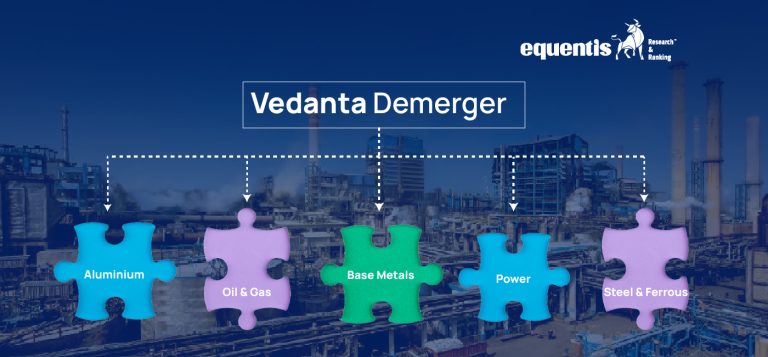
As of February 27, 2025, Vedanta Limited has made significant strides in its strategic demerger plan. The plan will restructure its diverse business portfolio into five independent, sector-focused entities. This move is designed to streamline operations, enhance transparency, and unlock shareholder value.

The approved demerger will result in the formation of five distinct entities, each concentrating on a specific sector:

  1. Vedanta Aluminium Metal Ltd.: As one of the world’s largest aluminum producers, this entity will focus on producing and supplying aluminum, leveraging its extensive resources and market position.
  2. Vedanta Oil & Gas Ltd. will oversee the oil and gas operations, maintaining its status as India’s largest private-sector crude oil producer.
  3. Vedanta Power Ltd.: This entity is dedicated to power generation and aims to contribute significantly to India’s energy sector.
  4. Vedanta Iron and Steel Ltd.: Focusing on the ferrous products industry, this company will manage the iron and steel operations, catering to both domestic and international markets.
  5. Vedanta Ltd.: The parent entity will continue to house the base metals business, including operations in zinc and copper, and will act as an incubator for emerging ventures, such as technology initiatives.

Share Allocation

According to the demerger scheme, upon completion, each Vedanta shareholder will receive one additional share in each of the four newly formed entities for every share held in Vedanta Limited.

The Need For Vedanta Demerger

The decision to demerge into five distinct entities is a strategic maneuver aimed at enhancing operational efficiency and unlocking shareholder value. Several key considerations drive this restructuring:

  1. Focused Management and Operational Agility: By segregating into specialized units—Vedanta Aluminium, Vedanta Oil & Gas, Vedanta Power, Vedanta Iron and Steel, and the parent Vedanta Limited—the company aims to foster dedicated management teams for each sector. This specialization is expected to streamline decision-making processes, tailor strategies to specific market dynamics, and enhance responsiveness to industry-specific challenges.
  2. Attraction of Sector-Specific Investments: Independent entities can appeal to investors with targeted interests, facilitating strategic partnerships and investments aligned with each sector’s unique growth prospects. This approach allows for more precise capital allocation and the potential to tap into diverse funding sources.
  3. Enhanced Transparency and Valuation: The demerger will provide clearer financial disclosures for each business unit, enabling more accurate performance and value assessments. This transparency can lead to a re-rating of the individual entities, potentially resulting in a cumulative market capitalization that surpasses the pre-demerger valuation.
  4. Unlock Hidden Value: Separate listings allow each entity to be valued based on its specific industry metrics, potentially leading to a higher cumulative market capitalization.

Implications for Shareholders

The demerger significantly shifts existing shareholders’ investment portfolios. Upon completion, shareholders will receive proportional shares in each newly formed entity corresponding to their existing holdings in Vedanta Ltd. This allocation allows investors to tailor their exposure based on individual sector performance and risk appetites.

Financial analysts project that this restructuring could lead to a re-rating of Vedanta’s businesses. Vedanta trades at an enterprise value to EBITDA multiple of under 5x. Post-demerger, the individual companies could command higher valuations, ranging from 6x to 7x, depending on industry dynamics. 

This potential uplift suggests an optimistic outlook for shareholders, with the sum-of-the-parts valuation possibly exceeding the current enterprise value. livemint.com

Financial Performance Overview

Leading up to the demerger, Vedanta Ltd. reported robust financial metrics:

  • Q3 FY2024 Revenue: ₹385.3 billion, a 10% increase year-on-year.
  • Net Profit: ₹35.5 billion, marking a 76% surge from the previous year.
  • EBITDA: ₹112.8 billion, with margins improving to 34%.

Market and Economic Implications

The demerger is poised to have several significant impacts on the market and broader economy:

  • Stock Market Performance: Following the announcement and subsequent approval of the demerger, Vedanta’s share price experienced an upward trajectory. On February 21, 2025, the stock rose by 1.99%, reaching an intraday high of ₹442.2 on the BSE. This marked the fifth consecutive session of gains, with the stock appreciating over 7% year-to-date. zeebiz.com 

Vedanta Share Price Performance (Pre & Post Demerger Approval) 

DateShare Price (₹)% Change (Intraday)
Feb 16, 2025430.20.009
Feb 17, 2025432.50.005
Feb 18, 2025436.10.008
Feb 19, 2025438.30.006
Feb 20, 2025442.20.0199

Source: Investing.com and EquityPandit

Since the demerger approval, Vedanta’s stock has gained 7% YTD and experienced a 1.99% jump on Feb 21, 2025.

  • Debt Management and Financial Health: As of September 2024, Vedanta’s parent company, Vedanta Resources, reported a debt of $11.36 billion. The demerger is expected to facilitate more effective debt management by allocating liabilities appropriately among the new entities, thereby improving financial stability and credit profiles. reuters.com
  • Sectoral Growth and Economic Contribution: Each independent entity is positioned to pursue growth strategies tailored to its specific industry. For instance, Vedanta Aluminium, India’s largest aluminium producer, can focus on expanding its market share and innovating within the aluminium sector. Such targeted growth may enhance the company’s contribution to India’s GDP, stimulate job creation, and bolster the country’s position in the global market. 

Next Steps

The demerger process is anticipated to conclude within 12 to 15 months, subject to statutory and regulatory approvals, including clearance from the National Company Law Tribunal (NCLT). timesnowhindi.com

This strategic restructuring positions each entity to pursue focused growth trajectories, attract sector-specific investments, and enhance shareholder value. 

Conclusion

Vedanta Limited’s strategic demerger into five specialized entities represents a calculated effort to enhance operational efficiency, attract targeted investments, and unlock shareholder value. Vedanta is poised to create a more agile and transparent corporate structure by aligning each business unit with its core competencies and market dynamics. This move positions the individual entities for focused growth and contributes positively to the broader economic landscape.

On February 24, 2025, the Indian stock market experienced a significant downturn, with the Sensex plummeting 857 points (1.14%) to close at 74,454.41 and the Nifty 50 dropping 243 points (1.06%) to settle at 22,553.35. This fall marked the fifth consecutive session of losses, erasing approximately ₹4 lakh crore from investors’ wealth in a single day.

Several prominent stocks, including NTPC Green Energy, Tata Motors, and Adani Green Energy, reached their 52-week lows during the session. The broader market also faced pressure, with the BSE Midcap index falling by 0.78% and the BSE Smallcap index declining by 1.31%.

Market Performance Overview

The Sensex opened at 74,893.45, a dip from its previous close of 75,311.06. During the session, it tumbled 924 points to touch 74,387.44. By the end of the day, it settled at 74,454.41, marking a decline of 857 points or 1.14%. Similarly, the Nifty 50 began at 22,609.35, down from its prior close of 22,795.90, and dropped 1.2% to hit 22,518.80 during intraday trading. It eventually closed at 22,553.35, down 243 points or 1.06%.

AD 4nXdjHZTEqge7FvPsgfsW1P7bdVSrj3blH4CNv20FudaYuWQurn4wacQH GHktpuyXjIIkDSztVywdXpuEkEoJNlFK0QZl62KmCHyT3pcoA4J0aOcK6ArUzHMWBLTokykOWDaLZljbQ?key=c0yiQwz0LdchwDImowWKqtXo
Source: BSE

This downturn wasn’t limited to the major indices. The BSE Midcap index fell by 0.78%, and the BSE Smallcap index decreased by 1.31%. The collective market capitalization of BSE-listed companies shrank by approximately ₹4 lakh crore in a single session, dropping from about ₹402 lakh crore to nearly ₹398 lakh crore.

Sectoral Indices Performance

Most sectoral indices faced significant losses:

  • Nifty IT: Decreased by 2.71%
  • Nifty Metal: Fell by 2.17%
  • Nifty Oil & Gas: Declined by 1.10%
  • Nifty Bank: Dropped by 0.67%

However, not all sectors were in the red.

  • Nifty FMCG: Increased by 0.36%
  • Nifty Auto: Rose by 0.22%
  • Nifty Pharma: Inched up by 0.02%

AD 4nXccTYZwxiGZ4MNpJg1ox4DUuJYONK5z4xfFESmM0ZJXgj9EBc3SgmiNwgt O5Wz6pf4LdIta6hVJdPoywzzQ4rqc8nWxREnT5Av TRTJcPKjBrlkVgOhKM
Source: NSE

Key Factors Behind the Market Decline

Several elements have contributed to this market slump:

Global Trade Tensions

The ongoing trade disputes, particularly involving the U.S., have created an atmosphere of uncertainty. Policies introduced by President Donald Trump have raised concerns about potential trade wars, which could hamper global economic growth. This apprehension has led investors to be cautious, impacting markets worldwide.

    Foreign Portfolio Investors (FPI) Outflows

    Foreign investors have been pulling out funds from the Indian equity market. In February alone, FPIs sold Indian equities worth nearly ₹37,000 crore up to the 21st. Since October 2024, the total outflow has surpassed ₹3 lakh crore. Factors such as high market valuations, rising U.S. bond yields, and signs of an economic slowdown have prompted this exodus.

    Attractive Chinese Market

    The Chinese stock market has been on an upward trajectory recently. Attractive valuations in China and relatively high valuations in India have led investors to reallocate funds. This “sell India, buy China” trend is expected to persist in the near term as Chinese stocks continue to appeal to global investors.

    Domestic Economic Concerns

    Indicators suggest a deceleration in India’s economic growth. Moody’s Analytics projects that India’s GDP growth rate will slow to 6.4% in 2025, down from 6.6% in 2024. Factors such as new U.S. tariffs and weakening global demand are anticipated to affect the country’s export performance, adding to investor concerns.

    Inflation and Interest Rate Uncertainty

    In the U.S., persistent inflation coupled with moderated economic growth has created a challenging scenario. The S&P Global’s flash U.S. Composite PMI Output Index fell to 50.4 in February, the lowest since September 2023. Simultaneously, the U.S. Consumer Price Index rose by 0.5% in January, reaching 3% year-over-year. These dynamics have led to uncertainty regarding future interest rate adjustments by the Federal Reserve, influencing global investor sentiment. Source: Livemint

    Stocks Hitting 52-Week Low

    The market downturn has also led to several stocks reaching their 52-week lows:

    • Adani Green Energy: Dropped to ₹819.1, a decline of 3.6% on Monday. The stock has decreased by almost 18% in the past month and 58% over the last year.
    • Tata Motors: Fell to ₹666, a 1% drop on Monday. The stock is down 8.5% in the past month and over 28% in the last year.
    • NTPC Green Energy: Plunged to ₹96.2, a 9% decrease on Monday, coinciding with the end of a three-month lock-in period for shareholders.
    • Sun TV Network: Declined to ₹567.05, a 1.5% drop on Monday. The stock is down 9.5% in the past month and 8.5% compared to a year ago.

    Source: Livemint

    What should investors do?

    While the recent downturn has raised concerns, investors should focus on staying informed and making well-researched decisions. Tracking market trends, understanding global economic shifts, and diversifying portfolios can help mitigate risks. Short-term volatility is a part of market cycles, and rather than reacting impulsively, investors should assess their long-term financial goals and risk appetite before making any changes to their investments. Monitoring fundamental indicators and sectoral movements will also provide insights into potential recovery trends.

    Conclusion

    The recent decline in the Indian stock market is a result of global and domestic factors. Trade tensions, foreign investor outflows, attractive alternative markets, domestic economic slowdown, and inflation concerns have collectively contributed to the current market scenario. Investors are advised to stay informed and exercise caution in their investment decisions as the situation evolves.

    What is Astrotourism? 

    Astrotourism, the practice of traveling to destinations with minimal light pollution to observe celestial events and the night sky, has significantly increased in popularity in recent years. This niche tourism sector allows enthusiasts to experience the cosmos in full splendor, far from urban light pollution. Beyond its recreational appeal, astrotourism presents substantial economic prospects, especially for regions with pristine night skies.

    The Genesis and Growth of Astrotourism

    Historically, humanity has been fascinated by the stars, with ancient civilizations using the night sky for navigation, timekeeping, and storytelling. In the modern era, the proliferation of artificial lighting has obscured the stars for many, leading to a renewed interest in seeking out dark-sky locations. This desire to reconnect with the cosmos has given rise to astrotourism.

    Countries like the United States, New Zealand, and Germany have long recognized the potential of astrotourism, integrating it into their tourism strategies and reaping economic benefits. For instance, the International Dark-Sky Association (IDA) has certified numerous Dark Sky Parks worldwide, attracting tourists and boosting local economies. 

    The Rise of Astrotourism

    Astrotourism, the practice of traveling to areas with minimal light pollution to observe celestial phenomena, is growing into a significant niche market in global tourism. According to a report by Statista, the global astrotourism market was valued at approximately $250 million in 2023 and is projected to grow at a CAGR of 10%, reaching $400 million by 2030.

    The Middle East and India are emerging as prime destinations, with governments and businesses investing in observatories, dark sky reserves, and educational tourism. This blog explores how astrotourism shapes local economies and India’s best stargazing spots.

    Economic Potential of Astrotourism

    Astrotourism can drive substantial economic benefits by attracting high-value tourists, particularly eco-conscious travelers. According to the International Dark-Sky Association (IDA), areas designated as Dark Sky Parks have seen an increase of 30-40% in tourist footfall post-certification.

    Case Study: Saudi Arabia’s AlUla Region

    AlUla, a UNESCO heritage site, has been declared a Dark Sky Reserve, receiving over 250,000 visitors annually for night-sky viewing. The Saudi government has pledged $35 billion to its astrotourism sector as part of its Vision 2030 economic diversification plan (NDTV, 2025). The newly designated Red Sea Project area aims to be the largest Dark Sky Reserve in the region. It is estimated to generate $1 billion annually in tourism revenue.

    India’s Growing Astrotourism Industry

    Astrotourism is gaining momentum in India, with several regions offering exceptional stargazing experiences. The Indian Astronomical Observatory in Hanle, Ladakh, stands at an elevation of 4,500 meters, providing one of the world’s highest sites for optical, infrared, and gamma-ray telescopes. The area’s designation as a Dark Sky Reserve in 2022 further bolstered its appeal to tourists and researchers. en.wikipedia.org

    Private enterprises are also contributing to the growth of astrotourism in India. Starscapes, founded in 2015, offers immersive stargazing experiences across multiple locations. It blends scientific knowledge with storytelling to engage visitors. Similarly, Astrostays empowers local communities by training residents to be astronomy guides, creating sustainable livelihoods, and preserving cultural heritage.

    Ladakh’s Hanle Dark Sky Reserve saw an increase in visitors from 500 in 2019 to over 5,000 in 2023, boosting local homestays and small businesses (Hindustan Times, 2024). Private ventures like Starscapes and Astrostays work with local communities, training over 300 rural youth as astronomy guides.  

    AD 4nXeOj yNQXUZQErnF axA6c7X9v PiqAjHful7QeDERRnU9K 7YhsWnGiXImnoqUX4fZZ679cNH3K3n33hVgBXtmpai6igl2P4hOdPbekbdA 8W7PzEji ADAqqGreqebPHwt1
    Source: Hindustan Times, 2024; International Dark-Sky Association (IDA), 2024

    Government Initiatives and Support

    Governments recognize the potential of astrotourism and are implementing policies to foster its growth. In India, the Swadesh Darshan Scheme, launched in 2015, aims to develop theme-based tourism circuits centered around spirituality and culture. While not explicitly focused on astrotourism, such frameworks can be adapted to include dark-sky initiatives, promoting regions with optimal stargazing conditions. en.wikipedia.org

    To further enhance astrotourism, governments can:

    • Establish Dark Sky Reserves: Protect areas from light pollution through legislation and community engagement.
    • Invest in Infrastructure: Develop observatories, planetariums, and visitor centers to enrich the tourist experience.
    • Promote Public-Private Partnerships: Encourage collaborations between local communities, businesses, and educational institutions to create sustainable astrotourism models.
    • Raise Awareness: Implement educational campaigns highlighting the benefits of dark skies for ecology, health, and cultural heritage.

    Best Stargazing Destinations in India

    1. Hanle, Ladakh – India’s First Dark Sky Reserve

    India is home to the Indian Astronomical Observatory, one of the world’s highest observatories at 4,500 meters. It offers 300 clear nights a year, making it one of the best places in the world for stargazing. Local tourism revenue has increased by 40% since 2022, with over $1 million in annual earnings.

    2. Pangong Lake, Ladakh

    Known for its crystal-clear skies and reflections of celestial bodies on the lake. Popular among astrophotographers, hotel bookings for night-sky tourism have increased by 25% post-pandemic.

    3. Spiti Valley, Himachal Pradesh

    This high-altitude desert with minimal light pollution and 270+ clear nights annually. It has seen a 35% rise in astro-tourists in the past three years.

    4. Rann of Kutch, Gujarat

    The white salt desert provides a surreal backdrop for meteor showers. Hosts annual astronomy festivals that attract over 10,000 visitors each year.

    5. Jaisalmer, Rajasthan

    Offers guided stargazing tours in the Thar Desert, with clear skies nearly 80% of the year. Luxury camps offering night-sky experiences report a 20% increase in occupancy rates.

    6. Coorg, Karnataka

    With its lush landscapes and clear skies, Coorg is emerging as a popular stargazing spot. 

    Astrotourism presents a unique intersection of science, culture, and sustainable economic development. By leveraging their natural dark skies and investing in infrastructure and education, regions in the Middle East and India can attract tourists, create jobs, and preserve their cultural heritage. As interest in the cosmos grows, astrotourism is poised to contribute significantly to local and national economies. 

    India’s pursuit to become a global leader in adopting electric vehicles (EVs) is gaining momentum. With a burgeoning automotive market, the nation aims to electrify 30% of its fleet by 2030. 

    However, achieving this ambitious target requires more than just manufacturing EVs; it necessitates a holistic approach that includes robust infrastructure development, strategic business opportunities, and policy reforms. Notably, enhancing rail connectivity is pivotal in accelerating EV adoption, drawing lessons from China’s successful integration of high-speed rail and EV proliferation.

    Current Landscape of India’s EV Market

    As of 2023, electric four-wheelers constitute 1% of India’s automotive market. The government’s Faster Adoption and Manufacturing of (Hybrid &) Electric Vehicles (FAME) scheme, now in its second phase with a budgetary allocation of ₹10,000 crore, aims to bolster this figure. 

    The scheme supports the deployment of 7,090 electric buses, 500,000 electric three-wheelers, 55,000 electric four-wheelers, and 1 million electric two-wheelers. Despite these initiatives, challenges such as limited charging infrastructure, high upfront costs, and consumer apprehension hinder widespread EV adoption.

    The China Paradigm: Railways Fueling EV Growth

    China’s rapid EV adoption offers valuable insights. A study analyzing 328 Chinese cities between 2010 and 2023 revealed that cities connected to the high-speed rail (HSR) network experienced a 1.22 percentage point increase in EV market share and a 91.39% surge in sales volume. 

    The extensive HSR network, covering 96% of areas with populations exceeding 500,000, alleviated range anxiety among consumers and complemented EV usage by providing reliable alternatives for long-distance travel. This symbiotic relationship between rail connectivity and EV adoption underscores the potential benefits for India.

    Tesla’s Foray into the Indian Market

    Tesla’s strategic entry into the Indian electric vehicle (EV) market parallels its earlier expansion into China. Both ventures involve penetrating populous markets with burgeoning EV potential, yet each presents unique challenges and opportunities.

    Tesla’s Entry into China: A Catalyst for Market Transformation

    In 2019, Tesla inaugurated its Gigafactory in Shanghai, marking its first manufacturing plant outside the United States. This pivotal move allowed Tesla to circumvent import tariffs, reduce production costs, and cater directly to the world’s largest EV market. The establishment of the Shanghai Gigafactory was unprecedented, being the first wholly foreign-owned car plant in China. This venture solidified Tesla’s presence in Asia and intensified competition within the Chinese EV sector.

    Tesla’s presence spurred local manufacturers to elevate their standards, leading to increased innovation and improved product offerings. Studies indicate that Tesla’s market entry significantly boosted demand for EVs in China, benefiting both the company and domestic producers. The “catfish effect” describes how Tesla’s competition prompted Chinese manufacturers to enhance their technological capabilities and cost efficiencies. Consequently, companies like BYD Auto expanded their market share, with BYD capturing 35% of China’s new energy vehicle market in 2023, while Tesla held a 7.8% share. Source: industryweek.com

    Anticipated Impact of Tesla’s Entry into India

    Tesla’s planned entry into India involves establishing showrooms in New Delhi and Mumbai, aiming to tap into the world’s third-largest automotive market. However, unlike its approach in China, Tesla has not announced plans for local manufacturing in India, which presents distinct challenges.

    1. Market Dynamics and Consumer Demand: India’s EV market is nascent, with electric vehicles accounting for approximately 2.5% of the 4.3 million cars sold in 2024. Tesla’s entry could elevate consumer interest and set new benchmarks for quality and performance. However, the high import duties on fully built units (ranging from 70% to 100%) could position Tesla’s vehicles at a premium price point, limiting their accessibility to a niche segment.
    2. Local Manufacturing and Supply Chain Integration: Tesla’s local production facilitated competitive pricing and supply chain efficiencies in China. In contrast, the absence of immediate manufacturing plans in India means Tesla may face higher operational costs and extended delivery timelines. The Indian government’s policies favor local production, offering incentives for manufacturers who commit to domestic manufacturing. Tesla’s decision to import vehicles initially might delay potential benefits from such incentives.
    3. Competitive Landscape: The Indian EV market is attracting global players, with companies like BYD also making inroads. BYD’s strategy includes local assembly, which could offer cost advantages over Tesla’s imported models. This pressure may compel Tesla to reassess its long-term strategy in India and consider local manufacturing to enhance its market position.
    4. Regulatory and Political Considerations: favorable policies and government support facilitated Tesla’s expansion into China. In India, negotiations regarding import duties and local manufacturing requirements are ongoing. The Indian government’s stance on promoting domestic production could influence Tesla’s operational strategies and investment decisions.

    Economic Implications and Business Opportunities

    India’s electric vehicle (EV) sector is poised for exponential growth, presenting substantial economic opportunities across various industries. In 2024, the Indian EV market was valued at approximately USD 23.38 billion and is projected to reach USD 117.78 billion by 2032, exhibiting a compound annual growth rate (CAGR) of 22.4%. fortunebusinessinsights.com 

    Several factors drive this rapid expansion:

    1. Increased Investments: The sector has witnessed a surge in investments, with EV companies securing significant funding from venture capital, private equity, and commercial investors. In 2024 alone, EV firms in India secured $1 billion in funding, underscoring strong investor confidence in the market’s potential. energy.economictimes.indiatimes.com
    2. Government Initiatives: The Indian government’s policies, such as the Faster Adoption and Manufacturing of Hybrid and Electric Vehicles (FAME) scheme, have been instrumental in promoting EV adoption. These initiatives offer manufacturers and consumers financial incentives, aiming to make EVs more accessible and affordable.
    3. Local Manufacturing and Job Creation: Companies like Tata Motors invest heavily in local production facilities, including battery manufacturing plants. Tata Motors plans to increase the proportion of electric models in its lineup from 12% in 2024 to 30% by 2030, reflecting a strategic shift towards electrification. Such investments reduce import dependence and generate employment opportunities, bolstering the domestic economy.
    4. Market Entry of Global Players: The anticipated entry of global EV manufacturers like Tesla is set to intensify competition, leading to technological advancements and potentially more competitive pricing. Tesla’s plans to establish a presence in India, including scouting for showroom locations in major cities, signify the attractiveness of the Indian market to international players.  reuters.com

    The economic ripple effect of the burgeoning EV market extends to ancillary industries such as charging infrastructure, battery production, and raw material supply chains. The government’s Production-Linked Incentive (PLI) scheme further encourages domestic manufacturing, aiming to position India as a global hub for EV production.

    Projected Growth of India’s EV Market (2024-2032)

    image 18
    Source: fortunebusinessinsights.com

    This table illustrates the projected expansion of India’s EV market over the next decade, highlighting the significant economic opportunities.

    Strategic Role of Rail Infrastructure

    Integrating rail and road transport can boost EV adoption by providing a reliable long-distance travel option, addressing range anxiety. This would allow EV use for urban commutes and trains for intercity travel, promoting EV adoption, reducing emissions, and decongesting roads.

    Enhanced rail connectivity can boost EV adoption by enabling EVs for urban commutes and trains for long-distance travel. This integrated approach promotes EV usage, reduces road congestion, and lowers emissions.

    Policy Interventions for Accelerated EV Penetration

    To outpace global competitors like China, India must implement comprehensive policy measures:

    1. Infrastructure Development: The expansion of charging stations, especially in urban centers and along highways, should be prioritized to alleviate range anxiety and encourage EV adoption.
    2. Financial Incentives: To make EVs more affordable and stimulate market demand, offer subsidies and tax benefits to both manufacturers and consumers.
    3. Local Manufacturing Support: To reduce costs and reliance on imports, provide incentives for domestic production of EV components, including batteries.
    4. Public Awareness Campaigns: Educate consumers about EVs’ environmental and economic benefits to shift public perception and drive adoption.
    5. Integration of Transport Modes: Develop policies that promote the synergy between rail and road transport, facilitating seamless intermodal travel and enhancing the appeal of EVs for daily commutes.

    Conclusion

    .India’s journey to becoming a global EV leader depends on infrastructure development, policy reforms, and strategic investments, including enhancing rail connectivity, which can accelerate EV adoption and reduce emissions. While Tesla’s entry into China spurred market transformation, replicating this success in India requires navigating high import duties, nascent infrastructure, and competitive pressures. 

    Tesla may need to consider local manufacturing, strategic partnerships, and active engagement with government policies to align with India’s vision for sustainable transportation and domestic industry growth to achieve a similar impact.

    India’s digital payment system has evolved rapidly, and UPI AutoPay has emerged as a game-changer. It has now surpassed card transactions in recurring payments, showing a clear shift in consumer preference for easy and automated payment methods.

    The UPI AutoPay feature, designed for hassle-free recurring payments, witnessed a threefold surge in transaction volume, reaching 175 million in January 2025—up from 58 million in January 2024, according to data from the National Payments Corporation of India (NPCI), which operates UPI. This rapid growth has enabled UPI to surpass card-based recurring payments processed through Standing Instructions set up via payment gateway companies. Source: Moneycontrol

    AD 4nXeGsK2ujm37Z2RLYMqW3sIWIL31sUPi2k MmlVW1IQ0hhqjTAioYqqKuPlgtSb66GD9g Y7qbpyIeJIAjArUntbUXQZgpCE0hTODSXnSFyL93NpyR5CmvM9cXf7zBDuKz PbtEh?key=qB7kHPiXVa06wtklyD4k8T3d
    Source: Moneycontrol

    The Emergence of UPI AutoPay

    UPI allows instant money transfers between bank accounts through mobile devices. Building upon this foundation, NPCI launched UPI AutoPay in 2020 to address the increasing demand for automated recurring payments.

    UPI AutoPay enables users to set up e-mandates for various recurring expenses, such as:

    • Utility bills: Electricity, water, and gas payments.
    • Subscription services: Over-the-top (OTT) platforms, magazines, and more.
    • Loan EMIs: Equated Monthly Installments for personal or home loans.
    • Insurance premiums: Regular payments for life, health, or vehicle insurance.

    Users ensure timely transactions without manual intervention by authorizing these payments once, enhancing convenience and reducing the risk of missed payments.

    Rapid Growth and Adoption

    The adoption rate of UPI AutoPay has been remarkable. In January 2024, UPI AutoPay accounted for 33% of all recurring payments. By January 2025, this figure had surged to over 53%, indicating a significant shift in consumer behavior towards this payment method. This data underscores the increasing trust and reliance on UPI AutoPay to manage recurring expenses.

    Its widespread adoption by banks, fintech firms, and telecom companies has fueled its rapid growth, making it the dominant mode of digital transactions in India. By 2023, UPI accounted for more than half of the country’s digital payment transactions.

      Card Share Declines as AutoPay Gains Momentum

      The share of cards in recurring payments has dropped from 42% last year to 31% this year, marking a significant shift in consumer preference. Meanwhile, the remaining recurring payments continue to be processed through Netbanking.

        UPI Crosses Cards, Widening the Gap

        The gap between UPI AutoPay and card transactions had expanded since September, when UPI first surpassed cards in recurring payments. This trend highlights the increasing dominance of UPI AutoPay in the automated payments space.

          Surge in AutoPay Registrations

          Customer registrations for UPI AutoPay, known as mandate creations, have surged to 35 million last month, a significant rise from 14.5 million in January last year. This rapid adoption reflects growing consumer trust in UPI AutoPay for seamless recurring transactions.

            Lack of Aggregate Card Mandate Data

            Unlike UPI AutoPay, no aggregate data is available for card mandate registrations, as card-issuing banks maintain this information individually. This lack of centralized data makes tracking the overall adoption of card-based recurring payments challenging.

              Regulations Disrupt Card-Based Recurring Payments

              Between 2020 and 2022, the Reserve Bank of India (RBI) introduced new rules for recurring payments, including additional factor authentication (AFA) for card transactions and a tokenization mandate. These changes disrupted existing standing instructions on cards. Customers were required to re-enter their card details for authorization, making the process complex. As a result, many opted for UPI, which had already become the go-to payment method for merchants and consumers. Source: Moneycontrol

              Merchants and Customers Shift to UPI

              Though the transition disrupted many subscriptions during COVID-19, merchants and consumers are now more comfortable using UPI AutoPay for recurring transactions. Even global platforms like Apple’s App Store no longer support card-based subscriptions in India; instead, they favor UPI, Netbanking, or Apple Wallet. A similar trend is observed across many businesses, big and small.

              This shift highlights how regulatory changes and UPI’s ease of use have reshaped the digital payments landscape, making cards less relevant for recurring payments.

              Factors Driving the Shift

              Several factors have contributed to the growing preference for UPI AutoPay over traditional card-based transactions:

              1. Simplicity and Convenience: Setting up recurring payments through UPI AutoPay is straightforward. Users can authorize payments directly from their bank accounts without the need to input card details repeatedly.
              2. Enhanced Security: UPI transactions are secured with two-factor authentication, reducing the risk of fraud associated with card payments.
              3. Broad Acceptance: A wide range of service providers, from utility companies to entertainment platforms, have integrated UPI AutoPay, offering consumers diverse options for automated payments.
              4. Cost-Effectiveness: Unlike card transactions that may incur additional fees, UPI AutoPay transactions are often free or have minimal charges, making them an economical choice for users.

              Impact on Businesses

              Businesses across various sectors have recognized the benefits of integrating UPI AutoPay into their payment systems:

              • Improved Cash Flow: Automated payments ensure timely receipts, aiding in better financial planning and stability.
              • Reduced Payment Failures: Direct bank account debits minimize the chances of payment declines due to expired or blocked cards.
              • Enhanced Customer Retention: Offering a hassle-free payment experience increases customer satisfaction and loyalty.

              Challenges and Considerations

              While UPI AutoPay offers numerous advantages, certain challenges persist:

              • User Awareness: Despite its benefits, some consumers remain unaware of UPI AutoPay’s features and advantages. Ongoing educational initiatives are essential to bridge this knowledge gap.
              • Technical Integration: Small businesses and startups may face hurdles integrating UPI AutoPay into their existing systems. Collaborations with fintech solution providers can offer streamlined integration processes.
              • Transaction Limits: Currently, there are caps on transaction amounts for UPI AutoPay, which may not suffice for high-value recurring payments. Revisiting these limits could make the platform more versatile.

              The Road Ahead

              The trajectory of UPI AutoPay suggests a promising future. As more consumers and businesses embrace this platform, we can anticipate:

              • Expansion into New Sectors: Industries such as education, healthcare, and real estate might adopt UPI AutoPay for fee collections, premium payments, and rent transactions.
              • Technological Enhancements: Continuous upgrades, including improved user interfaces and faster processing times, will further boost user experience.

              Conclusion

              UPI AutoPay overtaking card transactions in recurring payments is a major milestone in India’s digital payments growth. Its ease of use, security, and cost-effectiveness make it a preferred choice for consumers and businesses. As digital payments evolve, UPI AutoPay is set to reshape automated payments, making transactions smoother and more efficient.

              FAQs

              1. What is UPI AutoPay?

                UPI AutoPay is a feature that allows users to automate recurring payments using the Unified Payments Interface (UPI). This means you can set up automatic payments for bills, subscriptions, and other recurring expenses directly from your bank account.

              2. How does UPI AutoPay work?

                To use UPI AutoPay, you must first create a mandate with your UPI app, specifying the merchant, payment amount, and frequency. Once the mandate is set up, the payment will be automatically deducted from your account on the scheduled date.

              3. What are the benefits of using UPI AutoPay?

                UPI AutoPay offers several benefits, including convenience, security, and flexibility. It eliminates the need to remember due dates and manually make payments, and it also offers a secure way to automate recurring payments.

              4. What types of recurring payments can be automated with UPI AutoPay?

                UPI AutoPay can be used to automate a wide range of recurring payments, including utility bills, mobile recharges, loan EMIs, insurance premiums, and subscription fees.

              5. How is UPI AutoPay changing the landscape of recurring payments?

                UPI AutoPay is rapidly gaining popularity as a preferred method for recurring payments in India. Its convenience and security features drive its adoption, leading to a significant increase in its usage and a corresponding decline in the use of cards for recurring payments.

              The National Stock Exchange (NSE) has achieved a remarkable milestone, as highlighted in the 2024 Burgundy Private Hurun India 500 report. The exchange’s valuation has surged by an impressive 200%, reaching ₹4.7 lakh crore and securing its position as India’s 10th most valued private company.

              Understanding the Hurun List

              Established in 1999 by Rupert Hoogewerf, Hurun Report is a research, media, and investment group renowned for its comprehensive rankings and insights into the world’s wealthiest individuals and most valuable companies. The Hurun India 500 list, specifically, evaluates the top 500 companies in India based on their valuations, offering a detailed perspective on the nation’s economic landscape. hurun.net

              NSE’s Ascendancy in the 2024 Rankings

              The 2024 edition of the Hurun India 500 list underscores the dynamic growth of India’s corporate sector. The combined valuation of the top 10 companies has escalated by ₹22.7 lakh crore, totaling ₹96 lakh crore, which constitutes approximately one-third of India’s GDP. Notably, Bharti Airtel has made a significant contribution, adding over ₹4 lakh crore in 2024.

              The NSE’s impressive 200% valuation increase to ₹4.7 lakh crore is a testament to its pivotal role in India’s financial ecosystem. This surge has propelled the NSE into the top 10 for the first time, highlighting its growing influence and the robust performance of India’s capital markets.

              Economic Implications of NSE’s Growth

              The NSE’s remarkable growth trajectory offers several insights into India’s economic environment:

              1. Investor Confidence: The substantial valuation increase reflects heightened investor trust in the NSE’s operations and the broader Indian financial markets.
              2. Market Expansion: A thriving stock exchange indicates a vibrant economy with active participation from both domestic and international investors.
              3. IPO Momentum: The NSE’s plans to launch an Initial Public Offering (IPO) suggest a strategic move to capitalize on its growth, potentially attracting more investments and enhancing market liquidity.

              Comparative Analysis: NSE Among the Giants

              To contextualize the NSE’s position, here’s a comparison of India’s top 10 most valued private companies in 2024:

              image 15
              Data Source: Burgundy Private Hurun India 500 Report 2024

              NSE’s Meteoric Rise and Economic Implications

              The National Stock Exchange’s ascent into the top 10 reflects:

              • Robust Investor Confidence: A 200% valuation surge underscores growing trust in India’s financial markets.
              • Market Expansion: Increased market participation by domestic and foreign investors is fueling NSE’s growth.
              • IPO Momentum: The anticipated public listing of NSE could further enhance its valuation and market depth.

              Spotlight on India’s Corporate Giants

              1. Reliance Industries (₹17.5 Lakh Crore)

              Reliance Industries continues to dominate the Indian corporate space with significant investments in renewable energy, telecom, and retail. The company’s aggressive push into green energy and Jio’s leadership in the telecom sector has ensured a steady rise in market capitalization. Its retail arm, Reliance Retail, is also expanding at an unprecedented pace, leveraging India’s rising consumer base.

              2. Tata Consultancy Services (TCS) (₹16.1 Lakh Crore)

              TCS remains a global IT powerhouse, contributing significantly to India’s software exports. With increasing demand for AI, cloud computing, and digital transformation solutions, TCS has secured long-term contracts with Fortune 500 companies, strengthening its foothold in key international markets.

              3. HDFC Bank (₹14.2 Lakh Crore)

              The merger of HDFC Ltd. with HDFC Bank has created a banking behemoth, making it the most valuable private sector bank in India. The bank’s focus on expanding digital banking services and improving credit access for SMEs has reinforced its leadership in the financial sector.

              4. Bharti Airtel (₹9.74 Lakh Crore)

              Bharti Airtel’s valuation surge is driven by its substantial telecom and digital services presence. With rapid 5G deployment and increased mobile data consumption, Airtel has strengthened its market share. The company is also exploring new fintech and cloud computing ventures to diversify its revenue streams.

              5. ICICI Bank (₹9.3 Lakh Crore)

              ICICI Bank’s impressive growth is fueled by its leadership in digital banking, wealth management, and retail credit. With solid asset quality and a tech-driven approach, the bank continues to expand its lending portfolio, making significant inroads into rural markets.

              6. Infosys (₹8.0 Lakh Crore)

              Infosys is capitalizing on the AI-driven transformation sweeping across industries. The company’s strategic acquisitions, investments in blockchain, and cloud-based solutions have reinforced its position among the global IT elite.

              7. ITC (₹5.8 Lakh Crore)

              ITC’s diversified business portfolio across FMCG, hospitality, and agriculture has led to sustained revenue growth. The company’s focus on sustainability and premium consumer brands has increased its valuation.

              8. Larsen & Toubro (L&T) (₹5.4 Lakh Crore)

              As India’s premier infrastructure and engineering conglomerate, L&T benefits from the government’s push for large-scale infrastructure projects, including highways, metros, and smart cities. Its defense and renewable energy segments are also witnessing rapid expansion.

              9. HCL Technologies (₹5.2 Lakh Crore)

              HCL Technologies has positioned itself as a digital transformation, cybersecurity, and cloud computing leader. Its strong performance in AI-driven automation and enterprise solutions has helped maintain its competitive edge.

              Broader Economic Context

              The collective valuation of India’s top 500 private companies has reached $3.8 trillion (₹324 lakh crore), surpassing the nation’s GDP of $3.5 trillion in 2023. This underscores the private sector’s significant contribution to India’s economic growth. The 2024 Hurun India 500 report highlights these companies:

              • Generate $1 trillion in revenue.
              • Earn profits worth ₹8 lakh crore.
              • Pay ₹2.2 lakh crore in taxes.
              • Employ 8.4 million people.

              Conclusion

              The 2024 Hurun India 500 list reaffirms the dominance of established conglomerates like Reliance and TCS. NSE’s ascent into India’s top 10 most valued companies signifies more than just a numerical achievement. NSE’s upcoming IPO could further solidify its position, making it an even more influential player in the corporate landscape.

              With economic engines firing on all cylinders, India’s corporate sector is poised for unprecedented growth, making it a compelling space for investors and market watchers.

              Introduction

              For decades, India Qatar relations have been dynamic and primarily shaped by energy trade. However, new investment, trade, and cooperation avenues emerge as both nations look beyond traditional sectors. 

              With Qatar’s Emir, Sheikh Tamim bin Hamad Al Thani, making a historic visit to India in February 2025 after nearly a decade, the focus is on strengthening economic ties, signing new agreements, and fostering a broader partnership beyond energy.

              With bilateral trade valued at $14.08 billion in FY 2023-24, Qatar remains a vital trade partner for India, particularly as the largest supplier of liquefied natural gas (LNG). Meanwhile, India has been expanding its footprint in Qatar’s markets, exporting goods worth $1.7 billion while importing $12.38 billion from the Gulf nation.

              But what does the future hold for this India Qatar economic partnership? 

              The Backbone of India Qatar Trade: Energy & Investments

              LNG Dominance & Future Deals

              One of the defining aspects of India-Qatar trade relations is LNG. Qatar supplies over 40% of India’s LNG imports, making it an indispensable energy partner. In February 2024, QatarEnergy and India’s Petronet LNG signed a long-term deal extending LNG supply agreements from 2028 to 2048, securing India’s energy needs for the next two decades.

              Qatar is a significant crude oil, petrochemical, and LNG exporter to India. In return, Indian companies like ONGC Videsh have explored upstream investment opportunities in Qatar’s energy sector, indicating a two-way strategic partnership. In recent developments, Petronet LNG Ltd, India’s leading LNG importer, signed a long-term deal with Qatar Energy to procure 7.5 million tonnes of LNG annually from 2028 to 2048. This agreement secures a steady energy supply for India and signifies deepening economic ties between the two nations. indianembassyqatar.gov.in 

              Investment & Infrastructure Partnerships

              Qatar’s sovereign wealth fund, Qatar Investment Authority (QIA), has invested over $5 billion in India across real estate, infrastructure, and technology. This includes significant stakes in:

              • Adani Transmission
              • Retail & logistics startups like Flipkart
              • Renewable energy projects

              Qatar is looking to diversify its investments after the 2022 World Cup, and India remains a lucrative destination, particularly in infrastructure and digital transformation.

              India’s Export Profile: Expanding Trade Beyond Energy

              While hydrocarbons dominate India’s imports from Qatar, India’s exports to Qatar have diversified over the years. The key sectors include India’s exports to Qatar, encompassing a diverse range of products, reflecting the country’s manufacturing and agricultural capabilities. Key export commodities include:

              • Cereals: India supplies a significant portion of Qatar’s cereal imports, catering to the dietary staples of the Qatari population.
              • Copper and Articles of Iron and Steel: These materials are essential for Qatar’s infrastructure projects, especially in preparation for global events and urban development.
              • Vegetables, Fruits, and Spices: India’s diverse agricultural sector provides a variety of fresh produce and spices, aligning with Qatar’s culinary preferences.
              • Processed Food Products: The export of ready-to-eat meals and packaged foods caters to the convenience food market in Qatar.
              • Electrical Machinery and Equipment: India’s growing electronics industry supplies various electrical components and machinery to Qatar.
              • Plastic Products include household items and industrial-use plastics, meeting diverse consumer and commercial needs.
              • Construction Materials: With Qatar’s rapid infrastructural development, tiles, sanitary ware, and fittings are in high demand.
              • Textiles and Garments: India’s rich textile heritage offers a range of garments and fabrics appealing to both traditional and contemporary fashion markets in Qatar.
              • Chemicals: Industrial chemicals and dyes from India support Qatar’s manufacturing sectors.
              • Precious Stones and Jewelry: India exports diamonds and crafted jewelry, catering to Qatar’s luxury market.
              • Rubber Products: These include automotive parts and other industrial rubber goods.

              Top Indian Exports to Qatar (2018-24) 

              image 12
              Source: Economictimes

              While India’s exports to Qatar have declined slightly (from $1.99 billion in 2018 to $1.7 billion in 2024), there is substantial room for growth, particularly in engineering goods, digital services, and construction materials.

              Opportunities for Growth

              1. Pharmaceuticals & Healthcare: With Qatar expanding its healthcare sector, India’s generic drug manufacturers can play a significant role. Indian hospital chains like Apollo and Fortis are exploring Qatar-based operations.
              2. Digital & IT Services: India’s IT firms, including TCS, Infosys, and Wipro, already serve Qatar’s banking and telecom sectors. AI, cybersecurity, and fintech collaborations are next in line.
              3. Infrastructure & Smart Cities: Qatar’s real estate boom presents opportunities for Indian construction companies and raw material exporters.
              4. Renewable Energy & Green Hydrogen: With both countries committed to carbon neutrality, partnerships in solar energy and green hydrogen are promising areas of collaboration.

              What can you expect from the Qatar Emir’s visit?

              Emir Sheikh Tamim Bin Hamad Al-Thani’s state visit to India on February 17-18, 2025, marks a significant milestone in bilateral relations. Nearly a decade after his last trip, this visit underscores the commitment to enhancing cooperation in the energy, trade, and investment sectors. 

              The high-level delegation accompanying the Emir aims to explore new avenues for collaboration, particularly in technology and infrastructure development.

              This visit follows Prime Minister Narendra Modi’s trip to Doha in February 2024, which was instrumental in resolving the detention of eight Indian Navy personnel in Qatar. Such diplomatic engagements reflect the resilience and depth of the India-Qatar partnership.

              Key areas of India Qatar discussion include:

              • Renewed LNG contracts, ensuring price stability and supply security for India.
              • Enhanced investment ties, particularly in fintech, edtech, and e-commerce.
              • Strengthening the bilateral air transport agreement will increase direct flights between Indian cities and Doha.
              • Defense & security cooperation, focusing on naval and cybersecurity ties.

              Indian Diaspora in Qatar

              The Indian community in Qatar, numbering over 700,000, plays a vital role in strengthening bilateral ties. As the largest expatriate group in Qatar, Indians contribute significantly to the nation’s development across various sectors, including medicine, engineering, finance, and education. Their presence enhances economic collaboration and fosters cultural and people-to-people connections between the two countries. chamberindia.org

              Conclusion

              The India-Qatar relationship is a testament to strategic economic collaboration underpinned by historical ties and mutual respect. As both nations navigate the complexities of the global economy, their partnership serves as a cornerstone for regional stability and prosperity. With ongoing efforts to diversify trade and investment portfolios, the future of India-Qatar relations promises sustained growth and shared success. 

              As Prime Minister Narendra Modi and President Donald Trump step into fresh terms in office, bilateral trade talks between India and the U.S. have entered a decisive phase. With elections settled, both leaders can shift focus from political campaigns to economic diplomacy. Trade tensions persist, but political stability presents a window to secure long-term agreements. The question remains: will this moment lead to a historic breakthrough or continued deadlock?

              The Evolution of India-US Trade Relations

              Trade between India and the U.S. has expanded significantly over the last two decades. Bilateral trade in goods and services surpassed $191 billion in 2023, marking the U.S. as India’s largest trading partner. However, tariffs, market access, and intellectual property rights have remained persistent points of contention.

              AD 4nXeSuzN1WJnge3QyvPTqDdzTR9VqSTVJCsmjcQIv0nRuw8MM0vWtce002xU9 2DBJVqPTMH
              Source: US Census 

              AD 4nXcJQUHPDucniFcEiUOArv0HswT8ay5VWYcSc6h4cfjOcE3lF5a9Z6Jj3lhQ LHYbII0JvTuU0AzHxtbassJ
              Source: US Census

              Despite their growing trade volume, friction over tariffs on agricultural goods, digital trade restrictions, and defense technology transfers continue to hinder progress toward a comprehensive trade agreement.

              The Modi-Trump Talks: What’s on the Table?

              The key areas of discussion include:

              1. Energy Trade: Beyond Oil and Gas

              India is the U.S.’s largest energy export destination, importing $12 billion of crude oil and LNG annually. However, the Indian government seeks more than just hydrocarbons. Critical minerals like lithium and rare earths are now in focus to drive India’s EV and battery industries.

              Talks are advancing on long-term oil and gas price guarantees, reducing volatility in India’s energy costs—increased collaboration on solar, hydrogen, and carbon capture technologies as part of India’s net-zero commitment.

              2. Defense and Strategic Partnerships

              Due to sanctions, India is reducing its reliance on Russian arms, and U.S. defense companies see an opportunity to expand their footprint—discussions on F-35 fighter jets and advanced drone technology. The expansion of joint production for missile defense systems and helicopters and the push for eased restrictions on technology transfer remain a sticking point.

              3. Semiconductor Supply Chains: Can India Deliver?

              With both nations aiming to reduce reliance on China, semiconductors have taken center stage. Intel and Micron’s expanding operations in India signal a shift in global supply chains. India’s government is offering tax breaks and subsidies to attract U.S. chipmakers. However, Vietnam and Mexico also compete for U.S. investment, pressuring India to accelerate execution.

              4. Digital Trade and Data Localization: Finding Common Ground

              India’s Data Protection Act mandates stricter localization laws, which U.S. tech giants argue stifle business. The U.S. is pushing for greater access for firms like Google, Meta, and Amazon. India seeks to retain sovereign control over digital data, citing national security. AI, cybersecurity, and 5G infrastructure agreements are also on the negotiation table.

              5. Tariffs and Market Access: The Big Sticking Points

              While both countries are eager for stronger trade ties, tariff barriers remain contentious. India wants duty-free access to its textiles and pharmaceuticals. The U.S. seeks lower tariffs on agricultural goods, medical devices, and motorcycles. A resolution on the Generalized System of Preferences (GSP), which granted India preferential trade status until it was revoked in 2019, is also under discussion.

              What Lies Ahead? Key Challenges and Opportunities

              While the latest trade discussions between India and the U.S. have set the stage for deeper economic cooperation, several structural challenges and geopolitical complexities could influence the trajectory of bilateral trade. Here’s a detailed look at the road ahead:

              1. Tariff & Market Access Disputes

              Despite progress, tariff disputes remain unresolved. The U.S. has consistently criticized India’s high tariff barriers on American goods, particularly in the following sectors:

              • Motorcycles: India imposes a 50% tariff on high-end U.S. motorcycles, affecting brands like Harley-Davidson.
              • Wines & Spirits: India levies tariffs of 150% on imported wines and liquor, limiting U.S. exporters’ access.
              • Medical Devices: U.S. companies face price caps on medical stents and knee implants, reducing their profitability in the Indian market.

              While Modi offered tariff reductions on select agricultural products like almonds and apples, Trump is expected to push for broader tariff reductions. If unresolved, this could hinder the finalization of a comprehensive trade agreement.

              Key Question: Can India maintain a balance between protecting its domestic industries while granting the U.S. more market access?

              2. Political Stability: A Window for Trade Advancements

              Modi’s Third Term: With a fresh mandate, the government is expected to push forward pro-business reforms and deepen ties with the U.S. to attract foreign investment, particularly in manufacturing and technology.

              Trump’s Return to the White House: President Trump’s second term signals a renewed focus on trade renegotiations, emphasizing reducing the U.S. trade deficit and securing better market access. India may face continued pressure to lower tariffs due to its history of aggressive trade policies.

              With both leaders firmly in power until at least 2029, there is a stronger likelihood of finalizing long-term trade agreements. However, Trump’s America First approach and India’s self-reliance (Atmanirbhar Bharat) strategy could lead to negotiation friction.

              Key Question: Can both nations leverage their political stability to secure a balanced trade deal, or will protectionist policies continue to create roadblocks? 

              3. Strengthening the Energy Partnership: A Strategic Imperative

              India’s commitment to increasing crude oil and LNG imports from the U.S. is a major shift in its energy-sourcing strategy. However, challenges remain:

              • Supply Chain Disruptions: Global energy markets remain volatile, and disruptions in U.S. production (due to climate policies or geopolitical tensions) could impact India’s energy security.
              • Cost Competitiveness: U.S. crude oil is costlier than Middle Eastern supplies. India must negotiate favorable pricing to maintain affordability.

              If India successfully diversifies its energy imports, it can reduce reliance on OPEC nations, strengthening its negotiating position in global energy markets.

              Key Question: Can India lock in long-term contracts with the U.S. to ensure energy price stability? 

              4. Defense Trade and Strategic Alignment: Growing but Fragile

              India’s interest in F-35 fighter jets and advanced U.S. military technology signals an evolving defense partnership. However, deeper military ties with Washington come with strategic consequences:

              • Russia Dependency: India still relies on Russia for over 45% of its military hardware. Acquiring U.S. weapons may complicate India’s defense partnerships.
              • Technology Transfer Issues: India wants greater access to U.S. defense technology, but past deals have lacked tech-sharing provisions.
              • Regional Geopolitics: Strengthening ties with the U.S. could further strain India’s relationship with China, impacting border tensions and trade.

              If India and the U.S. finalize defense agreements, India’s military supply chain and strategic alliances could significantly shift.

              Key Question: Will the U.S. be willing to transfer critical technology to India to secure long-term defense partnerships? 

              5. The Future of Digital Trade: Data Localization & Tech Disputes

              India’s data localization policies require foreign companies to store Indian user data within the country, which has led to friction with U.S. tech firms like Google, Amazon, and Meta. The key concerns include:

              • Investment Uncertainty: U.S. firms argue that strict data policies could slow down tech investments in India.
              • Digital Trade Barriers: The U.S. sees India’s policies as protectionism that unfairly limits foreign companies’ market access.
              • India’s Standpoint: The Indian government insists that data localization is necessary for national security and regulatory control.

              The outcome of these negotiations could define the future of India’s digital economy, which is projected to reach $1 trillion by 2030 (Statista).

              Key Question: Can India and the U.S. find a middle ground that allows digital trade to flourish without compromising national security? 

              6. Semiconductor & Supply Chain Realignment: India’s Big Opportunity

              As part of its China+1 strategy, the U.S. seeks to diversify its semiconductor supply chain, making India an attractive partner. Key factors in play:

              • U.S. Investment: Semiconductor giants like Intel and Micron have shown interest in setting up operations in India.
              • India’s Readiness: India needs massive infrastructure investment to develop a self-sufficient semiconductor industry.
              • Competing Nations: Vietnam, Malaysia, and Mexico also vied for U.S. semiconductor investments, creating intense competition.

              If India successfully attracts U.S. investment in this sector, it could become a global semiconductor manufacturing hub, reducing dependence on China and Taiwan.

              Key Question: Can India rapidly scale its semiconductor industry to attract major U.S. investments? 

              7. Finalizing a Comprehensive Trade Agreement: Will It Happen?

              While Modi and Trump have set a seven-month timeline to finalize a comprehensive trade deal, challenges remain:

              • Past Attempts Failed: A similar trade deal was attempted in 2019 but collapsed due to tariff disagreements.
              • Complex Negotiations: A wide range of sectors—agriculture, defense, digital trade, pharmaceuticals, and semiconductors—must be addressed.
              • Election-Driven Delays: Trade negotiations could be pushed to 2026 or beyond if political dynamics shift.

              A successful comprehensive trade agreement could unlock billions in new investments and reshape global trade flows. However, given the challenges, a partial trade deal may be more realistic in the near term.

              Key Question: Will India and the U.S. prioritize completing trade deals, or will domestic political concerns take precedence? 

              As the world’s largest democracy and biggest economy sit at the negotiating table, the stakes couldn’t be higher. Energy security, technology access, defense deals, and trade tariffs will determine whether India and the U.S. can forge a stronger economic alliance or remain locked in disputes. With the right compromises, 2025 could be the year that sets the foundation for a historic trade deal.

              Frequently asked questions

              Get answers to the most pertinent questions on your mind now.

              [faq_listing]
              What is an Investment Advisory Firm?

              An investment advisory firm is a company that helps investors make decisions about buying and selling securities (like stocks) in exchange for a fee. They can advise clients directly or provide advisory reports and other publications about specific securities, such as high growth stock recommendations. Some firms use both methods, like Research & Ranking, India’s leading stock advisory company, specializing in smart investments and long-term stocks since 2015.

              An investment advisory firm is a company that helps investors make decisions about buying and selling securities (like stocks) in exchange for a fee. They can advise clients directly or provide advisory reports and other publications about specific securities, such as high growth stock recommendations. Some firms use both methods, like Research & Ranking, India’s leading stock advisory company, specializing in smart investments and long-term stocks since 2015.

              An investment advisory firm is a company that helps investors make decisions about buying and selling securities (like stocks) in exchange for a fee. They can advise clients directly or provide advisory reports and other publications about specific securities, such as high growth stock recommendations. Some firms use both methods, like Research & Ranking, India’s leading stock advisory company, specializing in smart investments and long-term stocks since 2015.

              An investment advisory firm is a company that helps investors make decisions about buying and selling securities (like stocks) in exchange for a fee. They can advise clients directly or provide advisory reports and other publications about specific securities, such as high growth stock recommendations. Some firms use both methods, like Research & Ranking, India’s leading stock advisory company, specializing in smart investments and long-term stocks since 2015.