Fundamental Analysis of Stocks

Fundamental analysis of stocks based on the quarterly and annual reports of the companies.

Extended non-performance period and failure to surpass its IPO issue price of ₹ 36. Investors almost wrote off NHPC. 

But something changed for the stock in the last couple of years. A greater push for renewable energy and favorable government policies led to strong demand for the stock, helping it cross the ₹100 threshold for the first time on February 2, 2024. 

In this article, we will perform a fundamental analysis of the NHPC share price and examine the stock’s long-term growth potential. Let’s begin. 

What does NHPC Do?

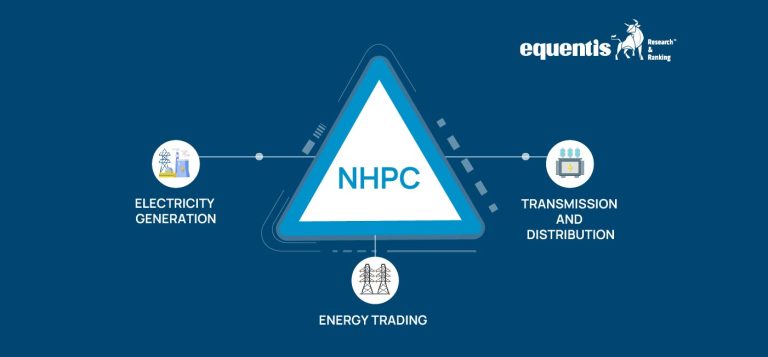
NHPC is a state-owned hydropower generation company that develops, operates, and sells bulk power to state utilities. 

Recently, it has also diversified into developing solar and wind energy projects. 

As of 31st October 2024, the company operates 22 hydropower stations, five solar power projects, and one wind energy project, with a combined installed capacity of over 7,200 MW. 

Along with its multiple joint venture partners, NHPC is currently developing 15 renewable energy projects, a mix of hydro and solar, with an installed capacity of over 10,000 MW.

Apart from selling energy from all its renewable energy projects, it earns revenue from power trading, contract execution, project management, and consultancy work. 

NHPC Management Team

Shri Rajendra Prasad Goyal is the Chairman and Managing Director of NHPC and holds the additional charge of Director (Finance). He started his career with NHPC in 1988 as a Senior Accountant and rose through the ranks, serving the company on various key projects. He is an associate member of ICAI and holds a Master’s Degree in Commerce from the University of Rajasthan. 

Shri Uttam Lal is the Director (Personnel) and has over 35 years of rich experience in human resource policies, industrial relations, employee benefits, and learning and development. Before joining NHPC, he headed the HR functions of the R&D wing of NTPC. Shri Lal has a management graduate degree from XISS, Ranchi, with an additional qualification of Bachelor of Law (HRM) and Harvard Manage-mentor certification. 

Shri Raj Kumar Chaudhary is the Director (Technical) at NHPC, overseeing the development and operations of various projects in India and Bhutan. He joined NHPC in 1989 as a Probationary Executive (Civil) and rose through the ranks of his career to the post of Director (Technical). 

Shri Sanjay Kumar Singh is the Director (Projects), and before joining NHPC, he was the Chief General Manager of SJVN Ltd. He has over 32 years of experience in the Power & Infrastructure sector. Shri Sanjay holds a degree in B.Tech (Civil) and has worked at various levels for key project activities like Project Construction, Survey & Investigation, preparation of detailed project reports and cost estimates, project planning and execution, and many other things. 

NHPC Shareholding Pattern

AD 4nXc2D XqSW8k

In the Domestic Institution segment, mutual funds in India hold a 3.63% stake in the company, and the Life Insurance Corporation of India has a 3.96% stake. 

NHPC Financial Performance

Revenue

In FY24, total income declined by 1.24% to ₹10,025 crores from ₹10,150.90 crores in FY23. 

And, in the first half of FY25, total income increased by 5.1% to ₹6,440 crores from ₹6,124 crores reported in the same period last year. 

AD 4nXdDqu9vT5HX8OsD RthMeqs7ok9yyE5iALmNL3TTUBnqGL2YnXww4Fy

EBITDA

In FY24, EBITDA growth was flat and decreased slightly to ₹5,733 crore from ₹5,743 crore in FY23. However, the EBITDA margin improved to 68% in FY24 from 61.65% in FY23. 

AD 4nXeM44Pfq399P8PwhRANdkadPWFZeFTsEVJA vrOTbDURvIam 4edj51zVGo4cb Cp7JH0KLq7xtoFEHyFNHBkepzxwhzKLSBSsz94M65MlhDISzTKD9VtHCoCbw53PEIEoiYzxa

Net Profit

In FY24, NHPC recorded a 2.3% decline in net profit at ₹3,743.94 crores, down from ₹3,833 crores in FY23.

In the first half of FY25, net profit decreased by 21% to ₹2,177.74 crores from ₹2,788.64 crores reported in the same period last year. The company’s net profit margin declined to 37.90% at the end of H1FY25 from 49% at the end of H1FY24. 

AD 4nXedRwByTMaMc8nEDD0SIwNziHU2Z5MrKZzVcgnEAD3ohsYbAfr Zt d303z4kyXwJFKsnwl56M5Tv4xw

NHPC Financial Ratios

Current Ratio: At the end of Q2FY25, the company’s current ratio declined 1.15 times from 1.24 times recorded in the same period last year. 

Debt-Equity Ratio: At the end of Q2FY25, the debt-to-equity ratio increased to 0.90 times from 0.82 times in Q2FY24. 

Debt Service Coverage Ratio (DSCR): The company’s debt service capability declined significantly. At the end of Q2FY25, its DSCR was 2.05 times, down from 4.39 times at the end of Q2FY24. 

Return on Capital Employed (ROCE): At the end of FY24, the company’s ROCE was 6.85%. 

NHPC Share Price Analysis

NHPC shares were listed on 1 September 2009, and they were oversubscribed nearly 24 times. After their listing, investor response was muted, and the stock traded in a range-bound fashion below its IPO price for more than 10 years. 

AD 4nXefDA7PfZfvSkdzyvCPOb9AwNbCcQvOHrZ2u0jBgg5ljCM4sGwZGAZn w e9UIqopSW7bS5MlJcOUXwaRoshXT p6TYbqw9rgKG4UWQLDKEuFRJct15vLd1
Source: Tradingview

On 15th July 2024, the NHPC share price reached an all-time high level of ₹118.40.  In the last three years, the NHPC share price made a remarkable turnaround and became a multibagger stock, growing by 37% annually. 

NHPC has a consistent dividend payment track record. Over the years, it has distributed more than 50% of its net profit as dividends to shareholders. In FY24, the dividend payout percentage was 53% of its net profit. 

In FY24, it paid ₹1.90 as dividend per share, ₹1.85 in FY23, and ₹1.81 in FY22.  At the current NHPC share price of ₹79, the dividend yield ratio is 2.40%.

NHPC Share Price Valuation Score

Earning Per Share (EPS)

The following is the last five years Earnings Per Share of NHPC:

FY20₹2.99
FY21₹3.22
FY22₹3.52
FY23₹3.82
FY24₹3.73

The company’s EPS growth has been moderate during the last five years and even decreased in the most recent fiscal year. It is important to note that a company’s share price rise is directly proportional to its earnings growth.

Price-to-Book VS Median Price-to-Book

The price-to-book value of NHPC’s share price is 2, while the 5-year median price-to-book value is 2. This indicates that the stock is trading at two times the book value compared to its historical averages. 

Source: Screener (24th Nov 2024)

Price-to-Equity VS Median PE

The current PE ratio of NHPC is 26.7, meaning investors are paying 26.7 times for every ₹1 of earnings. 

However, looking at the PE ratio in isolation doesn’t tell the full story. Therefore, we will compare it with a 5-year median PE.

As per data from the screener, the company’s 5-year median PE is 9.3. This means that at its current PE level, the stock is not trading at a premium compared to its historical valuations. 

AD 4nXcsADk02tAK 3UGMs2F5Svs toBiXwe8FSzsPAQWbR IzuSM caMMMf
Source: Screener (24th Nov 2024)

Because the stock was trading sideways with no major upside momentum following its IPO, the median long-term PE is low, and after the recent surge, the stock appears overpriced.

Comparing the stock PE to a peer firm will provide a more accurate estimate of stock valuations.

For example, SJVN Ltd., a state-owned hydropower generation business, trades at a PE of 45.7 times and has comparable financial metrics. This indicates that NHPC sells at a lower premium than its peer, SJVN.

NHPC Future Growth Outlook

The nature of its business restricts NHPC’s pursuit of aggressive growth in the hydropower segment. However, its recent diversification to solar and wind energy businesses provides the company with new growth opportunities.

Factors to look out for that could drive the earnings of the company:

Expansion Plans: The company has 10,402 MW of hydro and solar projects under various stages of construction, 4,112 MW of projects awaiting clearance, and 4,110 MW under survey & investigation, providing a long-term growth runway.

Flat revenue growth: In the last five years, the company’s compounded annual revenue growth has been 1%. A longer project execution timeline and flat revenue growth are key risks for NHPC’s share price growth. 

The company’s operating margins are high, but due to the capital-intensive nature of the business and higher non-classified expenses, the net earnings margin is lower. A boost in earnings per share is crucial for the long-term growth of its shares. 

Favorable Government Policies: In a bid to achieve 500 GW of renewable energy capacity by 2030, the government is supporting renewable energy companies through various policy initiatives, helping them grow and strengthen their balance sheets. 

Environmental and Hydrological Risks: Adverse weather conditions, unfavorable hydrology, and variations in water flows can affect power generation and the company’s operational performance. 

Regulatory Risks: Changes in regulatory regulations, particularly tariff adjustments, can impact NHPC’s revenue and profitability. While producing stable returns, the cost-plus tariff regime is subject to regulatory changes.

FAQ

  1. Is NHPC a solar company?

    NHPC is a state-owned hydropower generation company that recently diversified into developing solar and wind energy projects. 

  2. How has NHPC’s share price performed in the last 3 years?

    As of 24 November 2024, the NHPC share price has returned 37% annually in the last three and five years.

  3. Does NHPC pay dividends to shareholders?

    NHPC has a consistent track record of paying dividends to its shareholders, with a dividend payout ratio of 50% compared to net profit. In FY24, it paid ₹1.90 per share as a dividend.

This railway multibagger stock has caught everyone’s attention in the market. IRFC share price has reached an all-time high of ₹229 on 15th July 2024, rising more than 800% since its IPO in January 2021. And, investors continue to bet heavily on this stock. 

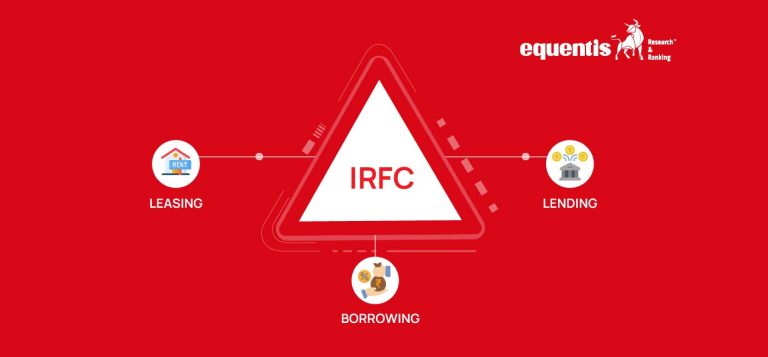
IRFC stands for Indian Railway Finance Corporation, and its primary task is to meet Indian Railways’ financial requirements by borrowing funds from financial markets. In short, IRFC is a funding arm of Indian Railways. 

In this article, we will analyze the IRFC share price and delve deeper into its financials. Let’s start. 

What does IRFC do?

IRFC is a public sector enterprise under the administrative control of the Ministry of Railways. It was incorporated on 12th December 1986 as a dedicated financing arm of Indian Railways to mobilize funds from domestic and overseas markets. 

Its primary business is to finance the acquisition of rolling stock assets of Indian Railways including locomotives, passenger coaches, wagons, electric multiple units and leasing these assets to other entities under the Ministry of Railways. 

All of these assets are leased for up to 30 years and lease rentals serve as the primary source of revenue for the company. The lease is divided into blocks of two 15-year periods. In the first 15 years, the lessee pays the principal amount for the leased assets, followed by a rent of ₹1 lakh per annum for the remaining 15 years, or until the asset is sold off before the lease period ends. 

So far, IRFC has funded the acquisition of 13,764 locomotives, 76,735 passenger coaches, and 2,65,815 wagons, accounting for approximately 75% of the total rolling stock fleet of Indian Railways. 

It is also lending to other railway entities like RVNL, Railtel, Konkan Railway Corporation Limited, and Pipavav Railway Corporation Limited, etc. 

IRFC raises funds through issue of both taxable and tax-free bonds and term loans from banks and financial institutions. 

IRFC Management Team

Smt. Usha Venugopal is the Chairman and Managing Director of IRFC from 1st August 2024. She is an Indian Railways Account Service (IRAS) officer of 1987 batch and has over 35 years of experience handling various key roles in the Ministry of Railways. 

Ms. Uma Ranade is the CEO and Railway Board has given her additional charge of CMD. She is a 1986 batch IRAS officer with over 35 years of experience in various Railway divisions and the Ministry of Railways. 

Ms. Shelly Verma is the Director (Finance) of IRFC. She holds B.Com degree from Shri Ram College of Commerce, Delhi and is a fellow member of ICAI. Prior to joining IRFC, she was with Power Finance Corporation as Executive Director (Finance) and has more than 30 years of experience in power sector financing. 

Shareholding Pattern

AD 4nXdSzzx9HvYq KAeB45yPFrt fWJ49xT4udERQQ5caUi6KCTMdONR1H i9wT AZAK9gSlxJkFY4O60txTxCDNIeBR4gHaVximQzt1JgfWTBHTPGX9ZxA4iMClX7P5q2 e58TW9aD3g?key=ONMoTNN0O42DS UdFgbpa597

The shareholding pattern shows that mutual funds and other institutional investors own a small stake in the company.

The company’s free-float is close to 14%, which means that only 14% of its shares are available for trading. When compared to IRCTC, the free float is nearly 38%.

When demand for shares rises, a lower free float frequently causes a sharp increase in share price.

IRFC Financials

Total Income

In FY24, the company’s total income increased by 12.2% to ₹26,656 crores from ₹23,763 crores. 

And, in the first half of FY25, IRFC’s total income increased marginally by 1.7% to ₹13,666.22 crores from ₹13,437.93 crores. 

AD 4nXe7kvSbOabBOkDM8U 3Jvg1qRMr3sGq9YKWwRLN4ywYmLDCEt2XCcqDqnGu2N91KNHi55Uu1Be6fgjoCI1DxeBd w0RQHgEZO58JN7t XQzOxuFQgQ7 N12ACVzppVCMtsQ28nzhw?key=ONMoTNN0O42DS UdFgbpa597

Net Profit

In FY24, net profit of the company increased by 4% to ₹6,412 crores from ₹6,167 crores.

And, in H1FY25, IRFC’s net profit increased by 3% to ₹3,189.47 crores from ₹3,095.86 crores. 

AD 4nXc5pJZZFeAgL778mrlasrbG1jtiebhX4faBRrF7358fdHb3nr5mHQflsqvnV3xAUTnWI4FckLmW1dFnTrYgfksONKLfi2axaxjFrzL79gzBQurKJMPC19hS2kGzNrHUoHfaRR3WRQ?key=ONMoTNN0O42DS UdFgbpa597

Asset Under Management

Asset Under Management or AUM reflects the total market value of all assets that the company manages for its clients. In IRFC’s case, Indian Railways is the primary client. 

At the end of FY24, IRFC managed assets worth ₹4.64 lakh crores and at the end of H1FY25, AUM marginally declined to ₹4.62 lakh crores.

AD 4nXe5V 4Qos 3RQXXISTaYc jD3p8QwPBu8A eTgzq5UMJHKeh9FdHonxVP iSjbTt2ezXEqR3XqiXusGzuxnmgyz8j0y5zwXzc10QLRXkgVWEymqYApuXT0ciqgqWJJin2H8SZngRA?key=ONMoTNN0O42DS UdFgbpa597

Asset Quality 

IRFC is one of the few NBFCs in India with no NPAs. This is because all loans are guaranteed by the Indian government, allowing it to operate with a low-risk business model and borrow funds at low rates

Also, the Government of India has exempted IRFC from paying any income taxes. 

IRFC Share Price Analysis

IRFC shares were listed on 29th January 2021 and made a quiet start around its IPO issue price. Eventually, IRFC share price exploded to make an all-time high of ₹229 on 15th July 2024, around 9 times its listing price. 

As of 15th November 2024, IRFC market cap stands at ₹1,82,515 crore and is trading at ₹140 per share. 

AD 4nXdqYtXbQtRvV6NKMo2gd JAkHaenLdDvUPO1w wjL SjiUwDB43hdxPvKpHnUWx45sQ1JXBXJT0GJSmNtNAK2TanBMGEVCAvSG13Y Nra1ACa9Yo6tPkmNTzHflEwMjzhrJlMrCw?key=ONMoTNN0O42DS UdFgbpa597
Source: Tradingview

IRFC has a good dividend payment history. In 2021, the dividend per share was ₹1.43, ₹1.5 in 2023, and ₹1.5 in 2024.

As of 15th November 2024, the dividend yield of IRFC stands at 1.07.

Earning Per Share (EPS)

EPS is an essential metric to assess whether a company is enhancing its profitability per share over time. Consistent flat EPS growth suggests that the company isn’t generating sufficient profit for its shareholders.

The following is the last five years EPS of IRFC.

FY20₹3.93
FY21₹3.66
FY22₹4.66
FY23₹4.85
FY24₹4.91

Over the last five years, IRFC reported a marginal increase in EPS. Consistent growth in earnings is important for rise in share price. 

Return on Equity (ROE)

Return on Equity is calculated by dividing the net profit by shareholder’s fund or equity. 

The following is the last 5 years ROE of IRFC:

FY2011.92
FY2112.29
FY2214.85
FY2313.93
FY2413.03

The five year average ROE of IRFC is 13.20%. 

A consistent ROE of 15% or higher is generally considered good as it indicates that the company is effectively using shareholder’s equity to generate profits. 

Return on Assets (ROA)

Return on assets is another profitability metric that is especially important for banks and NBFCs, which have an asset-heavy balance sheet. It is calculated by dividing net profit by total assets. 

The following is the last five year ROA of IRFC. 

FY201.33
FY211.16
FY221.35
FY231.29
FY241.32

The five year average ROA of IRFC is 1.29.

A ratio of more than one indicates that a company is generating more profit than the value of its assets. 

Price-to-Book VS Median Price-to-Book

For banking and NBFC stocks, the price-to-book ratio is the more appropriate ratio to measure valuations.

AD 4nXdPWWu3zI5MyD HMdiOOpInRnxha5Pv0drh4s2GPxP95zvYlQ tloVeI78OXR3jmZJKJWetxIg6jIEkvYWbHE1ZCK9O8xUDKpEmuSjAaLQNY66VUiTqspVihJRIdMckwfQ2QY3m?key=ONMoTNN0O42DS UdFgbpa597
Source: Screener (15th Nov 2024)

IRFC is trading at a price-to-book value of 3.5 times, while the 5 year Median Price-to-book value is 0.9 times, which means, it is trading at higher valuation compared to historical averages. 

Future Growth Potential of IRFC

The growth of IRFC is dependent on the growth of Indian Railways and its ability to raise low-cost funds.

In FY25, the Government of India has allocated a record ₹2.62 lakh crore in capex, a significant increase from ₹28,174 crores in FY14. The money will be spent on modernization of Indian Railways, new infrastructure development, and improving passenger safety and experience. 

Recent developments, such as the introduction of Vande Bharat train sets and Vande Bharat Sleeper train sets, the conversion of train rakes from ICF to LHB coaches, the transition to a fully electrified network, and the Dedicated Freight Corridor, have all contributed to an increase in demand for rolling stock within the Indian Railways.

The India’s railway and metro rolling stock market is expected to reach ₹4.75 lakh crores in the next five years, growing at a CAGR of 46%, showcasing huge growth potential for IRFC. 

One of the biggest advantages of IRFC is its low risk business model and predictable business growth. Recently, it has diversified its lending activities to financially viable project financing, And, it is the sole player in its business, giving it a long runway of growth.

However, in the event of unfavorable policy changes by the Ministry of Railways, it can adversely impact the growth of the company and IRFC share price. 

FAQ on IRFC Share Price

  1. When was IRFC incorporated?

    IRFC was incorporated on 12th December 1986 to raise money from the debt capital market to meet the extra budgetary requirements of Indian Railways in financing rolling stocks. 

  2. How has IRFC share price performed in the last three years?

    IRFC share price hit an all time high of ₹229 on 15th July 2024. Its shares were listed on 29th January 2021 at around ₹25, recording a CAGR of 79% over the last three years.

  3. Is IRFC a profitable company?

    Yes, IRFC is a profitable company and has recorded a profit growth of 4% to ₹6,412 crores in FY24.

Introduction:

The Public Sector Undertaking (PSU) bank sector is a key part of India’s banking system, comprising banks where the government holds a majority stake. This ownership ensures that these banks operate in the public interest. The growth of PSU banks aligns closely with national economic policies and efforts toward financial inclusion. The ongoing reforms and the government’s push for digital banking in 2024 have positioned PSU banks to adopt new technologies that enhance their services and operational efficiency. This growth is reflected in the NIFTY PSU Bank index, highlighting the sector’s positive trajectory.

AD 4nXc97u2pzfZLb8sLTzeFiv29jB6XrrXYjIhgtlhf2RPrilLXTcaaN5j8400kmpoxSLfSqZp7LqnlRcDfT8mugstz

Source: NSE

To make the best out of this growth, you can either invest in the index itself or a PSB like the Canara Bank. But before deciding on the investment, let’s take a look at the Canara Bank stock rate and use fundamental analysis to evaluate the Canara Bank stock price

Canara Bank Overview:

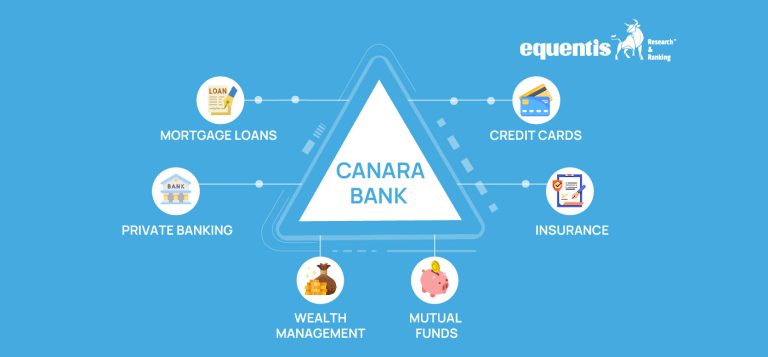
Canara Bank, known for its customer-centric approach, was established in July 1906 in Mangalore, Karnataka. Over its more than a century-long journey, the bank has experienced significant growth, especially after nationalization in 1969, which propelled it into a national player with extensive geographical reach and diverse clientele. The 1980s marked a period of business diversification for the bank. In June 2006, Canara Bank celebrated a century of operations in the Indian banking sector and later merged with Syndicate Bank in April 2020.

Today, Canara Bank is a major financial conglomerate with thirteen subsidiaries and sponsored institutions. It serves over 11.42 crore customers through a vast network of 9,627 branches and 12,256 ATMs across India. As of June 2023, it holds a market share of 6.2% in net advances and 6.5% in total deposits. The bank excels not only in commercial banking but also in corporate social responsibility. It focuses on national priorities, promotes rural development, and enhances self-employment through training institutes while advancing financial inclusion.

Canara Bank has consistently maintained a balanced asset mix, emphasizing sectors like agriculture and Micro, Small, and Medium Enterprises (MSMEs) alongside retail assets such as housing, education, and vehicle loans. As of March 2024, the bank’s capital adequacy ratio stood at 16.28%, well above the regulatory requirement of 11.5%. In FY 2023-24, it raised infrastructure bonds to diversify funding sources, totaling Rs.10,000 crore at competitive rates.

Shareholding Pattern:

The shareholding pattern of Canara Bank as of the quarter ending September 2024 is as follows-

AD 4nXcoDcH1GDxFrz5DeuaH3o QUHJsMc77C6K8 XDlPBq6ep5jtGWg9METJqok A PLujtpoiB P9cTJ9

Source: Company Report

Key Management Personnel:

Canara Bank was started by Shri Ammembal Subba Rao Pai in 1906. As of the financial year ending March 2024, the bank operates under the leadership of the following key management personnel:

  1. Shri Vijay Srirangan (Non-Executive Chairman):

Shri Vijay Srirangan, a Gold Medalist from IIM Ahmedabad (PGDBM) and IIT Delhi (B.Tech), brings extensive experience to his role since November 2022. He was the Director General and Mentor at the Bombay Chamber of Commerce & Industry. Previously, he spent 36 years with Tata Group, serving in leadership roles at Tata Consultancy Services, Tata Infotech, Tata Unisys, and Tata Burroughs. His responsibilities ranged from training and research to international sales and systems integration.

  1. Shri K Satyanarayana Raju (MD and CEO):

Shri K. Satyanarayana Raju, a Physics graduate with a postgraduate degree in Business Administration (Banking and Finance), began his banking career in 1988 at Vijaya Bank. He rose to Chief General Manager at Bank of Baroda, leading branches and serving as Zonal Head of Mumbai. He also held key roles in operations and services at the head office and was on the board of BoB Financial Solutions Limited. Currently, as Executive Director of Canara Bank since March 2021, he oversees various functions, including IT, digital banking, MSME, and corporate credit. 

  1. Dr. Parshant Kumar Goyal (Director representing the Government of India):

Dr. Parshant Kumar Goyal, IAS, serves as Joint Secretary in the Department of Financial Services, Ministry of Finance, focusing on Financial Inclusion and Digital Payments. Earlier, as director of the same department, he handled agriculture credit and regional rural banks. He has also served as Secretary to the Chief Minister of Tripura, managing additional portfolios in the GA (C&C) and Industries & Commerce departments.

Canara Bank Financials:

  1. Operating Profit:

Operating profit reflects the income generated from its core activities like lending, deposits, and other financial services, minus the operating expenses such as salaries, rent, and administrative costs. As of the financial year 2023-24, the operating profit for Canara Bank was Rs.29413 crore. The trend of operating income over the last few years is as under-

AD 4nXeWZnahiGFSShvR7bnqFOiDuIY D89bOERlaAA3jtwcELnkaNaCUp5Z qj2 SsInnpiRc6

Source: Annual Report

  1. Net Profit:

One of the primary measures of profitability, the net profit, for Canara Bank has been increasing since the bank incurred losses in 2019-20. As of the financial year 2023-24, the net profit of the bank was Rs.14554 crore. The trend of net profit over the last few years is as under-

AD 4nXc3sIe1yE5WzNiaqTbfmWwnQMFL0NX0ELz1H3Wisk8zOaLtywehlbkwyZGr9991NsF BJVGCMEkIhHfGn suu2uvGJ 8dkBqkQsT 6Gkvwih4OuIgW46qcW9ydVyU4sS6b0Zkmz7YIDmGfA1ZY1CNeY

Source: Annual Report

  1. Net Interest Income:

Net Interest Income represents the bank’s profitability earned through its core activities. As of the financial year ending March 2024, the bank’s net interest income stands at Rs.36566 crore, which was 16.32% more than the NII of FY2023 (Rs.31435 crore). The trend for the NII of the bank over the last few years is as under-

AD 4nXd1THTu6iX4MKiP7AJF4ocr7UHkUqXAS5Bu1B5g0YWJLLpVxpIE0O3Vqq6NTSvTpIGXawpq2dAjXxfeyboFc 7gapMRfxZnJyzU2l7j33KQlOxxntAJCciJsVO5MMzxR5lW

Source: Annual Report

  1. Deposits:

Deposits are a major source of funding for a bank, representing the money customers leave in savings, checking, or fixed accounts. For a bank, a growing deposit base means it has a larger base for lending, and its ability to generate income is good. A stable deposit trend indicates consistency and a lower base could signal a doubt in the bank’s ability to lend and earn. As of the financial year 2023-24, Canara Bank received a total deposit of Rs.22,72,968 crore, of which the CASA deposits were Rs.392327 crore, 7.06%. The trend for deposits received by Canara Bank over the last few years is as under-

AD 4nXd0WXxbnbgeg0d

Source: Annual Report

  1. Advances:

Advances refer to the loans and credits extended by a bank to its customers. Interpreting a bank’s advances reveals the bank’s risk exposure and profitability. Higher advances indicate active lending and is considered positive when driven by a healthy demand and good credit quality. However, this needs to be examined in combination with risk management and the bank’s NPA. As of FY2024, Canara Bank’s advances stood at Rs.960602 crore. The trend for advances as per the bank’s loan book over the last few years is as under-

AD 4nXcuAlze2O5 h9zLlVqZ 3uR qPgEpOmkRc yMX51fe3hnQ65lsiLU FrARlbs7fUzW2qpk QlXbW1FWWNcvwdgTyX4uOTTpzgl1ymbTpwilNKcbmeEtcKZ7GIHPXZ 7BH5a59q 2G0MnpskbfZPB0JVOjF

Source: Annual Report

Key Financial Ratios for Canara Bank:

  • Capital Adequacy Ratio: The bank’s capital adequacy ratio is 16.28%. This means that for every Rs.100 of risk-weighted assets, the bank has Rs.16.28 in capital. The ratio highlights the bank’s healthy cushioning for organic growth in the forthcoming quarters and the bank’s ability to absorb potential losses.
  • Net NPA Ratio: The net NPA ratio is 1.27%, meaning that out of every Rs.100 lent, Rs.1.27 is classified as non-performing. A lower NPA ratio shows effective credit management and a lower risk of bad loans.
  • Return on Equity: The return on equity is 22.06%. This indicates that for every Rs.100 of equity invested by shareholders, the bank generated Rs.22.06 in profit, reflecting strong profitability.
  • Return on Average Assets: The bank’s RoAA is 1.01%. This means that for every Rs.100 of assets, the bank earned Rs.1.01 in profit. A higher ROAA shows better asset utilization.
  • Net Interest Margin: The net interest margin is 3.05%, meaning that for every Rs.100 of interest-earning assets, the bank earns Rs.3.05 in net interest income. A higher NIM shows the bank’s efficiency in earning from its lending activities.
  • CASA Ratio: The CASA ratio for Canara Bank is 32.29%. This means that 32.29% of the bank’s total deposits come from low-cost current and savings accounts, reflecting a stable and cost-effective source of funding for the bank.

Source: Annual Report

Canara Bank Share Price Analysis:

A registered investment advisor evaluates a company share using analysis techniques and a stock screener. Canara Bank was listed on the NSE in December 2002. Since then, the stock has generated gains of over 900%. As of 24th October 2024, the market cap of Canara Bank stands at Rs.89,101.01 crore, and its share price stands at Rs.98.22, more than the Bank of Maharashtra share price (Rs.50). 

AD 4nXfHzqgyf4b2oicMrj8Uft8jrxt2YfVOoBX1OIA3x 8nFzdRqFr0vYxSm4 n7qw70KPbeFrNGJhJ1A540TG ZruqlU4pvu YA316k4hQNVTon9RmYtZyS7ic5L1is8gUoC45VhqjlE9KMM

Source: MoneyControl

Over the last twelve months, the stock has grown 38.07% as of 24th October 2024. It has surpassed the growth levels of the major indices NIFTY50 (26.42%) and SENSEX (23.92%). 

FY2024 Performance Highlights of Canara Bank:

  • The bank’s global business grew by 11.31% in FY 2023-24, reaching Rs.22,72,968 crores, with global deposits increasing by 11.29%.
  • Its retail portfolio saw an 11.68% growth, reaching Rs.1,56,414 crores. Housing loans rose by 10.81% to Rs.93,482 crores, vehicle loans by 14.03% to Rs.17,251 crores, and education loans grew by 6.65% to Rs.15,726 crores.
  • Advances to agriculture and allied activities increased by 18.69%, reaching Rs.2,53,206 crores, while advances to the MSME segment grew by 6.67% to Rs.1,31,869 crores by March 2024.
  • The bank’s yield on advances rose by 101 basis points, from 7.70% in March 2023 to 8.71% in March 2024.
  • In January 2024, Canara Bank inaugurated its Data and Analytics Center (DnA) in Bengaluru, setting a benchmark in the Indian banking sector.
  • The bank introduced API Banking to provide seamless digital banking services for corporate customers.
  • Canara SHG E-money, a unique digital initiative in partnership with the Reserve Bank Innovation Hub, now offers doorstep digital services to Self-Help Groups (SHGs).
  • The bank has partnered with NEC Corporation and HPE for Data Lake House implementation and with Microsoft for establishing an Advanced Analytics Platform and Data Lake in the cloud.

Source: Annual Report

Bottomline:

In FY2024, Canara Bank introduced API banking for corporate customers and launched Canara SHG E-money with the Reserve Bank Innovation Hub. Embracing digital transformation, it uses advanced analytics and cloud-based solutions to enhance customer service. The bank aims to increase low-cost deposits by offering innovative, customized products, striving to be recognized as the “Best Bank to Bank With.” Investing in Canara Bank could be a way to participate in the growth of India’s banking sector. However, when deciding whether to invest in Canara Bank or another option, remember to consider fundamental analysis vs. technical analysis. Use a stock screener to compare your investment choices with your financial goals. If necessary, consult a registered advisor for guidance.

FAQs

  1. What is the principle of Canara Bank?

    Canara Bank’s founding principles emphasize saving and thrift. It aims to be the community’s social heart, dedicated to assisting those in need. This sense of service mirrors the difference between fundamental and technical analysis in investing—each has its unique value and purpose.

  2. What is Canara Bank famous for?

    The bank is widely known for its customer-centricity.

  3. Is Canara Bank a good stock to buy?

    Canara Bank is a growing public sector bank in India. It can be a good investment opportunity; however, you should decide to invest only after thoroughly analyzing all the market and company parameters.

Introduction:

India’s banking system has remained one of the most stable globally, even during times of global uncertainty. It has a healthy structure with low non-performing loans and strong capital and liquidity buffers. Increased infrastructure spending, quick project implementation, and ongoing reforms are set to further boost the sector’s growth for both PSU banks and private banks. This building opportunity is also reflected in the NIFTY PSU Bank index’s yearly gains of 33.35% as of 23rd October 2024. 

Source: NSE

The growth in the industry can be leveraged by investing in the stocks of PSU banks like the Bank of Baroda. So, what is the Bank of Baroda share value? And how do investment advisory firms evaluate the BOB share price using fundamental analysis? Let’s understand. 

Overview of Bank of Baroda:

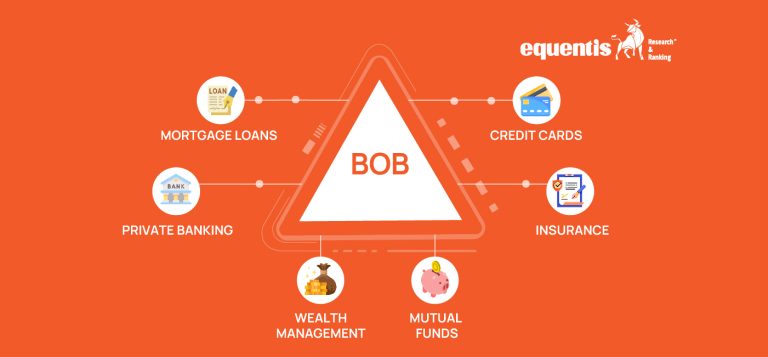
Bank of Baroda, often called BoB, is a nationalized bank headquartered in Vadodara, Gujarat. It was founded in 1908 by Maharaja Sayajirao Gaekwad III, initially serving as a private bank for the princely state of Baroda. In 1969, it was nationalized by the Government of India, which now holds a 63.97% stake. In 2019, the Bank of Baroda merged with Vijaya Bank and Dena Bank, making it India’s third-largest public sector bank. It offers a range of services, including personal, corporate, international, SME, rural, and NRI banking, along with treasury services. 

The bank is known for its digital presence through the ‘Bob World’ app, which provides 185+ banking services online. For net banking, the service is called Baroda Connect. BoB has an extensive network with around 8,168 branches in India, 94 branches abroad, and 11,475 ATMs, with 35% of its branches in rural areas. It also operates 150 currency chests across the country. 

Share Holding Pattern:

The shareholding pattern of the bank as of the quarter ending September 2024 is as follows-

AD 4nXePlA6KIE4BMK6Ke860 HFRCwHmTrPd8xXle7stziduw1X14aYhKM5E9tBeINELBDq9qrtDZIIFJo RIqzAKKSTDj5Id9hkoq tkV26FoOnxk9Zntt3S0WG4cUBLtCVo5PJryo TlPA8gK6O1gDCJoHvdHn?key=Mey6a9iBqIAf9HmMpcEFdw
Source: Company Report

Key Management Personnel:

The Bank of Baroda was founded on 20th July 1908 by Maharaja Sayajirao Gaekwad III, the Maharaj of Baroda. As of FY2024, the bank operates under the leadership of the following key management personnel:

  1. Shri Debadatta Chand (MD and CEO):

Shri Debadatta Chand became the Managing Director and CEO of the Bank on 1st July 2023. With over 29 years of experience in banking and finance, he holds a B.Tech, an MBA, CAIIB, a Post Graduate Diploma in Equity Research, and a Ph.D. in Management.

Shri Chand started his career at Allahabad Bank in 1994 and worked at SIDBI before joining PNB in 2005. He became Executive Director at Bank of Baroda, overseeing corporate credit, institutional banking, treasury, and foreign exchange, before becoming MD & CEO in July 2023.

  1. Chayani Manoj Sundar (CFO):

Chayani Manoj Sundar became the Chief Financial Officer (CFO) of Bank of Baroda on June 21, 2024. With over 19 years of experience in banking, he specializes in financial and credit operations. Sundar is a chartered accountant at ICWA with a bachelor’s degree in commerce. He succeeded Ian Gerard Desouza in this role.

  1. Mr. Ravindra Singh Negi (Chief Risk Officer):

Mr. Negi is a seasoned banker with over 25 years of experience at the Bank of Baroda. He has expertise in risk management, treasury, corporate and retail credit, international banking, and general branch operations. Since 1st May 2024, he has served as the Group Chief Risk Officer (GCRO). 

Before this, he oversaw global operations as the Deputy Chief Risk Officer for over two years. He also led the Bank’s GCC operations as CRO in Dubai and headed the Global Mid Office (Treasury) during his 11.5-year journey in risk management.

Bank of Baroda Financials:

  1. Net Interest Income:

Net Interest Income (NII) is the difference between the interest a bank earns from its lending activities (like loans, mortgages, and other credit products) and the interest it pays to depositors on savings accounts, fixed deposits, or other forms of borrowing. It’s the profit a bank makes from its core business of lending money after covering the cost of funds it provides to customers. As of FY2024, the bank’s NII was Rs.44,721.53 crore. 

AD 4nXexcbBfFCPIKJlgfo8BICUE4xijBsR7RPadrmqMUH72G8uPYSfE8zdKcfHGU0zsbA j2eBAjhDQl1WYnwyylH6usvFoShRkw L2VhQ5XQVLnpVxtox8vIjOQvL2LRoH gNEOMxDSsuMyene1 TqZMFtU4IY?key=Mey6a9iBqIAf9HmMpcEFdw
Source: Annual Report

  1. Net Profit:

Bank of Baroda’s net profit has been growing consistently after the loss incurred in 2017-18, and it increased significantly in 2021-22. As of FY2024, the bank’s net profit was Rs.17,788.78 crore. 

AD 4nXdPKrO0aZJp7 ZZgNiKZDC3KUDf9S9Fcsxswt8bXMF1YEzdNrQvfdHa7iM5YWnXmnptkLWVjLeVo3AFRGzBWSmiSJA2i4e1xjzJaq1dTqsld0vJkpPdC7YI xV pq DnsJAT 3kwgmLjNg0sxinNYv2 aRm?key=Mey6a9iBqIAf9HmMpcEFdw
Source: Annual Report

  1. Deposits:

Deposits represent the funds that customers place in the bank, such as savings accounts, fixed deposits, and current accounts. These are liabilities for the bank because the bank owes this money to its customers. As of FY2024, the total deposits for the bank reached Rs.13,26,958 crore, and the CASA deposits of Rs.5,14,366 crore. 

Financial YearTotal Deposits (Rs. Cr.)CASA Deposits (Rs. Cr.)
2017-185,91,314.81,92,323.1
2018-196,38,689.72,08,403.8
2019-209,45,985.43,15,952.4
2020-219,66,996.93,68,027.6
2021-2210,45,938.564,10,122.92
2022-2312,03,687.794,75,096.83
2023-2413,26,9585,14,366

Source: Annual Report

  1. Advances:

Advances refer to the loans or credit the bank provides to individuals or businesses, including home loans, personal loans, and business loans. They are assets for the bank since it earns interest income from borrowers. As of FY2024, the bank’s net advances were Rs.1065781.72 crore. 

Financial YearAdvances (Rs. Crore)
2017-184,27,431.8
2018-194,68,818.7
2019-206,90,120.7
2020-217,06,300.51
2021-22777155.18
2022-23940998.27
2023-241065781.72

Source: Annual Report

Key Financial Ratios for Bank of Baroda:

As of the financial year ending March 2024, the key financial ratios are as follows-

  • Net Interest Margin (NIM): The bank’s NIM is 3.18%, meaning that for every Rs.100 of interest-earning assets, the bank earns Rs.3.18 in net interest income. A higher NIM generally indicates better profitability from the bank’s lending activities.
  • Earnings Per Share (EPS): The bank’s EPS is Rs.34.40, which means that the bank earned Rs.34.40 in profit for each share. A higher EPS generally indicates better profitability per share for investors.
  • Return on Average Assets (ROAA): The bank’s ROAA is 1.17%, meaning it earned Rs.1.17 for every Rs.100 of its average assets. The ratio indicates how efficiently the bank uses its assets to generate profit.
  • Return on Equity (ROE): The bank’s ROE is 18.95%, indicating that for every Rs.100 of shareholders’ equity, the bank earned Rs.18.95 in profit. This suggests a strong return on the money invested by shareholders.
  • Capital Adequacy Ratio (CAR): The bank’s CAR is 16.31%, which means it has Rs.16.31 in capital for every Rs.100 of risk-weighted assets. A higher CAR indicates a strong capital base to absorb potential losses.
  • Cost-Income Ratio: The bank’s cost-income ratio is 47.71%, meaning it spends Rs.47.71 for every Rs.100 it earns in income. A lower ratio is generally favorable, as it shows better operational efficiency.
  • Net Non-Performing Assets (Net NPA): The bank’s Net NPA is 0.68%, which means that for every Rs.100 of loans, only Rs.0.68 is classified as non-performing or bad loans. A lower NPA reflects better asset quality and lower credit risk.

Source: Annual Report

Bank of Baroda Share Price Analysis:

The BOB share price can be analyzed using both techniques of analysis. Thus, there is no question of fundamental analysis vs technical analysis to determine the right outcome. Bank of Baroda was listed on the NSE in February 1997. As of 23rd October 2024, the bank’s market cap is Rs.1,23,155.99 crore, and its share price is Rs.238.66, more than the Bank of India share price of Rs.98.78. Since its inception, the stock has given a return of over 1700%. 

As of 23rd October 2024, the stock has returned 21.87% over the past twelve months, lower than the index growth of 33.35% for the same year. Moreover, the stock’s growth is also lower than the one-year returns of NIFTY (26.55%) and SENSEX (23.81%) as of the same date. 

Source: Money Control

Other Performance Highlights of Bank of Baroda:

  • The bank’s domestic CASA grew 5.4% year-on-year, reaching Rs.4,66,401 crore in FY 2024.
  • Global gross advances increased to Rs.10,90,506 crore in FY 2024, compared to Rs.9,69,548 crore in FY 2023. This represents a 12.5% year-on-year growth.
  • The bank’s net worth for FY 2024 rose to Rs.93,850.76 crore. This includes paid-up equity capital of Rs.1,035.53 crore and reserves of Rs.1,11,188.05 crore.
  • The UPI remittance success rate for the bank stands at 92% for FY2024.
  • In March 2024, the bank implemented a Green Finance Framework to raise Green Deposits and support credit flow for green activities.
  • An MOU was signed with KFW, a multilateral finance agency, under the “Solar Partnership—Promotion of Solar/PV in India” program. This program aims to refinance investments in solar energy at competitive interest rates.
  • The bank also entered into an MOU with IREDA. This collaboration focuses on co-lending and co-origination for renewable energy projects, along with loan syndication and underwriting.

Source: Annual Report

Bottomline

Bank of Baroda’s shares currently have a PE ratio of 6.80, a generally accepted PE level in the market. The bank’s financial performance in FY2024 shows promising growth, driven by increased CASA, advances, and successful initiatives in green finance and renewable energy partnerships.

However, deciding whether to invest in the Bank of Baroda or another bank should depend on your analysis using a stock screener, financial profile, and investment objectives. If necessary, seek the help of a registered stock advisor and align your decisions with your long-term goals before investing. 

FAQs

  1. What is the overview of the Bank of Baroda?

    Bank of Baroda (BOB) is a government-owned public sector bank based in Vadodara, Gujarat. It is India’s third largest public sector bank, following the State Bank of India. As of 2023, it is the 586th largest company on the Forbes Global 2000 list.

  2. What are the pillars of the Bank of Baroda?

    The bank stands on the pillars of reliability, transparency, and integrity.

  3. What is the Bank of Baroda famous for?

    Bank of Baroda is famous for its domestic presence and digital initiatives.

Tata Tele (Maharashtra) Limited (TTML), Tata Group’s telecom arm, offers a wide range of enterprise telecommunications services, both wired and wireless. It provides services under the name Tata Tele Business Services (TTBS).

Incorporated on March 13th, 1995, Hughes Ispat Limited secured essential telecom licenses to offer cellular services in the Maharashtra region. In December 2002, the company was acquired by Tata Group and renamed Tata Tele Maharashtra Limited. 

The company has been struggling to achieve growth due to rising competition. However, with Tata Sons infusing nearly ₹60,000 crore for debt payments in the past six years, could this become a turnaround stock? Let’s dive into the analysis of TTML share price.

What does TTML Do?

Operating under the Tata Tele Business Services (TTBS), it offers connectivity and communications solutions for businesses in Maharashtra and Goa. 

TTBS offers India’s businesses the most extensive information and communication technology (ICT) services, including connectivity, collaboration, cloud, security, IoT, and marketing solutions. 

The company also operated a consumer mobile business, partnering with Docomo and Tata Teleservices, but it later suspended operations due to unsustainable competition. On July 1, 2019, it sold its consumer mobile business to Bharti Airtel.

TTML Business Overview

The company has a fiber optic network of over 1.3 lakh KM, offering a comprehensive portfolio of smart digital solutions. It includes

  • Cloud Infrastructure
  • Cybersecurity Solutions
  • Managed Services
  • Business Communications
  • Network & Connectivity
  • Communication Suite for Collaboration & Productivity

TTBS primarily focuses on catering and empowering micro, small, and medium enterprises spanning various industries. 

TTML Management Team

Mr. Amur S. Lakshminarayanan is the TTML’s Chairman and a Tata Group veteran. And has also been MD & CEO of Tata Communications since November 2019. He is an engineering graduate from BITS Pilani. Before joining Tata Communication, he was President and CEO of TCS, Japan. 

Mr. Harjit Singh is the Managing Director and CEO of TTML and is responsible for the company’s growth and expansion as a leading digital service provider in the MSME category. He is also a Tata veteran and has been associated with companies such as Tata Housing, Tata AutoComp Systems, Tata Communication, and Neotel before joining TTML in 2019. 

Mr. Shinu Mathai is the Chief Financial Officer of TTML and joined the company in March 2004 and worked in various leadership roles. 

TTML Shareholding Pattern

The company’s shareholding pattern has not changed significantly over the last year, and no mutual funds have invested in it. 

AD 4nXeo4vkQA8Rs2W0qSxwoAUlrA6Kob6He 2hbVy3Ztm6l0Uyafy7z eAb6N3yQScJJo Cb5b3de2o8SuR VsS653zNkx2tg90AWbuSW5B ac3ODyIjyKlM QkTq Z081X7feaOHSGU Jdhl V inFRny57To?key=Y5 XMi2GLrd 9wgmsECp5Q

TTML Financial Performance Review

Revenue From Operations

In the last four financial years, TTML’s revenue from operations has grown at a lower single digit of 3.37% annually. In FY24, the company posted ₹1,191.65 crore in revenue from operation, up from ₹1,106.7 crore in FY23. 

AD 4nXeJ81x0JtpJEpV5VBJx B0faB5xYkZAXGcZOgUJJoVowCg3FfBTkDWKocD 4HoHPZ3E1LNB9K1BBowALm5Mo2ltlEK14DCOEFGGuHVSi2t mIVV7KDpthjdfJQpBY40FNyTH6UEP Hp3OtEnAoc3Ex5xLA?key=Y5 XMi2GLrd 9wgmsECp5Q

In Q1FY25, the company’s revenue from operations increased by 13.31% year-over-year to ₹323.50 crore from ₹285.51 crore in Q1FY24. 

EBITDA

The company’s EBITDA rose marginally in the last four years, from ₹500.3 crores in FY21 to ₹536 crores. The EBITDA margin is maintained at 45%. 

AD 4nXeMe8DKJUCRRDcUOYnu340tUphT JV0yxaD47 qMFFLD5JNtpVRqccLgN0qqqRsYI71zIgS7Su9RwtoNllyM6OBtJcLWrhKQgadKUZV9LeZ4 jNhueyNRDdzEsuyIMT3tG07jM8G 6Jrb2a2prboAH2pfGI?key=Y5 XMi2GLrd 9wgmsECp5Q

In Q1FY25, the company’s EBITDA was reported at ₹138.53 crores, up from ₹127.20 crores in Q1FY24.

Profit After Tax

Because of higher interest expenses, the company is reporting losses which are greater than its revenue.

AD 4nXfOeoGs4A7X9gMzzWGj5cVV7dpT03uHVusZlk2XxHcuzdWQF1ygZix73igVDlJSZBg6WHjonJlfka9g54r 9S1KQQWuBVpP30CBQeJnVfck53H2UjW9qzlhf2Ho5cxS4AJH6Pl9p0SgzYKICUEcVYv YyXL?key=Y5 XMi2GLrd 9wgmsECp5Q

The company reported a net loss of ₹323.40 crore in Q1 FY25, compared to a loss of  ₹301.18 crore in Q1 FY24.

TTML Key Financial Ratios

Current Ratio: The company’s ratio deteriorated in FY24 to 0.54 times from 0.64 times in FY23. 

Debt-to-equity Ratio: The debt-to-equity ratio has stayed constant at 1.04 times for the last two financial years. 

Interest Service Coverage Ratio: This metric measures the company’s ability to pay its debt interest costs. It has deteriorated to 0.80 times in FY24 from 0.85 times in FY25, indicating that the company is falling short of meeting interest costs in a financial year. 

Debt Service Coverage Ratio (DSCR): Similar to the interest service coverage ratio, this ratio indicates a company’s ability to repay debt. In FY24, DSCR was 0.08 times, improving marginally from 0.06 times in FY23. It suggests the company lacks enough financial means to repay its debt. 

TTML Share Price Analysis

The company has not created wealth for its investors. Tata Tele was listed on the stock market in October 2000, while its previous owner still owned it. The IPO’s issue price was ₹12. 

Because of the stiff competition in the telecom space following Jio’s arrival in 2016, TTML lost most of its market share due to the closure of its cellular operation, and its share price dropped to the level of a penny stock. However, it bounced back due to the strong performance of its enterprise business. 

TTML share price was trading at ₹2.70 on 14th October 2019 and made a high of ₹290 on 10th Jan 2022. It is currently trading around ₹80 level for quite some time now. 

AD 4nXfmAAL dXQLfaeXBw0D5ou lhuV68cXSWeUHxXGBnNIQPT2pDOthmD CoxfBg7Wk43oVgykidWSG63KLs6ZoogZfn3sUfhzbOKADoksD emRBJecuVsNqODolsdJxIpNrp96hJcRIWFiWvCQRXveUkNPh C?key=Y5 XMi2GLrd 9wgmsECp5Q
Source: TradingView

The company has no history of paying dividends. In August 2013, the company issued bonus shares at a 2:15 ratio, which means that for every 15 shares held, shareholders received two bonus shares.

Tata Tele Maharashtra Limited- TTML Debt Position

TTML’s net debt was ₹19,954 crores at the end of FY24, up slightly from ₹19,825 crore at the end of FY23. 

The interest expenses in FY24 increased to ₹1,621 crores from ₹1,501 crore in FY23. 

FY23FY24
Total Borrowings (in ₹ cr)₹19,825₹19,954 
Interest Expenses (in ₹ cr)₹1,501₹1,621

Despite its low debt-to-equity and interest service coverage ratio, TTML’s debt profile has been assigned a stable outlook by CARE Ratings. 

Tata Sons, its holding company, continues to provide strong financial support, which has resulted in a stable outlook. It has invested ₹46,595 crore in TATA Tele Business Services (TTBS) and continues to support the company.

Valuations Score

The valuation metric doesn’t apply to TTML because it is a loss-making company. Hence, the Price-to-Earnings (PE) Ratio cannot be calculated. With a negative net worth, the P/B Ratio is also negative. 

Market Cap to Sales

The company’s market cap-to-sales ratio is around 13 and is trading close to its 5-year median, which indicates that it is neither overvalued nor undervalued in these valuation metrics. 

AD 4nXcAv EdRujbzTVf0fnpWQRCu8waXhaENcL3e0gy84CWr0ng7NIlXf zUz4NDU7lPS3 VUuGgInIUpFdxzE0BwMnw nNMt7hqMrbQL 8nQVLXCrtvl 5Kz62JwbtW3CJ nupMffWnz9KQoMI3Fdx2DBd8DDz?key=Y5 XMi2GLrd 9wgmsECp5Q
Source: Screener.in

However, it would help if you compared TTML share price with that of peer companies and analyzed the valuation metrics. 

Industry Outlook

India is the second-largest telecom market in the world, with a teledensity of 85.87% at the end of May 2024. According to IBEF, the total number of telephone subscribers stood at 1,203.69 million, and Wired broadband subscribers stood at 41.31 million.

The percentage of digital penetration in the MSME sector is still lower. According to a report by Redseer, India is home to about 64 million MSMEs, contributing 30% to the nation’s GDP. However, the current digital penetration among MSMEs is 12%, which opens up many opportunities for players like TTML. 

To make MSME more digitally empowered, the Government of India has launched the Digital MSME Scheme for the increased adoption of digital tools, applications, and technologies. The government will provide subsidies to MSME units for using cloud-based software,

All these factors can offer a considerable growth potential for TTML stock price

FAQ

  1. What does TTML do?

    Incorporated in 1995, the company specializes in providing wireline voice, data, Cloud, and SaaS solutions to enterprise customers with a strong focus on the MSME sector.

  2. How has the TTML share price performed in the last 5 years?

    Over the last 5 years, TTML’s share price has increased by over 2800%, from a low of ₹2.70 on October 14, 2019, to a high of ₹290 on January 10, 2022.

  3. Is TTML a Tata Group company?


    TTML is a Tata Group company that offers services under the Tata Tele Business Services brand name.

Introduction:

The rising middle class and the increasing youth population are leading to a high demand in India’s automobile sector. The indicative index, NIFTY Auto’s yearly gains of 51.71% as of 18 October 2024, shows the sector’s growth and also reflects a growing investment opportunity in the automobile manufacturing industry. 

AD 4nXfSCFltgkjM9my56 nWKp1u8uam8wQOjmMNQbZwj2tJhv2PbnqySvE OMPcAfw1uQZleyxmKqmmUOAMpYz9QLqSWiCfU0QseZ29H33J9Dvin7bvQrWcww4WaRLgmzGguRAObU5 yYax75a4mrymXYQf4e6F?key=0ICmJp6SYvmIfPkj j5ZQ
Source: NSE

The industry opportunity can be leveraged by investing in automobile manufacturing companies like Ashok Leyland, India’s second-largest commercial vehicle manufacturer. But what is Ashok Leyland share price? How stable is the company, and what does the fundamental analysis of Ashok Leyland say? Let’s find out. 

Overview of Ashok Leyland Limited:

Ashok Leyland is the Hinduja group’s flagship company, with a strong presence in the medium and heavy commercial vehicle (M&HCV) market. It ranks as the fourth largest bus maker in the world and the 19th largest truck manufacturer. Recently, it was recognized as the 34th-best brand in India. Headquartered in Chennai, Ashok Leyland operates nine manufacturing plants—seven in India and one in the UAE and UK.

The company has a broad portfolio in the auto industry with product concepts that set commercial vehicle (CV) benchmarks. In FY24, it held a 31% market share in the M&HCV segment and 20% in the LCV segment. Ashok Leyland also plays a key role in defense, supplying the largest fleet of logistics vehicles to the Indian Army and partnering with armed forces worldwide. Its portfolio includes diesel engines for industrial, genset, and marine uses, along with electric vehicles through Switch Mobility.

The company has one of the largest networks in the commercial vehicle industry, with 52,863 touchpoints, including 1,748 exclusive ones and 11,207 outlets for Leyparts. Additionally, Ashok Leyland runs driver training institutes across India, having trained over 8,00,000 drivers to date. 

Share Holding Pattern:

The shareholding pattern for the company as of September 2024 is as follows-

AD 4nXeEjP4p6jD2IHg9v9YJHEfzcYh WbfyXkMNQNIJj5tDSuYoaCnH83lAk9BGRXaGdxiqoNekwmCxEDq7 HxNq i6ZmR4rFh7BZDIHH f1dKfQnCef8YiJXcy ZAGa HtZIFI6OXH7LTqh EvGgJGdSYZzx3v?key=0ICmJp6SYvmIfPkj j5ZQ
Source: Company Report

Key Management Personnel:

Ashok Leyland was founded by Raghunandan Saran in Chennai, where it began as ‘Ashok Motors’. The leadership baton currently lies in the hands of the following executives-

Mr. Dheeraj G. Hinduja (Executive Chairman):

    Mr. Dheeraj Gopichand Hinduja earned his B.Sc. (Hons) in Economics and History from University College, London, in 1993. He represents the Hinduja Group, and his expertise includes global business strategies, building and transforming organizations, and attracting top Boards and management talent. 

    Mr. Gopal Mahadevan (Director):

      Mr. Gopal Mahadevan is a Chartered Accountant and Company Secretary with 35+ years of experience in finance across various industries. He has worked in manufacturing, internet services, financial services, and project companies. Throughout his career, Mr. Gopal has been part of leading organizations like Thermax, Amara Raja Batteries, Sify, Sanmar Group, and TTK Pharma. He also serves on the board of multiple companies within the Ashok Leyland Group.

      Mr. Shenu Agarwal (MD & CEO):

        Mr. Shenu Agarwal is an NIT Kurukshetra graduate with Honors and holds an MBA from Duke University, USA. He brings over 25 years of hands-on experience in Sales, Marketing, R&D, Product Management, Strategy, Project Management, New Business Start-ups, and Strategic Tie-ups. Previously, he served as the President of Agri Machinery and Construction Equipment at Escorts Kubota Limited.

        Ashok Leyland Financials:

        Revenue (Gross Sales):

          The company’s revenue has been growing steadily since 2020-21. It reached its highest-ever sales revenue of Rs.38,367 crore in FY24, marking a 6% increase from the previous year. This growth came from selling 1,94,555 vehicles, 32,374 engines, and 3,469 spare parts and other items.

          AD 4nXfEyNVQ7c kg84oHoQrbiCAhAbNQFQSy6vvxPOe7Qe Rc6FBuguRknefSR6M xdbhBLurmg3i s6wzWLSflVjYost ewbIMf hNZ8e82l3HpL8E51I0IMztDF JopsQ qTINfIkAf PhOsex8Kyd09lgPap?key=0ICmJp6SYvmIfPkj j5ZQ
          Source: Annual Report

          EBITDA:

            The company’s EBITDA as of FY2024 was Rs.4607 crore, an all-time high level with a 57% growth from FY2023. Additionally, it was Rs.911 crore for the quarter ending June 2024. Over the years, the EBITDA trend for the company has been as follows-

            AD 4nXe3qAXg3fg2 Ia2GMQkIcXpbBXSP7P9rC TVKDxKr4Nzs2wOWAWNre0BJs7DTzh40aoDZ0DyPCGIseG4NWXu9b6by50hrSUf RgQC99g3Md0hADp5R0vSu3Sk zVWKXopn4RBtxkUZ2k9pIbVYMjczGyak8?key=0ICmJp6SYvmIfPkj j5ZQ
            Source: Annual Report

            Profit After Tax:

              The company posted a record profit (PAT) of Rs.2,617 crore, its highest ever. The previous record was Rs.1,983 crore in FY19. This marks a 90% growth compared to the previous year. As of the quarter ending June 2024, this figure had already reached Rs.526 crore. Over the past few years, the trend in the company’s PAT has been as follows-

              AD 4nXfUhGum0iMvSfp1USaWjtNbr06EDZe9AEYu2YAzIo4eQRZevBRQ4I3gUq rXVCRiMbWUCyrso1Q8G18gDhPXUYpoUUkwkSVuIQxW6imhVdr AmAqmlBqKOWBfJ87yCorZBSzMzRKmKZyvSKGNQCqQXo dk6?key=0ICmJp6SYvmIfPkj j5ZQ
              Source: Annual Report

              Key Financial Ratios for Ashok Leyland:

              As of the financial year ending 31st March 2024, the key financial ratios of the company are as follows:

              • Current Ratio: The company’s current ratio is 0.96, which means that for every Rs.1 of liabilities, it has Rs.0.96 in assets. A current ratio lower than 1 is generally considered less favorable. 
              • Debt-to-Equity Ratio: The company’s debt-to-equity ratio is 0.01, which means that for every Rs.100 of equity, the company has only Rs.1 in debt. 
              • Return on Capital Employed: The company’s ROCE is 15%. This means that the company generates a profit of 15 paise for every rupee of capital employed in the business. 
              • Return on net worth: The company gave a 30.8% return on its net worth, meaning that for every Rs.100 of equity invested by the shareholders, it earned Rs.30.8 as profit. This indicates an effective use of shareholder funds to generate profits. 
              • The company achieved a 31.1% market share in the  M&HCV Bus and Truck segment in FY2024. 

              (Source: Annual Report

              Ashok Leyland Share Price Analysis:

              A company’s share price analysis can be done through both techniques; thus, the question of fundamental analysis vs technical analysis doesn’t affect the outcome. Ashok Leyland was listed on the NSE on 25th May 1995. As of 18th October 2024, the company’s share price is Rs.223.40, and its market cap stands at Rs.65,599.79 crore. In the last twelve months, the stock investment advisors have seen the company stock grow 27.15%, lower than the index growth of 52.08% seen in NIFTY Auto. The company stock, however, crossed the NIFTY50 returns of 26.35% and the SENSEX returns of 23.30% as of the same date.  

              AD 4nXd8v85hhB3HUV3cX3jfFVve4CBxeB6WNIPoA2dP0LyNZgFEM781QfnjrQwzK7Na0TL40CKJEQc9Oq5Z15E7YMPH0DyB6Nn8A4L4PjhQT9nye4muO2MwrDE4lldmtMd8KYWdemytu4RshPbV8FS1tYWYpF2r?key=0ICmJp6SYvmIfPkj j5ZQ
              (Source: MoneyControl)

              Key Highlights of Ashok Leyland For FY2024:

              • The company’s aftermarket business grew by 28% over the past year. It also climbed to 2nd place in Sales & Service Satisfaction, showing the impact of its customer-focused initiatives.
              • In International Operations (IO), the company saw a 5% increase, delivering 11,853 units in FY24, up from 11,289 units in FY23.
              • On March 25, 2024, the Board of Directors declared an interim dividend of Rs.4.95 per equity share for the financial year ending March 31, 2024.
              • Over the past three years, the company has achieved strong profit growth of 117.9% and revenue growth of 35.85%. It has also maintained a Return on Capital Employed (ROCE) of 21.57%.
              • In October 2024, Ashok Leyland secured a contract to supply 180 electric trucks to Group BillionE.

              Bottomline:

              Ashok Leyland Limited’s shares have a PE ratio of 23.87, which is lower than that of Force Motors share price. The company’s financial performance in FY2024 is comparatively better than in previous years, considering the record sales and revenue generated this year. However, whether to invest in the automobile sector or not, and if yes, whether to choose Ashok Leyland or go with Tata Motors share price, must be decided based on your financial profile and relevant industry factors like market trends and growth rate. 

              FAQ

              1. Is Ashok Leyland better than Tata?

                Choosing between Ashok Leyland and Tata Motors depends on your needs. For investing in a commercial vehicle producer, Ashok Leyland is often the better choice. It specializes in trucks and buses, offering durable and fuel-efficient options. Its reputation in heavy-duty vehicles and public transport is strong. However, Tata Motors stands out if you’re interested in a wider variety of vehicles, including passenger cars and electric models. They lead in electric vehicle innovation and offer a broader range of vehicles.

              2. Who is the CEO of Ashok Leyland?

                The CEO of Ashok Leyland Limited is Mr. Shenu Agarwal. 

              3. What does Ashok Leyland do?

                Ashok Leyland is engaged in the production and sale of commercial vehicles. 

              Ola Electric is currently the only pure EV manufacturer listed on the Indian stock market.

              While its IPO was a success on the street, both in terms of oversubscription and listing gains, investors remain divided on its long-term prospects.

              In this article, we will be doing a fundamental analysis of Ola Electric and assess the long-term growth potential of its share price with the help of a stock market advisory.

              About Ola Electric

              Ola Electric Mobility Private Limited was incorporated in February 2017 in Bengaluru, Karnataka and is primarily into the business of manufacturing electric two-wheelers and core EV components like battery cells, motors, etc. 

              All of its manufacturing activities for electric two-wheeler (E2W) assembly and core component manufacturing take place at the Ola Gigafactory in Tamil Nadu. 

              In the E2W category, the company has increased its market share from 5.70% in FY22 to 34.80% at the end of FY24, according to the company’s IPO documents. 

              According to Tracxn, Ola Electric has raised nearly $1 billion in multiple funding rounds from different investors including Softbank, Ratan Tata, Tiger Global in combination of fresh equity infusion and debt. Before the IPO, the company raised funds at an enterprise valuation of $5.49 billion. 

              Ola Electric Business Overview

              As mentioned earlier, Ola Electric is a pure EV player in India with manufacturing capabilities for E2W, EV components including cells, motor, vehicle frames, etc. 

              Currently, it sells six variants of Ola scooters. In FY24, the company sold close to 3.3 lakh electric two-wheelers, up from nearly 1,56,251 units in FY23. 

              It manages its business operations primarily through two subsidiaries- Ola Electric Technologies Private Limited and Ola Cell Technologies Private Limited. 

              Ola Electric Technologies Private Limited is engaged in the business of providing services across the electric value chain and manufacture and supply of electric vehicles. 

              While, Ola Cell Technologies Private Limited is engaged in the business of manufacturing, processing, assembling, export, selling, repairing, and distribution of cells and battery packs. 

              The company is constructing the Ola Future Factory for EV manufacturing and the Ola Gigafactory for cell manufacturing, thereby creating an EV hub in Tamil Nadu. 

              Ola Electric Management Profile

              Bhavish Aggarwal has been the founder, Chairman, and Managing Director at Ola Electric since its inception. 

              Ramkripa Ananthan is the Head of Vehicle Design and has been with the company since July 2022. She holds a B.Tech in Engineering (Mechanical) from BITS, Pilani, and an M.Tech in Industrial Design from IIT Bombay. Earlier, she worked with Mahindra & Mahindra and Thermax. 

              Samraj Jabez Dhinagar is the Head- Vehicle Engineering and joined the company in February 2022. He is responsible for overseeing the complete vehicle development lifecycle. Samraj holds a master’s degree in automobile engineering from Anna University and a Phd from IIT Madras. Prior, he was associated with TVS Motors.

              Shaun William Calvert is the Chief Operations Officer and joined the company on March 1st, 2023. He is responsible for business operational activities and oversees Ola Future Factory. 

              Hyun Shik Park is the Chief Operations Officer of Ola Cell Technologies and joined the company in August 2023. He is in-charge of the Ola Gigafactory operations to ensure mass-production of cells and battery packages, His term in the office ends on August 16, 2027. 

              Harish Abichandani is the company’s Chief Financial Officer. He joined the company on December 6, 2023. He oversees our company’s financial strategy and ensures it aligns with overall business objectives. Harish is a chartered accountant by profession and earlier was associated with Tata Communications. 

              Ola Electric Shareholding Pattern

              After the IPO and as per the shareholding pattern filed by the company on 8 August 2024, Bhavish Aggarwal holds a 30.02% stake in the company, while another promoter group company holds a 6.76% stake. 

              The public shareholding of the company is 56.81%, and employees make up 6.41% of the company. 

              AD 4nXdtHSKP2l46guERytpfE9KYHRPzpNmgfPy4M2E6iYSEUkqQrsdr7cEDKR f6aSgr X MxX3b5aHIl 0xhbmMqahbEdponW9chnTR4QrgGKCjGDqpyRCKehsP2 5ykV6eyncsV3QB0W0XT hGC1duDe

              Ola Electric Financials

              Revenue

              In the last three years, the revenue of the company has grown at a mind-boggling rate of 136%  per annum. 

              For Q1FY24, the company reported revenue from operations at ₹1,644 crores, up from ₹1,243 crores in Q1FY23. The company earns the majority of its revenue from its automotive business. 

              AD 4nXd Xfolalpx8q0mhPV75eDS2tlriM99chB1yvx6RvghSCXOKRiJSJ L Jsm pC3WCP GBbtoWPUOmNgyHH85lHV9YyqMzQ7ySOgaJoMWY6xiD

              Source: RHP

              EBITDA

              The company continues to make losses from its operations, which means it is spending more than what it is earning. 

              AD 4nXeDY1swoaAC7m0eCP9S t5hk tg1E eJ5TmBieC TzGivuIz39O0iZdLcS9ShjCoSWD2Xr2VsZlE370r0Dvv67o3kSUCloLArXekYeJcZNNemS beLDul8Oyyp8vjdf

              Source: RHP

              In FY24, the losses of the company swelled to ₹1,584.4 crores from ₹784.1 crores in FY22. 

              Valuations

              Since the company is loss making since its inception, the normal valuation metrics like price to book, price to equity, and price earnings growth could not be applied. 

              The only valuation metric that can be applied is price to sales ratio.

              FY24 sales: ₹5,010 crores

              Market cap ( as of 13th September 2024): ₹49,224 crores

              Price-to-sales ratio = (Market cap / Sales)

              The price-to-sales ratio approaches ten times. It was nearly six times the initial public offering price. The lower the ratio, the better it is. 

              The absence of any listed pure EV player makes it challenging to compare the valuation with its peers. 

              Should You Invest in Ola Electric

              Ola Electric is building vertically integrated technology and manufacturing capabilities for EV and core EV components. 

              Its automotive business is not generating profit at operational levels. And, its cell manufacturing business is at the very initial stages of operations. The company is at a very early growth phase and yet to scale to its full potential, both in automotive and cell business. 

              Speaking about threats, the company is a beneficiary of the government FAME subsidy program for faster adoption of electric vehicles. The company has identified that reduction or elimination of such incentives can adversely affect customer demand and ability to achieve profitability or become less competitive. 

              Because the electric vehicle market is rapidly evolving and heavily reliant on R&D for new product development, the company is at risk of being eclipsed by deep-pocketed automotive companies if it reduces or stops innovating. 

              In conclusion, it’s a sunrise sector and if strategies and plans are executed well, Ola Electric can become one leading EV player in India, benefitting Ola Electric share price. 

              FAQs

              1. Should I invest in Ola Electric Shares?

                Ola Electric is a loss-making electric vehicle company that is benefitting massively from the increased adoption rate of electric vehicles in India. Compared to other listed automotive companies, Ola Electric is trading with expensive valuations.

              2. Who are the competitors of Ola Electric?

                Ather is the direct competitor of Ola Electric, along with other regular two wheeler automotive companies like Hero MotoCorp, TVS, Bajaj Auto.

              3. Who owns Ola Electric?

                Bhavish Aggarwal is the founder of Ola Electric and currently owns nearly 30% stake in the company. The remaining 57% stake is held by the public and close to about 6% shares are held by employees.

              Introduction

              Punjab National Bank, popularly known as PNB Bank, became the third bank in the public domain to reach a market valuation of Rs. 1 lakh crore on 15 December 2023. While the PNB share price was not at an all-time high on Friday, the government’s equity aid to revive the public sector banks from the claws of NPAs helped the bank achieve this milestone.

              However, is it just the government’s support, or is the bank also putting effort into becoming one of the largest public sector banks in the country? Let’s find out.

              Overview of Punjab National Bank

              In 1894, members from different parts of the country established the Punjab National Bank with a vision of offering the citizens a true national bank that would benefit the people and the economy. The first board members included some eminent personnel such as Sardar Dayal Singh Majithia, Kali Prosanna Roy, Lala Harikrishna Lal, and others. On 12 April 1895, the bank started operating, and Lala Lajpat Rai was the first PNB customer to open an account with the bank.

              Business Overview: PNB is a full-service bank offering various financial products for different uses. From loans to insurance to deposits, government financial schemes under its banking wing. It offers loans for retail, business, and agricultural needs. It has multiple schemes for MSMEs and SMEs. Apart from personal banking, corporate banking services are available, including cash management services, forex services for exporters and importers, and more. It also offers international banking facilities from foreign exchange and NRI accounts to world travel cards and others. That’s not all; Punjab National Bank has a capital services segment, which offers Mutual Funds, Merchant banking facilities, Depository services, and more.

              Key Management Personnel

              • Shri Atul Kumar Goel became the CEO and MD of Punjab National Bank on 1 February 2022. Before joining PNB, he held the same position at UCO Bank. He is a qualified CA and has a rich professional banking experience of more than 30 years. His expertise revolves around more or less all the banking segments, including handling large corporates, risk management, treasury management, financial planning, and investor relations.
              • Atul Kumar Goel played a pivotal role in bringing UCO Bank to life when it was on the verge of sinking with five years of consecutive losses. In FY 2020-21, when he was the MD and CEO of UCO bank, he brought the profitability back to the bank. Apart from being in the banking industry, he also held the position of Director of New India Assurance Co. Ltd. There are several similar positions he either held in the past or still holds. Shri K G Ananthakrishnan acts as the Non-official Director and Non-Executive.
              • Chairman of PNB. With over 40 years of experience in progressive leadership, he joined PNB as the Non-executive Chairman on 7 November 2022. He is known for his strategic thinking, thought leadership, and ability to build high-performing organizations. His expertise lies in general management, partnership building, strategic planning, optimization of profits and revenue, policy development, marketing tactics, and more. He started his career in 1976 as an executive in the sales and marketing team at Novartis India Ltd, and after that, his journey with the pharmaceutical industry began in 1999.
              • Shri Kalyan Kumar, an Executive Director of Punjab National Bank, started this journey in October 2021. He has over 25 years of experience in the banking sector, and he started as a Rural Development Officer at Union Bank in 1995. He is known for his strategies for different training programs for public sector banks, unique leadership development, and employ-centric operations.

              PNB Shareholding Pattern

              As of 30 September 2023, the shareholding pattern of PNB was segregated into promoters and the public only. The total number of fully paid equity shares outstanding as of the said date was over 1101 crores.

              image 7
              Source: BSE

              Financials of PNB

              • Total Income: The total income of PNB grew over the years. Between FY19 and FY23, the total income has grown at a CAGR of 10.73%, from Rs. 59514.53 crore to Rs. 99084.88 crore. In the FY24’s second quarter, the total income stood at Rs. 29847.05 crores.
              Source: BSE
              image 8
              Source: BSE
              • Net Profit: Coming to The net Profit of this public sector bank, was negative during FY19 and FY20, from which it grew Rs. 5886.99 crores in FY23. During the Q1 and Q2 of FY24, the net profits stood at Rs. 1210.82 crores and Rs. 1764.54 crores, respectively.
              Source: BSE
              image 9
               Source: BSE

              Key Financial Ratios of PNB

              • Return on Equity: Investors who purchased PNB shares before FY21 had earned an ROE of around 3.88% in FY21, which increased to 5.96% in FY22; however, in FY23, the ROE fell as per the PNB bank share price movement.
              image 10
              Source: BSE
              • Global Net Interest Margin Ratio: For any bank, the Net Interest Margin is a crucial metric to analyze its growth over the years. In FY21, the ratio stood at 2.88%, which declined to 2.71% in FY22, but in FY23, it rose to 3.06%.
              image 11
              Source: BSE
              • Return on Asset: Investors who had PNB shares in FY22 gained higher than those who sold the PNB share before the said year or invested later as in FY22, the ROA of the bank rose to 0.26%, while in FY21, it was 0.15% and in FY23, it stood at 0.18%.
              image 12
              Source: BSE
              • Net NPA: Punjab National Bank has reduced its NPA over the years. If you look at the Net NPA Ratio in FY21, it stood at 5.73% while it decreased to 2.72% in FY23.
              image 13
              Source: BSE

              PNB Share Price History

              image 14
              Source: BSE

              The Punjab National Bank share price has surged close to 65% in the past year, between 20 December 2022 and 19 December 2023. In the past year, the share price almost went up gradually, with minor corrections in between.

              If you look back to 2002, the PNB Share price was around Rs. 72.9, which rose to almost Rs. 1221 in 2010, but then in 2020, it dropped to 33.05, which has been the lowest in these 21 years that is from FY2022 to FY2023.

              image 15
              Source: BSE

              PNB SWOT Analysis

              From the financial information and ratios and PNB share price analysis, it can be understood that this public sector bank is again returning to business. After its share price touched the floor in 2020, in just three years, that is, on 15 December 2023, the bank ranked third as per market valuation amongst all public sector banks, a major achievement.

              On the other hand, while the profits turned negative during 2019-2020, they turned positive and grew for the past three years between FY21 and FY23. Similarly, the return on equity has increased over the years as well.

              Competitive Advantage

              • The third largest bank in the public sector as per market valuation.
              • The government of India is the largest shareholder of PNB. As of 30 June 2023, GOI had 73.15% stakes in this bank.
              • Offering basic banking products as well as high-end fintech services
              • Net NPAs have reduced to 2.72% in FY23, which suggests improvement in the financial health of the bank
              • Strong and experienced management team
              • PNB has a well-developed deposit base which increased by 14.18% on a YoY basis in Q1FY24.
              • As of 31 March 2023, PNB’s network had 10080 branches nationwide.

              Risks

              While PNB’s share price is reviving, the profits are going up, but still, certain challenges remain which can be a hindrance to the growth of this PSU bank.

              • The macro-economic situation, such as recession fear in the West, can lead to borrower’s credit servicing ability.
              • The bank’s ability to generate return on its assets has dipped drastically in FY23, which can be a concern regarding its management’s efficiency.

              FAQs

              1. What does PNB do?

                PNB is a full-service public sector bank which offers different financial and banking products and services such as loans, deposits, insurance products, and capital market products and services.

              2. When PNB was established?

                Punjab National Bank was established in May 1894 and started its operations in April 1895.

              3. How has PNB’s share price performed?

                In the past year, from 20 December 2022 to 19 December 2023, the PNB Share Price has increased by 64.61%.

              Several brands have ingrained themselves so deeply in our lives that they have become nearly irreplaceable or synonymous with their product category. One such brand is Good Knight, a mosquito repellent from the house of Godrej Consumer Products. Several other products from the same company, such as Cinthol, Hit, Aer, Godrej expert hair color creme, etc., have high brand recall among customers.

              In this article, we will understand more about Godrej Consumer Products and Godrej Consumer share price.

              Brief Overview of Godrej Consumer Products

              The Godrej brand needs no introduction in India and has over 125 years of rich history. The roots of the company date back to 1897, when Ardeshir Godrej, the company’s founder, became successful in the locks business after a few failed ventures. In the following years, Godrej ventured into multiple product categories, and in 1918, it launched the world’s first vegetable oil soap, Chavi.

              Over the years, Godrej emerged as a diversified conglomerate interested in food, chemicals, agriculture, FMCG, real estate, etc.

              Godrej Consumer Products Limited (GCPL) was created in 2001 through the demerger of Godrej Soaps Limited. The company was demerged into a chemical business- Godrej Chemicals, and a focused FMCG business, Godrej Consumer Products. Today, GCPL is a global company with over 85 countries and a revenue of $1.6 billion in FY23. The company has a strong presence in Indonesia, Sub-Saharan Africa, the USA, and Latin America.

              Business Overview of Godrej Consumer Products

              GCPL has divided its business into two categories:

              • Home Care
              • Personal Care

              The home care category includes household insecticides, air care, fabric care, and home hygiene. The personal care category includes personal washing and hygiene, hair care, and premium beauty and professional products. As reported in the AS 108 by the company, it has identified geographical segments as reportable segments, which are as follows:

              • India
              • Indonesia
              • Africa
              • Others

              The company’s top brands include Good Knight, Cinthol, Godrej No. 1, Darling, Hit, Godrej Expert, Stella, Ezee, Mitu baby wipes, and Godrej Aer. These 11 brands have contributed around 75% of revenue in FY23.

              Key Management Personnel

              • Ms. Nisaba Godrej is the Executive Chairperson of GCPL and has been a key architect of the company’s strategy and transformation in the last decade. She has a BSc degree from The Wharton School at the University of Pennsylvania and an MBA from Harvard Business School.
              • Mr. Sudhir Sitapati is the Managing Director and CEO of GCPL and joined the company in October 2021. He was with HUL as Executive Director- Foods and Refreshments and has been with the company for 22 years. Mr. Sudhir has an MBA from IIM-Ahmedabad and a B.Sc in Maths with Economics from St. Xavier’s College, Mumbai.
              • Mr. Aasif Malbari is the Chief Financial Officer at GCPL and joined recently in August 2023. Earlier, he was CFO at Tata Passenger Electric Mobility Limited and Director at Tata Motors Passenger Vehicle Limited. He is a qualified Chartered Accountant and Company Secretary.
              • Mr. Sumit Mitra is the Head of Human Resources at GCPL and group companies. He joined the company as a management trainee and has spent over 25 years working across different business verticals of the group.

              Godrej Consumer Product Shareholding Pattern

              image 37
              Source: BSE India

              Godrej Consumer Product Financials

              Revenue

              In FY23, GCPL reported a 9% year-on-year increase in total revenue to ₹13,484.38 crores from ₹12,366.21 crores. In Q2FY24, the company reported a 6.9% increase in revenue to ₹3.667.88 crores from ₹3,431.79 crores in Q2FY23.

              image 38

              Segment-wise Revenue

              Net Profit

              In FY23, the company reported a 4.5% fall in net profit to ₹1,702.86 crores from ₹1,783.39 crores in FY22. In Q2FY24, the company’s net profit increased 20.6% to ₹432.77 crores from ₹358.66 crores during the same period the previous year.

              image 39

              Key Financial Ratios

              Current Ratio: On 31st March 2023, the company’s current ratio increased by 16% to 1.76 times from 1.43 at the end of 31st March 2022.

              Inventory Turnover Ratio: The inventory turnover ratio during FY23 increased by 19% to 7.20 times from 6.33 in FY22.

              Trade Receivable Turnover Ratio: The company’s trade receivable turnover ratio declined marginally by 2% to 22.90 times in FY23 from 23.34 at the end of FY22.

              Trade Payables Turnover Ratio: At the end of FY23, the company’s trade payables turnover ratio increased by 8% to 5.28 times, from 4.87 at the end of FY22.

              Net Profit Margin: The company’s net profit ratio during FY23 was 12.9%, down from 14.65% during FY22.

              Return On Capital Employed (ROCE): The ROCE of the company declined by 18% during FY23 to 14.9% from 18.1% in FY22.

              Debt To Equity Ratio: The company has no significant debt. Therefore, the debt-to-equity ratio is zero, and the debt-service coverage ratio is almost 100%.

              Godrej Consumer Share Price History

              Godrej Consumer Products Limited was listed in the stock market through way of a demerger in 2001 and has been a consistent performer. As of 6th November 2023, the stock of GCPL has given a CAGR return of 15% and 8% over the last three and five years, respectively.

              godrej
              Source: TradingView

              Godrej Consumer Products has done two bonus issues and split its shares once. 100 shares of GCPL issued in 2001 are now 1200 shares.

              The company paid ₹6 in 2019, ₹2 in 2020, and ₹5 in 2023 as dividends to its shareholders. Godrej Consumer Products share price has hit an all-time high level of ₹1119 on 3rd September 2021. As of 6th November 2023, the market cap of Godrej Consumer Products Limited is ₹1,04,823 crores.

              Peer Comparison

              Acquisition of Raymond Consumer Care Limited

              In April 2023, the management of Godrej Consumer Products announced the acquisition of Raymond’s FMCG business, which houses brands like Park Avenue, KS, Kamasutra, and Premium. With this acquisition, the company aims to strengthen its product portfolio beyond soaps and insecticides. It will help GCPL to operate in the highly competitive deodorant market, where HUL, ITC, and other small players are active.

              In FY23, Raymond’s FMCG business reported a revenue of ₹622 crores, and the deal was closed at 4.5 times the revenue, i.e., ₹2,825 crores. With this acquisition, Godrej wants to repeat the success of the acquisition of Transelektra in 1994, which made the GoodKnight and Hit brands. Godrej acquired the brand for ₹100 crores, now with an implied value of ₹30,000 crores.

              Key Highlights

              The company’s three big markets are India, Indonesia, and Africa, and it has employed distinct product strategies for each region that helped it to become a leader in their respective product category.

              • India & SAARC countries: The company is the leader in household insecticides, air care, and hair color. It stands second in the market share for fabric care, personal wash, and hygiene products.
              • Indonesia: Godrej is the market leader in household insecticides, air care, and baby wipes in the country and is in third position in the hair color segment.
              • Sub-Saharan Africa & USA: In these regions, GCPL is the market leader in the hair color segment, with the second spot in premium beauty and professional products.
              • Latin America: The company is the leader in hair color premium beauty and professional products in Latin American countries.
              GCPL
              • In Q2FY24, the company’s consolidated EBITDA margin was 19.7%, with the company’s India business leading the growth. During the quarter, the company reported a 980 bps year-on-year expansion in gross profit margin. GCPL has taken multiple strategic cost reduction initiatives expected to enhance the EBITDA level in the coming quarters.
              • The company’s revenue from the e-commerce segment witnessed 33% CAGR growth in the last two years and is currently renewing its focus on the quick commerce segment. Also, with a strong e-commerce focus in the US, accounting for 6% of the e-commerce business.
              • The sharp improvement in newly acquired Raymond’s FMCG business performance, with sales clocking at ₹142 crores in Q2FY24. Integration of the brands is completed with GCPL, and cost synergies may flow from H2FY24.

              Brief Industry Overview

              • The creme segment dominates the global hair color market and may grow from $23.6 billion in 2022 to $35.2 billion by 2028, with an estimated CAGR growth of 6.2%. Regarding demand, Asia-Pacific accounted for the most significant global market share in 2021.
              • Increased demand from the aging population will likely boost hair color market growth. The overall increase in population in China and India and the aging population in Japan and South Asian countries are generating a high demand for hair color.
              • As per estimates, the global household insecticide market has witnessed sales of $15.12 billion and is expected to double to $31.67 billion by 2033, with an estimated CAGR growth of 7%.
              • Urbanization and changing lifestyles, increased demand for natural & eco-friendly household insecticides, convenience and ease of use, raising awareness about health and hygiene, and rising consumer disposable income are currently driving the market growth.
              • The deodorant market is one of the high-growth markets in India and is valued at $1.35 billion in 2023. It is estimated that through 2029, the market size may grow at a CAGR of 11.3%.

              FAQs

              1. When was Godrej Consumer Products Limited established?

                Godrej Consumer Products Limited was established as a legal entity in April 2001 and was demerged from Godrej Soaps Limited, with headquarters in Mumbai. The company entirely focuses on the FMCG vertical.

              2. How has Godrej Consumer Products share price performed in the last five years?

                As of 6th November 2023, Godrej Consumer share price has given a CAGR return of 8% in the last five years. Godrej Consumer share price has hit an all-time high of ₹1119 on 3rd September 2021.

              3. What are the consumer products of Godrej Consumer Products Limited?

                Godrej Consumer Products Limited houses brands like Good Knight, Hit, Aer, Ezee, etc. The company has a strong presence in Indonesia, the Saharan sub-Africa, the USA, and Latin America.

              Frequently asked questions

              Get answers to the most pertinent questions on your mind now.

              [faq_listing]
              What is an Investment Advisory Firm?

              An investment advisory firm is a company that helps investors make decisions about buying and selling securities (like stocks) in exchange for a fee. They can advise clients directly or provide advisory reports and other publications about specific securities, such as high growth stock recommendations. Some firms use both methods, like Research & Ranking, India’s leading stock advisory company, specializing in smart investments and long-term stocks since 2015.

              An investment advisory firm is a company that helps investors make decisions about buying and selling securities (like stocks) in exchange for a fee. They can advise clients directly or provide advisory reports and other publications about specific securities, such as high growth stock recommendations. Some firms use both methods, like Research & Ranking, India’s leading stock advisory company, specializing in smart investments and long-term stocks since 2015.

              An investment advisory firm is a company that helps investors make decisions about buying and selling securities (like stocks) in exchange for a fee. They can advise clients directly or provide advisory reports and other publications about specific securities, such as high growth stock recommendations. Some firms use both methods, like Research & Ranking, India’s leading stock advisory company, specializing in smart investments and long-term stocks since 2015.

              An investment advisory firm is a company that helps investors make decisions about buying and selling securities (like stocks) in exchange for a fee. They can advise clients directly or provide advisory reports and other publications about specific securities, such as high growth stock recommendations. Some firms use both methods, like Research & Ranking, India’s leading stock advisory company, specializing in smart investments and long-term stocks since 2015.