Fundamental Analysis of Stocks

Fundamental analysis of stocks based on the quarterly and annual reports of the companies.

Haven’t we all used stabilizers at some point in our life? These days you also get in-built stabilizers for consumer electronic products we use. But do you know how that came to be and who invented stabilizers? Well, this blog will take a look at the Genisys of stabilizers in India and the birth of a company that grew leaps since it began.

V Guard – The Company

They say you must first identify a problem and then provide an effective solution to that problem to be successful in business. And Mr. Kochouseph Chittilappilly, the owner of V Guard company, did the same in 1977, solving one of the most common problems affecting almost every Indian household with an electricity connection at the time.

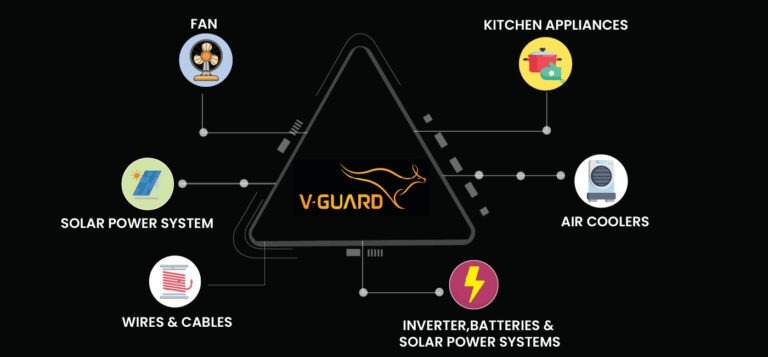
Yes, we mean the voltage fluctuations and the man in question is the founder of V Guard Industries. V Guard is one of the best-selling voltage stabilizers in India, and the brand has become synonymous with the product due to its high quality and effective marketing. V Guard is now more than just a voltage stabilizer manufacturer, having expanded into the other verticals of the  Fast-Moving Electrical Goods (FMEG) segment.

The V Guard Company Story

The story of the success of V-Guard is not a usual one, and it has overcome all of the challenges that any business enterprise established prior to liberalization faced. The Indian economy was a struggling economy before the liberalization, marred by inefficient government machinery, license-raj, and most importantly, erratic power supply with wide voltage fluctuations. It is where Mr Kochouseph Chittilappilly sensed a business opportunity and make a small impact on people’s lives.

It was not an easy journey for Chittilappilly, who comes from a traditional agricultural family in Thrissur, Kerala. His father desired that he pursue a traditional career in the government or the banking sector. However, Chittilappilly persuaded his father to invest in the business and borrowed a princely sum of Rs. 1 lakh from him. The journey to building one of the finest FMEG businesses in India started.

He hired a couple of high-school dropouts and started manufacturing voltage stabilizers under the brand V Guard from a 400 sq ft shed in Kochi to protect TV and refrigerators.

V Guard Market Foray

There are a few critical growth factors that should work in the favor of any business enterprise for it to succeed- like the right product fit for the addressable market, social impact, and identifying the future growth potential. And, for Mr Chittilappilly, V Guard happened at the right time.

The weaknesses of the Kerala State Electricity Board (KSEB) became the strength of V Guard Industries. Erratic power supply with wide voltage fluctuations resulted in the demand for voltage stabilizers from consumers to protect their expensive electrical appliances.

The big break for the company came when televisions first arrived in 1984 in Kerala, which shot up demand for stabilizers. In addition, Kerala was about to experience the Gulf Boom, as the families of NRIs working in the Middle East gradually began to improve their standard of living and splurged on expensive electrical appliances such as TV sets and refrigerators. V Guard’s promise to safeguard those devices from wide voltage fluctuations helped it to capture the market.

Today, V Guard has ventured into other businesses also, including the garment business (V-Star), amusement parks (Wonderla Amusement Park), NBFC and more.

V Guard Company Journey

During the early years of V Guard, Mr Chittilappilly’s astute business judgment ensured that his company was not adversely affected by trade union squabbles. He included women in the manufacturing process and outsourced a portion of the manufacturing process, which not only reduced the likelihood of disruptions but also enabled him to obtain excise duty exemptions by hiring women groups.

V Guard Company Analysis

Mr Chittilappilly and his son knew that in order to expand its product reach outside Kerala, he needed effective market strategies. Proper segmentation, testing, and positioning of products were done to help V-Guard penetrate the market deeper. Short, aggressive, and clutter-breaking TV commercials featuring the V-Guard product range helped to improve brand recall among users and sales too.

And, the result- revenue from the non-south region doubled for V-Guard in the last 10 years and soared over 40% with a leadership position in the stabilizers.

Revenue Growth

image 2

Expanding in the northern states and expanding its product portfolio has helped V-Guard Industries to more than triple its revenue from operations in the last 10 years. V-Guard’s revenue increased at a CAGR of 13.74% during the period between FY12 and FY22.

Change in the Geographical Distribution of Revenue

image 3

In the last 10 years, V-Guard has steadily reduced its revenue concentration from southern states in India and expanded its customer base across the country. The company looks to achieve equal revenue distribution coming from south and non-south regions in the country.

Segment Revenue Breakup

Operating SegmentsQ3 FY23 (in ₹ cr.)Q3 FY22 (in ₹ cr.)9M FY23 (in ₹ cr.)9M FY22 (in ₹ cr.)FY22 (in ₹ cr.)FY21 (in ₹ cr.)
Electricals  435.82 (▲1.5%)  429.23  1,273.53 (▲15.3%)1,104.941,596.15 (▲32.6%)1,203.46
Electronics191.35 (▼4.3%)199.91722.27 (▲27.1%)568.24815.12 (▲7.4%)758.87
Consumer Durables  353.67 (▲4.5%)338.43990.10 (▲28.9%)767.841,063.38 (▲44.3%)736.66

EBITDA and Net Profit

EBITDA margin in the last 10 quarters

image 4

One of the concerning developments in the company is the falling EBITDA margin, despite the increase in sales numbers. The company’s management has attributed the pressure in margins in the last few quarters to commodity price inflation and supply chain disruptions.

image 5

V-Guard Industries has managed to increase profit year-on-year. Still, a lower single-digit net profit margin is a cause of concern as it impacts the financial flexibility of the company during an uncertain business environment. In FY22, the net profit margin declined to 6.5% from 7.4% in FY21.

Key Financial Metrics

Current ratio: In FY22, the current ratio improved by 4% to 2.48 times from 2.36 times in FY21.

Debt-to-equity ratio: V-Guard’s debt-to-equity ratio for the last five years is zero, as reported in the company’s FY22 annual report. However, the company has taken ₹275 crores debt at 8.95% to fund a part of the Sunflame Enterprises acquisition in Q3FY23.

Gross Profit Margin: In FY22, V-Guard’s gross margin was 30.5%, which declined from 31.5% in FY21.

Net Profit Margin:  In FY22, V-Guard’s net profit margin was 6.5%, which declined from 7.4% in FY21. The company attributed the fall in net profit margin due to high-cost inventory and supply chain disruptions.

Return on Capital Employed (ROCE): In FY22, the company attained a ROCE Of 20.3%, which declined from 22.2% in FY21. 

V Guard Industries Share Price Analysis

V Guard IPO

V-Guard Industries launched its IPO on 18th Feb 2008, which was undersubscribed at that time. The IPO size was ₹65.6 crores. The company offered eight million equity shares to the public at a face value of ₹10 and at a price of ₹82 per equity share. V-Guard Industries shares were listed on 13th March 2008 at discount on the BSE at ₹60.

Shareholder Pattern

image 6

V-Guard Share Price Performance

Since its listing on the stock market, V Guard share price has given solid returns to its investors. In August 2016, stocks were split in the ratio of 1:10 and are currently trading with a face value of ₹1.

And on 15th March 2017, the company issued bonus shares at a ratio of 2:5, meaning for every five shares held, the shareholder received two new shares.

As of 28th March 2023, the V Guard share price (split and bonus adjusted) is trading at ₹241 a piece. The market cap is ₹10,426 crores.

In the last 3, 5, and 10 years, V Guard Industries share has given a CAGR return of 15%, 2%, and 23%, respectively.

image 8

Dividend payout

V-Guard Industries has a consistent track record of paying dividends to its shareholders. However, it has a low dividend-yield ratio of around 0.54. In 2020, 2021 and 2022, V Guard Industries paid ₹1.3, ₹1.2, and ₹0.90, respectively, as dividends to its shareholders.

V Guard Industries Share Price Future Growth Potential

From a single-product company to a multi-product company, V-Guard Industries has come a long way.

V Guard is the market leader in stabilizers, with a 42-45% market share in the organized market. However, the segment (Electronics) is witnessing slower growth in revenue compared to the other two segments. Also, the declining margin is a cause for concern. In Q3FY23, the segment witnessed a 530 bps drop in the margin in profit before tax and depreciation. The company has attributed the decline in margin due to high-cost inventory issues.

While the Electricals segment showed an 80-bps expansion in the margin of profit before tax and depreciation.

Strengthening Consumer Durables Portfolio

The company has increased its focus on the consumer durables segment, which has high margins and will benefit directly from the expansion of economies in Tier II and Tier III cities and rural areas.

Acquisition of Sunflame Enterprises

To become a significant player in the kitchen appliances segment, V-Guard acquired Sunflame Enterprises in January 2023 for an aggregate consideration of ₹680.33 crores. The acquisition will help to unlock synergy benefits, taking advantage of each other’s geographical spread, distribution touchpoints, product portfolio, and sales channel. Additionally, Sunflame is a dominant player in the non-south regions. The financial benefit will likely reflect in the balance sheet in the coming quarters.

V Guard Ramping Up In-house Manufacturing Plans

The company is slowly moving towards increasing in-house manufacturing capabilities and local sourcing, which is likely to improve competitiveness and improve margins in different segments. The combined V Guard and Sunflame in-house and outsourcing mix is expected to shift from 65:35 to 75:25 over the next five years.

V Guard Key Risks

  • V Guard is a dominant brand in southern India, where it has been present since the early 1980s and 1990s. Still, it faces stiff competition in non-south regions, where it is a late entrant. The market is crowded with regional players and strong players like Havells, Finolex, Luminous, and Symphony.
  • Operating with thin margins across segments due to price sensitivity, persistent high commodity inflation, and supply chain disruption can impact profitability.

In the next phase of growth and to achieve billion dollars in revenue, V-Guard is focusing big on the Consumer Durables segment. Therefore, if the segment witnesses higher growth in the next few quarters, along with improvement in margins in the Electronics segment, it could trigger a sharp rise in V Guard share price.

Disclaimer Note: The stocks and financials mentioned in this article are for information purposes only. They shouldn’t be considered as a recommendation by Research & Ranking. We will not be liable for any losses that may occur.

FAQs

Who is the founder of V Guard Industries?

Mr Kochouseph Chittilappilly founded V Guard Industries in 1977 in Kochi and started manufacturing voltage stabilizers.

What are the products of V Guard Industries?

V-Guard Industries has products across segments like Electronics, Electricals, and Consumer Durables. It is the market leader in voltage stabilizers across India, with a market share of 42-45% in the organized market. The company has acquired Sunflame to improve its product portfolio in the kitchen appliance segment.

When did the V Guard Industries IPO launch?

V-Guard Industries IPO was launched on 18th Feb 2008, and the stock was listed on 13th March 2008. The IPO size was ₹65.6 crores.

Read more: About Research and Ranking
How Long-term investing helps create life-changing wealth – TOI

As countries race to meet the COP26 climate change agreement, governments globally are focusing on the renewable sector and setting ambitious targets to reduce the economy’s emission intensity. Thus, creating huge opportunities for wealth creation in the renewable sector.

In this article, we will analyze Suzlon share price, a leading wind energy company in India, and assess its long-term growth potential in light of emerging global conditions.

Overview of India’s Renewable Energy Sector

The Indian government has set an ambitious goal of constructing 500 GW of non-fossil fuel energy capacity, with a share of renewable energy in total installed power capacity at 50% by 2030. And, the share of wind energy is expected to be 140 GW.

India’s total installed wind energy capacity is 42GW, as of 31st December 2022. As a result, India plans to build 100 GW of wind energy capacity over the next eight years. Let’s see how Suzlon share price will benefit from the upcoming opportunities.

History of Suzlon Energy

Suzlon Energy was founded in 1995 by Tulsi Tanti, a mechanical engineer by education who later became famous as a wind man of India.

Tulsi Tanti began his career in his family’s textile business in Surat, Gujarat, but the company struggled due to high operating costs and frequent power outages. So, to mitigate the impact of expensive power and power outages, Mr. Tanti began looking into alternative sources of stable power and purchased two wind turbines to generate his own electricity. His success caught the attention of others in the business community in his solution, prompting Mr. Tanti to leave the family business and start Suzlon.

Over the years, through multiple technological collaborations and manufacturing excellence,  Suzlon has established itself as a leading wind energy player.

Suzlon has a presence in 17 countries on six continents with over 5,800 workforces and a total installed wind energy capacity of 19.7 GW as of 31st December 2022. Its cumulative market share in India stands at 33%.

The company has a market cap of ₹9,805 crores (as of 25th Feb 2023), and due to the company’s poor financial health, the Suzlon share price has fallen below ₹10 and has become a penny stock. However, Suzlon shows signs of a financial turnaround on the back of strong revenue growth and order book. 

Suzlon Business Overview

Suzlon has all its manufacturing facilities across India, producing every component in-house for installing windmills, from wind turbine generators and blades to towers. It follows a vertically integrated low-cost supply chain to maintain its leadership position in the market.

It produces wind turbine generators ranging from 0.6MW to 3+MW suitable across diverse climatic conditions, including low wind sites found commonly in India. Suzlon provides end-to-end solutions to its customers, from manufacturing and supply chain management, and installations, to lifetime asset management & support.

The company divided its operations into four business segments- Sale of wind turbine generators, Foundry & Forging, Operation and Management Services (OMS), and Others. The sale of wind turbine generators generates most of the company’s revenue among the four business segments.

In FY22, the company reported a 97.89% jump in revenue at ₹6519.95 crores compared to FY21 at ₹3,294.65 crores.

Suzlon Management Profile

Mr. Tulsi Tanti, Chairman, and Managing Director led Suzlon. However, due to his untimely death on October 1st, 2022, Vinod Tanti has taken over as Chairman and Managing Director.

Vinod Tanti is a founding member of Suzlon and has over 37 years of experience and expertise in wind resource evaluation, product design, prototyping, project execution & lifecycle management through OMS. He has done BE in Civil.

Girish Tanti is Suzlon’s Vice Chairman and a founding member. He has 27 years of experience and was instrumental in establishing global business operations and leading various functions such as IT, communications, HR, and CSR. He has a BE in Electronics and Communication and an MBA from the United Kingdom.

Ashwani Kumar is the Group CEO and joined Suzlon in October 2020. He has over three decades of experience across leading Indian infrastructure and power companies.

Himanshu Mody is the Group CFO. He joined the company in August 2021 from Essel Group, where he worked for over 20 years.

Companies Financials

Revenue

In FY22, the company reported ₹6519.95 crores in revenue, 97.89% higher compared to FY21 at ₹3,294.65 crores, driven by higher sales in wind turbine generators. In 9M FY23, the company reported net revenue of ₹4,257 crores, up by 4.3% compared to 9M FY22 at ₹4,078 crores. The contribution margin is 33.8%. The contribution margin is also called the gross margin.

Segment-wise revenue breakup (in ₹ crores)

 9M FY239M FY22FY22FY21
Wind Turbine Generator2,663.45  2,493.594,376.401,193.38
Foundry & Forging332.29323.33476.70334.31
Operations and Maintenance Service1,386.741,337.881,825.031,884.52
Others5.396.767.749.45

EBITDA

In FY22, EBITDA came in at ₹889 crores, which rose by 54% over FY21 at 534.28 crores. The EBITDA margin was 12.7% in FY22.

While in 9M FY23, EBITDA came in at ₹605 crores, and the EBITDA margin is at 14.2%. This is slightly down from ₹636 crores reported in 9M FY22.

Net Profit

In FY22, The Company reported a loss of ₹166 crores against a profit of ₹100.34 crores. During the 9M FY23, the company reported a net profit of ₹104 crores, against a loss of ₹93 crores.

Suzlon Key Ratios

Current ratio: The Company’s current ratio was 1.20 times in FY22, improved marginally from 1.27 times in FY21.

Interest coverage ratio: Suzlon has improved its interest coverage ratio to 0.90 in FY22 from 0.29 in FY21 due to strong revenue growth and improved liquidity. And, in 9M FY23, the interest coverage ratio further improved to 1.9 times, signaling a better financial position for the company. The finance cost also reduced to ₹321 crores during the period 9M FY23 from ₹540 crores incurred during 9M FY22.

Debt-to-equity ratio: In FY22, the debt-to-equity ratio slightly improved to 1.79 times from 2.02 times in FY21. At the end of FY22, The Company’s net debt stood at ₹5,796 crores, which dropped to ₹2,035 crores in FY21.

Operating profit margin: Suzlon’s operating profit margin during FY22 stood at 13.64%, down from 16.22% in FY21.

Suzlon Share Price Target Analysis

Since its stock market listing, Suzlon share price has failed to create wealth for its shareholders. Suzlon IPO was launched on 29th September 2005, with an issue size of ₹1,496.3 crores at ₹510 per share. Due to the poor financial health of the company and its high debt-to-equity ratio, Suzlon share price failed to attract investors in the stock market.

Additionally, the high pledge percentage of promotors’ holding – over 80% – is another factor for low investor confidence in Suzlon shares.

image 22

The stock underwent a split on the 10:2 ratio on 21st January 2008.

Suzlon share price in the last three years has given a CAGR return of 48%, rising from ₹2.20 to a high of ₹11.20. In the last 10 years, the company has not paid dividends to shareholders.

Suzlon Fundamental Analysis

The Suzlon share price has not performed as expected since its listing in the stock market and has witnessed a steady decline in value due to high debt levels and losses. However, the company has taken steps for financial turnaround and has become a strong player in India’s renewable energy sector. Some of the steps taken to support the falling Suzlon share price include the following-

Deleveraging

In recent quarters, the company has taken numerous steps to deleverage its balance sheet to improve its market competitiveness. Improved interest coverage ratio and debt-to-equity are some positive indications.

Another significant step the company has taken is refinancing its debt. On May 24, 2022, Suzlon concluded a debt refinancing agreement replacing 16 lenders consortium led by State Bank of India with another two lenders consortium led by REC Limited.

REC’s better understanding of the company’s power sector and operational needs will likely aid Suzlon in its deleveraging process. Additionally, the company is looking to offload some of its non-core assets to give momentum to the turnaround process.

Right Issue

Suzlon successfully conducted a ₹1200 crore rights issue on October 20, 2022, of which ₹300 crores will go towards debt reduction, and the remaining sum will be used to meet the company’s operational needs.

Steady Order Flow

As per the release by the company, Suzlon has a wind firm order book of 782 MW as on 31st December 2022. And, further India invites bids for 8GW wind projects annually; Suzlon is likely to emerge as a key beneficiary from the development due to its unique capabilities.

Key Risks

Key risks that can impact Suzlon share price target growth are:

Debt repayment obligation: From ₹13,000 crores of debt in FY20, the company successfully reduced close to 80% of its debt at the end of H1 FY23, lowering finance costs and improving the interest-coverage ratio. According to the FY22 Annual Report, the refinanced debt with REC requires the company to repay a significant portion of the debt over the next twelve months from the date of disbursement, which it will accomplish through the sale of non-core assets and the right issue. Any delay in selling non-core assets could impact the debt repayment plan.

Availability of adequate working capital: The company operates with limited working capital, which limits its progressive growth. Furthermore, because the company earns the majority of its revenue from the sale of wind turbine generators, which is a capital-intensive business, the inability to maintain adequate working capital on a continuous basis can result in the risk of lost orders or execution delays.

Supply chain risk: In the face of emerging global situations, supply chain risk is a constant risk, adding to the cost and timely availability of components.

Business volume risk: Lower realization of wind tariffs is a big risk for the company and can adversely impact the company’s finances.

Suzlon Share Price Future Growth Potential

The government’s prime focus on ramping up the share of renewable energy in India’s energy mix and favorable policies is expected to benefit renewable energy companies. Suzlon’s net worth has turned positive after more than nine years, and a significant reduction in debt should favor the company’s fortunes.

Suppose the company reports a steady EBITDA level in the next few quarters, accompanied by strong order flow. In that case, Suzlon could become a financially strong player in the market among other players like Seimens Gamesa and Envision.

Disclaimer Note: The numbers mentioned in this article are only for information purposes. He/she should not consider this a buy/sell/hold recommendation from Research & Ranking. The company shall not be liable for any losses that occur.

FAQs

How has Suzlon share price performed in the last 10 and 5 years?

Suzlon share price has failed to perform as per the investors’ expectations due to poor financial results. Suzlon share price has been trading below ₹10 for the last few years. As of 25th February 2023, Suzlon’s market cap is a little below ₹10,000 crores.

Does Suzlon share price have a future?

In the last few quarters, the company is working aggressively on a financial turnaround by reducing debt and execution delays. Suzlon has managed to reduce debt by close to 80% from the FY20 level, helping Suzlon share price to recover from its lower level.

When was Suzlon Energy established?

Suzlon Energy was founded in 1995 by Late Mr Tulsi Tanti.

Read more: About Research and Ranking

From meeting the needs of its people to supplying affordable medicines worldwide during challenging times, the Indian pharmaceutical industry has stood the test of time. In FY22, the Indian pharmaceutical industry was valued at $49 billion, growing at a rate of 9% compared to FY21. In this blog, we will analyze Divis Laboratories share price, one of India’s top-performing export-oriented leading generic drug manufacturers.

In the last 5 and 10 years, Divis Laboratories share price has increased at a CAGR of 24% and 19%, respectively. Meaning ₹ 1,00,000 invested in 2012 would have grown around six times to reach ₹ 5,69,468. Let’s look closer at the growth potential of Divis Laboratories share price over the long term.

image 20

Divis Laboratories Company Journey

Divi Murali established Divi’s Laboratories on October 12 1990, as Divi’s Research Centre (DRC), with research and development as their prime focus. Between 1991 and 93, the company successfully developed and commercialized processes for intermediates and bulk actives and supplies to manufacturing majors.

 Following its initial success, DRC changed its name to Divi’s Laboratories Ltd in 1994 to reflect its growing areas of interest, including entering the manufacturing processes of generic APIs. It is how the journey of Divi’s Laboratories Ltd. to become one of the top 3 manufacturers of Active Pharmaceutical Ingredients (APIs) in the world started with the highest level of compliance.

In 1995, the company started operations from its first manufacturing facility at Choutuppal near Hyderabad, and in 2002, the second plant in Chippada near Vishakapatnam began operations.

Over the years, Divis Laboratories has established itself as a reliable supplier of generic APIs to big pharma companies worldwide. APIs are substances in medicine that give beneficial health effects to the medication.

In 2003, Divis Laboratories went for IPO and listed its stocks on National Stock Exchange (NSE) and Bombay Stock Exchange (BSE).

Divis Laboratories Business Operations

Divi’s Laboratories operates across three countries with a 16,500-strong workforce and 400 scientists working in three R&D centers across functions.

The company currently operates two manufacturing units. A third unit is coming up in Kakinada, Andhra Pradesh, delivering 1000 tonnes of non-potent to highly potent APIs to major pharmaceutical companies worldwide. The combined total reaction capacity of both units is over 14,500m3, making it one of the largest API manufacturing facilities in the world.

Both facilities manufacture Generic APIs, Nutraceutical ingredients, and custom synthesis for big pharma. Divi’s is the global leader in over ten generic APIs, supplying 1000s of tonnes to customers in 95 countries annually.

Generic APIs are used in generic drugs and are the same as original APIs but slightly differ in formulation, manufacturing process, excipients, taste, and color. And nutraceutical ingredients are vitamins, minerals, prebiotics, and probiotics used in food supplements.

As mentioned earlier, Divi’s Laboratories is an export-oriented company, meaning most of its revenue is earned from foreign countries. For instance, in FY22, Divis made 44% from the USA, 33% from Europe, 10% from India, 9% from the rest of Asia, and 4% from the rest of the world.  

Divis Laboratories Management Team

Dr Murali K. Divi is the founder and Managing Director at Divi’s Laboratories, overseeing the technical and financial operations of the company. He holds a PhD degree in Pharmaceutical Sciences from Kakatiya University, India.

Dr Kiran K. Divi is the Whole-time Director and CEO and has been with Divis for two decades. He overlooks the company’s corporate functions and operations at manufacturing facilities. Before joining Divis, he gained extensive knowledge of the US generics market and held a postgraduate degree in Pharmacy from JNTU, India.

Mr NV Ramana is the Executive Director and has been with Divis for 25 years. However, he overlooks the company’s strategic planning, sales and marketing, custom manufacturing, and nutraceutical ingredients development.

Mr Madhusudan Rao Divi is the Whole-time Director (Projects) and overlooks all aspects of manufacturing, engineering, sustainability, and environmental management.

Ms Nilima Prasad Divi is the Whole-time Director (Commercials), overseeing the company’s material sourcing and procurement, corporate finance, and investor relations.

Divis Laboratories Company Analysis

Revenue

In FY22, the company recorded 31% year-on-year growth in revenue to ₹8,879 crores, driven by solid export volumes to the US. During the year, the company more than doubled its export revenue from the USA to ₹3,832 crores, from ₹1,5868 crores in FY21, an increase of over 142%. 

And in the last five years, the company posted 18.27% CAGR growth in total consolidated revenue. However, in Q3FY23, the company reported a weak set of numbers, with consolidated revenue falling by ~32% year-on-year to ₹1,708 crores. 

EBITDA

In FY22, EBITDA came in at ₹3,987.7 crores, a 38% growth year-on-year. The EBITDA margin for the year stands at 44%.

What is EBITDA Margin?

EBITDA stands for Earnings Before Interest Depreciation and Amortization, and the metric helps compare the company’s short-term financial and operational efficiency. 

While in Q3FY23, due to weak sales numbers and input costs pressure, EBITDA tanked 63% year-on-year to ₹408 crores, and EBITDA margin slipped to the lowest ever at 23.9%. 

Profit after Tax (PAT)

In FY22, profit after tax (PAT) grew by 51% year-on-year to ₹2,948.5 crores, and the net profit margin stood at 33%. While in Q3FY23, PAT nosedived 66% year-on-year to ₹306 crores.

Divis Labs Key Financial Ratios

The key financial ratios in FY22 are:

  • Current Ratio: The company’s current ratio increased by 26.11% yearly to 7.10 times from 5.63 times in FY21. The increase is primarily due to increased bank deposits and other assets, thanks to improved financial performance.
  • Debt-to-equity Ratio: The debt-to-equity ratio stands at zero, meaning zero debt in the company’s books. 
  • Operating profit margin: The operating profit margin during the year increased to 44.91% from 42.41% in FY 21. 
  • Inventory Turnover Ratio: During the year, the inventory turnover ratio improved by 8.36% to 3.76 times, meaning the company can sell and replenish 3.76 times its inventory. 

Divis Laboratories Share Price History

Divis Laboratories launched its IPO on February 17 2003, and the size of the IPO was ₹ 44.87 crores. The proceeds of the issue were utilized to expand its manufacturing facility in Vishakapatnam. The equity shares were priced at ₹140 per share at the IPO.

Since the IPO, the company’s shares have undergone a split once in August 2007, in the ratio of 10:2, meaning one share was divided into five shares with a new face value of ₹2. And in 2009 and 2015, the company announced the issue of bonus shares in the ratio of 1:1, expanding its outstanding shares in the market. Therefore, we can call Divis Laboratories a true multibagger which has made fortunes for its investors.

All time high of Divis Laboratories share price is ₹5,425, which it made on October 18 2021. Pharma stocks were the only sector which bucked the pandemic blues and gave superior returns to investors during the period. In the last three years, Divis Laboratories gave a final dividend of ₹30 in 2022, ₹20 in 2021, and ₹16 in 2020.

Shareholding Pattern

As of December 2022, the company’s promoters hold a 51.94% stake, with FIIs and DIIs holding 15.15% and 20.67% stakes, respectively. The public owns the remaining 12.23% stake.

Divis Laboratories Share Price Target

There is no doubt Divis Laboratories has given investors superior returns since its stock market listing. However, due to a steep fall in revenue and net profit that missed estimates by a considerable margin in Q3FY23, Divis Laboratories share price has taken a beating. Moreover, Divis Laboratories share price tumbled ~27% in 2022.

This situation provides a unique opportunity for investors looking for fundamentally strong stocks trading at low valuations. Although Divis Laboratories share price growth potential outlook may look weak due to the recent fall, the long-term view seems reasonably robust.

According to Vantage Research, the global API market is expected to grow at a CAGR of 6.3% through 2028, reaching $251.3 billion. And region-wise, North America is expected to dominate the global API market.

And as per Pharmexcil, the Indian Pharma Industry is estimated to grow at a CAGR of 12% and reach $130 billion by 2030, out of which 60% of the value will come from exports.

With the third manufacturing unit nearing completion and the company’s increased focus on the US market, Divis Laboratories has strategically placed itself to grab the maximum opportunities in the generic API market and benefit investors in the long term.

Divis Laboratories Future Growth Potential

As the company earns most of its revenue (90% in FY22) through exports, it is exposed to global risks. Rapid demand change, foreign exchange risks, and other external threats can impact its profitability.

However, Divis Laboratories has demonstrated strong execution skills throughout its existence. As a result, it has emerged as one of the world’s top API manufacturers in 30 years, taking on big pharma companies.

Divi’s Laboratories’ profitability is expected to improve in the future, thanks to greenfield expansion plans in Kakinada that will add new capacity, the addition of new niche molecules in the API segment, and an improved outlook in the custom synthesis segment.

Disclaimer Note: The numbers mentioned in this article are only for information purposes. He/she should not consider this a buy/sell/hold recommendation from Research & Ranking. The company shall not be liable for any losses that occur.

FAQs

How has Divis Laboratories share price performed in the last 10 and 5 years?

In the last 10 and 5 years, Divis Laboratories share price has grown at a CAGR of 18% and 22%, respectively. After adjusting to corporate actions, Divis Laboratories share price climbed from ₹9 on March 13, 2003, to the present price level of ₹2,780. Its all-time high level is ₹5,425, made on October 18 2021.

When was Divis Laboratories established?

Divis Laboratories was established on October 12 1990, as Divi’s Research Centre (BRC) by Dr Murali K Divi with a prime focus on research and development. The company is now a leading supplier of generic APIs to big pharma companies worldwide. The company went public on February 2003, and its shares are listed on the Bombay Stock Exchange, National Stock Exchange, and Hyderabad Stock Exchange.

What is the market capitalization of Divis Laboratories?

Divis Laboratories is a large-cap pharma company. With a share price (of ₹2,778), Divi’s Lab’s market capitalization is ₹73,12245 crores as of February 18, 2022.

Read more: About Research and Ranking

Eight sectors are considered core sectors in India, and cement is one of them. The sector has given good returns to investors over the long term. For example, Shree Cement, one of India’s premier cement companies, has given investors a CAGR return of 18% last 10 years. Shree Cement share price rose from ₹4,455 in February 2013 to a high of ₹32,048 in April 2021.

In this blog, we will conduct a detailed analysis of Shree Cement’s business performance and long-term growth prospects to assist you in making investment decisions.

History of Shree Cement

Shree Cement was started in 1979 by Benu Gopal Bangur in Jaipur. In 1,983, the company commissioned its first integrated cement plant of 0.6 million tons per annum (MTPA) in Beawar, Rajasthan, starting production in 1985. Despite its initial roots in Rajasthan, the company’s head office is located in Kolkata.

Mr Hari Mohan Bangur is the Chairman, and Mr Prashant Bangur is the Vice Chairman. The company went public in 1984, and its shares were listed on the Bombay Stock Exchange. Since listing, Shree Cement share price has risen steadily, helping it to be known as a consistent compounder in the Indian stock market.

Over the years, Shree Cement has become a dominant player in the Northern and Eastern parts of India, with 14 manufacturing locations across 10 states. The company has a total cement production capacity of 46.40 MTPA and 29.60 MTPA clinker production capacity.

Hey,

Need a customized investment portfolio?

We have one for you!

Hey,

Need a customized investment portfolio?

We have one for you!

The company has a total installed power capacity of 820.4 MW, of which 48.2% comes from green sources. In FY22, the company posted a consolidated revenue from operations at ₹15,009 crores, growing at a CAGR of 9.45%0.43% in the last 10 years. And posted an EBITDA of ₹4,185 crores.

At the end of 2022, Shree Cement had a market capitalization of ₹86,711 crores, which has grown at a CAGR of 23.40% in the last 10 years from ₹10,590 crores.

Shree Cement Business Performance

Shree Cement is primarily engaged in the manufacturing and selling of cement and cement-related products, and there are no other reportable segments.

The company operates outside India in Ras Al Khaimah, UAE, with a cement production capacity of 4 MTPA. In FY 2022, revenue from outside India came in at ₹898.81.60 crores, up from ₹847.18 crores in the previous year.

In terms of capacity utilization, the company maintains a healthy capacity utilization ratio of over 60%. In FY22, the company held the capacity utilization ratio of all its plants at 63.7%, producing 276.92 MTPA cement.

Product Portfolio

The company specialises in manufacturing ordinary portland cement, portland slag cement, portland pozzolana cement, and composite cement. Its products are sold under the brand name Shree Jung Rodhak Cement, Bangur Cement, Rockstrong Cement, Concrete Master Roofon Cement, Bangur Power Cement, and Shree Cement.

Green Initiatives

Shree Cement is consciously moving towards building sustainable manufacturing capabilities for a lesser impact on the environment. In FY22, the share of alternative fuels in total fuel consumption was 9.8%, and we want to increase the share of green power in total power consumption to 55% from the present 48.2%. The company has also pioneered the manufacturing process of synthetic gypsum, replacing the use of mineral gypsum.

Shree Cement Customer Profile

In FY 2022, Shree Cement sold 79% of its products to retail customers and the rest, 21%, to institutional clients.

Shree Cement Management Team

Chairman Shri HM Bangur, Vice Chairman Mr. Prashant Bangur, a Managing Director Neeraj Akhoury lead the company. Shri HM Bangur is a chemical engineer from IIT Bombay, and Prashant Bangur is a management graduate from ISB, Hyderabad.

Other key management professionals include Shri Diwakar Payal – President (Marketing), Shri Sanjay Mehta – President (Commercial), Shri Man Mohan Rathi- Jt. President (Power Plants), and Shri Subhas Jajoo (Chief Financial Officer).

Shree Cement Financial

Revenue

In FY22, revenue from operations was at ₹ 14,306 crores, up by 13% from ₹ 12,588 crores in FY21, driven by cement sales volume growth of 4.7% over the previous year. In the last 10 years, Shree Cement recorded a compounded sales growth of 9.45%.

In H1FY23, the revenue from operations stood at ₹7,984 crores, compared to ₹6,655 crores in H1FY22.

EBITDA

In FY 2021-22, the EBITDA came in at ₹4,185 crores, down 5% from ₹4,13 crores in FY 2020-21. In the last 10 years, Shree Cement reported 8.75X% compounded growth in EBITDA. 

In H1FY23, EBITDA came down to ₹1,477 crores from ₹2,201 crores in H1FY22, down by 32.9%.

EBITDA margins in FY22 and H1FY23 were 29.3% and 18.5%.

Profit after tax (PAT) for the FY22 came in at ₹2,377 crores, compared to ₹2,312 crores a year earlier. In H1FY23, PAT came in at ₹505 crores, compared to ₹1,239 crores, down by 59.2%.

Shree Cement Key Ratios

Interest Coverage Ratio: In FY22, the interest coverage ratio improved to 19.22 times from 17.86 due to reduced finance costs.

Debt-to-equity Ratio: In FY22, there was not much change in the debt-to-equity ratio, which was 0.10 times, meaning the company has near zero debt in its books.

Current Ratio: The liquidity ratio indicates the company’s ability to meet its short-term obligations or those dues within one year. In FY22, the current ratio stood at 1.69 times, meaning the company has enough liquidity to service all its obligations.

Operating and net-profit margin: In FY22, the operating and net profit margins declined significantly due to increased power and fuel cost. The operating profit margin stood at 25.50%, and the net profit margin was 16.61%.

Shree Cement Share Price Analysis

Shree Cement shares were listed on the Bombay Stock Exchange after a successful IPO in 1984 and are one of the top-performing stocks in India and have grown at a CAGR rate of 18% in the last 10 years. However, Shree Cement share price has underperformed the Nifty 50 index over the previous three years.

image 7

In the pandemic-led market crash in March 2020, Shree Cement share price made a low of ₹15,410 but quickly recovered, hitting a high of ₹31,990 on 9th April 2021.

The face value of Shree Cement shares is ₹10, and the company had its last right issues in December 1996. Here, the promoters hold the majority with a 62.55% stake in the company, institutional investors hold a 24.47% stake, and the public holds the remaining 12.99% stake.

Dividend Payout

Shree Cement consistently pays dividends to its shareholders and has an uninterrupted and increasing dividend payout track record since 2000-01. In the last three financial years, Shree Cement has paid dividends of FY 2019-20- ₹110, FY 2020-21- ₹60, and 2021-2022- ₹90.

Shree Cement Share Price Target

Shree Cement share price has declined by more than 40% since its peak as raw materials, power, and fuel prices have significantly impacted profitability. In addition, macro uncertainty due to worsening geopolitics also weighed on the stock. Also, cement stocks fall under cyclical stocks, meaning the stock closely follows the economic growth trends.

Now, coming to the Shree Cement share price growth outlook. The company has invested significantly in ramping up capacity through strategic expansion projects. By FY25, the company is working on expanding its capacity from 46.4 to 55.9 MTPA, and by FY30, the company aims to increase it to 80 MTPA.

Looking at the macro data, India’s cement production increased at a CAGR of 5.65% between 2016 and 2022, while consumption grew at a rate of 5.68% during the same period, implying that growth in cement consumption is slightly higher than growth in production capacity, indicating a considerable growth potential.

With a strong project execution capability, organic growth primarily funded by its funds, and the lowest capital cost per ton, Shree Cement has a clear advantage over its peers. Therefore, the return of the realization rate on the sale per ton of cement to or above the Q1FY23 level (₹5,926), which fell to ₹5,384 in Q2FY23, is likely to be a catalyst for Shree Cement share price growth.

image 8

Shree Cement Future Growth Potential

India is the world’s second-largest producer and consumer of cement, with increased spending on housing and real estate, infrastructure, industrial development, and low-cost housing projects driving demand. In FY22, cement demand in India is expected to range between 353 and 358 million tons, up from 153 million tons in FY07.

With the government increasing capital expenditure by 33% to ₹10 lakh crores and announcing the revival of 50 airports in budget 2023, demand for cement is expected to rise significantly, and Shree Cement’s growth plan and manufacturing capabilities will help to capitalize on the market’s opportunities. Also, the company has started diversifying its presence in India from a 100% North player four years back.

However, some risks that can adversely impact Shree Cement share price growth are volatility in the price of imported coke/pet coke and delay in the commissioning of new plants.

Disclaimer Note: The numbers mentioned in this article are only for information purposes. He/she should not consider this a buy/sell/hold recommendation from Research & Ranking. The company shall not be liable for any losses that occur.

FAQs

How has the Shree Cement share price performed in the last 10 and 5 years?

Shree Cement share price has given a CAGR return of 18% and 8% in the last 10 and 5 years, respectively. However, due to not-so-favorable unit economics because of adverse macro conditions and a challenging business environment, Shree Cement share price has underperformed the Nifty 50 index in the last year.

What is the all-time high of Shree Cement share price?

The all-time high of Shree Cement share price is ₹32,048, which it made on 8th April 2021. Shree Cement had a market capitalization of  ₹86,711 crores at the end of 2022.

Who owns Shree Cement?

Shree Cement was founded by Shri Benu Gopal Bangur in 1979 at Jaipur and commissioned its first integrated cement plant of 0.6MTPA Beawar, Rajasthan. Currently, Shri Hari Mohan Bangur leads the company as Chairman. The promoters hold a 62.55% stake in the company.

Read more: About Research and Ranking

Overview of the Asian Paints Share Price

Asian Paints Limited is an international paint manufacturer with Indian roots headquartered in Mumbai, Maharashtra. The firm manufactures, sells, and distributes paints, coatings, home décor goods, bathroom fixtures, etc. Since 1967, the business has held the top position in the paint market. It has grown twice as big as any other paint business in India. Asian Paints produces a large selection of paints for both ornamental and industrial purposes.

Asian Paints, with a total sales of Rs 25,002 crores, is the largest paint manufacturer in India. In the fiscal year 2021–2022, the firm brought in ₹25640.40 crores in sales and made ₹4194.14 crores in profit. The organization enjoys an exceptional reputation for professionalism, rapid expansion, and creating shareholder wealth in the business sector. Asian Paints has 26 paint production plants worldwide and operates in 15, serving customers in more than 60 nations.

Asian Paints Business

In addition to Asian Paints, the group also conducts business internationally through its affiliates Asian Paints Berger, Apco Coatings, SCIB Paints, Taubmans, Causeway Paints, and Kadisco Asian Paints. Asian Paints produces a large selection of decorative and industrial paints. Asian Paints is a player in the decorative paints market’s four subsectors: interior wall finishes, exterior wall finishes, enamels, and wood finishes. Its product line also includes wall coverings, adhesives, and waterproofing.

To meet the expanding demands of the Indian automobile coatings industry, Asian Paints also does business through “PPG Asian Paints Pvt Ltd”, a 50:50 joint venture between Asian Paints and PPG Inc., USA, one of the leading automotive coatings manufacturers in the world. The second joint venture (JV) with PPG, known as “Asian Paints PPG Pvt Ltd,” provides services for India’s protective, industrial powder, industrial containers, and light industrial coatings sectors.

Asian Paints Management

NameDesignation
Ashwin DaniChairman (Non-Executive Director)
Deepak SatwalekarChairman & Independent Director
Manish ChoksiVice Chairman & Non-Executive Director
Amit SyngleManaging Director & CEO
R J JeyamuruganCFO & Company Secretary
Malav DaniNon-Executive Director
Jigish ChoksiNon-Executive Director
Amrita VakilNon-Executive Director
Nehal VakilNon-Executive Director
Suresh NarayananIndependent Director
R SeshasayeeIndependent Director
Milind SarwateIndependent Director
Pallavi ShroffIndependent Director
Vibha Paul RishiIndependent Director

History of Asian Paints

In 1945, The Company was incorporated as a private limited company under Asian Oil and Paint Company Pvt. Ltd. It was converted into a public limited company in 1973. Asian Paints manufactures a wide range of surface coatings catering to different end uses. It also manufactures vinyl pyridine latex used in the manufacture of rubber tires. The company expanded its product range, developed its own technology, set up a distribution network penetrating smaller towns, and plowed a large part of earnings into creating new facilities.

Here is a timeline of how Asian Paints expanded

  • In 1965, the name was changed from Asian Oil and Paint Company Pvt. Ltd. to Asian Paints (India) Pvt. Ltd.
  • In 1975, Bonus Equity shares were issued in the ratio: 1:2 in 1961, 1:3 in 1962, 1:1 in 1966, 1:2 in 1969, 2:3 in 1971, and 1:2 in 1975.
  • In 1978, 1,00,000 Bonus Equity shares were issued in the prop. 2:3.
  • In 1982, The main objectives of the public issue of capital during August were to fulfill the Stock Exchange listing requirements and provide part of the finance for the increased operations.
  • In 1990, The Company also set up two more joint ventures under the names and styles of Asian Paints (Nepal) Pvt. Ltd., and Asian Paints (S.I.) Ltd., both of which are subsidiaries of the Company.
  • In 1995, Pantasia Chemicals Ltd. (PCL) was merged with the Company. The assets and liabilities of the erstwhile PCL are vested with the company from 1st October 1994.
  • In 1999, in its first-ever acquisition overseas, Asian Paints Ltd (APL) acquired a 76 percent equity stake in Sri Lanka-based Delmege Forsyth & Co (Paints) Ltd.
  • In 2000, Asian Paints launched two variants of polyurethane (PU) wood finish under the brand name Opal. They opened a manufacturing plant in Oman in partnership with a local company. Asian Paints acquired Pacific Paints Company based in Australia for over Rs 1 crore.
  • In 2001, Asian Paints introduced Utsav Enamel for the festive season.
  • In 2002, Asian Paints revamped its international operations. They transferred shares in its subsidiaries in Fiji, Tonga, Solomon Island, Vanuatu, Australia, and the Sultanate of Oman to the Mauritius-based subsidiary Asian Paints International. Executed agreement for the purchase of 60% equity capital of SCIB Chemicals S.A.E., Egypt. Launched its $3 million joint venture with Bangladesh-based Confidence Cement, in which it holds a 51 percent stake. Acquired a controlling stake of 50.1 percent in Berger International, Singapore, for Rs 58 crore.
  • In 2003, Asian Paints, via its Singapore-based subsidiary – Berger International – inked a technology and brand licensing agreement with PT Abadi Coatings Solusi, an Indonesian paint company. Shareholders approved the Scheme of Arrangement proposed to be made. It acquired Taubmans Paints (Fiji) Ltd. through its subsidiary in Fiji, Asian Paints (South Pacific) Ltd (APSP), acquired 9.2% shares in ICI India Ltd too and bagged the Ken Sharma award.
  • In 2004, Asian Paints launched paint solutions for kids.
  • In 2005, Berger International partnered with the Filipino firm Dutch Boy. The company has changed its name from Asian Paints (India) Ltd. to Asian Paints Ltd.
  • In 2006, APICL’s new manufacturing plant at Baddi commenced commercial Production.
  • In 2009, Asian Paints Ltd submitted the disclosure under Regulation 7(3) of SEBI (Substantial Acquisition of Shares & Takeovers) Regulations, 1997, to BSE. It appointed Shri. S Ramadorai as an Additional Director of the Company pursuant to Section 260 of the Companies Act, 1956.
  • In 2010, Berger International Ltd Singapore (BIL), a subsidiary of Asian Paints Ltd, became a wholly-owned subsidiary of the Company. The company signed an MOU with Maharashtra Govt. to set up a Mega Project to manufacture Paints & Intermediate.
  • In 2011, it formed a second Joint Venture with PPG Industries. The company’s subsidiary, SCIB Chemicals SAE, temporarily restarted the operations of its two plants in Egypt.
  • In 2013, the company completed the acquisition of Sleek Group.
  • In 2014, it entered into a binding agreement with ESS.
  • In 2015, the company signed a Memorandum of Understanding (MoU) with the Government of Andhra Pradesh to set up a manufacturing facility for paints and intermediates in Vishakhapatnam District, Andhra Pradesh.
  • In 2017, the paints company expanded its paint manufacturing capacity in Gujarat.
  • In 2019, commercial production at the company’s Vishakhapatnam Plant commenced.
  • In 2020, the company approved the Scheme of amalgamation of Reno Chemicals Pharmaceuticals & Cosmetics Private Limited (Transferor Company), a wholly-owned subsidiary of the Company, with Asian Paints Limited.
  • In 2021, the company signed a Memorandum of Understanding with the Government of Gujarat, commencing the proposed expansion of the manufacturing capacity of paint from 130,000 KL to 250,000 KL and resins and emulsions from 32000 MT to 85000 MT.

Asian Paints Shareholding Pattern

Scrutiny of the shareholding pattern of an organization is a vital piece of central examination. The shareholding pattern is a determinant of the stock’s market capitalization and is a sign regardless of whether the stock valuation is legitimate. Here, The shareholding pattern of of the company presents the Promoter’s holding, FII holding, DII’s Holding, and shareholding by the general public, central public, etc.

image 23

The Promoters hold half of the shareholding, followed by foreign institutions, General banks, financial institutions, Banks Mutual funds, central government, etc.  

Asian Paints Financial Performance

Asian Paints Ltd is India’s largest, Asia’s third-largest, and the World’s ninth-largest paint organization, with a presence in 22 nations globally with 27 paint-producing offices overhauling customers in 65 nations through Berger International SCIB Paints Apco Coatings and Taubmans.

The shares of any stock are volatile and keep changing throughout the day owing to different factors ~INR. In January 2000, Asian Paints share was trading at ~INR 16. On 17 March 2021, the stock price was around INR 2,425. It means 15,056% returns over two decades, which does not include dividends. It has also been the only company to deliver a CAGR of 20% for six decades globally.

As of September 2020, the paints major held 39% of the overall industry. That’s twice the consolidated share of three of its nearest rivals Akzo Nobel, Berger Paints, and Kansai Nerolac. Its market cap in March 2021 was around INR 2.3 lakh crores. As of 10th February 2023, Asian Paints share price is ~INR 2807.15; The Market capitalization is ~INR 2.69 lakh cr.

asian paints share price

Marketing Strategies

Asian Paints Embraced an inventive bundling that painted a brilliant future.

Paint used to get sold in tins. But, in 1945, the company dumped monster tins and began selling paint in minuscule parcels. This out-of-the-case bundling technique improved its sales speeding its distribution. Furthermore, with only 5 tones: black, white, red, blue, and yellow, the company earned ~INR 3.5 lakhs. By 1952, its yearly turnover was an incredible ~INR 23 crores.

The 73-year-old Paints brand is synonymous when you consider refurbishing or beautifying your home. Gattu RK Laxman’s incredible creation is a memorable brand mascot of its times. Then emerged with the ‘Mera Wala’ campaign. “The tagline became so popular that people would go to stores and ask for ‘mera wala blue or ‘mera wala green.’ 

It was the beginning of the Ogilvy & Mather and Asian Paints team, which shared unforgettable campaigns more focused on the home exteriors focusing on how the paints could keep the exteriors timeless. Their tagline, “Har Ghar Kuch Kehta Hai,” created a storm. They went from a simple paint company to a paint solution provider.

Later it launched its ‘Home Solutions’ offering painting services through a dial-in facility. With the launch of several initiatives like Delhi Beautiful Homes (The first ever ‘beauty contest for homes’) and the ‘Rethink Recycle’ campaign, The paint major found the ideal opportunity to move to luxury and superior segments.

It went through two rebranding exercises rejigging its brand portfolio, focusing on a few strong brands, neatly clubbed under verticals like exterior (Apex Ultima), interior (Tractor Emulsion, Royale, Royale Play), solutions (Ezycolour) and waterproofing (SmartCare), releasing campaigns accordingly by roping in celebrities.

From encouraging individuals to practice environmental safety to winding around brief promotion films on causing men to comprehend varieties to making intriguing and delightful narrating, such as ‘Homes Not Showroom’, to foraying into the first happy space.  Throughout the long-term, Asian Paints has been making homes more joyful and invests wholeheartedly in amalgamating advancement and innovation with its item improvement program, advertising tricks, client support going past walls, and being Indian on a basic level, always.

Today, customers are familiar with ideas like outside, waterproof, etc. However, in earlier days, discussing different shades on offer was odd.  Varieties, shades, and paint were far, and few, and the decision was passed on to the local home improvement shop to choose.

Conclusion 

Asian Paints has forever been somewhat revolutionary. It exploited television ads to promote the brand. Its very first television ad circulated in 1984. Afterward, somewhere between 1998 and 1999, the company laid out community tasks and finished a site. Thus, it centers around being future prepared to stay aware of patterns.

The details shared above are based on the quarterly and annual reports of Asian Paints and are meant for information purposes only. However, we suggest doing your due diligence before you make investment decisions.

Disclaimer Note: The numbers mentioned in this article are just for information purposes only. He/she should not consider this a buy/sell/hold recommendation from Research & Ranking. The company shall not be liable for any losses that occur.

Read more: About Research and Ranking.

Chalti Ka Naam Gaadi– this movie name perfectly goes with India’s largest IP company -Saregama. A treasure house of intellectual property that closely tracks the evolution of Indian cinema and playback singing right from its start.

Saregama is constantly reinventing itself to serve the changing preferences of Indian audiences worldwide and continues to be India’s leading content generation platform. Under the flagship of RP-Sanjiv Goenka Group, the company continues to grow and stay relevant amidst the rapid pace of digital content delivery. Saregama share price has given a whopping CAGR return of 109% in the last three years, making it the top-performing stock in the media & entertainment sector. Saregama share price made an all-time high of ₹550 in January 2022, rising from ₹41.50 in January 2019.

In this Saregama share price analysis article, we will review the fundamentals of the company and its future growth potential that will help you make an informed investment decision.

History of Saregama

Saregama is one of the few companies operating in India before independence and can constantly transform itself in this continuously changing environment and preferences.

Incorporated as The Gramophone Company (India) Pvt Ltd. in 1946 in Calcutta, the company’s main objective was to manufacture, sell, and deal in gramophone records, radio receivers, record players, record producers, and other allied products.

In 1986, the RPG Group acquired the company, and in 2000, the company started retailing products under the “Saregama” brand. Since then, the company has added many business verticals, including TV serial production, a film production house, investing in non-film music, etc.

Saregama holds music IPs of over 142,000 songs, including the first recording of an Indian song in 1902 and all the classic hits, making it India’s most prominent music IP company. The company’s market cap as of 18 November 2022 is ₹7,279 crores. Total revenues from operations in FY22 came in at ₹580.60 crores, of which a large part of revenue came from licensing revenue or monetizing existing IPs.

As the company deals with intellectual property, it reports OIBCID- operating income before content charge, interest, and depreciation instead of EBITDA. As a result, Saregama is a debt-free company.

Saregama Business Performance

Being a media and entertainment company, Saregama constantly faces the risk of changing trends and consumption patterns impacting its operations. However, over the years, Saregama has managed to ring-fence its businesses from operational uncertainties with new investments and monetization of IPs that are helping to deliver superior business performance. Saregama has three business segments- Music, TV & Films, and Publication. We will look into each business segment and closely analyze their performances.

Music

The music segment of the business primarily deals with music IP creation and monetization. Saregama has a catalogue of over 142,000 music IPs acquired over the years, ranging from all classical hits to modern music. And it has now started enhancing its music IP catalogue through new film and non-film music creation in different Indian languages.

The second part is monetizing this massive music IP collection, which it does effectively by licensing to third-party platforms, including music streaming platforms, TV channels, brand advertisements, video streaming platforms, and social media platforms, and retailing directly through Carvaan.

Carvaan was launched in 2017 with preloaded 5,000 songs, which let the person listen to their favorite music anytime without any ad-break.

Saregama earns every time a user listens to a Saregama-owned song on a music streaming platform like Spotify, Gaana, or any OTT app. In FY 2022, Saregama’s music IPs got used over 140 billion times, and the revenue from the music segment was ₹473.8 crores. As a result, the segment generated close to 81% of the income for company. And, in Q3, FY 2023, the segment reported 24% y-o-y growth in revenue to  ₹150.9 crores.

Video/ TV and Films

The company’s video segment focuses on producing video content for third-party digital platforms like Netflix, Disney+Hotstar, ZEE5, etc., under the production house Yoodles Films. Saregama also has a presence in the video broadcasting segment through serials for Sun TV and creates 15-16 hours of weekly content, which it also monetizes on YouTube.

The company is focusing more on creating regional content to capitalize on the increased demand for regional content on OTT platforms. As a result, in FY 2022, the segment generated ₹102.4 crores in revenue, almost 17.6% of the total revenue. For Q2, FY 2023, the revenue for the segment came in at ₹341 crores, which is 53% higher compared to Q2, FY 2022.

Publication

It is the print segment under which the company publishes the weekly current affairs magazine “OPEN.” In FY 2022, the segment generated ₹44 crores in revenues, and in Q2, FY 2023, delivering a growth surprise with revenue coming in at ₹42 cores, posting 250% y-o-y growth.

Saregama Management Team

The company is led by Vikram Mehra, an industry veteran with diverse experience managing different businesses. He joined the company in 2014, is a Tata Administrative Service (TAS) alumni, and holds an MBA from IIM Lucknow and B.Tech in Computer Science from IIT Roorkee. Before joining Saregama, he was with Tata Sky as Chief Marketing Officer and Commercial Officer. His earlier stints in companies include Star TV, Tata Motors, and TCS.

Mr. Pankaj Chaturvedi is the Chief Financial Officer (CFO). He has over two decades of experience in various industries and verticals across organizations such as Go Airlines, Vodafone, Reliance Jio, and Hitachi.

Saregama Fundamental Analysis

Revenue

The company offers unique value propositions and has a distinct advantage in the music and entertainment industry because of its extensive music IP library. In FY 2022, total revenue came in at ₹580.6 crores, of which it earned ₹358.5 crores from music licensing. In Q2, FY 2023, total revenue from operations came in at ₹1,892 crores, up by 30% compared to last year.

EBIT

EBIT stands for earnings before interest and taxes. In FY 2022, revenues from music segments stood at ₹225.19 crores, while the two other segments made a loss. Loss reported for the video segment stands at ₹14.92 crores, and for the publication business, it stands at ₹11.71 crores.

OIBCID and PAT

OIBCID stands for operating income before content charge, interest, and depreciation. In FY 2022, OIBCID came in at ₹223 crores, and the margin to revenue is 38%. And, in Q2, FY 2023, OIBCID is ₹699 crores.

The company posted ₹152.5 crores net profit in FY 2022, and the net profit margin is 26%. And, in Q2, FY 2023, PAT came in at ₹461 crores, recording 36% y-o-y growth, and the net profit margin for the quarter is 24%.

Key Financial Ratios

Interest Coverage Ratio

In FY 2022, the interest coverage ratio improved to 572 times from 558 times. In addition, due to zero debt in its book, the company can easily cover any of the interest expenses on its book.

Current Ratio

The current or liquidity ratio as of 31 March 2022 stands at 5 times compared to 2 times in FY 2021.

Earning Per Share (EPS)

In FY 2022, EPS improved to ₹8.4, from ₹6.5 in FY 2021. For FY 2023, EPS may improve on superior H1, FY 2023 financial performance.

Saregama Share Price Analysis

Shares of Saregama are one of the top-performing stocks in the market and created massive wealth for its shareholders in the last 10 years at a CAGR return of 46%. Saregama share price in the last three years has increased from the low of ₹18.75 (made on 23 March 2020) to hit an all-time high of ₹550 on 3 January 2022.

In April 2022, the stock was split in the ratio 1:10, and the new face value was ₹1. Saregama is a consistent dividend-paying company and last paid a dividend of ₹30 on the pre-split stock.

SAREGAMA 2022 11 21 08 35 27

Since January 2022, the Saregama share price has corrected by almost 40% from its peak, and the stock reflects broader market sentiment, which is impacted by inflation and geopolitical tensions.

Saregama Share Price Target

Saregama is one of the few companies in the market to have a net profit margin in the range of 20s and is consistently maintaining it for the last 10 quarters, which has helped in the growth of Saregama share price.

Strong income flow from music IPs monetization and strengthening its play in the regional video content delivery supports growth in Saregama share price. The video segment (TV and Films) has also shown a good growth potential, registering 250% y-o-y growth in revenue in Q2 FY 2023. The media & entertainment industry is expected to grow by 11% by 2024 to reach ₹ 2.32 trillion. Saregama has substantial leverage to benefit from the sector’s growth and drive higher revenue.

Saregama Future Growth Potential

Mirroring the global trend, the Indian music industry has been growing at a surreal rate since 2015 due to increased digital revenues and the government’s anti-piracy measures. Saregama has converted all 142,000 songs from its music libraries to digital records, helping drive digital revenue from streaming platforms.

Investments in new music under the brand “Saregama Originals,” non-film music, are helping to grow OTT streams and YouTube views. In FY 2022, the company acquired video and audio rights to 436 new films and non-film music worldwide.

In the new initiatives, Saregama forayed into Live Music events, providing a platform for artists to directly engage with fans and the company to earn revenue from ticket sales and sponsorships. And the second vertical is the Artist Management vertical to identify and groom rising new talents.

Being a non-cyclical business, Saregama share price is less likely to show high volatility during a slowdown compared to stocks involved in the core functions of the economy. Therefore, it gives comfort for higher price growth in the future.

Disclaimer: The numbers mentioned in this article are for information purposes only. He/she should not consider this a buy/sell/hold recommendation from Research & Ranking. The company shall not be liable for any losses that occur.

FAQs

How has Saregama share price performed in the last 10 years, 5 years, and 3 years?

 In the last 10, 5, and 3 years, Saregama share price CAGR growth is 46%, 33%, and 109%. At the start of March 2020, Saregama share price fell to ₹18.75level due to widespread panic selling caused by the pandemic. However, the share price has recovered since and has given investors returns of over 1000%, and it made an all-time high level of ₹550.

What is the market capitalization of Saregama?

At the current Saregama share price of ₹ 374 (17 December 2022), the market capitalization is ₹7,279 crores.

What are the business segments of Saregama?

Saregama has three business segments: Music, Video, and Publication. It earns over 80% of the revenue from the music segment.

Read more: About Research and Ranking

IRCTC, Indian Railway Catering, and Tourism Corporation Limited is a prominent player in e-commerce and leading catering and hospitality services. In addition, an extended arm of Indian Railways, IRCTC share price, has given superior returns to investors in all scenarios- post-listing gains, capital gains, and dividends.

Overview of IRCTC

It is one of the market’s top-performing PSU stocks, and many analysts have a favorable long-term growth outlook. Listed in October 2019, IRCTC’s stock has given tremendous returns to its investors. In a short period, IRCTC share price made a peak of ₹6,375.45 on 19th October 2021, against its issue price of ₹320. The stock was split in a 10:2 ratio on 28th October 2021.

IRCTC is an exciting company to know about, as it touches the lives of every Indian in some way. This blog article will look at the long-term growth outlook of IRCTC share price, its business performance, key financial metrics, and other parameters that will help you decide on your investments.

History of IRCTC

IRCTC is synonymous with online ticket booking in Indian Railways for all passenger, express, and premium trains across the country. A Miniratna (Category-I) central public sector enterprise under the Ministry of Railways, Government of India, IRCTC was incorporated in 1999 to upgrade, professionalize, and manage the catering and hospitality services at railway stations, and on trains and promote domestic and international tourism.

The company’s core activities include catering and hospitality, internet ticketing, travel and tourism, and packaged drinking water- Rail Neer.

IRCTC commenced online ticket booking services in 2002 and has consistently moved up the ladder regarding business and financial performance. In 2017, IRCTC ranked in Fortune India Next 500 list of Indian companies.

Being the only authorized entity to sell online tickets to railway passengers, IRCTC is one of the most logged websites in the Asia Pacific region, with 25 million monthly visits and 6.27 million daily logins. It sells over 80% of all reserved rail tickets in India. A zero-debt company, in FY 2022, its revenue from operations was ₹1,879.48 crores.

IRCTC Business Performance

IRCTC primarily has four business segments- catering, internet ticketing, travel and tourism, and packaged drinking water through which it earns revenue. Let’s look at the performance of each business segment individually.

Catering

IRCTC is India’s leading hospitality enterprise, serving railway passengers through its different service units- mobile catering, static catering, other hospitality businesses, and e-catering.

  • Mobile catering business includes serving railway passengers in premium trains, mail/express trains, and station-side vending.
  • Static catering business includes serving railway passengers through Food Plazas, Jan Ahaar, base kitchens, cell kitchens, and refreshment rooms set up in railway stations.
  • Other hospitality businesses include executive lounges, retiring rooms, Rail Yatri Niwas/ BNR, and hotels.
  • And e-catering is a new service for railway passengers with reserved tickets to order food from their favorite restaurants online.

This segment contributes 27% of total revenue in FY 2022.

Packaged Drinking Water

The business unit was set up in 2003 by setting up the first Rail Neer plant at Nangloi, New Delhi. Today, it is one of India’s most sought-after packaged drinking water brands. It has 15 bottling plants across India, and in FY 2022, it produced 19.86 crores of bottles. This segment contributes 9% of total revenue in FY 2022.

Travel and Tourism

IRCTC offers multiple services under this segment, including air ticketing, hotel & tourism packages, railway tourism, and other travel-related services. Some special trains IRCTC runs include Maharaja Express, Golden Chariot, Bharat Darshan, Ramayana Yatra, etc. This segment contributes 8% of total revenue in FY 2022.

Internet Ticketing

This segment is the cash cow for IRCTC as it contributes to more than 50% of the total revenue. In FY 2022, the internet ticketing segment contributed 54% to the total revenue. And the total value of all railway tickets booked through the platform is ₹ 38,178.32 crores in FY 2022.

IRCTC Management Team

The Chairperson & Managing Director, Smt. Rajni Hasija leads the company’s management team. She has been on the board since May 2018 and is an officer from the 1989 Indian Railway Traffic Service (IRTS) batch. She has worked in several divisions in her 32-year career in Indian Railways. She has managed important business segments of IRCTC, including IT, marketing, and operations, playing a crucial role in the inception and development of IRCTC’s online ticketing site.

Shri Ajit Kumar is the Director (Finance) & CFO and an officer of the 1989 Indian Railway Account Service (IRAS) batch. Debashis Chandra is the Director (Catering Services) and an officer of the 1993 Indian Railway Traffic Service (IRTS) batch.

IRCTC Financial Performance

Revenue

IRCTC has managed to reverse the impact of a pandemic on the business and is close to surpassing the revenue level of FY 2019-20 in the current fiscal, indicating a pickup in travel demands.

In FY 2022, revenue from operations came in at ₹1,879.48 crores, compared to ₹776.66 crores in FY 2020-21, up by 142%. In the June quarter of FY 2022, IRCTC posted revenues of ₹852 crores, a 250% year-on-year growth.

Segment-wise, the revenue share

SegmentsRevenue Share (%) FY22
Catering Services27
Internet Ticketing54
Rail Neer9
Travel and Tourism8
State Teertha (new)1.6

EBITDA

In FY 2022, EBITDA was ₹953.56 crores, up by 250% from ₹272.74 crores in FY 2020-21. Looking at the segment-wise profits, the internet ticketing business contributed ₹870.19 crores, Catering Services contributed ₹26.02 crores, and State Teertha contributed ₹2.97 crores to the profit. While the Rail Neer and Travel and Tourism business segments made losses of ₹14.68 crores and ₹46.13 crores, respectively.

Profit after tax (PAT) in FY 2022 jumped 255% to ₹663 crores. And, in the June quarter of FY 23, PAT came in at ₹246 crores, up from ₹83 crores in Q1 of FY 22.

IRCTC Key Ratios

Interest coverage ratio: During FY 2022, the interest coverage ratio improved from 10.86 in FY 2021 to 27.77 times due to an increase in EBITDA.

Current ratio: The current or liquidity ratio for the financial year ending on 31st March 2022 stands at 1.86 times compared to 1.76 times in the previous year, an increase of 6.25%.

Debt-equity ratio: The Company has almost zero debt on its book, and the debt-to-equity ratio stands at 0.06x, reflecting a solid balance sheet position.

The EBITDA margin is a significant financial metric that shows how much the company keeps after deducting all the operating expenses. For example, EBITDA margin for FY 2022 stands at 50.74%, from 35.12% recorded in FY 2021. It means the company can keep almost 50% of the revenue as profits before adjusting for depreciation, taxes, and interest cost. As a result, an increased income level can result in a higher EBITDA margin.

Net profit margin: The net profit margin for FY2022 is at 35.31%, meaning the company is keeping almost 35% of its revenue after meeting all the expenses.

Fundamental Analysis of Stocks

IRCTC Share Price Analysis

IRCTC IPO opened for subscription on 30th September 2019 to raise ₹645 crores from public investors. At the close, the IRCTC IPO was oversubscribed by 111 times, receiving bids for 225.29 crore shares against the IPO size of 2.016 crore shares.

On the day of listing, IRCTC share price debuted at ₹ 644, 115% over the issue price. The stock split in October 2021, and the current face value of its share is ₹2. The IRCTC share price has seen a CAGR of 63% in the last three years.

image 20
IRCTC share price history   Source: tradingview 

 Since listing, IRCTC share price has shown a consistent upside movement, moving from a split-adjusted value of ₹125 to an all-time high level of ₹1,279. The IRCTC share price is updated after factoring in the stock split.

Dividend Payout

IRCTC is a consistent dividend-paying company, and in FY 2022, the company paid ₹3.5 as a total dividend, and in FY 21, it paid ₹7.50 as a dividend to shareholders.

IRCTC Share Price Target

The company has solid fundamentals and a consistent revenue stream from sources like catering services and internet ticketing for Indian Railways, in which it has a monopoly.

For instance, IRCTC charges ₹15 as a convenience fee per ticket in the non-AC category and ₹30 in the AC category. Although the pandemic crippled the travel economy, it resulted in higher online ticket booking on the IRCTC platform. In FY 2022, IRCTC’s mobile and web app booked 80.43% of the total reserved tickets and booked 1.14 million tickets per day.

With Indian Railway’s focus on improving profitability by introducing more 3-AC economy coaches, 400 Vande Bharat trains in the next three years, and corporate trains, IRCTC’s revenue from internet ticketing will witness a steep increase and EBITDA too. It will translate to growth in the IRCTC share price in the long term.

Compared to any other business, IRCTC share price is less likely to be affected by market volatility due to its unique business proposition.

Know How Does Fundamental Research Help To Find Multibagger Stocks?

IRCTC Share Price Future Growth Potential

At present, the key focus is the recovery of the catering and tourism business to pre-pandemic levels, which are performing below expectations. Some of the key reasons that can improve the financials of the company and increase IRCTC share price are:

  • Reach and distribution
  • Stable and monopolistic business segments
  • Good return on equity (ROE) track record for last three years at 31.6%
  • Government support through policy decisions
  • Pick up in travel demand and high disposable income

The company experienced a kind of threat in its business operations during the pandemic; however, that situation is now less likely to happen anytime soon. Nevertheless, as mentioned in the Prabhudas Lilladher research report, the absence of meaningful growth levers can impact IRCTC share price in the future.

The details shared above are based on the quarterly and annual reports of IRCTC, Indian Railway Catering, and Tourism Corporation Limited, meant for information purposes only. However, we suggest doing your due diligence before you make investment decisions.

Disclaimer Note: The numbers and data mentioned in this article are only for information purposes. He/she should not consider this a buy/sell/hold from Research & Ranking. The company shall not be liable for any losses that occur.

FAQs

How has the IRCTC share price performed in the last three years?

In the last three years, IRCTC share price had a CAGR growth is 63%. Since its listing in October 2019, IRCTC share price has outperformed the market and is one of the top-performing PSU stocks.

What is the market capitalization of IRCTC?

At the current IRCTC share price of ₹ 758, the market capitalization is ₹60,692 crores. On 14th October 2019, the listing date, IRCTC’s market capitalization was ₹ 11,622 crores.

What is the top-performing business segment of IRCTC?

The top-performing business segment of IRCTC is internet ticketing and catering services, which contribute 54% and 27% to the total revenue.

Read more: About Research and Ranking

It is human nature to associate countries with successful businesses that originate from them. When we talk about companies like Google, Apple, and Microsoft, we immediately know that these businesses come from the United States of America. For India, it is undeniably the Tata Group of companies.

Tata Group is home to more than 30 businesses, of which 29 are listed. These companies span ten business verticals, with each establishment having secured a strong foothold in their respective industries. Over the years, businesses have consistently performed and delivered healthy returns for their stakeholders. Therefore, it is fair to say that some Tata stocks are the most valuable ones on the market today.

One such Tata company that has had a fantastic journey is Titan. With the titan share price rising skyrocketing, the company has delivered 25,914.8% during its lifetime.

The Birth of Titan -History

Titan Company LTD Journey began as a joint venture between the Tamil Nadu state government and the Tata group in 1984. It was initially called Titan Watches Limited, which was later renamed Titan Industries in 1993.

Several Tata companies and their associates, such as Questar Investments, Tata Sons, and Tata Press, collaborated with Tamil Nadu Industrial Development Corporation (TIDCO) to promote Titan in the initial phase. The primary objective of launching the brand was to revolutionize the Indian watch market. As a result, Titan was one of the first Indian companies to introduce analog electronic watches in over 150 designs to Indian consumers.

Over the company’s four-decade history, Titan has evolved into a premier lifestyle brand and is the world’s largest integrated watch manufacturer. Pioneering customer-centric innovation, the company’s portfolio of products includes key segments like jewelry, watches, fragrances, eyewear, and Indian dress wear.

Shareholding Pattern

As of September 2022, the majority owner of Titan company is the Tata group, while FIIs, DIIs, the Public, and Others hold the rest. Led by MD C K Venkataraman, Titan is one of India’s most respected and admired companies. This is because it has always been at the forefront of leveraging cutting-edge technology to delight its discerning customers.

titan shareholding
Source: Moneycontrol

Titan Financial Company Analysis

Imbibing the Tata ethos and values, Titan has always remained a customer-centric brand, ensuring they always make the right choice for their people, partners, customers, and communities by creating long-term value. The Titan share price is not the only aspect of the company that demarcates it from its competitors in the market.

Since 1984, Titan has experienced phenomenal overall growth. From a one-product company, it is a business enterprise home to 16 brands and over 2000 retail stores. In addition, the company supports more than 7000 employees committed to delivering profitable and responsible growth for its shareholders.

In the last ten years, the company has recorded a staggering 40% growth with a sales CAGR of 13%. Titan’s current market capitalization stands at Rs 2.3 trillion in the financial year 2021-22.

The company hit record revenues of Rs 274.56 billion in the fiscal year 2021-22, an uptick of 32% on a year-on-year (YoY) basis. The EBITDA experienced a massive 87% increase from Rs 18.82 billion to Rs 35.25 billion last year.

Despite the slight fluctuations in the Titan share price, the company’s operating profit increased by 90.5% YoY during the fiscal. Operating profit margins decreased to 11.4% in the financial year 2021-22 as against 8.0% in the fiscal year 2020-21.

Net profit for the year grew by 124.5% YoY, whereas net profit margins increased from 4.5% in the fiscal year 2020-21 to 7.6% in the financial year 2021-22.

Look at Titan’s Revenue for 2021-22.

 March 2021 (Rs. In Million)March 2022% Change
Net Sales207,830274,56032%
Other income1,8702,38027.3%
Total Revenues209,700276,94032%
Gross profit17,23032,83090.5%
Depreciation3,7503,9906.4%
Interest2,0302,1807.4%
Profit before tax13,32029,040118.0%
Tax3,5307,060100.0%
Profit after tax9,79021,980124.5%
Gross profit margin8.0%11.4% 
Effective tax rate26.5%24.3% 
Net profit margin4.5%7.6 % 
Titan’s Revenue Source: Accord Fintech

The benefits of a steady increase in the Titan share price also reflect positively on the company’s balance sheet. Titan’s current liabilities stand at Rs 105 billion. The debt-to-equity ratio is 0.6x. Long-term debt decreased to Rs 20 million compared to Rs 90 million during the fiscal year 2020-21, a drop of 77.8%. Current assets rose 32% and stood at Rs 175 billion, while fixed assets rose 13% and stood at Rs 36 billion in the financial year 2021-22.

Here’s a snapshot of Titan’s balance sheet as of March 2022.

StatementMarch 2021 (Rs. Mn)March 2022% Change
Net worth74,93092,97024.1%
    
Current Liabilities77,140105,12036.3%
Long-term Debt9020-77.8%
Gross profit163,470210,07028.5%
    
Current assets131,970174,54032.3%
Fixed Assets31,50035,53012.8%
Total Assets163,470210,07028.5%

The Titan share price also impacted the company’s net cash flows, which now stand at Rs 380 million in the financial year 2021-22.

Titan Share Price History

What started out as the ‘watch projects’ for the Tatas have now transformed the lifestyle industry in India. Today, the company is no longer limited to just watch manufacturers. The diversification of the product portfolio has been one of the primary reasons for the rise in the Titan share price.

When Rakesh Jhunjhunwala bought 80 m Titan shares between 2002-2003, they were priced at Rs 3 per unit. Today, they are trading in the vicinity of Rs 2600 apiece.

This pins Rakesh Jhunjhnwala’s holding value of 5.1% in Titan at a staggering Rs 118.5 billion.

Let’s look at Titan’s share price history since it became a listed company in 2002.

Over the last year, the Titan share price has increased from Rs 1,763.3 to Rs 2,013.4, registering a gain of Rs 250.1 or around 14.2%. The stock price has recorded a CAGR of 24% over the last 10 years.

There has been one instance where the Titan share price has undergone a stock split since it became a listed company. In June 2011, the company announced a 10:1 stock split and a 1:1 bonus. Even though the stock split did not really impact the existing investors in the company, the input cost for those who had purchased Titan shares in August of 2002 decreased by 10% of the actual price.

During the stock split, where the Titan share price became 1/10th of what they were trading in June 2011, the Tata Group also announced a 1:1 bonus share for its shareholders. As a result, existing Titan shareholders who had purchased the Titan shares in 2002 saw their bonus shares decrease by 50%.

This meant that the stock split had decreased the input cost to 10% of the actual cost, and the bonus share issuance saw another drop in their cost prices to 5% of their basic buying level. Therefore, those who bought the stock when the Titan share price was Rs 3 apiece saw the actual cost of one share come down to Rs 0.15 per share due to the 10:1 stock split and the 1:1 bonus share announcement.

Despite the stock split, which was long-term investors of Titan from the time that the Titan share price was Rs 3 per share saw their investment grow by 16,900 times in the last 20 years.

To put things into perspective, anyone who may have invested Rs 1 lakh when Titan shares were priced at Rs 3 apiece would see their investment grow to Rs 169 crores in these 20 years. So the Titan share price growth has been 845% over the last two decades.

Given the history of the Titan share price, the stock is one of the most successful in the Indian stock market in the last few decades. Titan has delivered 279.9% returns in the previous ten years.

The company’s earnings per share (EPS) stands at Rs 24.5, an improvement from the EPS of Rs 11.0 recorded last year. The company’s EPS has grown from Rs 4.9 to Rs 10.9 between 2011 and 2021, with an average 17% increase YoY. Moreover, long-term investors in Titan have not only gained from the rise in the Titan share price but have earned hefty dividend payouts. Bonus shares and buyback of shares.

Titan’s Future Plans

The Titan share price has witnessed this growth trajectory over many years as the company progressively moved towards strategic brand transformation. The legacy lifestyle brand is on its way to becoming a more evolved, edgy, and young organization focused on pioneering customer-centric innovation by leveraging cutting-edge technology to satisfy its target audience.

Not all of Titan’s divisions have delivered a profit for the company. However, its unprofitable Titan Eye vertical recorded its best-to-date performance in 2020-21. As a result, the company restructured the verticals by shutting around 15 unviable stores and is looking to shift focus from frames to lenses.

The company has been working on ambitious expansion plans, exploring its options to introduce new verticals, with Titan’s wearable divisions leading the way.

Titan has recently acquired a Hyderabad-based technology and wearables firm known as HUG Innovations, which is expected to pivot the company towards embracing innovative technology. In addition, Titan is keen to invest in collaborating and creating capabilities to drive growth in this segment. Going forward, this is sure to have some impact on the Titan share price.

Titan currently holds the number two position in the smart wristband segment and is eager to skyrocket sales in the foreseeable future. Titan is driving this by announcing the opening of 27 stores in the financial year 2022-23, with a pipeline of another dozen odd stores scheduled to open by the end of this fiscal year.

Over the last nine months, the company has been in hyper-expansion mode by opening 125 stores under its wearables division. The aim is to increase the network count from 707 to 1000 by the end of the financial year 2022-23.

International expansion is also on the radar for Titan by taking its jewelry vertical global. The watches-to-jewelry maker has a blueprint of launching around 20 international stores in key international markets like the United States, Canada, and Gulf Cooperation Council (GCC) countries in the next three years.

Analysts predict that the Titan share price may increase by a few good notches if this effort becomes successful. Having said that, Titan plans to make some inroads into domestic markets, including smaller cities and towns across all three key divisions.

Titan is also exploring its options of penetrating underperforming segments like deodorants, fragrances, and Skinn and Fastrack perfumes into emerging markets. Taneira, its premium Indian dresswear brand, is the latest addition to its portfolio of lifestyle products expected to be a core revenue driver for Titan in the next 18 to 24 months.

Conclusion

Titan expects to hit a 40% growth in its top line and 50% in EBITDA by 2023, which could help the company grow.

Disclaimer Note: The numbers mentioned in this article are for information purposes only. He/she should not consider this a buy/sell/hold from Research & Ranking. The company shall not be liable for any losses that occur. The details shared above are based on the quarterly and annual reports of Titan’s share price and are meant for information purposes only. However, we suggest doing your due diligence before you make investment decisions. Please do not consider it a buy, sell, or hold call from Research & Ranking.

Who owns Titan?

The Tamilnadu Industrial Development Corporation Limited and Tata Group own 52.9%, while the rest are held by FII, DII, Public, and others.

Name the Peers for the Titan Company?

Rajesh Exports, Kalyan Jeweler, Vaibhav Global, and PC Jeweler are well-known Peers of Titan.

What was Titan’s EPS in March 2022?

Titan’s EPS in March 2022 was 24.49.

Read more: About Research and Ranking

Now Read: Multibagger Stocks for 2023

Frequently asked questions

Get answers to the most pertinent questions on your mind now.

[faq_listing]
What is an Investment Advisory Firm?

An investment advisory firm is a company that helps investors make decisions about buying and selling securities (like stocks) in exchange for a fee. They can advise clients directly or provide advisory reports and other publications about specific securities, such as high growth stock recommendations. Some firms use both methods, like Research & Ranking, India’s leading stock advisory company, specializing in smart investments and long-term stocks since 2015.

An investment advisory firm is a company that helps investors make decisions about buying and selling securities (like stocks) in exchange for a fee. They can advise clients directly or provide advisory reports and other publications about specific securities, such as high growth stock recommendations. Some firms use both methods, like Research & Ranking, India’s leading stock advisory company, specializing in smart investments and long-term stocks since 2015.

An investment advisory firm is a company that helps investors make decisions about buying and selling securities (like stocks) in exchange for a fee. They can advise clients directly or provide advisory reports and other publications about specific securities, such as high growth stock recommendations. Some firms use both methods, like Research & Ranking, India’s leading stock advisory company, specializing in smart investments and long-term stocks since 2015.

An investment advisory firm is a company that helps investors make decisions about buying and selling securities (like stocks) in exchange for a fee. They can advise clients directly or provide advisory reports and other publications about specific securities, such as high growth stock recommendations. Some firms use both methods, like Research & Ranking, India’s leading stock advisory company, specializing in smart investments and long-term stocks since 2015.