Personal Finance

In a world where our pets hold a special place in our hearts, ensuring their health and well-being becomes paramount. Just like any member of the family, our beloved furry companions deserve the best care possible. In India, where the bond between pet owners and their animals is growing stronger by the day, it’s time to introduce you to a safeguard that promises to keep your four-legged friends protected: pet insurance.

They say a pet is a friend for life, and indeed, these loyal companions offer us unwavering companionship and affection. As responsible pet parents, it’s our duty to prioritize their health and happiness. While we shower them with love and attention, unforeseen circumstances such as illnesses or accidents can arise, presenting unexpected financial burdens.

Join us as we embark on a journey to explore the realm of pet insurance in India. Discover the myriad options available. From comprehensive coverage to its importance, this article will guide you through the process of selecting the perfect insurance solution to ensure a lifetime of happiness and well-being for your beloved pet.

What is a Pet Insurance?

Pet insurance is a type of coverage that helps pet owners manage the cost of veterinary bills for their pets. Similar to health insurance for humans, pet insurance typically covers expenses related to accidents, illnesses, and sometimes routine care such as vaccinations or annual check-ups. Pet insurance plans vary in coverage, cost, and deductible amounts, allowing owners to choose a plan that suits their budget and their pet’s needs.

In essence, pet insurance acts as a safety net, providing financial protection against unexpected veterinary expenses. It can help alleviate the burden of costly procedures or treatments, enabling pet owners to make decisions based on what’s best for their pet’s health rather than solely on financial constraints. With the rising costs of veterinary care, pet insurance has become increasingly popular among pet owners looking to safeguard their furry friends’ well-being while managing their budget effectively.

What are the Benefits of a Pet Insurance in India?

In India, pet insurance policies may vary in coverage, cost, and terms depending on the insurance provider. Some common features of pet insurance in India may include:

  • Veterinary expenses coverage: This includes coverage for medical treatments, surgeries, diagnostic tests, and medications for illnesses or injuries suffered by the insured pet.
  • Hospitalization coverage: This covers the costs associated with keeping the pet hospitalized for treatment or recovery.
  • Pre-existing condition coverage: Some policies may cover pre-existing conditions, while others may exclude them.
  • Wellness benefits: Some insurance plans may offer coverage for routine veterinary care, such as vaccinations, annual check-ups, and preventive treatments like flea and tick control.
  • Third-party liability coverage: This covers the insured pet owner’s legal liability towards third parties for damages or injuries caused by their pet.
  • Lost or stolen pet coverage: Some policies may provide coverage for the costs associated with finding a lost or stolen pet, including advertising and reward expenses.

Some Things to Know for Pet Insurance in India

  • Tailored plans: Personalized insurance options are available for various pets including dogs, cats, birds, and more.
  • IRDA authorization: Pet insurance plans are officially sanctioned by the IRDA (Insurance Regulatory and Development Authority), covering diverse categories like cattle, dogs, horses, cats, etc.
  • Assured amount: Typically, the assured sum for dog insurance spans from Rs. 15,000 to Rs. 30,000, varying based on breed and relevant factors.
  • Diverse safeguards: Pet insurance encompasses three primary coverage types: lifetime cover for chronic ailments, time-limited protection post-illness or injury, and money-limit coverage for ongoing medical expenses without a temporal restriction.
  • Premium rates: Typically, the premium for pet insurance policies in India amounts to 3% – 5% of the sum assured.

What are the Pet Insurance Inclusions and Exclusions in India?

Here’s a simplified table outlining what a typical insurance policy in India might include and exclude:

Included CoverageExcluded Coverage
Accidental Death BenefitPre-existing medical conditions
Hospitalization ExpensesCosmetic procedures
Critical Illness CoverSelf-inflicted injuries
Disability InsuranceWar or acts of terrorism
Medical Expenses ReimbursementHazardous activities (e.g., extreme sports)
Maternity CoverageNon-allopathic treatments
Outpatient TreatmentCertain high-risk occupations
Emergency EvacuationDamage caused by illegal activities

Before finalising any policy, it is essential to carefully read through the policy documents to understand the complete list of inclusions and exclusions.

Which are the Pet Insurance Providers in India?

In India, there are several insurance policies available for pets offered by various companies. Here are some of the popular ones:

  • New India Assurance: New India Assurance offers pet insurance policies that cover veterinary expenses due to illness or accidents. They also offer coverage for death due to accident, theft, or loss.
  • Bajaj Allianz: Bajaj Allianz offers pet insurance plans that cover medical expenses arising from accidents and illnesses. They also offer coverage for surgeries, hospitalization, and vaccinations.
  • United India Insurance: United India Insurance provides pet insurance policies that cover veterinary expenses due to accidents or illnesses. They also offer coverage for surgeries, hospitalization, and third-party liability.
  • IFFCO Tokio General Insurance: IFFCO Tokio offers pet insurance plans that cover medical expenses, including hospitalization, surgeries, and vaccinations. They also provide coverage for accidental death and third-party liability.
  • Future Generali India Insurance: Future Generali offers pet insurance policies that cover veterinary expenses due to accidents or illnesses. They also provide coverage for surgeries, hospitalization, and accidental death.
  • Oriental Insurance Dog Insurance: The company covers death due to any illness or accident. It offers coverage for vaccination tick treatments. It does not cover partial and permanent disability of any nature, rabies, canine distemper and leptospirosis.

Always remember to do your research before choosing the best plan for your pet.

Conclusion: Choosing the right pet insurance policy is a crucial decision for pet owners looking to protect their furry companions’ health and finances. By understanding the various types of insurance coverage available and assessing their pet’s specific needs, owners can make informed choices to ensure comprehensive protection.

Read More: How to invest money

FAQ

  1. What does a pet insurance policy typically cover?

    A pet insurance policy can cover various medical expenses, including accidents, illnesses, surgeries, medications, and sometimes even preventive care like vaccinations and wellness exams. However, coverage can vary depending on the type of policy you choose.

  2. Are pre-existing conditions covered by pet insurance?

    Most pet insurance policies do not cover pre-existing conditions, which are typically defined as any illness or injury that occurred before the policy’s start date or during the waiting period. It’s essential to review policy terms carefully to understand what is and isn’t covered.

  3. Is pet insurance worth it?

    Yes, pet insurance can be highly beneficial in covering unexpected veterinary expenses and providing peace of mind. It helps mitigate the financial burden of costly treatments and ensures that your pet receives the necessary care without hesitation.

Trying to understand the basic tax concepts? Well, you are in the right place as in this blog we will explain in detail all the concepts of taxation.

Did you know? In FY 2020-21, income tax contributed over 50% of the total direct tax revenue, showcasing its pivotal role in India’s economy. 

Income tax in India is a significant fiscal component that makes for a major part of the government’s revenue.   It is essential for funding public services and infrastructure development. 

In India, the amount of tax you pay depends on how much money you make. This system is designed to consider the different financial situations of the country’s people, ensuring fairness for everyone.

Understanding these tax concepts is essential for compliance, informed financial planning, and contributing to the nation’s growth.

If you have an income source in India, this guide on the basic concepts of income tax is indispensable.

Basic Concepts of Income Tax: Introduction

The concept of income tax in India is governed by the Income Tax Act of 1961. This Act lays down the rules and regulations about the tax on income. 

The government of India levies taxes on the income earned by individuals, businesses, organizations, and other entities within a financial year. The financial year in India starts on April 1st and ends on March 31st of the following year.

Let’s Understand the Concepts of Income Tax

  • Levy on Income: Income tax is levied on the income earned by individuals, HUFs, companies, and other entities during a financial year.
  • Progressive Tax System: The tax rates increase with higher income levels, promoting a fair and equitable tax structure.
  • Taxable Income – In tax concepts, taxable income is the percentage of income subject to taxation. The categories of taxable income include salaries, wages, profits, rental incomes, pensions, employment benefits, etc. 
  • Tax Brackets/Slabs – The income tax rates differ for individuals and corporate earnings. The Central Government determines these tax slabs or brackets. The rate is planned and implemented based on annual income and income category.
  • Annual Tax Filing: Taxpayers must file an annual income tax return, declaring earnings from various sources like salaries, business profits, capital gains, and property income.
  • Tax Administration: The Central Board of Direct Taxes (CBDT) administers income tax laws in India.
  • Revenue for Public Services: Collected tax funds are utilized to fund public services, infrastructure, defense, and welfare schemes, aiding national development.

Concepts of Taxation: Deductions and Exemptions

, The Income Tax Act of 1961 provides for deductions and exemptions to promote savings and investments among taxpayers. For example, tax-free bonds are a great financial tool to reduce your tax liability. They reduce the tax rates or provide tax relief on the income tax payout. 

You can explore different tax-saving investment options to benefit from tax exemptions.

These can be claimed under different sections of the Act, the most popular being Section 80C, which includes investments in PPF, ELSS, life insurance premiums, NPS, etc. Other significant sections include 80D for health insurance premiums, 80E for interest in educational loans, and 80G for donations to charitable organizations.

Income Tax in India: Who is Liable to Pay?

The liability to pay income tax depends on your ‘Residential Status.’ This status can be broadly categorized as:

  • Resident Indian
  • Non-Resident Indian (NRI)
  • Resident But Not Ordinarily Resident (RNOR)

Additionally, as per the basic concept of income tax in India, the tax slabs and rates will vary depending on which category of taxpayers you belong to:

  • Individual
  • Hindu Undivided Family (HUF)
  • Companies
  • Firms
  • Other Entities

Income Tax Concepts: Heads of Income

  • Income from Salary – It includes wages, pensions, allowances, and other benefits received from employment.
  • Income from Business or Profession – Profits and losses a business or organization incurs are a part of this income category. 
  • Income from House or Personal Property – Any rental income or other income generated from a pre-owned property falls under this income category.
  • Income from Capital Gains – Income from the sale of capital assets like shares, real estate, etc., is taxed under this head. The tax rate depends on the duration you hold the asset – short-term or long-term capital gains.
  • Income from Other Resources – Any other source of income, like interest earnings, gifts, dividends, etc., is added to this income category. 

Income Tax Concepts: Tax Slabs and Rates for 2024

Your income is categorized into different slabs based on your salary, and each slab has a specific tax rate. These slabs and rates are subject to revision every financial year based on the Union Budget presented by the Finance Minister of India.

India follows a progressive concept of taxation on income. It means, the higher your salary, the higher your taxable rate will be.

Below are the income tax slabs and rates for the financial year 2024-25 basis the Interim Budget announced on February 1st, 2024:

Income Tax Slabs and Rates for 2024-25 – Old Regime

Income Slab (₹)Tax Rate
Below 60 years
Up to 2,50,000Nil
2,50,001 – 5,00,0005%
5,00,001 – 10,00,00020%
Above 10,00,00030%
Senior Citizens (60 Years and Above, But Less than 80 Years)
Up to 3,00,000Nil
3,00,001 – 5,00,0005%
5,00,001 – 10,00,00020%
Above 10,00,00030%
Super Senior Citizen (80 Years and Above)
Up to 5,00,000Nil
5,00,001 – 10,00,00020%
Above 10,00,00030%

Tax Slabs and Rates for 2024-25 – New Regime

The new tax regime offers lower tax rates but requires forgoing certain exemptions and deductions. It applies to all individuals regardless of their age.

Income Slab (₹)Tax Rate
Up to 2,50,000Nil
2,50,001 – 5,00,0005%
5,00,001 – 7,50,00010%
7,50,001 – 10,00,00015%
10,00,001 – 12,50,00020%
12,50,001 – 15,00,00025%
Above 15,00,00030%

Key Points Regarding the Income Tax Concepts

  • The old tax regime offers exemptions and deductions, which can significantly reduce your taxable income.
  • The new tax regime helps you enjoy lower rates, but you must forego a majority of exemptions and deductions.
  • The new tax regime will be the default choice. You must choose the old tax regimes each financial year if you wish to benefit from various deductions.
  • Health and education cess at 4% applies to the tax payable under both regimes.

Which ITR Form Should You Choose?

The Income Tax Department has notified 7 types of Income Tax Return (ITR) forms for filing taxes in India. Choosing the correct ITR form in India depends on your income source and category:

  • ITR-1 (Sahaj): For resident individuals with income up to ₹50 lakhs from salaries, one house property, and other sources like interest.
  • ITR-2: For individuals and HUFs without income from business or profession, covering salary, multiple house properties, capital gains, and foreign income.
  • ITR-3: For individuals and HUFs with income from a business or profession, including partners in firms but not conducting business through the firm.
  • ITR-4 (Sugam): For resident individuals, HUFs, and firms with total income up to ₹50 lakhs and presumptive income under Sections 44AD, 44ADA, or 44AE.
  • ITR-5: For firms, BOIs (Bodies of Individuals), AOPs (Association of Persons), LLPs (Limited Liability Partnerships), and AJP (Artificial Juridical Persons), excluding individuals, HUFs, and companies.
  • ITR-6: Exclusively for companies that do not declare exemption as per Section 11, which includes income from property held for religious or charitable purposes.
  • ITR-7: For companies or persons who need to file taxes as per sections 139(4A) mandatorily, 139(4B), 139(4C), and 139(4D), such as political parties, trusts, and educational institutions.

New Reforms in Income Tax in 2024

The government can amend the general tax concepts regarding tax exemptions, tax brackets, taxable income, etc. 

  • The FM announced tax demands of up to ₹25,000 before 2010 and up to ₹10,000 between 2010 and 2015 will be withdrawn to enhance tax services.
  • The Tax Department can adjust past tax claims against the current year’s tax refunds.
  • The minimum income not subject to tax is now ₹7 lakhs under the new tax regime.
  • Under the old tax system, individuals can use about 70 different tax breaks and deductions, depending on their investments and types of income.
  • The surcharge rate for individual income taxpayers has been reduced to 25%. Additionally, a surcharge of 4% is added to health and education for individuals. 
  • The surcharge rate for long-term capital gains or dividend income is limited to the upper limit of 15%.

Final Thoughts

Understanding the different tax concepts involved in income tax can help you plan your tax liabilities better. A basic concept of income tax is that taxable income is calculated by subtracting the various tax-saving deductions from your gross salary.  

These tax-saving options include long-term investment stocks and other investment options to build a robust financial portfolio for yourself. 

A SEBI-registered investment advisory can help you make better investment decisions. For more details, get in touch with us today.

Concept of Taxation: FAQs

  1. What are the top reasons to file income tax on time?

    To claim a timely tax refund.
    To benefit from faster loan approvals, as ITR is a mandatory document of proof. 
    To avoid heavy penalties and increased tax rates due to late filing.
    To reduce the risk of unannounced income tax audits due to delayed ITR filing.
    To carry forward your business losses to offset them in the future with the profits, reducing your subsequent tax liability.
    Improve your credit score by complying with the government’s income tax rules. 

  2. Which documents do you need to file income tax returns?

    PAN card
    Aadhaar card
    Form 16 part A & B, 16A, 16B, or 16C in case of non-salaried tax deductions
    Annual Information Statement (AIS)
    Bank account details 
    List of investments and other assets under the capital gains category

  3. What are non-claimable tax deductions and exemptions under the new FY 2023-24 regime?

    Professional tax 
    Leave travel allowance 
    House rent allowance 
    Interest on a house loan for a self-occupied or vacant property
    Entertainment allowance 
    Any deduction under Section 80C, 80CCC, 80CCD, 80D, 80DD, 80DDB, 80E, 80G, etc.

Are you the one who solely relies on tax calculators to file your returns? If calculating your taxable income and filing your returns is giving you goosebumps as the end of the year approaches, don’t worry.  We have carefully designed this article for taxpayers like you.

This article will clarify what taxable income is and how it is calculated. We’ll also discuss the available deductions and exemptions. Once you’ve grasped the fundamentals, we’ll review how to use tax calculators to save money.

Let’s get the ball rolling!

What is Taxable Income and How is it Calculated?

Taxable income is the amount of income that is subject to tax by the government. It is calculated by subtracting deductions and exemptions from gross income, the total income earned from all sources.

Understanding how taxable income works is critical for budgeting and filing your taxes, even if you use tax calculators.

Using a tax calculator is one way to estimate your accurate taxable income. This online tool can help you determine your tax liability based on income, deductions, and tax rates.

A tax calculator, for example, can help you determine how much money you can save contributing to your retirement, donating to charity, or claiming a tax rebate.

A tax calculator can help you determine and plan your tax income. However, a tax calculator does not replace professional tax advice.

As a result, you should always check the accuracy of your tax calculator results against your income documents and receipts.

Types of Income that are Taxable and Non-Taxable

Let us look at some of the common types of taxable income and non-taxable income under both regimes-

Taxable Income

– Salary income: Salary income is fully taxable under both regimes, except for some allowances that are exempt up to a certain limit, such as the HRA, LTA, conveyance allowance, and so on. Both regimes allow for a standard ₹50,000 deduction from salary income.

– Interest income: This is the income you earn from deposits, bonds, debentures, or other investments. Interest income is generally taxable under both regimes, except for interest from a savings bank account (up to ₹10,000), post office savings account (up to ₹3,500), PPF intt, etc.

Capital gains: This is the income you earn from the sale of capital assets, such as property, shares, mutual funds, gold, etc. Capital gains are taxable under both regimes, depending on the nature and duration of the asset.

Short-term capital gains are taxed at the normal slab rates, while long-term capital gains are taxed at 10% or 20%, depending on the type of asset.

– Business or professional income: Business or professional income is taxable under both regimes, after deducting the expenses incurred for earning such income.

Non-Taxable Income

– Agricultural income is the income you earn from cultivating land, selling crops, or renting out agricultural land. Agricultural income up to Rs. 5 Lacs is fully exempt from tax under both regimes, subject to certain conditions.

– Gifts or inheritance: if you receive gifts from non-relatives exceeding ₹50,000 in a year, you have to pay tax on the excess amount as income from other sources.

– Life insurance proceeds: This is the income you receive from your life insurance policy, either as maturity or death benefits. Life insurance proceeds are fully exempt from tax under both regimes if the premium paid for the policy exceeds 10% of the sum assured.

Deductions and Exemptions that Reduce Taxable Income

Not all deductions and exemptions are available to everyone, and some depend on your chosen tax regime.

Some of the common deductions and exemptions that you can claim under the old tax regime are:

– Section 80C: This section allows you to invest up to Rs 1.5 lakh per year in various tax-saving instruments, such as Public Provident Fund, Employees’ Provident Fund, Sukanya Samriddhi Yojana, National Saving Certificate, 5-year bank fixed deposits, Equity-linked saving scheme, etc.

– Section 80D: This section allows you to claim a deduction for the premium paid for health insurance for yourself, your spouse, your dependent children, and your parents.

The maximum deduction you can claim is Rs 25,000 for yourself and your family and Rs 25,000 for your parents (Rs 50,000 if they are senior citizens). You can also claim an additional deduction of Rs 5,000 for preventive health check-ups.

– Section 80E: This section allows you to claim a deduction for the interest paid on education loans taken for higher studies for yourself, your spouse, or your children.

There is no limit on the deduction amount, but you can claim it only for a maximum of 8 years or until the interest is paid, whichever is earlier.

– Section 80G: This section allows you to claim a deduction for the donations made to notified relief funds and charitable institutions. The deduction can be 50% or 100% of the donation amount, depending on the entity you donate to. However, the deduction is subject to a limit of 10% of your adjusted gross income.

– Section 80TTA: This section allows you to claim a deduction for the interest income earned from a savings bank account, post office savings account, or cooperative society. The maximum deduction you can claim is Rs 10,000 per year.

Section 80TTB: This section allows senior citizens to claim a deduction for the interest income earned from deposits in banks, post offices, or cooperative societies. The maximum deduction they can claim is Rs 50,000 per year.

Standard deduction: This is a flat deduction of Rs 50,000 from your salary income, available to all salaried taxpayers. You must not submit any proof or documents to claim this deduction.

– House Rent Allowance: This employer’s allowance covers your rent expenses. The exemption amount is the least of the following: the actual HRA received, 50% of basic salary for metros and 40% for non-metros, or rent paid minus 10% of basic salary.

– Leave Travel Allowance: This is an employer’s allowance to cover your travel expenses during leaves. The exemption amount is the travel cost incurred or the amount specified by your employer, whichever is lower. You can claim this exemption only twice in a block of four years.

Therefore, referring to a tax calculator before claiming any deduction or exemption is advisable.

A tax calculator can help you understand your taxable income and plan for your taxes.

How to Use a Tax Calculator to Estimate Your Taxable Income?

A tax calculator is a handy tool to help you estimate your taxable income and tax liability for the year.

To use a tax calculator, you need to follow these steps:

1. Enter your details, including your name, age, gender, and residential status. This will help the tax calculator determine your tax slab, rates, and the applicable deductions and exemptions.

2. Enter your income details, such as your salary, interest, capital gains, business or professional income, and other sources of income.

3. Enter your deduction and exemption details

4. Choose the tax regime you want to opt for, either the old or the new tax regime. The tax calculator will show you the tax liability under both regimes, and you can choose the one that suits your income profile and tax planning objectives.

5. Review the tax calculator results and verify.

Illustration on Taxable Income: Both Under Old Tax and New Tax Regime

Suppose you are a salaried employee with a gross income of ₹15 lakh in FY 2023-24. Your investments include-

  • Standard deduction of ₹50,000
  • HRA exemption of ₹1,20,000
  • LTA exemption of ₹20,000
  • Deduction under section 80C of ₹1,50,000
  • Deduction under section 80D of ₹25,000
  • Deduction under section 80TTA of ₹10,000

Your taxable income and tax liability under the old and new tax regime would be as follows.

Tax Liability

Under the Old Tax Regime

New Tax Regime

Here, in the above case we saw how the new tax regime is more beneficial for you.

However, this may not be the case for everyone, as it depends on your income level, deductions, and exemptions.

Therefore, it is advisable to use a tax calculator to choose the tax regime that suits your income profile and plan tax accordingly.

Common Mistakes and Tips to Avoid Them When Filing Your Tax Returns

  • Choosing the wrong tax regime: You should choose the tax regime carefully and use a tax calculator to see which one is more beneficial for you.
  • Missing the deadline: If you miss the deadline, you may have to pay a late fee of up to ₹10,000, and you may also lose some benefits, such as carrying forward your losses, claiming interest on refunds, or revising your returns.
  • Not verifying your Form 26AS: You should verify your Form 26AS with your income and tax details, and report discrepancies, if any. This will help you avoid any tax notices or demands from the income tax department.

Key Takeaways

In conclusion, understanding taxable income is essential for planning your finances and filing your tax returns. It’s the amount of income that is subject to tax by the government, and it is calculated by subtracting deductions and exemptions from the gross income.

You can use a tax calculator to accurately calculate your taxable income, and assess your tax liability based on your income, deductions, and tax rates. You can also compare different tax regimes, deductions, and exemptions, and see how they affect your taxes.

However, a tax calculator is not a substitute for professional tax advice, and you should always consult with a qualified CA or tax consultant before filing your taxes.

Knowing your taxable income and tax bracket precisely allows you to maximise your tax savings while avoiding common mistakes and penalties.

FAQ

  1. What is taxable income and how is it different from gross income?

    Taxable income is the part of your gross income that is subject to federal tax. Gross income is the total income you receive from all sources, but some of it may be exempt from tax or eligible for deductions and credits.

  2. How do I calculate my taxable income from my salary?

    To calculate your taxable income from salary, you need to add up all the salary components, deduct the non-taxable portion of allowances, professional tax, and standard deduction, and include any other income from other sources.

  3. What are the consequences of not filing or under-reporting my taxable income?

    If you fail to file your ITR or under-report your taxable income, you may face penalties, interest, and prosecution under the Income Tax Act. The penalty for not filing ITR is Rs. 10,000 for income upto Rs. 5 lakhs, and Rs. 1,000 above Rs. 5 Lacs.
    You are also liable to be charged an interest for late filing @ 1% per month on the tax due. Along with fine, punishment may also include an imprisonment for up to 7 years.

Are you searching for ways to save on taxes? If so, you would have probably encountered the terms ‘tax deduction’ and ‘tax exemption.’ While they might seem similar at first glance, they’re quite distinct from each other, both stemming from the provisions of the Income Tax Act of 1961. 

Many people find these terms confusing and opt to have their accountants, parents, or friends handle their tax filing. However, understanding these terms is crucial for maximizing the benefits of available schemes and policies. This article aims to clarify the difference between tax deductions and tax exemptions, their impact on taxes, and what investors can keep in mind.

What are Tax Deductions?

Tax deductions refer to specific investments and expenses that individuals can subtract from their taxable income, thereby reducing it. These deductions serve as incentives to promote retirement planning and foster long-term financial stability among taxpayers. Using a tax calculator also helps to find the deductions.

For example, if your total income is Rs. 10,00,000 and you’ve invested Rs. 1,50,000 in eligible instruments under Section 80C, your taxable income would be reduced to Rs. 8,50,000.

Various sections of the Income Tax Act of 1961 offer avenues for tax deductions. Here’s a glimpse:

  • Section 80C: Investments in schemes like the Public Provident Fund (PPF), Equity Linked Saving Scheme (ELSS), home loan principal repayments, and more, up to Rs. 1.5 lakhs annually, are deductible from taxable income. This is in addition to the standard deduction of Rs. 50,000 available to all taxpayers.
  • Section 80D: Premiums paid for health insurance, ranging from Rs. 25,000 to Rs. 1 lakh, are tax deductible, along with other deductions for specified treatments.
  • Section 80E: Interest paid on education and housing loans for first-time buyers can be deducted from taxable income, encouraging education and domestic real estate investment.
  • Section 80G: Contributions to social causes and political parties are eligible for tax deductions, supporting charitable initiatives and social welfare activities.
  • Section 80TTA: Interest income from savings accounts, up to Rs. 10,000, can be deducted from taxable income.

What are Tax Exemptions?

Tax exemptions refer to tax-free portions of one’s income, requiring no additional spending or investment to qualify for the exemption. They play a crucial role in reducing the overall tax burden for individuals.

Here are some examples of tax exemptions:

  • Long-Term Capital Gains: Equity mutual funds’ LTCG is exempt from taxation up to a limit of Rs. 1 lakh per annum.
  • Housing Rent Allowance (HRA): This is part of an employee’s salary and is exempt from income tax if the employee lives in a rented house.
  • Leave Travel Allowance (LTA): Some employers provide LTA, which can be used for traveling during leaves. This exemption can be used once every four years.
  • Agricultural Income: All agrarian income in India is exempt from taxation. This exemption is crucial as agriculture is the primary source of income for a large part of rural India, and the country is heavily dependent on it for food security.
  • Lowest Income Tax Slab: An income of Rs. 5 lakhs and below is completely exempt from income tax. For instance, if one has an income of Rs. 7 lakhs, only Rs. 2 lakhs is taxable.

A tax calculator can help individuals assess their tax liability more accurately by factoring in exemptions and deductions. Understanding these exemptions is essential for taxpayers to optimize their tax planning and minimize their tax burden legally and ethically.

What is the Difference Between Exemptions vs. Deductions?

Here’s a table highlighting the key differences between exemptions and deductions in taxable income in India:

AspectExemptionsDeductions
DefinitionPortion of income not subject to tax.Section 80C, 80D, and 80E deductions for investments, insurance premiums, education loan interest, etc.
NatureFixed amount or specific categories.Varies based on specified expenses or investments.
ApplicabilityAvailable to specific individuals or entities based on criteria set by the government.Available to individuals or entities who meet specific conditions outlined by tax laws.
ExamplesHRA exemption, LTC exemption, agricultural income exemption.Section 80C, 80D, 80E deductions for investments, insurance premiums, education loan interest, etc.
LimitationsUsually capped at a certain percentage of total income or a fixed amount.Typically subject to maximum limits specified in tax laws.
Impact on Taxable IncomeDirectly reduces the taxable income by the exempted amount.Reduces taxable income by the deducted amount after computing the total income.
Documentation RequiredMay require specific proofs or documents to claim.Often requires receipts or documents as evidence for eligible expenses or investments.

This table should provide a clear overview of the distinctions between exemptions and deductions in taxable income in India. In conclusion, understanding the difference between exemptions and deductions is crucial for taxpayers in India to optimize their tax liabilities. By using a tax calculator and leveraging these provisions effectively, investors and individuals can minimize their tax burdens and enhance their financial planning. 

*Disclaimer Note: The securities quoted, if any, are for illustration only and are not recommendatory. This article is for education purposes only and shall not be considerea d as recommendation or investment advice by Research & Ranking. We will not be liable for any losses that may occur. Investment in securities market are subject to market risks. Read all the related documents carefully before investing. Registration granted by SEBI, membership of BASL, and certification from NISM in no way guarantee the performance of the intermediary or provide any assurance of returns to investors.

FAQs

  1. Can I claim both exemptions and deductions on my tax return?

     Yes, you can claim exemptions and deductions, provided you meet the criteria specified under the Income Tax Act.

  2.  Are there any restrictions on the types of investments that qualify for deductions?

    Yes, the Income Tax Act specifies certain investments that qualify for deductions, such as PPF, EPF, and life insurance premiums.

  3. How do exemptions and deductions differ from tax credits?

    Exemptions and deductions reduce taxable income, while tax credits directly reduce tax liability. Tax credits are applied after the tax liability is calculated.

The Interim Union Budget 2024-25 was announced recently. All eyes were on the income tax slabs and the applicable tax rates for the forthcoming year. However, being an election year and an interim budget, the tax slabs and rates were left unchanged. Most have applauded the announcement, while some are figuring out basic income tax concepts.

Indeed, the Budget, finance, taxation, and their impact on individuals can be challenging to understand. This blog attempts to explain helpful income tax knowledge so one can understand how one’s income is taxed.

Basics of Income Tax for Beginners

Soon, a new fiscal year will start. It is also when we fill out Form 16 and file Income Tax Returns. It can be quite confusing for those filling out the forms for the first time, given the many aspects of filling it out. Here, we explain some basic income tax concepts to make tax filing easier. 

1. Defining the ‘Previous year

After you fill in the personal details in your ITR, there is a field ‘Previous Year.’ It is one of the most crucial income tax basic concepts. It is the year before the year the tax is filed. Individuals file their income tax returns for a fiscal year in the following year. For example, if an individual files his tax in 2023-24, 2022-23 is the Previous Year. Simply put, it is the year before the current year when one files the returns.

Assessment Year

Along with the ‘Previous Year,’ there is also the ‘Assessment Year, ’which is crucial from the perspective of basic income tax knowledge. The assessment year is the year right after the present financial year. The assessment year also starts from 1 April to 31 March.

Both the Previous and the Assessment years can be explained with an example.

Period: April 1, 2023 – March 31, 2024.

Financial year – 2023-24

Assessment year – 2024-25

Understanding your Salary

In income tax basic concepts, the income tax rate applies to one’s income depending on one’s income slab or category. This information about the income is available in the individual’s salary slip. 

The salary slip, also known as the pay slip, which your HR department maintains, gives the break-up of the salary structure in a given month. The salary slip contains information about the basic salary, house rent allowance (HRA), conveyance allowance, and medical allowance. 

As fundamental income tax basics, the employers also mention the applicable deductions such as professional tax, Employee Provident Fund (EPF), and Tax Deducted at Source (TDS).   

Income On Which You Pay Tax

There is so much to income taxation, and every aspect of it is crucial to income tax basic concepts. Generally, most individuals are either salaried, businesspersons or self-employed. While this is their core income, they could also get income from other sources. In this case, your total income is your income as a salaried individual/self-employed or a businessman.   

Sources of Income for Tax Filing

To understand the basic income tax concepts, we must also know the different sources of income. The following are the income heads from which an individual can earn and are taxed.

  • Business Income: These are the profits from owning and operating a business, including self-employment earnings, partnerships, and sole proprietorships.
  • Rental Income:  This is the income from a house or a building that could be self-owned/ self-occupied or rented. 
  • Income from Capital Gains: This is the income one makes from selling capital goods or investments. Even if an individual makes a loss, they will still be taxed.
  • Income from Other Sources: This is the income from other sources not included above, such as interest on savings bank accounts, fixed deposits, family pensions, or gifts. 

Deductions

As a part of income tax basic concepts, deductions are claims individuals make to reduce their taxable income. It is a tax benefit that helps them save tax. Individuals with additional income from various investments and other expenses can claim tax deductions to lower their taxable income. 

Deductions Under Section 80C

One of the most significant and helpful income tax basic concepts is the deduction under Section 80C. This section of the Income Tax Act 1961 allows deductions for investments in specified instruments such as Public Provident Fund (PPF), National Savings Certificate (NSC), Equity Linked Savings Scheme (ELSS), life insurance premiums, tuition fees for children, home loan EMIs, Post Office Time Deposits, etc., up to a maximum limit of Rs. 1.5 lakh per financial year.

Standard Deduction

Another significant concept in income tax basic concepts is standard deduction. A standard deduction is another claim by salaried individuals and pensioners, irrespective of any investment or spending by taxpayers. As per the new FY 2023-24 tax regime, salaried individuals can get a standard deduction of Rs. 50,000. The same standard deduction applies to pensioners, while family pensioners qualify for a standard deduction of Rs.15,000.

TDS or Tax Deducted at Source

A deduction is one of the most crucial income tax basic concepts. It is Tax Deducted at Source or TDS. TDS is the tax deducted by the person making the payment. The amount of tax deducted is as per the rules prescribed by the Income-Tax department. An employer will assess your income and deduct the applicable amount if your income exceeds the Rs. 2,50,000 threshold. Also, your fixed deposit will attract a TDS on the interest income. The TDS is generally 10% and can be 20% if the PAN card number is not mentioned.   

How to Calculate Income Tax Payable

Income tax basic concepts also include the income tax payable. It is the amount of tax one has to pay in a year. An individual’s final tax payable is determined by the taxable income and the rates that apply to it. From this tax payable, one deducts the TDS to arrive at the final tax payable. You can also learn more about income tax concepts with our blog.  

Illustration on Salary TDS

Using some of the income tax basic concepts and deductions discussed, we take an example to understand the basic income tax formula.

Anuja’s gross salary – Rs.13,00,000.

Tax-exempted HRA – Rs. 1,00,000

Tax-exempted LTA – Rs. 1,00,000

Standard Deduction – Rs. 50,000

80C deduction declared by an employee – Rs. 1,50,000

80D deduction declared by an employee – Rs. 50,000

Net Salary = Gross salary – (tax-exempted HRA) – (tax-exempted LTA) – (standard deduction) 

Net Salary = 13,00,000 – 1,00,000 – 1,00,000 – 50,000.

Net Salary = Rs. 10,50,000.

Then, 

Net Taxable Salary = Net salary – 80C deduction – 80D deduction

Net Taxable Salary = 10,50,000 – 1,50,000 – 50,000

Net Taxable Salary = Rs. 8,50,000

Tax Payable 

Up to Rs. 5,00,000: 5% of Rs. 2,50,000 = Rs. 12,500

Rs. 5,00,000 to Rs. 8,50,000 = 20% of Rs. 3,50,000

                                               = 70,000

Tax Payable = Rs. 12,500 + Rs. 70,000

        = Rs. 82,500

Applicable TDS rate = Tax Payable / Gross Income *100

= 82,500 / 13,00,000 *100

                                = 6.35%

Hence, your employer will deduct 6.35% of your taxable income per the basic income tax formula.

Documents Required to File Income Tax Returns

When an individual is filing his income tax returns, he has to submit some documents. Knowing this is a part of the income tax basic concepts. These documents depend on the salary status of the citizen filing the ITR. However, the following documents are needed by the type of occupation status of the taxpayer.

Salaried Individual –  The finance department provides a salaried individual with the 16A/16B form. The 26 AS reflects the TDS deducted during the year. The employee submits the rent receipt (for HRA), payslips, and other investments made under  Sections 80C, 80E, 80D, and 80G should be provided.

Capital Gains – When filing ITR for capital gains, the individual must provide an ELSS statement, a mutual fund statement, proof of sale and purchase of securities/bonds, purchase/sale price of property, registration details of any residential property sold, and a capital gains statement showing stock trading and the sales of securities.    

House Property – PAN card, co-owner details, property address, and home loan interest certificate.

Other Sources include interest from savings accounts, fixed deposits (FD), family pensions, or gifts. 

Income Tax Slabs

In India, the income tax individuals have to pay is organized in slabs or categories in which their income falls. It is an essential part of income tax basic concepts. Every such slab has a tax rate assigned to it. Generally, the tax slabs begin from the 0 tax liability slab to the highest tax liability. It means that while some portion of income is tax-free, the remaining is taxable. Also, as the individual’s income increases, the tax rates increase. 

In the recent interim Union Budget 2024-25, the tax slabs and the rates were left unchanged. The total Union Budget to be held later may change the tax slabs and the rates. Presently, two tax regimes are applicable as follows:

                          (Old Regime) Income Tax Slabs: FY 2023 / AY (2024-25)
Citizens less than 60 years of ageResident Senior Citizens (60-80 years of age)Resident Super Senior Citizens (80 years and above)
Up to Rs. 2,50,000 lakhNILNILNIL
Rs. 2,50,000 lakh to Rs. 3,00,000 lakh5%NILNIL
Rs. 3,00,001 to Rs. 5,00,0005%5%NIL
Rs. 5,00,001 lakh to Rs. 10,00,000 lakh20%20%20%
Above Rs. 10,00,000 lakh30%30%30%
                                              (New Regime) Income Tax Slabs
Up to Rs. 3,00,000Nil
Rs. 3,00,001 to Rs. 6,00,0005%
Rs. 6,00,001 lakh to Rs. 9,00,000 lakh10%
Rs.9,00,001 to Rs. 12,00,00015%
Rs. 12,00,001 to Rs. 15,00,00020%
Above Rs. 15,00,00030%
Source: Finance Bill, Interim Union Budget, 2024-25.

Income Tax Returns

The income tax basic concepts also include, Income Tax Returns (ITR). ITR is a form from the Income-Tax department with seven such forms available. They are ITR-1, ITR-2, ITR-3,  ITR-4, ITR-5,  ITR-6 and ITR-7. Which form applies to you depends on the sources of income, the income earned, and whether the taxpayer is an individual, a Hindu Undivided Family, or a company. 

Conclusion

As a responsible citizen, knowing income tax basics is very important. Here, we familiarised ourselves with some of the frequently used basic income tax concepts and some that also give tax relief. 

Together, the income tax concepts are of great help in understanding taxation.   

FAQ

  1. What is the basic concept of income tax?

    The income tax basic concepts start with an individual/non-individual mandated to pay income tax earned on income as per the applicable laws of I-T.

  2. How do you calculate income tax?

    Income tax is calculated by deducting the exemptions from your gross income to arrive at the taxable income. The standard deduction is subtracted, and the net tax payable is derived. On this, the income tax is charged as per the applicable rate.

  3.  Who pays income tax?

    As per the Income-Tax Act 1961, the income tax basic concepts require every person to pay income tax. Section 2(3) defines a person as a natural and an artificial person/entity. 

We all have financial goals; a robust financial plan is the best way to achieve them. However, building a solid financial plan without proper tax planning is impossible. Taking measures to reduce your tax burden is a priority for all taxpayers as it is one of the best ways to retain your earnings. You can avail of several tax-saving options to reduce your overall tax liability.

In this blog, we shall discuss some of the popular income tax-saving options available and highlight a few tax-saving investments for different taxpayer groups.

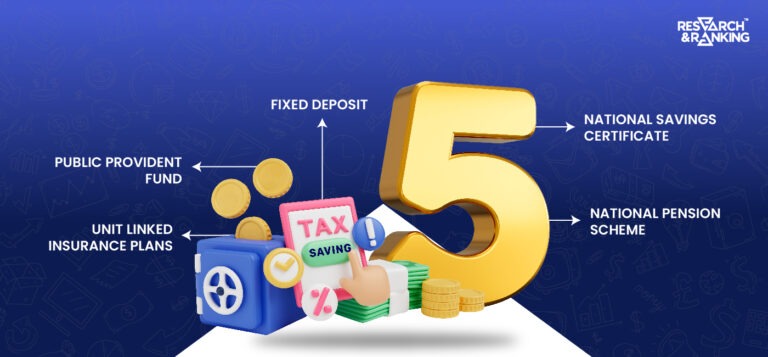
 Preferred Tax-Saving Investment Options at a Glance

Tax-Saving OptionsReturnsLock-in PeriodTax Benefits
Equity Linked Savings Scheme (ELSS)15%-20% annualized returns#3 yearsTax exemption under Section 80C for amounts under ₹1.5 lakhs 
Unit Linked Insurance Plan (ULIP)10%-12% annualized returns##5 yearsTax benefit up to ₹1.5 lakhs under Section 80C and under Section 10(10D) for death or maturity benefits earned. 
Public Provident Fund (PPF)7.1% p.aa15 yearsTax exemption under Section 80C. Maximum deduction allowed of up to ₹1.5 lakhs
Employee Provident Fund (EPF)8.15% p.a.5 years
National Savings Certificate (NSC)7.7% p.a.5 years
Senior Citizen Savings Scheme (SCSS)8.2% p.a.5 years
Sukanya Samriddhi Yojana7.6% p.a.Maturity period: 21 years from account opening 
Bank FDs5.5% – 7.75% p.a.5 years
National Pension Scheme (NPS)9%-12% p.a.5 yearsTax deduction of up to 10% of basic pay under Section 80CCD(1) and up to ₹50,000 under Section 80CCD(1B), subject to a maximum of Rs.1.5 lakh under Section 80CCE.
3 years annualized returns for Direct Plans and funds with high CRISIL Ranking. Source: Moneycontrol
5 years annualized return. Source: Moneycontrol

Tips for Effective Tax-Planning Through Tax-Saving Options

One of the most crucial pillars of financial planning – tax planning, must ideally be done at the beginning of the financial year. However, in India, most taxpayers postpone this critical decision-making process in the last quarter of a financial year, risking themselves to a last-minute scramble. 

  • Tip #1: Estimate your yearly income at the beginning of the financial year. This will help you understand your expected taxable income.
  • Tip #2: Check your existing tax-saving options. These may include your home loan repayment, EPF contribution, etc.
  • Tip #3: Plan investment in tax-saving schemes accordingly. Once you know your estimated tax liability and current expenses, you can plan investments in tax-saving schemes wisely.
  • Tip #4: Assess your tax liability at regular intervals. This step will help you adjust your tax-saving plan.
  • Tip #5: Opt for tax-saving investments based on your risk profile and willingness to lock in the funds for the specified time. If you already have equity investments, you may look for options like ELSS that offer both equity exposure and tax benefits at relatively lower risk.
  • Tip #6: Purchase adequate medical insurance for self, spouse, children, and parents; premiums are eligible for tax deduction under Section 80D.
  • Tip #7: Start investing early in age and the first quarter of a financial year. Early investing gives you the benefit of the power of compounding, thereby increasing your overall returns. Investing in the first quarter of a financial year helps you spread the tax-saving investment options wisely.

Preferred Tax-Saving Options for Different Age Groups and Income Sources

1. Tax-Saving Investment Options For Unmarried Individuals Or Newly Married Couples

Age group20-35 years
Risk appetiteELSS, ULIP, or other life insurance products and PPF. Moreover, purchase health insurance (deduction under Section 80D). Individuals with a high-risk appetite can also consider investing in high-return stocks. 
Recommended tax-saving investmentsWith a single income always consider diversifying your portfolio to ensure better returns.
Things to rememberWith a single income always consider diversifying your portfolio to ensure better returns.

2. Tax-Saving Investment Options For Parents With Single Income

Age group25-45 years
Risk appetiteLow
Tax-saving investment optionsWhen you have more responsibilities, a more prudent financial plan may help. Chart out your important long-term goals and make investment decisions accordingly.
Things to rememberWhen you have more responsibilities, a more prudent financial plan may  help. Chart out your important long-term goals and make investment decisions accordingly.

3. Tax-Saving Investment Options For Parents With Double Income

Age group25-45 years
Risk appetiteModerate to high
tax-saving investmentsELSS, ULIP or other life insurance, bank FDs, NPS or pension schemes, and health insurance.
Things to rememberExhaust Section 80C limit for taxpayers (₹3 lakhs) to invest substantial amounts in medium-risk instruments. If you wish to understand which is better for you – tax-saving vs equity investment, always consider evaluating your risk appetite, current financial situation, and long-term financial goals. Equity investments are more inclined towards wealth creation, whereas ELSS and ULIPs can offer dual advantages. 

4. Tax-Saving Investment Options For Senior Citizens and Retired Persons

Age groupAbove 55 years
Risk appetiteLow
tax-saving investmentsSCSS, NPS, annuity plans, and pension funds
Things to rememberLook for income tax saving options that offer a steady flow of income after retirement. Restrict your investment to low-risk instruments unless you are in a comfortable financial position.

Conclusion

There are multiple ways to save tax. However, it is crucial to understand the tax-saving options that suit you the best and offer the dual advantage of saving and wealth creation. Planning your taxes and contacting a trusted investment advisory service like Research & Ranking is essential to help you make informed decisions.

FAQs

What are the best tax-saving options?

The best tax-saving option depends mainly on your income, risk-taking ability, and willingness to lock in your funds for a certain period. However, some popular tax-saving options include ELSS, ULIP, PPF, etc.

How can I save my 30% tax?

Individuals with earnings of ₹15 lakhs and above in a financial year come under the 30% tax range. Besides investing in high-return stock, consider investing in instruments offering tax benefits under Section 80C. You can earn additional tax benefits by purchasing medical insurance and opting for a home loan.

How can I save tax beyond 1.5 lakhs?

Section 80C offered a deduction of up to ₹1.5 lakhs. You can save tax beyond this limit by purchasing a health insurance policy (Section 80D), investing in NPS (Section 80CCD), opting for a home loan (tax deduction on interest under Section 24(B)), or availing of deduction on bank interest savings (Section 80TTA).

How do you save taxes on a 10 lakh salary?

Firstly, opt for the right tax regime based on your investment in tax-saving options. Next, utilize your Section 80C and  80D deductions. Also, take advantage of HRA exemption to save maximum tax on ₹10 lakh salary.

In investment options, tax-free bonds stand out as a secure haven for those seeking stable returns without the burden of tax liabilities. Let’s delve into the intricacies of these bonds and understand why they are becoming an increasingly attractive choice for investors.

What Are Tax-Free Bonds?

Tax-free bonds are fixed-income securities issued by public undertakings, providing investors with interest income exempt from taxation. With a face value typically set at Rs. 1000, these bonds offer a stable return on investment, unaffected by fluctuations in the secondary market.

Features of Tax-Free Bonds

  • Annual Interest Payouts: Investors enjoy annual interest payouts without any tax implications. This regular income stream and tax benefits make tax-free bonds an attractive proposition.
  • Investment Tenure Options: Flexible investment tenures ranging from 10 to 20 years allow investors to align their choices with their financial goals and preferences.
  • Trading Flexibility: Tax-free bonds can be traded based on market rates, allowing investors to capitalize on favorable market conditions.
  • Physical and Dematerialized Holding: Investors can hold tax-free bonds in physical or dematerialized form, catering to their preferences and convenience.

Issuers of Tax-Free Bonds

Renowned entities like Power Finance Corporation, NTPC Limited, and Indian Railways Finance Corporation Limited issue tax-free bonds in India. Understanding the credibility of the issuer is crucial for risk-conscious investors.

Trading and Investment Options

Investors can trade tax-free bonds through a Demat account or in physical form. The option to apply online or offline adds flexibility to the investment process. However, selling bonds in the secondary market may attract capital gains tax.

Interest Rate Dynamics

The interest rate on tax-free bonds remains fixed based on the face value, ensuring a predetermined annual return for investors. Despite fluctuations in the secondary market, the interest income remains constant, making them a reliable choice.

Bond Tenure Importance

The tenure of tax-free bonds, ranging from 10 to 20 years, plays a pivotal role in determining returns. Investors holding bonds until maturity receive the entire principal amount, highlighting the long-term commitment associated with these instruments.

Advantages of Tax-Free Bonds

  • Safety of Investment: Tax-free bonds offer a high level of safety, minimizing the risk of default in interest payments and principal repayment as government entities back them. Despite the low risk, these bonds provide relatively higher yields than other fixed-income options.
  • Tax-Free Interest Income: One of the primary advantages is the tax-free nature of the interest earned. Investors in higher tax brackets find tax-free bonds more appealing than taxable alternatives, as they shield earned interest from tax deductions.
  • Liquidity and Secondary Market Trading: Investors can liquidate their investments by selling tax-free bonds in the secondary market, capitalizing on market fluctuations. This flexibility adds another layer of attractiveness for those looking to optimize returns.

How Do Tax-Free Bonds Work?

  • Purpose and Issuing Entities: Government entities issue tax-free bonds to raise funds for specific capital expenditures. The issuance remains open for a short period, during which investors can subscribe to purchase these bonds.
  • Subscription Process: Tax-free bonds offer fixed interest rates determined by prevailing yields, credit ratings, and investor qualifications like other bonds. Retail investors and high-net-worth individuals (HNIs) are categorized based on their investment amounts.
  • Tenure and Maturity Redemption: With 10, 15, or 20 years, investors can redeem tax-free bonds at maturity. The option to buy and sell in the secondary market exists, with profits taxed differently based on the holding period.

Ideal Investors for Tax-Free Bonds

  • Long-Term Investors: Given their extended tenure, tax-free bonds are ideal for long-term investors seeking stable income over an extended period.
  • Low-Risk Profile: Investors with a low-risk appetite find tax-free bonds attractive due to their safety and government backing, minimizing default risks.
  • Consideration for Senior Citizens: Senior citizens aiming for a secure income in their retirement years may find tax-free bonds suitable for their investment needs.

Redeeming Tax-Free Bonds

While tax-free bonds cannot be redeemed before maturity, they can be sold in the secondary market. Investors must be mindful of capital gains tax if they sell before maturity.

Issuers of Tax-Free Bonds

Only government-backed PSUs have the authority to issue tax-free bonds. However, not all bonds issued by these entities fall under the tax-exempt category. Recognized entities such as Power Finance Corporation, NTPC Limited, and Indian Railways Finance Corporation Limited are among India’s common issuers of tax-free bonds.

Income Tax Exemption for Tax-Free Bonds

Tax-free bonds qualify for exemption under Section 10(15) of the Income Tax Act, providing investors with a shield against tax obligations. Not all bonds issued by government-backed PSUs enjoy tax exemption. Identifying specific issues that fall under this exemption for a tax-efficient investment strategy is essential.

Investors holding tax-free bonds until maturity enjoy complete exemption from taxes on interest income, providing a significant tax advantage. Capital gains tax applies if a tax-free bond is sold before maturity. The holding period determines the taxation rate, emphasizing the importance of a strategic investment horizon.

Risks Associated with Tax-Free Bonds

Credit Default Risk: While tax-free bonds are generally safe from credit default risk, liquidity, and interest rate risks remain potential concerns, mainly if sold before maturity.

Liquidity and Interest Rate Risks: The liquidity of tax-free bonds may be lower due to their extended tenure. Additionally, interest rate fluctuations can impact bond values, highlighting the importance of holding bonds until maturity.

Advantages of Investing in Tax-Free Bonds

  • Tax-Free Regular Income: Investing in tax-free bonds provides investors with a regular, tax-free income stream, ensuring financial stability and predictable returns.
  • Safety Assurance: Backed by public undertakings or the government, tax-free bonds offer a high level of safety, making them a preferred choice for risk-averse investors.
  • Trading Ease and Profit Potential: Listed on the stock exchange, tax-free bonds offer ease of trading and profit potential when market prices appreciate.
  • Higher Returns for High Tax Brackets: Investors in higher tax brackets stand to gain more from tax-free bonds, making them an attractive option for wealth maximization.

Identifying the Best Tax-Free Bonds

When seeking the best tax-free bonds to make informed investment decisions, you must carefully evaluate issuer profiles, yield to maturity, and maturity dates.

  • Issuer Profile: Understanding the reputation and financial stability of the issuer is crucial for assessing the safety and reliability of tax-free bonds.
  • Yield to Maturity: The Yield to Maturity of a bond provides insights into the total returns an investor can expect over the bond’s entire tenure, helping make informed investment choices.
  • Maturity Date: Remember the maturity date to avoid early liquidation and exposure to liquidity and interest rate risks.

In conclusion, tax-free bonds offer a unique investment avenue, combining safety, tax benefits, and the potential for stable returns. While they may not be suitable for all investors, those seeking long-term stability and tax advantages should consider adding tax-free bonds to their investment portfolio.

Know more about JOYALUKKAS INDIA IPO

FAQs

  1. Can tax-free bonds be redeemed before maturity?

    Tax-free bonds cannot be redeemed before maturity but can be sold in the secondary market.

  2. What tax benefits do investors enjoy with tax-free bonds?

    Investors hold tax-free bonds until maturity and pay no tax on interest income.

  3. What are the risks associated with tax-free bonds?

    Risks include liquidity, interest rate, and potential capital gains tax on early sale.

  4. How do you identify the best tax-free bonds in the market?

    Consider issuer profile, Yield to Maturity, and maturity date for informed decision-making.

  5. Why did the government stop issuing tax-free bonds?

    The government wanted to attract investors to invest in the bonds of some critical PSUs, so it issued tax-free bonds. However, as the bond market matured, the government no longer needed to attract investors to invest in the bonds of these important companies.

  6. How are tax-free bonds different from capital gains bonds?

    Tax-free bonds don’t attract tax, while capital gains bonds help investors save long-term capital gains tax arising from the sale of a capital asset (property/land)

  7. Are tax-free bonds corporate bonds?

    Yes, tax-free bonds are corporate bonds issued by specific Public Sector Units.

Budget 2023 was crucial to every Indian taxpayer. Do you know why? The government decided the new tax regime introduced on 1st April 2020 would be the default option. The new tax regime offers lower tax rates but narrows the scope of tax deductions and exemptions.

The new regime is optional, and taxpayers can choose to stick to the old regime, which has higher tax rates but more tax-saving options. The widening of options has also fueled the debate over which is better—the new or the old. No single rule applies to all. Individuals may have varying income levels, tax-saving investments, expenses, and financial goals.

So, if you are struggling to decide which is better, the new or old regime, this article is all you need. In this article, we’ve covered everything from both regimes’ features, benefits, and drawbacks. We also share some real-life cases to help you pick the best side in this conflict between the new tax regime and the old one.

How do you choose between the old and new tax regimes for salaried individuals?

To help you solve this riddle, it is essential to understand the detailed features of New Tax Regime vs Old.

FeaturesOld Tax RegimeNew Tax Regime
Tax Slab RatesUpto 2.5 Lacs Nil Rs. 2.5 Lacs – Rs. 5 Lacs 5% Rs. 5 Lacs – Rs. 10 Lacs 20%
Above Rs. 10 Lacs 30%
Up to Rs. 3 Lacs Nil Rs.
3 Lacs – Rs. 6 Lacs 5%
Rs. 6 Lacs – Rs. 9 Lacs 10%
Rs. 12 Lacs- Rs. 15 Lacs 20%
Above 15 Lacs 30%
Tax RebateUp to Rs. 5 Lacs under Section 87AUp to Rs. 7 Lacs under Section 87A
Standard DeductionRs. 50,000 for salary incomeRs. 50,000 for salary income and Rs. 15,000 or 1/3rd of pension, whichever is lower, for family pension
Surcharge37% for income over Rs. 5 Crores25% for income over 5 crores
Leave Encashment exemptionRs. 3 Lacs for non-government employeesRs. 25 Lacs for non-government employees
Deductions and ExemptionPlenty options available-
House Rent Allowance (HRA)
Deductions on savings bank interest u/s 80TTA/80TTB
Entertainment Tax and Professional tax Deduction (for government employees)
Rebate on Home Loan interest u/s 24 (for self-occupied or vacant property)
Tax-saving investments up to Rs. 1.5 Lacs u/s 80C
Medical insurance premiums up to Rs 25,000/- for individuals and Rs. 50,000/- for senior citizens.
Plenty options available-
House Rent Allowance (HRA)
Deductions on savings bank interest u/s 80TTA/80TTB
Entertainment Tax and Professional tax Deduction (for government employees)
Rebate on Home Loan interest u/s 24 (for self-occupied or vacant property)
Tax-saving investments up to Rs. 1.5 Lacs u/s 80C
Medical insurance premiums up to Rs 25,000/- for individuals and Rs. 50,000/- for senior citizens.
Default OptionApplicable until FY 2022-23Applicable from FY 2023-24

Old vs New Tax Regime: Which One is More Beneficial for You?

The difference between the old tax regime and the new one is not just about the tax rates but also the tax-saving opportunities. The old regime allowed various deductions and exemptions, such as HRA, LTA, Section 80C, Section 80D, etc., that could reduce taxable income and tax liability.

On the other hand, the new tax regime offers lower tax rates and limits deductions and exemptions to a few options, such as NPS contribution by employer and gratuity.

The choice between a new tax regime or vs old one depends on various factors, such as income level, tax-saving investments, expenses, and financial goals. Some taxpayers may benefit from the simplicity and lower rates of the new regime, while others may prefer the flexibility and higher savings of the old regime.

To make an informed decision, taxpayers should compare the tax liability under both regimes and choose the one that suits their needs and preferences better.

The breakeven threshold for deciding between the New vs Old tax regime

The breakeven point is the income level at which there is no difference in tax liability between the old tax regime vs new. The amount of deductions and exemptions that a taxpayer can claim under the old regime influences the choice of tax regime.

The old regime will benefit more if the eligible deductions and exemptions exceed the breakeven threshold for a given income level. However, if the deductions and exemptions are less than the breakeven point, the new regime will benefit more.

For example, the breakeven point for a 15-lakh income level is 3.75 lakhs. This means that if a taxpayer can claim more than 3.75 lakhs in deductions and exemptions under the old regime, they will pay less tax under the new regime. However, if the deductions and exemptions total less than 3.75 lakhs, the new regime will result in a lower tax liability.

Tax under Old vs New Regime

Suppose Mr X has a gross income of ₹15,00,000 in the financial year 2023-24. He also has the following deductions and exemptions:

-Standard deduction of ₹50,000 applicable to salary income

– Deduction of ₹1,50,000 under Section 80C for investments in PPF, ELSS, etc.

– Deduction of ₹50,000 under Section 80CCD(1B) for investment in NPS

– Deduction of ₹25,000 under Section 80D for health insurance premium

– Exemption of ₹1,00,000 for house rent allowance (HRA)

Let us compare his tax liability under the old and the new tax regimes:

ParticularsOld Tax RegimeNew Tax Regime
Gross IncomeRs. 15 LacsRs. 15 Lacs
Less Standard DeductionRs. 50,000Rs. 50,000
Less: Exemption under Chapter VI-ARs. 2.25 LacsNil
Less: Exemption u/s 10Rs. 1 LacsNil
Net Taxable IncomeRs. 11.25 LacsRs. 14.50 Lacs
Tax on Total Income up to. 3 lacsNilNil
Tax on income from 3,00,001 to Rs. 6 LacsRs. 15,000/-Rs. 15,000/-
Tax on income from Rs. 6,00,001 to Rs. 9 LacsRs. 60,000/-Rs. 30,000/-
Tax on income from Rs. 9,00,001 to Rs. 12 LacsRs. 90,000/-Rs. 45,000/-
Tax on income from Rs. 12,00,001 tto15 LacsRs. 90,000/-Rs. 60,000/-
Heath and Education cess @ 4%Rs. 10,200/-Rs.6,000/-
Total Tax PayableRs. 2,65,200/-Rs. 1,56,000/-

As we can see, Mr X will save ₹1,09,200 in taxes if he opts for the new tax regime. However, this may not be the case for everyone, as various factors, including income level, tax-saving investments, expenses, and financial goals, determine the chosen tax regime. As a result, taxpayers should compare their tax liability under both regimes and select the one that best suits their needs.

Conclusion

Choosing between the new tax regime vs old one is not a matter of flipping a coin. It involves checking and analyzing deeper aspects, such as income level, tax-saving investments, expenses, and financial goals.

When comparing the new tax regime vs old, the latter has higher tax rates and more options to save tax, which can lower the taxable income and promote saving habits. On the flip side, the new regime has lower tax rates and fewer options to save tax, making the tax calculation easier and benefiting those who do not avail of many tax benefits.

The government allows you to switch between tax regimes every year to adjust your choice between new and old tax regimes based on your changing income and expenses. You should weigh your tax liability under both regimes and choose the one that most closely fits your financial preferences and goals.

FAQs

  1. Can I switch between the old and the new tax regime every year?

    Yes, you can switch between the old and the new tax regime every year, depending on your income, deductions, and financial goals.

  2. What are the documents required to opt for the new tax regime?

    Submit a declaration form (Form 10-IE) to your employer or the income tax department to opt for the new tax regime.

  3. How do you choose between the old tax regime and the new regime?

    To make the perfect choice, you should compare your tax liability under both regimes and choose the one that suits them better. You can also seek help from a financial advisor or use any online tools available.

Understanding Tax on Rental Income: Why Managing Tax on Rental Income is Important

What is Income Tax on Rent Income?

Income tax on rent income is a tax levied on the earnings generated from letting out property. This income is subject to tax under the “Income from House Property” head as per income tax on rental income India regulations.

Tax Implications for Individuals Earning Rent in India

Rental income is added to your total income and taxed as per the applicable slab rates. Understanding these implications helps minimize your tax liabilities.

Overview of Tax Slabs and Rates for Rental Income

For individuals, the tax rates range from 5% to 30%, depending on their annual income. Rental income, after permissible deductions, is included in the total income for taxation.

Strategy 1: Claiming Standard Deduction on Rental Income

How the 30% Standard Deduction Reduces Taxable Rent

The Income Tax Act allows a 30% standard deduction on the annual value of the property to cover maintenance costs, reducing the taxable income significantly.

Eligibility and Process for Claiming the Deduction

This deduction is available to all property owners earning rental income. The calculation is straightforward and does not require proof of expenses.

Strategy 2: Using Home Loan Interest Deductions

How to Offset Rental Income Tax With Interest on Home Loans

Interest paid on loans for acquiring or constructing rental properties can be deducted under Section 24(b). This can reduce your taxable income substantially.

Section 24(b): Understanding the Deduction Limit for Rental Properties

The deduction limit is Rs. 2,00,000 annually if the property is self-occupied. For rented properties, there is no upper limit, making this an excellent tool for reducing tax liability.

Strategy 3: Accounting for Municipal Taxes Paid

How Municipal Taxes Lower Your Taxable Income

Municipal taxes paid by the property owner can be deducted from the rental income before calculating taxable income.

Conditions to Claim Deductions for Municipal Taxes

Ensure the taxes are paid during the financial year to claim this deduction. Retain receipts as proof for tax filing purposes.

Strategy 4: Leveraging Joint Ownership for Tax Benefits

Splitting Rental Income Between Co-Owners to Reduce Tax Liability

When a property is jointly owned, the rental income can be split among co-owners, reducing the tax burden.

Key Rules for Joint Ownership Deductions

Each co-owner must have a valid ownership share, and the rental income division should align with their ownership proportions.

Strategy 5: Investing in Tax-Saving Instruments

Using Section 80C and Other Exemptions to Offset Taxable Income

Investments in instruments like PPF, ELSS, and NPS can reduce taxable income under Section 80C.

Tax-Saving Investments Tailored for Property Owners

Property owners can also consider NPS and other retirement schemes for additional tax benefits.

StrategyDescriptionBenefitsPotential Tax Savings
1. Invest in NPSContribute to NPS (Tier-I) to avail tax deductions under Section 80CCD(1B) over and above the Rs. 1.5 lakh limit of Section 80C.Additional tax deduction of up to Rs. 50,000 per annum.Up to Rs. 15,600 savings in income tax.
2. Salary RestructuringRequest your employer to include NPS contributions in your CTC (Cost to Company) and claim deductions under Section 80CCD(2).Reduce your taxable income, thus lowering the tax liability. Employer’s contribution (up to 10% of salary) is tax-free.Varies based on salary structure and employer’s contribution.
3. NPS for Self-EmployedSelf-employed individuals can also invest in NPS and avail tax benefits under Section 80CCD(1B).Claim tax deductions on contributions made to NPS. Benefit from the power of compounding over time.Up to Rs. 15,600 savings in income tax.
4. Withdrawal PlanningPlan your NPS withdrawal strategically, as partial withdrawals are tax-free, and annuity income is taxable as per your tax slab.Tax-free partial withdrawals for specified purposes.
Optimize annuity to minimize tax liability.
Varies based on withdrawal strategy.
5. Maximizing Employer’s ContributionEnsure your employer contributes the maximum allowed 10% of your salary to NPS and leverage this contribution for tax savings.Employer’s contribution is deductible under Section 80CCD(2).
Increase your overall NPS corpus for retirement.
Varies based on your salary and employer’s contribution.

The rental income tax deduction is not just an economic move but a smart strategy that can lead to significant savings. By using these five smart strategies, including the “rent to mum” strategy, investing in NPS, claiming HRA deductions, taking home loan interest deductions, and carefully checking records types, you pay taxes while protecting your financial future -Can significantly reduce liability

Also, the potential of the National Pension System (NPS) cannot be overstated. Not only does it offer incredible tax savings, but it is also an excellent retirement planning tool. These steps allow you to optimize your finances, reduce taxes, and pave the way for a safe and prosperous financial journey. You can also learn more about income tax concepts with our blog.

Other Tax Exemptions on Rental Income: What You Should Know

Exemptions for Properties Rented to Government or Charitable Organizations

Certain properties rented to government bodies or charitable organizations may qualify for exemptions.

Special Provisions for Senior Citizens Earning Rent

Senior citizens can leverage additional exemptions and deductions, reducing their overall tax liability.

Common Mistakes to Avoid While Filing Tax on Rent Income

  • Not Declaring Rent Income in the Right Assessment Year:  This refers to incorrectly reporting rental income in the wrong tax year. It’s crucial to declare rental income in the year it is earned, not when it is received, to comply with tax regulations.
  • Failing to Maintain Proper Documentation for Deductions:  This means not keeping adequate records to support claimed deductions related to rental property expenses. Without proper documentation, deductions may be disallowed, leading to higher tax liability.
  • Ignoring Applicable Surcharges and Penalties:  This highlights the importance of being aware of and paying any applicable surcharges or penalties related to rental income tax. Failure to do so can result in additional financial costs and legal consequences.

Here’s a table outlining five smart strategies to reduce tax on rent in India using the NPS (National Pension System) to cut income tax by Rs. 86,000. This table will provide a clear overview of each strategy, its benefits, and potential tax savings:

FAQs about Tax on Rental Income

Is renting a property to one’s mother legal to reduce tax liability?

Yes, it is legal to rent a property to your mother or any family member. However, ensuring that the arrangement is transparent and complies with all legal requirements, including having a formal rental agreement and paying rent regularly, is crucial.

How much can I save in taxes by investing in NPS?

By investing in NPS, you can save up to Rs. 86,000 in income tax annually. This is achieved through an additional deduction of Rs. 50,000 under Section 80CCD(1B) of the Income Tax Act, over and above the limit of Rs. 1.5 lakh available under Section 80C

What are the key documents required to claim HRA deductions?

To claim House Rent Allowance (HRA) deductions, you will typically need rent receipts, a lease agreement or rent agreement, and proof of rent payment. These documents help support your claim and reduce your taxable income.

*Disclaimer Note: The securities quoted, if any, are for illustration only and are not recommendatory. This article is for education purposes only and shall not be considered as recommendation or investment advice by Research & Ranking. We will not be liable for any losses that may occur. Investment in securities market are subject to market risks. Read all the related documents carefully before investing. Registration granted by SEBI, membership of BASL, and certification from NISM in no way guarantee the performance of the intermediary or provide any assurance of returns to investors.

Introduction

In India, the Income Tax Act offers myriad benefits to aspiring property owners. For example, when you sell certain capital assets like gold, mutual funds, and shares to buy a residential property, you can avail of capital gains tax exemption.

In this article, we will answer the common investor question – can I enjoy tax benefits on capital gains if I buy another house? Before we explore this topic in detail, we must understand terms like capital gains tax and long-term capital gains (LTCG) tax.

Capital gains tax

When investors sell their capital assets like stocks and shares, jewelry, vehicles, or land at a price higher than their purchase price, they profit. These profits are called capital gains.

Capital gains are of two types: short-term and long-term. When an investor makes a profit on the sale of equity shares and bonds held for more than one year (12 months) or property older than three years (36 months), it is referred to as long-term capital gains.

Unlisted and foreign shares have to be held for no less than two years for profits from their sale to be categorized as LTCG.

Profits from selling debt mutual funds may be considered LTCG if the assets have been held for at least three years.

Long-term capital gains tax

Short-term capital gains do not enjoy tax exemptions. By contrast, as per the Income Tax Act guidelines, long-term capital gains may be tax deductible.

One good way to avail of long-term capital gains tax exemptions is to use the money to purchase or build a residential property.

Taxable gains accumulated by selling the following assets only – diamond or gold jewelry, equity or debt mutual funds, bonds, and shares (Indian, foreign, or unlisted) can be safeguarded by transferring them to a Capital Gains Account Scheme (CGAS), helping to reduce the tax burden by up to 20%.

When purchasing a new house through the Capital Gains Account Scheme, capital gains are exempt from taxes if used to buy the house within two years or construct one within three years.

Let us understand this better with an example. An owner of a successful Indian start-up sells a portion of his company shares for Rs. 10 crores and transfers the entire amount to a CGAS. After one year, he withdraws eight crores and purchases a house.

He will have to pay taxes on only the remaining two crores. Simply parking the gains in a CGAS is not enough. You have to transfer the complete funds to a capital gains account with a bank.

For example, if you bought shares worth Rs. 2 lakh and made a profit of Rs. 50,000, you have to transfer the entire amount (principal + gains), i.e. Rs. 2.5 lakhs in a CGAS. The money can be withdrawn from the CGAS by filling out Form C.

Conditions

Under the Income Tax Act of 1961, the following are the preconditions to availing the CGAS tax exemption benefits:

  • On the day of the sale, you should not own more than one property.
  • The money withdrawn from CGAS can be only used to purchase residential property. You cannot use it to buy commercial property or land.

When availing of the tax exemptions granted by the CGAS, you must buy the property and file your returns within the timeframe to enjoy said benefits.

For instance, if you sold your shares and transferred all the funds to CGAS in October 2020, you would have two years to buy a residential property to avail of the tax exemptions until October 2022 before filing your returns in 2022.

To enjoy the tax benefits, you must buy the property by 31st July 2022 (non-audited) and not 31st March 2023. According to section 54 (F), to enjoy the tax exemptions under the CGAS, you cannot resell the property before three years.

Selling your property before three years will undo the tax benefit completely. In addition to the tax, you will also have to pay the interest and penalty on the LTCG, calculated from the date of the sale.

Joint ownership

Individuals, such as a married couple, can jointly own shares and still avail of this tax exemption. For example, a couple who realized profits from the sale of jointly owned shares transferred all the proceeds to CGAS and, after the stipulated time, bought two separate residential properties, will enjoy the same tax benefits as a single individual.

Availing tax benefits by transferring gains from the sale of shares to a CGAS and buying a residential property can be a win-win for those who make intelligent financial decisions.

On one hand, they can save a substantial portion of their hard-earned money and invest in a valuable asset they can sell off later at a premium or generate regular income through lease or rent.

FAQ

I wish to sell off a portion of my share portfolio and buy a residential property with the proceeds. Can I enjoy any tax benefits from this transaction?

Yes, you can. Transfer the complete funds (principal + gains) to a Capital Gains Account Scheme (CGAS). Money parked in CGAS is exempt from taxes if they are used to purchase residential property within two years or build one within three years.

Are there any preconditions to enjoying these tax benefits?

Yes. On the date of sale of shares, you should not own more than one property. Also, the property you buy can only be residential. It cannot be land or commercial property.

Is there a waiting period before I can resell the property?

Yes. After realizing the tax benefits, you must hold the property for at least three years. If you sell the property before three years, you will have to pay the complete tax, including the penalty and interest on the LTCG, calculated from the date of the sale.

*Disclaimer Note: The securities quoted, if any, are for illustration only and are not recommendatory. This article is for education purposes only and shall not be considered as recommendation or investment advice by Research & Ranking. We will not be liable for any losses that may occur. Investment in securities market are subject to market risks. Read all the related documents carefully before investing. Registration granted by SEBI, membership of BASL, and certification from NISM in no way guarantee the performance of the intermediary or provide any assurance of returns to investors.

Frequently asked questions

Get answers to the most pertinent questions on your mind now.

[faq_listing]
What is an Investment Advisory Firm?

An investment advisory firm is a company that helps investors make decisions about buying and selling securities (like stocks) in exchange for a fee. They can advise clients directly or provide advisory reports and other publications about specific securities, such as high growth stock recommendations. Some firms use both methods, like Research & Ranking, India’s leading stock advisory company, specializing in smart investments and long-term stocks since 2015.

An investment advisory firm is a company that helps investors make decisions about buying and selling securities (like stocks) in exchange for a fee. They can advise clients directly or provide advisory reports and other publications about specific securities, such as high growth stock recommendations. Some firms use both methods, like Research & Ranking, India’s leading stock advisory company, specializing in smart investments and long-term stocks since 2015.

An investment advisory firm is a company that helps investors make decisions about buying and selling securities (like stocks) in exchange for a fee. They can advise clients directly or provide advisory reports and other publications about specific securities, such as high growth stock recommendations. Some firms use both methods, like Research & Ranking, India’s leading stock advisory company, specializing in smart investments and long-term stocks since 2015.

An investment advisory firm is a company that helps investors make decisions about buying and selling securities (like stocks) in exchange for a fee. They can advise clients directly or provide advisory reports and other publications about specific securities, such as high growth stock recommendations. Some firms use both methods, like Research & Ranking, India’s leading stock advisory company, specializing in smart investments and long-term stocks since 2015.