Retirement

No one wants to spend their entire life working or relying on social security programs for survival. We’re all aware of how vital pension planning is. However, we still struggle with questions such as when I should start, how much I should invest, and what age is best to say adieu to a hectic life and enjoy the peace of retirement.

So, to help you navigate this maze, we’ve created a comprehensive guide to pension planning. By the end of this article, you will have the answers to all of your retirement planning questions.

So, let us get on the wheels.

What is Pension Planning?

We’ll start our beautiful exploration journey by defining precisely what pension planning is. Pension planning is the process of preparing for a comfortable and secure life in retirement.

Pension planning begins with clearly defining your financial goals and then saving and investing money based on your needs and preferences. There are numerous factors to consider when planning your pension, which we will address later in this article.

To figure out a specific nest egg, consider your current income, expenses, assets, liabilities, life expectancy, inflation, tax benefits, and risk tolerance. Decide when you want to retire, how much income you will need, and what vehicles you will use to achieve the corpus required to live the life you want.

Why is pension planning important?

Now that you understand what pension planning is all about let us look into why it is such a trendy topic. Here are five reasons why pension planning is an inescapable part of your life:

  1. Helps you achieve your life goals

Whether you want to travel the world, pursue a hobby, or spend time with your loved ones, retirement planning can help you fund your dreams.

  • Have a steady source of income

By saving and investing your money wisely, you can create a retirement corpus that can generate regular returns and meet your expenses even when you are not working.

  • Gear up for  unexpected emergencies

You never know what life may throw at you, such as health issues, natural disasters, or family crises. Pensions can help you cope with these situations without compromising your financial security.

  • Reduce your tax liability

Effective pension planning reduces your tax liability and increases your net worth. You can grow your wealth by investing in multiple assets that can appreciate over time and help you save taxes.

  • Gives you peace of mind and happiness

By using the right pension planning, you can avoid financial stress, maintain your lifestyle, and contribute to the economy and social welfare.

Factors to Consider While Planning for Retirement

  1. Your retirement age and life expectancy
  • Start by asking yourself two questions: When do you want to retire? How long do you expect to live? The age at which you retire is entirely up to you. Some people want to stay active and work into their later years. Some want to retire early and enjoy the aspects of life that they skipped out on due to their busy work lives.
  • You can estimate your life expectancy based on your health, family history, and lifestyle and then save accordingly.

2. Effect of Inflation on Your Pension

Inflation is the rise in the average cost of goods and services over time. When inflation rises, it reduces the purchasing power of your money. So, to prevent inflation from eating up your retirement corpus, invest in assets that can generate returns higher than the inflation rate to preserve the value of your portfolio.

3. Don’t lose sight of tax liabilities

Remember this: Taxes will take a toll on your retirement corpus and pension. So, while retirement planning, keep an eye on your tax bracket, deductions, and exemptions. You should look for tax breaks and tax-efficient investments to lower your tax liability and increase your net worth.

4. Returns on Investment (ROI)

We invest to generate profits from our savings and investments. Furthermore, returns are determined by the risk you take and the time horizon of the asset classes you choose. To achieve your retirement goals, diversify your portfolio and devote yourself to long-term investments that balance risk and return. This will help you develop immunity to market fluctuations.

How to start pension planning?

Follow the steps below to start your pension planning right away-

Step 1: Select your retirement age

Your financial goals and responsibilities will influence the retirement age you set. You should consider your current health, life expectancy, lifestyle, and career goals. For instance, if you are career-oriented or have financial responsibilities, your retirement age will be higher than that of someone financially secure or satisfied with their career achievements.

Step 2: Set financial goals and form a budget.

You should calculate how much income you will require in retirement based on your estimated expenses, inflation, and tax rates. Keep your budget realistic, allowing you to save and invest a portion of your income regularly.

Step 3: Invest early for a peaceful retirement

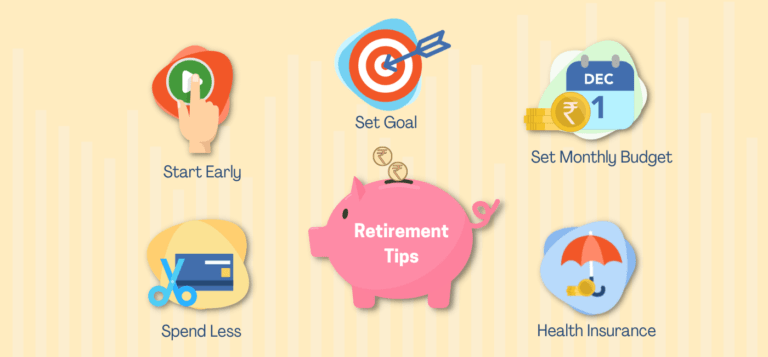
Start as early as possible is the secret mantra to effective retirement planning. Compounding can help you boost your returns as time goes by. You should choose a retirement plan that suits your risk tolerance, time horizon, and financial goals.

Step 4: Compute your retirement corpus

Calculate how much money you’ll need to save by retiring to maintain your desired lifestyle. To calculate the future value of your savings, you can use a retirement calculator or consult a financial advisor. Because it is critical to consider your expected rate of return, inflation, and withdrawal frequency.

Step 6: Avoid avoidable expenses

You should reduce your debt, spend less, and avoid making unnecessary or impulsive purchases. To pay off your debts, use the descending order of interest. To put it another way, start repaying the loan with the highest interest rate first and work your way down to lower interest rates.

Step 7: Regularly review and track your plan

You should periodically review your retirement plan and make changes as needed. Don’t miss out on reviewing your insurance policies to ensure adequate health, life, and property coverage. You should also review your goals, budget, investments, and expenses to ensure they align with your changing needs and circumstances.

Best Investment Options For Retirement Planning

If you are covered by an old pension scheme and are eligible for a pension, you should still consider these investment options due to their high returns and tax-free status. If not, this list is exactly what you need.

Public Provident Fund (PPF)

  • PPF is a government-backed savings scheme that offers a fixed and guaranteed return, currently at 7.1% p.a.
  • Your money is locked in PPF for 15 years, and you can continue for 5-year blocks.
  • Partial withdrawals and loans are allowed only after certain conditions are met.
  • It is a safe and tax-free option but may not beat inflation in the long run.

National Pension Scheme (NPS)

  • NPS is a market-linked pension scheme that allows you to invest in different asset classes, such as equity, debt, and government securities, through various pension fund managers.
  • NPS offers two account options: Tier I and Tier II. Tier I account is mandatory and has a lock-in period till age 60, while Tier II account is optional and has no lock-in period.
  • You can choose between active and auto choices for your asset allocation.
  • You can also claim an additional tax deduction of Rs. 50,000 under Section 80CCD(1B) for your NPS contributions over and above the Rs. 1.5 lakh limit under Section 80C.
  • Returns in NPS are based on market performance. But if you start early with a long-term investing vision, you can beat inflation and generate good returns. 

Mutual Funds

  • Mutual funds are pooled investment vehicles that invest in various securities, such as stocks, bonds, gold, etc., depending on the fund’s objective and strategy.
  • Contrary to stocks, where you manage your risk, Mutual funds are managed by professional fund managers and regulated by SEBI.
  • Mutual Funds have various options to suit different risk profiles, time horizons, and goals. Depending on your investing tastes, you can choose different plans, such as growth, dividend, and systematic investment plans.
  • You can also invest in ELSS (Equity Linked Savings Scheme) funds, which are tax-saving mutual funds with a lock-in period of 3 years and qualify for deduction under Section 80C.
  • Mutual funds can offer higher returns than fixed-income options but are also subject to market fluctuations and taxation.

Equities or Shares

  • Equity or shares are units of ownership in a company that entitle you to a proportionate share of its profits and assets.
  • They are traded on stock exchanges and their prices are determined by the demand and supply forces.
  • Shares can give you capital appreciation and dividends but are risky and volatile.
  • Shares can yield attractive returns only when you research the company, avoid short-term gains, study its financial and technical ratios, competitive advantage, etc., before investing.
  • You must also pay brokerage fees, transaction charges, and taxes on your share transactions.

Key Takeaways

  • Pension planning is a pressing topic that we must address. Systematic planning can help you meet your retirement objectives and secure your financial future.
  • Starting early, saving regularly, investing sensibly, and selecting the right pension plan will allow you to enjoy your golden years without financial worries.
  • However, pension planning is an ongoing process that must be reviewed and tweaked regularly in response to changing economic conditions. You cannot afford to ignore other factors that influence retirement planning, such as taxes, inflation, and healthcare costs.

To summarise, if you are unsure about pension planning, never hesitate to seek professional advice. Remember, it is never too late to begin pension planning, but the sooner you do it, the better.

FAQs

  1.  How to cope with your health care bills after you stop working?

     One of the most difficult aspects of retirement is dealing with rising healthcare costs as we age.  
    To deal with these expenses, you can try these: maintain a healthy lifestyle, choose the right health insurance plan, save for medical emergencies, and look into other options such as government schemes, health savings accounts, and long-term care insurance.

  2. How to deal with inflation in retirement?

    To deal with inflation in retirement, you should adjust your budget, increase your income, and invest in inflation-hedging assets. Equity, real estate, commodities, inflation-linked bonds, and annuities are inflation-protective assets.

  3. How much do you need to put aside for your retirement?

    So, this is not a one-size-fits-all situation. The amount you need to save for retirement depends on factors like your current income, desired retirement income, life expectancy, expected rate of return, inflation rate, etc. Aim to save at least 10% to 15% of your annual income. Also, aim to retire with at least 25 times your annual expenses.

Introduction

Importance of Knowing Retirement Age

The main goal of savings in most Indian households is a comfortable retirement, one of the most significant milestones in a person’s life. Yet, many people remain unaware of when exactly they are expected, or allowed, to retire. Understanding the retirement age in India gives you a clear picture of the time horizon for your investment strategies. It also helps in effective financial planning, securing pension benefits, and knowing your legal rights as an employee.

Overview of Retirement Policies in India

Unlike many nations with a uniform policy, retirement age in India varies depending on sector, employment type, and state-specific regulations. It typically ranges between 55 to 65 years, with adjustments made for specific professions or government roles.

Retirement is one of the biggest milestones in an individual’s life. But unlike other things, we never talk about the age at which one should retire. Most of us don’t know the ideal retirement age in India.

But first, we must understand what retirement exactly means. It is the age when a person stops working and becomes eligible for a pension or other benefits without working for money or, in other words, retirement benefits. Retirement age varies depending on the type of employment, sector, and country. In this blog, we will explore the retirement age in India for different categories of workers and the factors that influence it.

Standard Retirement Age in India

Government Employees

The government job retirement age in India for central government employees is generally 60 years, as prescribed under the Central Civil Services (Pension) Rules, 1972. However, several exceptions exist:

  • Academics: As per the University Grants Commission (UGC) Regulations, 2018, the retirement age for professors, principals, and directors in centrally funded universities and institutions is 65 years.
  • Scientists: In organizations like the Defence Research and Development Organisation (DRDO), the retirement age for scientific and technical staff is 60 years, but certain high-ranking roles allow extensions up to 64 years, based on performance and need, under the DRDO Recruitment Rules for Scientist B and above.
  • Regulatory board members: For statutory and regulatory bodies such as SEBI, TRAI, or UPSC, the retirement age for chairpersons and members can go up to 65–70 years, as per the Department of Personnel and Training (DoPT) guidelines on Tenure, Terms, and Conditions of Appointment of Chairpersons/Members of Regulatory Bodies and Tribunals.

Private Sector Employees

The retirement age in India for private sector employees is more flexible and generally defined by company policy or individual contracts. It usually falls between 58 and 60 years but can vary depending on the industry and individual agreements.

Retirement Age In India

Unlike some countries with a uniform retirement age for all citizens, India has different retirement ages for different types of workers. The retirement age in India depends on the type of employment, sector, and state. Generally, the legal retirement age in India ranges from 55 to 65 years, with some exceptions.

New Retirement Age In India

In recent years, the retirement age in India has been changed for certain categories of employed professionals. The central government has increased the retirement age of some of its employees to address the shortage of skilled manpower and to retain experienced professionals. For example, in 2019, the retirement age of doctors working under the central health services was increased from 62 to 65 years. Similarly, in 2020, the retirement age of central armed police forces personnel was increased from 60 to 65 years.

High Court Judge Retirement Age in India

The retirement age of high court judges in India is determined by the Constitution of India. According to Article 217 of the Constitution, the retirement age of high court judges is 62 years. However, a high court judge can be appointed as a Supreme Court judge, in which case the retirement age is 65 years, per Article 124 of the Constitution.

Retirement age in India for Central Government employees

The Central Civil Services (Pension) Rules, 1972, fixed the retirement age in India for central government employees. According to these rules, the retirement age of central government employees is 60 years unless otherwise specified. However, there are some exceptions to this rule, such as:

  • The retirement age for professors, principals, and directors of academic institutions under the central government is 65 years, per the University Grants Commission Regulations, 2018.
  • The retirement age for scientists and technical officers of the Defence Research and Development Organisation (DRDO) is 60 years, with an option to extend up to 64 years, as per the DRDO Recruitment Rules for Scientist B (Direct Recruitment).
  • The retirement age for chairpersons and members of statutory and regulatory bodies under the central government is 70 years, per the Department of Personnel and Training Guidelines on Tenure, Terms, and Conditions of Appointment of Chairpersons/Members of Regulatory Bodies and Tribunals.

Recent Changes and Discussions on Retirement Age

Proposed Increases

Over the last decade, the retirement age in multiple services has been changed. For instance, in June 2016, the Union Cabinet approved an increase in the retirement age for doctors under the Central Health Services from 62 to 65 years. 

A similar extension was seen in 2019 for the retirement age for personnel in the Central Armed Police Forces (CAPFs), including CRPF, BSF, ITBP, CISF, and SSB. The retirement age for all was standardized to 60 years from the previous cap of 57 years. 

As of 2025, many states in India have revised the retirement age for government employees. The Andhra Pradesh government increased the retirement age to 62 years (from the previous 60), while the Kerala government increased it to 60 years (from 58). Following this, the Central government has also had discussions around increasing the retirement age.  

Official Clarifications

Despite rumors, the government has confirmed that there is currently no proposal (as of March 2025) to increase the retirement age for most central government employees to 62. So, the current govt job retirement age in India remains at 60 unless stated otherwise.

Retirement Age for Specific Professions

Judiciary

Under Article 217 of the Constitution, High Court judges retire at 62, while Supreme Court judges retire at 65.

Armed Forces

The retirement age in India for Army personnel depends on rank and years of service. It can range from 35 years for junior personnel to 60 years for medical officers. Officers generally retire between 54 and 60 years of age, depending on their role.

Medical Professionals

Doctors in central health services now retire at 65, thanks to recent reforms. This move aims to combat the shortage of skilled professionals in the healthcare sector and illustrates how the new retirement age in India can evolve to meet national needs.

Factors Influencing Retirement Age

Life Expectancy

India’s life expectancy increased from 62.7 years to 67.7 years by 2022. With increasing life expectancy, there’s a growing conversation about extending the retirement age in India to allow people to contribute longer and secure their financial future.

Economic Considerations

India’s evolving economic landscape also affects retirement norms. The ability of pension systems and organizations to support longer retirements is a crucial factor when deciding what is the retirement age in India.

Workforce Demographics

As India hosts a young population alongside an aging workforce, policymakers must balance employment opportunities for youth while retaining experienced employees, influencing changes in retirement age in India.

Retirement Age in India Compared to Other Countries

Global Retirement Age Trends

Globally, retirement ages hover around 65 to 67 years in most developed countries. Comparatively, the retirement age in India remains relatively low in several sectors, prompting debates around raising it in line with global trends.

India’s Position in Global Context

India’s flexible retirement age structure accommodates diverse employment types but may need reforms to remain competitive globally. Aligning the retirement age in India with international practices could help improve workforce retention and social security outcomes.

Employees’ retirement age in India for the private sector

The retirement age in India for private sector employees is not fixed by law. Still, it depends on the contract of employment, the policies of the employer, and the mutual agreement between the employer and the employee. Generally, private sector employees’ retirement age in India is 58 or 60 years. Still, it can vary from 55 to 65 years, depending on the industry, the nature of work, and the performance of the employee.

Army Retirement Age in India

The retirement age in India for army personnel depends on the rank, the service, and the option of the individual. The retirement age in India for army personnel ranges from 35 to 60 years, with some exceptions. For example, the retirement age for:

  • Sepoys, naiks, havildars, and equivalent ranks is 35 years or 17 years of service, whichever is earlier, as per the Indian Army website.
  • Junior commissioned officers (JCOs) and equivalent ranks are 48 years or 28 years of service, whichever is earlier, as per the Indian Army website.
  • Commissioned officers (COs) and equivalent ranks are 54 years or 30 years of service, whichever is earlier, per the Indian Army website.
  • Army Medical Corps officers’ retirement age is 60 or 31 years of service, whichever is earlier, per the Indian Army website.
  • Army dental corps officers’ retirement age is 60 or 30 years of service, whichever is earlier, per the Indian Army website.

Police Retirement Age in India

The retirement age in India for police personnel depends on the state, the rank, and the service. The retirement age in India for police personnel ranges from 55 to 62 years, with some exceptions. For example, the retirement age for:

  • Constables, head constables, assistant sub-inspectors, sub-inspectors, and inspectors are 55 or 60 years old, depending on the state, as per the Police Reforms Bill Summary by PRS Legislative Research.
  • Deputy superintendents of police, assistant commissioners of police, and equivalent ranks are 58 or 60 years, depending on the state, as per the Police Reforms Bill Summary by PRS Legislative Research.
  • Superintendents of police, deputy commissioners of police, and equivalent ranks is 60 years, as per the Police Reforms Bill Summary by PRS Legislative Research.
  • Additional directors general of police, directors general of police, and equivalent ranks is 62 years, per the Police Reforms Bill Summary by PRS Legislative Research.

Will the retirement age be increased to 62?

There have been some speculations and rumors that the central government may increase the retirement age of central government employees from 60 to 62 years. However, there has been no official confirmation or announcement from the government. The government has clarified that there is no proposal to change the retirement age of central government employees. Therefore, the retirement age of central government employees remains 60 years unless otherwise specified.

Conclusion

Retirement age in India is a complex and dynamic topic, as it varies depending on the type of employment, sector, and state. Retirement age in India is influenced by various factors, such as the availability of skilled manpower, the demand for experienced professionals, the financial implications, and the social and economic conditions. Retirement age in India may change in the future, as the government and employers may revise their policies and practices to suit the changing needs and expectations of the workforce and society.

Recap of Key Points

The retirement age in India is not uniform—it varies across sectors and roles. While the standard age for government employees is 60, it can go up to 65 or 70 in special roles. In the private sector, it is usually around 58–60, based on employment contracts.

Future Outlook on Retirement Policies in India

Given longer life spans and a shifting economy, the retirement age in India may be revised further. The goal will be to ensure social security, retain expertise, and manage generational employment transitions effectively.

Know more about: MEDI ASSIST HEALTHCARE IPO

  1. What is the retirement age in India?

    The retirement age in India varies depending on the type of employment, sector, and state. Generally, it ranges from 55 to 65 years, with some exceptions. For more information, please read our blog on Retirement Age In India.

  2. What is the right age for retirement? 

    The right age for retirement depends on various factors, such as your lifestyle goals, financial capability, health condition, and personal preference. Some people may want to retire early, while others may want to work longer. However, there are some general guidelines that can help you decide the right age for retirement, such as planning based on your expected life span, considering the impact of inflation, taxes, and health care costs, assessing your current and future sources of income and expenses, and evaluating your personal and professional satisfaction and goals. For more tips, please read our blog on How to Choose the Right Age for Retirement.

  3. Can I retire at 62 if I am 58?

    Yes, you can retire at 62 if you are 58, provided that you have enough savings and income to support yourself and your dependents after retirement. However, there are some pros and cons of retiring at 62 that you should be aware of. Some of the pros are that you can enjoy more free time and flexibility, avoid the stress and pressure of work, and take advantage of the early retirement benefits offered by some employers. Some of the cons are that you may receive lower Social Security benefits, face higher health care costs, and outlive your savings. Therefore, before you decide to retire at 62, you should weigh the pros and cons carefully and consult a financial planner or advisor. For more details, please read our blog on The Pros and Cons of Retiring at 62.

  4. What is the current retirement age for central government employees?

    The current government job retirement age in India is 60 years for most central government employees, though exceptions apply in academia, scientific research, and judicial positions.

  5. Has the retirement age been increased to 62 years?

    No, there has been no official change. Although there were rumors, the central government clarified that it does not plan to increase the retirement age in India for its employees to 62 as of 2025.

  6. How does retirement age vary between public and private sectors?

    Public sector retirement is regulated—mostly at 60 years. In contrast, the retirement age in India for the private sector varies from 55 to 65 years based on company policies and contracts.

  7. Are there exceptions to the standard retirement age in India?

    Yes. Academicians, judges, defense personnel, and health professionals often have higher retirement ages. The retirement age in India is influenced by skill needs and sector-specific policies.

  8. How does retirement age impact pension eligibility?

    Eligibility for pensions often kicks in at the retirement age, with full benefits granted only after completing minimum service years. Any change in the retirement age in India directly impacts when and how employees receive retirement benefits.

Dreaming of long vacations, relaxed mornings, and doing all those things you always wanted to do? Early retirement might sound like a distant dream, but guess what? It’s closer than you think. There’s no magic involved. All it takes is smart planning, disciplined savings, investments, and healthy living. 

Can India Bridge the Retirement Investment Gap?

The retirement-age population in India is expected to rise by 41% by 2031; however, only 32% have opted for retirement-catered solutions. According to a study by ICICI Prudential Life Insurance study titled ‘Is India prepared for retirement: 

  • 65% want annuity products, but only 11% actively saving.
  • Maintaining a current lifestyle in retirement is a top priority for 83%.
  • Bright spot: A new generation starts planning early at 40, saving 17% of income.
  • Retirement goals include travel, staying connected, and financial security.

What does retiring early mean?

It doesn’t mean you stop working. It means your savings have reached such a stage that you can live through the returns you generate. That is true financial independence. It means your investments generate enough returns to live your life and meet your wants and needs, so you do not have to work for money. 

1. Figure Out Your Retirement Number

Before diving into investment strategies, figure out the amount you need to live comfortably post-retirement. Consider your current expenses, inflation, healthcare costs, and desired lifestyle. A simple rule of thumb suggests 70-80% of your pre-retirement income.

If you plan to retire at 45 and are currently 30, you have 15 years to build up a fund that will cover your living expenses for 30-35 years after your early retirement. To make this possible, you’ll need to save an amount that is 30 times your annual expenditure. The question is, how can you achieve this?

Once you reach 30, you should aim to save almost 70 percent of your total earnings every year. It means you must save more than twice the amount you spend annually. By following this approach, you can save for two years with every passing year while keeping a 10 percent margin for inflation, contingencies, and other uncertainties.

So, if your annual expense is ₹10 lakh. Then you must be earning ₹32 lakh (after tax) so that you can 70 percent of it to be able to save ₹22 lakh, which is nearly 10 percent more than the two-year expenses:

(10X2) + (10% X 20) = 20 + 2 = ₹22 lakh.

The remaining 30 percent of 32 lakh is ₹9.6 lakh or nearly ₹10 lakh — which you can spend.

If you maintain the current saving rate over the next 15 years, you can create a portfolio that will last more than double the number of years you saved, which is 30 years. As you progress in your career, your income will likely increase, and you can save faster than before. This additional income can be used to cover unexpected expenses.

Retirement at 45 may sound a little surprising, but it is possible to do so. Remember, it is a slow process that can’t be achieved overnight. It needs planning. 

2. Start Saving Early, Watch it Grow

The earlier you start, the easier it gets. Compound interest works wonders over time. Save at least 15-20% of your income monthly. Diversify your savings across multiple instruments like PPF, EPF, NPS, mutual funds, and stocks. Utilize platforms like SIPs (Systematic Investment Plans) for disciplined investing. You can also use our SIP calculator for more details.

Now, saving Rs. 10,000 per month through SIPs in diversified equity funds with an 8% average return could potentially reach Rs. 2.4 crore in 30 years. If you intend to live a retired life for 30 years, saving 70% of your income for at least 15 years is recommended. This will ensure you have sufficient funds to cover your expenses in the long run. The remaining 30% of your income can cover your current expenses. Remember, this is just an estimate, and actual returns may vary.

3. Debt Free = Stress Free

High-interest loans can eat up your retirement savings. So, focus on clearing debts before putting too much into investments. Try to explore ways to combine loans or get lower interest rates. Remember, a stress-free mind is vital to a happy retirement.

4. Add To Your Skills and Look for a Side Income

Multiple income sources are like a safety net and can boost your retirement savings. Explore your skills and find a side business you enjoy – freelancing, online businesses, consulting, or even teaching. Every bit adds up and provides financial security. Remember, a side hustle is not your chief source of income.

5. Create a Realistic Budget and Stick to it

Track where your money goes, spot extra expenses, and cut back on unnecessary, fancy stuff. Every rupee saved today brings you closer to your retirement goals. Remember, a budget can help you reach your goals faster.

6. Seek Professional Guidance

A qualified financial advisor can help you build a personalized retirement plan based on your risk appetite and goals. Their expertise can save you time and money in the long run.

7. Don’t Forget Healthcare

Healthcare costs in India are rising faster than inflation. Studies show they’ve increased by around 15% annually in recent years. That means a treatment costing Rs. 10,000 today could cost Rs. 26,533 in just 10 years! According to a Max Bupa Health Insurance survey, 75% of senior citizens in India spend over Rs. 15,000 annually on Healthcare. Remember, investing in a good health insurance plan early on is a wise thing to do. 

Think of retirement planning as a lifelong journey. Stay healthy and active—it’s good for you and saves money on Healthcare later. Enjoy the process, adjust plans as needed, and get advice from financial experts. That way, you can retire confidently and enjoy the freedom it brings.

After creating a substantial fortune in 15 years, you can start withdrawing 3 percent of it each year, while the remaining portion of the fund can be kept invested. It will allow the fund to grow exponentially over the next 30 years, ensuring that the fund never runs out of money during its lifetime.


Retirement marks a significant transition in life. Starting from working hard to build a life and choosing to leave work life behind permanently, It is time to reap the rewards of hardship and dedication. While some retired people set sail on voyages worldwide, others look forward to spending their time in relaxation and comfort.

While retirement in India offers the option of a shift of pace and opportunities in terms of infrastructure, healthcare facilities, and good connectivity, you must be practical and thoughtful about the shifting times. Around the world, rising inflation, economic instability, and the loss of money value increase the cost of living.

List of the Best Places to Live After Retirement in India

Goa

Known for its stunning beaches, vibrant culture, and laid-back lifestyle, Goa has become a magnet for retirees seeking a peaceful existence. The demand for real estate is increasing rapidly, and investing at the right time can help you plan your future. The attractive destination offers clean air, facilities of all kinds, transportation, and a network. The weather also does not turn cold, and many activities can be explored.

  • Cost of Living: Moderate to high
  • Monthly Rent: Approximately 20K for a 3BHK
  • Air Quality: Good
  • Climate: Tropical and sunny as it is close to water bodies
  • Public Transport System: Transportation in South & North Goa is mostly via taxis, which can be expensive. However, scooters on rent are easily available
  • Medical Facilities: Goa has good hospitals with modern facilities, internationally qualified doctors, and trained staff.

Pune

Another place for retirement in India is Pune, where traditions meet modernity. Known as the “Oxford of the East,” Pune balances traditional charm and modern amenities. The city is known for its affordability, amenities, and robust educational and healthcare facilities. Pune holds a historic charm of its own. Easy travel and pleasant weather are add-ons.

  • Cost of Living: Moderate to high (for a family)
  • Monthly Rent: Approximately 20-40K for a 3BHK
  • Air Quality: Moderate
  • Climate: Summers can be extremely hot. Winters are pleasant
  • Public Transport System: Buses and autos are available for moving in and around Pune
  • Medical Facilities: More than 550 medical centers. Pune is emerging as a top city in the healthcare sector

Coimbatore

Nestled in Tamil Nadu, Coimbatore is gaining popularity as a retirement destination. The city offers a peaceful atmosphere and a comfortable lifestyle. The cost of living is also not too high compared to other major cities. Coimbatore is growing at an unprecedented pace and already has a pleasant climate, access to quality healthcare, and well-developed infrastructure, making it an excellent choice for retirees seeking a peaceful yet dynamic setting.

  • Cost of Living: Low to moderate
  • Monthly Rent: Approximately 20K for a 3BHK
  • Air Quality: Good
  • Climate: Summers are dry and humid. Usually hot all year round.
  • Public Transport System: Buses are available at a good frequency, for in and around Coimbatore and even out-station
  • Medical Facilities: Coimbatore is known for good healthcare facilities and experienced doctors

Dehradun

Dehradun is next on our list of places to live after Retirement in India. Stepping into the foothills of the Himalayas, Dehradun offers a tranquil environment and pleasant weather. The city provides good healthcare facilities, a low crime rate, and a range of outdoor activities, making it ideal for retirees who enjoy a slower pace of life. It is a well-connected transportation network that ensures easy access to essential services. There are many other places that you can also consider.

  • Cost of Living: Moderate
  • Monthly Rent: Approximately 25-30K for a 3BHK
  • Air Quality: Good
  • Climate: Summers are pleasant, and winters get colder towards December-January
  • Public Transport System: Buses and auto rickshaws are available for traveling within Dehradun
  • Medical Facilities: Dehradun has many reputed hospitals and a good healthcare set-up

Chandigarh

Located in the heart of north India, the small towns of Punjab and the upcoming cities like Panchkula, Mohali, and Chandigarh are growing rapidly. A green city with lush houses and spacious buildings has been the ideal target for many retirement homes. Not to forget the proximity of the Himalayan range. Also known as the first planned city of India, it is growing rapidly. According to reports, Chandigarh has, in recent years, opened its doors to many investors and buyers. The city is easily accessible by public transport, train, air, or private vehicles.

  • Cost of Living: Moderate to high (for a family)
  • Monthly Rent: Approximately 25-30K for a 2BHK
  • Air Quality: Good
  • Climate: Summers are pleasant, and winters get colder towards December-January
  • Public Transport System: All places are easily accessible via auto-rickshaws
  • Medical Facilities: Good medical facilities

Pondicherry

Pondicherry, also known as Puducherry, is a charming coastal city known for its French colonial architecture, serene beaches, and spiritual atmosphere. Retirees can enjoy a laid-back lifestyle amidst tranquil surroundings, with opportunities for leisurely walks along the promenade and yoga and meditation retreats. The city’s vibrant cultural scene, with its blend of Indian and French influences, offers retirees ample opportunities to engage in cultural activities, art exhibitions, and culinary experiences.

Monthly Rent: Approximately INR 15,000 for a 2BHK apartment

  • Cost of Living: Moderate
  • Air Quality: Good
  • Climate: Tropical climate with moderate temperatures year-round
  • Public Transport System: Well-connected by buses and auto-rickshaws
  • Medical Facilities: Good healthcare facilities with hospitals and clinics offering modern services.

Kasauli

Nestled in the Himalayan foothills, Kasauli is a picturesque hill station known for its lush greenery, colonial charm, and panoramic views of the surrounding mountains. Retirees can enjoy a peaceful and tranquil environment, with opportunities for nature walks, birdwatching, and exploring the town’s quaint cafes and markets. The city’s serene ambiance and clean air make it an ideal retreat for retirees looking to escape the hustle and bustle of city life and reconnect with nature.

  • Cost of Living: Moderate
  • Monthly Rent: Approximately INR 20,000 for a 2BHK cottage
  • Air Quality: Excellent
  • Climate: Pleasant climate with cool summers and mild winters
  • Public Transport System: Limited public transport, but easily accessible by private vehicles
  • Medical Facilities: Basic medical facilities are available, with larger hospitals in nearby towns

Delhi

Delhi, the capital city of India, offers retirees a mix of culture, history, and modern amenities. With its vibrant markets, historical landmarks, and diverse culinary scene, retirees can immerse themselves in the rich tapestry of Delhi’s heritage while enjoying the comforts of urban living. The city’s well-connected transport system and world-class healthcare facilities ensure that retirees can access all necessary amenities and services. This makes it a popular choice for those seeking a dynamic and cosmopolitan lifestyle in their retirement years.

  • Cost of Living: Moderate to high
  • Monthly Rent: Approximately INR 25,000 for a 2BHK apartment
  • Air Quality: Varied, with pollution levels higher in certain areas
  • Climate: Hot summers and cold winters
  • Public Transport System: Well-developed metro rail network, buses, and auto-rickshaws
  • Medical Facilities: Excellent healthcare facilities with top hospitals offering advanced treatments.

Bengaluru

Bengaluru, often called the Silicon Valley of India, is a vibrant metropolis known for its pleasant climate, green spaces, and cosmopolitan culture. Retirees can enjoy a blend of modern amenities and cultural experiences, with opportunities for leisure activities, cultural events, and wellness retreats. The city’s thriving tech industry and bustling startup scene create a dynamic and vibrant atmosphere, attracting retirees looking to stay intellectually engaged and socially active in their retirement years.

  • Cost of Living: Moderate to high
  • Monthly Rent: Approximately INR 22,000 for a 2BHK apartment
  • Air Quality: Moderate
  • Climate: Pleasant climate with mild temperatures year-round
  • Public Transport System: Well-connected by buses, metro rail, and auto-rickshaws
  • Medical Facilities: Excellent healthcare facilities with renowned hospitals and medical institutions

Ahmedabad

Ahmedabad, the largest city in Gujarat, offers retirees a mix of cultural heritage, culinary delights, and modern infrastructure. With its rich history, vibrant markets, and friendly locals, retirees can immerse themselves in the colorful tapestry of Gujarati culture while enjoying a comfortable and affordable lifestyle. The city’s well-preserved historical landmarks, such as the Sabarmati Ashram and Sidi Sayyed Mosque, offer retirees opportunities to explore and appreciate the city’s cultural heritage.

  • Cost of Living: Moderate
  • Monthly Rent: Approximately INR 18,000 for a 2BHK apartment
  • Air Quality: Moderate
  • Climate: Hot summers and mild winters
  • Public Transport System: Well-connected by buses and auto-rickshaws
  • Medical Facilities: Good healthcare facilities with hospitals offering quality medical services

Bhubaneshwar

Bhubaneshwar, the capital city of Odisha, is known for its ancient temples, serene lakes, and green spaces. Retirees can enjoy a peaceful and relaxed lifestyle amidst the city’s cultural heritage, with opportunities for leisurely walks in parks, visits to temples, and cultural festivals. The city’s well-maintained parks and gardens, such as the Ekamra Kanan and Biju Patnaik Park, offer retirees serene spots to unwind and connect with nature.

  • Cost of Living: Moderate
  • Monthly Rent: Approximately INR 16,000 for a 2BHK apartment
  • Air Quality: Good
  • Climate: Tropical climate with hot summers and mild winters
  • Public Transport System: Well-connected by buses and auto-rickshaws
  • Medical Facilities: Good healthcare facilities with hospitals offering modern services.

Dharamshala

Dharamshala, nestled in the lap of the Dhauladhar mountains, is a peaceful hill station known for its Tibetan culture, monasteries, and scenic beauty. Retirees can enjoy a tranquil environment, with opportunities for meditation, yoga, and trekking amidst nature’s splendor. The city’s vibrant Tibetan community and bustling markets offer retirees a unique cultural experience, with opportunities to learn about Tibetan art, cuisine, and traditions.

  • Cost of Living: Moderate
  • Monthly Rent: Approximately INR 20,000 for a 2BHK apartment
  • Air Quality: Good
  • Climate: Pleasant climate with cool summers and cold winters
  • Public Transport System: Limited public transport, but easily accessible by private vehicles
  • Medical Facilities: Basic medical facilities are available, with larger hospitals in nearby towns

Jaipur

Jaipur, the Pink City of India, is a vibrant and colorful city known for its majestic forts, palaces, and rich cultural heritage. Retirees can immerse themselves in the city’s royal charm, with opportunities for heritage walks, shopping in bustling markets, and indulging in traditional Rajasthani cuisine. The city’s well-preserved historical landmarks, such as the Amber Fort and City Palace, offer retirees opportunities to explore and appreciate the city’s rich history and architectural heritage.

  • Cost of Living: Moderate
  • Monthly Rent: Approximately INR 20,000 for a 2BHK apartment
  • Air Quality: Moderate
  • Climate: Hot summers and mild winters
  • Public Transport System: Well-connected by buses, auto-rickshaws, and cycle rickshaws
  • Medical Facilities: Good healthcare facilities with hospitals offering quality medical services

Mysore

Mysore, the cultural capital of Karnataka, is known for its grand palaces, vibrant festivals, and rich cultural heritage. Retirees can enjoy a peaceful and relaxed lifestyle amidst the city’s serene surroundings, with opportunities for yoga, meditation, and cultural performances. The city’s well-maintained parks and gardens, such as the Brindavan Gardens and Karanji Lake, offer retirees tranquil spots to unwind and connect with nature.

  • Cost of Living: Moderate
  • Monthly Rent: Approximately INR 18,000 for a 2BHK apartment
  • Air Quality: Good
  • Climate: Pleasant climate with moderate temperatures year-round
  • Public Transport System: Well-connected by buses and auto-rickshaws
  • Medical Facilities: Good healthcare facilities with hospitals offering modern services.

Rishikesh

Rishikesh, nestled on the banks of the Ganges River, is a spiritual hub known for its yoga ashrams, meditation centres, and adventure sports. Retirees can enjoy a serene and spiritual lifestyle amidst the city’s tranquil surroundings, with opportunities for yoga, meditation, and exploring the Himalayan foothills. The city’s vibrant spiritual community and serene natural beauty offer retirees a peaceful and enriching environment in which to spend their golden years.

  • Cost of Living: Moderate
  • Monthly Rent: Approximately INR 15,000 for a 2BHK apartment
  • Air Quality: Good
  • Climate: Pleasant climate with cool summers and mild winters
  • Public Transport System: Limited public transport, but easily accessible by private vehicles
  • Medical Facilities: Basic medical facilities are available, with larger hospitals in nearby towns.

In conclusion, India offers a diverse range of cities for retirees, each with unique charm, cultural heritage, and lifestyle amenities. Whether you prefer the tranquillity of a hill station, the vibrancy of a metropolitan city, or the spiritual ambiance of a pilgrimage town, there’s a perfect city for every retiree to call home.

Some key factors to consider while evaluating retirement destinations:

  • Cost of Living: Choosing your place and spending habits define your expenses. The lower the cost of living, the more you save on your retirement savings. Expenses in this category include groceries, housing, healthcare, entertainment, and transportation. Based on your monthly expenses, this needs to be factored in.
  • Healthcare Facilities: Easy access to healthcare facilities should be one of your top factors. Having healthcare facilities nearby is essential. Retirement can also bring unforeseen health changes, and there should be no compromise on healthcare systems and doctors.
  • Air Quality and Climate: Would you choose to live in a bustling and fast-paced metropolis or a quiet, cold place? Consider a climate that suits your preferences and helps maintain peace of mind.
  • Infrastructure: Most of the cities in India are now growing as smart cities. But keep in mind the basic amenities like water, electricity, modes of transportation, and much more. Access to these basic requirements gives you less stress and a more leisurely lifestyle. Always remember that this can also burn a hole in your pocket. Public transportation and connectivity are also needed.
  • Safety: There has been an increase in crime rates, as cited in reports. Consider the average crime rate and opt for a place with effective police. This experience helps ensure a stress-free and secure retirement.
  • Social Life and Recreational Activities: After retirement, everyone has a way of keeping themselves occupied. Some would be interested in cultural beliefs, while others might enjoy an active community. This decision helps you decide your lifestyle.

If you plan your retirement in India, you can look forward to relaxing, traveling, pursuing hobbies, experiencing new adventures, and much more. But to strike a healthy balance between affordability and quality of life, it is important to weigh factors related to finances and your requirements.

FAQ

  1. What factors should someone consider when choosing the best place to live after retirement in India based on finances?

    When considering places to live after retirement in India, you should factor in the cost of living, healthcare facilities, proximity to amenities, safety, climate, and access to social activities.

  2. Are there any states in India that provide specific benefits for retirees?

    Yes, states like Kerala and Goa are known for their retiree-friendly environments. Kerala offers quality healthcare services, a pleasant climate, and a relaxed lifestyle. Goa is known for its beautiful beaches and vibrant expat community.

  3. How do I assess the cost of living in different cities for retirement?

    Research the average housing, groceries, transportation, healthcare, and entertainment costs in your chosen cities. Online cost-of-living calculators can also help you make informed comparisons.

Introduction

You deserve to enjoy your retirement when you work hard all your life. But how can you ensure you have enough money to live comfortably and pursue your passions? The answer lies in the use of retirement accounts for long-term investing.

Long-term investing is putting your money into assets that can grow in value over time and provide you with income and security in the future. Long-term investing can help you achieve your retirement goals, whether you want to travel the world, start a new hobby, or leave a legacy for your loved ones.

In this article, you will learn how to make use of retirement accounts for long-term investing and how to apply it to your retirement planning. You will also discover some of the best long-term investment options for your retirement account and how to avoid common risks and challenges. By the end of this article, you will have a solid foundation of knowledge and skills to start your long-term investment journey for retirement.

Why is Retirement Planning so important?

Retirement planning entails more than just putting money aside for the future. It is also about imagining what your life will be like after you stop working. Retirement planning is essential because it allows you to align your actions with your goals. If you don’t choose suitable investment vehicles to withstand the impact of rising inflation, you’ll be left with nothing after inflation devours the majority of your corpus.

Knowing how to use retirement accounts for long-term investing empowers you set realistic and achievable goals that will make you happy and fulfilled. What makes it indispensable is that it helps you secure your future and live your dreams.

But the fact remains that only a small percentage of Indians know how to use retirement accounts for long-term investing. According to a survey conducted by PGIM India Mutual Fund and Nielsen, more than 51% of Indians polled had made no retirement plans at all.

Another Statista survey found that only 28% of Indian workers have a written retirement savings strategy. According to these statistics, while Indians are willing to fund their retirement accounts with extra money, they are less likely to do so by sacrificing current expenses. This may cause financial stress and anxiety later in life.

Learn the Use of Retirement Accounts for Long-Term Investing for your best retirement planning.

Retirement accounts are specialized investment accounts that allow you to save money for retirement. You can save taxes, preserve capital, and increase your returns over time if you know the use of retirement accounts for long-term investing.

Considering the use of retirement accounts for long-term investing discourages you from withdrawing your money too soon, either by imposing penalties for early withdrawals, restrictions, or a lock-in period. As a result, you will be more disciplined and focused on your long-term goals.

4 Best Long-Term Investment Options for Your Retirement Account

Now that we’ve established why retirement planning is so important, let’s dig deeper into the four long-term investment options to consider-

Equity-Linked Saving Scheme (ELSS)

ELSS is one of the trending use of retirement accounts for long-term investing. This is a type of mutual fund in which at least 80% of the assets are invested in equity and equity-related instruments. ELSS funds can provide higher returns than other fixed-income investments, but they also carry an additional degree of risk and volatility.

Public Provident Fund (PPF)

One of the most tax-efficient options for the use of retirement accounts for long-term investing is PPF. This is a government-backed fixed-income scheme that provides tax-free returns.

National Pension Scheme (NPS)

NPS is another catching on use of retirement accounts for long-term investing. This voluntary pension plan allows you to invest in a blend of equity and debt funds. Although NPS can help you widen your portfolio and generate market-linked returns, it has a more extended lock-in period and lower liquidity than other options.

National Savings Certificate (NSC)

NSC is the next most frequently mentioned use of retirement accounts for long-term investing. This is a government-backed fixed-income scheme that offers guaranteed returns.

Avoiding Common Risks and Challenges of Long-Term Investing for Retirement

Long-term investing for retirement can be rewarding but also risky. You need to balance your potential returns with the possibility of losing money due to market volatility, inflation, taxes, and other factors. To avoid common risks and challenges of long-term investing for retirement, you should follow some basic principles:

Portfolio Diversification

Diversify your portfolio across different asset classes, such as stocks, bonds, cash, and real estate. This way, you can reduce the impact of a single market downturn on your overall wealth.

Focus on Asset Conservation

Invest in low-risk and less volatile investments that provide steady returns, such as fixed-interest Bonds, ETFs, Index Funds, liquid mutual funds, Post-Office Monthly Interest Schemes (POMIS), and annuities. These can help you preserve your capital and generate recurring income for your living expenses.

Invest in Tax-Advantaged Schemes

Take advantage of tax-saving retirement accounts, such as Public Provident Fund, tax-saving mutual funds, and National Savings Certificate (NSC). These can help you save more for retirement and defer taxes on your earnings until you withdraw them.

Portfolio Re-balancing

Keep an eye on your portfolio and adjust it whenever necessary. Adjust your asset allocation according to your age and risk tolerance. As you get closer to retirement, you may want to shift more of your portfolio to less risky investments that can protect your principal and provide a reliable income stream.

Control Your Emotional Impulses

Long-term investing requires patience, discipline, and a clear vision of your financial goals. But sometimes, emotions can cloud your judgment and make you do things that hurt your returns, such as panic selling, impulse buying, following fads, or overreacting to some market news.

Key Takeaways

Long-term investing is an innovative and effective way to use your retirement account to grow wealth and achieve financial goals. By investing for the long term, you can benefit from compound interest, diversification, tax advantages, and more. You can also choose from various investment options that suit your risk tolerance, time horizon, and preferences.

However, long-term investing also comes with its own sweet and sour challenges and risks that you must be aware of and avoid. You must have a clear plan, a realistic budget, and a disciplined mindset.

You also need to monitor and adjust your strategy as your situation changes. By following the tips and advice on how to use retirement accounts for long-term investing, you can turn your retirement account into a powerful tool o reach your financial dreams. Don’t wait any longer. Start your long-term investment journey for retirement today.

FAQs

How much do I need to save for my retirement planning?

This question has no one-size-fits-all answer because it depends on various factors, such as your current income, expenses, lifestyle, life expectancy, inflation, and expected returns. However, some general guidelines to make the best use of Retirement Accounts for Long-Term Investing-
 
●  Save at least 10% to 15% of your annual income for retirement
●  Use the 4% rule to calculate how much money you can withdraw from your savings each year without running out. According to the 4% rule, you can withdraw 4% of your invested value in the first year of retirement and then adjust the amount for inflation in the next years.

When should I start thinking about retirement planning?

Retirement planning has no age limit. Start anytime you want. However, the earlier you begin, the better. Starting early allows you to benefit from the power of compounding, which means earning interest on your interest. It can also encourage you to save more and invest more aggressively because you will have more time to recover from market slumps.

Read more:  How Long-term investing helps create life-changing wealth – TOI

Lingering cross-border tensions, high oil and commodity prices, sustained supply chain disruptions, heightened market volatility, and fears of a COVID-19-like pandemic pose an upside risk to inflation and a downside risk to your retirement nest egg. However, for people with a fixed income post-retirement, making inflation-proof investing for retirement looks inevitable.

If you, like millions of others, are working hard to build a retirement portfolio to ensure that money is available when you need it, this article is for you. Unfortunately, most of us make the same mistake regarding retirement planning: we underestimate inflation. We ignore that sober-looking monster slowly devouring your savings before you can use them.

This article will walk you through four ways of inflation-proof investing for retirement. Before we jump on to the ideas to offset the effect of inflation, let us discuss in brief what are the essentials of effective retirement planning.

Plan For Retirement Effectively

Every job has an end date, whether by law, personal choice, or medical necessity, and your regular pay cheques will stop one day. However, just because you’ve retired doesn’t mean you must abandon the lifestyle or habits you’ve developed. With proper retirement planning, you can create an action plan that includes the right mix of investments to ensure a lifetime of happiness.

Before you start crunching numbers on your retirement goals, start planning for inflation-proof investing for retirement by determining your financial goals and the time horizons you have to achieve them, assessing risk tolerance, etc. Saving is not enough in this case; you must also choose the suitable investment vehicles and take advantage of the power of compounding to boost your money to be future-ready.

You can make inflation-proof investing for retirement by following the well-established 4% rule. This rule allows you to withdraw 4% of your accumulated retirement corpus in the first year. Further annual withdrawals could be inflation-adjusted to provide a consistent and secure income stream. Let’s look at an example to see how this works.

Say you have saved Rs. 1 Crore as your retirement corpus. Then in the first year, you may withdraw Rs. 4 lacs. Let us assume the inflation rate is 6%, and subsequent withdrawals from the second year onwards would be Rs. 4,24,000/-   (Rs. 400000 * 1.06). If the inflation has decreased by 6%, then you can withdraw less than the previous year i.e. Rs. 3,84,000/-(Rs. 400000*0.94).

So, the tried-and-true strategy for building inflation-proof investing for retirement is to diversify your portfolio across asset classes, from equity to debt. Continue to rebalance your portfolio in response to rising age and inflation trends to make it more resilient to market volatility. As you get older and your risk tolerance decreases, shift your investment focus from capital appreciation to capital conservation, i.e. from equity to safe havens like bonds.

4 Ways of Inflation-proof Investing For Retirement

According to the Ministry of Statistics and Programme Implementation, the average inflation rate has remained between 5 and 6% over the last nine years; it peaked at 12.2% in 2013 and fell to 1.5% in 2017. So, when it comes to retirement savings, you suddenly find that all that you save over the years through financial discipline starts to get eroded with inflation. How do you invest in things that will appreciate at a rate that matches inflation?

Let us explore some simple yet effective ways to inflation-proof investing for retirement-

1. Start Investing in Equity Market

When inflation unexpectedly rises, your equity portfolio may frequently move up or down in the short term. However, investments in fundamentally sound companies with strong cash flows have outperformed inflation over long periods. If you consider the long-term equity market returns and try to juxtapose this with inflation considering a long-term horizon, you will find your wealth compound.

For inflation-proof investing for retirement, you can invest in mutual funds/stocks in which the fund allocation is in sectors such as Gold, Commodities, Oil and gas, healthcare, consumer staples, etc, that are largely resistant to inflation or are beneficiaries of inflation.

2. Invest in Indexed Inflation Bonds

Inflation Indexed Bonds (IIB) were introduced by the Reserve Bank of India in 2013-14 to hedge the Indian retail investors against market volatility causing fluctuations in inflation. IIBs were based on wholesale Price Index (WPI) movements. Consider the table below to understand how these inflation-indexed bonds designed to keep pace with inflation outperform regular coupon bonds during inflationary periods-

image 27

3. Avoid hoarding too much cash

Having an emergency fund of three to six months’ expenses is life-saving. Still, it can injure your retirement plans if inflationary pressures are high, as inflation and savings do not work well together. Your cash holding starts losing its purchasing power and intrinsic value as inflation rises.

So, in inflation-proof investing for retirement, avoid holding excess cash. Instead, consider it an investment opportunity to start putting the cash to use. Take advantage of the market touching correction territories and accumulate harder assets and fundamentally strong companies that tend to outperform inflationary periods.

4. Rethink Your Expenses

Finally, one of the most common pieces of retirement planning advice is to optimize your savings and cut unnecessary expenses. This may be the easiest to follow, but it frequently requires the most coaching. Dig through your expenses to find the most valuable and fulfilling ones while cutting the rest.

For inflation-proof investing for retirement, invest time in budgeting and curtail avoidable expenses that do not align with your core values. Begin living a minimalist lifestyle that you can comfortably maintain even after retirement. Reducing your expenses is the best way to combat inflation. A few lifestyle changes make a huge difference, like timely paying off your debts and other liabilities to be liability-free post-retirement, travelling in the off-season, avoiding overpriced luxury products, and doing detailed market surveys before buying any product.

Key Takeaways

Since the average longevity increased by 0.33% from 2022 to 70.42 in 2023, inflation-proof investing for retirement planning has become pivotal. With inflation exceeding RBI expectations and reaching new highs, fears are growing that inflation will devastate your retirement corpus, which has been built up over years of financial hardship and discipline.

So, to realize your dreams of spending your retirement years luxuriously, you must first defeat rising inflation. Your roadmap to inflation-proof investing for retirement relies on how meaningfully you embrace the four ways we have suggested above to protect your retirement stash from inflation.

FAQs

Does inflation beat social security schemes like PPF, Senior Citizen Savings Scheme (SCSS), or Bank’s Fixed Deposit (FD)?

In the long run, social security schemes like PPF or other long-term schemes like SCSS or FD may give you good guaranteed returns, but the deposit yields no or negative real returns. Such schemes are not inflation protected despite giving assured returns.

They fail to give consistent returns when inflation rises. Your corpus may grow, but the purchasing power of the money will be lower. However, if the inflation is below the guaranteed interest, these products may yield a positive real return. The National Pension Scheme (NPS), a long-term social security scheme, can be a good option if started early to build a hefty retirement corpus.

Which sectors are more resilient to rising Consumer Price Index (CPI) inflation, which significantly impacts commodity prices in India?

Some of the sectors that are historically more stubborn to CPI inflation and can potentially improve your yields during inflation include-
●  Real Estate
●  Energy
●  Financial Companies
●  Commodities
●  Health Care
●  Consumer Staples

Which companies should I invest in to beat inflation?

It is empirically proven through past phases of inflation that investing in companies with low capital needs to help you earn higher returns on capital invested. During inflation, companies with low capital needs can earn far better than those requiring more money to maintain their position.

Can investing in gold be part of inflation-proof investing for retirement?

Yes, gold is traditionally considered an inflation hedge because, unlike fiat currencies, it retains its purchasing power for longer periods of rising inflation. Alternatively, long-term investments in productive assets such as stocks, real Estate, or agricultural land, on the other hand, can generate dividends, rental income, and food for their owners.

Read more:  How Long-term investing helps create life-changing wealth – TOI.

Senior citizens have several investment options, some government-backed and others private. Senior Citizen Saving Scheme (SCSS) and Senior Citizens Special FDs are two of the most popular choices. Senior citizens want two things from their investments first, decent guaranteed returns, and second, regular income to maintain their lifestyle.

This article will look at the Senior Citizen Savings Scheme (SCSS) and Senior Citizens Special FDs to assess which is best for your investment needs.

Senior Citizen Savings Scheme (SCSS)

The Senior Citizen Savings Scheme (SCSS) is a government-supported investment scheme crafted for senior citizens who can invest a lump sum to earn a regular income to cover their expenses.

Features

DescriptionFeatures
Age (Min, Max)Min age: In case of- General Public: 60 years Superannuation or VRS: 55-60 years Defence Pensioners(excl civilian defence personnel): 50 – 60 years   Max age: No upper age limit
 Tenure of deposit5 years, with the option to extend for another 3 years. A maximum of one extension is permitted.
Amount of depositMin: Rs. 1000 Max: 30 Lacs (revised limit as per Budget 2023)
Interest Rate100 basis points above 5 years over government bond yield (From 01/01/23 to 31/03/23 applicable interest – 8%)
Loan FacilityNot available
TDSAs per the applicable tax slab
Can be Availed throughNotified banks and Any  Post Office
Premature withdrawal/ ClosurePremature withdrawal/ Closure

The Perks of the Senior Citizen Savings Scheme (SCSS)

  • Safe and secure investment vehicle
  • Guaranteed returns
  • Higher rate of interest
  • Good source of regular income
  • Tax exemption u/s 80C available

Drawbacks of the Senior Citizen Savings Scheme (SCSS)

  • Investor loses the benefit of compounding due to quarterly interest payout. So, this scheme may not benefit those who immediately need regular income for their living expenses.
  • Interest paid is taxable therefore reduces the net interest earned post taxes
  • A loan facility is not available under Senior Citizen Savings Scheme (SCSS)
  • If you don’t close SCSS post maturity, you get an interest of 4%, applicable in the Post Office savings bank account.

Senior Citizens Special FDs

1. SBI We Care FD

The largest nationalized bank launched a senior citizens special FD called “SBI We Care FD”, designed specifically for senior citizens. This product falls under the Retail TD segment and is available as a new deposit or a renewal of maturing deposits with the bank.

Features of Senior Citizens Special FDs Scheme: SBI We Care

DescriptionFeatures
EligibilityMinimum Age: 60 years
 Tenure of depositMin: 5 years Max: 10 years
Interest Rate100 bps over rate offered to the public
Loan FacilityAvailable (Interest of 1% above the relative FD rate)
TDSAs per the applicable tax slab
Can be Availed throughBranch/Internet Banking/YONO
Valid till31.03.2023
Interest Rate7.50% (w.e.f 15.02.23)

2. ICICI Bank Golden Years FD

ICICI Bank introduced a special senior citizen FD scheme named “ICICI Bank Golden Years FD” on 20th May 2020 as a tool of income protection by providing additional interest of 30 basis points.

DescriptionFeatures
EligibilityMinimum Age: 60 years Max Deposit: Rs. 2 crore
 Tenure of depositMin: 5 years 1 day Max: 10 years
Interest Rate60 bps over rate offered to the public
Loan FacilityAvailable. Bank, at its discretion, may offer a loan/OD facility at an interest rate of 2% above the contracted rate with a reduction of up to 1% as per the terms and conditions of the Bank.
TDSAs per the applicable tax slab
Can be Availed throughBranch/Internet Banking
Valid till31.03.2023
Interest RateFor single deposit Less than Rs. 20mn – 7.50% (w.e.f 24.02.2023) Above Rs. 20mn but less than Rs. 50mn – 6.75% (w.e.f 06.03.2023)
Premature withdrawal/ ClosureOn or after 5 years 1 day – 1.10% Before 5 years, 1 day – 1%

3. HDFC Senior Citizens Care FD

The HDFC Senior Citizens Care FD is a senior citizens special FDs scheme launched on 20th April 2020. The private sector giant offers premium interest rates to its senior citizen customers (both on new deposits and renewals), helping them generate regular income to meet the rising costs.

DescriptionFeatures
EligibilityMinimum Age: 60 years Maximum age: 80 years Max Deposit: Rs. 5 crores
Minimum amount: Rs. 10,000
 Tenure of depositMin: 1 year: 10 years
Interest Rate 75 bps over rate offered to the public The Tenor       
Interest Rate  More than 1 year – 2 years – 7.50 %
More than 2 years but less than 3 years -7.25%
More than 3 years but less than 5 years – 7%
5 years  –  7%
Between 5 years – 7 years – 7%
Loan FacilityAvailable
TDSAs per the applicable tax slab
Can be Availed throughBranch/Internet Banking/Phone Banking
Valid till31.03.2023
Interest Rate6.50%
Premature withdrawal/ closureAllowed. A penalty of 1.0% will be levied.

4. IDBI Naman Senior Citizen Deposit

IDBI launched this special senior citizens FDs scheme on April 20, 2022, to alleviate the growing inflation pressure on senior citizens by providing regular income sources.

DescriptionFeatures
EligibilityMinimum Age: 60 years Max Deposit: Rs. 2 crore
 Tenure of depositMin: 5 years 1 day Max: 10 years
Interest Rate 60 bps over rate offered to published ic
Loan FacilityAvailable (Interest of 1% above the relative FD rate)
TDSAs per the applicable tax slab
Can be Availed throughBranch/Internet Banking
Valid till07.04.2023
Interest RateFor single deposit Less than Rs. 20mn – 7.50% (w.e.f 24.02.2023)
Above Rs. 20mn but less than Rs. 50mn – 6.75% (w.e.f 06.03.2023)
Premature withdrawal/ ClosureFor single deposit Less thPrematuremn – 7.50% (w.e.f 24.02.2023)
Above Rs. 20mn but less than Rs. 50mn – 6.75% (w.e.f 06.03.2023)

Drawbacks and Limitations of Senior Citizens Special FDs

  • There is no tax exemption available.
  • Premature withdrawals incur a penalty.
  • Reinvestment risk exists. As the senior citizens special FDs renew automatically, you may earn lower interest rates upon reinvestment.
  • Only domestic deposits are eligible.
  • Inflation risk as the interest rate is lower than the inflation rate.
  • Lack of flexibility because each scheme has specific requirements you must meet.

Comparison: Senior Citizen Saving Scheme vs Senior Citizens Special FDs

 Senior Citizen Savings Scheme (SCSS)Senior Citizens Special FDs  
Interest rates25-50 bps higher than FDs25-50 bps lower than SCSS
Deposit Amount (Min, Max)Min Investment: Rs. 1000 Max Investment: Rs.30 LacsMin Investment: Rs. 1000 Max Investment: Rs. Up to 2 crores
Tax BenefitsTax exemption up to Rs. 1.5 lacs allowed under Sec 80 C.No tax benefit allowed
Tenure5 years extendable for another 3 years7 days to 10 years
Lock-in-period5 yearsNo lock-in period
Interest PayoutQuarterly (on 1st working day of every financial quarter)The principal plus accrued interest is paid on maturity.
Loan FacilityNot PermittedLoan facility allowed
LiquidityLess liquidityHigh Liquidity

Key Takeaways

As you approach retirement age, you are done with your financial planning and responsibilities. Aside from capital appreciation, you require an additional source of regular income to supplement your living expenses.

 You should be clearer now if you were undecided between the Senior Citizen Savings Scheme (SCSS) and the Senior Citizens Special FDs scheme. We hope that the information in this comprehensive guide has made building a healthy portfolio that generates consistent income much more straightforward.

FAQs

Can Senior citizens open both a Senior Citizen Saving Scheme (SCSS) account individually?

Yes, but the total investment per investor should not cross the upper limit of 30 lacs as proposed under Budget 2023.

What happens in the event of the death of the SCSS account holder?

If a Senior Citizen Savings Scheme account holder dies, the account is closed at the request of the nominee/legal heir, and interest is paid only until the account holder’s death.

How can I save TDS on Senior Citizens special FDs?

If your taxable income, including interest income, is less than the taxable limit, you can avoid TDS deduction by submitting form 15 H to your respective bank. If your total interest income exceeds Rs. 50,000, you are taxed at a lower rate (i.e. 10%). You can fill out Form 12 BBA and save the excess TDS deduction.

Read more: About Research and Ranking
How Long-term investing helps create life-changing wealth – TOI

Porting Of NPS Annuity: National Pension Scheme (NPS) is a way you can regularly invest while building a healthy retirement corpus. It is one of the easier ways even the most skeptical investor can enjoy the benefits of stock market returns without actively investing in equity. 

In the bid to improve investor experience and provide more flexibility to NPS holders, the Pension Fund and Regulatory Development Authority (PFRDA) has initiated a discussion with insurance regulator IRDA on the possible porting of annuities. 

Let’s check out the details and see how the new proposed rule will simplify investing in NPS.

What’s the new proposed change in NPS (National Pension System)?

Porting the NPS policy between service providers is allowed only at the fund accumulation stage. Now, regulators want to extend it to the annuity stage. 

Per the current policy, on the maturity of the NPS policy, subscribers must choose their annuity plan/ pension plan. As an NPS subscriber, you can change the annuity plan in the initial cooling-off period, which usually ranges between 15 to 20 days. 

Once the cooling-off period is over, the policyholder cannot change the annuity plan again and must be satisfied with whatever is selected. 

In the proposed change by PFRDA, which is at the very initial stage of discussion, the policyholder can switch their pension plan with another NPS provider on an ongoing basis. 
Why is the change being proposed in NPS?

Currently, 14 life insurance companies offer to invest in NPS, and 10 life insurance companies provide annuity services. The rate of return life insurers offers is between 5.39 to 6.8%.

The general idea is that while choosing the NPS pension plan, many policyholders decide in a hurry without comparing the returns of different strategies. And, once the cooling period is over and the policyholder develops a better understanding of the product, it’s too late for them to switch. 

Therefore, to give policyholders a fair chance to revisit their investment decision and get maximum yield on investment, the government proposed a change in the NPS pension policy. 

How will the proposed NPS rule benefit investors?

If the proposed porting of annuities in the NPS policy gets regulatory approval, it will mark a massive step towards making NPS investor friendly. 

The following are the benefits.

Better returns from investment: 

With the added flexibility to switch between different annuity service providers, NPS subscribers can check which is better and compare returns of varying annuity plans before making informed decisions. 

For example, a percentage point difference in return on Rs 20 lakh capital results in a variation of Rs 20,000 in actual returns annually. Furthermore, NPS porting will help subscribers not feel unequal and get the desired benefits of the NPS scheme. 

Will help in better allocation of superannuation funds: 

Per the NPS policy plan, subscribers must invest 40% of the accumulated N.P.S corpus/superannuation fund at maturity.

Therefore, many N.P.S subscribers tend to invest a minimum of 40% to save themselves from the uncertainty of lower returns compared to other annuity service providers in the future. With N.P.S porting facility, it will help N.P.S subscribers to increase the percentage allocation of accumulated corpus towards annuity plans and ensure guaranteed income for life. 

Insurers will offer better facilities to N.P.S subscribers:

If the regulator allows the proposed NPS porting, it will increase competition among life insurers, resulting in better facilities and services for subscribers. 

For instance, additional benefits like annual bonuses, access to other products at a discounted price or matching the highest return other annuity service providers may give. 

Wrap-up: How Porting Of NPS Annuity Will Benefit Investors

Since the N.P.S porting proposal is at the initial stage of discussion and there is no timeline for its approval, it would not be easy to discuss the actual benefits. As a result, the final structure may differ and can also come with certain caveats. 

However, the above points are the broad benefits N.P.S subscribers will get from the NPS porting facility. Investing in N.P.S will become user-friendly and attractive for investors, making the sector competitive and helping in better value discovery. 

Will the policy change get the regulator’s nod? Those investing in NPS may have to wait and watch. In the meantime, if you haven’t set up your N.P.S account yet, do so today. It is never too late to start investing

Read more: About Research and Ranking

A smooth sailing retirement is a dream we all share. You finally get to settle into this period, having retired from all your responsibilities to enjoy your golden years with much-needed peace of mind.

It is possible only if you’ve planned for your retirement and made systematic investments over the years leading up to it. Retirement planning aims to build a corpus that lets you continue living the way you always have while having enough money to pay for unforeseen expenses and even fulfil some of your post-retirement life goals. But, of course, all of this is made possible with wise investing.

The Best Approach to Retirement Planning in India

Retirement planning for many fails because they start the process too late in life. Ideally, you should start your retirement planning process from the day you receive your first paycheck. 

Another reason why many Indians do not have enough savings in their sunset years is that they’ve either invested too little or not in the sound financial assets that will deliver returns in the long run. Many cannot save or invest only with an idea to safeguard their savings. Traditional assets may protect your savings but will not help your money grow. 

You must clearly understand that the objective of retirement planning in India is to have an adequate corpus that will allow you to sustain the same lifestyle you have now, considering inflation in the future. Therefore, making an early start is your best bet to prepare for your sunset years. 

Step by Step Guide to Planning Your Retirement

Look at our 7-step guide to your retirement planning in India.

Step 1: Decide When You Want to Retire

The most common retirement age in India is 60 years, but it may vary depending on the individual, company, and industry. Besides the legal retirement age, there is also the concept of voluntary retirement, wherein you can voluntarily retire before you reach your designated retirement age at the company where you work. 

Deciding at what age you wish to retire is the first concrete step toward your retirement planning. It is crucial because the steady inflow of income will cease when you opt for retirement. Not, In addition, notryone is eligible for a pension, so you must have enough savings and investments to take care of your life post-retirement for you and your family. 

Step 2: Create a Contingency Fund

Don’t let unexpected expenses derail your savings or empty your pocket! As they say, precaution is better than a cure, so planning for unplanned medical emergencies is more manageable than scrambling for money when the event occurs.

But, on the other hand, such sudden events could empty your savings and ruin your financial plans. So, it is a good idea to have funds devoted to such contingencies, which may or may not occur.

Step 3: Don’t forget, Start Retirement Planning Early

For most Indians, retirement planning is something they do when they’re almost at the end of their career. The approach should be exactly the opposite. 

You must invest ample time in your retirement planning in India. It should begin the day you start generating income. The earlier you start, the greater the opportunity to compound your wealth. It will help you create the corpus of funds needed to live your life comfortably after retirement.

The following table depicts how important it is to start early Investment Amount: INR 1, 00,000 yearly estimated @ 10% p.a. return. 

Starting age253545
Retirement Age606060
Years to Retire352515
Total investment35,00, 00025,00, 00015,00,000
Retirement corpus2,71,02,43798,34,70531,77,248

Step 4: Decide How Much Money You Need To Live Comfortably After Retirement

The rule in retirement planning is to smartly calculate the corpus you would need to ensure that your retirement years are smooth sailing. You first must set a target, keeping specific calculations and estimations in mind. 

Key factors you must consider are your expected age of retirement, your probable life expectancy, an average of your monthly expenses, healthcare, and a possible inflation rate. Remember, you must also account for the rate of return on expected investment pre-and post-retirement. All these parameters are essential when you define the figure for your retirement corpus. 

Step 5: Spread Your Asset Allocations Invest In Equity Too

It is common for people to invest in a single asset class when they are retirement planning in India. It could be fixed deposits, public provident funds, bonds, or equities. Investing in one asset class is a mistake when it means securing your financial future. The goal should be spreading your funds across several asset classes that offer varying returns. 

The idea is to build an investment portfolio with conservative assets such as fixed deposits that build the foundation for wealth creation and minimize risk. Don’t forget to include a robust healthcare plan to insure against existing conditions. Also, consider adding a critical illness that can cover you against any terminal diseases in the future. 

While doing all this, ensure you also invest in the right stocks for the long term and mutual funds that allow your funds to compound faster by offering higher returns. Invest according to your risk appetite and consider the number of years that you have to achieve your future life goals. 

Step 6: Track and Review your Plan Periodically

Ideally, you should have a schedule to track your investment asset performance across the board on a half-yearly, at the most, on an annual basis. Anything over that timeline is not acceptable. 

This periodic monitoring of your corpus is integral to the retirement planning process. It allows you to check what you have saved during that period and, in the future, is your plan suitable to help you meet your goals. If not, you can incorporate any changes in income, expenses, retirement age and fluctuations in the market into your retirement plan.  

Step 7: Avoid Breaking Your Retirement Corpus

One of the most important things you can do is avoid using funds from the retirement corpus. For instance, if you switch jobs, do not withdraw your PF balance; instead, transfer the balance to your next employer’s PF account. Moreover, every time you withdraw your PF, you save that much less, and your retirement corpus decreases too. You will also have to pay taxes if you remove your PF amount before 5 years.

The Bottom Line

Retirement planning in India you save enough to gift yourself a stress-free and financially stable retirement. Moreover, you get peace of mind knowing that you have a solid corpus readily accessible to manage your financial expenses satisfactorily in your golden years.

As retirement sets in, your regular income stops, but the expenses keep rolling. When inflation skyrockets, so will everyday expenses.

An evolving demographics, a boost in life expectancy, a surge in nuclear families, and possibly a desire to retire early are other credible reasons retirement planning is a must. Working hard to generate wealth is a given. But that is not enough. You must have solid financial planning as a support system to let you reach your future goals as you start your retired life.

Here are our top 7 retirement tips for 2022 in India.

1. Estimate Your Retirement Corpus

It is essential to have a clear sight of your future goals. You must apply the same philosophy to your retirement planning. It helps to ensure that you retain your lifestyle in your sunset years.

You must estimate and calculate the corpus amount you will need to maintain your current lifestyle after you retire. Considering the factors mentioned below will help:

  • Your retirement age
  • Your life expectancy
  • Your average monthly expenses
  • An estimated rate of inflation
  • The rate of return on expected investment pre- and post-retirement

2. Manage Your Debt Smartly

One of the top retirement tips from retirees includes managing your debt wisely before starting your second innings in life. Prioritize expenses according to value. Therefore, home or mortgage loans come first, followed by student debt, car loans, personal loans, and credit card debt should be dealt with innovatively and efficiently. 

If you plan to retire within 12 months, you must ensure that you pay off all existing debts and refrain from taking on any new debt of a significant value. 

3. Prepare a Health Insurance Strategy

With inflation rising and better quality of life, healthcare will become a significant expense when you mature. Therefore, you must invest in a solid medical plan that covers your partner and you for all health-related concerns until the end of life.

If there is a history of critical conditions like cancer in the family, make sure you purchase adequate riders that will cover major critical illnesses. Mediclaims come in packages, and every package suits a specific need of the beneficiary. So, choosing the right mediclaim policy is essential.

4. Monitor Your Income Sources

You may not be able to maintain your current lifestyle because you consider retirement planning when you had the chance. Working with a financial expert can help you understand the income that you will need to generate post-retirement to keep up with the lifestyle that you are accustomed to.

It will involve carefully determining your current income sources, letting you save and invest early to achieve your retirement targets. 

You can liquidate an emergency fund to meet healthcare expenses or for anything else. 

5. Imbibe A Disciplined Habit to Invest

Accumulating enough wealth to tide over your post-retirement expenses demands a disciplined approach to smart investing. An intelligent investment plan ensures you have enough saved to reward yourself with a stress-free retirement with financial freedom. In addition, a systematic approach allows your fund to grow over time, making it possible to achieve your life goals.

With the power of compounding, you can counter the effects of inflation, tackle unforeseen expenses, maintain your current lifestyle by investing in a pension plan from an early age, and build a significant corpus.

6. Diversify Your Asset Allocation

Never make the mistake of building your nest egg with a single asset allocation. Instead, it should be a mix of high, medium, and low-risk financial instruments, be it stocks, bonds, mutual funds, gold, or other asset classes.

The perfect retirement plan enables you to start investing early and roll it over 30 and 40 years. You can also explore pension schemes that usually give investors a wide range of options on how you want to build your investment portfolio by selecting the asset class that will provide you with maximum exposure and comes with a guaranteed income in the future.

You must carefully assess your risk appetite and the years remaining for your goal realization.

7. Take Inflation into Consideration

In the long-term scenario, inflation can negatively impact the accumulated value of your investments geared towards your retirement corpus. Hence, the focus should consider a competitive inflation rate and invest in channels that can deliver returns. 

Several insurance providers offer pension and retirement plans that provide value to your investment more significantly than the rate of inflation, along with sufficient coverage with a sum assured post-retirement.

The best of retirement tips and tricks says that you should aim to build a corpus that should be sufficient to cater to your financial and lifestyle needs after your retirement, not just for you but for your dependents as well.

Final Takeaways

You get absolute peace of mind when you know that you have a solid corpus readily accessible in the form of a retirement plan that can manage your financial expenses satisfactorily in your golden years.,,,

Frequently asked questions

Get answers to the most pertinent questions on your mind now.

[faq_listing]
What is an Investment Advisory Firm?

An investment advisory firm is a company that helps investors make decisions about buying and selling securities (like stocks) in exchange for a fee. They can advise clients directly or provide advisory reports and other publications about specific securities, such as high growth stock recommendations. Some firms use both methods, like Research & Ranking, India’s leading stock advisory company, specializing in smart investments and long-term stocks since 2015.

An investment advisory firm is a company that helps investors make decisions about buying and selling securities (like stocks) in exchange for a fee. They can advise clients directly or provide advisory reports and other publications about specific securities, such as high growth stock recommendations. Some firms use both methods, like Research & Ranking, India’s leading stock advisory company, specializing in smart investments and long-term stocks since 2015.

An investment advisory firm is a company that helps investors make decisions about buying and selling securities (like stocks) in exchange for a fee. They can advise clients directly or provide advisory reports and other publications about specific securities, such as high growth stock recommendations. Some firms use both methods, like Research & Ranking, India’s leading stock advisory company, specializing in smart investments and long-term stocks since 2015.

An investment advisory firm is a company that helps investors make decisions about buying and selling securities (like stocks) in exchange for a fee. They can advise clients directly or provide advisory reports and other publications about specific securities, such as high growth stock recommendations. Some firms use both methods, like Research & Ranking, India’s leading stock advisory company, specializing in smart investments and long-term stocks since 2015.