News

This category will talk of the news of the day and our analysis of the event.

March-end—when tax season turns into a frantic scramble. Last-minute savings, confusing rules, and a desperate hunt for misplaced receipts. No matter how digital the world became, tax filing remained a puzzle—complex forms, endless calculations, and the fear of getting it wrong.

Until one IIT Guwahati graduate turned this frustration into an opportunity, transforming how millions of Indians file taxes. The result? A company that generated ₹209 crore in revenue in 2023-24.

Here’s how one idea made tax filing effortless. 

Story of Cleartax Storytelling 00 02

That Changed Everything

Dial back to the afternoon of 2010 in Delhi and a chat between Archit Gupta, who was visiting from San Francisco, and his Chartered Accountant father, Raja Ram Gupta.

Archit’s dad talked about the government’s new online tax filing system, which is the same old hassle but in a digital form.
The conversation was casual, but not the problem.

It stuck with Archit and sparked something deeper—and by 2011, it had brought him back to India with one clear thought: Let’s make it easy for people. And that’s how the seeds of ClearTax were sown.

Story of Cleartax Storytelling 00 03

Data Engineering to Taxation

Imagine an IIT Guwahati Graduate quitting a job at Data Domain Corporation and PhD at the University of Wisconsin to start a venture in India – armed with nothing but an idea.

Now add a $250,000 cheque from his boss as an angel investor. Sounds like a well-planned, pitch-perfect startup story.

Not quite. Archit had no product, no detailed business plan—just a clear goal: to build the simplest possible solution to a problem millions of Indians faced.

Story of Cleartax Storytelling 00 04

From the Idea To The Product

Archit started from scratch in a new business ecosystem, learning from the CAs and deepening his knowledge and understanding of the Indian tax system.

He started looking at ‘e-filings’ as a software problem and developed the platform. The mission was simple: eliminate the complexities and simplify tax filing with a few clicks.

Story of Cleartax Storytelling 00 05

A Product Of The People, For The People

India’s startup scene was all about transactions and e-commerce. But Archit set out to build a product-first company.

But the big question? Can a pure product company survive here?
The team started by building software for consumers and CAs, planning to roll it out via CAs first. But it felt incomplete.

So, they decided to put consumers at the heart of it all. Focus on their needs. Make e-filing simple.

In July 2011, Archit, his father, and Ankit Solanki – a friend he met at a hackathon – launched ClearTax with that mission.

Story of Cleartax Storytelling 00 06

Startup to First 1,000 Users

Fun fact: the completely bootstrapped company was launched just 11 days before the tax filing deadline for the year!

With no marketing budget, Archit relied on word-of-mouth, emailing friends and acquaintances to test the platform. 

Within two hours of going live, ClearTax registered its first user. By the end of 11 days, 1,000 people had filed their taxes on the platform. 

Three dedicated people working in a garage got ClearTax its first tick of approval! 

Story of Cleartax Storytelling 00 07

An Easy-Breezy Tax Filing Tool

ClearTax was built for the people, and Archit kept consumers at the centre of each aspect, working day and night to add one support feature after another. 

Once, someone told him how difficult it was to understand and read the form.

ClearTax added a feature where you could upload the form online, and the platform would extract the necessary details automatically. 

What once took hours was now done in just 15 minutes.

Story of Cleartax Storytelling 00 08

Of Scale And Achieving It

With easy-to-use features on the platform, the number of users also increased.

The company had started to scale and it was time to work on more financial backing. But raising funds was tough for a tax-filing startup.

Meanwhile, US giants were entering the Indian market with aggressive marketing.

That’s when Archit came across Y Combinator, a Silicon Valley accelerator.

But there was a catch: the investor did not have a pattern of investing in emerging-economy companies. 

Story of Cleartax Storytelling 00 09

Financial Stamp Of Approval!

Archit saw the opportunity when YC invested in a Brazilian company.

He took a chance, applied, appeared for the interview, and got selected as the fifth YC-backed Indian start-up in 2014. 

ClearTax also became the first YC-backed Indian company focusing only on the Indian market. 

Story of Cleartax Storytelling 00 10

The Funding Flood Gates

ClearTax received a seed fund of $1,20,000 from YC, followed by financial backing from One97 Communications in October 2015.

It also raised $2 million in the Pre-Series A round of investment from FF Angel and Sequoia Capital, besides seed funding of $1.3 million from PayPal co-founder Scott Banister. 

Later, big names like Naval Ravikant, WhatsApp business head Neeraj Arora, Dropbox VP Operations Ruchi Sanghvi, and Flexport’s CEO Ryan Petersen joined the list of investors. 

From bootstrapping to raising $75 million in 2021 from Stripe, Cleartax started deepening its mark in the Indian business ecosystem.

Story of Cleartax Storytelling 00 11

To a Financial Ecosystem

With solid financial backing, ClearTax expanded beyond tax filing. It introduced GST solutions in the B2B space, compliance services, and investment tools, gradually evolving into a full-fledged financial ecosystem.
 
Today, the platform connects over 2,000 brands, 700,000 businesses, and 60,000 tax professionals, simplifying finance for millions of Indians.

Its innovation and impact earned it numerous accolades, including TC Top Companies (Y Combinator) in 2021,

Most Innovative Fintech Data Solution Provider Award in 2022, and one of India’s Most Trusted Brands in 2023.

Story of Cleartax Storytelling 00 12

Product At Its Best

Today, ClearTax is synonymous with efficiency, reducing tax filing time to just seven minutes on average and helping save ₹1000 crore as tax savings. 

It processes up to 10% of India’s business invoices and contributes significantly to India’s e-invoice generation. 

In fact, in FY2024, the company’s operation scaled 93%, clocking a revenue of ₹209.84 crore. Their approach? Keep listening to and understanding your consumers. 

Story of Cleartax Storytelling 00 13

A Financially Empowered India

Archit Gupta envisions ClearTax, now recognized as ‘Clear’, as more than just a tax-filing platform; he sees it as a financial partner for every Indian. 

The company continues pushing boundaries, exploring AI-driven financial tools, and expanding its portfolio to make financial literacy and tax compliance easier for individuals and businesses alike.

From a summer conversation in Delhi to revolutionizing India’s financial landscape, ClearTax’s journey proves that the best businesses don’t just solve problems—they change lives, one tax return at a time!

Stocks from the Anil Dhirubhai Ambani Group (ADAG) made a sharp upward move today, catching the attention of investors across Dalal Street. While benchmark indices like the Sensex and Nifty saw a pullback, Reliance Power jumped 11% intraday, Reliance Infrastructure surged 10% yesterday, and Reliance Capital climbed 2%, continuing a strong rally from earlier this week.

So, what’s driving this sudden surge in Anil Ambani’s legacy companies?

The Catalyst: Reliance Capital Acquisition

The key trigger was the successful acquisition of Reliance Capital by IndusInd International Holdings Ltd (IIHL) for ₹9,650 crore. This milestone comes after a three-year resolution process, significantly boosting investor confidence in the broader ADAG group. (Source: livemint)

According to Sugandha Sachdeva, Founder of SS WealthStreet, “The official takeover by IIHL, coupled with their first board meeting, has acted as a confidence booster. It signals a more stable, growth-oriented future for the group’s companies. This optimism is clearly reflected in the sharp price action we’re seeing today.”

Stock Performance Snapshot

Let’s take a closer look at how individual ADAG stocks are performing:

Reliance Power (RPower)

  • 11% up intraday
  • 13.35% up over the past month
  • 12% down YTD
  • 43% up in the last one year
  • 203% return over two years – a true multi-bagger

RPower has the largest power generation portfolio under development in India’s private sector. The stock has been quietly building momentum, and today’s rally may reinforce bullish sentiment among long-term investors. (Source: livemint)

AD 4nXfYWRh9dJF78uAATgFV8lqEZ5HzG8G709geJnKacS007vlSQcFKsRl0LlC9CPEszGDwU4rFLSDRv1R ANdMAeHSt2yBgRIJF6MSNnxCmbhn3sdJmLa13c6AT7Jcc4RItVeSYtimIw?key=k oUNWuv0mLqNsuUuGeEDmur
Source:https://www.tradingview.com/x/T9t5gjk0/ 

Reliance Infrastructure (RInfra)

  • 10% up yesterday
  • 14% up in one month
  • 21% down YTD
  • 134% up in the last three years

As a major shareholder in RPower, RInfra is also benefiting from the positive sentiment. The company has been focusing on deleveraging and improving operational efficiency, which seems to be resonating with the market. (Source: livemint)

AD 4nXfHUe4hoEM5 Yp2CaALuz ErCXwod2cTnp9la0RcBxf4fEbkLNiJUBy74 CSKB L 1vzwF27PnOp1PqiZtwyOJyYAlcfM2XQQ21hKzbykU9H2AHSUysmBwsRHM0SwycvJqP10wMKQ?key=k oUNWuv0mLqNsuUuGeEDmur
Source:https://www.tradingview.com/x/TDaNffwv/  

Broader Market Context

Interestingly, this rally came on a day when the broader markets were under pressure:

  • Sensex dropped 728 points to 77,288.50
  • Nifty 50 fell 181.80 points, closing at 23,486.85
  • Profit booking in banking and IT stocks weighed heavily ahead of monthly derivatives expiry

Despite this, ADAG stocks defied the trend, suggesting that the rally was backed by more than just market momentum. In fact, it signals a shift in investor perception around Anil Ambani’s business group. (Source: livemint)

What Does This Mean for Investors?

The strong rebound in ADAG stocks serves as a reminder of how quickly sentiment can change, especially when corporate restructuring and debt resolutions come into play.

While today’s rally is a positive signal, it’s also worth approaching with measured optimism. These stocks have a volatile history, and sustainable performance will depend on continued governance improvements, business clarity, and financial discipline.

If the group continues to deliver on these fronts, it may mark the start of a longer-term turnaround story.

Final Thoughts

Today’s gains in Reliance Power, RInfra, and Reliance Capital reflect more than just numbers; they represent a renewed vote of confidence in Anil Ambani’s ability to turn things around.

It’s too early to call this a full-fledged comeback, but the momentum is undeniable. And for investors watching the Indian infrastructure and power sectors closely, ADAG stocks are again part of the conversation.

FAQs

  1. What triggered the sudden rally in ADAG stocks?

    The rally was triggered by the successful acquisition of Reliance Capital by IndusInd International Holdings Ltd (IIHL) for ₹9,650 crore, which restored investor confidence in the group.

  2. Why is Reliance Power gaining interest again?

    Reliance Power has shown significant long-term returns, with a 203% gain over two years, and has a large power generation portfolio under development. Recent positive sentiment has revived interest.

  3. Is Reliance Infrastructure related to Reliance Power?

    Yes, Reliance Infrastructure is a major shareholder in Reliance Power and often moves in tandem with its performance.

  4. How did the broader market perform on the same day?

    Despite the rally in ADAG stocks, the Sensex fell by 728 points, and Nifty 50 declined by 181.80 points due to profit booking in banking and IT sectors.

  5. Should investors consider entering ADAG stocks now?

    While the current momentum is positive, investors should exercise caution due to past volatility. Focusing on governance, debt reduction, and clear strategy will be key indicators of sustainable growth.

Introduction:

When it comes to investing in mutual funds, choosing between direct and regular plans can feel like deciding between cooking your own meal or dining at a restaurant. Both options lead to the same outcome — your investment grows — but the costs, convenience, and involvement vary significantly.

Direct mutual funds are like cooking at home: you save on service charges but must know your ingredients well. Regular mutual funds resemble dining out — you pay for expert preparation and guidance. Understanding which approach suits your financial appetite can make a big difference in your returns.

What Are Direct and Regular Mutual Funds?

Direct Mutual Funds

Direct mutual funds are purchased directly from the asset management company (AMC) without involving intermediaries such as brokers or agents. As a result, these funds have a lower expense ratio, which directly improves your net returns. Since there are no commissions or distribution costs involved, you save on fees that would otherwise reduce your earnings.

For instance, if you invest ₹1 lakh in a direct mutual fund with a 12% annual return and an expense ratio of 1%, your returns would grow more substantially compared to a regular fund with higher expenses.

Regular Mutual Funds

Regular mutual funds are purchased through intermediaries like brokers, financial advisors, or agents. These intermediaries charge commission fees, which are built into the fund’s expense ratio, making it higher than that of a direct plan. While this increases costs, it comes with added benefits like personalized advice and guidance, which can be especially helpful for first-time investors or those seeking professional insights.

For example, if you invest ₹1 lakh in a regular mutual fund with the same 12% annual return but an expense ratio of 2%, your overall returns would be lower than those of a direct plan.

Key Differences Between Direct and Regular Mutual Funds

AspectDirect Mutual FundsRegular Mutual Funds
Expense Ratio Lower as no commissions are paid to intermediaries. Typical expense ratio is 0.5% – 1%.Higher as it includes broker/advisor commissions. Typical expense ratio is 1.5% – 2.5%.
ReturnsHigher returns due to lower expenses. For example, a direct fund may offer 1% – 1.5% higher returns annually.Lower returns as commissions reduce overall gains. The difference can compound significantly over time.
Investment CyclePurchased directly via AMC websites, apps, or direct investment platforms.Purchased through intermediaries such as brokers, agents, or financial advisors.
Advisory SupportNo advisory support; investors must research and manage their investments independently. Suitable for experienced investors.Provides professional guidance in selecting and managing funds. Ideal for beginners or those seeking tailored advice.
NAV (Net Asset Value)Generally higher because lower expense ratios mean less deduction from fund assets.Slightly lower NAV as commissions reduce the total value of the investment.
TransparencyGreater transparency as you can track fund performance directly without third-party influence.Limited transparency as fund decisions may be influenced by commission-driven advisors.
ConvenienceRequires more effort to research, select, and track investments independently. Best for confident investors.Easier for those who prefer professional guidance or lack time for research.

Why Choose Direct Mutual Funds?

Direct mutual funds are an excellent choice for investors seeking higher returns and greater control over their investments. Unlike regular mutual funds, direct funds have lower expense ratios, meaning more of your money stays invested and grows over time.

In regular mutual funds, a portion of the expense ratio is allocated towards distributor commissions. These commissions vary between schemes and brokers, and in some cases, brokers may recommend funds with higher commissions to maximize their earnings. Additionally, some distributors frequently switch investors’ funds every 2–3 years to earn repeated commissions. These practices can significantly reduce your net returns.

Direct mutual funds, on the other hand, eliminate the need for middlemen. Since there are no commissions, the overall expenses are lower, enhancing your returns in the long run. This cost advantage makes direct funds an appealing choice for investors who prefer a hands-on approach.

Investors willing to take the initiative in researching funds and managing their portfolios can benefit greatly from direct funds. While regular funds offer the convenience of distributor support, direct funds provide complete transparency and unbiased information. If you’re unsure about choosing the right fund, consider consulting a SEBI-registered advisor who can guide you towards suitable direct funds for a fixed fee instead of commission-based recommendations.

Example: Imagine you started a monthly SIP of ₹10,000 in a large-cap mutual fund 10 years ago, earning an average annual return of 10%. If you invested in a regular fund, you may have paid over ₹1,00,000 in commission fees during this period. By opting for a direct fund instead, this amount would have remained invested, potentially adding significantly to your returns.

In short, the combination of lower costs, higher potential returns, and increased investment control makes direct mutual funds an attractive option for those willing to manage their portfolios actively.

Why Choose Regular Mutual Funds?

Regular funds are ideal for individuals who may lack extensive knowledge of mutual fund investments. For such investors, relying on a broker can simplify the process by offering guidance and insights. Brokers provide valuable resources like detailed fund analysis and research reports, helping investors make more informed decisions without diving deep into complex financial data.

This approach is particularly beneficial for those who prefer professional support in managing their investments. By leveraging a broker’s expertise, investors gain access to tailored advice, market updates, and strategic recommendations, ensuring they navigate mutual fund investments with greater confidence.

For instance, imagine Ramesh, a working professional with limited knowledge of mutual funds. He wants to invest but feels overwhelmed by the variety of options available. By opting for a regular fund through a financial advisor, Ramesh receives personalized guidance. His advisor suggests a balanced mutual fund suited to his risk appetite and financial goals. Additionally, the advisor provides regular updates, performance reviews, and insights on when to rebalance his portfolio. This professional support helps Ramesh stay informed and confident in his investment decisions, even without in-depth market expertise.

Which One Should You Choose?

Choose Direct Mutual Funds if:

  • You are financially literate and confident in making investment decisions.
  • You prefer saving on costs to maximize returns.
  • You are comfortable using online platforms for direct investments.

Choose Regular Mutual Funds if:

  • You need expert guidance in selecting suitable funds.
  • You value personalized advice tailored to your financial goals.
  • You are a first-time investor seeking professional insights.

In conclusion, the choice between direct mutual funds and regular mutual funds depends on your investment knowledge and financial goals. While direct plans generally offer better returns, regular plans provide valuable advisory support. Assess your comfort level with financial planning to make the best choice for long-term growth.

FAQ

  1. Can I switch from a regular mutual fund to a direct plan?

    Yes, switching is possible by redeeming units from your regular plan and reinvesting in the direct plan. However, this switch is considered a new investment, which may attract exit loads (if applicable) and capital gains tax. Additionally, ensure that your new investment aligns with your financial goals before making the switch.

  2. Are direct mutual funds safer than regular ones?

    Both types of funds are equally safe because they invest in the same portfolio of assets. The only difference lies in costs and advisory services. Direct funds may yield higher returns due to lower expenses, but without expert guidance, investors may struggle to pick suitable options.

  3. How much extra return can I expect from a direct mutual fund?

    Direct mutual funds can deliver 0.5% to 1.5% higher returns annually. While this may seem minimal, it compounds significantly over time, resulting in better wealth accumulation in the long run.

  4. Is switching to a direct plan always beneficial?

    Switching to a direct plan is beneficial if you have the knowledge and confidence to manage your investments independently. However, if you rely heavily on financial advisors for guidance and prefer expert insights, remaining in a regular plan may be a wiser choice. Carefully assess your investing style and comfort level before making the switch.

A sharp market reaction rattled investors, as shares of Tata Motors plunged about 6.65% to ₹661.10 in early trading on Thursday, 27 March 2025. The decline followed a surprise move by US President Donald Trump to impose a 25% tariff on imported cars, light trucks, and auto parts, which will be implemented from 2 April 2025. Source: Economic Times

What’s Behind the Trump Tariff

The market’s reaction was swift and severe because of Trump’s move aimed at rallying American workers. The US President views tariffs as generating revenue to help offset his proposed tax cuts and boost the American industrial sector. A White House official stated that the aim is to move away from simply assembling foreign-made parts and rebuild America’s manufacturing strength. The official also confirmed that no country will be exempt from the new auto tariffs.

AD 4nXdUcR5wWXS2vn5oYpNiki1KahFc R39x98FqGyITWKpOrcMryvD7gY VpPiJpjy69ioXGwWX8fB70 0LVzPr4m0smI3 KzPNLua71ckI0 GLzuE79PXfyIjARZptvwkuk1urfGe?key=DD1QIhNf73djJhtJSnaeJyVS
Source: NSE

Why Tata Motors Got Hit the Hardest

Tata Motors, the parent company of Jaguar Land Rover (JLR), will likely face pressure since the U.S. is a major market for the luxury car brand. As per its latest annual report, close to one-third of JLR’s total sales in 2024 came from North America, with 22% coming from the U.S. alone.

Even with the current market pressure, Tata Motors’ management had recently told investors that JLR was well on its way to achieving its Q4 goal of 10% EBIT margins and becoming net debt-free by the end of the financial year. This positive update had helped the stock bounce back from its 52-week low of ₹606. However, the new tariff announcement has once again led to increased stock sales. Source: India Today

Impact on Other Indian & Global Auto Giants

  • The announcement had a ripple effect on other auto majors like Maruti Suzuki, Mahindra & Mahindra, and Hyundai Motor. Mahindra & Mahindra and Hyundai Motor India shares fell over 1.7% each, trading at ₹2,696 and ₹1,680.25, respectively. Maruti Suzuki India slipped 0.7% to ₹11,650 during the morning session, while Force Motors declined by 1% for the day. Overall, the Nifty Auto slipped by 1.06%, dragged by Tata Motors’ weak show.
  • At the same time, uncertainty around Trump’s trade policy and concerns about a possible economic slowdown have shaken global financial markets. Consumer confidence has also dipped in recent months due to growing fears about the impact of these tariffs.
  • Uncertainty surrounding Trump’s trade policies and concerns about a possible economic slowdown have unsettled financial markets. Consumer confidence has also declined in recent months, with fears growing over the potential impact of the new tariffs.
  • Ahead of Trump’s announcement on Wednesday afternoon, Wall Street saw a drop—General Motors shares fell by 3.1%, while Ford managed a small gain of 0.1%. Toyota’s shares fell by nearly 3.5%. Nissan dropped 2.5%, and Honda declined by up to 3.1%. Source: Business Today
AD 4nXeKO44jdu2MJ5easteNX xeCBjPM2PDBeSgwjQ6oebLMiBkEqH SWZdjFhkx10SO6ZlC2sres74wS84cMF0aEE7poPFKo B5Q79iLbOPALaK0bOf E0tHDClvhQeUgca3ZCjJP1ag?key=DD1QIhNf73djJhtJSnaeJyVS
Source: NSE

The general concern is this: If the U.S. starts imposing protectionist policies again, it could disrupt global supply chains, increase costs, and affect the long-term growth plans of Indian automakers looking to expand in global markets.

Analysts Turn Cautious – Citing FY25 Risks

Tata Motors recently shared a positive outlook for FY25, especially with JLR’s plans to grow profits and focus on electric vehicles. But the sudden tariff change has disrupted those plans. Analysts also consider that other countries might respond with their tariffs, which could cause a chain reaction and upset the fragile balance that automakers have worked hard to keep since the pandemic.

The bigger picture is about more than just one stock or company. This move by Trump has re-opened a conversation about trade wars, globalization, and economic nationalism. Tata Motors’ steep stock drop isn’t just about numbers—it reflects the tension between global business ambitions and political unpredictability.

Conclusion 

The company has made significant strides in recent years, primarily through the JLR brand. But like many others in the global auto industry, it now faces a new test: navigating policy shocks in an increasingly uncertain trade environment. 

For now, markets are cautious—and watching every move closely.

The global markets are reeling as escalating trade tensions, primarily driven by U.S. President Donald Trump’s recent imposition of 25% tariffs on imported automobiles, cast a shadow over the economic outlook. 

These protectionist measures have prompted swift retaliatory actions from key trading partners, leading to heightened volatility in stock markets worldwide and raising concerns about the trajectory of global economic growth. ​Financial Times The Guardian

U.S. Auto Tariffs and Immediate Market Reactions

On March 27, 2025, President Trump announced the implementation of a 25% tariff on all imported cars and auto parts, effective April 3. This move aims to bolster domestic manufacturing and address trade imbalances. 

However, the immediate market response was negative, with the S&P 500 closing lower, driven by significant declines in auto-related stocks. General Motors experienced a drop of over 7%, while Ford’s shares fell by 3.9%. Auto parts manufacturers such as Aptiv and BorgWarner also saw their stocks decline by approximately 5% (Reuters).

Global Retaliation and Countermeasures

The U.S. tariffs have elicited strong reactions from major economies, leading to a series of retaliatory measures:

  • Canada: Prime Minister Mark Carney condemned the tariffs as unjustified and announced plans for reciprocal trade actions to maximize impact on the U.S. while minimizing domestic harm. Specific measures are expected to be detailed in the coming week.
  • European Union: EU officials are preparing countermeasures, including suspending intellectual property rights and excluding major U.S. technology firms from public contracts. These actions aim to pressure the U.S. into negotiating a comprehensive trade agreement to alleviate the imposed tariffs. 
  • Japan and South Korea: Both nations, heavily reliant on auto exports to the U.S., are exploring their options. Japanese Prime Minister Shigeru Ishiba has sought exemptions and is considering possible countermeasures, while South Korea is evaluating its response to mitigate economic impacts (AP News).

Impact on Global Markets and Investors

The escalation of trade tensions has led to pronounced volatility across global financial markets:

  • Stock Markets: Investors are exhibiting caution, reducing exposure to riskier assets. The S&P 500 has dipped below its 200-day moving average, a technical indicator often associated with bearish trends. Auto manufacturers’ stocks, particularly those with significant exposure to international markets, have faced substantial declines (Reuters). The New Zealand stock market also fell sharply, with the NZX 50 Index dropping by 2.3%, as investors reacted to global trade uncertainties and fears of supply chain disruptions (TradingView).
  • Currency Markets: The currencies of countries most affected by the tariffs, including Mexico, Japan, Canada, and South Korea, have shown resilience against the U.S. dollar. This trend reflects broader dollar weakness from declining consumer and business confidence due to protectionist trade policies.
  • Commodity Markets: Gold prices have surged to new highs as investors seek safe-haven assets amid escalating trade tensions and concerns over inflation and geopolitical instability.

Impact on Indian Markets

India, though not directly targeted by the latest U.S. auto tariffs, is feeling the ripple effects of the global trade war. The Nifty 50 and Sensex saw sharp declines as global risk-off sentiment affected investor confidence. On March 28, the Nifty 50 fell by 1.8%, while the Sensex dropped by 750 points, primarily driven by declines in auto, IT, and export-driven stocks. Major auto players like Tata Motors and Maruti Suzuki were down 3% and 2.5%, respectively, as fears of global demand slowdown loomed.

The rupee also depreciated against the U.S. dollar, crossing the 83.5 per dollar mark, as foreign institutional investors (FIIs) pulled out capital, moving towards safer assets like gold and U.S. treasuries. Additionally, India’s IT sector, heavily reliant on U.S. exports, saw weakness, with Infosys and TCS falling by 2% each, amid concerns over trade restrictions and reduced demand for outsourcing services.

While India’s domestic consumption remains strong, prolonged global trade disruptions could impact economic growth, particularly in export-oriented sectors like pharmaceuticals, IT services, and automobiles.

Economic Implications and Growth Forecasts

The unfolding trade war poses significant risks to global economic growth:

  • Corporate Earnings: Analysts project a 5%-6% decline in earnings per share for U.S. companies, attributing this downturn to the adverse effects of tariffs on production costs and supply chains.
  • Consumer Prices: The auto tariffs are expected to increase vehicle prices in the U.S., contradicting President Trump’s campaign promise to lower consumer costs. Ferrari, for instance, has announced price hikes of up to 10% for cars sold in the U.S., and other automakers have indicated similar intentions.
  • Inflation and Interest Rates: Higher consumer prices may contribute to inflationary pressures, potentially leading to increased interest rates. This scenario could dampen consumer spending and slow economic growth.

Conclusion

The imposition of U.S. auto tariffs and the ensuing retaliatory measures have intensified global trade tensions, leading to significant market volatility and raising concerns about the future of economic growth. 

As nations navigate this complex landscape, the potential for prolonged disputes underscores the need for diplomatic engagement and the pursuit of mutually beneficial trade agreements to ensure global economic stability. 

After a sluggish start, the primary market indices picked up the pace and closed green for the day. While the indices rebounded during the trading session, NIFTY50 rebalanced its constituents and is ready to welcome two major companies in the 50-pack index- Zomato Limited and Jio Financial Services Limited. 

As an effect of this shift, the share price of the two companies saw positive movements when the market opened on 27th March 2025. However, the shift is also said to have attracted over $900 million in passive inflows and drove the index PE (price-to-equity ratio). How? Let’s understand.

NIFTY50 Revaluation

The NIFTY50 index is a benchmark for the Indian stock market, representing the performance of the top 50 largest and most liquid Indian companies listed on the National Stock Exchange of India (NSE). To ensure accurate representation, NSE rebalances the constituents regularly, meaning that companies that no longer meet these criteria are removed while others that qualify are added. 

The recent rebalancing in March 2025 led to Zomato Limited replacing Bharat Petroleum Corporation Limited (BPCL), and Jio Financial Services Limited replacing Britannia Industries as the NIFTY50 index constituents effective 28th March 2025. 

Meeting The Eligibility Criteria:

Zomato Limited and Jio Financial Services Limited met the four main criteria set by NSE to make it in the 50-pack index. 

  • Market Impact Cost: The stock must have an average impact cost of 0.50% or less over the past six months for at least 90% of the observations, based on a trade value of Rs.100 million.
  • F&O Segment Eligibility: The company’s stock must be actively traded in the Futures & Options (F&O) segment.
  • Minimum Listing History: While some sources indicate a required listing period of six months, others suggest one month as the cutoff.
  • Free-Float Market Capitalization: A company’s average free-float market cap should be at least 1.5 times the smallest constituent in the index. The index undergoes semi-annual rebalancing to reflect market dynamics.

For Zomato Limited, the following developments led to the inclusion in NIFTY50-

  1. Revenue Growth: The company’s revenue surged from Rs.2,605 crore (March 2020) to Rs.12,114 crore (March 2024), demonstrating a strong 5-year CAGR of over 40%.
  2. Profitability: After years of reporting losses, Zomato turned profitable, recording a net profit of Rs.351 crore in March 2024.
AD 4nXfTjICg eo9Rv5RxP1VhbRvwJ14OFMp3wasil7Ecl 4da8w KJs34u9MobTgW ZKxhe0s8Yrxc9zaj5rTnQrLHx Ts9mLfsqSGPHaLfZp3Ed27 L
Source: Annual Reports

  1. Market Capitalization: As of its inclusion in March 2025, Zomato’s market cap ranged between Rs.202,465 crore to Rs.216,650 crore, with an average free-float market capitalization of Rs.1,69,837 crore- well above the required threshold.

In the case of Jio Financial Services, although a relatively new listing post-demerger from Reliance Industries, Jio Financial Services (JFS) quickly demonstrated its strength in the financial sector.

  1. Revenue & Profitability: The company reported a revenue of Rs.638.06 crore and a net profit of Rs.382.47 crore in FY2024, establishing early financial stability.
AD 4nXdZnOS5CI3LT2n3BsPbc6pzYfiniN5t8oj
Source: Financial Statements

  1. Market Capitalization: JFS’s market cap ranged from Rs.1,41,293 crore to Rs.1,44,568.98 crore, with an average free-float market capitalization of Rs.1,04,387 crore- again exceeding the NSE’s minimum requirement.

Effects Of Revaluation:

a. Investment Inflows:

The inclusion of Zomato and JFS in the NIFTY50 index has led to significant passive fund inflows. This means that the other related index funds and ETFs, to keep mirroring the benchmark, adjust their holdings accordingly to match the updated index, leading to automatic buying of newly included stocks and selling of those being replaced. As a result,

  • Zomato is expected to attract $602 million worth of inflows, corresponding to the purchase of $245.3 million shares.
  • Jio Financial Services may see around $308 million in inflows from passive investment funds.
  • Britannia Industries and BPCL, which were removed from the index, are estimated to witness outflows of $238 million and $225 million, respectively. Source: LiveMint

b. Impact on NIFTY50’s PE Ratio

The PE ratio measures the market’s company valuation relative to its earnings. Adding high-PE stocks like Zomato and JFS has raised the NIFTY50’s overall PE ratio, as they replaced lower-PE stocks.

Before the inclusion, the NIFTY50 index traded at a PE ratio 19.9x, based on estimated earnings per share (EPS) of Rs.1,186 for FY26. For FY27, the index was projected to trade at a PE of 17.5x, with an estimated EPS of Rs.1,349.

Following the inclusion of Zomato and JFS, Nuvama Institutional Equities revised its projections:

  • The NIFTY50 PE ratio for FY26 is expected to rise from 19.9x to 20.2x, as the EPS estimate decreases from Rs.1,186 to Rs.1,171.
  • For FY27, the PE ratio is projected to increase from 17.5x to 17.7x, with the EPS estimate falling from Rs.1,349 to Rs.1,335. Source: LiveMint

c. Stock Price Movements Post-Inclusion Announcement

The market reaction to the index rebalancing was reflected in the stock price movements of the newly included companies leading up to their official inclusion.

AD 4nXfeRWXV8Fn2td7LBRKCtIIqtcdzZ9PKafLfcMaJnmOonwbkJlwvxBO6OcKLO0KDM95ALtbOxkphPCwW98wDqriDC5n7p7DP
Source: MoneyControl

Zomato’s share price rose by 2.68% to reach Rs.208.75 per share on March 27, 2025, the day before its official inclusion.

AD 4nXcFSRoB73WXZsyRtz4hZ4veI1T F6wBJpS kP5YeuAqA7Qh11iV6f8sIPi65BeacJX
Source: Money Control

Jio Financial Services witnessed a 1.95% increase, touching Rs.226.75 per share on the same day.

This price movement indicates investor anticipation of increased demand from passive funds. While index inclusions generally lead to a short-term positive reaction in stock prices, long-term performance depends on broader market conditions, financial results, and investor sentiment.

Bottomline:

The rebalancing has influenced passive fund inflows, raised the overall PE ratio of the index, and triggered stock price movements. While such changes may impact market dynamics in the short term, long-term trends depend on factors such as company performance, economic conditions, and investor sentiment. It is thus essential to keep a close watch on the market conditions and conduct thorough research to understand the market shifts. 

FAQs

  1. What is PE ratio?

    The Price-to-Earnings (PE) ratio is a financial metric that measures how much investors are willing to pay for each unit of a company’s earnings.

  2. What is the F&O Segment?

    F&O stands for Futures & Options, derivative instruments that allow traders to speculate on or hedge against price movements of underlying assets like stocks, indices, or commodities.

  3. How does index rebalancing affect the PE ratio?

    When high-PE stocks replace low-PE stocks in an index like NIFTY50, the overall PE ratio of the index increases, signaling a shift toward companies with higher growth expectations.

Shares of Indian graphite electrode manufacturers Hindustan Electro-Graphites Ltd (HEG Ltd) and Graphite India Ltd surged sharply this week following a significant development in international trade. Japan has imposed a 95.2% anti-dumping duty on graphite electrode imports from China, effective 29 March 29, 2025, for a provisional period of four months. The move, aimed at protecting Japanese manufacturers from underpriced Chinese exports, has stirred optimism around Indian producers’ potential to tap into new opportunities. Source: CNBC 18

Japanese Trade Action Sparks Investor Optimism

The news of Japan’s decision catalyzed a rally in graphite electrode stocks on 25 March 2025. HEG surged up to 14% to ₹510, while Graphite India jumped 18% to ₹525. Investors perceived this as a strategic opening for Indian companies to expand market share in Japan and other regions where Chinese imports may now be less competitive due to increased duties.

While Japan’s steel production is currently subdued—with monthly output at a five-year low—the sentiment shift favored companies like HEG and Graphite India, both well-positioned in the global graphite electrode market. Source: Business Standard

AD 4nXdI4xtul 1n VYOkjaloQTarEU5WVJwVUAbN1yRh0jM lSJGWY3sA7OxVq0GCPOyyKwz JpEXtO27rDU C4sj6MhIA 8HQu17hQmm9FKi4VM8jCLUTuREarL 3lSGVAHiLuqncYhQ?key=iMZrVwZvnZatSP5HE4 CKvwO
Source: NSE

HEG and Graphite India: Positioned for Domestic and Global Advantage

HEG Ltd has long been a global force in the graphite electrode space, operating the world’s largest single-site plant under one roof. The company recently expanded its annual capacity to 100,000 tons, making it the third-largest producer in the Western world. With 65–70% of its production consistently exported to over 35 countries, HEG has an established international footprint. Source: Business Standard

Graphite India, meanwhile, maintains a strong domestic presence and a diversified product portfolio that includes graphite, carbon, and allied products. The firm’s market share and operational scale make it a key player poised to benefit from regional price recalibrations or supply shifts.

The Catch: Limited Immediate Gains from Japan

Despite the excitement, analysts are cautious about short-term profit gains from Japan. According to ICICI Securities, India exported only 5% of its graphite electrodes to Japan between April 2024 and February 2025. Coupled with weakened demand in Japan’s steel sector, the immediate volume upside appears limited.

However, the longer-term implication of the anti-dumping duty could be significant. If extended or made permanent, it could gradually displace Chinese suppliers in Japan and other aligned markets, opening new lanes for Indian exports.

AD 4nXejKz IneWavfujp2M9ZUF9QcLHN3YPKAm5Gv1IH6EC9p9U7PEuCd
Source: NSE

Domestic Price Gains Offer a Boost

In the short term, the price hike by Chinese manufacturers for high-power (HP) graphite electrodes is a key development. This move is expected to lift domestic prices by around 7%. For HEG, this is a positive trigger—33% of its revenue comes from the Indian market, and the company is a key supplier of HP electrodes domestically.

Graphite India also benefits from this pricing trend due to its robust local presence. As domestic steelmakers adjust to rising input costs, Indian electrode makers with stable supply chains and local manufacturing could command stronger margins.

The Decarbonization Opportunity

Beyond short-term market fluctuations, the global decarbonization push in the steel industry presents a long-term growth catalyst for graphite electrode producers. The shift from traditional blast furnaces to Electric Arc furnaces (EAF) steelmaking is gaining momentum worldwide. Since graphite electrodes are critical in EAF processes, demand is expected to grow steadily.

HEG, in its Q3 investor presentation, projected an additional 200,000 tons of graphite electrode demand by 2030, excluding China. The company sees this as a major opportunity aligned with its global growth strategy. Similarly, Graphite India’s Chairman, K K Bangur, highlighted increasing steel consumption in infrastructure, automotive, and construction, supporting electrode demand in the coming years. Source: Business Standard

Market Movement: Tracking the Rally

The investor response has been strong. HEG shares were trading above all key moving averages, including 5-day, 10-day, 20-day, and up to the 200-day averages. The stock has gained 89.5% over the past two years, signaling strong investor confidence.

Graphite India also enjoyed a solid rally, with shares trading higher than short-term moving averages. On Tuesday alone, HEG saw 11.86 lakh shares traded with a turnover of ₹58.18 crore, and its market cap climbed to ₹9,329 crore. Graphite India shares peaked at ₹525 in intraday trade, with notable volumes backing the movement. Source: Business Today

However, by 12 PM today, Graphite India shares saw a decline of 1.11% to ₹497.70, while HEG dipped by 2.67% to ₹485.90. With such volatility, all eyes will be on these stocks to see how they trend next.

Conclusion

Japan’s anti-dumping duty has stirred excitement in the market, but its immediate impact on Indian exporters may be modest due to their limited exposure to Japan. Still, it reflects a growing global resistance to Chinese pricing practices, which could benefit diversified and competitive players like HEG and Graphite India in the long run.

In addition, a rising domestic price scenario and the structural shift toward green steelmaking technologies will make the case for Indian graphite electrode manufacturers even stronger. Investors and analysts will watch closely to see if this moment turns into momentum.

India’s economic landscape has undergone a remarkable transformation over the past decade, with its Gross Domestic Product (GDP) soaring from approximately $2.1 trillion in 2015 to an impressive $4.3 trillion in 2025. This 105% increase underscores India’s robust growth trajectory and positions it ahead of the global average GDP growth during the same period. 

AD 4nXfiFY4XAopYkzzyqcn3A0z5Pvb2EpJ9nj5V08uY rpFloSMX6zCu1kHZ3HojMeFlhHkZUD683vPqg 9yoR6iRn4b uu4McPqFKIW9EqbCRljn7DSVKq b5h5OrOhESx1dXrCwehw?key=Lr4F6fuwUn E fjoH4FkX3eT
Source: Statista

Such an unprecedented rise prompts an in-depth exploration of the key drivers behind this economic expansion, its implications for the nation, and the potential future impact on markets and investors. Additionally, the global economic climate, particularly the possibility of a US recession, may indirectly benefit India.  

Key Drivers of India’s GDP Growth

1. Service Sector Dominance

India’s services sector has been the primary driver of economic growth, contributing approximately 55% to the GDP. The rise of Information Technology (IT), business process outsourcing (BPO), and fintech industries has fueled both domestic consumption and export earnings. Companies like TCS, Infosys, and Wipro have expanded their global footprint, attracting foreign investment and boosting employment opportunities.

Additionally, India’s digital revolution has significantly impacted the service sector. The penetration of mobile internet, aided by affordable data costs, has catalyzed growth in e-commerce, fintech, and online education. For instance, the Unified Payments Interface (UPI) has transformed digital transactions, making India a leader in real-time payments globally.

2. Manufacturing and Industrial Growth

India’s “Make in India” initiative has been pivotal in transforming the country into a global manufacturing hub. The Production-Linked Incentive (PLI) scheme has attracted significant investments in electronics, pharmaceuticals, and automobiles. Major international firms, including Apple and Tesla, are expanding their manufacturing base in India, strengthening their export potential.

Infrastructure development has also played a crucial role, with initiatives such as the Bharatmala and Sagarmala projects improving logistics and connectivity. Expanding industrial corridors and smart cities fosters urbanization and industrial growth, increasing employment and productivity.

3. Agricultural Advancements and Rural Economy

Despite rapid urbanization, agriculture remains a crucial component of India’s economy. Introducing high-yield crop varieties, precision farming, and digital agri-tech startups has enhanced productivity. The Pradhan Mantri Kisan Samman Nidhi (PM-KISAN) scheme and rural credit initiatives have provided farmers with financial security and boosted rural consumption.

The shift towards agri-tech and food processing industries has also contributed to higher value addition. Companies like DeHaat and Ninjacart are leveraging technology to connect farmers directly with markets, improving price realization and reducing supply chain inefficiencies.

4. Demographic Dividend and Labor Force Growth

India’s population of 1.4 billion, with a median age of around 29, provides a significant workforce advantage. Expanding the gig economy and startups has created diverse job opportunities, while government-led skill development programs, such as Skill India and Digital India, have enhanced employability.

A growing middle class with rising disposable incomes has fueled consumption in real estate, automobiles, and consumer goods. The retail industry, both online and offline, has seen exponential growth, contributing to overall GDP expansion.

5. Economic Reforms and Policy Initiatives

Over the past decade, India has undertaken structural economic reforms that have enhanced business efficiency. Implementing the Goods and Services Tax (GST) has streamlined taxation, reducing compliance costs and boosting tax revenues. Foreign Direct Investment (FDI) liberalization across defense, retail, and insurance sectors has attracted multinational corporations.

The Insolvency and Bankruptcy Code (IBC) has improved credit discipline, reducing the banking sector’s non-performing assets (NPAs). India’s robust forex reserves and a stable monetary policy framework have strengthened macroeconomic stability, fostering investor confidence.

Implications of GDP Growth for India

1. Poverty Reduction and Socioeconomic Development

India’s rapid GDP growth has translated into rising per capita income, helping lift millions out of poverty. According to the World Bank, India has seen a significant decline in extreme poverty levels, with higher job creation in urban and semi-urban areas contributing to improved living standards.

2. Infrastructure and Urbanization

Government spending on infrastructure—such as highways, railways, and metro projects—has increased. The expansion of smart cities, affordable housing projects, and renewable energy initiatives has supported industrialization and job creation, accelerating urban economic activity.

3. India’s Global Standing

India has gained greater influence as the world’s fifth-largest economy in international trade and economic forums. The country is actively negotiating free trade agreements (FTAs) with key partners, including the European Union and the UK, to enhance export opportunities. Its membership in global economic alliances such as BRICS and the G20 has strengthened its geopolitical standing.

Future Impact on Markets and Investors 

1. Bullish Equity Markets

India’s GDP expansion is closely linked with stock market performance. The Nifty 50 and Sensex indices have consistently reached new highs, driven by strong earnings growth and increasing retail participation. Key sectors expected to benefit include technology, consumer goods, infrastructure, and renewable energy.

2. Foreign Direct Investment and Market Liquidity

India continues to be an attractive destination for global investors. FDI inflows, particularly in technology, infrastructure, and renewable energy, are expected to rise. Sovereign wealth funds and institutional investors are increasing their allocation to Indian equities and bonds, providing greater market liquidity.

3. Currency and Inflation Dynamics

A growing economy typically supports a stable currency. However, external factors such as global interest rate movements and trade imbalances may impact the rupee. India’s inflation trajectory remains a key concern, with supply-side disruptions influencing price stability.

Potential Benefits from a US Recession

1. Lower Commodity Prices 

A slowdown in the US economy often reduces global demand for commodities, resulting in lower oil and raw material prices. As a net importer of crude oil, India stands to benefit from lower energy costs, which could help curb inflation and improve the current account deficit.

2. Investment Diversion to Emerging Markets

Global investors seeking higher returns might shift capital from developed economies to high-growth emerging markets like India. With India’s strong economic fundamentals and policy stability, foreign portfolio investments (FPI) will likely increase.

3. Diversified Export Markets

While a US recession could dampen demand for Indian exports, the country’s diversified trade relationships with Europe, the Middle East, and Southeast Asia may cushion any adverse impact. Additionally, India’s growing domestic market can help mitigate external risks.

Conclusion

India’s journey from a $2.1 trillion to a $4.3 trillion economy within a decade is a testament to its resilience, strategic reforms, and dynamic workforce. As the nation continues on this upward trajectory, it must navigate global uncertainties, leverage its demographic advantages, and implement policies that sustain inclusive growth. For investors, India’s expanding economy offers a landscape rich with opportunities, provided they remain cognizant of both domestic and international developments.

After a period of sustained outflows, foreign investors are making a roaring return to Indian equities, investing Rs 23,000 crore over five trading sessions as of March 25. This robust rebound in Foreign Institutional Investor (FII) activity began on March 18, when they turned net buyers for the first time in a month. Since then, FIIs have gone on a buying spree, making net purchases in four of the last five trading sessions.

The Turnaround: What’s Fueling the Surge?

Several key drivers are behind this strong FII comeback:

  1. Favorable Global Cues: The US Federal Reserve’s dovish stance, suggesting a potential rate cut or pause, has encouraged capital to flow back into emerging markets like India.
  2. Improved Domestic Landscape: Easing inflation, a firmer rupee, and better-than-expected macroeconomic indicators paint India a more positive picture.
  3. Attractive Valuations: The recent market correction has made valuations appealing, prompting FIIs to take advantage of the lower entry points.
  4. Short Covering Rally: On March 25 alone, FIIs net bought shares worth Rs 19,066.28 crore and sold shares worth Rs 13,694.71 crore. This session also witnessed widespread short-covering, with 101 out of 220 stocks in the futures and options (F&O) segment showing short-covering activity.

Market Reaction: Indices on the Rise

AD 4nXdQj8t03DpRITTlqGgM y MZcapHbQ5EJLwzxbGIryQi HXailsUy2N7YO1xAlD W RWntJ8BZLLjYiVO2upjvDaTsYzLa8PaW1av0 hmrzHOdkxONYpiW6tYd7tqlIM6Sa8Tts?key=Hj6nrCGk07yDdNUUrYGOn pk
Source: NSE 

The infusion of foreign capital has already made its presence felt. Benchmark indices such as the Nifty 50 and BSE Sensex have seen an uptick, supported by financials, IT, and auto sector gains. Market breadth has also improved, with mid-cap and small-cap stocks participating in the rally.

Foreign Investors Sector Allocation

1. Financial Services – 36.56%

2. Information Technology – 12.13%

3. Oil Gas & Consumable Fuels – 10.57%

4. Fast Moving Consumer Goods – 7.42%

5. Automobile and Auto Components – 7.26%

6. Telecommunication – 4.42%

7. Healthcare – 3.98%

8. Construction – 3.84%

9. Metals & Mining – 3.74%

10. Power – 2.81%

11. Consumer Durables – 2.24%

12. Construction Materials – 2.07%

13. Consumer Services – 1.09%

14. Capital Goods – 1.01%

15. Services – 0.84%

 Source: www.niftyindices.com

Broader Trends: Net Selling Still a Concern

Despite the recent bullish activity, FIIs remain net sellers of Indian equities to the tune of Rs 1.49 lakh crore in 2025 so far. This selling pressure has been partially attributed to short-term strategies by hedge funds and portfolio reallocations to other emerging markets, particularly China.

However, the tide may be turning. According to Bay Capital, an India-focused investment firm, the sharp sell-off in previous months was likely temporary. They believe that as Indian markets stabilize and valuations normalize, FIIs could resume more consistent inflows in the coming months.

What’s Next For Foreign Investors

While optimism returns, market participants remain mindful of external risks such as geopolitical tensions, global monetary policy shifts, and commodity price volatility. Nevertheless, India’s strong fundamentals and improving investor sentiment provide a solid foundation for continued growth.

Conclusion

Over five sessions, the Rs 23,000 crore FII infusion marks a major turning point for Indian equities. It highlights India’s long-term investment appeal and signals a potential shift in foreign investor sentiment. India could witness sustained FII inflows yearly if supportive domestic and global conditions persist.

FAQs

  1. What are Foreign Portfolio Investors (FPIs)?

    Foreign Portfolio Investors invest in a country’s financial assets, such as stocks and bonds, without taking direct control or ownership of companies.

  2. Why did FPIs return to Indian markets recently?

    FPIs were encouraged by favorable domestic conditions, expectations of US rate cuts, and strong corporate earnings in India.

  3. Which sectors saw the highest FPI inflows?

    Banking, IT, and capital goods sectors witnessed significant interest from foreign investors.

  4. Will this FPI trend continue?

    While the outlook is positive, the continuation of FPI inflows depends on global economic conditions and domestic policy stability.

  5. How do FPI inflows impact the stock market?

    Large FPI inflows typically boost market liquidity and can drive up stock prices, positively influencing investor sentiment and overall market performance.

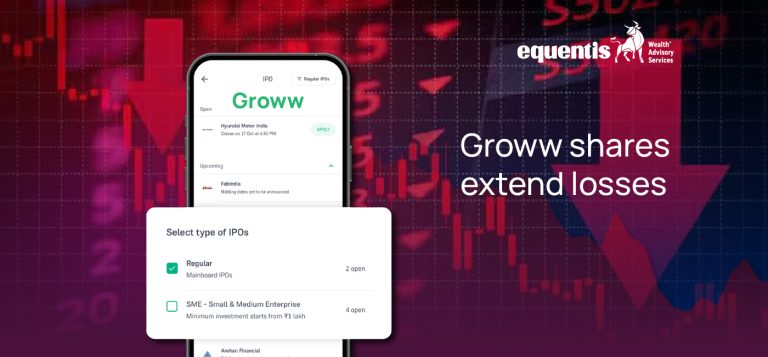
India’s stockbroking industry has rapidly evolved, with digital platforms expanding market access. Bengaluru-based investment platform Groww has emerged as the country’s largest stockbroker in terms of active clients. As it prepares for a public listing, Groww is in talks to raise $200 million in pre-IPO funding. 

According to sources familiar with the matter, Groww is currently evaluating a $200 million fundraising and has held talks with Singapore’s sovereign wealth fund, GIC, and its existing investor, Tiger Global. If this deal materializes, the company’s valuation could reach approximately $6.5 billion, significantly higher than its last valuation of around $3 billion during its previous funding round in 2021. Source: Economic Times

GIC’s involvement highlights its ongoing interest in India’s fintech industry. The sovereign wealth fund has previously invested in several fast-growing Indian startups across various sectors, including Flipkart, Delhivery, Swiggy, Razorpay, and Cred. Source: TimesofIndia

This move comes at a time when Groww’s competitors, including Mumbai-based brokerage firm Dhan, are also in discussions with investors for large funding rounds, indicating a broader trend of fintech firms gearing up for expansion and public listings.

Groww Competing in a Fast-Growing Market

Groww, which started its journey as a direct mutual fund distribution platform, has now evolved into the country’s largest stockbroker in terms of active clients. According to NSE data, as of February, Groww had an active trader base of approximately 13 million users, surpassing other leading brokerage firms like Zerodha, which had around 8 million active users, and Angel One, which had approximately 7.7 million.

AD 4nXdyisBGuCWfxSn0R9ISzxh4Tvde 2ui9beVjJy 3mM79FdPZXu0k9K0reSONMjz2Azmgf4MPuuY5qFN
Source: Economic Times

The Pre-IPO Fundraising Strategy

Groww’s plans for a pre-IPO funding round are crucial as the company looks to strengthen its financial position before entering the public markets. 

In January, reports surfaced that Groww was likely to raise around $700 million through its IPO, joining the wave of Indian startups that have opted for local listings in recent years. The pre-IPO fundraising appears to be part of a larger strategy to ensure that the company has sufficient capital to navigate the stock market debut and sustain its operations in the long run. Source: Economic Times

Moving Its Domicile to India

A key development in Groww’s journey towards its IPO was the company’s decision to shift its domicile from the US to India in November last year. The move aimed to facilitate its listing on the Indian stock exchanges, allowing it to align with regulatory requirements and attract domestic investors.

For many Indian startups that initially incorporated abroad, moving their domicile back to India has become a strategic step before an IPO. This relocation helps companies avoid potential legal and tax complexities while also making it easier for Indian investors to participate in their stock offerings. 

Financial Performance and Revenue Growth

Despite its rapid growth, Groww has faced financial challenges, including a notable net loss in FY24. The company reported revenues of Rs 3,145 crore for the fiscal year but also recorded a net loss of Rs 805 crore. This loss was largely attributed to a one-time tax payout to US authorities as part of its return to India. Source: Economic Times/ TimesofIndia

Expanding Beyond Stockbroking

In addition to its core stockbroking services, Groww has been actively working towards diversifying its business. 

  • Reports indicate that the company has engaged in discussions to acquire Fisdom, a wealth management platform backed by PayU. This potential acquisition aligns with Groww’s broader strategy of expanding into wealth management and offering its users a wider range of financial products.
  • Besides wealth management, Groww has also ventured into the consumer durables loan segment. The company has launched financial products aimed at helping users finance big-ticket purchases, further strengthening its position as a comprehensive financial services provider.
  • To support its diversification plans, Groww has also introduced a new business unit called ‘W,’ which is dedicated to wealth management services. As competition intensifies in the fintech space, companies like Groww are increasingly focusing on expanding their product offerings to cater to a broader audience and create additional revenue streams.

Regulatory Challenges and Market Trends

While Groww has been on an upward trajectory, regulatory developments in the financial markets have posed challenges for new-age brokerage firms. The Securities and Exchange Board of India (Sebi) recently tightened its regulations around futures and options (F&O) trading, a segment that contributes significantly to the revenue of digital brokerage platforms.

With over 70% of revenues coming from F&O trading, many brokerage firms, including Groww, have experienced an impact due to these regulatory changes. In February, the number of active traders on Groww’s platform dropped by more than 200,000, marking the first decline in two years. Competitors like Zerodha and Angel One also witnessed a reduction in their active trader base by around 150,000 users during the same period.

Industry experts have pointed out that these regulatory changes could shift trading patterns, prompting brokerage firms to explore alternative revenue sources. Zerodha’s co-founder and CEO, Nithin Kamath, had previously stated that the new regulations could lead to a 30% decline in trading volumes across the industry.  Source: Economic Times

The Road Ahead for Groww

As Groww prepares for its IPO, its ability to navigate regulatory changes, expand its product portfolio, and secure strong investor backing will be crucial. The pre-IPO funding round, if finalized, will provide the company with additional capital to strengthen its operations and scale its business.

​In the bustling world of Indian fintech, Groww has rapidly emerged as a standout player. Starting as a direct mutual funds distributor, it has transformed into the country’s largest stockbroker by active clients. The Bengaluru-based startup is reportedly in talks to raise $200 million in a pre-IPO funding round, potentially valuing the company at around $6.5 billion.

Aiming for New Heights

This potential funding round involves discussions with Singapore’s sovereign wealth fund, GIC, and existing investor Tiger Global. If successful, this would double Groww’s valuation from its last fundraising in 2021, pegged the company at approximately $3 billion.

Preparing for Public Listing

The anticipated $200 million infusion is expected to precede Groww’s initial public offering (IPO), with plans to raise around $700 million through the listing. This move aligns Groww with other modern startups venturing into the public markets in recent years.

Dominating the Market

According to data from the National Stock Exchange (NSE), as of February 2025, Groww boasts an active trader base of approximately 13 million users. This positions it ahead of competitors like Zerodha, with 8 million users, and Angel One, with around 7.7 million.

Strategic Moves

In November 2024, Groww relocated its domicile from the US to India, a strategic decision aimed at facilitating its listing on Indian stock exchanges. This move underscores the company’s commitment to strengthening its presence in the Indian market.

Financial Performance

For the fiscal year ending in 2024, Groww reported revenues of ₹3,145 crore. However, the company also recorded a net loss of ₹805 crore, attributed to a one-time tax payout to US authorities related to its domicile shift back to India.

Diversifying Offerings

In a bid to broaden its service portfolio, Groww has been in talks to acquire Fisdom, a wealth management firm backed by PayU. Additionally, the company has introduced consumer durable loans and is establishing a new business unit, ‘W’, to focus on wealth management services.

Navigating Regulatory Changes

These developments occur amid increased scrutiny from the Securities and Exchange Board of India (SEBI) on futures and options (F&O) trading. New-age brokerages, which derive a significant portion of their revenue from F&O trades, have felt the impact of these regulatory changes. In February, Groww experienced a decline of over 200,000 active traders from the previous month, marking its first drop in two years. Competitors like Zerodha and Angel One also saw reductions of approximately 150,000 users each during the same period.

Industry Perspectives

Nithin Kamath, co-founder and CEO of Zerodha, commented on the situation, noting a more than 30% drop in activity across brokers. He highlighted that the industry is experiencing a downturn in business for the first time in 15 years.

Frequently asked questions

Get answers to the most pertinent questions on your mind now.

[faq_listing]
What is an Investment Advisory Firm?

An investment advisory firm is a company that helps investors make decisions about buying and selling securities (like stocks) in exchange for a fee. They can advise clients directly or provide advisory reports and other publications about specific securities, such as high growth stock recommendations. Some firms use both methods, like Research & Ranking, India’s leading stock advisory company, specializing in smart investments and long-term stocks since 2015.

An investment advisory firm is a company that helps investors make decisions about buying and selling securities (like stocks) in exchange for a fee. They can advise clients directly or provide advisory reports and other publications about specific securities, such as high growth stock recommendations. Some firms use both methods, like Research & Ranking, India’s leading stock advisory company, specializing in smart investments and long-term stocks since 2015.

An investment advisory firm is a company that helps investors make decisions about buying and selling securities (like stocks) in exchange for a fee. They can advise clients directly or provide advisory reports and other publications about specific securities, such as high growth stock recommendations. Some firms use both methods, like Research & Ranking, India’s leading stock advisory company, specializing in smart investments and long-term stocks since 2015.

An investment advisory firm is a company that helps investors make decisions about buying and selling securities (like stocks) in exchange for a fee. They can advise clients directly or provide advisory reports and other publications about specific securities, such as high growth stock recommendations. Some firms use both methods, like Research & Ranking, India’s leading stock advisory company, specializing in smart investments and long-term stocks since 2015.