Uncategorized

50-30-20 Rule: An Introduction

Looking for information on the 50-30-20 rule? Financial planning can feel overwhelming, especially for beginners. Balancing bills, managing unexpected expenses, and saving for future goals can seem daunting. The 50-30-20 rule provides a straightforward and effective solution. This budgeting framework helps individuals allocate their income into three categories: needs, wants, and savings, making financial management less intimidating and more structured.

50-30-20 Rule: What is it?

Breaking Down the 50-30-20 Rule: Needs, Wants, and Savings

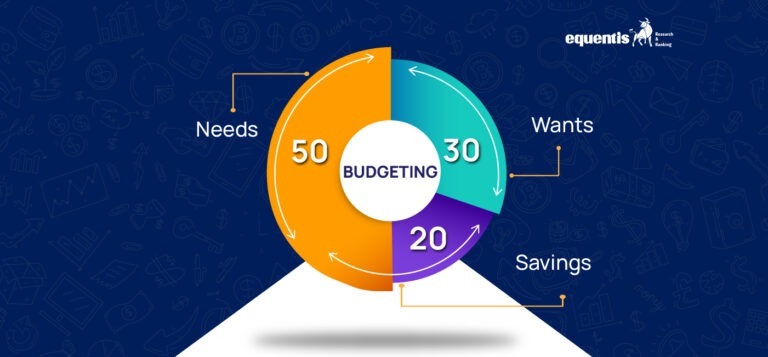
The 50-30-20 rule is a budgeting method where you allocate your post-tax income as follows:

  • 50% Needs: Essential expenses, such as rent, utilities, groceries, and minimum debt payments.
  • 30% Wants: Discretionary spending, including dining out, entertainment, and hobbies.
  • 20% Savings: Financial goals, such as emergency funds, retirement savings, and investments.

This approach ensures a balance between fulfilling immediate necessities, enjoying life, and preparing for the future.

How the 50-30-20 Rule Helps You Manage Your Income Effectively

By dividing your income into clear categories, the 50-30-20 rule prevents overspending on one area while neglecting others. It encourages mindful spending and saving habits, making achieving financial stability and long-term goals easier.

Also Read: How to Save Money from Salary in India

How to Apply the 50-30-20 Rule in Your Life

1. Calculate Your Total Income After Taxes

  • Start by determining your net income—the amount you receive after deductions for taxes and other withholdings.

2. Allocate 50% of Your Income to Needs (Essentials)

  • Cover non-negotiable expenses such as:
    • Housing: Rent or mortgage payments.
    • Utilities: Electricity, water, internet.
    • Groceries and essential household items.
    • Transportation: Car payments, public transit, fuel.
    • Minimum debt payments.

3. Spend 30% on Wants (Lifestyle Expenses)

  • Use this portion for non-essential but enjoyable activities:
    • Dining out and entertainment.
    • Hobbies and subscriptions.
    • Travel and leisure activities.

4. Save 20% for Financial Goals (Savings and Investments)

  • Focus on building financial security:
    • Emergency funds covering 3-6 months of expenses.
    • Retirement accounts such as EPF or NPS.
    • Investments for long-term goals like a home or child’s education.

Benefits of the 50-30-20 Rule

1. Simple and Easy to Understand Framework

The clear structure makes it accessible for financial planning beginners.

2. Helps Maintain Financial Discipline

Encourages mindful spending and consistent saving.

3. Balances Living in the Present With Preparing for the Future

Allows for enjoying discretionary spending without compromising savings goals.

Using the 50-30-20 Rule Calculator

1. How the Calculator Works: Inputs and Outputs

Input your monthly income, and the calculator divides it into percentages for needs, wants, and savings.

2. Advantages of Using a Calculator for Budget Allocation

Simplifies calculations and provides clarity on spending limits.

3. Where to Find the Best 50-30-20 Rule Calculators

Explore online financial planning tools or apps designed for budgeting.

Common Mistakes to Avoid When Using the 50-30-20 Rule

1. Misclassifying Expenses Between Needs and Wants

Clearly distinguish between essential and non-essential or impulse expenses to avoid overspending.

2. Ignoring Fluctuations in Monthly Income

Don’t ignore monthly income fluctuation. Adjust allocations based on income changes, such as bonuses or seasonal fluctuations.

3. Skipping the 20% Savings Allocation

Prioritize savings, even if it means cutting back on wants temporarily.

Adapting the 50-30-20 Rule to Your Financial Goals

1. Adjusting the Ratios for High or Low Income Levels

High earners may allocate more to savings, while low-income individuals might prioritize needs.

2. How to Incorporate Debt Repayments Into the Rule

Include minimum debt payments under needs and allocate extra repayments from savings or wants.

3. Modifying the Rule for Specific Life Stages

Young professionals may focus on building emergency funds, while retirees might prioritize investments.

Real-Life Examples of the 50-30-20 Rule in Action

Example 1: The Young Professional (Monthly Income: Rs. 80,000)

  • Needs (50%): Rs. 40,000 covers rent, groceries, utilities, transportation, and minimum debt payments.
  • Wants (30%): Rs. 24,000 is allocated for dining out, entertainment, and hobbies.
  • Savings (20%): Rs. 16,000 is saved for an emergency fund, retirement, and long-term goals.

Example 2: The Growing Family (Monthly Income: Rs. 4.5 Lakh)

  • Needs (50%): Rs. 3.15 Lakh includes:
    • Mortgage: Rs. 1.87 Lakh (home loan EMI)
    • Utilities: Rs. 15,000
    • Groceries: Rs. 37,500
    • Transportation: Rs. 22,500
    • Childcare: Rs. 52,500
  • Wants (30%): Rs. 1.35 Lakh includes:
    • Streaming Services: Rs. 3,750
    • Family Activities: Rs. 11,250
    • Vacation Fund: Rs. 7,500
  • Savings (20%): Rs. 1.05 Lakh includes:
    • Emergency Fund: Rs. 15,000
    • Retirement Savings: Rs. 90,000

50-30-20 Rule: Conclusion

Why the 50-30-20 Rule is a Game-Changer for Personal Finance

The 50 30 20 rule simplifies financial planning by offering a clear and adaptable structure. By categorizing income into needs, wants, and savings, it ensures a balanced approach to money management. Whether you’re new to budgeting or seeking a reliable framework, the 50 30 20 rule empowers you to take control of your finances and work towards long-term financial security.

FAQs on the 50-30-20 Rule:

  1. Does the 50-30-20 rule work?

    The 50/30/20 rule is a solid starting point for budgeting. It promotes responsible spending, saving, and enjoying life. While it might not be perfect for everyone, especially those seeking aggressive wealth-building through high-growth stocks, it offers a framework for financial stability.

  2. What is the golden rule of 50-30-20?

    The 50/30/20 rule, also called the golden rule of budgeting, is a simple yet effective strategy. Allocate 50% to needs (rent, groceries), 30% to wants (entertainment, dining out), and 20% to savings (emergencies, retirement). This ensures financial balance, lets you enjoy life, and prioritizes your future.

  3. What is a 50-30-20 budget example?

    Let’s consider a monthly income of Rs.50,000. Following the rule, 50% (Rs.25,000) is allocated to needs like rent, groceries, and utilities. 30% (Rs.15,000) goes towards wants such as dining out, entertainment, and shopping. The remaining 20% (Rs.10,000) is dedicated to savings, including investments, emergency funds, and retirement contributions.

Post the Union Budget for 2019, and subsequent correction in the market due to FPI surcharge many investors were confused about how they should proceed to invest in equity. The rollback of FPI surcharge offered some boost to the market and investors who had earlier preferred to adopt a wait and watch approach are now back in the market.

But given the uncertainty surrounding US-China trade wars and signs of an upcoming recession signaled by the America’s inverted bond yield curve the question “How to invest in equity?” still looms large across minds of most investors.

To find the answer to this question, let’s look back in time to the last union budget of 2014. When Narendra Modi rode to power in 2014, one of the top priorities announced by the government was the cleanliness mission emphasizing on hygiene and construction of toilets for all under the Swachh Bharat Abhiyan.

After Prime Minister Narendra Modi’s Independence Day speech, the ministries involved in the Swachh Bharat Abhiyan disbursed funds for sanitation campaigns. Investors who priced in the benefits expected to accrue as the Swachh Bharat Abhiyan mission progressed made substantial gains as the share prices of companies engaged in manufacture of sanitary ware products increased.

The below table reveals how the budget allocation and Prime Minister Narendra Modi’s push for Swachh Bharat Abhiyan helped leading sanitary ware manufacturers indirectly.

So you can see that the budget 2019 too gives some definite clues to investors which can help in answering the question “How to invest in equity post budget 2019?”

Electrical vehicles and infrastructure, the best two sectors to invest in equity currently

In the Union Budget for 2019, the government has specified its intention to promote electrical vehicles as an alternative for petrol and diesel vehicles. This move is expected to not only bring down huge import bills of fossil fuels as well curb rising emissions which cause huge health problems.

This presents a huge opportunity for companies which manufacture electrical vehicles as well those into manufacturing batteries for electronic vehicles. According to estimates the market for electric vehicle battery itself is estimated to reach $300 billion by 2030. The electric vehicle segment offers a big opportunity for investors who wish to invest in equity currently.

Another sector which received a huge boost in the form of a 100 lakh crore allocation is infrastructure sector. This amount will be mainly used for development of water grids, modernization of railways, and construction of 60,000 kms of national highways, regional airports, ports, new townships and urban centres.  This massive push in infrastructure announced in the budget 2019 will be highly beneficial for companies operating in the construction, cement, capital goods & engineering sector. Hence investors looking forward to invest in equity can definitely consider investing in some of the top performing companies in the infrastructure sector.

Read more:  How Long-term investing helps create life-changing wealth – TOI

Recently I met a cousin of mine, Pranay who asked me, “Should I go for high growth stocks or look for value stocks?’’

His question took me by surprise, given the fact that he had just started investing, but I assume he must have read up about these investing styles somewhere.

It was even more surprising for me because till date, nobody had asked me this important question, not even people I know who have been investing for several decades now.

Nevertheless, I told Pranay what legendary investor Warren Buffet had told the shareholders of Berkshire Hathaway many years ago, “Value and growth are joined at the hip’’.

“What does this mean? Can you explain in detail” he asked with a confused look on his face.

Even as you read this, I am sure you too must be having the same doubt after reading Warren Buffet’s comment.

Well what it means is growth is one of the parameters an investor needs to look at while investing in high value stocks. Irrespective of the fact, whether growth is positive or negative, it is an important factor which should not be ignored.

Before we proceed further, let’s take a look at what exactly growth and value investing approach means.

Growth investing is all about looking for companies that have a potential to grow faster than others. Such stocks have low dividend yields and higher price-to-earning (P/E) ratio and price-to-book value (P/B) ratio.

Growth stocks generally tend to perform better when interest rates are falling and company earnings are rising. However, they are the first to fall during economic downturns.

On the contrast, value investing is all about buying undervalued stocks for a market price below its intrinsic value. Such stocks have above-average dividend yields and low (P/E) ratio.

Value stocks, generally do well early in an economic recovery phase but appreciate slowly during a sustained bull market phase.

Most investors feel that ‘Value’ and ‘Growth’ belong to two opposite styles of investing. In fact in his letter to his company’s shareholders, Warren Buffet himself admitted that he too used to think on the same lines previously, but realized that it is not the case.

Here’s an excerpt from Warren Buffet’s letter:

“Common yardsticks such as dividend yield, the ratio of price to earnings or to book value, and even growth rates have nothing to do with valuation, except to the extent they provide clues to the amount and timing of cash flows into and from the business. Market commentators and investment managers who glibly refer to “growth” and “value” styles as contrasting approaches to investment are displaying their ignorance, not their sophistication. Growth is simply a component – usually a plus, sometimes a minus – in the value equation.”

In simple words, the phrase ‘Value and growth are joined at the hip’ means that growth and value are closely connected. Instead of looking at growth and value as separate fundamental approaches, an investor should look at growth as a component of value, while investing.

Read more:  How Long-term investing helps create life-changing wealth – TOI

Do you remember the story of the Trojan horse used by Greeks to win the war against the kingdom of Troy?

The city of Troy was protected by a high wall built around the city and Greek warriors had been trying to breach the wall for about ten years. After a failed 10-year siege, the Greeks constructed a beautiful and huge wooden horse, and hid some soldiers inside and pretended to sail away. Trojans were so impressed by the horse that without thinking about anything else pulled the horse into their city as a trophy. That night the Greek force crept out of the horse and opened the gates for the rest of the Greek army, which had sailed back under cover of night. The Greeks entered and destroyed the city of Troy, winning the war. That was the end of Troy.

What happened in the above incident was that the Trojans were so focussed on the horse that they failed to see the bigger picture i.e. the Greek enemy soldiers hiding inside the horse which ultimately led to their downfall.

With an aim to find how many people failed to notice other things (the bigger picture), when asked to focus on a particular task, a thought-provoking study was conducted in the year 1999. In a study conducted by cognitive psychologists Daniel Simons and Christopher Chabris, the participants were told to watch a video and asked to count how many times three basketball players wearing white t-shirts passed a ball. After a few seconds, a woman dressed in a gorilla suit entered the room, faced the camera and even thumped the chest before walking away. Nearly half the viewers missed the gorilla and did not see it.

After a few months, there was a sequel to the video. The viewers were expecting a gorilla, and it did make an appearance. But they were so focussed on the gorilla, that they missed the other prominent changes such as a change in color of the curtains and one player exiting the match.

The question is: How could they miss something so evident? This limitation is not in the vision of the eye, but of the mind. When one develops ‘inattentional blindness’, it is difficult to spot the details they are not looking for.

But why I am telling you this story?

A few weeks back, the stock markets had touched new lifetime highs.

From a high of 38,896.63 points in August 2018, the BSE Sensex has fallen to 34,790.93 losing around 4105.7 points due to unfavourable global cues, depreciating rupee, soaring oil prices and a default by mega infra-finance company, IL&FS. There is a sense of panic among a large section of investors who are worried about the future direction of the markets.

Many investors are watching the market movements and ticker price so closely, that they have almost forgotten that there is a gorilla in the stock market.

But what is this gorilla we’re talking about?

Considering the Q1 2018 – 2019, India’s GDP grew at 8.2%, which is the highest in the last two years. With this, credit rating giant Fitch has upgraded its forecast for India’s growth from 7.4% to 7.8%.

GDP of a country tells a lot about the size of an economy, and the stock markets are nothing but a reflection of the health of an economy.

India’s growth is at an inflection point and the best time is yet to come. There is an uptick in the credit growth, expansion of capacity utilization, acceleration in manufacturing activity as well as the surge in consumption power.

While inflation has moderated, foreign direct investments are at a historic high and foreign exchange reserves have peaked. At the same time, ease of making investments and doing business in India has increased attracting new businesses.

India’s structural growth story is just beginning to play out! For long-term investors who wish to ride on India’s ascent story, this market correction is a golden opportunity to accumulate stocks of sound businesses at a bargain price.

In spite of this opportunity, many investors have become cautious and are focussing their full attention on the current volatility just like we discussed in the gorilla story above. However in this process of waiting they are likely to miss-out this untapped goldmine in the market.

While the stock market is loaded with vulnerability, certain proven standards can help investors to support their changes for long term investment.

Market correction is a great time to buy high-quality stocks at a bargain.

For the long-term investor, a stock market correction is a best time to pick up high-quality companies at a good discount because fundamentally strong stocks are first to recover when the market reverses from a correction. In fact, investments over a long run have always delivered better returns on account of the phenomenal effect of the ‘Power of Compounding.’

When asked about the uncertainty in the markets, Warren Buffett in an interview told CNBC, “Don’t watch the market closely. If you’re trying to buy and sell stocks, and worry when they go down a little bit … and think you should maybe sell them when they go up, you’re not going to have very good results.”

Stop focussing on the temporary ups and downs of the market and maintain a long term view. Remember a fall in the price of a fundamentally sound stock does not mean its values have also fallen. It has just corrected as a part of broader market correction. As long as the quality of the stocks in your portfolio remains intact and is in sync with your financial goals, remember this – Doing Nothing Can Be The Best Thing!

Read more:  How Long-term investing helps create life-changing wealth – TOI.

With India aiming to transform from a current USD 2.6 trillion economy to a USD 5 trillion economy over the next 4 to 5 years, there are many long term investment opportunities available in multiple sectors such as infrastructure, banking, non-banking financial companies (NBFC), fast-moving consumer goods (FMCG) and defence.

Even though currently there is some uncertainty in the market due to multiple reasons, there is no dearth of long term investment opportunities for investors who have an investment perspective of more than 5 years.

Post the FPI surcharge announced in the Union Budget 2019 on 5th July, Indian markets have been experiencing a free-fall. According to data released by National Securities Depository Ltd (NSDL), Foreign portfolio investors (FPI) were net sellers in July, withdrawing around Rs 12,419 crore from the Indian equity market, the highest since October 2018, when foreign investors withdrew Rs 27,622 crore from the stock market.

This huge outflow shows that investors have started shifting to other developing economies in their hunt for higher returns. This has made many investors worry about the road ahead for Indian equity markets. Another big reason for the current volatility is the fresh round of trade wars between USA and China.

However there is nothing to worry for investors who have made a long term investment as India’s growth story remains intact and an analysis of Indian stock market reveals that it follows the path of GDP growth over the long run.

It took around 60 years for India to become a $1 trillion economy but only seven years for its next trillion. Given the current rate of economic growth, India can easily touch the $5 trillion mark over the next 5 years. As the economy grows significantly, businesses will also report better growth and earnings. Currently many of these businesses are available at cheap valuations making them ideal for long term investment.

Here are some of the top reasons which makes India a stock picker’s market for long term investment:

  • Growing domestic consumption due to large and fast growing middle class with rising purchasing power, changing lifestyles and rising aspirations
  • Indian government’s continuously evolving investor friendly policy
  • 100% FDI through the automatic route in several sectors, without the need of government approval
  • India’s strategic and convenient location with easy access to markets of Gulf region, South East Asia and Europe.

Global industry experts are of the view that Indian markets will do better than international markets over the next few years. Even foreign investors know the potential for long term investment in India and that is why as per UNCTAD list of Investment, India remains the third-most preferred investment destination after US and China.

Read more:  How Long-term investing helps create life-changing wealth – TOI

Markets are rallying. Few investors are excited about the rally in small-cap and mid-cap stocks. What a start of the month it’s been!

Time and again we spoke about the golden opportunities stock markets have thrown at us, yes, even during times of market correction.

Now since markets have started to bounce back, many investors are asking us: Can Sensex reach 40,000 in 2019?

To answer this, we do expect a few headwinds or difficult phases for the markets. This can be due to the uncertainty around the elections and trade war outcome. Even oil prices and micro indicators such as inflation, fiscal deficit needs to be watched out for.

But we are still optimistic about the times ahead. Allow me to explain why?

Why 2019 is a good year for Sensex?

We are seeing the positives such as earnings revival led by policy reforms, improvement in asset quality, and recovery in corporate capex.

We all know that Sensex is an average reflection of the prices of the top 30 well-established and financially sound companies listed on the Bombay Stock Exchange. So if the Sensex touches 40,000, it essentially means the corporate earnings of those 30 companies forming the index is improving.

The revival of corporate earnings is seen as one of the major drivers of stock markets. Subdued corporate earnings in the first 3 quarters of 2018, can be attributed mainly to high input costs for manufacturing companies and high credit cost for banks. We strongly believe that these factors have already started reversing.

A strong consumption-led demand growth, growing economy, a huge consumer market, rising corporate earnings to positive macro-economic factors, India has it all.

In our last few mailers, we already spoke about the sectors that will outperform in the coming years, the reforms that will RE-FORM your portfolio and why this is the golden time to invest.

India is today the fastest growing economy in the world and given the current rate of growth, many analysts even predict that India will become a superpower by 2030.

But when a country becomes a ‘Superpower’?

Superpower is a term used to describe a country that has a major influence on policies and decisions, on a world level. When a country is powerful economically, militarily, and has the latest technology and excellent international relations, it is deemed as a superpower. And if India becomes a superpower, Sensex may be between 40,000-50,000 levels.

But till then, to answer your question: How the Sensex will perform in 2019?

According to a report by Morgan Stanley, the stock markets could start pricing in stronger poll outcome in coming weeks and Sensex could touch 42,000 as early as December 2019.

The brokerage expects earnings growth to accelerate to 7-10 per cent in FY19, and 23-25 per cent in FY20.

India is all set to become a $5 trillion economy. And in this process, many opportunities will grow 10-20-50 times or even more in the next few years.

But the question remains: Are you all set to take your share and grow your wealth while India grows? The opportunities are many, all you have to do is invest in superior quality companies and hold on to them.

We would recommend business with high competitive moats in form of strong business fundamentals, attractive valuations, sustainability and adhere to corporate governance policies.

Read more:  How Long-term investing helps create life-changing wealth – TOI

Most Indians who are heading towards retirement are either invested in Fixed Deposits or Post Office Savings Scheme. With a minuscule return of 4-7% while inflation remaining stubborn in the range of 4-5%, their earnings have fallen sharply in the last few years. So, my question remains, is there any rescue?

There are mutual funds and equities that cater to the cumulative needs of millennial. They not only give you higher returns than the traditional products but are also liable to a lower tax outgo, thus making the post-tax returns more attractive.

However, many novice investors are confused when it comes to making the choice between mutual funds and stocks. On prima facie, they both may look the same, as equity mutual funds are also invested in equities. Also, both provide the flexibility of investing small chunks at regular intervals rather than an upfront lump sum amount. Lastly, both provide the scope to well-diversify your portfolio to mitigate the risks.

However, the management, flexibility and composition of these asset classes are what makes them truly distinctive from each other. Let’s look at the key differences between the two.

Caveats While Selecting Your Investments

1. Don’t compare apples with oranges: When the markets are in bull-run, both equities and mutual funds deliver impressive returns as compared to fixed deposits, PPF’s or Pension Schemes. Coming to the returns, many investors commit a mistake of comparing apples with oranges. If you’ve invested in mutual funds, then your overall direct equity portfolio needs to be compared with the returns of your mutual funds’ scheme. Again, the composition of mutual funds i.e. growth funds, dividend funds depends on the overall objective of the fund.

John C Bogle, Founder former CEO of Vanguard Group once quoted, “Surprise, the returns reported by mutual funds aren’t actually earned by investors.”

While investing in direct equities, the returns are crystal clear. Also, these returns depend on the selection of the stocks in your portfolio. If these stocks are selected carefully, then equities have the potential to deliver 10x-20x-50x or even more in 10 years. If history is to go by, many stocks such as Eicher Motors, Bajaj Finance, CEAT, Amara Raja, etc. have gone to register returns of 20x and more in the last decade.

2. Identifying right fund vs. right stocks: Lastly, for the beginners, many stock advisors recommend investing in mutual funds as investing in equities demand identifying the right stocks and a lot of efforts. However, this assumption may not always hold true. With more than 2000 primary mutual fund schemes in India, selecting the right mutual that suits your goal and risk requires equal efforts.

“The goal of the nonprofessional should not be to pick winners—neither he nor his “helpers” can do that—but should rather be to own a cross section of businesses that in aggregate are bound to do well. A low-cost S&P 500 index fund will achieve this goal.” – Warren Buffett

With the arrival of many knowledgeable and credible stock advisors in the investing space along with the level of personalization, the potential of returns and flexibility that direct equities offers, it can be the way forward to create significant wealth for the future.

Read more:  How Long-term investing helps create life-changing wealth – TOI

Time and again, the stock market offers many valuable opportunities and lessons to investors. It is perfectly okay for investors to miss some of those opportunities, but it is crucial not to miss out on the lessons.

One of the most important lessons which every investor should know is the perils of investing in debt-laden companies and why it makes sense to steer clear from such companies.

Why companies go for debt?

Businesses need capital for expanding or diversifying their business. In case the company’s earnings are not generating a surplus, the next option is opting for loans. However going overboard with debt can be disastrous, at times for businesses as it puts too much pressure on them, especially when there is economic distress.

Videocon, a classic example of how massive debt can destroy a business and shareholder wealth

I am sure you might have heard of Videocon, which ruled the Indian consumer electronics market long before Samsung, LG and Sony entered the scene. Videocon was a household name across India until a few years back with a vast product line-up which included washing machines, refrigerators, air conditioners, televisions and home entertainment systems.

Everything was fine as long as the company was dabbling in consumer electronics in the ’90s. However, in the 2000s, the company went on a rapid expansion mode by entering into new verticles of business such as DTH, energy and telecom. And for this, it took massive debts.

On one side while the company’s debt started piling up, on the other hand, the company’s capacity to pay off the debt started weakening as the new businesses were highly capital intensive and were not making enough revenues. Despite Videocon’s diversification to multiple businesses, consumer electronics was still the biggest revenue generator. However, Videocon’s consumer business too suffered a considerable setback with intense competition from international brands.

With falling revenues and rising interest costs, Videocon was unable to service its debt. Selling off its DTH and oil and gas business did not help much. As a result, the company ended up with more debt than value.

Massive debt for expansion turned Videocon Industries from a profit-making company to a bankrupt company which is currently undergoing insolvency proceedings under the National Company Law Tribunal (NCLT).

An investment of Rs. 1,00,000 in shares of Videocon Industries on 1st Jan 2008 would be worth just Rs. 176 today. Can you imagine the extent of investor wealth the stock has eroded?

Don’t invest in debt-laden companies: A timeless lesson at Dalal street

Unitech, JP Associates, Reliance Power and Suzlon are some of the best examples of debt-laden companies which have destroyed investor wealth by huge margins. It is a well-known fact that debt-laden companies take the biggest hit during a phase of an economic slowdown.

In an economic downturn when earnings of businesses fall, the interest payments on debt don’t stop. As a result, there could be a default of payments, piling up of additional interest. As a last resort, businesses may even have to resort to selling assets. On the other hand, cash-rich companies have enough funds to withstand the recession, which at the most, may last for a few months or a year or two.

Investors often make the crucial mistake of selecting their investments based on market capitalization. However, market capitalization does not denote the actual value of a company as it does not include vital factors like the company’s debt and its cash reserves.

To give you an example of why investing based on market capitalization is a bad idea, let’s take a look at the case of Tata Motors and Maruti Suzuki, which are market leaders in their respective segments in the auto industry.

Tata Motors has a market capitalization of Rs. 49,258.17 crores whereas Maruti Suzuki has a market capitalization of Rs. 216,159.43 crores. At Rs. 170.20, the stock of Tata Motors looks quite cheap compared to the share of Maruti Suzuki which trades at a high price of Rs. 7130.90.

But does this make the stock of Tata Motors a better buy among the two?

The answer is no. Because the total debt of Tata Motors stood at Rs. 28,826 crores as on Mar 2019, as compared to Rs.149.60 crores of Maruti Suzuki during the same period. So despite trading at a higher price, the stock of Maruti Suzuki offers better value to investors.

To conclude, not all companies with high debt may turn out to be bad investments. However, as an investor, you need to invest only in those companies which have a debt to equity ratio of zero or less than one. For some companies, loans may be necessary to expand and grow. Still, from an investor’s perspective, it is essential to undertake thorough due diligence to avoid debt traps like Suzlon or Videocon Industries.

Click here to know more about investing in fundamentally sound companies which can multiply your wealth creation by 4-5 times in 5 years.

Read more:  How Long-term investing helps create life-changing wealth – TOI.

In our previous article, we spoke to you yesterday about 2 types of investors, let us start by showing you 2 charts showcasing Automobile Production in India and how you are forced to think negatively with the noise outside.

Chart 1 showcases the trend line over the past 18 odd months.

Chart 2 showcases the trend line over the past 20 odd years.

Chart 1

Chart 2

Chart 1 shouts out that India is going through an extremely rough phase, and if the chart is to be believed, doom is something we would see ahead.

Chart 2 shows a longer trend and shows a completely different picture. The trend line shows what to expect in the future.

Let me highlight a couple of pointers to you on this:

    1. To start, check the phase between 1997 & 1999, automobile production was flat and then had a fall. And after that, they jumped up. The same has got repeated each and every time the line dips for a short period.
    2. Every time there has been a dip, there is usually a big jump up that follows.

The automobile production has had a CAGR increase of 10%+ if I look at the data over the past 19-20 years.

It really amuses us when all the noise out there is only about short term happenings and spelling doom for the future.

The good part of the story – every time this has happened – in 1999-2000 or in 2008-2009 – if an investor ignored the noise and preferred to be Type 2 investor, he would have been a participant in the big bull runs that followed.

But, if you are a Type 1 investor who invests only when everything looks green and wonderful… not sure what I can say to that approach.

And in view of the phase that we are at currently going through, data suggests that we will see a repeat of or rather see a bigger bull run in the coming few years.

Read more:  How Long-term investing helps create life-changing wealth – TOI.

Portfolio management is all about guiding your investments in the right direction.

Wealth creation is not an easy job. But with the right guide to steer your investments in the right direction, it can be a very simple task.

This reminds me of a story from the great epic, Mahabharata. Before the start of the great war, both Arjun and Duryodhan went to Krishna to seek his support. Arjun chose Krishna over his large and powerful army known as the Narayani Sena.

When Duryodhana heard Arjun’s choice, he was very happy. He was foolish enough to think that Krishna, who wouldn’t even fight in the war, would be of no use to Arjun, but Krishna’s huge army would certainly be of great help to him.

We all know the outcome of the war. It was Krishna’s guidance and support that led to the Pandavas victory in the war.

Time and again, we have heard of many such cases in the past, where expert guidance can make a huge difference between success and failure in any field. And trust us, stock market investing is no different.

The primary objective of portfolio management services is to ensure that your investments are performing as expected and that they are moving on the right track to achieve your financial goals.

Portfolio management includes:

  • Identifying fresh investments to achieve your financial goals
  • Evaluating the performance of your investments regularly
  • Exiting those businesses which are not performing as expected
  • Identifying new opportunities, wherever possible
  • Risk management

Now let’s take a look at the different benefits offered by portfolio advisory services:

Make the right investment choices:

Not every investment can create wealth for you. Hence, it is very important to invest in the right business opportunities that can multiply your wealth over a period of time. Portfolio management can help an investor to invest in the right business opportunities for maximum wealth creation with minimal risks.

Tracking performance and rebalancing the portfolio:

In today’s world, you can no longer afford to invest and forget. There are multiple variables that affect your investment, and hence, it is very important to track the performance of your investment and rebalance it as and when required. Portfolio rebalancing includes exiting those business opportunities which are no longer performing and replacing them with better-performing stocks.

Regular and disciplined investing:

Serious wealth creation requires regular and disciplined investing. When you invest on your own, the discipline and effort to invest regularly often takes a backseat due to other priorities in life. However, when you invest through portfolio advisory services, you have a dedicated expert who ensures that you invest regularly in a systematic way to achieve your financial goals.

To conclude, portfolio advisory services is one of the best ways to multiply your wealth. Portfolio advisory services can help you to effectively plan for a wide range of financial goals, including retirement, child’s education, house and wedding.

Read more:  How Long-term investing helps create life-changing wealth – TOI.

Frequently asked questions

Get answers to the most pertinent questions on your mind now.

[faq_listing]
What is an Investment Advisory Firm?

An investment advisory firm is a company that helps investors make decisions about buying and selling securities (like stocks) in exchange for a fee. They can advise clients directly or provide advisory reports and other publications about specific securities, such as high growth stock recommendations. Some firms use both methods, like Research & Ranking, India’s leading stock advisory company, specializing in smart investments and long-term stocks since 2015.

An investment advisory firm is a company that helps investors make decisions about buying and selling securities (like stocks) in exchange for a fee. They can advise clients directly or provide advisory reports and other publications about specific securities, such as high growth stock recommendations. Some firms use both methods, like Research & Ranking, India’s leading stock advisory company, specializing in smart investments and long-term stocks since 2015.

An investment advisory firm is a company that helps investors make decisions about buying and selling securities (like stocks) in exchange for a fee. They can advise clients directly or provide advisory reports and other publications about specific securities, such as high growth stock recommendations. Some firms use both methods, like Research & Ranking, India’s leading stock advisory company, specializing in smart investments and long-term stocks since 2015.

An investment advisory firm is a company that helps investors make decisions about buying and selling securities (like stocks) in exchange for a fee. They can advise clients directly or provide advisory reports and other publications about specific securities, such as high growth stock recommendations. Some firms use both methods, like Research & Ranking, India’s leading stock advisory company, specializing in smart investments and long-term stocks since 2015.