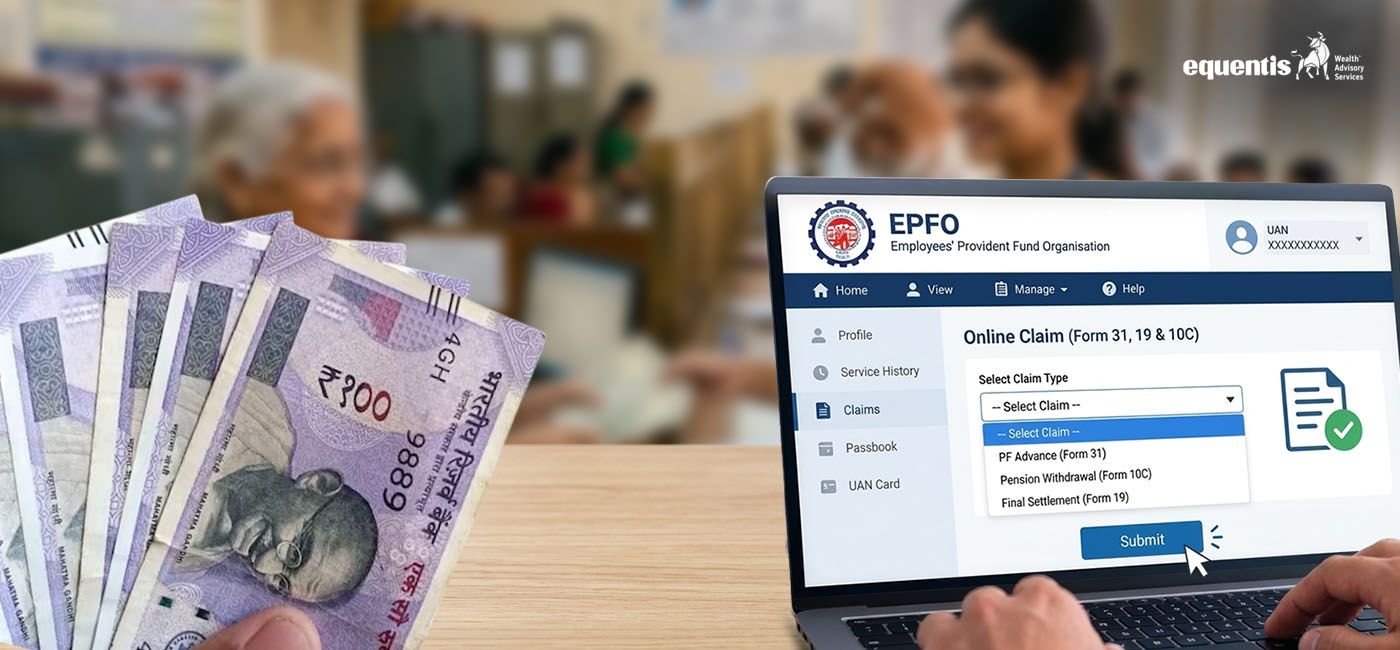

EPFO has introduced an automatic settlement facility that allows eligible members to receive money from certain inactive Provident Fund (PF) accounts without filing a withdrawal claim. Under the new facility launched on November 1, 2026, PF balances of ₹1,000 or less in eligible inoperative accounts can be transferred directly to members’ bank accounts. Aadhaar verification and valid bank details are essential for receiving the money. The initiative aims to help people recover small amounts lying unclaimed in old PF accounts. ET Now
Introduction
Millions of salaried employees in India have accumulated PF savings across different jobs. While some transfer their accounts after changing employers, others leave behind small balances that remain untouched for years.
The new EPFO automatic PF settlement facility is designed to address this problem. Instead of requiring eligible members to submit withdrawal forms, the organisation can initiate the transfer of qualifying amounts directly into verified bank accounts.
However, this facility does not mean that every PF account holder can withdraw their entire retirement savings automatically. The new provision applies to a specific category of inactive accounts with limited balances.
Context and Background: Why Has EPFO Introduced Automatic PF Withdrawal?
The Employees’ Provident Fund Organisation manages retirement savings for millions of employees working in India’s organised sector.
Over the years, employees who changed jobs without transferring their PF accounts often left behind accumulated savings. These balances could remain unclaimed because members were unaware of their old account details, faced difficulties completing documentation or simply forgot about the money.
EPFO has been gradually moving towards digital and automated services to reduce paperwork and improve access to savings.
Earlier reforms included automated processing of eligible advance claims, simplified PF transfers and easier KYC corrections. The latest automatic settlement facility extends this approach to certain small balances in inactive accounts. EPFO+2
EPFO New Rules: Who Is Eligible to Receive PF Money Without Filing a Claim?
The new facility has specific eligibility conditions.
1. PF account must be inoperative
The account should fall under EPFO’s prescribed category of inoperative accounts. Simply having an old PF account does not automatically make it eligible.
2. PF balance must be ₹1,000 or less
The automatic settlement facility is intended for accounts with a balance of ₹1,000 or below.
Members with higher balances should not assume that their PF money will automatically be transferred under this particular provision.
3. Aadhaar verification is necessary
The member’s Aadhaar details must be verified to establish the identity of the account holder.
4. Bank account details must be verified
The bank account information should be correctly linked and verified with EPFO. The bank account should also be Aadhaar-linked as required under the facility.
These checks are important because automatic transfers must reach the correct beneficiary without creating errors or fraudulent payments. ET Now
How Does the New Automatic PF Settlement Facility Work?
The process is designed to reduce the need for manual applications.
Under the facility, EPFO identifies eligible inoperative PF accounts with balances of ₹1,000 or less. After the required identity and bank verification, the organisation can initiate the transfer directly to the member’s bank account.
This means eligible members do not need to submit a fresh withdrawal claim specifically for this automatic settlement.
The initiative is particularly useful for people who have forgotten about small balances accumulated during earlier employment.
What Should PF Account Holders Do to Receive the Money?
Although the facility removes the need to file a claim for eligible accounts, members should ensure their records are accurate.
Here are some practical steps:
- Check whether your Aadhaar details are correctly verified with EPFO.
- Ensure your bank account details are accurate and linked appropriately.
- Confirm that your PF account details and personal information are correct.
- Monitor your bank account for any automatic credit.
- Check your EPFO account if the expected amount has not been received.
Members should also remain cautious of fraudulent messages claiming that a fee is required to release PF money. EPFO services should be accessed through official channels, and OTPs or banking credentials should never be shared with unauthorised individuals.
What Does EPFO Consider an Inoperative PF Account?
An inoperative PF account is not simply an account belonging to someone who has changed jobs.
Under the EPF Scheme, an account is generally classified as inoperative when no contribution is received for three continuous years after the member reaches 55 years of age or retires, whichever is later.
Therefore, an employee who changes jobs and leaves behind a PF balance may not automatically have an inoperative account under this definition. Press Information Bureau+1
Impact and Implications: Who Benefits From the New EPFO Rule?
Employees who changed jobs
Employees who accumulated small PF balances in earlier jobs may benefit from automatic settlement without completing a separate withdrawal application.
Retired employees
Retired individuals who have forgotten about small PF balances in older accounts may find it easier to recover their money.
Families and beneficiaries
The initiative also highlights the importance of maintaining accurate account information so that provident fund savings can reach their rightful recipients.
According to the government’s announcement, approximately one lakh accounts involving around ₹5 crore are expected to benefit from the automatic settlement initiative. Press Information Bureau
Opportunities and Risks: What Should PF Subscribers Know?
The automatic settlement facility offers several advantages:
- Reduces paperwork for eligible account holders.
- Helps recover forgotten PF balances.
- Minimises the need for individual claim submissions.
- Makes the settlement process more convenient.
- Improves access to long-pending retirement savings.
However, there are some important limitations.
The ₹1,000 limit applies only to the automatic settlement facility. It does not mean that PF account holders with larger balances cannot withdraw their money through normal procedures.
Similarly, members should not assume that every old PF account will be automatically settled. Eligibility depends on the account being classified as inoperative and satisfying the required verification conditions.
Members with larger balances can continue to explore regular PF withdrawal or transfer options, depending on their employment status and applicable EPFO rules.
Conclusion
The new EPFO automatic PF settlement facility is a useful step towards helping employees recover small amounts lying forgotten in old provident fund accounts. Eligible members with Aadhaar-verified inoperative accounts containing ₹1,000 or less can receive their money without filing individual claims, subject to identity and bank verification.
The important takeaway is that automatic PF withdrawal without a claim is currently limited to qualifying small inoperative accounts, rather than being a blanket facility for all PF subscribers.
Employees should keep their Aadhaar, UAN and bank information updated, monitor their PF balances and follow official EPFO announcements for any expansion of the facility.
Frequently Asked Questions
1. Can I withdraw PF money without filing a claim under the new EPFO rules?
Yes. EPFO has introduced automatic settlement for eligible inoperative PF accounts with balances of ₹1,000 or less. Members meeting the eligibility conditions do not need to submit individual withdrawal claims. The organisation initiates the settlement after completing the required identity and bank account verification.
2. What is the maximum PF amount eligible for automatic settlement?
The current automatic settlement facility covers eligible inoperative PF accounts with balances of up to ₹1,000. This limit applies specifically to the claim-free settlement initiative and does not restrict regular PF withdrawals for members with higher balances.
3. Who is eligible for automatic PF withdrawal?
Members with Aadhaar-verified inoperative EPF accounts containing ₹1,000 or less are eligible, subject to prescribed identity and bank account verification. The account must meet EPFO’s definition of an inoperative account, and the payment details must be verified before the settlement is initiated.
4. What is an inoperative PF account?
An inoperative PF account is generally one in which no contribution has been received for three continuous years after the member reaches 55 years of age or retires, whichever is later. An account belonging to someone who recently changed jobs is not automatically classified as inoperative.
5. Will EPFO automatically transfer PF money to my bank account?
EPFO will initiate automatic settlement for eligible accounts after completing the prescribed verification. Members should ensure their Aadhaar details and bank account information are accurate and appropriately linked with EPFO to facilitate the transfer.
6. Can I withdraw my entire PF balance without filing a claim?
The new automatic settlement facility does not cover every PF account or the entire accumulated balance of all members. It is limited to qualifying inoperative accounts with balances of ₹1,000 or less. Other withdrawals continue to follow the applicable EPFO eligibility and claim procedures.
7. How can I check my PF balance under the new EPFO services?
EPFO has introduced WhatsApp services through which members can check their PF balance, access passbook information and view their latest five transactions. Subscribers can use the organisation’s verified WhatsApp service to access these facilities, subject to the required authentication.
8. What happens if my PF balance is more than ₹1,000?
If your inoperative PF account contains more than ₹1,000, it is not covered by the current automatic settlement limit. You can explore the regular withdrawal or transfer process according to your employment status and applicable EPFO rules.
9. Is automatic PF withdrawal available for employees who recently changed jobs?
Not automatically. Employees who change jobs should generally transfer their previous PF balance to their new account rather than assume it will be automatically withdrawn. The claim-free facility is specifically intended for qualifying inoperative accounts.
10. Do I need to pay any charges to receive PF money through automatic settlement?
Members should not pay unauthorised agents or individuals promising guaranteed PF settlement. Automatic settlement is an EPFO initiative, and members should use official services for account verification and assistance. Never share your OTP, UAN password or banking credentials with unknown persons.
Disclaimer Note: The securities quoted, if any, are for illustration only and are not recommendatory. This article is for education purposes only and shall not be considered as a recommendation or investment advice by Equentis . We will not be liable for any losses that may occur. Investments in the securities market are subject to market risks. Read all the related documents carefully before investing. Registration granted by SEBI, membership of BASL & certification from NISM in no way guarantee the performance of the intermediary or provide any assurance of returns to investors.

Jaspreet Singh Arora is the Chief Investment Officer at Equentis, where he heads a seasoned team of equity analysts and turns two decades of market experience into portfolios that consistently beat the benchmark. A go-to voice on cement, building-materials, real-estate, and construction stocks, Jaspreet previously ran research desks at leading brokerages, honing an eye for the metrics that truly move share prices. His plain-spoken analysis helps investors cut through noise and act with conviction. When he’s not deep-diving into earnings calls, you’ll find him unwinding over sports, weekend cricket or a good history podcast.