
Summary
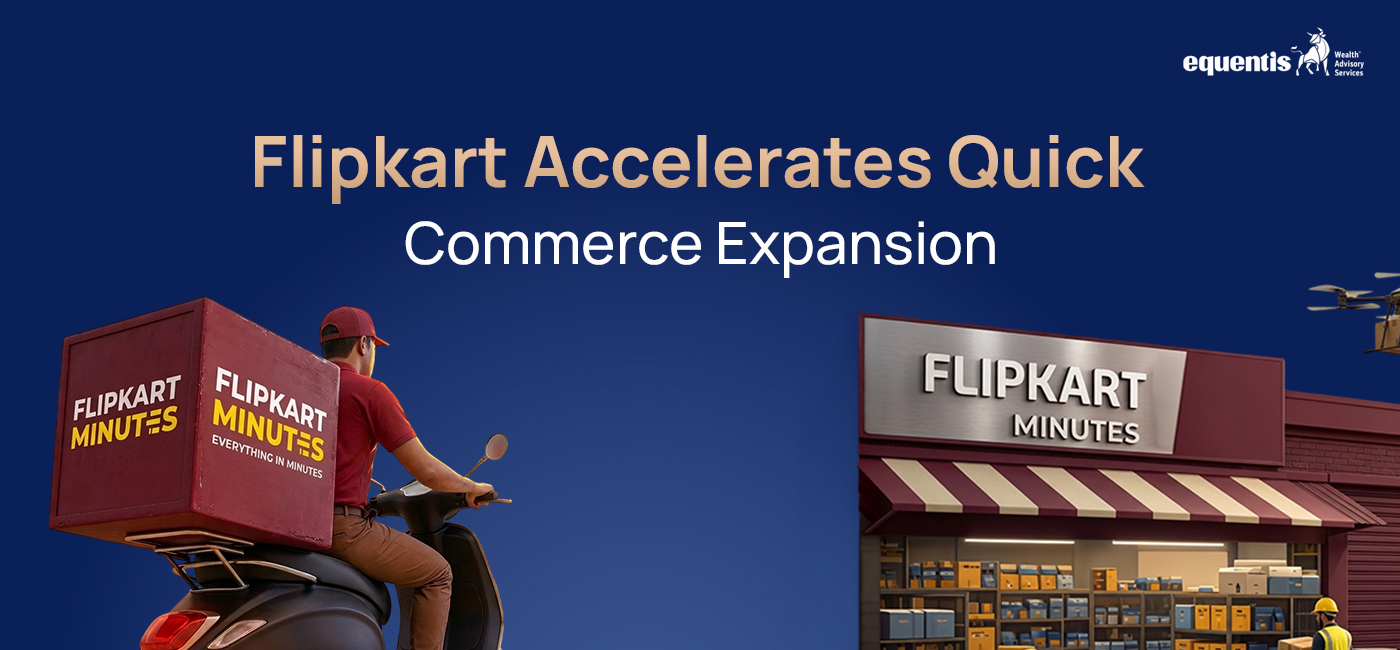
Flipkart is accelerating its quick commerce expansion as competition intensifies in India’s fast-growing instant delivery market. Through its quick commerce platform, Flipkart Minutes, the company is expanding dark stores, strengthening logistics infrastructure, and increasing its presence across major cities. The move reflects changing consumer preferences for faster deliveries, growing demand for convenience, and the increasing importance of quick commerce in India’s retail ecosystem. For investors, businesses, and consumers, Flipkart’s expansion signals a new phase in the battle for market share in one of the country’s fastest-growing digital sectors.
Why Flipkart’s Quick Commerce Push Matters Today
Indian consumers have become accustomed to getting products delivered within hours, and increasingly, within minutes. What started with grocery delivery has expanded to categories such as electronics, personal care products, medicines, household essentials, and even fashion accessories.
As consumer expectations evolve, e-commerce companies are adapting their business models to offer faster fulfillment. Flipkart’s decision to accelerate its quick commerce operations highlights how delivery speed is becoming a key competitive advantage in India’s retail market.
The expansion also comes at a time when the quick commerce industry is witnessing significant investments, rapid customer adoption, and growing competition among major players.
Understanding India’s Quick Commerce Boom
Quick commerce, often referred to as Q-commerce, focuses on delivering products within a very short timeframe, typically between 10 and 30 minutes.
The model relies on strategically located dark stores, technology-driven inventory management, and efficient last-mile delivery networks. Unlike traditional e-commerce, which may take one or two days for delivery, quick commerce aims to meet immediate consumer needs.
Several factors have contributed to the rapid growth of the sector:
- Increasing smartphone penetration
- Growing digital payment adoption
- Urban lifestyles demanding convenience
- Rising comfort with online shopping
- Improved logistics and delivery infrastructure
Industry analysts estimate that India’s quick commerce market could continue expanding significantly over the coming years as customer behavior shifts toward instant fulfillment.
Flipkart’s Quick Commerce Strategy
Flipkart’s quick commerce ambitions are largely centered around Flipkart Minutes, which aims to provide faster deliveries across multiple product categories.
The company’s strategy appears focused on several key areas.
Expanding Dark Store Networks
Dark stores are localized fulfillment centers designed specifically for online orders.
By increasing the number of dark stores in densely populated urban areas, Flipkart can reduce delivery times and improve service reliability. The closer inventory is to customers, the faster products can reach their destination.
This infrastructure forms the foundation of any successful quick commerce operation.
Diversifying Product Categories
Initially, quick commerce was primarily associated with grocery deliveries. However, consumer demand has evolved.
Flipkart is increasingly offering categories such as:
- Smartphones and accessories
- Personal care products
- Home essentials
- Packaged foods
- Consumer electronics
- Daily-use products
Expanding product selection allows the company to increase order values and improve customer engagement.
Leveraging Existing E-Commerce Strengths
Unlike many standalone quick commerce startups, Flipkart already possesses a large customer base, established supply chains, and extensive seller relationships.
This existing ecosystem may help the company scale its quick commerce business more efficiently while leveraging operational expertise developed through years of e-commerce growth.
Technology and Logistics Investments
Technology remains a critical component of quick commerce success.
Advanced inventory management, demand forecasting, route optimization, and delivery partner management systems help improve operational efficiency while reducing costs.
Flipkart’s continued investments in logistics and technology demonstrate its commitment to building a sustainable quick commerce operation.
Key Drivers Behind the Expansion
Rising Consumer Expectations
Modern consumers increasingly prioritize convenience.
Many shoppers no longer want to wait several days for everyday purchases when faster alternatives are available. Quick commerce fulfills this demand by offering near-instant access to products.
Competitive Pressure
The quick commerce space has become highly competitive.
Companies across grocery delivery, e-commerce, and food delivery segments are investing heavily to capture market share. Flipkart’s expansion can be viewed as both a growth initiative and a defensive strategy to maintain relevance in changing consumer markets.
Urban Consumption Trends
India’s urban population continues to grow, creating a favorable environment for rapid delivery services.
Busy professionals, young consumers, and digitally connected households often value convenience and speed over traditional shopping experiences.
Growth in Digital Commerce
The broader digital commerce ecosystem continues to expand across India. Increased internet usage and online spending are creating opportunities for companies that can offer differentiated customer experiences.
Impact on Consumers
Consumers are among the biggest beneficiaries of quick commerce expansion.
Faster Access to Products
Customers can receive products within minutes rather than days, improving convenience for urgent purchases.
Greater Product Availability
As quick commerce platforms expand categories, consumers gain access to a wider range of products through a single platform.
Enhanced Shopping Experience
Real-time tracking, personalized recommendations, and seamless digital payments contribute to a more convenient shopping journey.
Increased Competition
Competition among platforms may lead to better service quality, improved user experiences, and promotional offers for customers.
What It Means for Businesses and Sellers
Quick commerce is reshaping how businesses interact with consumers.
New Sales Channels
Brands gain access to consumers seeking immediate purchases, creating additional revenue opportunities.
Faster Inventory Movement
Rapid fulfillment models can help businesses improve inventory turnover and product visibility.
Data-Driven Consumer Insights
Digital platforms provide valuable information about customer preferences, purchasing behavior, and demand patterns.
Localized Market Reach
Quick commerce enables brands to target specific neighborhoods and urban clusters more effectively.
Implications for Investors
Investors are paying close attention to the quick commerce sector because of its rapid growth potential.
Several factors make the segment noteworthy:
- Rising consumer adoption
- Expanding order frequency
- Growth in digital commerce
- Increasing urban demand
- Strategic investments from major players
However, profitability remains a key consideration. While revenue growth can be strong, companies must balance customer acquisition costs, infrastructure investments, and delivery expenses.
The long-term success of quick commerce may depend on achieving operational efficiency while maintaining customer satisfaction.
Opportunities and Risks
Opportunities
Growing Market Size
India’s quick commerce market remains relatively underpenetrated compared to its overall retail sector, leaving significant room for expansion.
Higher Consumer Engagement
Frequent purchases create opportunities for stronger customer relationships and recurring revenue.
Expansion Beyond Groceries
Categories such as electronics, beauty products, healthcare items, and household essentials offer new growth avenues.
Technology Innovation
Artificial intelligence, predictive analytics, and automation can improve efficiency and customer experiences.
Risks
Profitability Challenges
Maintaining fast delivery networks requires significant investment in infrastructure and logistics.
Intense Competition
Aggressive competition may lead to pricing pressure and increased marketing expenses.
Operational Complexity
Managing inventory, delivery fleets, and demand fluctuations can be challenging at scale.
Regulatory Changes
Evolving regulations related to e-commerce and digital commerce may impact business strategies in the future.
The Future of Quick Commerce in India
The quick commerce sector is still in its early stages of development.
As customer expectations continue to evolve, companies will likely focus on improving delivery speeds, expanding product categories, enhancing technology capabilities, and optimizing profitability.
The distinction between traditional e-commerce and quick commerce may gradually blur as consumers increasingly expect flexible delivery options.
For Flipkart, continued investment in quick commerce reflects a long-term belief that speed, convenience, and accessibility will remain important drivers of online shopping behavior.
Conclusion
Flipkart’s accelerated quick commerce expansion underscores the growing importance of instant delivery in India’s retail landscape. Through investments in dark stores, logistics infrastructure, technology, and category expansion, the company is positioning itself to compete in a rapidly evolving market.
For consumers, the expansion promises greater convenience and faster access to products. For businesses, it creates new opportunities to reach customers through high-frequency purchasing channels. For investors, it highlights a sector with significant growth potential, albeit one that still faces profitability and operational challenges.
As India’s digital economy continues to mature, quick commerce is expected to play an increasingly important role in shaping the future of retail. Flipkart’s latest moves indicate that the competition for consumer attention, convenience, and loyalty is only beginning to intensify.
FAQs
1. What is Flipkart Minutes?
Flipkart Minutes is Flipkart’s quick commerce platform that focuses on delivering products within a short timeframe, often within minutes.
2. What is quick commerce?
Quick commerce is a retail model that enables ultra-fast delivery of products, typically within 10 to 30 minutes.
3. Why is Flipkart expanding its quick commerce business?
The company is responding to rising consumer demand for faster deliveries and increasing competition in the instant delivery market.
4. What products are available through Flipkart Minutes?
Categories may include groceries, electronics, personal care products, home essentials, packaged foods, and daily-use items.
5. How does quick commerce differ from traditional e-commerce?
Traditional e-commerce focuses on deliveries over one or more days, while quick commerce aims to fulfill orders within minutes.
6. What are dark stores in quick commerce?
Dark stores are small fulfillment centers designed exclusively for online order processing and rapid delivery.
7. How does quick commerce benefit consumers?
Consumers receive faster deliveries, greater convenience, and easier access to essential products.
8. What challenges does the quick commerce industry face?
Key challenges include profitability, operational complexity, delivery costs, and intense competition.
9. Why are investors interested in quick commerce?
The sector is experiencing rapid growth driven by changing consumer behavior and expanding digital commerce adoption.
10. What is the future outlook for Flipkart’s quick commerce business?
The outlook remains positive as consumer demand for speed and convenience continues to grow across India’s digital retail ecosystem.
Disclaimer Note: The securities quoted, if any, are for illustration only and are not recommendatory. This article is for education purposes only and shall not be considered as a recommendation or investment advice by Equentis. We will not be liable for any losses that may occur. Investments in the securities market are subject to market risks. Read all the related documents carefully before investing. Registration granted by SEBI, membership of BASL & certification from NISM in no way guarantee the performance of the intermediary or provide any assurance of returns to investors.

Parvati Rai is the Vice President of the Research team at Equentis. She has over 15 years of equity-research and strategy-consulting experience. A specialist in deep-dive valuations, financial modelling, and forecasting, she has built research desks from the ground up, by steering buy-side, sell-side, and independent coverage across sectors. When she isn’t fine-tuning models, Parvati unwinds on nature treks and mentors aspiring analysts.