
In the realm of Indian industry, building a legacy that spans decades is no small feat. For a firm that began as a modest engineering partnership in pre-independent India, the journey of Larsen & Toubro (L&T) is a compelling narrative of vision, grit, and transformation. This is a story not only of business success, but also of how an enterprise became embedded in the nation-building culture. For business readers keen on growth strategies, brand legacy, and consumer/market connections, L&T offers a case study worthy of attention.
The Humble Beginnings and Emotional Hook
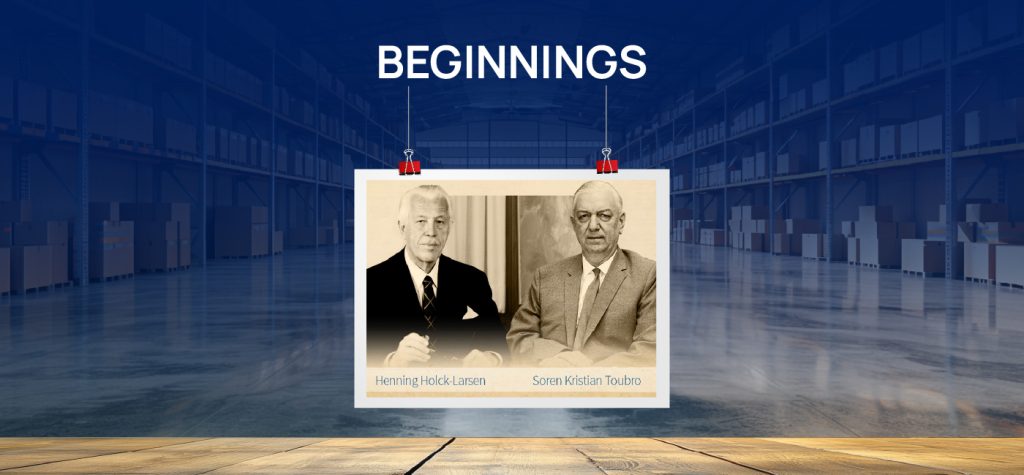
In 1938, two Danish engineers, Henning Holck-Larsen and Søren Kristian Toubro, arrived in Bombay (now Mumbai) and set up shop in a land poised for change. What began as importing machinery from Europe soon evolved into something much larger when wartime disruptions forced the company to pivot into fabrication and repair work. The story resonates with the emotional arc of two outsiders believing in Indian opportunity, adapting under pressure—an early theme of resilience and connection.
By 7 February 1946, the company was formally incorporated as Larsen & Toubro Private Limited. The early work—servicing ships, fabricating plants, meeting emerging industrial needs—gave the brand a foundation of “we can solve what others cannot” that would serve it for decades. The emotional hook lies in ambition against adversity: building domestic engineering capacity at a time when imports were constrained, and India itself was entering independence. L&T became more than an engineering firm—it was linked to the idea of national industrialisation.
Key Growth Milestones: Building the Backbone
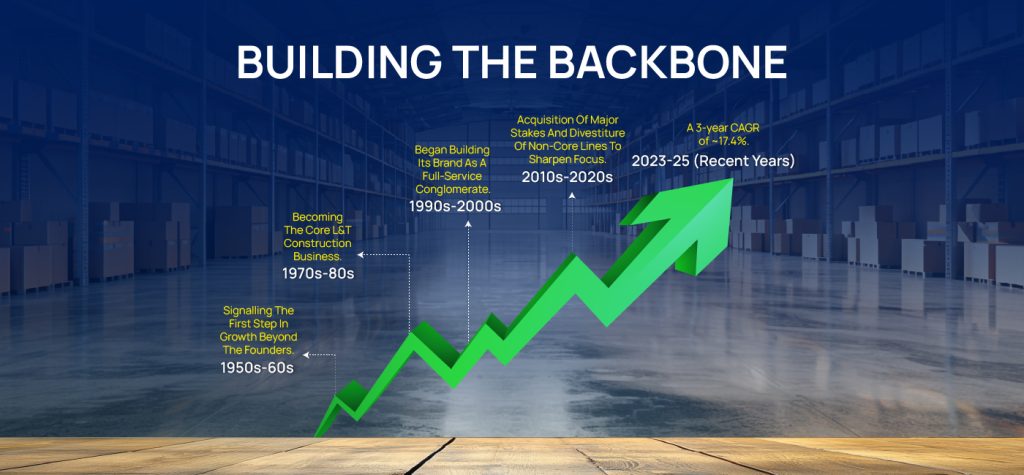
1950s-60s: Already, L&T was acquiring land in Powai, Mumbai, and entering into manufacturing, setting up new businesses in welding, machinery, and earth-moving equipment. In 1950, the company became a public company, signalling the first step in growth beyond the founders.
1970s-80s: The firm secured major contracts: from airports to nuclear reactor components, to defence-related fabrication. One landmark: in the 1970s, L&T bid for an airport project in Abu Dhabi, and subsequently its ECC division was merged into the main group, eventually becoming the core L&T Construction business.
1990s-2000s: L&T diversified into financial services (L&T Finance, 1994) and other manufacturing arenas. It began building its brand as a full-service conglomerate.
2010s-2020s: One of the most visible transitions: heavy growth internationally, acquisition of major stakes (for instance, the 2019 acquisition of a controlling stake in IT services firm Mindtree) and divestiture of non-core lines (such as the electrical & automation business sold in a ₹14,000 crore deal) to sharpen focus.
Recent Years (2023-25): The company achieved full-year consolidated revenue of ₹2,21,113 crore in FY 2023-24, up ~21% year-on-year; order book at ₹4,75,809 crore, up ~20% In FY2024-25, the group clocked revenues of ₹2,55,734 crore, registering ~16% growth. On a USD basis, revenue has grown from about USD 22.31 billion in 2023 to USD 26.27 billion in 2024, with a 3-year CAGR of ~17.4%.
These numbers reflect not only scale but also consistency in growth—an essential element of the brand’s trust among the business community.
Marketing Strategy and Brand Positioning
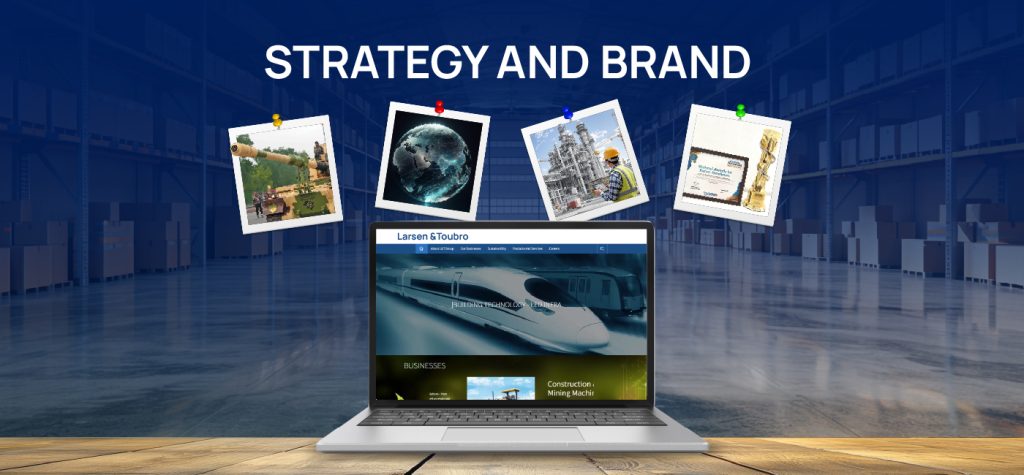
While L&T is not a “consumer-brand” in the usual sense, its marketing and brand strategy have built credibility, reliability, and national pride associations. Some strategic dimensions:
Internal branding and talent culture: By earning awards for employer branding, quality, safety, and execution, L&T reinforced the internal culture, which then translated into external trust.
These elements combined to create a brand image of “India’s industrial backbone” — a powerful space for B2B and institutional clients.
Engineering excellence as brand promise: From its early days servicing warships to building nuclear reactor components, L&T positioned itself as tackling the hardest challenges. This is one of the emotional anchors: clients trust L&T with their mission-critical work.
Nation-building narrative: L&T aligned with India’s infrastructure and industrial ambitions—metro systems, airports, defence platforms, real estate, and manufacturing. That linkage allowed it to transcend mere business and tap into cultural relevance.
Diversification with coherence: The firm expanded into manufacturing, infrastructure, defence, technology, and finance, yet kept a common theme—“engineering, technology, value creation”. Their website emphasises “customer-focused approach” and “world-class quality”.
Globalisation and partnerships: By entering joint ventures, acquisitions, and exporting capabilities, L&T marketed itself not just as Indian-centric but globally competitive. That enhanced brand perception among global clients and investors.
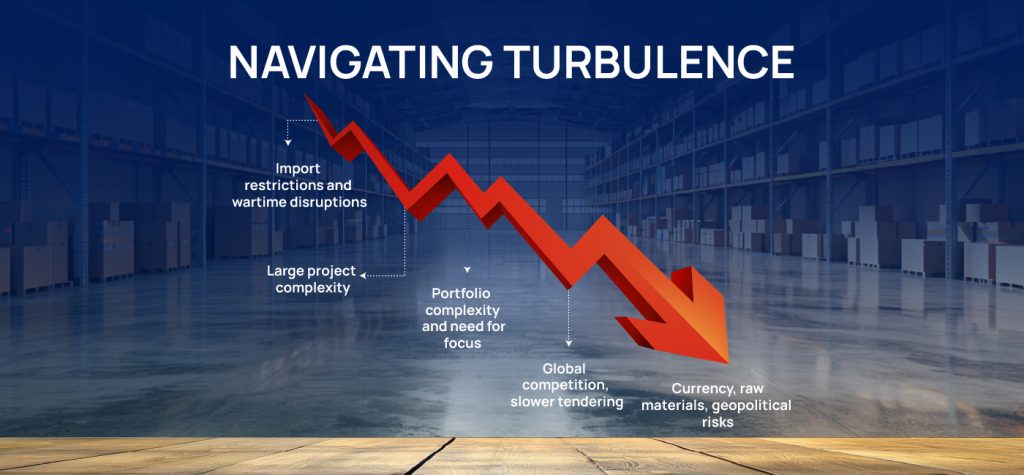
Challenges Faced: Navigating Turbulence
No legacy brand grows without challenges. L&T confronted its share:
- Import restrictions and wartime disruptions: In its earliest years, during WWII and the immediate post-war period, supply chain constraints forced a pivot from trading imports to manufacturing locally.
- Large project complexity: Mega infrastructure and engineering projects carry high execution risk, cost overruns, and margin pressures. L&T’s journey includes many such episodes, though specific public setbacks are less visible.
- Portfolio complexity and need for focus: As L&T diversified, it faced the challenge of too many business lines. The strategic divestment of its electrical & automation business (₹14,000 crore deal) shows recognition of this and a refocusing strategy.
- Global competition, slower tendering: Even recently, analysts noted that Indian government project tendering remained sluggish, putting pressure on order inflows.
Currency, raw materials, geopolitical risks: As L&T grew internationally, exposure to foreign currencies, supply chains, and global project risk amplified. While these are less documented in public storytelling, they are inherent to the business.
By facing and overcoming these challenges, L&T grew not just in size but in maturity—refining project management, execution discipline, risk control and strategic clarity.
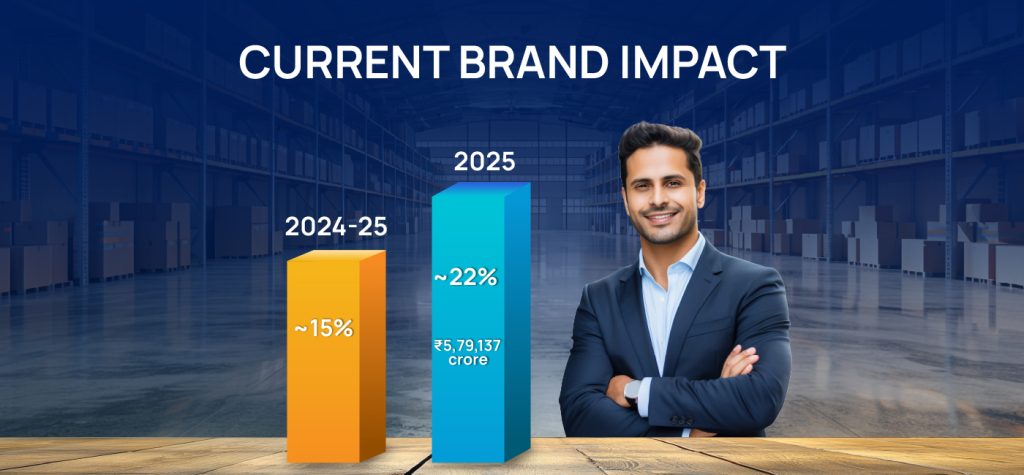
The Current Brand Impact: Legacy, Market Leadership, Cultural Relevance
Today, L&T stands as one of India’s most respected conglomerates. It is a constituent of the BSE Sensex and NSE Nifty-50 indices.
In terms of market leadership:
- Its order book as of March 2025 stood at ₹5,79,137 crore, up ~22% year-on-year.
- Its revenue growth continues in double-digits, and profits are growing (~15% PAT growth in FY 2024-25).
- Its 3-year revenue CAGR is ~17.4%.
On the cultural and brand side: - L&T has become a symbol of India’s industrial and infrastructure aspirations. The projects it undertakes often carry national importance (defence manufacturing, metros, power plants) and thereby associate its brand with progress, patriotism, and engineering excellence.
- Among business clients, the brand carries trust — “if it’s L&T, it will get done”. That intangible is valuable in large-scale projects.
For talent and the engineering ecosystem in India, L&T offers career pathways, high-end manufacturing capabilities, and global exposure—reinforcing its role beyond profit into nation-building.
The brand’s impact is thus multi-dimensional: financial, strategic, cultural.
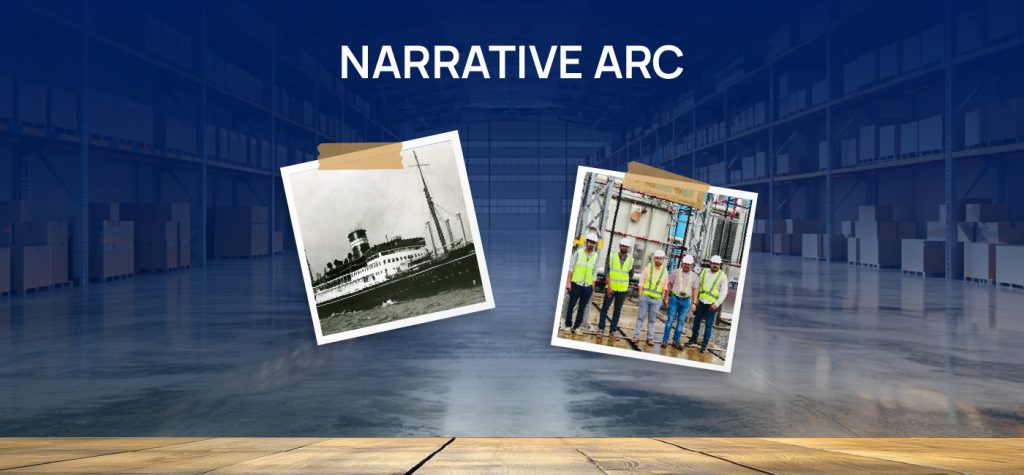
Narrative Arc: From Trading Imports to Engineering Titan
Imagine two young Danish engineers arriving in Bombay, believing in the opportunity of India. They start modestly, trading machinery. Wartime disruptions force them to innovate—repair ships, manufacture locally. That willingness to pivot becomes the first hallmark of what L&T’s brand will be: adaptability.
As India itself moves from colonial rule to independence and then full-scale industrialisation, L&T grows in parallel. It builds plants, infrastructure. The story of L&T becomes intertwined with India’s story of industrialisation. It steps into power, construction, manufacturing, and defence. It chooses complexity over simplicity: nuclear components, metro systems, offshore platforms. In doing so, it builds not just a business but a legacy.
Then comes diversification and globalisation. L&T acquires, partners, divests. It refines its focus. It is no longer simply an Indian engineering company—it is a global-class conglomerate with deep Indian roots. The cumulative milestones—becoming one of India’s largest private-sector defence manufacturers, ordering rockets, executing mega-orders—cement its leadership.
Today, the company stands at ₹2.6 trillion revenue (approx) with consistent growth, a global footprint, and an order book that promises tomorrow’s momentum. The story completes the arc: from small beginnings to industry giant; from trading to creating; from local to global; from reactive to strategic.

What Business Readers Can Learn: Growth Strategy & Consumer Connection
For business strategists and readers, L&T’s journey gives several lessons:
Remain agile amid change: Challenges from globalisation, supply chain, project risk are real—but L&T’s adaptation (divesting, refocusing) suggests the importance of agility.
Begin with capability, build trust: L&T’s early focus was on doing difficult tasks that others could not. That built a reputation.
Align with macro-context: L&T aligned itself with India’s infrastructure and industrial needs. That provided tailwinds.
Diversify deliberately, then streamline: L&T entered multiple domains, but when certain areas became non-core, it divested, focusing on synergies.
Brand through execution, not just marketing: L&T’s “marketing” is mostly its track record. Big organisations often trust reputation more than flashy campaigns.
Embed cultural relevance: By becoming part of the nation-building story, L&T did not just sell services—its brand contributed to identity, purpose, and pride. That connection matters for long-term legacy.
Measure, grow, repeat: Substantial order books, consistent revenue growth (~15-20% year-on-year in recent years) indicate disciplined execution.

Conclusion: Legacy in Motion
The brand story of L&T is not static—it continues to evolve. From two Danish engineers to a ₹2.6 trillion turnover global conglomerate, the company has built a legacy at the intersection of engineering, ambition, national purpose, and business discipline. For business readers looking into growth strategy, brand legacy, and how a corporate entity connects with broader cultural and economic currents, L&T offers an exemplar.
In today’s world of fast-moving technologies and short-term gains, the 80-plus year trajectory of L&T reminds us that brand legacy is built through decades of steady execution, strategic clarity, and meaningful connection with the stakeholders—clients, employees,and the nation. The journey from a small machinery-import firm to India’s industrial bedrock is compelling, and its story continues.