
Introduction
India’s sneaker market was long dominated by global giants. For years, brands like Nike and Adidas owned aspiration, while Indian footwear labels largely competed on affordability. Then came Comet, a homegrown sneaker startup that decided not to play the “cheap alternative” game. Instead, it built a culture-first brand focused on storytelling, exclusivity, and community.
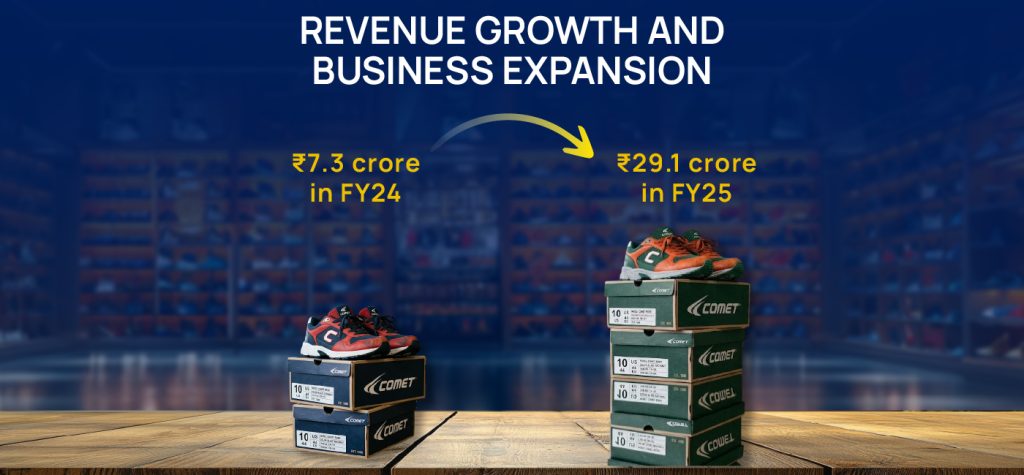
In less than three years, Comet evolved from a young D2C experiment into one of India’s most talked-about sneaker brands. The company reportedly scaled its revenue from ₹7.3 crore in FY24 to ₹29.1 crore in FY25, nearly a fourfold jump, while also securing a valuation of around ₹160 to ₹167 crore after its funding rounds.

The Beginning of Comet’s Journey
Founded in 2023 by Utkarsh Gupta and Dishant Daryani, Comet entered the Indian sneaker industry with a simple observation: Indian consumers wanted stylish, premium sneakers with personality, but there were very few local brands delivering that experience.
Instead of copying international trends, Comet leaned into culture. Every sneaker launch carried a story, emotion, or identity attached to it. Limited-edition drops like “Mango,” “Pataka,” and “Jugnu” were not marketed as just shoes. They were positioned as collectibles tied to memories, moods, and youth culture.
That emotional positioning became the brand’s biggest differentiator.
Building a Culture-First Sneaker Brand
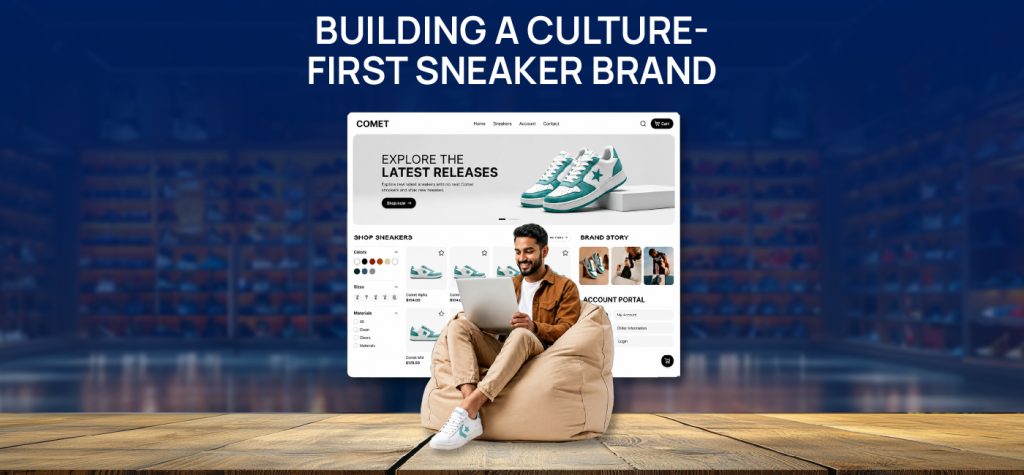
Comet’s early growth strategy focused heavily on direct-to-consumer sales through its own website. This gave the company full control over customer experience, data, and storytelling.
Rather than spending aggressively on celebrity endorsements, the founders invested in creating hype through limited releases and community-driven marketing.
The “drop culture” strategy worked exceptionally well. Small-batch sneaker launches created urgency and scarcity, pushing customers to engage quickly before products sold out. Some collections reportedly sold out within minutes, helping the brand generate organic social media buzz without depending entirely on paid advertising.

Marketing Strategy That Fueled Growth
Social media became central to Comet’s rise. The brand built a strong Gen Z and millennial audience by speaking the language of sneaker enthusiasts instead of traditional footwear buyers.
By early 2025, Comet had reportedly built a sneaker community of over 1.6 lakh Instagram followers and was serving more than 12,000 customers monthly.
The company also focused heavily on storytelling marketing. Every product launch had a narrative behind it, making customers emotionally connected to the sneakers they purchased.
This strategy helped Comet create cultural relevance instead of simply becoming another footwear brand.
Revenue Growth and Business Expansion
Comet’s financial growth became one of the biggest talking points in India’s D2C ecosystem.
The company reportedly grew its revenue from ₹7.3 crore in FY24 to ₹29.1 crore in FY25, representing nearly 300% year-on-year growth.
This rapid expansion also attracted investor attention. In 2024, Comet raised $5 million in a Series A funding round led by Elevation Capital with participation from Nexus Venture Partners.
The funding allowed the company to expand operations, strengthen inventory management, improve product quality, and scale marketing efforts.
Challenges Faced During Scaling
Rapid growth did not come without difficulties.
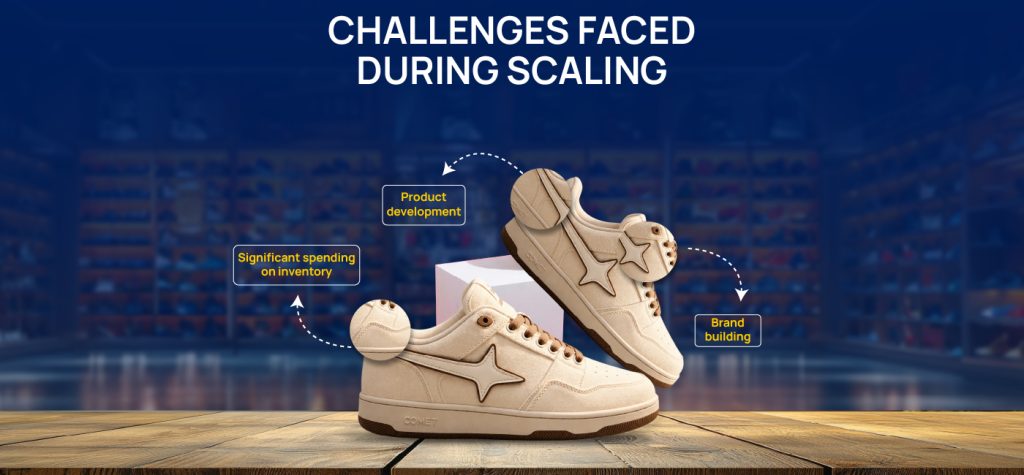
Breaking into a category dominated by multinational companies required significant spending on inventory, product development, and brand building. Unlike many budget sneaker sellers, Comet focused on custom designs and premium detailing instead of white-label manufacturing.
Reports suggest the company developed proprietary components and custom molds to differentiate its products. While this improved product identity, it also increased operational costs.
Despite strong revenue growth, the company’s losses widened to around ₹4.4 crore in FY25 due to aggressive expansion and marketing investments. Advertising and promotional expenses reportedly crossed ₹9 crore during the year.
Scaling while maintaining exclusivity remains one of the brand’s biggest ongoing challenges.
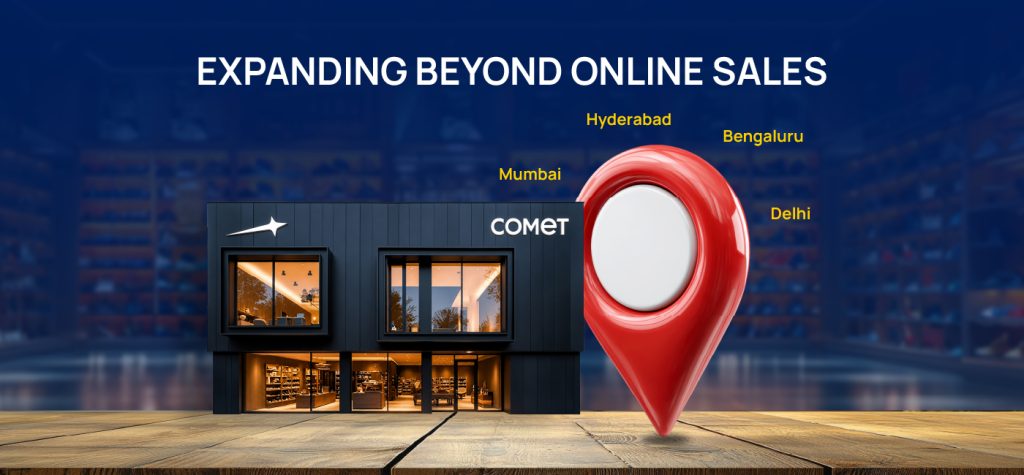
Expanding Beyond Online Sales
After establishing a strong online presence, Comet slowly entered offline retail.
The brand expanded into select sneaker stores and multi-brand outlets across cities like Mumbai, Bengaluru, Delhi, and Hyderabad. This omnichannel strategy allowed Comet to connect with consumers who still preferred trying footwear physically before purchasing.
Offline visibility also helped strengthen trust among first-time buyers.
By combining online hype with offline accessibility, Comet created a balanced growth model that supported long-term expansion.
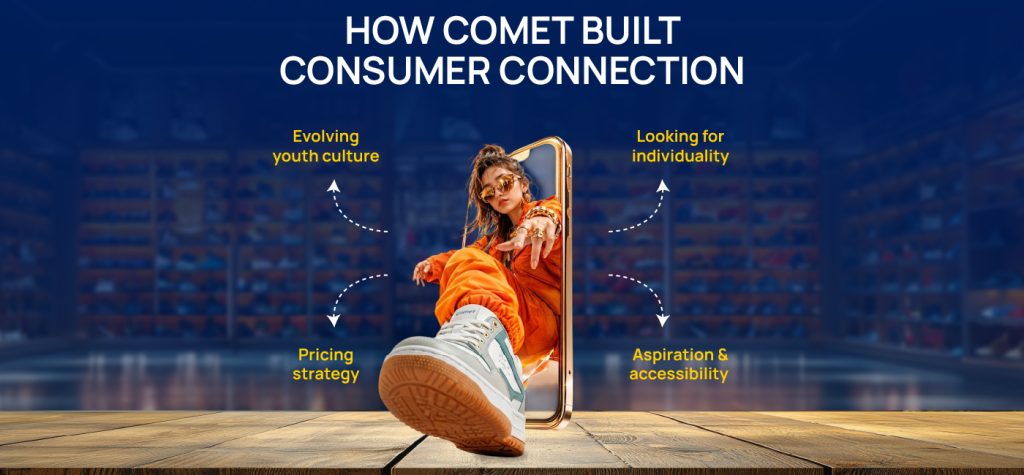
How Comet Built Consumer Connection
One of the strongest reasons behind Comet’s success is its understanding of India’s evolving youth culture.
Young consumers today are looking for individuality rather than simply buying global logos. Comet tapped into this emotional gap effectively by positioning itself as an aspirational Indian sneaker brand.
Its pricing strategy also worked in its favor. The sneakers were premium enough to feel exclusive while remaining more affordable than many international alternatives.
This balance between aspiration and accessibility helped Comet connect deeply with urban Indian consumers
Comet’s Impact on India’s Sneaker Industry
Comet’s rise reflects a larger transformation happening within India’s consumer market.
The company proved that Indian startups can compete in lifestyle categories traditionally dominated by international brands if they focus on strong storytelling, differentiated products, and loyal communities.
More importantly, Comet changed the perception of Indian footwear brands. Instead of competing only on price, it showed that homegrown brands can also build aspiration and cultural relevance.
Today, Comet is often viewed as one of the emerging faces of India’s modern sneaker movement.
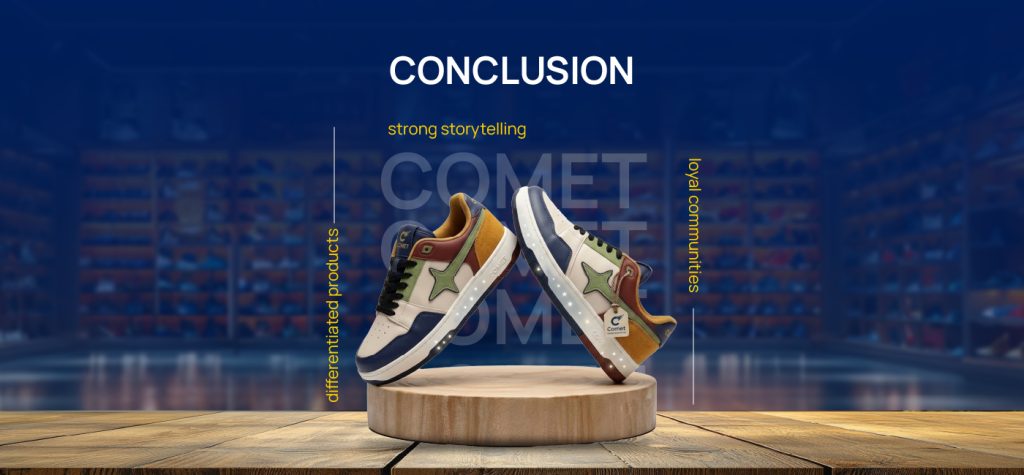
Conclusion
From a startup launched in 2023 to a fast-growing sneaker brand generating nearly ₹29 crore in annual revenue, Comet’s journey highlights the power of storytelling-driven business growth.
The company built more than just a footwear label. It created a community around identity, culture, and self-expression.
While competition in the sneaker market continues to intensify, Comet’s ability to combine emotional branding, digital-first marketing, and product differentiation has already made it one of India’s most promising D2C success stories.
Its journey is a reminder that in today’s consumer economy, brands that create emotional connection often grow faster than brands that only sell products.

Parvati Rai is the Vice President of the Research team at Equentis. She has over 15 years of equity-research and strategy-consulting experience. A specialist in deep-dive valuations, financial modelling, and forecasting, she has built research desks from the ground up, by steering buy-side, sell-side, and independent coverage across sectors. When she isn’t fine-tuning models, Parvati unwinds on nature treks and mentors aspiring analysts.