Introduction
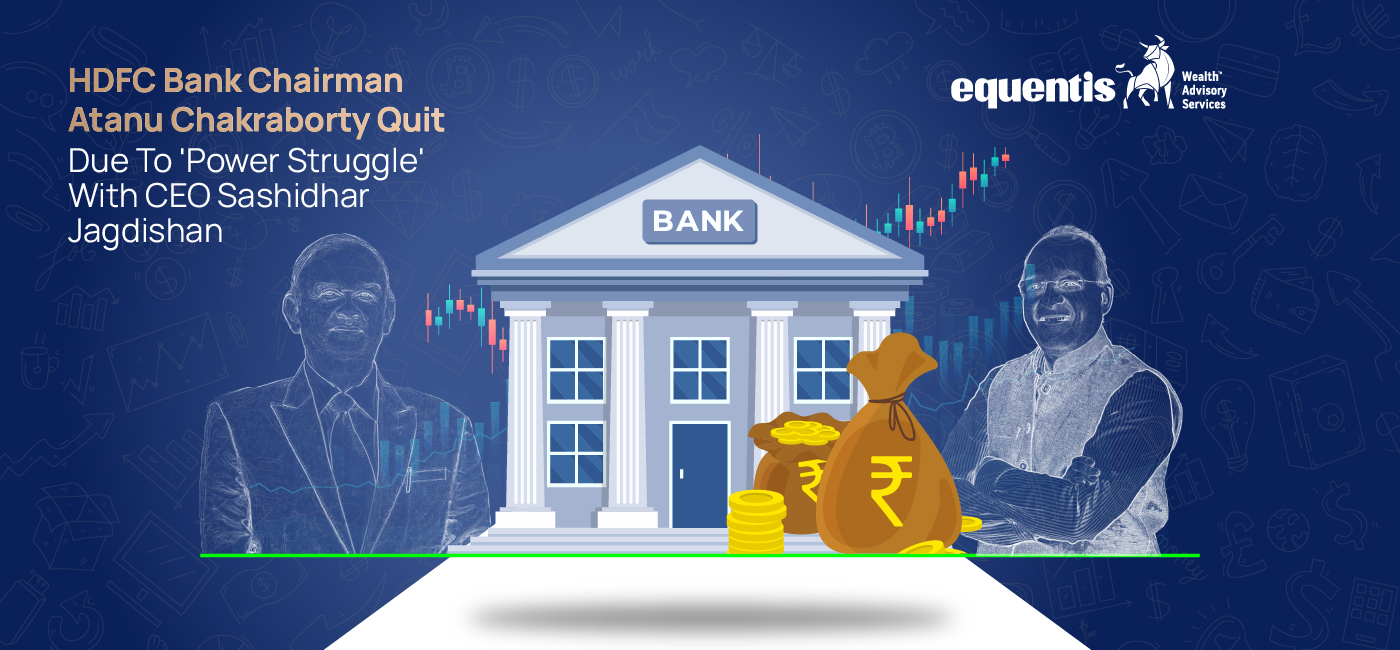
In a significant development for India’s banking sector, HDFC Bank chairman Atanu Chakraborty has stepped down from his role, reportedly due to internal differences with CEO Sashidhar Jagdishan. The core issue, widely discussed in market circles, revolves around a perceived power struggle at the top leadership level. This development matters because leadership stability is critical for a bank of HDFC Bank’s scale, especially at a time when the institution is integrating operations post its merger with HDFC Ltd and navigating evolving regulatory expectations.
Background and Context
To understand the significance of this resignation, it is important to look at the broader context.
HDFC Bank has long been considered one of India’s most stable and well-governed financial institutions. Its leadership transitions in the past have been relatively smooth, with a strong focus on continuity and governance discipline.
Atanu Chakraborty, a former IAS officer and ex Secretary of the Department of Economic Affairs, took over as chairman in 2021. His appointment was seen as a move to strengthen regulatory alignment and governance oversight.
On the other hand, CEO Sashidhar Jagdishan, who succeeded Aditya Puri, has been leading the bank through a crucial phase. This includes the massive merger with HDFC Ltd, which significantly expanded the bank’s balance sheet and operational complexity.
However, as the organization grew larger, the dynamics between board oversight and executive control appear to have evolved, leading to friction at the top.
What Led to the Resignation
Reports suggest that the resignation was not abrupt but the result of ongoing differences between the chairman and the CEO regarding decision making authority and strategic direction.
Key points being discussed include:
- Differences over governance roles between the board and management
- Diverging views on strategic priorities post merger
- Questions around operational control and decision making boundaries
While no official statement has confirmed a “power struggle” in explicit terms, multiple reports indicate that disagreements had been building over time.
It is important to note that such tensions are not uncommon in large organizations. However, when they occur in a systemically important bank like HDFC Bank, they draw significant attention due to potential implications on governance standards.
Why This Matters for the Banking Sector
Leadership disputes at the top of a major bank can have ripple effects beyond the institution itself.
Governance Signal
HDFC Bank has historically been seen as a benchmark for corporate governance in India. Any indication of internal conflict raises questions about board management alignment.
Regulatory Sensitivity
Banks operate under strict oversight from the Reserve Bank of India. Leadership instability can attract closer regulatory scrutiny, especially when the bank is already managing integration challenges.
Market Confidence
Investors tend to closely track leadership stability. Even perceived disagreements can influence sentiment, particularly in the short term.
Impact on Investors
For investors, the immediate concern is whether this development changes the investment thesis for HDFC Bank.
Short Term Sentiment
In the near term, such news can lead to uncertainty. Markets generally react cautiously to leadership exits, especially when linked to internal disagreements.
Long Term Fundamentals
However, the core strength of HDFC Bank lies in:
- Strong asset quality
- Consistent earnings track record
- Large retail franchise
- Robust capital position
Unless the leadership issue leads to deeper structural challenges, the long term fundamentals may remain intact.
What Investors Should Watch
- Appointment of the next chairman
- Clarity in governance structure
- Communication from the management
- Progress in post merger integration
Implications for the Bank’s Strategy
The resignation comes at a time when HDFC Bank is executing one of the largest financial sector mergers in India.
This raises a few strategic considerations:
Integration Challenges
The merger with HDFC Ltd requires seamless coordination between multiple teams. Leadership alignment is crucial during such transitions.
Decision Making Speed
Any friction at the top can slow down decision making, which may impact execution timelines.
Cultural Alignment
Merging two large institutions involves blending cultures. Leadership cohesion plays a key role in ensuring smooth integration.
Opportunities and Risks
Opportunities
- A new chairman could bring fresh perspective and alignment with the CEO
- Clearer governance structure may emerge post transition
- Strong institutional framework can absorb leadership changes
Risks
- Prolonged leadership uncertainty could impact strategic execution
- Investor sentiment may remain cautious in the short term
- Regulatory scrutiny may increase if governance concerns persist
For long term investors, the key lies in distinguishing between temporary noise and structural change.
Broader Lessons for Corporate India
This episode highlights a few broader lessons for large organizations:
- Clear definition of roles between board and management is essential
- Communication between leadership levels must remain transparent
- Governance frameworks must evolve as organizations scale
Even well established institutions are not immune to internal challenges, especially during periods of rapid growth or transformation.
Conclusion
The resignation of Atanu Chakraborty as chairman of HDFC Bank, reportedly linked to differences with CEO Sashidhar Jagdishan, marks an important moment for India’s largest private lender. While the situation has raised concerns around governance dynamics, it does not necessarily signal a structural issue unless further developments indicate otherwise.
For investors and market participants, the focus should remain on how the bank manages this transition. Leadership clarity, communication, and execution will be key in maintaining confidence.
In the coming months, the appointment of a new chairman and the bank’s ability to stay on track with its strategic goals will determine whether this episode remains a short term disruption or evolves into a deeper concern.
FAQs
1. Why did Atanu Chakraborty resign from HDFC Bank?
Reports suggest differences with CEO Sashidhar Jagdishan over governance and decision making.
2. Is there an official confirmation of a power struggle?
No explicit confirmation, but multiple reports indicate internal disagreements.
3. Who is Sashidhar Jagdishan?
He is the CEO of HDFC Bank and has been leading the bank since 2020.
4. Will this impact HDFC Bank’s stock price?
It may affect short term sentiment, but long term impact depends on how the situation evolves.
5. What is HDFC Bank known for?
Strong governance, consistent growth, and a large retail banking franchise.
6. Who will replace Atanu Chakraborty?
The bank is expected to appoint a new chairman soon.
7. Is this a governance concern?
It raises questions, but not necessarily a structural issue yet.
8. Should investors be worried?
Investors should monitor developments but avoid reacting to short term noise.
9. How does this affect the merger with HDFC Ltd?
Leadership alignment is important, but operations are likely to continue as planned.
10. What is the role of a bank chairman?
Oversight of governance, board functioning, and strategic direction.
11. What is the role of a CEO in a bank?
Managing daily operations and executing strategy.
12. Can such conflicts happen in large companies?
Yes, especially during periods of transformation.
13. Will RBI intervene in this matter?
Only if governance concerns escalate significantly.
14. How important is leadership stability in banks?
Very important for investor confidence and operational continuity.
15. What should analysts track next?
New chairman appointment and management commentary.
16. Does this affect customers of HDFC Bank?
No immediate impact on customers is expected.
17. Is this common in Indian banks?
Not very common, especially in well governed institutions.
18. Could this lead to management changes?
Unlikely unless the situation escalates further.
19. What is the long term outlook for HDFC Bank?
Still strong, provided governance stability is maintained.
20. Is this a buying opportunity for investors?
Depends on individual risk appetite and long term view.
Disclaimer Note: The securities quoted, if any, are for illustration only and are not recommendatory. This article is for education purposes only and shall not be considered as a recommendation or investment advice by Equentis – Research & Ranking. We will not be liable for any losses that may occur. Investments in the securities market are subject to market risks. Read all the related documents carefully before investing. Registration granted by SEBI, membership of BASL & certification from NISM in no way guarantee the performance of the intermediary or provide any assurance of returns to investors.

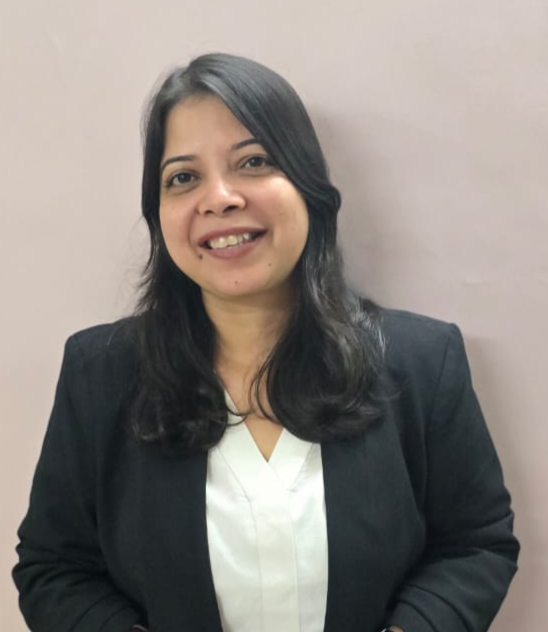
Parvati Rai is the Vice President of the Research team at Equentis. She has over 15 years of equity-research and strategy-consulting experience. A specialist in deep-dive valuations, financial modelling, and forecasting, she has built research desks from the ground up, by steering buy-side, sell-side, and independent coverage across sectors. When she isn’t fine-tuning models, Parvati unwinds on nature treks and mentors aspiring analysts.