
Summary
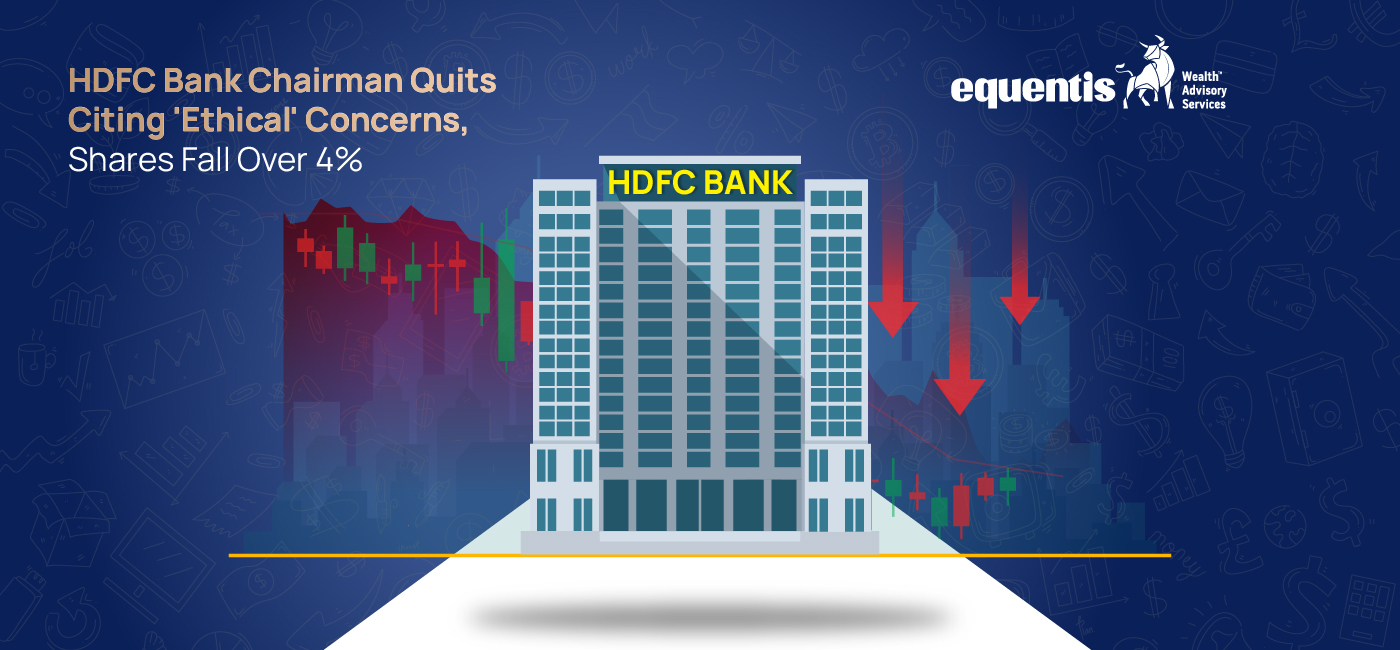
Shares of HDFC Bank fell over 4% after the sudden resignation of its chairman, citing “ethical concerns,” triggering investor anxiety around corporate governance and leadership stability. While the exact nature of the concerns remains unclear, the development has raised short-term uncertainty, leading to selling pressure despite the bank’s otherwise strong fundamentals.
Introduction
Leadership exits in large financial institutions rarely go unnoticed, but when they are linked to “ethical concerns,” markets react swiftly. The recent resignation of HDFC Bank’s chairman has become a key talking point across Dalal Street, not just because of the individual involved but due to what it could signal about governance practices.
For investors, this isn’t just about a single stock decline. It touches on trust, transparency, and the broader confidence in one of India’s most widely held banking stocks.
Context and Background
HDFC Bank has long been considered one of India’s most stable and well-managed private sector banks. Known for its consistent performance, strong asset quality, and disciplined growth, it has been a core holding for both institutional and retail investors.
Over the years, the bank has built a reputation for maintaining high governance standards. This is why the chairman’s resignation, especially with a reference to ethical concerns, has caught markets off guard.
Such events are rare in large, systemically important institutions, and when they occur, they tend to trigger immediate reactions, even before all details are fully understood.
What Exactly Happened?
The chairman stepped down from his position, citing “ethical concerns” as the reason behind the decision. While no detailed explanation has been publicly disclosed yet, the lack of clarity has contributed to speculation.
Markets generally dislike uncertainty more than bad news. In this case, the absence of specifics has led investors to adopt a cautious stance, resulting in a sharp drop in the stock price.
The immediate reaction was visible as HDFC Bank shares declined by over 4% during trading, reflecting concerns around leadership continuity and governance standards.
Key Factors Behind the Share Price Decline
1. Governance Concerns
The mention of “ethical concerns” directly raises questions about internal processes, oversight, and decision-making.
Even if the issue is isolated, markets tend to price in the risk of deeper problems until clarity emerges.
2. Leadership Uncertainty
A chairman’s role is crucial in shaping strategic direction and ensuring governance oversight.
Sudden exits at the top level can create uncertainty about succession planning and continuity, which investors closely monitor.
3. Market Sensitivity to Banking Stocks
Banking stocks are particularly sensitive to trust and credibility. Unlike other sectors, banks deal directly with public money, making governance a critical factor.
Any perceived weakness in governance can lead to disproportionate market reactions.
4. Institutional Selling Pressure
Large institutional investors often react quickly to governance-related developments. Even a temporary reduction in exposure by these players can lead to sharp price movements.
5. Broader Market Sentiment
The fall in HDFC Bank also comes at a time when markets are already cautious due to global uncertainties and interest rate concerns.
This amplified the impact of the news, leading to a sharper decline.
Why This Matters Beyond One Stock
The development is not just about HDFC Bank. It has broader implications for how investors view corporate governance in India’s banking sector.
When a leading bank faces such a situation, it prompts investors to reassess risks across similar institutions.
It also highlights the increasing importance of transparency and timely disclosures in maintaining investor confidence.
Impact on Investors
Short-Term Impact
In the short term, volatility is likely to remain high in HDFC Bank’s stock.
Investors may react to every new update or clarification related to the resignation. Trading volumes could remain elevated as both buyers and sellers reassess positions.
Long-Term Impact
The long-term impact depends largely on how the situation is handled.
If the bank provides clarity, ensures smooth leadership transition, and reinforces governance standards, investor confidence can return.
HDFC Bank’s strong fundamentals, including its loan growth, asset quality, and profitability, remain intact as of now.
Impact on the Banking Sector
The news could lead to temporary pressure on other banking stocks as well, especially those with similar investor profiles.
However, unless broader systemic issues emerge, the impact is likely to remain limited.
The Reserve Bank of India’s regulatory oversight also plays a key role in maintaining stability in the sector.
Opportunities and Risks
Opportunities
- Short-term correction may provide entry opportunities for long-term investors
- Strong fundamentals may support recovery once clarity emerges
- Institutional investors may re-enter at lower valuations
Risks
- Lack of clarity around “ethical concerns” may prolong uncertainty
- Potential reputational impact if issues are more serious
- Continued selling pressure if institutional investors remain cautious
What Should Investors Do?
Investors should avoid making decisions based purely on headlines.
- Track official disclosures from the bank
- Evaluate whether fundamentals have changed
- Avoid panic selling during volatility
- Consider staggered investing if confident in long-term prospects
It is important to distinguish between temporary sentiment-driven declines and fundamental deterioration.
Conclusion
The resignation of HDFC Bank’s chairman, citing ethical concerns, has created a wave of uncertainty, leading to a sharp fall in its share price. While the development is significant, the full impact will depend on the clarity provided in the coming days and the bank’s response.
For now, the market reaction reflects caution rather than a confirmed structural issue. Investors would benefit from staying informed, focusing on fundamentals, and avoiding impulsive decisions.
Events like these remind us that governance plays a critical role in shaping market confidence, especially in sectors like banking, where trust is central.
FAQs
1. Why did HDFC Bank shares fall today?
Shares fell after the chairman resigned, citing ethical concerns, creating uncertainty.
2. What does “ethical concerns” mean in this context?
It refers to issues related to governance or conduct, though details are not yet clear.
3. How much did the stock fall?
HDFC Bank shares declined by over 4% following the news.
4. Is this a major governance issue?
It is unclear at this stage due to limited information.
5. Should investors be worried?
Investors should stay cautious but wait for more clarity before making decisions.
6. Will the stock recover?
Recovery depends on how the situation is resolved and communicated.
7. Is this a good time to buy HDFC Bank shares?
It may be considered after evaluating risks and clarity on the issue.
8. How important is a chairman’s role in a bank?
The chairman plays a key role in governance and strategic oversight.
9. Could this impact other banking stocks?
There may be a short-term sentiment impact, but not necessarily long-term.
10. What should long-term investors do?
Focus on fundamentals and avoid reacting to short-term volatility.
11. Has HDFC Bank faced such issues before?
The bank has generally maintained a strong governance track record.
12. What is the role of the RBI in such cases?
RBI oversees banking operations and ensures regulatory compliance.
13. Will FIIs sell HDFC Bank shares?
Some institutional selling may occur due to uncertainty.
14. What factors will drive the next move in the stock?
Clarity on the issue and leadership transition will be key.
15. Is this linked to financial performance?
No direct link has been established yet.
16. How does governance affect stock prices?
Poor governance can reduce investor confidence and lead to selling.
17. What should traders watch now?
News updates, price levels, and trading volumes.
18. Can such events impact the entire market?
They can influence sentiment, especially in related sectors.
19. What is the biggest risk here?
Lack of clarity and potential reputational impact.
20. What is the key takeaway for investors?
Stay informed, avoid panic, and focus on long-term fundamentals.
Disclaimer Note: The securities quoted, if any, are for illustration only and are not recommendatory. This article is for education purposes only and shall not be considered as a recommendation or investment advice by Equentis – Research & Ranking. We will not be liable for any losses that may occur. Investments in the securities market are subject to market risks. Read all the related documents carefully before investing. Registration granted by SEBI, membership of BASL & certification from NISM in no way guarantee the performance of the intermediary or provide any assurance of returns to investors.

Parvati Rai is the Vice President of the Research team at Equentis. She has over 15 years of equity-research and strategy-consulting experience. A specialist in deep-dive valuations, financial modelling, and forecasting, she has built research desks from the ground up, by steering buy-side, sell-side, and independent coverage across sectors. When she isn’t fine-tuning models, Parvati unwinds on nature treks and mentors aspiring analysts.