
Introduction
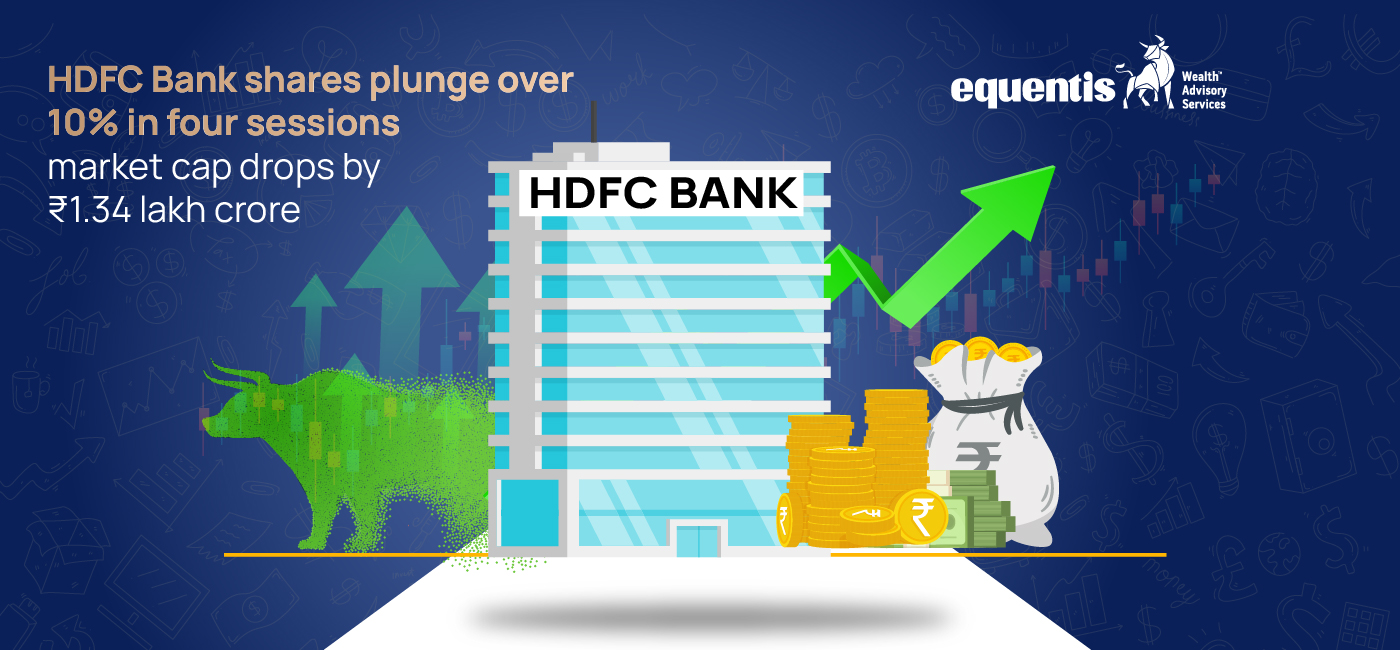
The recent sharp fall in HDFC Bank shares has caught the attention of investors across the country. In just four trading sessions, the stock has declined by over 10%, wiping out nearly ₹1.34 lakh crore in market capitalisation. This sudden correction is not just about one stock. It reflects broader concerns around growth expectations, valuation pressures, and evolving market sentiment toward India’s banking sector.
For investors, the key question is simple. What caused this fall, and does it signal a deeper issue or a temporary adjustment?
Context and Background
HDFC Bank has long been considered one of India’s most stable and well-managed financial institutions. Its consistent growth, strong asset quality, and disciplined lending practices have made it a core holding in many portfolios.
The merger with Housing Development Finance Corporation in 2023 was seen as a transformational move. It created a financial giant with a strong presence across retail lending, home loans, and corporate banking. However, large mergers often bring integration challenges, and markets tend to react sharply when expectations are not met.
Over the past year, the stock has faced pressure due to slower than expected balance sheet expansion and tighter liquidity conditions. The recent fall appears to be an extension of these concerns.
What Triggered the Sharp Decline
Several factors have contributed to the recent drop in HDFC Bank shares. While no single reason explains the entire fall, a combination of developments has influenced investor sentiment.
Slower Deposit Growth
One of the key concerns has been slower deposit growth compared to loan growth. Banks rely on deposits as a primary source of funding. When deposit growth lags, it creates pressure on margins and limits the ability to expand lending.
In the case of HDFC Bank, post merger adjustments have impacted deposit mobilisation, leading to concerns about liquidity management.
Margin Pressures
Net interest margins are a critical indicator of a bank’s profitability. Rising competition for deposits and higher cost of funds have put pressure on margins. Investors are increasingly cautious about how this will impact earnings growth in the coming quarters.
Integration Challenges Post Merger
The merger has added scale but also complexity. Integrating systems, aligning loan books, and managing regulatory requirements takes time. Markets often react negatively when integration appears slower than expected.
Valuation Reset
HDFC Bank has historically traded at a premium valuation due to its strong fundamentals. However, when growth slows or uncertainties rise, markets tend to reassess valuations. The recent fall may partly reflect this adjustment.
Broader Market Sentiment
The decline also comes at a time when global and domestic markets are showing volatility. Banking stocks often react more sharply to shifts in interest rates, liquidity, and economic outlook.
Key Insights for Investors
The recent correction offers several insights into how markets are currently viewing large banking stocks.
Market Expectations Are High
HDFC Bank is not just any stock. It carries high expectations. Even a slight deviation from expected growth can trigger a strong reaction.
Growth Quality Matters More Than Scale
While the merger increased size, investors are focusing more on sustainable growth, asset quality, and profitability rather than just scale.
Short Term vs Long Term Perspective
Short-term volatility does not necessarily change long-term fundamentals. However, it does highlight the importance of monitoring key metrics like deposit growth and margins.
Impact on Investors and the Banking Sector
The fall in HDFC Bank shares has implications beyond just one company.
Portfolio Impact
Many mutual funds and retail investors have significant exposure to HDFC Bank. The decline may have a noticeable impact on portfolio performance in the short term.
Sector Sentiment
HDFC Bank is often seen as a benchmark for the banking sector. Its decline can influence sentiment across other banking stocks, especially large cap private banks.
Opportunity for Value Investors
Corrections in fundamentally strong stocks sometimes create entry opportunities. However, investors need to evaluate whether the current concerns are temporary or structural.
Opportunities and Risks
Opportunities
Investors may find potential value if they believe the current issues are temporary and the bank can return to its historical growth trajectory.
The bank still has strong fundamentals, including a large customer base, a diversified loan book, and robust risk management practices.
Long-term growth in India’s financial sector remains strong, driven by rising credit demand and financial inclusion.
Risks
If deposit growth continues to lag, it could impact lending capacity and profitability.
Integration challenges from the merger may take longer than expected to resolve.
A prolonged period of margin pressure could affect earnings growth.
Market sentiment may remain cautious until there is clear visibility on growth revival.
What Should Investors Do
Investors should avoid reacting purely to short term price movements. Instead, focus on key indicators such as deposit growth trends, net interest margins, and management commentary in upcoming earnings.
Diversification remains important. Relying heavily on a single stock, even one as established as HDFC Bank, can increase portfolio risk.
For long term investors, the current correction may warrant a closer look, but only after careful evaluation of fundamentals.
Conclusion
The recent 10% decline in HDFC Bank shares over four sessions and the ₹1.34 lakh crore erosion in market capitalisation reflect a mix of operational concerns and shifting market expectations. While the fall has raised questions, it does not automatically signal a fundamental breakdown.
The coming quarters will be crucial. Investors will closely watch how the bank manages deposit growth, margins, and integration challenges. Until then, the stock may remain volatile.
For investors, this situation serves as a reminder that even the most established companies are not immune to market corrections. Understanding the reasons behind such moves is key to making informed decisions.
FAQs
- Why did HDFC Bank shares fall recently?
The fall is due to slower deposit growth, margin pressures, and post merger integration concerns. - How much market cap was lost
Around ₹1.34 lakh crore in market capitalisation was wiped out. - Is HDFC Bank fundamentally weak now?
There is no clear indication of fundamental weakness, but short-term challenges exist. - What is the impact of the HDFC merger?
The merger increased scale but brought integration and liquidity challenges. - Should investors be worried
Investors should monitor key metrics but avoid panic selling. - Is this a good time to buy HDFC Bank shares
It depends on individual risk appetite and long-term outlook. - How does deposit growth affect banks
Lower deposit growth can limit lending and impact profitability. - What are net interest margins?
They measure the difference between interest earned and interest paid by banks. - Will the stock recover
Recovery depends on how quickly the bank addresses current concerns. - How does this impact the banking sector
It may affect sentiment across other banking stocks. - Is this fall linked to global markets
Partly, as broader market volatility also plays a role. - What should long-term investors do
Focus on fundamentals and avoid short-term reactions. - Has HDFC Bank seen similar falls before
Yes, like most stocks, it has experienced corrections in the past. - What are the key risks ahead
Margin pressure, deposit growth slowdown, and integration challenges. - How important is HDFC Bank in mutual funds
It is a major holding in many mutual fund portfolios. - Can this impact loan growth
Yes, slower deposits can affect the bank’s ability to lend. - What is market sentiment right now
Cautious, especially toward large banking stocks. - Are private banks under pressure
Some private banks are facing similar concerns. - How should new investors approach this
Start with research and avoid rushing into decisions. - What is the long term outlook for HDFC Bank
The long term outlook depends on execution and recovery in growth metrics.
Disclaimer Note: The securities quoted, if any, are for illustration only and are not recommendatory. This article is for education purposes only and shall not be considered as a recommendation or investment advice by Equentis – Research & Ranking. We will not be liable for any losses that may occur. Investments in the securities market are subject to market risks. Read all the related documents carefully before investing. Registration granted by SEBI, membership of BASL & certification from NISM in no way guarantee the performance of the intermediary or provide any assurance of returns to investors.

Parvati Rai is the Vice President of the Research team at Equentis. She has over 15 years of equity-research and strategy-consulting experience. A specialist in deep-dive valuations, financial modelling, and forecasting, she has built research desks from the ground up, by steering buy-side, sell-side, and independent coverage across sectors. When she isn’t fine-tuning models, Parvati unwinds on nature treks and mentors aspiring analysts.