A homemaker can work towards financial independence by building a ₹25 lakh investment corpus through disciplined saving and investing, even without a regular salary. The key is to start with whatever amount is practical, separate personal savings from household expenses, and invest consistently over time. A ₹25 lakh goal may look large initially, but with a clear target, monthly investment plan and reasonable time horizon, it can become a structured financial goal rather than a distant number.
Why financial independence matters for homemakers
Household work often involves managing budgets, paying bills, planning expenses and making important financial decisions, but it may not come with a monthly income. That can make personal financial security easy to overlook.
Building an independent corpus can provide greater control over personal expenses and future goals. It can also create a financial cushion for unexpected situations, children’s education, retirement planning or other long term needs.
Financial independence does not necessarily mean earning a large income. It can also mean having money and investments that are under your own control and continuing to grow over time.
How much should you invest to build ₹25 lakh?
The amount required depends on your investment period and the return generated by your investments.
For example, assuming an illustrative 10% annualised return, a monthly SIP could potentially build approximately:
| Investment period | Approx. monthly SIP |
|---|---|
| 5 years | ₹32,300 |
| 7 years | ₹20,700 |
| 10 years | ₹12,200 |
| 15 years | ₹6,050 |
| 20 years | ₹2,400 |
These numbers are only illustrations. Market linked investments do not provide fixed returns, and actual outcomes can be higher or lower.
The table also highlights an important point: time can reduce the monthly amount required to reach the same corpus. Starting earlier may make the ₹25 lakh goal more manageable.
Step 1: Set a personal financial target
Start by defining why you want to create the ₹25 lakh corpus.
For example, the money could be intended for long term financial security, a personal emergency fund, retirement, a future business, education expenses or simply greater financial independence.
Once the purpose is clear, divide the target into smaller milestones such as ₹5 lakh, ₹10 lakh, ₹15 lakh and finally ₹25 lakh. Smaller milestones can make the journey easier to track.
Step 2: Create a saving habit from household money
A common misconception is that investing is possible only when someone earns a salary. In reality, a homemaker may be able to invest from money received for household management, gifts, savings on expenses, rental income, family contributions or income from a small home based activity.
The important part is consistency.
Suppose ₹5,000 is available every month for long term investing. Instead of waiting until a large amount accumulates, a monthly SIP can put that money to work regularly.
As household finances improve, the SIP amount can be increased gradually.
Step 3: Build an emergency fund first
Before focusing entirely on the ₹25 lakh corpus, it is important to keep some money readily accessible for emergencies.
An emergency fund can help cover unexpected medical costs, urgent repairs or temporary income disruptions without forcing you to sell long term investments at an unfavourable time.
The emergency fund and the ₹25 lakh investment corpus should ideally be treated as separate goals. One is meant for accessibility and financial protection, while the other is intended for long term wealth creation.
Step 4: Choose investments based on your time horizon
The right investment mix depends on how soon the money will be needed and how much volatility you can tolerate.
For long term goals, equity mutual funds can provide growth potential but come with market risk. Debt oriented investments can provide greater stability, although their growth potential may be lower.
A homemaker building a long term corpus should focus on asset allocation rather than chasing whichever investment performed well recently.
The goal is not to predict the market. It is to remain invested through different market conditions while maintaining an approach that matches your financial goal.
Step 5: Increase your investment gradually
A ₹25 lakh corpus does not always require starting with a large SIP.
Suppose a person starts with ₹4,000 per month and increases the investment whenever household income or savings improve. This can make the goal more manageable than trying to begin with a high monthly amount.
An annual increase of even 5% to 10% in the SIP amount can materially improve the amount accumulated over a long period, although the final result will depend on actual investment returns.
This approach is particularly useful when there is no fixed monthly salary.
Impact of building your own corpus
Having investments in your own name can provide a greater sense of financial control. It can also encourage better participation in household financial decisions.
More importantly, the habit of investing creates financial discipline. Over time, the focus shifts from simply saving leftover money to intentionally allocating money toward a defined goal.
Financial independence is therefore not only about reaching ₹25 lakh. It is also about developing the ability to manage, invest and review your finances regularly.
Opportunities and risks
The biggest advantage of starting early is the potential benefit of compounding. Returns earned on investments can themselves generate returns when money remains invested for a long period.
However, investments linked to the market can fluctuate. A SIP does not eliminate market risk, and past returns should not be treated as a promise of future performance.
Inflation is another factor. A ₹25 lakh corpus will have less purchasing power in the future than it has today, which means the eventual goal may need to be increased depending on the purpose and time horizon.
Taxation, investment costs and changes in household expenses also need to be considered.
Conclusion
Building a ₹25 lakh corpus as a homemaker is achievable as a structured financial goal, but the approach should focus on consistency rather than trying to invest a large amount at once. Start with a realistic monthly amount, maintain an emergency fund, choose investments according to your time horizon and increase contributions gradually.
The most important factor may be time. Starting with a manageable amount today can be more useful than waiting for the perfect moment to begin. The ₹25 lakh target should also be reviewed periodically so that it remains aligned with inflation, changing expenses and your broader financial goals.
Frequently Asked Questions
1. Can a homemaker build a ₹25 lakh investment corpus?
Yes. A homemaker can build a ₹25 lakh corpus by investing regularly from available savings, household allocations, gifts, rental income or other sources. The required monthly investment depends on the time available and the returns earned. Starting earlier generally reduces the amount that needs to be invested each month.
2. How much should I invest every month to reach ₹25 lakh?
The monthly amount depends on your time horizon and investment returns. As an illustration, at a hypothetical 10% annualised return, investing around ₹12,200 per month for 10 years could accumulate approximately ₹25 lakh. Actual returns can vary, so the required amount may be different in practice.
3. Can I build ₹25 lakh with a ₹5,000 monthly SIP?
It is possible over a sufficiently long period, but the exact time depends on investment returns. At an illustrative 10% annualised return, ₹5,000 invested every month for 15 years would grow to roughly ₹20.7 lakh, while continuing for longer could take the corpus closer to or beyond ₹25 lakh.
4. Which investment is suitable for building a ₹25 lakh corpus?
There is no single investment that is suitable for everyone. The choice depends on your goal, time horizon and risk tolerance. Equity mutual funds may suit long term growth goals but can be volatile, while debt and fixed income options may offer greater stability. A diversified approach can be considered based on individual circumstances.
5. Should homemakers invest in mutual funds?
Mutual funds can be one option for long term wealth creation because they provide access to diversified portfolios. However, they also carry different levels of market risk. Investors should understand the scheme, costs, investment objective and risk level before investing rather than choosing a fund only because it recently delivered strong returns.
6. What is the biggest benefit of starting early?
Starting early provides more time for compounding. When investment returns remain invested, future returns can be generated on both the original investment and accumulated gains. This can reduce the pressure to invest a very large amount later, although investment returns are not guaranteed.
7. Should I increase my SIP every year?
Increasing the SIP periodically can help keep the investment aligned with rising household income and long term goals. A step-up approach, where the contribution increases by a fixed percentage or amount each year, can potentially accelerate corpus building. However, the increase should remain comfortable relative to household cash flow.
8. Do I need an emergency fund before investing for ₹25 lakh?
An emergency fund is generally important before committing too much money to long term investments. It provides liquidity for unexpected expenses and can reduce the need to withdraw market-linked investments during a downturn. The appropriate emergency reserve depends on household expenses, income stability and personal circumstances.
9. Is ₹25 lakh enough for financial independence?
₹25 lakh can be a meaningful financial milestone, but whether it provides financial independence depends on your age, expenses, inflation, other assets and financial goals. Someone with low expenses and additional family income may have different requirements from someone who needs to fund retirement or major future expenses independently.
10. How can a homemaker stay disciplined while building wealth?
Automation can make investing easier. Setting up a monthly SIP or scheduled transfer shortly after receiving the money allocated for personal savings reduces the temptation to spend it elsewhere. Reviewing the portfolio periodically rather than reacting to every market movement can also help maintain a long term investing discipline.
Disclaimer Note: The securities quoted, if any, are for illustration only and are not recommendatory. This article is for education purposes only and shall not be considered as a recommendation or investment advice by Equentis. We will not be liable for any losses that may occur. Investments in the securities market are subject to market risks. Read all the related documents carefully before investing. Registration granted by SEBI, membership of BASL & certification from NISM in no way guarantee the performance of the intermediary or provide any assurance of returns to investors.

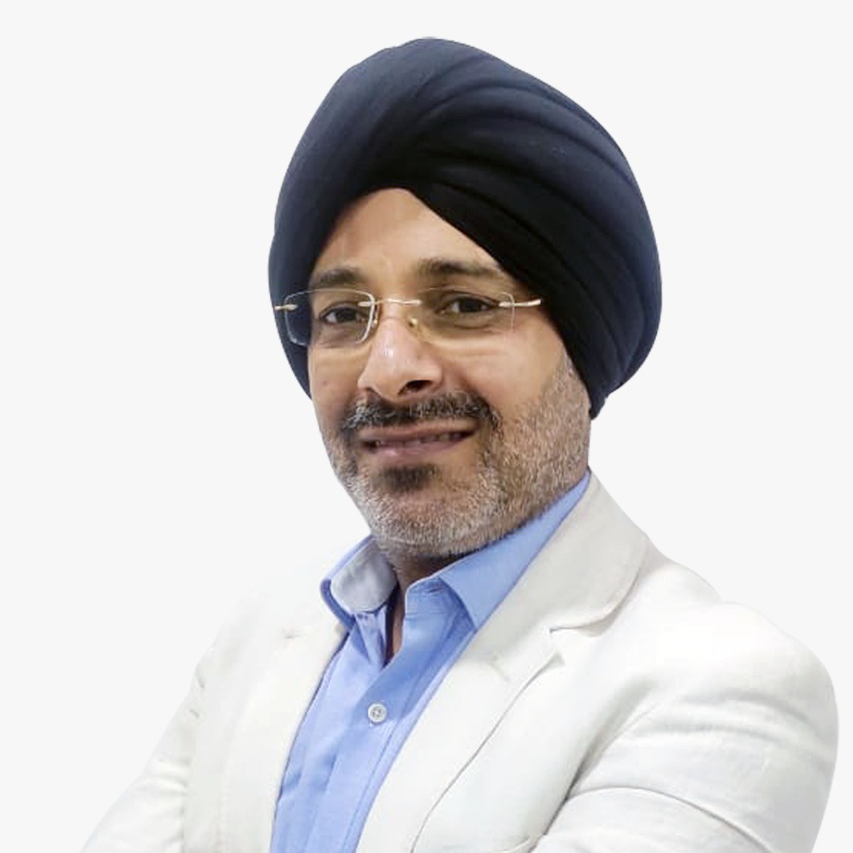
Jaspreet Singh Arora is the Chief Investment Officer at Equentis, where he heads a seasoned team of equity analysts and turns two decades of market experience into portfolios that consistently beat the benchmark. A go-to voice on cement, building-materials, real-estate, and construction stocks, Jaspreet previously ran research desks at leading brokerages, honing an eye for the metrics that truly move share prices. His plain-spoken analysis helps investors cut through noise and act with conviction. When he’s not deep-diving into earnings calls, you’ll find him unwinding over sports, weekend cricket or a good history podcast.