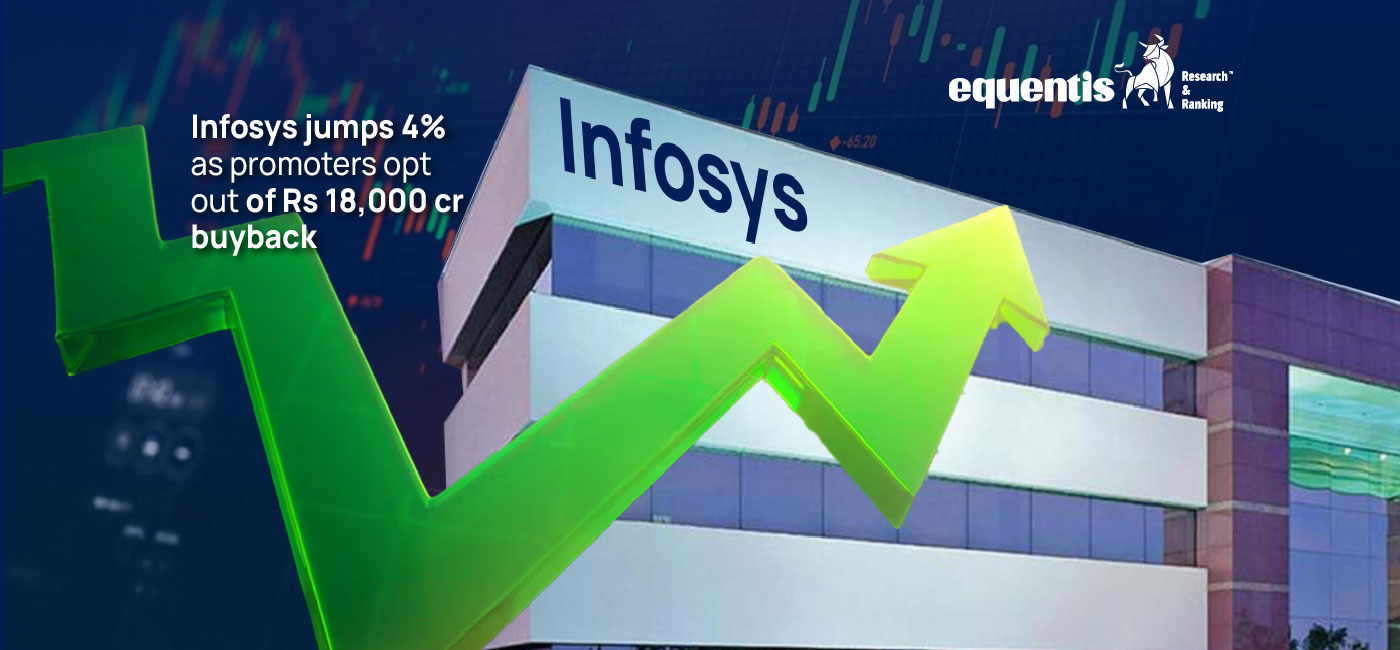

Infosys, one of India’s leading IT service providers, saw its shares rise around 4% after the company announced that its promoters and promoter group members would not participate in its ₹18,000 crore share buyback program. The decision caught the attention of investors and analysts, who viewed it as a signal of management’s long-term confidence in the company’s prospects.
Background of the Buyback
Infosys had announced a share buyback worth ₹18,000 crore, aiming to return capital to shareholders and enhance long-term shareholder value. The buyback, structured through the open market route, was priced at up to ₹1,650 per share. Such initiatives often serve as a way for companies to utilize surplus cash and reward shareholders, particularly when they see limited opportunities for large-scale expansion in the near term.
Historically, Infosys has used share buybacks as part of its capital allocation strategy. The company has conducted similar buybacks in previous years, including in 2017, 2019, and 2022. This consistent approach has allowed Infosys to optimize its balance sheet and maintain shareholder confidence even in volatile market phases.
Promoters’ Decision to Stay Out
The most notable part of this buyback announcement was the decision by Infosys’ promoters, including the company’s founders and their family members, to abstain from participating. This choice was viewed as a strong signal of trust in the company’s long-term growth potential.
Promoter participation in buybacks can sometimes be perceived as a lack of confidence in the company’s future value. By opting out, the promoters effectively indicated that they expect the share price to appreciate over time, making it more beneficial to retain their holdings.
The decision also aligns with the company’s focus on improving shareholder returns through operational performance rather than through promoter-led selling.
Market Reaction
Following the announcement, Infosys shares climbed nearly 4% in intraday trading. Investors appeared to interpret the promoters’ decision as a sign of strength and confidence in the company’s fundamentals. The rise came at a time when the broader IT sector has been showing mixed signals due to global macroeconomic uncertainties, particularly in key markets like the United States and Europe.
The increase in share price also reflected optimism surrounding Infosys’ efforts in expanding its digital transformation and AI-led service offerings. Investors seem to believe that the company’s strong client base, combined with its investments in emerging technologies, could help it navigate the evolving technology landscape.
Why Buybacks Matter
A share buyback generally indicates that a company has excess cash and limited immediate investment needs. It helps reduce the total number of shares in circulation, which can enhance earnings per share (EPS) and potentially support the stock price. For Infosys, this move reflects a healthy financial position and an intention to reward shareholders without compromising future growth plans.
Buybacks also provide an alternative to dividends, giving shareholders the option to benefit from potential capital gains instead of cash payouts. Given Infosys’ consistent cash flow generation, the buyback adds to its reputation for disciplined capital management.
Financial Context
Infosys has maintained steady revenue growth in recent quarters, though margins have been under pressure due to higher costs and cautious client spending. Despite these challenges, the company’s strong cash reserves and low debt levels have allowed it to pursue shareholder-friendly policies such as buybacks and dividends.
The ₹18,000 crore buyback is expected to enhance value for long-term investors by improving capital efficiency. It also demonstrates that Infosys remains confident about sustaining profitability, even as it faces competitive pressures from peers in both domestic and international markets.
Analyst Viewpoint
Market experts have largely viewed the promoters’ decision to skip the buyback as a positive development. It reduces selling pressure and sends a message that those most familiar with the company’s outlook believe in its continued growth. Analysts suggest that such signals often help boost investor sentiment in the short term and may contribute to more stable stock performance over the long run.
However, some have also cautioned that while the promoters’ confidence is encouraging, the broader IT sector still faces challenges related to global demand recovery and pricing pressures. Investors, therefore, may want to balance optimism with a realistic view of sectoral headwinds.
Future Outlook
Infosys continues to focus on key growth areas such as cloud computing, AI integration, automation, and digital services. These segments are expected to be the main drivers of revenue over the next few years. The company’s strategy of combining cost optimization with innovation-driven solutions positions it well to adapt to changing client needs.
In the near term, investor attention will remain on the company’s upcoming quarterly results and commentary on demand trends from large enterprise clients. The ongoing buyback could also lend some support to the stock, especially if the market remains volatile.
Conclusion
The 4% rise in Infosys’ shares following the promoters’ decision to stay out of the ₹18,000 crore buyback reflects the market’s positive interpretation of management’s confidence. It highlights how capital allocation moves, when coupled with clear signals from promoters, can influence investor sentiment.
While the IT industry continues to navigate global challenges, Infosys’ prudent financial management and consistent shareholder focus have helped maintain its credibility in the market. The buyback, along with the promoters’ stance, reinforces the narrative of long-term stability and measured growth for one of India’s most respected technology companies.
Disclaimer Note: The securities quoted, if any, are for illustration only and are not recommendatory. This article is for education purposes only and shall not be considered as a recommendation or investment advice by Equentis – Research & Ranking. We will not be liable for any losses that may occur. Investments in the securities market are subject to market risks. Read all the related documents carefully before investing. Registration granted by SEBI, membership of BASL & certification from NISM in no way guarantee the performance of the intermediary or provide any assurance of returns to investors.