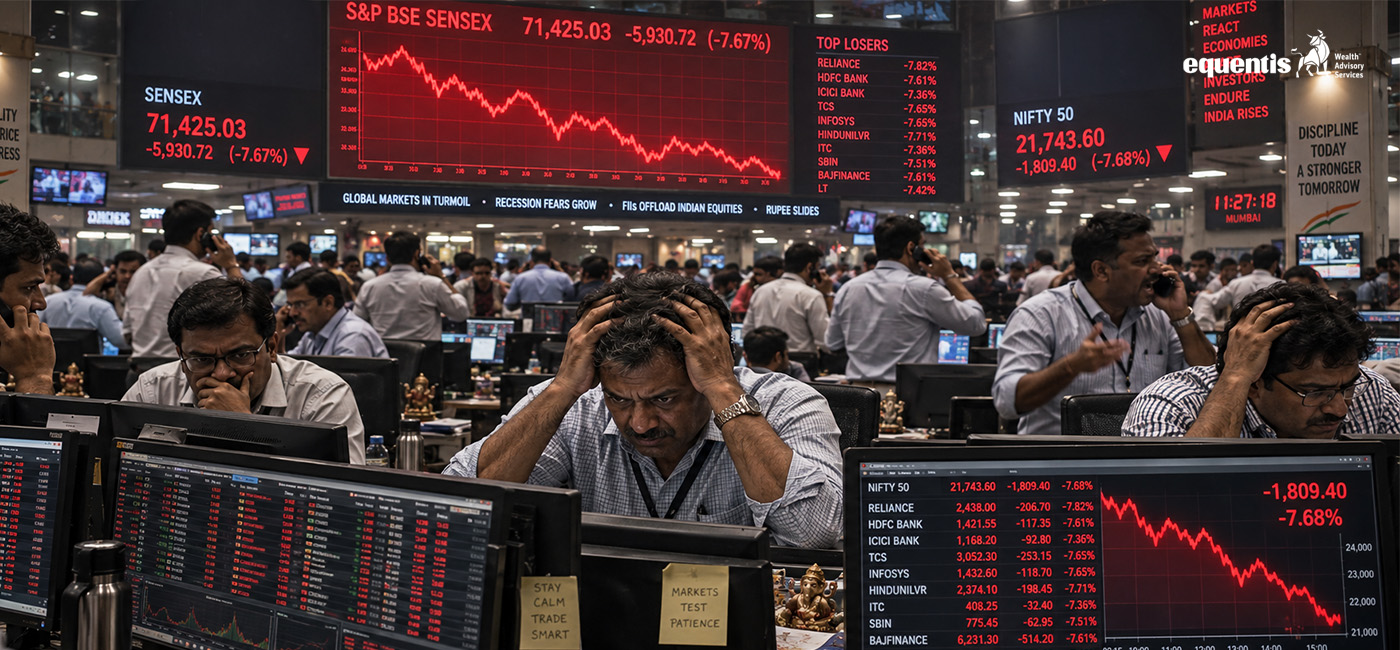

IT stocks came under heavy selling pressure on September 9, 2026, with the Nifty IT index falling around 3% and several major technology shares declining sharply. Infosys, HCL Technologies, Tech Mahindra, TCS and Wipro were among the stocks under pressure, while Coforge saw an especially sharp fall after Chairman Om Prakash Bhatt resigned following concerns raised during an internal audit. The sell-off reflects a combination of US interest-rate worries, higher crude prices, geopolitical uncertainty, visa-related costs and company-specific concerns.
Why Are IT Stocks Falling Today?
The Nifty IT fall is not being driven by one factor. Several developments have come together at a time when investors were already cautious about the outlook for technology spending.
One major concern is the changing outlook for US interest rates. Stronger-than-expected US employment data has increased expectations that the Federal Reserve could maintain a tighter monetary stance or potentially raise rates. US bond yields have also remained elevated, creating pressure on technology stocks globally.
This matters for Indian IT companies because the United States is a critical market for their revenues. Higher interest rates can make businesses more cautious about technology budgets, potentially affecting discretionary spending and new project decisions.
Nifty IT Falls 3%: Which Stocks Are Under Pressure?
The decline was broad-based across the IT sector.
In early trading on September 9, Infosys fell around 3.5%, HCL Technologies declined 3.7%, Tech Mahindra dropped 3.4% and TCS lost nearly 2.9%. Coforge was among the biggest casualties, falling sharply after the chairman’s resignation.
The Nifty IT index was down about 3% and later touched an intraday low around 28,779.80, representing a decline of roughly 3.6% at that point in trading.
The weakness also extends a broader losing streak. Moneycontrol reported that the IT index was falling for a sixth consecutive session and had lost more than 10% over that period.
Coforge Adds to Sector Pressure
Coforge has faced an additional company-specific problem.
Chairman Om Prakash Bhatt resigned on September 8 after an internal audit raised concerns about the company’s board evaluation process. Coforge subsequently appointed Vivek Sharma, a non-executive independent director, as interim chairman.
The development triggered a sharp reaction in the stock, with Coforge falling around 6% in morning trading. The concern for investors is not simply the leadership change but the circumstances surrounding the resignation, which have introduced additional governance uncertainty.
It is important, however, to distinguish Coforge’s company-specific issue from the broader IT-sector sell-off. Even IT companies without similar governance developments were under pressure.
US Rate Hike Concerns Are Hurting Sentiment
Indian IT companies generate a substantial portion of their revenue from overseas markets, particularly the US. Therefore, expectations around the US economy and Federal Reserve policy can have an outsized influence on IT stocks.
When US interest rates remain high, businesses may become more selective about technology spending. Projects that are considered discretionary can be delayed, while clients may negotiate more aggressively on costs.
For investors, this creates concerns about revenue growth, deal pipelines and operating margins.
The latest selling follows a similar IT-sector decline earlier in the week, when stronger US jobs data revived expectations of another Federal Reserve rate hike.
H-1B and L-1 Visa Costs Add Another Concern
Another issue affecting sentiment is higher immigration-related costs for companies employing Indian technology professionals in the US.
Recent changes have increased costs associated with certain H-1B and L-1 visa extensions. Reports indicate that covered employers could face fees of $4,000 for certain H-1B extension petitions and $4,500 for L-1 extensions under the expanded provisions taking effect September 9.
Indian IT companies have historically relied heavily on skilled professionals working at client locations in the United States. Higher visa-related expenses could therefore increase staffing costs and put pressure on margins, although the actual financial impact will vary from company to company.
Rising Crude Prices Create a Broader Market Problem
The IT-sector sell-off is happening alongside weakness across Indian equities.
Escalating tensions in the Middle East have pushed Brent crude towards the $100-per-barrel mark, increasing concerns about India’s inflation, current-account position and economic growth. India is one of the world’s largest crude importers, making oil prices particularly important for the domestic economy.
At the same time, the Indian rupee has weakened towards the ₹95-per-dollar level. Currency weakness can provide some support to exporters such as IT companies because overseas revenue converts into more rupees, but that benefit can be offset by higher overseas costs, hedging effects and weaker demand expectations.
What Does the IT Stock Crash Mean for Investors?
The sharp decline does not necessarily mean that every IT company has experienced a similar deterioration in its underlying business.
Investors should separate sector-wide sentiment from company-specific fundamentals.
For large IT companies, important factors to monitor include:
- US technology spending
- Deal wins and order pipelines
- Revenue growth
- Operating margins
- Client concentration
- Employee costs
- AI-related opportunities and disruption
- Currency movements
- US visa and immigration policies
A sharp one-day fall can reflect changing expectations rather than an immediate deterioration in quarterly earnings.
Opportunities and Risks Ahead
The IT sector continues to have structural opportunities from cloud computing, artificial intelligence, cybersecurity, data analytics and digital transformation. Companies that successfully integrate AI into their services could potentially improve productivity and develop new revenue streams.
However, investors also face significant risks. AI could reduce demand for some traditional technology services, while clients may demand lower prices as automation improves. At the same time, high US interest rates, geopolitical uncertainty and immigration-policy changes could keep volatility elevated.
The recent fall therefore needs to be viewed in the context of both short-term market pressure and longer-term changes in the technology industry.
What Should Investors Watch Next?
The immediate focus will be on US interest-rate expectations, technology spending, crude oil prices, the rupee, foreign investor flows and developments around US visa policies.
For individual companies, quarterly earnings, management commentary and new deal announcements may provide a clearer picture of whether current selling is primarily sentiment-driven or reflects weaker business expectations.
The Coforge governance issue will also remain important for investors tracking the company’s next steps.
Conclusion
The Nifty IT index’s 3% decline reflects a combination of macroeconomic and sector-specific pressures, rather than one isolated trigger. US rate-hike concerns, elevated bond yields, Middle East tensions, higher crude prices, visa-related costs and the Coforge chairman’s resignation have all contributed to the negative sentiment.
For Indian investors, the key takeaway is to avoid treating the entire IT sector as one homogeneous trade. The financial performance, overseas exposure, AI strategy, margins and valuation of each company can differ considerably.
With global markets remaining volatile, investors should watch US monetary policy, technology spending and company fundamentals closely before drawing conclusions from the latest IT stock sell-off.
Frequently Asked Questions
1. Why are IT stocks falling today?
Indian IT stocks are falling because of several factors, including rising expectations of higher US interest rates, elevated US bond yields, concerns over technology spending and broader global risk aversion. The sector has also been affected by higher visa-related costs and company-specific developments such as the resignation of Coforge Chairman Om Prakash Bhatt.
2. Why did the Nifty IT index fall 3%?
The Nifty IT index fell around 3% on September 9 amid widespread selling in technology stocks. Infosys, HCLTech, Tech Mahindra, TCS and Coforge were among the major stocks under pressure. The decline reflected concerns about US rates, technology spending, geopolitical uncertainty and company-specific developments.
3. Why is Coforge falling more than other IT stocks?
Coforge faced an additional company-specific issue after Chairman Om Prakash Bhatt resigned following concerns identified during an internal audit of the board evaluation process. The resignation increased governance uncertainty around the company and triggered a sharp decline in its shares.
4. How do US interest rates affect Indian IT stocks?
Indian IT companies earn a large share of their revenue from international clients, particularly in the US. Higher US interest rates can make companies more cautious about discretionary technology spending and can increase uncertainty around future IT budgets. Expectations of tighter monetary policy can therefore negatively affect valuations and investor sentiment toward IT stocks.
5. Do higher H-1B costs affect Indian IT companies?
Higher H-1B and L-1 visa-related costs can increase the expense of deploying and retaining technology professionals in the United States. This could affect staffing economics and margins for companies that rely heavily on onsite employees. The actual impact will differ depending on each company’s workforce structure, pricing and ability to pass costs to clients.
6. Does a weaker rupee help Indian IT companies?
A weaker rupee can benefit IT exporters because dollar revenue converts into more rupees. However, the overall benefit is not guaranteed. Companies may have dollar-denominated expenses, use currency hedges or face weaker overseas demand. Therefore, currency depreciation should be considered alongside revenue growth, margins and international operating costs.
7. Is the IT sector’s decline linked to rising crude oil prices?
The relationship is largely indirect. Higher crude prices increase inflationary concerns for India and can contribute to broader market risk aversion. The recent rise in oil prices has coincided with geopolitical tensions and a wider decline in Indian equities, adding to pressure on IT stocks.
8. Could AI be affecting Indian IT stocks?
AI is becoming an important factor in the valuation of IT companies. Investors see opportunities from AI-led services and productivity improvements, but there are also concerns that automation could reduce demand for some traditional software services or put pressure on pricing. Companies’ ability to adapt their business models is therefore increasingly important.
9. What should investors watch after the Nifty IT fall?
Investors should monitor US Federal Reserve expectations, US technology spending, new deal wins, revenue growth, margins, AI adoption, visa policies, currency movements and quarterly management commentary. Company-specific factors are equally important because different IT companies have different client mixes, growth rates and exposure to global markets.
10. Does a 3% fall in Nifty IT mean IT stocks will continue falling?
Not necessarily. A sharp sectoral decline reflects the market’s current expectations and risk sentiment, but it does not determine future performance. IT stocks could remain volatile if macroeconomic concerns persist, while improving rate expectations, stronger technology spending or positive company results could change sentiment. Investors should evaluate individual businesses rather than relying solely on one day’s market movement.
Disclaimer Note: The securities quoted, if any, are for illustration only and are not recommendatory. This article is for education purposes only and shall not be considered as a recommendation or investment advice by Equentis. We will not be liable for any losses that may occur. Investments in the securities market are subject to market risks. Read all the related documents carefully before investing. Registration granted by SEBI, membership of BASL & certification from NISM in no way guarantee the performance of the intermediary or provide any assurance of returns to investors.

Jaspreet Singh Arora is the Chief Investment Officer at Equentis, where he heads a seasoned team of equity analysts and turns two decades of market experience into portfolios that consistently beat the benchmark. A go-to voice on cement, building-materials, real-estate, and construction stocks, Jaspreet previously ran research desks at leading brokerages, honing an eye for the metrics that truly move share prices. His plain-spoken analysis helps investors cut through noise and act with conviction. When he’s not deep-diving into earnings calls, you’ll find him unwinding over sports, weekend cricket or a good history podcast.