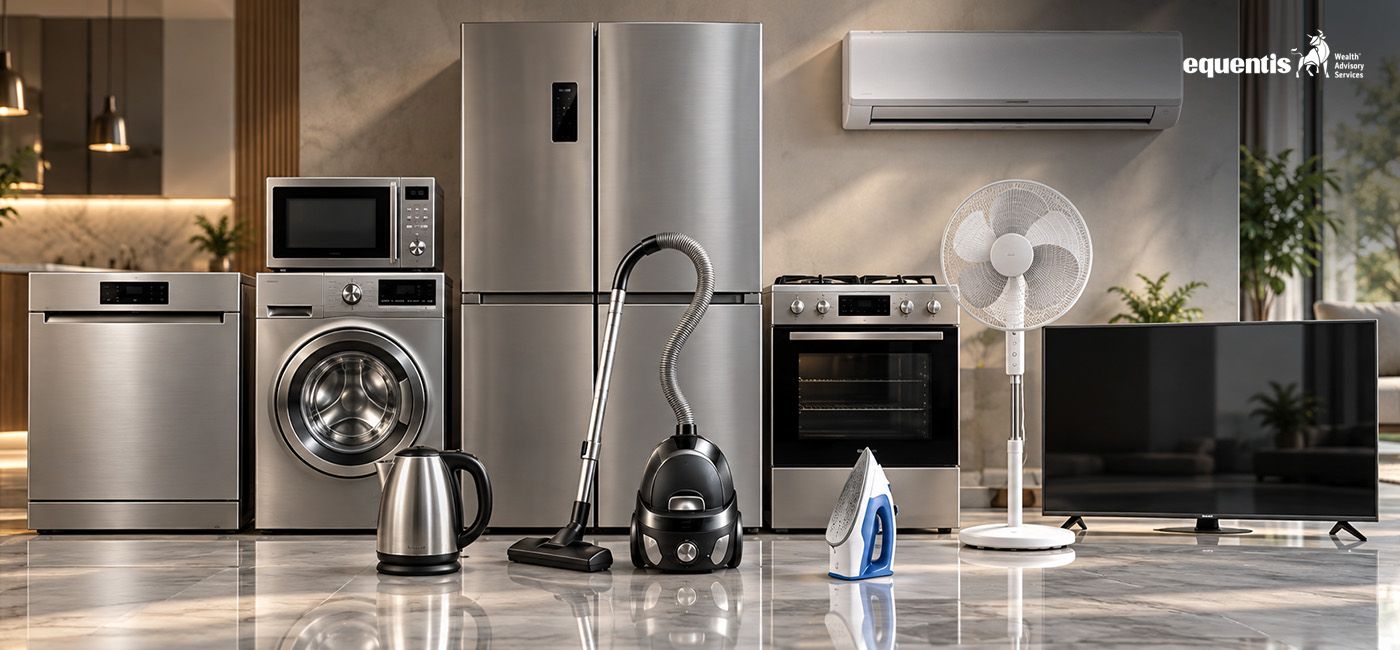

Consumer electronics and appliance prices in India are set to rise from October 1, 2026, with air-conditioner prices expected to increase by around 5–8% and some televisions and other appliances also becoming costlier. The latest AC and TV price hike in October 2026 comes as manufacturers face higher costs for copper, aluminium, steel, crude oil derivatives, freight and currency-related expenses. The development has also put consumer durable stocks such as Voltas and Blue Star in focus as investors assess whether higher selling prices can help companies offset input-cost pressure.
Why Are AC and TV Prices Increasing in October 2026?
The latest price revision is primarily linked to rising input and operating costs. Copper and aluminium are important materials in air-conditioners, while steel and crude-derived components are used across several consumer durable products.
Manufacturers are also dealing with higher freight expenses and currency volatility. According to industry reports, these pressures have continued even after earlier price revisions, prompting another round of increases ahead of the festive shopping season.
This is also not the first increase this year. Industry executives have described the October revision as the third round of price hikes in 2026, highlighting the sustained pressure on manufacturers’ margins.
How Much Will AC and TV Prices Increase?
The impact will vary by company and product category.
Air-conditioners are expected to see price increases of approximately 5–8%, while some manufacturers are increasing prices of LED TVs, refrigerators and washing machines by around 3–4%. The exact increase can differ depending on the brand, model, inventory position and timing of implementation.
For example, Blue Star has confirmed an 8% increase in air-conditioner prices, while LG Electronics India has announced a 5–7% increase in AC prices from October 1. LG has not announced a similar increase across all its other product categories.
Some manufacturers are expected to implement price increases at different times, meaning the entire market may not move to higher prices on the same day.
Why Are Voltas and Blue Star Shares in Focus?
The price increases have attracted attention in the stock market because higher selling prices can potentially help consumer durable companies recover part of their increased input costs.
Voltas and Blue Star shares moved higher in early trading on September 28 after the price-hike announcements. Around 9:30 am, Voltas was reported at ₹1,129.50, up about 1%, while Blue Star was at ₹1,579, up around 0.91%. However, stock prices can change throughout the trading session, and the immediate market reaction does not establish how the companies will perform over the longer term.
LG Electronics India also remained in focus, although its early trading performance was mixed in reports. This highlights an important distinction: a product price increase may support revenue per unit, but the overall effect on a company’s financial performance depends on volumes, margins, competition and input costs.
What Does the Price Hike Mean for Consumers?
For consumers, the biggest concern is that festive-season purchases could become more expensive.
However, higher announced prices do not necessarily mean every customer will immediately pay 5–8% more. Dealers and distributors had reportedly stocked some products at older prices before the latest increases. This existing inventory could allow retailers to continue selling selected models at previous prices for some time.
Consumers should therefore compare the final transaction price rather than focusing only on the manufacturer’s revised price. Discounts, exchange offers, bank offers, warranties and financing schemes can also affect the effective cost.
For someone planning to purchase an AC or television during the festive season, checking multiple retailers and comparing the same model across platforms can provide a clearer picture of the actual price impact.
What Does It Mean for Investors?
For investors tracking Voltas, Blue Star, LG Electronics India and other consumer durable stocks, the key issue is whether companies can pass higher costs on to customers without significantly reducing sales volumes.
Higher prices can improve average selling prices and potentially support margins if demand remains stable. However, if consumers delay purchases because of higher prices, volume growth could come under pressure.
The festive period is particularly important because consumer durable companies typically see strong demand around major shopping events. A price increase immediately before this period creates a balance between protecting margins and maintaining demand.
Investors may therefore want to monitor quarterly revenue growth, operating margins, sales volumes, inventory levels and management commentary rather than interpreting a single day’s share-price movement in isolation.
Opportunities and Risks
The price revision could provide some relief to manufacturers facing higher commodity and logistics costs. Companies with strong distribution networks and the ability to pass on cost increases may be better positioned to protect profitability.
At the same time, there are clear risks. Higher prices could affect affordability, particularly in the mass-market segment. Continued increases in copper, steel, aluminium or crude-linked costs could create additional pressure. Competition between brands may also limit how much of the cost increase can ultimately be passed on to consumers.
Another factor to watch is old-price inventory. If dealers continue selling products purchased before the price revision, the full impact of higher prices may take time to appear in company financial results.
Conclusion
The AC and TV price hike from October 2026 reflects a combination of higher raw-material, freight and currency-related costs facing India’s consumer electronics industry. AC prices are expected to rise by around 5–8%, while selected televisions and other appliances could see smaller increases.
The move has brought Voltas, Blue Star, LG Electronics India and other consumer durable companies into focus, but the longer-term impact will depend on how successfully manufacturers balance higher prices with festive-season demand.
For consumers, existing dealer inventory could provide some products at older prices for a limited period. For investors, the important factors to watch are margins, sales volumes, commodity prices, inventory and demand during the festive season.
Frequently Asked Questions
1. Why are AC prices increasing from October 2026?
AC prices are rising mainly because manufacturers are facing higher costs for copper, aluminium, steel, crude-derived materials, freight and other inputs. Currency volatility has added to cost pressures. Several manufacturers are passing part of these increases on to consumers through higher product prices from October 1, 2026.
2. How much will AC prices increase in October 2026?
Air-conditioner prices are expected to increase by around 5–8%, although the actual increase will depend on the manufacturer and model. Blue Star has confirmed an 8% AC price increase, while LG Electronics India has announced a 5–7% increase from October 1.
3. Will TV prices also increase from October 1?
Some television manufacturers are expected to raise prices, although the increase may differ from the AC segment. Industry reports indicate that selected LED TVs, along with refrigerators and washing machines, could become around 3–4% more expensive for some manufacturers.
4. Why did Voltas and Blue Star shares rise after the price-hike news?
The stocks attracted attention because higher product prices could help manufacturers offset some of the increase in input costs. Voltas and Blue Star both traded higher in early September 28 trading. However, a short-term share-price movement does not by itself indicate future company performance.
5. Is this the first appliance price hike in 2026?
No. Industry reports describe the October revision as the third round of price increases for consumer appliances in 2026. Manufacturers have been dealing with persistent increases in commodities and other operating costs, leading to repeated price revisions during the year.
6. Will consumers immediately pay 5–8% more for an AC?
Not necessarily. The final price can depend on retailer discounts, existing inventory, promotional offers and the specific model. Dealers reportedly have some products purchased at older prices, which could allow certain models to remain available at previous prices for a period after October 1.
7. Which raw materials are making ACs and appliances more expensive?
Copper, aluminium and steel are among the important materials affecting appliance manufacturing costs. Crude oil derivatives also influence several components and logistics expenses. Higher freight costs and currency movements can add further pressure to manufacturers’ overall costs.
8. Could higher AC prices affect festive-season demand?
Higher prices could put some pressure on demand, particularly among price-sensitive consumers. However, the actual impact will depend on discounts, financing schemes, dealer inventory and consumer demand during the festive season. Existing inventory at older prices may also soften the immediate impact on buyers.
9. What should investors watch in consumer durable stocks?
Investors can track sales volumes, average selling prices, operating margins, inventory levels, commodity costs and management commentary. The ability to pass higher costs to customers while maintaining demand will be an important factor in assessing the impact of the latest price increases.
10. Will appliance prices continue rising after October 2026?
Future price movements will depend on commodity prices, freight costs, currency movements, demand and manufacturers’ margins. Some industry executives have indicated that further revisions could depend on how input costs evolve. Therefore, the October increase should not automatically be treated as a fixed indication of future appliance prices.
Disclaimer Note: The securities quoted, if any, are for illustration only and are not recommendatory. This article is for education purposes only and shall not be considered as a recommendation or investment advice by Equentis – Research & Ranking. We will not be liable for any losses that may occur. Investments in the securities market are subject to market risks. Read all the related documents carefully before investing. Registration granted by SEBI, membership of BASL & certification from NISM in no way guarantee the performance of the intermediary or provide any assurance of returns to investors.

Jaspreet Singh Arora is the Chief Investment Officer at Equentis, where he heads a seasoned team of equity analysts and turns two decades of market experience into portfolios that consistently beat the benchmark. A go-to voice on cement, building-materials, real-estate, and construction stocks, Jaspreet previously ran research desks at leading brokerages, honing an eye for the metrics that truly move share prices. His plain-spoken analysis helps investors cut through noise and act with conviction. When he’s not deep-diving into earnings calls, you’ll find him unwinding over sports, weekend cricket or a good history podcast.