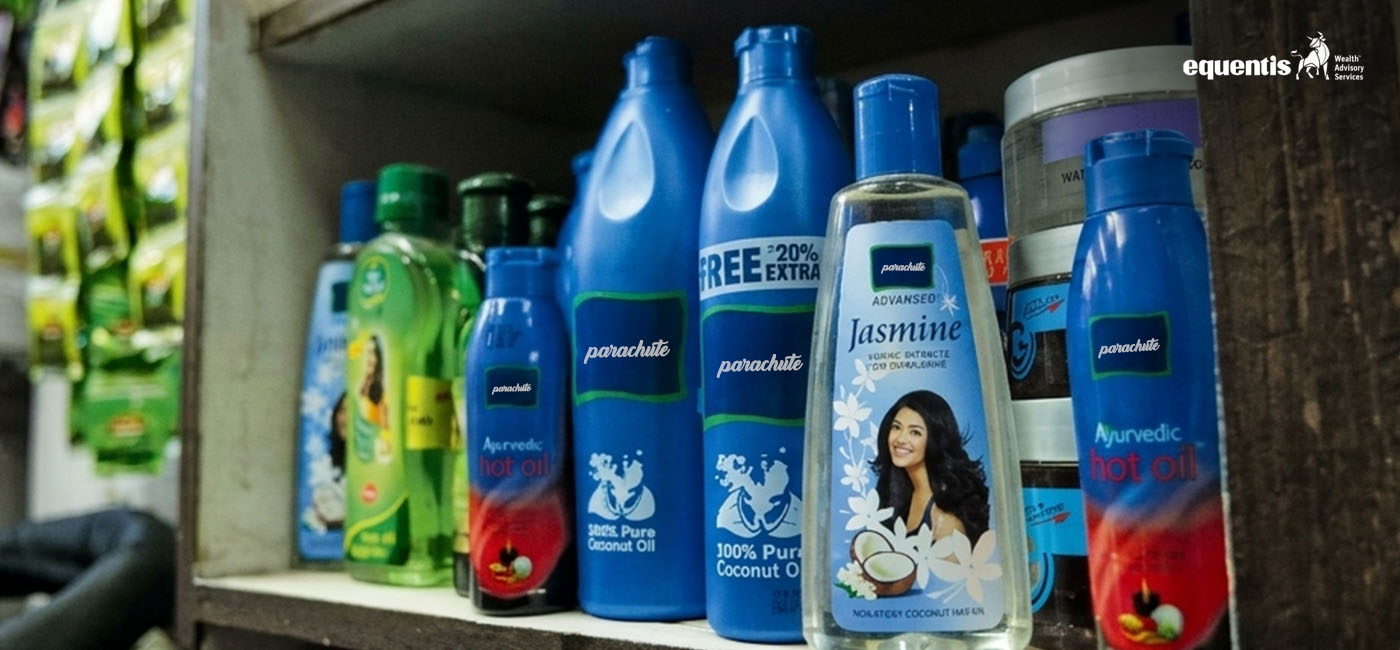

Marico’s Parachute volume growth has reportedly reached a 22-quarter high, strengthening the company’s outlook for FY27 and drawing attention to the Marico share price. The improvement reflects stronger consumer demand for Parachute coconut oil, better sales momentum and encouraging business conditions. The company’s raised FY27 guidance signals confidence in sustaining growth, although investors will need to monitor input costs, pricing decisions and profitability to assess whether the momentum translates into stronger earnings.
Marico Share Price: Why Parachute Volume Growth Matters
Parachute is one of Marico’s key consumer brands and an important contributor to its domestic business. Its performance provides valuable insight into the company’s ability to maintain demand in India’s competitive FMCG market.
A 22-quarter high in volume growth is significant because it indicates stronger sales quantities rather than growth driven entirely by higher prices.
For investors, volume growth is an important indicator of underlying demand. When consumers purchase more products, it can indicate improving brand traction, distribution strength and consumption trends.
The latest development also comes at a time when FMCG companies are closely tracking rural demand, urban consumption and household spending patterns.
What Does Parachute Volume Growth Mean?
Volume growth measures the increase in the quantity of products sold during a particular period.
For example, if a company sells 100 units in one quarter and 120 units in the next comparable quarter, its volume growth is 20%.
This is different from revenue growth, which measures the increase in the value of sales.
Volume Growth Versus Revenue Growth
The distinction matters because revenue can increase even when the quantity sold remains unchanged.
A company may report higher revenue because of price increases, premium product sales or changes in product mix.
However, volume growth generally provides a clearer indication of whether consumers are purchasing more products.
For Marico, stronger Parachute volume growth can support revenue expansion while improving the company’s ability to manage fixed operating costs through higher sales volumes.
Why Is Parachute Coconut Oil Seeing Stronger Demand?
Parachute Pure Coconut Oil | Vishal Mega Mart India
Marico To Focus On Strengthening Market Share In Hair Oil Segment
Several factors can influence demand for Parachute coconut oil in India.
1. Strong Brand Recognition
Parachute has an established presence in Indian households, particularly in the coconut oil category.
Brand familiarity, availability across retail outlets and repeat purchases can support consistent demand.
2. Distribution and Market Reach
Marico’s distribution network plays an important role in making Parachute products available across urban and rural markets.
Improved product availability, retail expansion and effective distribution can help the company reach additional consumers.
3. Consumer Consumption Trends
Household consumption patterns, spending capacity and product preferences influence FMCG sales.
If consumers purchase more frequently or increase their consumption of established products, companies can benefit from improved volume growth.
However, sustained growth depends on demand remaining healthy across different regions and consumer segments.
Marico Raises FY27 Guidance: What Does It Indicate?
The reported increase in Marico’s FY27 guidance suggests management sees better growth prospects for the financial year.
Guidance refers to a company’s expectations or outlook for future business performance.
When management raises guidance, it generally indicates greater confidence in factors such as sales growth, demand conditions or operating performance.
For Marico, stronger Parachute volumes could contribute to improved domestic business momentum.
However, higher guidance should not automatically be interpreted as a guarantee of higher profits. The actual financial outcome will depend on product mix, input costs, advertising expenditure and other operating expenses.
Marico Q2 FY27 Results: Key Financial Highlights
Marico reported a strong performance in the September quarter of FY27, with growth across several business segments.
| Financial Metric | Q2 FY27 Performance |
|---|---|
| Consolidated revenue | ₹3,897 crore |
| Revenue growth | 13% YoY |
| Adjusted net profit | ₹550 crore |
| Adjusted profit growth | 31% YoY |
| EBITDA | ₹709 crore |
| EBITDA growth | 27% YoY |
| EBITDA margin | 18.2% |
| India volume growth | 10% |
The improvement in profitability was supported by lower copra prices and a favourable product mix. EBITDA margin expanded approximately 200 basis points year-on-year, while advertising and promotional spending also increased as the company continued investing in its brands. NDTV Profit+2
Parachute Market Share Reaches 60%
Parachute Rigids recorded 13% volume growth and increased its volume market share to approximately 60%, gaining more than 570 basis points.
Interestingly, Parachute revenue growth remained relatively flat despite stronger volumes. This was partly because Marico passed on lower copra costs to consumers through price reductions.
The development illustrates why volume growth and revenue growth should be evaluated together. Stronger quantities sold can coexist with relatively modest revenue growth when product prices decline. Company Results – Business Standard+1
Other Marico Businesses Supporting Growth
Marico’s performance is increasingly supported by businesses beyond its traditional coconut oil portfolio.
Value-Added Hair Oils
The Value-Added Hair Oils segment recorded 21% growth, marking its sixth consecutive quarter of strong performance.
Products across premium and mid-range categories have helped the company expand its presence beyond traditional hair oil consumption.
Foods and Digital-First Brands
Marico’s foods portfolio grew 45%, crossing an annualised revenue run rate of ₹1,500 crore.
Its digital-first portfolio reached an annualised revenue run rate of approximately ₹1,150 crore, while premium personal care crossed ₹500 crore.
These businesses are important because they can reduce the company’s dependence on a limited number of traditional products over time. ETRetail.com+2
What Does the Raised FY27 Guidance Mean for Marico Investors?
Marico has increased its FY27 growth expectations following the strong first-half performance.
The revised outlook includes:
- Consolidated revenue growth in the teens.
- EBITDA growth in the mid-twenties.
- Double-digit volume growth for the India business.
- Revenue exceeding ₹15,000 crore during FY27.
- Earlier achievement of its ₹20,000 crore revenue ambition, now targeted for FY29 instead of FY30.
These changes indicate management’s confidence in sustained business momentum. However, guidance represents an expectation rather than a guaranteed financial outcome. NDTV Profit+2
Opportunities and Risks for Marico Share Price
The latest results provide several positive indicators for Marico.
Potential growth drivers include:
- Continued demand for Parachute coconut oil.
- Expansion of premium hair care products.
- Growth in foods and digital-first brands.
- Improving distribution and market penetration.
- Better profitability supported by operational efficiencies.
However, investors should also consider potential risks.
Key risks include:
- Rising copra prices reversing recent margin benefits.
- Inflation in crude-linked derivatives and vegetable oils.
- Higher advertising expenditure affecting profitability.
- Weak demand in certain international markets.
- Premium stock valuations limiting potential upside.
Marico has also indicated that commodity inflation and weather-related developments remain important factors to monitor. NDTV Profit+1
Conclusion
Marico’s Parachute volume growth reaching a 22-quarter high is an important development for the company’s domestic business. The 13% volume increase, stronger market share and improved performance across value-added hair oils and newer businesses have supported the decision to raise FY27 guidance.
For investors tracking the Marico share price, the next important indicators will be sustained volume growth, margin performance, commodity prices and execution of the company’s broader growth strategy.
The business outlook has improved, but maintaining that momentum through changing consumer demand and commodity cycles will remain essential.
Frequently Asked Questions
1. Why is Marico share price in the news?
Marico shares attracted investor attention after the company reported strong Q2 FY27 results and raised its full-year growth guidance. Parachute coconut oil recorded its highest volume growth in 22 quarters, while EBITDA and adjusted net profit increased significantly. The improved outlook strengthened market interest in the FMCG company’s earnings prospects.
2. What is Parachute volume growth in Q2 FY27?
Parachute Rigids recorded 13% year-on-year volume growth in Q2 FY27, marking its strongest performance in 22 quarters. The brand also increased its volume market share to approximately 60%. Stronger volumes indicate improved consumer demand, although revenue growth remained relatively modest because of earlier price reductions.
3. What is Marico’s FY27 revenue growth guidance?
Marico expects consolidated revenue growth in the teens during FY27 and anticipates crossing ₹15,000 crore in revenue. The company has also raised its EBITDA growth guidance to the mid-twenties. These expectations reflect stronger business momentum following its September quarter performance.
4. What is Marico’s EBITDA growth guidance for FY27?
Marico has raised its FY27 EBITDA growth guidance to the mid-twenties from its earlier high-teens expectation. EBITDA measures operating earnings before interest, taxes, depreciation and amortisation. The revised outlook reflects stronger volumes, favourable product mix and lower copra costs, although future commodity prices could influence profitability.
5. Why did Parachute revenue grow slower than volume?
Parachute volume growth was 13%, but revenue growth remained approximately flat. This happened partly because Marico reduced prices earlier in the year to pass on the benefits of lower copra costs to consumers. Consequently, the company sold more products without experiencing a comparable increase in revenue.
6. What was Marico’s net profit in Q2 FY27?
Marico reported adjusted net profit of approximately ₹550 crore in Q2 FY27, representing 31% year-on-year growth. The improvement was supported by stronger operating performance and expanding margins. Investors should also examine whether profit growth remains sustainable as commodity costs and promotional spending change.
7. What is Marico’s ₹20,000 crore revenue target?
Marico has brought forward its ₹20,000 crore consolidated revenue ambition to FY29 from FY30. The revised timeline reflects stronger growth expectations and expansion across its traditional FMCG, foods, premium personal care and digital-first businesses. Achieving the target will depend on sustained demand and successful execution.
8. How do lower copra prices benefit Marico?
Copra is a key raw material used in coconut oil production. When copra prices decline, Marico may benefit from lower manufacturing costs and improved gross margins. However, the impact depends on procurement timing, inventory levels and pricing decisions. A reversal in copra prices could reduce some of these profitability benefits.
9. What are the risks for Marico shares after strong Q2 results?
Potential risks include rising commodity prices, inflation in crude-linked ingredients, higher advertising expenditure and weaker consumer demand. Valuation is another consideration because strong earnings expectations may already be reflected in the share price. Investors should evaluate financial performance and business risks together.
10. What should investors watch in Marico’s upcoming quarterly results?
Investors should monitor Parachute volume growth, India business volumes, EBITDA margins, copra prices and international business performance. Growth in foods, premium personal care and digital-first brands will also be important. These indicators can help assess whether Marico is maintaining the momentum required to achieve its revised FY27 guidance.
Disclaimer Note: The securities quoted, if any, are for illustration only and are not recommendatory. This article is for education purposes only and shall not be considered as a recommendation or investment advice by Equentis . We will not be liable for any losses that may occur. Investments in the securities market are subject to market risks. Read all the related documents carefully before investing. Registration granted by SEBI, membership of BASL & certification from NISM in no way guarantee the performance of the intermediary or provide any assurance of returns to investors.

Parvati Rai is the Vice President of the Research team at Equentis. She has over 15 years of equity-research and strategy-consulting experience. A specialist in deep-dive valuations, financial modelling, and forecasting, she has built research desks from the ground up, by steering buy-side, sell-side, and independent coverage across sectors. When she isn’t fine-tuning models, Parvati unwinds on nature treks and mentors aspiring analysts.