
Introduction
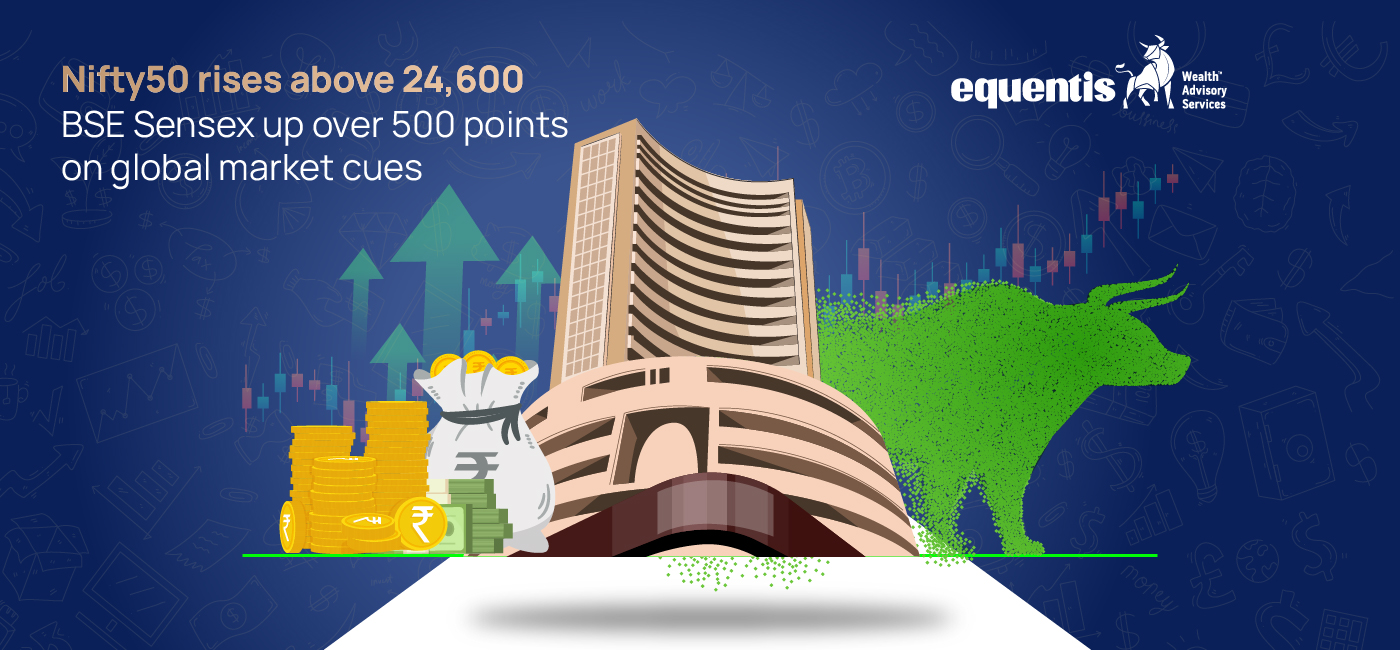
Indian equity markets witnessed a positive session as the Nifty50 crossed the 24,600 mark while the BSE Sensex surged more than 500 points, reflecting renewed optimism among investors. The rally came amid supportive global cues and improved sentiment across key sectors of the market.
For investors tracking Large Cap Stocks and Mid Cap Stocks, such market movements often signal changing momentum and shifting risk appetite. When benchmark indices move sharply on global triggers, it tends to influence portfolio decisions, trading strategies, and overall market outlook.
The latest rise in benchmark indices indicates that investors are responding to a mix of global developments, sectoral momentum, and expectations around economic stability. Understanding the reasons behind this rally can help investors interpret whether the momentum is sustainable or simply a short-term reaction to global signals.
Context and Background
India’s stock market benchmarks, the Nifty50 and the BSE Sensex, are closely tied to both domestic economic indicators and global financial conditions. Movements in international markets, interest rate expectations, commodity prices, and geopolitical developments often influence investor sentiment in India.
Over the past few sessions, global markets have shown signs of stability following earlier volatility. Investors worldwide have been watching central bank signals, inflation trends, and economic growth indicators. Positive developments in these areas tend to support equity markets globally, and India often benefits from this broader sentiment.
Another factor influencing the Indian market is the steady participation of domestic institutional investors and retail investors. Strong domestic liquidity has helped cushion the market from external shocks in recent years.
As a result, when global cues turn favorable, Indian indices often respond quickly. The recent rally reflects this pattern, with benchmark indices gaining momentum as investors reacted to improving global signals.
Key Developments Driving the Market Rally
Several factors contributed to the rise in the Nifty50 and Sensex during the latest trading session.
1. Positive Global Market Sentiment
Global equity markets showed signs of recovery, which supported investor confidence in emerging markets like India. When international markets move higher, it typically encourages investors to increase exposure to equities, including Indian stocks.
This improved sentiment often leads to buying activity in heavyweight sectors such as banking, information technology, and energy.
2. Strength in Banking and Financial Stocks
Banking stocks played a key role in pushing benchmark indices higher. Large private sector banks and financial institutions carry significant weight in both the Nifty50 and the Sensex. When these stocks move up, they tend to lift the broader indices.
Investor confidence in the financial sector remains linked to credit growth expectations, asset quality stability, and economic expansion.
3. IT and Export-Oriented Stocks Benefit from Global Signals
Technology stocks also gained attention as global market conditions improved. IT companies are closely tied to international demand, especially from the United States and Europe. Any sign of economic stability in these regions often supports IT stocks listed in India.
4. Sectoral Buying Across Large Caps
Broad-based buying in Large Cap Stocks contributed to the upward movement of benchmark indices. Institutional investors often prefer large-cap companies during periods of uncertainty because they typically offer stronger balance sheets and more stable earnings visibility.
At the same time, mid-cap stocks have continued to attract interest due to their potential for growth, although they tend to be more volatile compared to large caps.
What This Means for Investors
A rise in benchmark indices often creates optimism in the market, but investors need to interpret such movements carefully.
For long-term investors, market rallies driven by global cues highlight the importance of diversification and disciplined investment strategies. Instead of reacting to short-term market movements, investors may benefit from focusing on fundamentals such as earnings growth, sector outlook, and valuation.
Short-term traders, however, often look at such rallies as opportunities to capitalize on momentum. When markets respond to global triggers, trading volumes and volatility can increase, creating both opportunities and risks.
Another important takeaway is the growing resilience of the Indian market. Domestic investor participation and consistent economic growth have helped the market absorb global shocks more effectively than in the past.
Opportunities and Risks to Watch
While the recent market rally reflects positive sentiment, investors should remain aware of both opportunities and potential risks.
Opportunities
India’s economic outlook continues to support long-term equity investments. Factors such as infrastructure spending, digital adoption, and rising consumption are contributing to growth across multiple sectors.
For investors, this environment may create opportunities in sectors such as banking, manufacturing, infrastructure, and technology.
Additionally, corrections or consolidation phases often provide opportunities for investors to accumulate quality stocks at reasonable valuations.
Risks
Despite the positive momentum, several risks could influence market direction.
Global uncertainties remain a key concern. Changes in interest rate expectations, geopolitical developments, or economic slowdown in major economies could impact global financial markets and eventually affect Indian equities.
Valuations in certain segments of the market, particularly mid caps, have also been a topic of discussion among analysts. If valuations move significantly ahead of earnings growth, markets may witness periods of consolidation.
Investors should therefore remain cautious and avoid chasing short-term rallies without considering underlying fundamentals.
Conclusion
The recent surge in the Nifty50 above 24,600 and the 500-point rise in the BSE Sensex reflects improving investor sentiment supported by positive global market cues. Strength in banking, IT, and large-cap stocks played a major role in driving the benchmark indices higher.
While such rallies often create optimism, investors should view them within the broader context of global developments, sector performance, and economic trends. Markets can move quickly in response to external factors, making it important to stay focused on long-term fundamentals rather than short-term fluctuations.
For investors tracking Large Cap Stocks and Mid Cap Stocks, the current market environment highlights the importance of balance, diversification, and patience. As global and domestic factors continue to shape market direction, staying informed and maintaining a disciplined investment approach will remain essential.
The coming sessions will likely depend on global cues, economic data, and investor sentiment. Whether the rally continues or markets move into a consolidation phase, the focus will remain on sustainable growth and earnings visibility across sectors.
Disclaimer Note: The securities quoted, if any, are for illustration only and are not recommendatory. This article is for education purposes only and shall not be considered as a recommendation or investment advice by Equentis – Research & Ranking. We will not be liable for any losses that may occur. Investments in the securities market are subject to market risks. Read all the related documents carefully before investing. Registration granted by SEBI, membership of BASL & certification from NISM in no way guarantee the performance of the intermediary or provide any assurance of returns to investors.

Parvati Rai is the Vice President of the Research team at Equentis. She has over 15 years of equity-research and strategy-consulting experience. A specialist in deep-dive valuations, financial modelling, and forecasting, she has built research desks from the ground up, by steering buy-side, sell-side, and independent coverage across sectors. When she isn’t fine-tuning models, Parvati unwinds on nature treks and mentors aspiring analysts.