
Summary
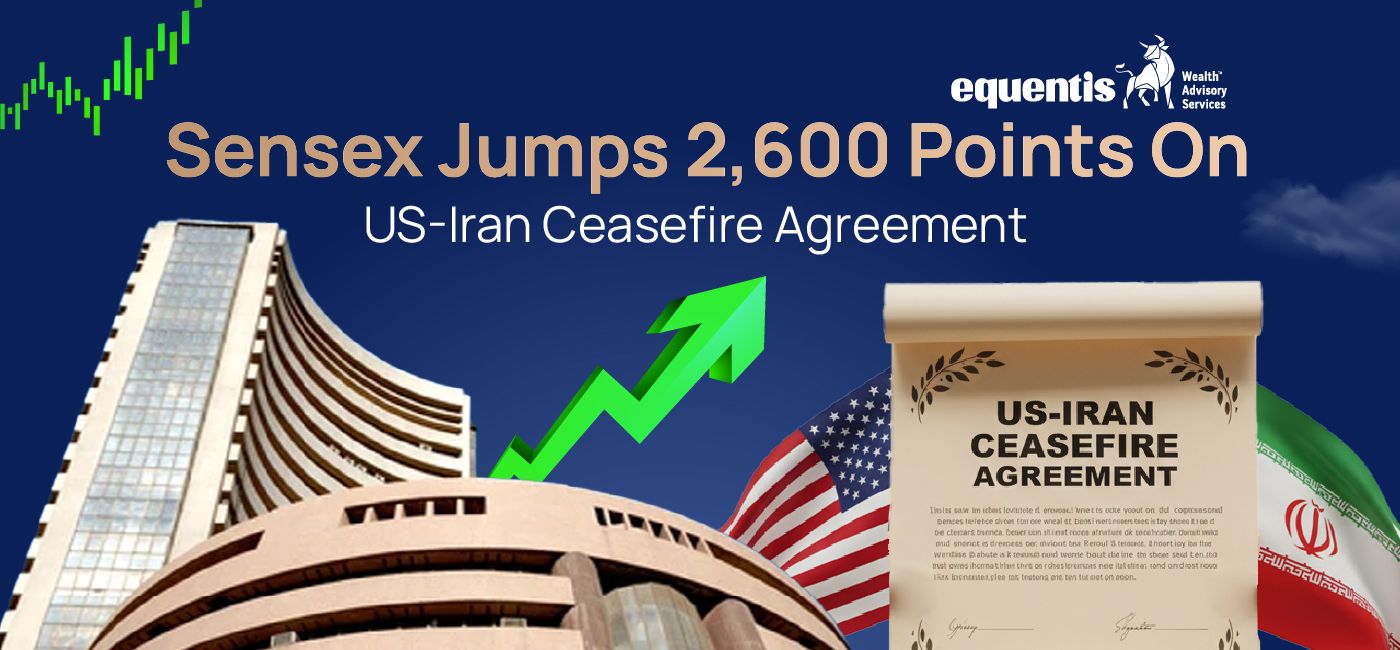
The Indian stock market witnessed a sharp rally, with the Sensex surging over 2,600 points following the announcement of a US-Iran ceasefire agreement. This sudden spike reflects how quickly global geopolitical tensions can influence market sentiment. The ceasefire reduced fears of escalating conflict and rising oil prices, boosting investor confidence across equities, especially in sectors sensitive to global risks. For investors, this move highlights the importance of tracking global events alongside domestic fundamentals.
Introduction: Why This Rally Matters Today
The stock market often reacts not just to earnings or economic data, but also to global developments. The recent ceasefire agreement between the US and Iran has become a major trigger for market optimism.
For Indian investors, this is particularly important because geopolitical tensions in the Middle East directly impact crude oil prices, inflation expectations, and overall economic stability. A de-escalation signals relief, and the markets have responded strongly.
The Sensex’s 2,600-point jump is not just a number. It reflects a shift in sentiment from fear to optimism in a very short span.
Understanding the Context: Why US-Iran Tensions Matter
To understand this rally, it is important to look at the broader context. The US and Iran have had a long history of conflict, and any escalation often leads to global uncertainty.
Key reasons why this matters to India:
- India is a major importer of crude oil
- Middle East tensions can disrupt oil supply
- Rising oil prices increase inflation and fiscal pressure
- Global investors tend to reduce risk exposure during conflicts
When tensions rise, markets usually fall. When tensions ease, markets rebound.
The recent ceasefire has reduced the risk of supply disruptions and stabilized crude oil expectations, which is a positive signal for emerging markets like India.
What Drove the 2,600-Point Rally
The rally was not random. It was driven by a combination of factors that aligned positively.
1. Cooling Oil Prices
One of the biggest triggers was the expected stabilization of crude oil prices. Lower oil prices reduce:
- Input costs for companies
- Inflationary pressures
- Pressure on the Indian rupee
2. Return of Risk Appetite
Global investors tend to move money into equities when uncertainty reduces. The ceasefire encouraged:
- Foreign Institutional Investors (FIIs) to increase exposure
- Strong buying in large-cap stocks
3. Broad-Based Buying
The rally was not limited to a few stocks. It was seen across:
- Banking stocks
- IT companies
- Auto sector
- Capital goods
4. Short Covering
Markets had been cautious due to geopolitical tensions. Once clarity emerged, traders rushed to cover short positions, accelerating the rally.
Sector-Wise Impact of the Rally
Banking and Financials
Banks led the rally as lower oil prices improve macroeconomic stability. Lower inflation expectations also support interest rate outlooks.
IT Sector
IT stocks benefited from improved global sentiment. Reduced geopolitical risk strengthens confidence in global economic growth.
Oil Marketing Companies
These companies gained as lower crude prices improve margins.
Auto and Consumption
Lower fuel costs can increase disposable income, indirectly supporting consumption-driven sectors.
What This Means for Investors
This rally is a reminder that markets are influenced by both domestic and global factors.
Short-Term Impact
- Positive momentum may continue if stability holds
- Volatility may reduce in the near term
- Traders may see opportunities in momentum-driven stocks
Long-Term Perspective
Investors should avoid getting carried away by a single-day rally. Instead:
- Focus on fundamentals
- Track earnings growth
- Diversify portfolios
Global events can trigger short-term movements, but long-term returns depend on business performance.
Opportunities Emerging from the Situation
1. Entry Opportunities in Quality Stocks
Sharp rallies often come after corrections. Investors who missed earlier dips can still look for:
- Fundamentally strong companies
- Leaders in sectors like banking, IT, and manufacturing
2. Beneficiaries of Lower Oil Prices
Sectors that benefit include:
- Aviation
- Paint companies
- Logistics
3. Improved Macro Environment
A stable geopolitical environment supports:
- Economic growth
- Corporate earnings
- Investor confidence
Risks Investors Should Watch
While the rally is positive, it is important to stay cautious.
1. Ceasefire Stability
Geopolitical agreements can be fragile. Any breakdown could reverse sentiment quickly.
2. Oil Price Volatility
Even with a ceasefire, oil prices can fluctuate due to other global factors.
3. Overvaluation Concerns
Sharp rallies can push valuations higher, making markets expensive in the short term.
4. Global Economic Signals
Investors should also track:
- US interest rates
- Global inflation trends
- Currency movements
How Should Investors Approach the Market Now
Stay Disciplined
Avoid chasing stocks after a sharp rally. Instead:
- Invest gradually
- Use SIP-like approaches in equities
Focus on Asset Allocation
Balance between:
- Equity
- Debt
- Gold
Think Long-Term
Short-term events create noise. Long-term wealth is created through:
- Consistency
- Patience
- Quality investing
Conclusion: A Relief Rally, Not a Trend Guarantee
The Sensex’s 2,600-point jump following the US-Iran ceasefire is a classic example of how global events shape market movements. The easing of geopolitical tensions has provided immediate relief, especially by stabilizing crude oil expectations and improving investor sentiment.
However, investors should treat this as a relief rally rather than a confirmation of a long-term trend. Markets remain sensitive to global developments, and volatility can return quickly if uncertainties resurface.
The key takeaway is simple: stay informed, stay disciplined, and focus on long-term fundamentals rather than reacting to short-term headlines.
FAQs
1. Why did the Sensex jump 2,600 points?
The rally was driven by improved global sentiment after the US-Iran ceasefire reduced geopolitical risks.
2. How does a ceasefire impact stock markets?
It reduces uncertainty, improves investor confidence, and stabilizes key factors like oil prices.
3. Why are oil prices important for India?
India imports most of its crude oil, so price changes affect inflation and the economy.
4. Which sectors benefited the most from the rally?
Banking, IT, auto, and oil marketing companies saw strong gains.
5. Should investors invest after such a rally?
Investors should be cautious and avoid chasing prices. Gradual investing is recommended.
6. Can this rally continue?
It depends on global stability and domestic economic factors.
7. What role do FIIs play in such rallies?
FIIs often increase investments when global risks reduce, boosting markets.
8. Is this a good time to buy stocks?
Selective buying in fundamentally strong stocks may be considered.
9. What risks remain after the ceasefire?
Geopolitical tensions can re-emerge, and oil prices can still fluctuate.
10. How does inflation relate to oil prices?
Higher oil prices increase transportation and production costs, raising inflation.
11. Why do markets react quickly to global news?
Markets are forward-looking and price in expectations rapidly.
12. What is short covering?
It happens when traders buy stocks to close earlier bearish positions, pushing prices up.
13. Are such rallies common?
Yes, markets often react sharply to major global developments.
14. How should beginners react to such news?
Avoid impulsive decisions and stick to a long-term strategy.
15. Can geopolitical risks affect long-term investments?
They usually impact short-term volatility more than long-term trends.
16. What is the role of crude oil in stock markets?
It influences inflation, currency, and corporate profitability.
17. Should investors track global news regularly?
Yes, global events can significantly impact markets.
18. What is a relief rally?
A temporary market rise after negative uncertainty reduces.
19. Can markets fall again after this rally?
Yes, if new risks emerge or sentiment changes.
20. What is the key takeaway for investors?
Stay disciplined, focus on fundamentals, and avoid reacting to short-term noise.
Disclaimer Note: The securities quoted, if any, are for illustration only and are not recommendatory. This article is for education purposes only and shall not be considered as a recommendation or investment advice by Equentis – Research & Ranking. We will not be liable for any losses that may occur. Investments in the securities market are subject to market risks. Read all the related documents carefully before investing. Registration granted by SEBI, membership of BASL & certification from NISM in no way guarantee the performance of the intermediary or provide any assurance of returns to investors.

Parvati Rai is the Vice President of the Research team at Equentis. She has over 15 years of equity-research and strategy-consulting experience. A specialist in deep-dive valuations, financial modelling, and forecasting, she has built research desks from the ground up, by steering buy-side, sell-side, and independent coverage across sectors. When she isn’t fine-tuning models, Parvati unwinds on nature treks and mentors aspiring analysts.