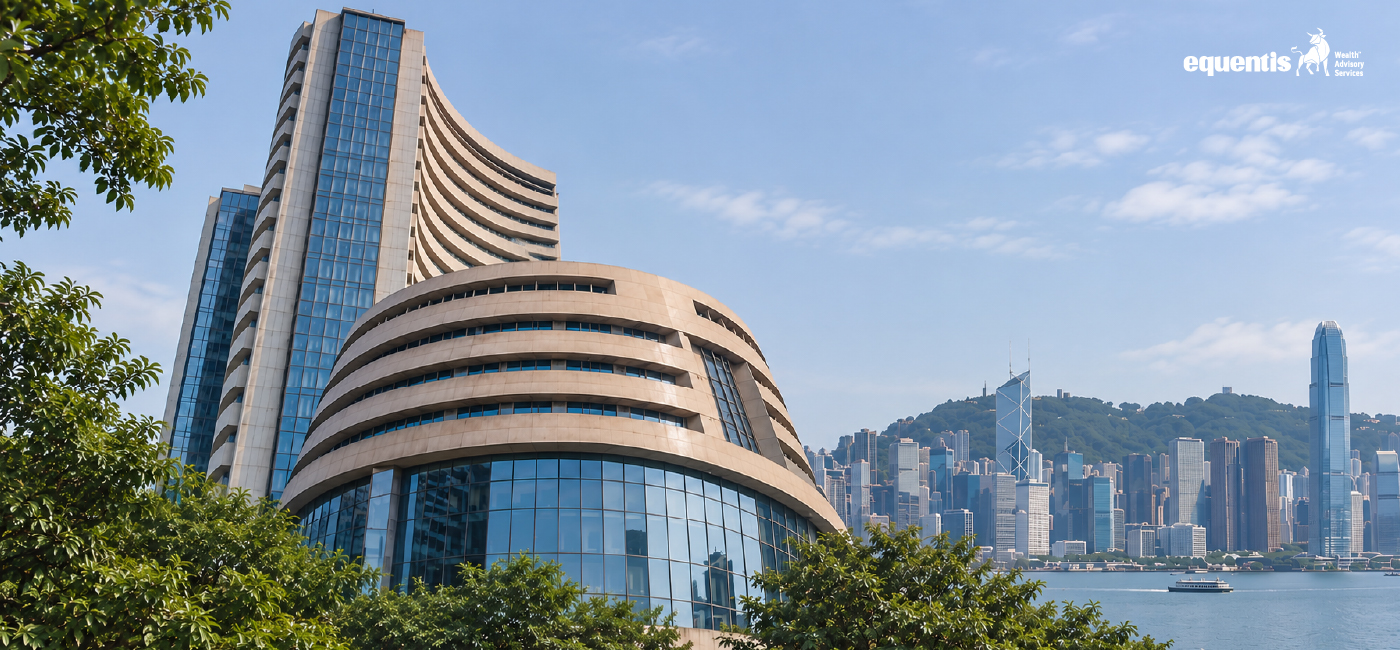

The Indian stock market witnessed a positive trading session on November 17, 2026, as the Sensex and Nifty extended their recent gains while the Bank Nifty touched a fresh record high. Although domestic benchmark indices opened almost flat amid mixed global cues, buying interest in banking, automobile and realty stocks supported the upward movement. Falling crude oil prices and renewed foreign institutional investor (FII) inflows also improved market sentiment. The session highlighted the growing strength of banking stocks, even as investors remained selective across other sectors.
Stock Market Today: How Did Sensex and Nifty Perform?
Indian equity markets started Tuesday’s session on a relatively cautious note but gained momentum as trading progressed. The BSE Sensex and NSE Nifty 50 moved higher, supported by buying in heavyweight stocks and financial companies.
At the closing bell on November 17:
- BSE Sensex: Closed at 82,532.19, gaining 427.40 points or 0.52%.
- NSE Nifty 50: Settled at 25,387.40, rising 96.30 points or 0.38%.
- Bank Nifty: Touched a fresh intraday record high of 62,414.90.
The Nifty also crossed the 25,500 mark during intraday trading before giving up some of its gains. Both benchmark indices extended their positive momentum for a second consecutive session. Reuters+2
The relatively stronger performance of banking stocks compared with the broader market indicates that investors are currently showing interest in select sectors rather than buying indiscriminately across the market.
Why Is Bank Nifty Rising Near Record High Levels?
Banking stocks remained among the key contributors to Tuesday’s market gains. The Nifty Bank index crossed the 62,000 mark and reached a fresh record high, reflecting strong buying interest in public and private sector lenders.
Several factors have supported the banking sector’s recent performance.
1. Strong Interest in Banking Stocks
Investors have shown interest in banking shares amid expectations of stable credit growth, improving business activity and relatively resilient financial performance.
Large banking companies also have considerable weight in benchmark indices. Consequently, movements in major banking stocks can influence the overall direction of the Sensex and Nifty.
2. Foreign Investor Buying
Foreign institutional investors have returned to Indian equities after recording net outflows during the previous two months.
Foreign investors reportedly invested approximately ₹84,290 crore in Indian equities during the first fortnight of November. This reversal in investment activity has provided additional support to domestic market sentiment. The Times of India+1
3. Improved Market Sentiment
A combination of easing crude oil prices, foreign fund inflows and interest in domestic financial stocks has helped improve investor confidence.
However, a record high does not automatically mean banking stocks are undervalued. Investors still need to monitor valuations, asset quality, deposit growth and lending margins.
What Is Supporting the Indian Stock Market Rally?
Apart from banking stocks, several domestic and international developments are influencing market movements.
Falling Crude Oil Prices
Crude oil prices have been an important factor supporting Indian equities.
Brent crude traded around $92–93 per barrel on November 17, extending its recent decline. Lower international oil prices can benefit India because the country depends significantly on imported crude to meet its energy requirements. Reuters+1
Lower crude prices can have several positive implications:
- Reduce pressure on India’s import bill.
- Help moderate inflationary pressures.
- Provide some relief to oil marketing companies.
- Reduce input costs for industries such as paints, tyres and aviation.
However, geopolitical developments and changes in global oil supply could influence crude prices again.
Foreign Institutional Investors Return
FII activity is another important factor influencing the market.
Foreign investors had been cautious about Indian equities amid global uncertainties and valuation concerns. Their return in November has improved liquidity and supported buying in large-cap stocks.
Sustained foreign investment could provide support to financial services, banking and other heavyweight sectors. However, FII flows can change quickly depending on global interest rates, currency movements and investor risk appetite.
Domestic Economic Expectations
Investors are also assessing India’s economic growth prospects, corporate earnings and domestic consumption trends.
Companies with stable earnings, manageable debt and consistent business performance could attract investor attention when market conditions remain uncertain.
Which Sectors and Stocks Are Driving Market Movements?
The November 17 session witnessed buying interest across several sectors, although the performance remained uneven.
Banking, automobile and realty stocks contributed to the market’s positive movement. Public sector banks and select private lenders also witnessed buying interest.
Among individual Sensex constituents, Axis Bank, Reliance Industries and State Bank of India were among the notable gainers during the session. India Today
On the other hand, IT stocks experienced some profit booking, limiting the broader market’s gains.
This difference in sectoral performance is important because a rising Sensex does not necessarily mean every stock is participating in the rally.
Investors should examine sectoral indices and individual company performance rather than relying only on benchmark movements.
What Does the Market Movement Mean for Retail Investors?
For retail investors, the latest market movement highlights the importance of understanding sectoral trends and maintaining a disciplined investment approach.
The Bank Nifty reaching a record high reflects strength in banking stocks, but investors should avoid assuming that the entire banking sector will continue moving in the same direction.
A few practical considerations include:
- Review valuations: Record highs can increase the risk of buying stocks at expensive valuations.
- Monitor earnings: Company performance should remain an important consideration.
- Watch FII activity: Foreign investment trends can influence market liquidity and sentiment.
- Maintain diversification: Concentrating investments in one sector can increase portfolio risk.
- Avoid reacting to daily movements: Short-term market fluctuations should not automatically change long-term financial plans.
Investors should also distinguish between short-term trading opportunities and long-term investment decisions.
Opportunities and Risks: What Should Investors Watch Next?
The Indian stock market has received support from improving foreign investor participation, lower crude oil prices and strength in banking stocks.
If these factors remain favourable, they could help sustain positive sentiment across domestic equities.
However, certain risks remain relevant.
Global market volatility: Weakness in international technology stocks and uncertainty surrounding global economic conditions could influence foreign investment decisions.
Crude oil fluctuations: A sudden increase in oil prices could put pressure on India’s inflation outlook and currency.
Profit booking: Stocks trading near record levels may experience selling pressure as investors look to book profits.
Valuation concerns: Strong market momentum does not always translate into attractive valuations.
Investors should also monitor the US Federal Reserve’s policy outlook, foreign institutional investor flows, corporate earnings and developments in the Middle East.
Conclusion
The Indian stock market ended November 17 on a positive note, with the Sensex gaining over 427 points and the Nifty closing above 25,350. The Bank Nifty’s fresh intraday record high highlighted the strength of banking stocks, while falling crude oil prices and renewed FII buying provided additional support.
Going forward, the sustainability of the rally will depend on foreign investment flows, corporate earnings, global market conditions and domestic economic developments. For retail investors, the focus should remain on valuations, diversification and long-term financial objectives rather than chasing short-term market momentum.
Frequently Asked Questions
1. Why did the Indian stock market rise on November 17, 2026?
The Indian stock market rose on November 17 due to buying in banking, automobile and realty stocks. Falling crude oil prices and renewed foreign institutional investor inflows also supported sentiment. The Sensex gained 427.40 points, while the Nifty 50 advanced 96.30 points during the session.
2. At what level did the Sensex close on November 17, 2026?
The BSE Sensex closed at 82,532.19 on November 17, 2026, gaining 427.40 points or 0.52%. Banking, automobile and select heavyweight stocks contributed to the positive performance during the trading session.
3. At what level did the Nifty 50 close today?
The NSE Nifty 50 settled at 25,387.40 on November 17, 2026, rising 96.30 points or 0.38%. The index crossed 25,500 during intraday trading before experiencing some profit booking.
4. Why is Bank Nifty reaching record highs?
Bank Nifty has benefited from buying interest in public and private sector banks, improving market sentiment and expectations surrounding banking sector performance. Foreign investor participation and interest in large-cap financial stocks have also supported the index.
5. What is the Bank Nifty record high on November 17, 2026?
The Nifty Bank index touched a fresh intraday record high of 62,414.90 on November 17, 2026. The milestone reflected strong buying interest in banking shares during Tuesday’s trading session.
6. How do falling crude oil prices affect the Indian stock market?
India imports a significant proportion of its crude oil requirements. Lower oil prices can reduce import costs, ease inflationary pressures and support the rupee. They may also benefit industries such as aviation, paints, logistics and tyres through lower input costs.
7. What are FII and DII activities in the stock market?
FII refers to Foreign Institutional Investors, while DII refers to Domestic Institutional Investors. FIIs include overseas investment institutions, whereas DIIs include domestic mutual funds, insurance companies and financial institutions. Their buying and selling activities can influence market liquidity and share prices.
8. Does a rising Bank Nifty mean banking stocks are good investments?
Not necessarily. A rising Bank Nifty indicates positive movement in the banking sector, but individual companies can have different financial positions and valuations. Investors should examine earnings, asset quality, loan growth, deposit costs and valuations before making investment decisions.
9. What factors should investors watch in the Indian stock market?
Investors should monitor crude oil prices, FII and DII flows, corporate earnings, inflation, interest rate decisions, global economic developments and currency movements. These factors can influence market sentiment and the performance of individual sectors.
10. What is the outlook for Sensex and Nifty after the November 17 rally?
The near-term direction of the Sensex and Nifty will depend on sustained buying interest, corporate earnings, foreign investment activity and global economic conditions. Although recent gains indicate improving sentiment, investors should remain mindful of market volatility and avoid treating short-term gains as a guarantee of continued upward movement.
Disclaimer Note: The securities quoted, if any, are for illustration only and are not recommendatory. This article is for education purposes only and shall not be considered as a recommendation or investment advice by Equentis . We will not be liable for any losses that may occur. Investments in the securities market are subject to market risks. Read all the related documents carefully before investing. Registration granted by SEBI, membership of BASL & certification from NISM in no way guarantee the performance of the intermediary or provide any assurance of returns to investors.

Jaspreet Singh Arora is the Chief Investment Officer at Equentis, where he heads a seasoned team of equity analysts and turns two decades of market experience into portfolios that consistently beat the benchmark. A go-to voice on cement, building-materials, real-estate, and construction stocks, Jaspreet previously ran research desks at leading brokerages, honing an eye for the metrics that truly move share prices. His plain-spoken analysis helps investors cut through noise and act with conviction. When he’s not deep-diving into earnings calls, you’ll find him unwinding over sports, weekend cricket or a good history podcast.