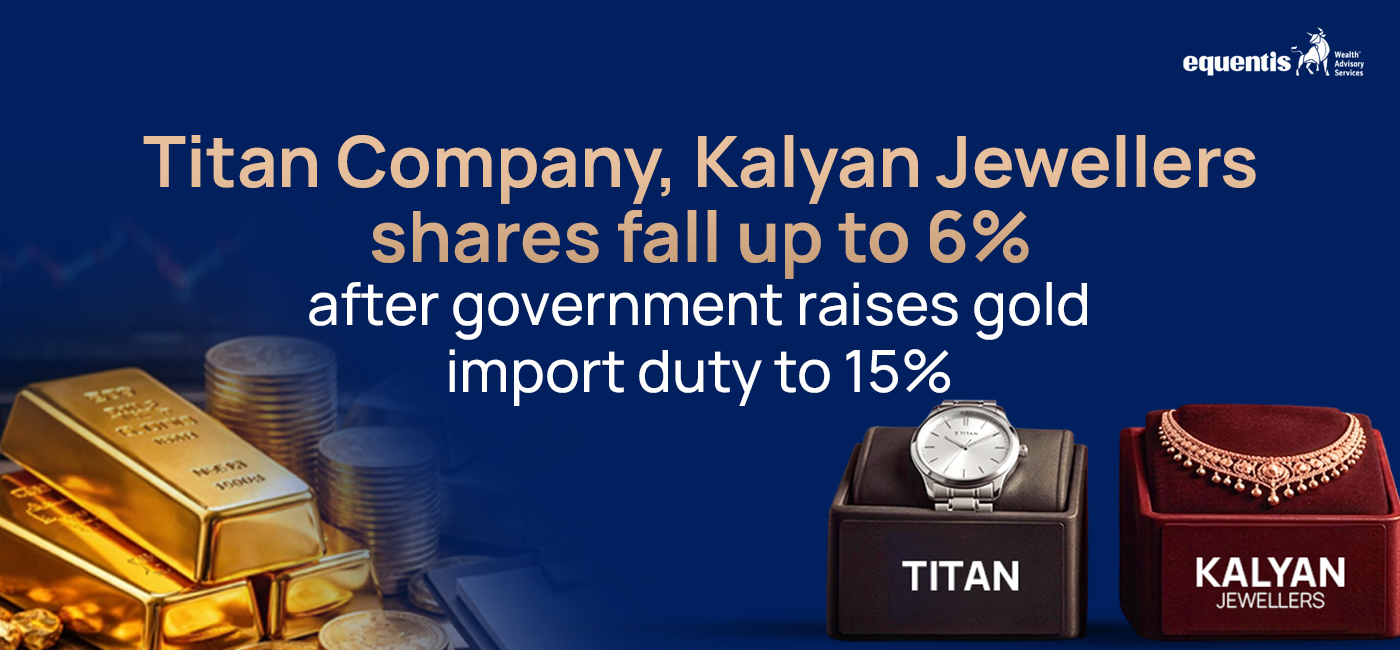

Gold jewellery stocks such as Titan Company and Kalyan Jewellers came under pressure after the Indian government increased the effective gold import duty to 15%. The move triggered concerns over higher raw material costs, possible pressure on jewellery demand, and narrower profit margins for organised jewellers. Shares of Titan Company and Kalyan Jewellers fell up to 6% as investors reacted to the likely impact on pricing, consumption, and future earnings growth. While the duty hike may support government revenue and help manage imports, it has also raised fresh questions about the near term outlook for India’s jewellery sector, especially ahead of festive and wedding demand.
Introduction
Gold holds a unique place in Indian households. It is not just an investment or a luxury purchase but also an emotional and cultural asset tied to weddings, festivals, and family savings. This is why any policy change related to gold often creates immediate reactions across financial markets, jewellery retailers, and consumers.
The latest trigger came after the government raised the effective gold import duty to 15%, leading to sharp declines in jewellery stocks. Titan Company and Kalyan Jewellers saw selling pressure on the stock market as investors assessed the impact of rising costs and possible changes in consumer behaviour.
The development arrives at a time when gold prices are already trading near elevated levels globally. Adding higher import duty on top of expensive international prices could make gold jewellery even costlier for Indian buyers. This combination has created uncertainty around demand trends for jewellery companies in the coming quarters.
At the same time, some market experts believe organised players may still perform relatively better than smaller unorganised jewellers due to stronger branding, better inventory management, and customer trust. The bigger question now is whether demand remains resilient despite higher prices or whether consumers delay purchases until prices stabilise.
Why Did Jewellery Stocks Fall?
The decline in jewellery stocks was mainly driven by concerns around profitability and demand.
Jewellery retailers depend heavily on imported gold as raw material. When import duty rises, the landed cost of gold increases. Companies then face two choices:
- Pass on the higher cost to customers through increased jewellery prices
- Absorb part of the cost, which can impact profit margins
Both situations create challenges.
If prices rise sharply, customers may postpone discretionary purchases, especially in urban markets where consumers closely track gold rates. On the other hand, if jewellers absorb costs to protect sales volumes, profitability may suffer.
This is why investors reacted negatively to the announcement and booked profits in major jewellery stocks.
Understanding the Gold Import Duty Hike
India is one of the world’s largest consumers of gold. Since domestic production is limited, the country imports a large quantity of gold every year. Import duty is a tax imposed on these imports.
The government usually changes gold duty rates for multiple reasons, including:
- Managing the trade deficit
- Controlling excessive imports
- Supporting the Indian rupee
- Increasing tax revenue
- Balancing macroeconomic conditions
The latest increase has pushed the effective duty on gold imports to 15%, making imported gold more expensive for jewellers and consumers.
For a country like India, where demand for physical gold remains structurally strong, such changes can have wide ranging implications across retail, investment, and consumer spending patterns.
How Higher Gold Duty Impacts Jewellery Companies
Rising Raw Material Costs
Gold is the primary raw material for jewellery retailers. Any increase in import costs directly impacts inventory expenses.
Companies like Titan Company and Kalyan Jewellers maintain large inventories to cater to seasonal demand during weddings and festivals. Higher duty means fresh inventory purchases become more expensive.
This can temporarily affect operating margins, especially if companies cannot fully pass on higher costs immediately.
Pressure on Consumer Demand
India’s jewellery demand is highly price sensitive.
When gold prices rise sharply, many consumers either:
- Reduce the quantity purchased
- Shift towards lighter jewellery
- Exchange old gold instead of fresh purchases
- Delay purchases temporarily
The impact becomes even more visible in discretionary segments where buyers may prioritise affordability.
Impact on Wedding Season Sales
India’s wedding market is one of the biggest demand drivers for jewellery companies. Families typically allocate a fixed budget for jewellery purchases.
When gold becomes expensive:
- Customers may buy lower weight ornaments
- Diamond jewellery may gain preference in some categories
- Consumers may wait for price corrections
This could affect revenue growth expectations for jewellery retailers in the short term.
Inventory and Hedging Challenges
Jewellery companies use hedging strategies to manage gold price volatility. However, sudden policy changes can still create temporary disruptions in inventory planning and pricing models.
Companies with better supply chain management and stronger balance sheets are usually better positioned to handle such volatility.
Why Organised Jewellers May Still Stay Resilient
Despite the negative market reaction, some analysts believe organised jewellery companies may remain relatively stronger than smaller local jewellers.
Strong Brand Trust
Consumers increasingly prefer trusted brands for jewellery purchases because of:
- Purity assurance
- Transparent pricing
- Buyback policies
- Hallmarking standards
This trend has supported the long term growth of organised jewellery retailers in India.
Better Financial Strength
Large listed players often have:
- Strong cash flows
- Better vendor relationships
- Advanced inventory systems
- Wider distribution networks
These advantages can help them manage temporary demand slowdowns more effectively.
Shift From Unorganised to Organised Sector
Higher compliance requirements and rising customer awareness have gradually shifted market share toward organised players.
Even during periods of industry stress, larger companies often continue gaining market share from smaller retailers.
Titan Company: Market Reaction and Business Outlook
Titan Company remains one of India’s most closely watched retail stocks because of its dominant jewellery business through the Tanishq brand.
The company has built strong brand equity over the years and benefits from:
- Nationwide presence
- Premium positioning
- Customer loyalty
- Strong wedding jewellery demand
However, Titan is also highly sensitive to gold price movements because jewellery contributes a significant portion of its revenue.
The recent decline in the stock reflects investor concerns that:
- Higher gold prices may slow volume growth
- Margins could face temporary pressure
- Consumer demand may weaken in the near term
Still, long term investors often track Titan for its ability to capture organised market share and maintain consistent execution across cycles.
Kalyan Jewellers: Key Concerns and Growth Drivers
Kalyan Jewellers has expanded aggressively across India and international markets over the last few years.
The company has focused on:
- Regional market penetration
- Franchise expansion
- Wedding jewellery demand
- Brand visibility
The stock correction reflects broader concerns affecting the jewellery sector rather than company specific issues alone.
Investors are now watching:
- Same store sales growth
- Demand trends during festive periods
- Inventory management
- Profit margin stability
If consumer demand remains resilient despite elevated prices, organised retailers like Kalyan Jewellers could recover from short term market volatility.
Impact on Consumers
Jewellery Purchases Could Become Costlier
The most immediate effect of higher import duty is increased jewellery pricing.
Consumers purchasing:
- Gold coins
- Chains
- Wedding jewellery
- Investment ornaments
may have to pay significantly more compared to earlier periods.
Higher Making Charges May Add to Costs
Apart from gold prices, consumers also pay:
- Making charges
- GST
- Design premiums
When base gold rates rise, the total bill increases sharply.
Exchange Programs Could Gain Popularity
Many buyers may increasingly opt for:
- Old gold exchange schemes
- Gold saving plans
- Instalment based jewellery purchases
These options help reduce upfront financial burden.
Impact on the Indian Economy
Current Account Deficit Concerns
India imports large quantities of gold annually. Rising imports can widen the current account deficit, especially when crude oil prices are also elevated.
Increasing import duty is sometimes used as a tool to discourage excessive gold imports and reduce pressure on foreign exchange reserves.
Possible Impact on Smuggling
Historically, sharp increases in import duty have occasionally led to concerns about unofficial gold inflows or smuggling activity.
When the price gap between legal and unofficial channels widens significantly, illegal trade risks can increase.
This remains an important area that policymakers and enforcement agencies monitor closely.
What Investors Should Watch Going Forward
Festive Season Demand
The upcoming festive and wedding season will be critical for jewellery companies.
Strong consumer demand despite higher prices could improve investor confidence.
Gold Price Movement
Global gold prices remain influenced by:
- US Federal Reserve policy
- Inflation trends
- Geopolitical tensions
- Currency movements
Any major change in global prices can influence Indian jewellery demand further.
Margin Performance
Investors will closely monitor quarterly earnings to assess whether companies can maintain healthy margins after the duty hike.
Store Expansion and Market Share
Organised players that continue expanding successfully may still deliver long term growth even if short term sentiment remains weak.
Opportunities for Investors
Long Term Growth of Organised Jewellery Sector
India’s jewellery market continues to shift toward organised brands. This structural trend remains a long term opportunity.
Rising Consumer Preference for Trusted Brands
Hallmarking awareness and quality concerns are driving customers toward established retailers.
Potential Recovery After Initial Panic
Stock market reactions to policy changes are often immediate and emotional. Over time, businesses may adjust pricing strategies and consumer demand could normalise.
Investors with long term horizons may monitor whether current corrections create valuation opportunities.
Risks Investors Should Consider
Demand Slowdown
Persistent high prices could reduce discretionary jewellery spending.
Margin Compression
If companies cannot fully pass higher costs to consumers, profitability may decline.
Volatile Gold Prices
Sharp fluctuations in global gold prices can affect both inventory value and customer behaviour.
Economic Slowdown
Any broader slowdown in consumer spending may further impact jewellery demand.
How Analysts Are Interpreting the Situation
Market experts remain divided on the long term impact of the duty hike.
Some analysts believe:
- Organised retailers will continue gaining market share
- Demand destruction may remain temporary
- Wedding related purchases are relatively resilient
Others are cautious because:
- Gold prices are already elevated
- Consumer affordability may weaken
- Margin pressure could continue for multiple quarters
The next few earnings seasons will provide clearer signals regarding actual business impact.
Broader Market Sentiment Around Consumer Stocks
The reaction in jewellery stocks also reflects broader market sensitivity toward consumption related sectors.
Investors are currently tracking:
- Inflation trends
- Interest rates
- Urban spending patterns
- Rural demand recovery
Any factor affecting household budgets can influence discretionary purchases like jewellery.
This explains why policy changes related to gold often create immediate stock market reactions.
Conclusion
The fall in Titan Company and Kalyan Jewellers shares after the government raised gold import duty to 15% highlights how sensitive India’s jewellery sector is to policy changes and gold price movements.
Higher import duty increases raw material costs, raises jewellery prices, and creates concerns around demand and profitability. This triggered a negative reaction in jewellery stocks as investors reassessed near term earnings expectations.
However, the long term outlook for organised jewellery retailers may still remain supported by structural trends such as brand trust, rising formalisation, and increasing consumer preference for certified jewellery.
For consumers, the immediate impact is likely to be higher jewellery prices. For investors, the key factors to watch include festive demand trends, margin performance, and how companies adapt to changing market conditions.
While short term volatility may continue, India’s deep cultural connection with gold means demand is unlikely to disappear entirely. The bigger question is how quickly the industry adjusts to the new pricing environment and whether organised players can maintain growth momentum despite rising costs.
FAQs
1. Why did Titan Company shares fall today?
Titan Company shares declined after the government increased gold import duty to 15%, raising concerns about higher costs and weaker jewellery demand.
2. Why did Kalyan Jewellers stock decline?
Kalyan Jewellers shares fell because investors expect higher gold prices to affect consumer purchases and company margins.
3. What is the new gold import duty in India?
The effective gold import duty has been increased to 15%.
4. How does higher gold duty affect jewellery prices?
Higher import duty raises the cost of imported gold, making jewellery more expensive for consumers.
5. Will gold become costlier after the duty hike?
Yes, gold jewellery prices are expected to rise due to higher import costs.
6. How does gold duty impact jewellery companies?
It increases raw material costs and may affect profitability and consumer demand.
7. Are organised jewellers better positioned than local stores?
Large organised players often have stronger branding, inventory systems, and financial strength.
8. Is the fall in Titan and Kalyan shares temporary?
Market reactions are often immediate, but long term performance will depend on demand and earnings trends.
9. Why does India import so much gold?
India has strong cultural and investment demand for gold but limited domestic production.
10. Can higher gold prices reduce wedding jewellery demand?
Some consumers may reduce purchase quantities or delay buying decisions.
11. What happens to jewellery company margins when gold prices rise?
Margins may shrink if companies cannot fully pass higher costs to customers.
12. Will gold smuggling increase after the duty hike?
Historically, sharp duty increases have sometimes raised concerns around unofficial gold imports.
13. How do gold prices affect stock market sentiment?
Gold price changes influence jewellery company earnings expectations and investor confidence.
14. Should investors worry about jewellery stocks now?
Investors may monitor demand trends, earnings, and long term growth potential before making decisions.
15. What are the key risks for jewellery companies currently?
High gold prices, weak demand, and margin pressure are major risks.
16. Can organised jewellery brands continue growing despite high prices?
They may continue gaining market share due to brand trust and customer preference.
17. Why is gold important in India?
Gold is widely used for weddings, festivals, gifting, and long term savings.
18. How do higher gold prices affect consumers?
Consumers may spend more, buy lighter jewellery, or postpone purchases.
19. What should investors track after this development?
Investors should monitor festive demand, quarterly earnings, and gold price trends.
20. Are jewellery stocks sensitive to government policy changes?
Yes, policy decisions related to import duty and taxation often impact jewellery stocks significantly.
Disclaimer Note: The securities quoted, if any, are for illustration only and are not recommendatory. This article is for education purposes only and shall not be considered as a recommendation or investment advice by Equentis. We will not be liable for any losses that may occur. Investments in the securities market are subject to market risks. Read all the related documents carefully before investing. Registration granted by SEBI, membership of BASL & certification from NISM in no way guarantee the performance of the intermediary or provide any assurance of returns to investors.

Parvati Rai is the Vice President of the Research team at Equentis. She has over 15 years of equity-research and strategy-consulting experience. A specialist in deep-dive valuations, financial modelling, and forecasting, she has built research desks from the ground up, by steering buy-side, sell-side, and independent coverage across sectors. When she isn’t fine-tuning models, Parvati unwinds on nature treks and mentors aspiring analysts.