
Introduction: Why this tariff move matters now
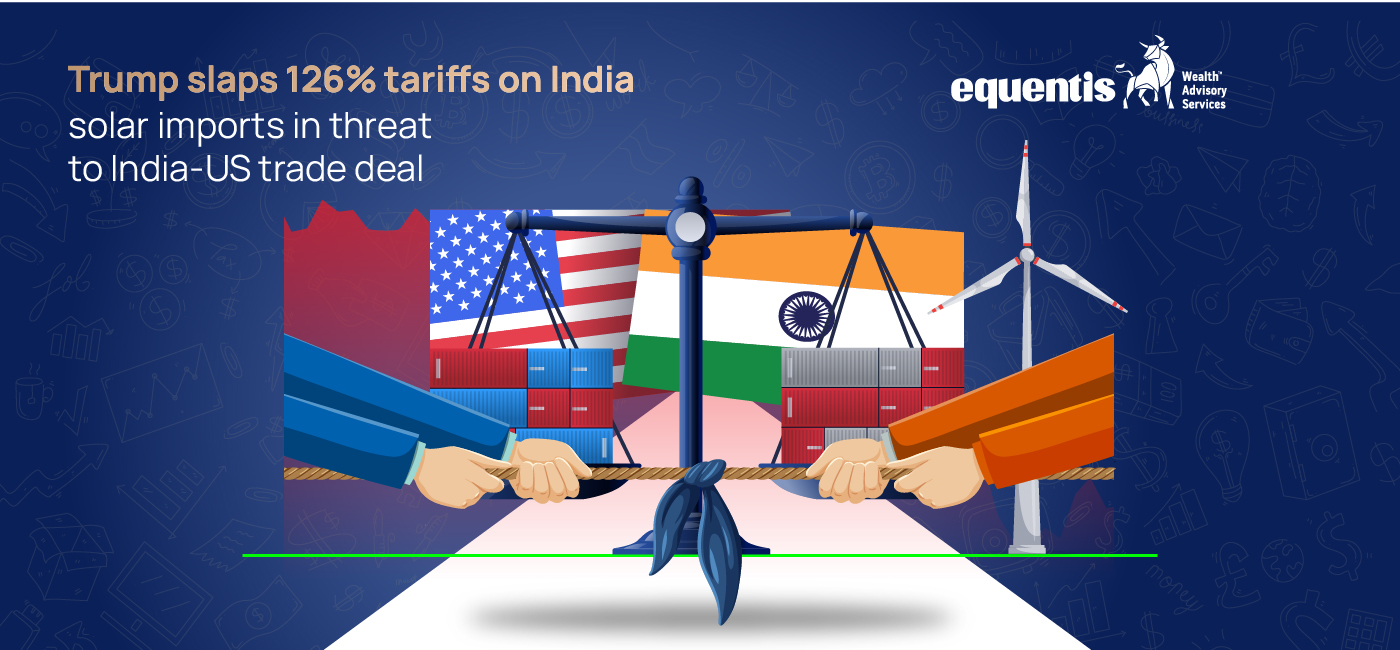
A sharp trade shock has entered the India-US economic relationship. Former US President Donald Trump has announced a steep 126 percent tariff on solar imports from India, a move that has quickly drawn attention from policymakers, businesses, and investors. At a time when both countries are trying to balance strategic cooperation with domestic economic priorities, this decision introduces fresh uncertainty. For India, which has been positioning itself as a reliable clean energy manufacturing hub, the tariff raises uncomfortable questions about export stability, investment confidence, and the future direction of bilateral trade talks.
Context and background: How we got here
Trade tensions between India and the United States are not new. Over the past decade, disagreements have surfaced over market access, subsidies, intellectual property, and import duties. Solar manufacturing has been a particularly sensitive area.
The US has long argued that low-cost solar imports, especially from Asia, hurt domestic manufacturers. Previous administrations imposed safeguard duties and anti-dumping measures on solar modules and cells. India, on the other hand, has been encouraging solar manufacturing under its production-linked incentive framework while also remaining dependent on exports for scale and efficiency.
The latest 126 percent tariff appears aimed at protecting US manufacturers and addressing concerns around pricing and supply chains. However, its timing is notable. India and the US have been exploring a broader trade understanding, and this sudden escalation complicates negotiations that were already moving cautiously.
Key developments explained simply
The headline number, 126 percent, effectively makes Indian solar exports uncompetitive in the US market overnight. A tariff of this size more than doubles the landed cost of solar products, pushing US buyers to either look for domestic suppliers or source from other countries not facing similar penalties.
For Indian exporters, this is not just about margins. It is about market access. The US has been one of the important destinations for Indian solar components, particularly as global companies looked to diversify away from single-country dependence. The tariff also signals a tougher stance on trade enforcement, suggesting that future sectors could face similar scrutiny if trade disputes intensify.
Another important development is the broader signal it sends to global supply chains. Even as countries talk about cooperation on climate goals, trade protectionism in clean energy is becoming more visible. This contradiction adds complexity for businesses planning long-term investments.
Impact on investors, businesses, and consumers
For Indian solar manufacturers, the immediate impact is negative. Export-oriented firms may see order cancellations, inventory buildup, and pressure on cash flows. Companies with high exposure to the US market could face earnings volatility in the near term.
Investors are likely to reassess risk premiums for solar and renewable energy stocks, especially those dependent on overseas demand. Short-term sentiment may weaken, although domestically focused players could be relatively insulated.
For US consumers, the picture is mixed. While the tariff aims to support local manufacturing, it could raise solar installation costs in the short run. Higher equipment prices may slow adoption for some projects, especially utility-scale installations that rely on cost efficiency.
From a policy perspective, the move adds friction to India-US trade discussions. It increases the likelihood of countermeasures or prolonged negotiations, which could spill over into other sectors if not managed carefully.
Opportunities and risks: A balanced view
Despite the disruption, there are potential opportunities. Indian solar manufacturers may accelerate efforts to diversify export markets, focusing more on Europe, the Middle East, and emerging economies where renewable adoption is rising. This could reduce long term dependence on any single geography.
The tariff could also push companies to deepen their domestic presence. India’s own renewable energy targets remain ambitious, and local demand for solar equipment is expected to grow steadily. Firms that adapt their strategies toward domestic and regional markets may find stability over time.
The risks, however, are real. Prolonged trade tensions can discourage foreign investment and delay capacity expansion plans. Smaller manufacturers with limited balance sheet strength may struggle to absorb the shock. There is also the risk that trade disputes overshadow cooperation in climate technology, an area where both countries have shared interests.
Conclusion: What lies ahead
The 126 percent tariff on Indian solar imports marks a significant moment in India-US trade relations. It highlights how quickly economic priorities can override broader strategic narratives. For India’s solar sector, the near term looks challenging, with pressure on exports and sentiment. Yet the episode also underscores the importance of diversification, resilience, and policy engagement.
Much will depend on how both governments respond in the coming months. Constructive dialogue could still limit long-term damage, while businesses adapt to a more fragmented global trade environment. For investors and industry participants, the key takeaway is clear. Trade policy risk is now an integral part of the renewable energy story, and navigating it will be just as important as technological or cost competitiveness in shaping future outcomes.
Disclaimer Note: The securities quoted, if any, are for illustration only and are not recommendatory. This article is for education purposes only and shall not be considered as a recommendation or investment advice by Equentis – Research & Ranking. We will not be liable for any losses that may occur. Investments in the securities market are subject to market risks. Read all the related documents carefully before investing. Registration granted by SEBI, membership of BASL & certification from NISM in no way guarantee the performance of the intermediary or provide any assurance of returns to investors.

Parvati Rai is the Vice President of the Research team at Equentis. She has over 15 years of equity-research and strategy-consulting experience. A specialist in deep-dive valuations, financial modelling, and forecasting, she has built research desks from the ground up, by steering buy-side, sell-side, and independent coverage across sectors. When she isn’t fine-tuning models, Parvati unwinds on nature treks and mentors aspiring analysts.