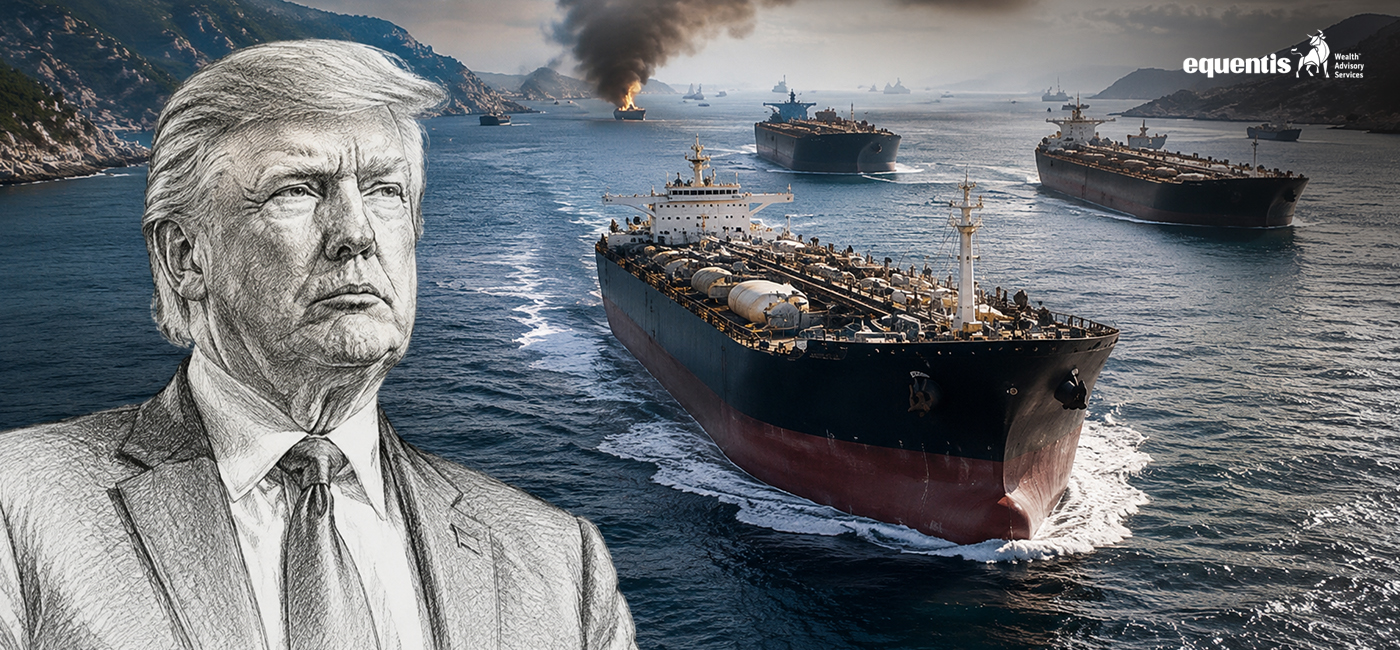

US President Donald Trump’s latest remarks on the Strait of Hormuz have added another layer of uncertainty to an already disrupted global oil market. Trump said on August 14 that the United States could designate the strategic waterway as US territory, while Iran rejected the claim and maintained that the strait remains under Iranian control. With shipping through Hormuz already close to a standstill, the immediate implication is that oil markets are likely to remain sensitive to any development affecting crude supplies and tanker traffic.
Why Is the Strait of Hormuz So Important for Oil?
The Strait of Hormuz is one of the world’s most important energy chokepoints. It connects the Persian Gulf with the Gulf of Oman and the Arabian Sea, making it a major route for crude oil and other energy shipments from countries including Saudi Arabia, Iraq, the UAE, Kuwait and Qatar.
When shipping through such a narrow and strategically important route is disrupted, the market immediately worries about whether available oil supplies can reach refineries. Even before an actual shortage develops, that uncertainty can push crude prices higher as traders price in a larger risk premium.
That is what makes Trump’s Hormuz remarks significant. They come at a time when traffic through the waterway has already fallen sharply.
What Did Trump Say About Hormuz?
On August 14, Trump said he could soon declare the Strait of Hormuz US territory, arguing that the United States effectively controlled the waterway through its naval presence and blockade. Iran rejected the statement and insisted that the strait remains under its control.
The comments matter because the future status and operation of Hormuz are already central to stalled US-Iran discussions.
On August 17, shipping activity remained extremely limited. Reuters reported that Kpler data showed only five commodity vessels transited the strait on Saturday, with none recorded on Sunday, compared with 31 vessels during the previous weekend.
That means the market is not reacting to a hypothetical disruption alone. Physical shipping flows are already being affected.
How Are Oil Prices Responding?
Brent crude was around $88.79 a barrel on August 17, while US West Texas Intermediate stood near $82.16. Brent had risen more than 5% during the previous week following attacks involving energy infrastructure and tankers in the region.
However, oil prices have not moved continuously higher despite the severe disruption. That is an important distinction for investors.
Markets are weighing two opposing factors. On one side is the risk of a deeper supply disruption if Hormuz remains effectively closed. On the other is the possibility that diplomatic efforts eventually restore shipping and reduce the risk premium built into crude prices.
As a result, oil could remain volatile rather than simply moving in one direction.
What Happens If Hormuz Remains Disrupted?
A prolonged disruption would create pressure at several points in the energy supply chain.
First, countries that depend heavily on Gulf crude would have to secure alternative supplies. Second, shipping distances and insurance costs could rise. Third, refiners could face changes in crude availability and pricing.
The impact would also depend on how much oil can be redirected through alternative pipelines, ports and suppliers.
This is why the duration of the disruption matters as much as the headline itself. A temporary slowdown in shipping has a very different economic impact from a prolonged closure that restricts physical oil supplies for weeks or months.
What Does This Mean for India?
India is particularly sensitive to crude oil prices because it imports most of the oil it consumes. ICRA estimates that India relied on imports for about 90% of crude oil consumption in the first 10 months of FY2026, with roughly 45–50% of crude imports routed through the Strait of Hormuz.
However, India’s exposure has been reduced through diversification. The government said in March that around 70% of India’s crude imports were then arriving through routes outside Hormuz, compared with about 55% before the conflict.
That provides some protection, but it does not completely remove the risk.
Higher international crude prices can increase India’s import bill, put pressure on the rupee and complicate the inflation outlook. Recent data already showed the effect of elevated energy prices, with India’s crude oil import bill rising sharply during the April-June quarter.
Which Indian Sectors Could Be Affected?
The impact of higher crude prices is not uniform across the Indian market.
Oil marketing companies: Higher crude prices can affect margins depending on how quickly domestic fuel prices adjust and how companies manage inventory.
Aviation: Airlines are particularly sensitive to jet fuel prices because fuel is a major operating expense.
Paints and chemicals: Many companies use petroleum-derived inputs, so higher crude can increase production costs.
Logistics and transport: Higher diesel prices can increase freight and transportation expenses.
Refiners: The impact can vary depending on crude sourcing, refining margins and product prices.
On the other hand, upstream oil producers can benefit from higher crude prices because their revenues are directly linked to oil realisations.
Could Oil Prices Rise Further?
A further rise is possible if the physical disruption worsens, but the outcome depends heavily on actual supply losses.
Analysts cited by Reuters have indicated that a much larger and sustained disruption to crude flows through Hormuz, or disruption to other major shipping routes such as Bab el-Mandeb, would likely be needed to push prices significantly higher from current levels.
This is an important point for investors. Political statements can move markets temporarily, but sustained oil price increases generally require a meaningful change in physical supply and demand.
Opportunities and Risks for Investors
For investors, the biggest risk is assuming that every geopolitical escalation will automatically translate into a prolonged oil rally.
The key variables to monitor are:
- Actual tanker traffic through Hormuz
- US-Iran diplomatic developments
- Crude production and export disruptions
- Alternative shipping routes
- Global oil inventories
- Brent crude prices
- India’s import bill and rupee movement
If tensions ease and shipping resumes, some of the geopolitical premium in oil could disappear quickly. If the disruption becomes more severe, energy costs could remain elevated for longer.
What Should Indian Investors Watch Next?
The next few days could be important because the market needs clarity on whether the current slowdown in Hormuz shipping is temporary or becoming a prolonged disruption.
For Indian investors, Brent crude is only one part of the equation. The rupee, domestic fuel pricing, inflation expectations, corporate margins and government policy will also determine how higher oil prices filter through to the economy and stock market.
Conclusion
Trump’s remarks about potentially designating the Strait of Hormuz as US territory have intensified an already serious oil market risk. With tanker traffic through the waterway close to a standstill and US-Iran talks stalled, crude prices are likely to remain sensitive to developments in the region.
For India, the situation is significant because crude imports remain essential to the economy. However, greater diversification of supply routes provides some cushion. The key question now is whether Hormuz shipping remains disrupted for an extended period. That, more than the political rhetoric alone, will determine the next major move in oil prices.
Frequently Asked Questions
1. Why is the Strait of Hormuz important for oil prices?
The Strait of Hormuz is a major shipping route connecting the Persian Gulf with international markets. Large volumes of crude and other energy products move through the waterway. Any disruption can raise concerns about supply availability, shipping costs and insurance, potentially increasing the risk premium in global crude prices.
2. What did Trump say about the Strait of Hormuz?
Donald Trump said on August 14 that the United States could designate the Strait of Hormuz as US territory. He argued that the US effectively controls the waterway through its military presence. Iran rejected the statement and said the strait remains under Iranian control.
3. Why could Trump’s Hormuz remarks push oil prices higher?
The remarks increase uncertainty around the future operation of the waterway. If tensions escalate and shipping remains restricted, traders may expect tighter oil supplies and higher transportation risks. That can increase the geopolitical risk premium in crude prices even before an actual global shortage occurs.
4. What is happening to oil prices currently?
On August 17, Brent crude was around $88.79 per barrel and WTI was around $82.16. Brent had gained more than 5% during the previous week amid regional attacks and shipping concerns. However, prices have remained mixed because markets are also considering the possibility of diplomatic progress.
5. How does the Strait of Hormuz affect India?
India imports around 90% of the crude oil it consumes. ICRA estimates that approximately 45–50% of India’s crude imports were routed through Hormuz in FY2026. India has since increased sourcing through alternative routes, reducing its direct dependence on the strait.
6. Will higher crude prices increase petrol prices in India?
Higher international crude prices can increase the cost of petroleum products, but the effect on retail petrol and diesel prices depends on several factors, including domestic pricing decisions, taxes, refining margins, currency movements and government policy. Therefore, a rise in Brent crude does not automatically result in an equivalent increase at Indian fuel stations.
7. Which Indian sectors are most vulnerable to higher oil prices?
Aviation, logistics, transportation, paints, chemicals and other industries that use petroleum-based inputs can face higher costs when crude prices rise. Oil marketing companies may also experience margin pressure depending on pricing decisions. The impact varies by company because some businesses can pass higher costs on to customers.
8. Can Indian oil companies benefit from higher crude prices?
The impact differs between upstream producers and refiners or marketers. Upstream oil producers can benefit from higher crude realisations, while refiners and fuel retailers face a more complicated environment because their profitability depends on crude costs, product prices, refining margins and inventory effects.
9. Could oil prices fall if the Strait of Hormuz reopens?
Yes. If shipping through Hormuz normalises and the risk of prolonged supply disruption declines, some of the geopolitical premium could leave crude prices. The extent of any decline would also depend on global demand, inventories, production levels and other geopolitical risks affecting energy markets.
10. What should investors watch next for oil prices?
Investors should track tanker traffic through Hormuz, US-Iran negotiations, actual oil production disruptions, alternative supply routes and Brent crude prices. For Indian markets, the rupee, inflation expectations, fuel pricing and corporate margins are also important because changes in oil prices can affect the wider economy.
Disclaimer Note: The securities quoted, if any, are for illustration only and are not recommendatory. This article is for education purposes only and shall not be considered as a recommendation or investment advice by Equentis. We will not be liable for any losses that may occur. Investments in the securities market are subject to market risks. Read all the related documents carefully before investing. Registration granted by SEBI, membership of BASL & certification from NISM in no way guarantee the performance of the intermediary or provide any assurance of returns to investors.

Jaspreet Singh Arora is the Chief Investment Officer at Equentis, where he heads a seasoned team of equity analysts and turns two decades of market experience into portfolios that consistently beat the benchmark. A go-to voice on cement, building-materials, real-estate, and construction stocks, Jaspreet previously ran research desks at leading brokerages, honing an eye for the metrics that truly move share prices. His plain-spoken analysis helps investors cut through noise and act with conviction. When he’s not deep-diving into earnings calls, you’ll find him unwinding over sports, weekend cricket or a good history podcast.