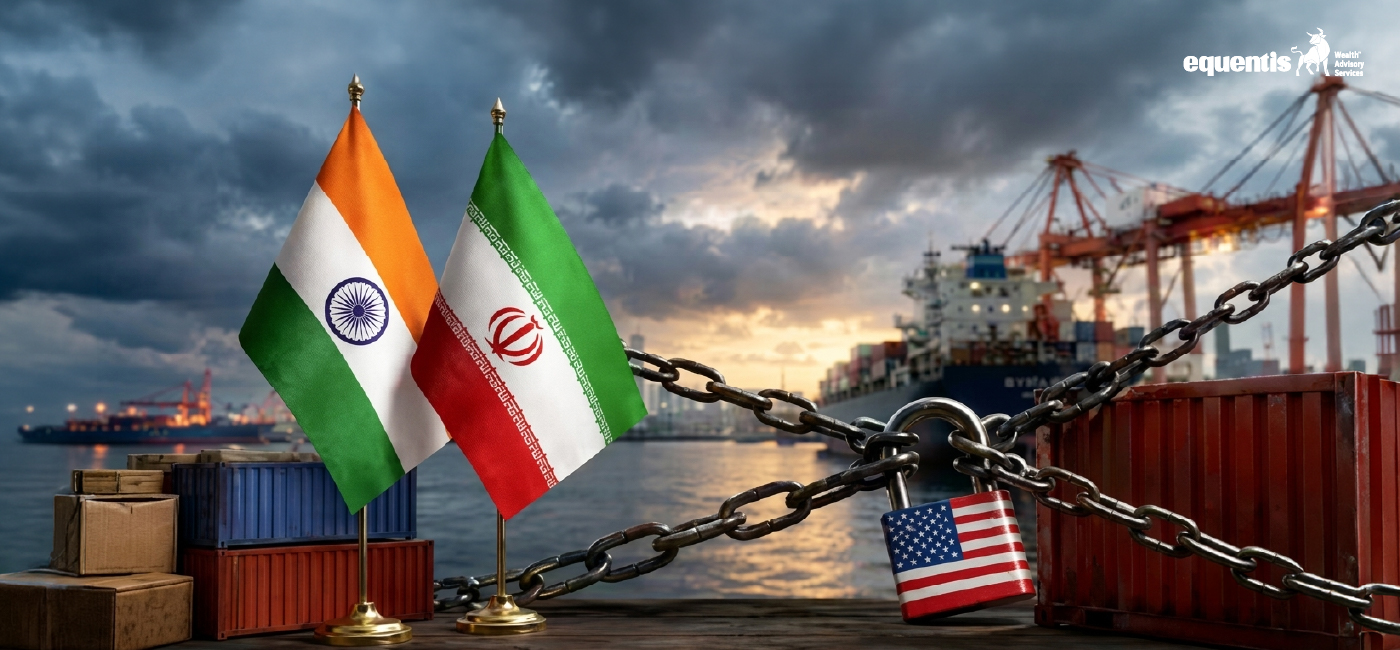

The latest US sanctions on Iran-linked entities are adding another layer of uncertainty to the global crude oil market, although the immediate reaction has been relatively muted. Washington has targeted dozens of individuals, companies and vessels connected to Iran’s military, procurement and petroleum networks, while also warning countries and businesses maintaining ties with Tehran about possible secondary sanctions. For India, the key issue is whether these measures eventually reduce Iranian oil exports, raise shipping and insurance costs, or trigger a broader supply disruption.
What Are the New US Sanctions on Iran?
The United States has stepped up its economic pressure on Iran through a new round of sanctions targeting nearly 60 individuals, entities and vessels. The measures include oil and petrochemical traders and shipping networks accused of helping Iran generate revenue from energy exports.
The action is part of Washington’s wider campaign to restrict Iran’s financial connections and limit the revenue available to Tehran. The latest measures also expand the risk of secondary sanctions, which can affect foreign companies or financial institutions that continue doing business with sanctioned Iranian entities.
That distinction matters for the oil market. Iran remains an important oil producer, and any policy that makes it harder for Iranian crude to reach buyers can potentially tighten global supply.
Why Has Crude Not Surged Sharply?
Despite the fresh sanctions, crude prices have not experienced a dramatic spike. Brent crude rose modestly to around $92.44 a barrel early on August 25 after falling more than 2% in the previous session. WTI was around $85.38.
The relatively limited reaction suggests traders are currently assessing the sanctions as a financial and trading restriction rather than an immediate physical supply shock.
In simple terms, markets are watching whether the measures actually remove barrels from the global market. If Iranian oil continues reaching buyers through alternative trading and shipping channels, the impact on global supply could remain limited.
The response could be very different if sanctions lead to a significant and sustained reduction in Iranian exports.
How Could Iran Sanctions Affect Crude Prices?
There are several possible transmission channels.
1. Lower Iranian Oil Exports
The most direct impact would come if sanctions successfully reduce Iran’s crude exports. Fewer Iranian barrels available to international buyers would tighten the global supply-demand balance.
When supply becomes tighter while demand remains stable, crude prices can come under upward pressure. The size of that move would depend on how many barrels are removed and whether producers elsewhere can compensate.
2. Higher Shipping and Insurance Costs
Sanctions can also make oil transportation more complicated. Companies, banks, insurers and shipping operators may become more cautious about transactions involving Iranian cargoes.
For legitimate buyers, higher compliance, insurance and freight costs can increase the effective cost of sourcing crude even if headline oil prices do not immediately rise.
For India, this is particularly relevant because the country imports most of its crude requirements and therefore remains sensitive to both oil prices and freight costs.
3. Strait of Hormuz Risk
The bigger risk for crude markets is not necessarily the sanctions themselves but any escalation that affects shipping through the Strait of Hormuz.
A substantial share of global oil consumption normally passes through this strategically important waterway. Any prolonged disruption could affect supplies from several major Middle Eastern producers, turning a sanctions story into a much larger global energy shock.
Markets are therefore watching geopolitical developments alongside the sanctions.
What Does This Mean for India?
India is particularly exposed to changes in global crude prices because of its high dependence on imported oil.
If crude remains elevated for an extended period, India’s import bill can rise. That can put pressure on the trade balance and, depending on other factors, the Indian rupee.
Higher crude prices can also increase costs across the economy. Transportation, aviation, chemicals, paints, plastics and several manufacturing industries can feel the impact because energy and petroleum products are important inputs.
The currency channel can amplify the effect. If the rupee weakens while crude prices rise, Indian refiners and other oil-consuming businesses may face an even higher cost in rupee terms.
India Faces Another Challenge: Competition for Alternative Crude
One important issue for Indian refiners is what happens if buyers move away from Iranian crude.
China is a major buyer of Iranian oil, and any shift in its sourcing could increase competition for alternative supplies. Recent market analysis has already highlighted concerns that China’s increased purchases of Russian crude could make sourcing more challenging for Indian refiners.
India therefore has to balance crude availability, pricing, freight costs and geopolitical considerations when adjusting its import basket.
The country’s refiners can source oil from multiple regions, which provides some flexibility. However, replacing a particular grade of crude is not always a simple one-for-one exercise because refineries are configured around specific crude characteristics.
Impact on Indian Businesses and Consumers
The effects of higher crude prices are not limited to oil companies.
Oil marketing companies can face pressure depending on how quickly retail fuel prices reflect changes in international crude and foreign-exchange rates.
Airlines are sensitive to jet-fuel costs, while logistics and transport companies can face higher operating expenses.
For consumers, sustained increases in global energy costs can eventually feed into transportation and other goods and services. The eventual impact depends on domestic fuel pricing, government policy, currency movements and the duration of the crude-price increase.
Could Some Companies Benefit?
The impact is not uniformly negative.
Upstream oil producers can potentially benefit from higher crude prices because the value of their output rises. Export-oriented businesses may also receive some support from currency movements if the rupee weakens, although their individual exposure varies.
Conversely, businesses that consume large quantities of petroleum products without being able to pass higher costs to customers may face margin pressure.
For investors, the important point is that crude sensitivity differs significantly from one company to another.
Key Risks and Opportunities
The biggest risk is an escalation from financial sanctions to physical supply disruption. If sanctions materially reduce Iranian exports or geopolitical tensions affect shipping routes, crude could move substantially higher.
There is also a less severe scenario in which alternative suppliers increase output or existing inventories provide a buffer. In that case, the sanctions could have a relatively limited impact on actual oil availability.
The market is therefore likely to remain focused on three questions: Are Iranian exports falling? Are shipping risks increasing? And can other producers compensate for any lost supply?
What Should Investors Watch Next?
Indian investors should monitor:
- Brent and WTI crude prices
- Iranian oil export volumes
- Developments around the Strait of Hormuz
- US secondary-sanction enforcement
- OPEC+ production decisions
- The USD/INR exchange rate
- India’s monthly crude import bill
- Freight and marine insurance costs
The direction of crude will ultimately depend on whether the sanctions translate into a genuine reduction in physical supply.
Conclusion
The US sanctions on Iran-linked entities are a significant geopolitical development for the crude oil market, but their immediate price impact has been limited. Brent remained around the $92-a-barrel level on August 25 as traders assessed whether the measures would actually reduce Iranian oil flows.
For India, the bigger concern is a sustained rise in crude prices combined with a weaker rupee or higher shipping costs. The next phase will depend on how aggressively the US enforces secondary sanctions, how buyers respond and whether Iran’s oil exports are materially disrupted. Until those effects become clearer, crude markets are likely to remain highly sensitive to every new development.
Frequently Asked Questions
1. What are the latest US sanctions on Iran?
The US has imposed a new round of sanctions targeting nearly 60 individuals, entities and vessels linked to Iran’s military activities, procurement networks and petroleum and petrochemical trade. The measures are designed to restrict Iran’s access to international financial networks and reduce revenue generated through energy exports.
2. How do US sanctions on Iran affect crude oil prices?
Sanctions can affect crude prices if they reduce Iran’s ability to export oil. Lower Iranian exports can tighten global supply and potentially push prices higher. However, the actual impact depends on enforcement, alternative buyers, available inventories and whether other oil-producing countries can compensate for any lost Iranian barrels.
3. Why has crude not risen sharply after the new Iran sanctions?
Markets currently appear to believe the sanctions may not immediately remove large volumes of physical crude from global supply. Brent crude actually fell more than 2% on August 24 before recovering modestly on August 25. Traders are therefore waiting to see whether the measures translate into lower Iranian exports.
4. What is secondary sanction risk?
Secondary sanctions can penalise foreign companies, banks or other entities that continue certain transactions with a sanctioned country or entity. This can make international businesses more cautious about dealing with Iran even when they are not directly based in the United States.
5. How will higher crude prices affect India?
Higher crude prices can increase India’s import bill because the country relies heavily on imported oil. A sustained increase can also put pressure on the rupee, transportation costs and inflation. The ultimate effect depends on international oil prices, currency movements, domestic fuel pricing and the duration of the increase.
6. Will Indian petrol and diesel prices immediately rise because of Iran sanctions?
Not necessarily. Domestic fuel prices depend on international crude prices, exchange rates, taxes, refining margins and pricing decisions. A temporary movement in global crude does not automatically translate into an immediate change in retail petrol or diesel prices in India.
7. Why is the Strait of Hormuz important for crude oil?
The Strait of Hormuz is a major shipping route for Middle Eastern energy supplies. Any prolonged disruption could affect oil flows from several major producers, making it much more significant for global crude markets than sanctions affecting only individual Iranian traders or entities.
8. Could Indian refiners face higher costs because of Iran sanctions?
Yes. If Iranian crude becomes harder to source, refiners may need to purchase alternative grades from other suppliers. Freight, insurance and payment-related costs could also increase. The impact will depend on the availability and pricing of alternative crude and each refinery’s ability to process different grades.
9. Which Indian sectors are most sensitive to higher crude prices?
Oil marketing, aviation, logistics, chemicals, paints, plastics and other petroleum-intensive industries can be sensitive to higher crude and fuel costs. Upstream oil producers may benefit from higher crude prices, while companies that cannot pass increased input costs to customers may face margin pressure.
10. What should investors watch after the new Iran sanctions?
Investors should track Iranian oil export volumes, Brent crude, OPEC+ production, Strait of Hormuz shipping conditions, US sanction enforcement and the USD/INR exchange rate. For Indian markets, the combination of crude prices and rupee movements is particularly important because it influences the country’s import costs and inflation outlook.
Disclaimer Note: The securities quoted, if any, are for illustration only and are not recommendatory. This article is for education purposes only and shall not be considered as a recommendation or investment advice by Equentis. We will not be liable for any losses that may occur. Investments in the securities market are subject to market risks. Read all the related documents carefully before investing. Registration granted by SEBI, membership of BASL & certification from NISM in no way guarantee the performance of the intermediary or provide any assurance of returns to investors.

Jaspreet Singh Arora is the Chief Investment Officer at Equentis, where he heads a seasoned team of equity analysts and turns two decades of market experience into portfolios that consistently beat the benchmark. A go-to voice on cement, building-materials, real-estate, and construction stocks, Jaspreet previously ran research desks at leading brokerages, honing an eye for the metrics that truly move share prices. His plain-spoken analysis helps investors cut through noise and act with conviction. When he’s not deep-diving into earnings calls, you’ll find him unwinding over sports, weekend cricket or a good history podcast.