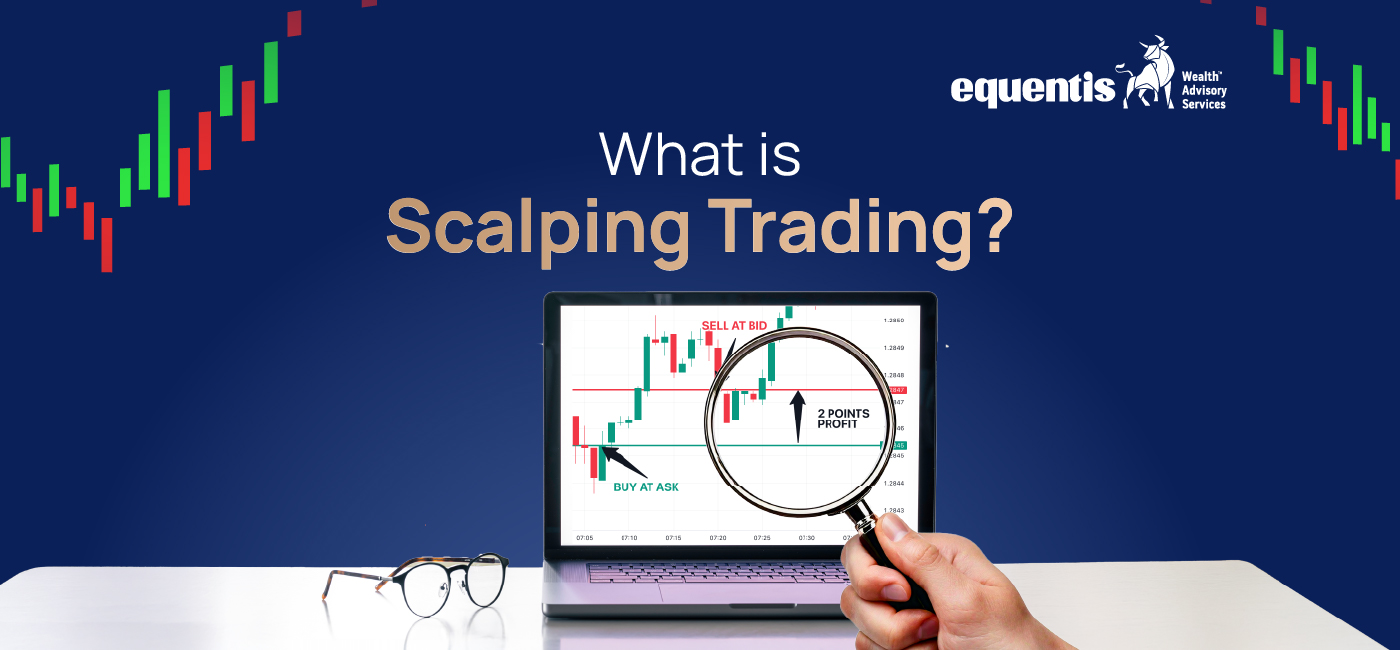

In the fast paced world of the financial markets, speed is often the difference between a profit and a loss. While many investors look toward long term growth, a specific group of high energy traders thrives on the exact opposite. This is the realm of scalping trading, a strategy built on the philosophy that small, frequent wins can compound into massive daily gains. If you have ever wondered how some individuals manage to make dozens or even hundreds of trades in a single session, you are looking at the art of the scalp.
In 2026, the rise of high frequency retail platforms and advanced algorithmic tools has made scalping more accessible than ever. However, it remains one of the most demanding styles of market participation. To succeed, one must master the micro movements of the price chart, possess lightning fast reflexes, and maintain a level of discipline that would challenge even the most seasoned professional.
Defining the Scalper’s World
At its core, scalping trading is a short term strategy where traders aim to profit from tiny price fluctuations within seconds or minutes. Unlike a day trader who might hold a position for several hours to catch a mid day trend, a scalper is in and out of the market before most people have even noticed a price change.
The goal is not to find a stock that will double in value over a year. Instead, the scalper looks for a stock that will move by a few cents or pips in the next thirty seconds. By utilizing high leverage and large position sizes, these “micro profits” are amplified. When a trader successfully executes fifty such trades in a day, the cumulative result can rival the returns of much longer term strategies.
Scalping Trading vs. Investing: A Tale of Two Timelines
To truly understand this method, we must look at the fundamental differences in trading vs investing. These two approaches represent opposite ends of the financial spectrum.
- Investing: This is a marathon. An investor looks at the fundamental health of a company, its management, and its long term growth potential. They are willing to sit through market crashes and years of volatility because they believe in the ultimate value of the asset.
- Scalping Trading: This is a 100 meter sprint. The scalper does not care if the company is profitable or if it will exist in ten years. They only care about the next tick on the chart. Fundamental analysis is almost entirely discarded in favor of technical indicators and order flow.
For many, the transition from being an investor to a scalper is a difficult one because it requires a complete shift in mindset. You are no longer “buying a piece of a business” but rather “renting a price movement.”
Key Strategies for Success in 2026
The year 2026 has introduced new layers of complexity to the markets, but the classic scalping strategies remain the bedrock of the profession.
- Market Making: This involves placing both a buy and a sell order simultaneously for the same asset. The scalper aims to capture the “spread”—the difference between the bid and ask price. This works best in highly liquid environments where the price is relatively stable.
- Momentum Scalping: Here, the trader waits for a sudden surge in volume or a breakout from a narrow range. They “ride the wave” for a few seconds and exit as soon as the momentum shows the slightest sign of fading.
- Range Trading: When a stock is bouncing between a clear support and resistance level, a scalper will buy at the bottom and sell at the top multiple times until the range is broken.
To execute these successfully, most professionals rely on a dedicated stock advisory or sophisticated scanning software that alerts them to these micro opportunities in real time. Without the right tools, a human simply cannot compete with the speed of modern markets.
The Essential Toolkit: Indicators and Execution
You cannot scalp with a standard mobile banking app. Successful scalping trading requires a specialized setup:
- VWAP (Volume Weighted Average Price): This is perhaps the most important indicator for a scalper. It shows the average price based on both volume and price action, acting as a dynamic support or resistance line.
- Level 2 Quotes: This allows the trader to see the “depth” of the market—how many buy and sell orders are waiting at each price point. This is the secret weapon for reading intent before the price even moves.
- One-Click Execution: In a world where a half second delay can turn a profit into a loss, having a platform that allows for instantaneous entry and exit is non negotiable.
Many traders also consult with a stock advisory service that specializes in technical setups. These services provide the “watchlists” of highly liquid stocks that are most likely to provide the volatility a scalper needs.
Comparing Global Financial Icons
To put the intensity of this trading style into perspective, it is interesting to look at the earnings of global celebrities. For instance, the cristiano ronaldo net worth in 2026 is estimated at 1.4 billion dollars. While Ronaldo builds his wealth through massive, long term contracts and global brand equity, a scalper builds wealth through the sheer volume of small transactions.
The discipline required to stay focused for six hours a day, making split second decisions, is very similar to the elite athletic training of a superstar like Ronaldo. Both require a “flow state” where the individual is completely immersed in the task at hand. While the scalper may not have a billion dollar brand, the ability to generate “on demand” income from the markets is a unique form of financial freedom.
The Risks: Why Most Scalpers Fail
Despite the allure of quick money, the failure rate in scalping trading is high. The primary enemy is “transaction costs.” Because a scalper makes so many trades, commissions and the bid ask spread can eat up over 50% of their gross profits.
Furthermore, the psychological toll is immense. A single “revenge trade” where a trader refuses to accept a small loss can result in a catastrophic “blow up” of the entire account. This is why strict risk management, such as the 1% rule (never risking more than 1% of your capital on a single trade), is the only way to survive the long game.
The Verdict: Is Scalping for You?
As we move through 2026, the markets are becoming more automated and faster. Scalping remains the ultimate challenge for those who love the adrenaline of the markets and possess the technical skill to back it up. If you prefer a quiet life and slow growth, stick to investing. But if you have the focus of an elite athlete and the analytical mind of a programmer, the world of the scalp might just be your path to the billionaire’s list.
FAQs
What is the basic definition of scalping trading?
It is a high frequency trading strategy that aims to profit from very small price changes, with trades usually lasting from a few seconds to a few minutes.
How is scalping different from day trading?
Scalping is much faster and involves many more trades per day, whereas day traders might only take two to five trades and hold them for hours.
Do I need a lot of money to start scalping?
While you can start with a small amount, the high volume of trades and the need for large position sizes to make small price moves profitable usually require more capital.
What are the best indicators for scalping in 2026?
The most popular indicators are VWAP, Bollinger Bands, RSI (on a 1 minute chart), and Moving Average Convergence Divergence (MACD).
Is scalping legal in India?
Yes, scalping is a legal and recognized trading strategy on the NSE and BSE, provided you follow the exchange’s rules and regulations.
What is the biggest risk in scalping trading?
The biggest risk is the accumulation of small losses or one large “uncontrolled” loss that wipes out several days of small gains.
How many trades does a scalper make in a day?
An active scalper can make anywhere from 20 to over 200 trades in a single six hour trading session.
Can I scalp on a mobile phone?
It is highly discouraged. Scalping requires fast execution, multiple monitors, and real time data feeds that mobile apps generally cannot provide.
What is the role of a stock advisory in scalping?
A stock advisory helps by providing high liquidity watchlists and technical levels, saving the trader time on research during market hours.
How does trading vs investing affect my tax?
In India, scalping is usually treated as business income (speculative or non speculative), whereas long term investing is taxed under capital gains.
Is it possible to automate a scalping strategy?
Yes, many professional scalpers use “bots” or algorithms to execute trades based on pre defined technical criteria to remove human emotion.
Which market is best for scalping?
The Forex market and highly liquid large cap stocks (like Reliance or HDFC Bank) are generally the best for scalping due to their tight spreads.
How does the Cristiano Ronaldo net worth compare to a top scalper?
While the cristiano ronaldo net worth is 1.4 billion dollars from global fame, top tier institutional scalpers and hedge fund traders can earn tens of millions annually.
What is the “bid-ask spread”?
It is the difference between the highest price a buyer is willing to pay and the lowest price a seller is willing to accept; scalpers must overcome this to be profitable.
Why is liquidity so important for scalpers?
High liquidity ensures that you can enter and exit large positions instantly without “slippage” or moving the price against yourself.
Can beginners start with scalping?
It is not recommended for absolute beginners due to the high speed and psychological pressure; most start with swing trading or investing first.
What is “slippage” in trading?
Slippage occurs when your order is executed at a different price than expected, usually during high volatility or low liquidity.
How do commissions affect scalpers?
Since scalpers trade frequently, high commission brokers can make it impossible to stay profitable; low cost or zero commission brokers are essential.
What is a “stop-loss” in scalping?
A stop loss is an automated order to close a trade at a specific price to prevent further losses; it is the most critical tool for a scalper.
Will AI replace scalpers by 2027?
While AI handles much of the high frequency volume, human scalpers still find “edge” in reading market sentiment and unique price patterns that algorithms might miss.
Disclaimer Note: The securities quoted, if any, are for illustration only and are not recommendatory. This article is for education purposes only and shall not be considered as a recommendation or investment advice by Equentis. We will not be liable for any losses that may occur. Investments in the securities market are subject to market risks. Read all the related documents carefully before investing. Registration granted by SEBI, membership of BASL & certification from NISM in no way guarantee the performance of the intermediary or provide any assurance of returns to investors.

Parvati Rai is the Vice President of the Research team at Equentis. She has over 15 years of equity-research and strategy-consulting experience. A specialist in deep-dive valuations, financial modelling, and forecasting, she has built research desks from the ground up, by steering buy-side, sell-side, and independent coverage across sectors. When she isn’t fine-tuning models, Parvati unwinds on nature treks and mentors aspiring analysts.