


Renewable Energy in India:
Our world is changing at a faster pace than ever before. Air in our cities is filled with pollution, supplies of freshwater are reducing and sea levels are rising. A major reason for this is global warming. The decline in food production, increasing natural disasters, and rising temperatures because of climate change are all pointing towards a ghastly future for humans.
A recent example of this includes the devastating cyclone – Tauktae which caused severe loss to life and property. A study by The Indian Institute of Tropical Meteorology has shown that both the frequency and intensity of cyclones in the Arabian Sea are on the rise. The experts believe the key reason is a rise in the temperature of the Arabian Sea.
It’s a matter of grave concern. Because when oceans get warmer, it creates an enabling environment for cyclones. This was the third cyclone that emerged from the Arabian sea after Vayu (2019) and Nisarga (2020).
The primary culprit behind this is the use of fossil fuels such as coal, natural gas, and petroleum.
In case you are wondering how here are the reasons:
Coal: The no.1 contributor of CO2
Coal, used as fuel for electricity generation the world over, has high carbon content and emits more CO2 as compared to other fossil fuels when burnt. Globally, coal combustion is the biggest reason for the increase of CO2 in the atmosphere. To make matters worse, during the mining process of coal, methane gas is generated which has a 25 times greater global warming potential than CO2.
Vehicular emissions: The 2nd top source of air pollution
Vehicles with internal combustion engines which use diesel and petrol emit almost three-fourths as much CO2 as burning coal.
Natural gas: Not clean as it appears
Natural gas has been often termed as the cleanest gas among all different fuels derived from fossil fuels. While it is true to a large extent. However, natural gas still emits about 50% of CO2 as compared to that emitted when coal is burnt. Hence, in absolute terms, it’s still a contributor to global warming-causing emissions.
Renewable energy is the solution
Unlike conventional fuels that emit harmful greenhouse gases, renewable energy obtained from sources as solar, wind, and hydropower do not produce harmful by-products. That’s not all. There are many other benefits associated with renewable energy too.
Renewable energy is good for the economy
By developing renewable energy, countries can cut down on their import bills on fuels drastically. Currently, India is 85 percent dependent on imported crude oil to meet its fuel needs. Besides, as compared to fossil fuels, there are no transportation costs involved in wind, solar, and hydro energy.
Renewable energy is good for public health
As there are no harmful emissions of greenhouse gases, renewable energy can help in making the air pollution-free and thus prevent respiratory diseases and related deaths, which account for over 2 million cases in India alone every year.
Click below to get your personalized portfolio of 20-25 potential multibagger stocks for 2022.
Let’s take a look at different aspects associated with renewable energy such as:
Different sources of renewable energies
In this section, we will take a detailed look at the different renewable energy sources, such as solar power, hydro energy, wind-generated energy, India’s achievements in this sector, government initiatives, and key growth drivers for the sector.
Challenges in the renewable energy sector in India
Every sector has its own challenges. In this section, we shall examine the major challenges in the renewable energy industry.
Top renewable energy companies in India
Here we shall take a look at the top companies (listed as well as unlisted) in the renewable energy sector in India and whether it makes sense to invest in this sector or stay away from it.
Different Sources of Renewable Energies
“The nation that leads in renewable energy will be the nation that leads the world” – James Cameroneron
In our previous story, we talked about the role of renewable energy in creating a better and greener environment. Today let’s take a look at the different sources of renewable energies and where India stands in terms of these technologies.
The major sources of renewable energy are:
Wind power
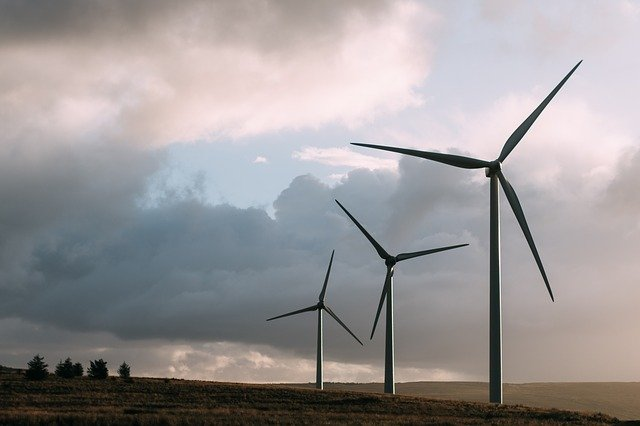
Wind power is generated by turbines that work as a fan using wind to generate electricity. The wind rotates the propeller-like blades of a turbine around a rotor, which spins a generator, creating electricity. Wind turbines can be built offshore or on land or even in large bodies of water like oceans and lakes.
India’s achievements in wind power
- Ranks no. 4 in the world
- 38.789 GW installed capacity
- 300+ GW estimated potential
Andhra Pradesh ranks as the number one state in terms of installed wind power capacity in India, followed by Gujrat and Karnataka.
State-wise wind power installed in India as on 31.12.2020
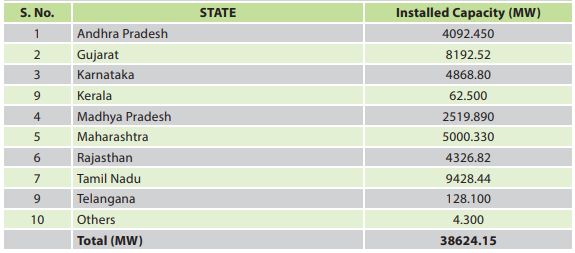
Source: Ministry of New and Renewable Energy MW=Megawatts GW=Gigawatts
Solar Power
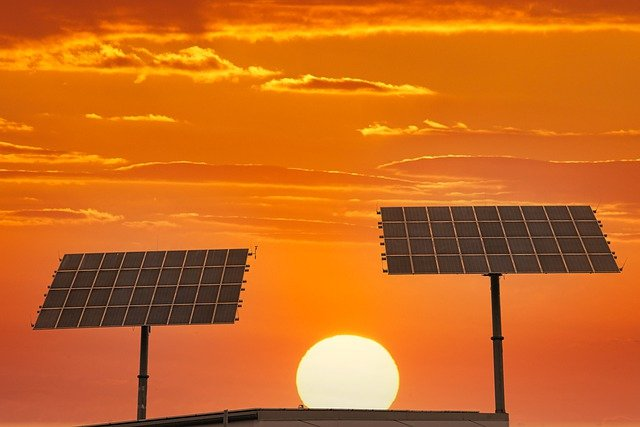
Solar power is generated by converting sunlight into electrical energy through photovoltaic (PV) panels or through mirrors that concentrate solar radiation. The energy thus created can generate electricity or can be stored in batteries or thermal storage.
India’s achievements in wind power
- Ranks no. 3 in Asia
- Ranks no.4 in the world
- 30GW installed capacity
- Most attractive solar market (Ernst & Young’s renewables attractiveness index)
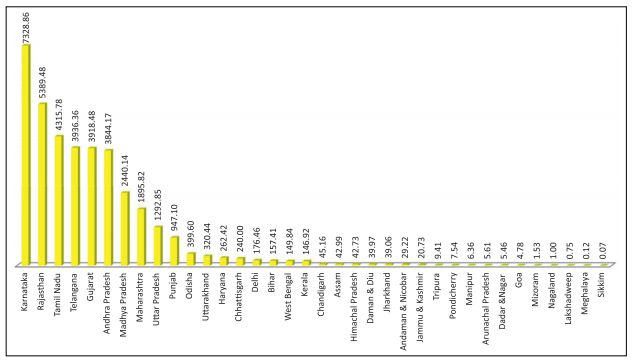
Now let’s look at the state-wise installed capacity of solar power in India. Karnataka tops the list followed by Rajasthan and Tamil Nadu.
Cumulative Capacity of Solar Power Installed in India till 31-12-2020
Bioenergy
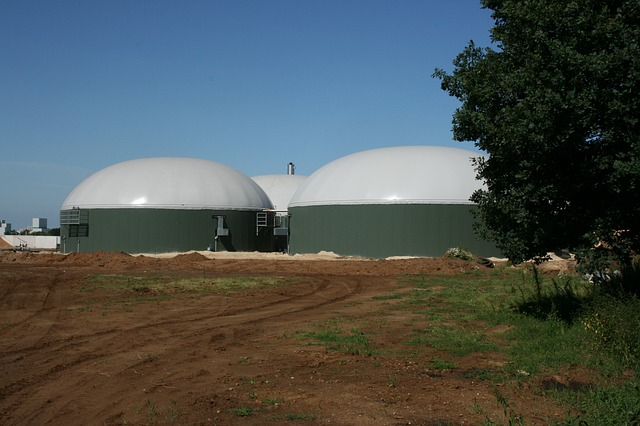
Bioenergy refers to electricity and gas that is generated from organic materials, known as biomass. This can be anything from plants and timber to agricultural and food waste–and even sewage.
India’s achievements in bioenergy
- 50.28 lakh family/sm size biogas plants installed
- 10145 MW total installed capacity
- 180000 MW estimated potential
- 7,43.508 m3 biogas output per day
Hydropower
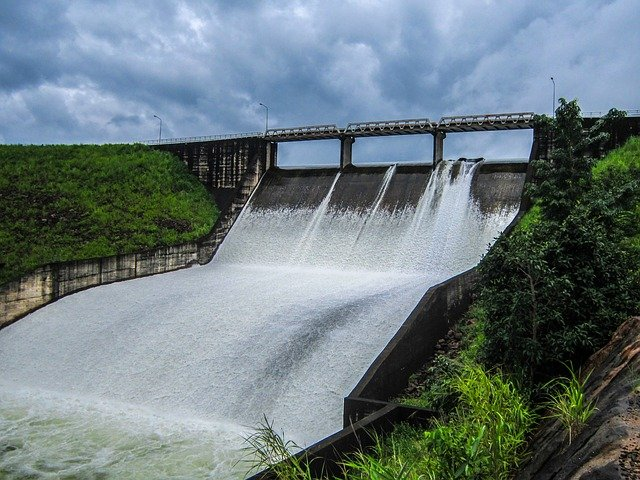
Hydropower refers to the use of falling or fast-running water to produce electricity by converting the kinetic energy of water into electrical or mechanical energy. Hydropower is a form of sustainable energy production used from ancient times.
India’s achievements in hydropower
- Ranks no. 5 in the world
- 45,700 MW total installed capacity
- 1,48,700 estimated potential
Given India’s abundance of natural resources, India has a huge potential to further develop the capacity of electricity generated from hydropower.
Total estimated capacity of hydropower in India
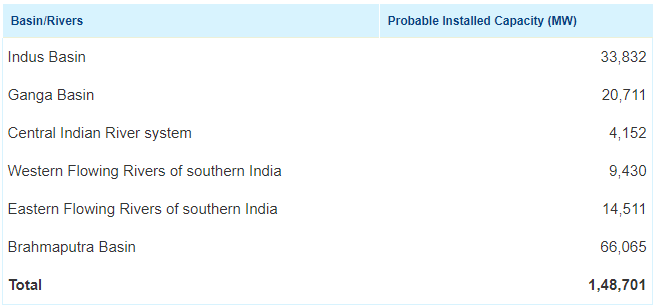
Source: NHPC website
Over the last few years, India has taken massive strides in the field of renewable energy. The below table talks about cumulative growth in India’s renewable energy in the past seven years.
Cumulative growth in India’s renewable energy from CY2014 to CY2020
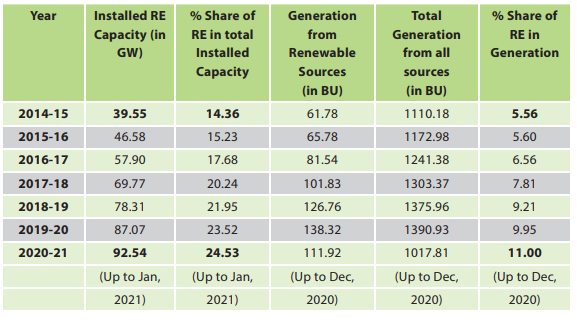
(Bu=Billion Units)
Recent investments and key developments
Some major investments and developments in the Indian renewable energy sector are:
- India’s largest floating solar power plant in Telangana with a total installed capacity of 447MW to be commissioned by May-June 2022 by NTPC
- In March 2021, the US Agency for International Development (USAID) and the US International Development Finance Corporation (DFC) reported a loan guarantee program worth US$41 million to support Indian SME investments in renewable energy.
- Adani Green Energy to acquire a 250 MW solar power project in Rajasthan for approx. Rs.10 billion announced in March 21.
- Japan International Cooperation Agency (JICA) has entered into a loan agreement with Tata Cleantech Capital Limited (TCCL) for US$90.31 million in March 2021 under which the latter will provide loans to Indian companies for renewable energy production, e-mobility solutions, and energy conservation in line with the Green Loan Principles.
- In March 2021, India and America agreed to restructure their strategic energy partnership to focus on cleaner energy sectors including biofuels and hydrogen production.
- In October 2020, NTPC set up a new wholly-owned company for its renewable energy business—NTPC Renewable Energy Ltd. with an aim to generate 30% of its overall power capacity from renewable energy sources by 2032.
Government initiatives
Some initiatives by the Government of India to boost India’s renewable energy sector are:
Pradhan Mantri Kisan Urja Suraksha Evam Utthan Mahabhiyan (PM KUSUM)
One of the largest initiatives in the world to provide clean energy to over 3.5 million farmers by solarising their agriculture pumps to the tune of 30.80 GW total installed capacity.
Roof Top Solar (RTS) Programme
Under this program incentives and subsidies are provided for residential, institutional, and social sectors and aims to create a cumulative capacity of 40,000 MW by the year 2022.
Solar Parks
This initiative aims to set up solar park projects under a plug-and-play model for creating a target capacity of 40 GW. Under this scheme, Solar parks are being developed by central and state government agencies, JVs between agencies of Central and State Governments, and private entrepreneurs.
Green Energy Corridors
To facilitate the evacuation of electricity from renewable energy projects, the Green Energy Corridor scheme was launched in 2015 for the setting up of transmission and evacuation infrastructure. As of March 2020, the Inter-State Transmission System (ISTS) component comprising 3200 ckm transmission lines and 17,000 MVA substations has been completed in March 2020.
Greening of Islands
Under this program, the government intends to fully convert Andaman and Nicobar, Lakshadweep islands to Green Energy, where energy needs will be met using renewable energy sources. By 2022, projects of 20 MW SPV with 16 MW/8MWH BESS in Port Blair, South Andaman; and a project of 1.95 MW with 2.15 MWH BESS in 4 Islands of Lakshadweep are expected to be commissioned by January 2022
Apart from the above initiatives, the government has focussed on strengthening macroeconomic fundamentals, ensuring policy stability, and introducing several fiscal incentives. India’s position in the World Bank’s Ease of Doing Business rankings and the WEF’s Global Competitiveness Index has been steadily increasing and currently ranks 3rd in the Renewable Country Attractiveness Index.
To facilitate the easy transfer of capital and technology, the government has permitted 100% FDI for renewable energy projects. Other measures introduced by the government to boost the sector include tax breaks for setting up mega-manufacturing plants for solar cells, lithium storage batteries, electric vehicles and charging infrastructure.
Due to massive investments in the sector and active support from government policies, India’s renewable energy sector is growing at a rapid pace. It is estimated that around 49% of the total electricity will be generated by renewable energy in India by the year 2040.
Key drivers for growth
Government commitments |
Proposed solar cities and parks |
New areas of opportunities |
Atmanirbhar Bharat |
|
Raise the share of non-fossil fuel in total capacity to ~40% by 2030 |
60 solar cities approved and $1.3 bn allocated for setting up 50 solar parks of 40GW |
Wind – Solar Hybrid, Off-shore Wind Energy, Floating PV Projects |
PLI scheme in Solar PV manufacturing with financial outlays of INR 4,500 crores introduced under Atmanirbhar Bharat 3.0 |
Challenges in the Renewable Energy Sector in India
India has set an ambitious target of producing 175 GW of renewable energy by the year 2022. However, the average capacity addition per year has been just around 12 GW per year. The emergence of the Covid-19 pandemic has further slowed down the capacity addition in renewable energy with a mere 7 GW addition in 2020-21.
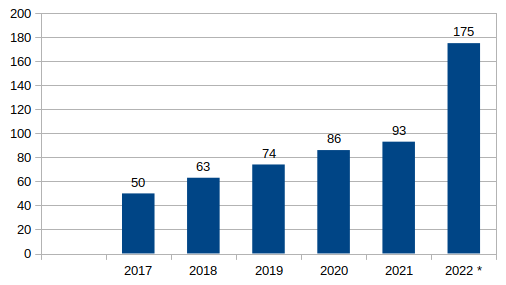
There are several challenges that are hampering the rapid development of the renewable energy sector in India
Some of the key challenges in the renewable energy sector in India are:
High initial setup costs
High initial setup costs are one of the greatest challenges in the development of the renewable energy sector in India. While setting up a coal-based power plant requires an investment of around Rs. 4 crores per MW, the setup cost for a solar-based power plant would be around Rs. 6 crores. The cost of setting up a 1MW wind farm would amount to anywhere between 4.5 crores to 6.85 crores depending upon the location, size, and type of technology used.
Falling tariffs
Contracts for the supply of electricity are awarded to power producers based on the prices quoted by them to state electricity distribution companies. Over the last 5 years, tariffs for solar power in auctions have fallen by over 50%. To negotiate better deals, power distribution companies often delay the signing of long-term purchase agreements with energy producers.
Difficulties in land acquisition
Acquisition of land continues to be an enormous challenge for developers of renewable energy projects in India. Some of the major challenges in the acquisition of land include poorly maintained land records, different land ceiling acts in different states, the requirement of approvals from multiple agencies, etc.
Reducing Costs
Reducing the per-unit cost is one of the greatest challenges in the renewable energy sector. This can be done only by continuous innovation to increase efficiencies and bring down costs. Innovations that can reduce the per-unit cost include harnessing lower wind speeds, harnessing the energy of tides and waves to produce electricity, and creating larger grids to lower losses of electricity, etc. to name a few.
Apart from technical innovations, innovations can also be policy-based to channel further investments in the sector and a complete overhaul of credit channels to help developers of renewable energy projects to gain access to easy and cheaper sources of credit.
Political differences at the state and center level
In the 70s India formulated a provision for low subsidized electricity tariffs for enhancing the production of agriculture. For political benefits, many state governments do not want to compromise on this, thus creating a hurdle towards the rational electricity pricing concept.
Besides battling for highly competitive prices for their power and delayed payments, producers of renewable energy also have to struggle with several charges including the cross-subsidy surcharge (CSS), a tax levied by state governments to ensure that domestic and agricultural consumers receive power at a more affordable rate.
This challenge can only be overcome when states and center align their renewable energy goals.
There is a promising future for the renewable energy sector in India is working hard to embrace the same. However, unless the challenges we have seen above are addressed, there will always be a gap in the estimated capacity expansion and actual achievements in the sector.
Top Players in the Renewable Energy Sector and the best renewable energy stocks India
Tata Power Solar Systems Ltd.
A part of the Tata conglomerate, Tata Power Solar Systems Ltd. is the largest integrated solar power player in the country. The company has three separate business segments–manufacturing of solar cells and modules, engineering, procurement & construction for solar power projects and other solar products.
The company offers customized and specialized solutions for various sectors like education, banking, healthcare, telecom, etc., and operates in rural as well as urban areas. Tata Power plans to expand rooftop solar services as it has already installed over 375 MW of rooftop solar projects.
ReNew Power Ventures Ltd.
Founded in the year 2011, ReNew Power Ventures is an independent power producer which generates renewable energy through solar and wind power and sells the same to state electricity boards and large industrial companies in India.
ReNew Power has a capacity of over 8.65 GW of wind & solar power assets, of this, over 5.44 GW is already operational across the country.
Adani Green Energy Ltd. (AGEL)
Adani Green Energy Limited (AGEL) ranks as one of the largest companies in the renewable sector in India, with a current project portfolio of 13,990 MW with a presence across 11 Indian states. AGEL develops, builds, owns, operates, and maintains large utility-scale grid-connected solar and wind farm projects and caters to central and state government entities and government-backed corporations.
The company has entered into long-term Power Purchase Agreements (PPAs) of 25 years with central and state government entities and has a portfolio of 54 operational projects and 12 projects under construction.
Acme Solar Holdings Private Ltd.
Acme Solar is the largest solar independent power producer in India, having a portfolio of solar power projects with an aggregate capacity of over 5500 MWp. The company develops, builds, owns, operates, and maintains utility-scale solar power projects and its clients include central and state government organizations and government-backed corporations across 12 states in India. Currently, the company has a portfolio of operational solar power projects of around 2900+ MWp with an additional 2600 MWp projects under different phases of development.
Greenko Ltd.
Headquartered in Hyderabad, Greenko is one of India’s leading Renewable Energy companies which provides utility-scale, clean and affordable energy. Founded in the year 2006, the company’s portfolio includes hydropower, wind, solar, natural gas, and biomass assets and currently has over 120 MW of contracted capacity including 6 hydro & 6 biomass plants and nearly 350 MW of licenses under development.
Azure Power Global Ltd.
Founded in the year 2008, Azure Power Global Limited is an independent power producer, developer, and operator of utility and commercial-scale solar photovoltaic power plants. Headquartered in New Delhi, India, Azure Power Global is one of the country’s largest solar power developers with a 7GW+ pan-India portfolio. As a pure-play solar power company, with in-house engineering, procurement, and construction expertise the company offers solar power solutions to customers across the country.
NTPC Ltd.
Established in the year 1975, NTPC is a Maharatna Company and India’s largest energy conglomerate with a major presence in the power generation business. From fossil fuels, NTPC has steadily forayed into generating electricity via hydro, nuclear and renewable energy sources.
The company owns and operates several renewable energy projects across India. NTPC has several JVs with other companies for coal-based, gas-based, and other renewable energy projects.
Currently, NTPC has a commissioned capacity of 1,088 MW of RE projects under its own capacity addition while an additional 2284 MW of RE projects are under implementation.
Food for thought
There is absolutely no doubt that the renewable energy sector holds the key to the future. With our growing energy needs and limited resources of fossil-based sources of energy, the renewable energy sector offers immense growth potential. As the sector grows, key players in the sector will also grow.
However, not all listed companies in companies will create wealth for investors. The best example of this is the stock of Suzlon Energy. Suzlon Energy is indeed the biggest wind power generator in India. However, the company’s share price hasn’t moved significantly since the 2009 fall.
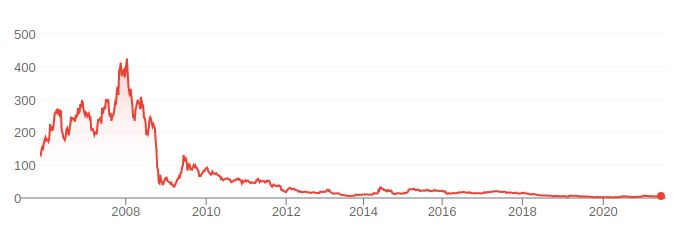
Until 2008 the company was investors’ favorite, however, it went on to become one of the biggest wealth destroyers despite being one of the leading players in the renewable energy space. From a share price of around Rs. 300 levels in Jan 2008, the share price of Suzlon Energy is currently trading at around Rs. 7 levels.
To put in perspective, a Rs. 1 lakh investment in Suzlon Energy shares would be worth just Rs. 2333 in the present day. The reasons for the company’s downfall can be attributed to the enormous debt it raked up to scale up its business through several international acquisitions and external factors like the slowdown post-global financial crisis of 2008.
Hence, it is very important to invest only after detailed research. If there is a deterioration in a company’s fundamentals, timely exit and rebalancing also matters a lot. If you are not sure about all these aspects of investing, it would be best to get in touch with a financial advisory service like us, as our research experts can simplify the investing process for you. Click here to get started.
Read more: About Research and Ranking










