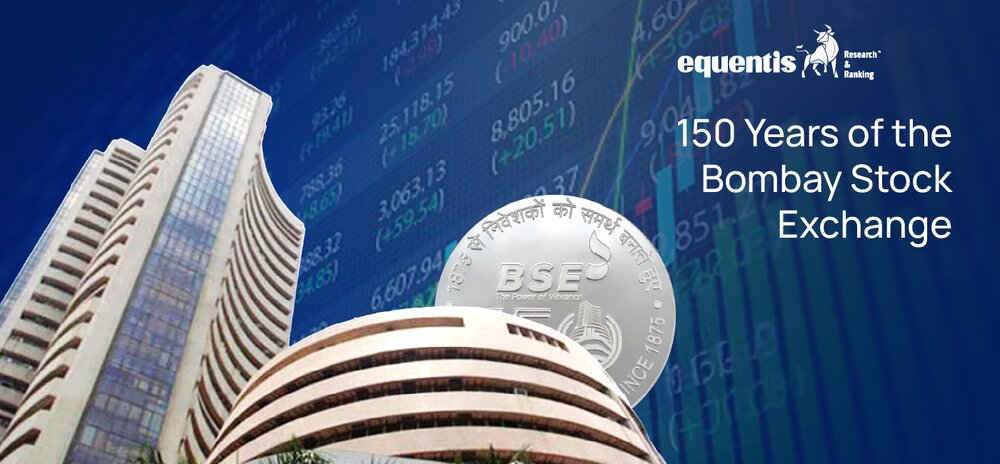

Editor’s Note: The Bombay Stock Exchange (BSE) completes 150 years today — but only 8% of Indians invest. That’s the gap we highlighted in our BSE Day video. Because when you do start, starting right matters.
#AdvisorZaruriHai
Beyond 150: How BSE Could Shape Tomorrow
As the Bombay Stock Exchange (BSE) marks its 150th year of existence, this cornerstone of India’s economic landscape is actively charting its course for the next century and beyond.
Digitalization, sustainability, and the demand for instant access are not just buzzwords; they are fundamental forces reshaping how markets operate worldwide.
In this editorial, we explore how BSE is aligning itself with future trends and global market demands.
Empowering Growth: The Future of SME Platforms
Small and Medium Enterprises (SMEs) are a significant driver of the Indian economy, contributing substantially to GDP, manufactured output, exports, and employment. Recognizing this, the BSE’s dedicated SME platform is poised to play an even more crucial role in facilitating their access to capital and fostering their growth in the years to come.
The strong performance of SME IPOs in 2024, with a significant number of companies debuting and delivering positive listing-day gains, indicates robust investor appetite and an evolving landscape of SME financing. This trend is expected to continue.
Adapting to Evolving Regulations
In response to increased volatility and instances of fraudulent bidding in the SME segment, SEBI has introduced several regulatory changes aimed at enhancing investor protection and market integrity. These tighter rules for SME IPOs are a direct consequence of observed market dynamics, prompting regulators to implement stricter measures.
Impact of Recent SEBI Regulations on SME IPOs
| Regulatory Area | New Norm/Change | Implication |
| Eligibility Criteria | Minimum operating profit (EBITDA) of ₹1 crore in 2 of last 3 financial years. | Ensures financial stability of issuers. |
| Minimum Bid Size (Individual Investor) | Increased to 2 lots (over ₹2 lakh). | Restricts smaller investors, discourages speculative bids. |
| Cut-off Price Option | Removed. | Requires investors to place bids at a specified price, increasing discipline. |
| Bid Modification/Cancellation | Not allowed post-placement. | Discourages impulsive bidding behavior. |
| Use of IPO Proceeds (General Corporate Purpose) | Capped at lower of ₹10 crore or 15% of total issue size. | Ensures funds are primarily directed towards specific business objectives. |
| Use of IPO Proceeds (Loan Repayment) | Prohibited for loans from promoters/related parties. | Protects investor interests by preventing misuse of funds. |
| Promoter Lock-in | Staggered lock-ins for holdings exceeding minimum promoter contribution. | Ensures long-term commitment from promoters. |
| Minimum Allottees | Raised from 50 to 200. | Aims for wider investor participation and reduced concentration. |
| DRHP Public Comments | 21-day public comment period introduced. | Enhances transparency and stakeholder engagement. |
| Offer for Sale (OFS) Cap | Capped at 20% of total issue size; selling shareholders cannot offload >50%. | Prioritizes fresh equity infusion and limits shareholder exits. |
Investing Responsibly: The Ascent of ESG in India’s Markets
Environmental, Social, and Governance (ESG) investing, which considers a company’s performance on non-financial factors alongside traditional financial metrics, is rapidly gaining prominence globally.
The integration of ESG factors into investment decisions is a significant global trend, with global ESG assets projected to exceed USD 40 trillion by 2030.
This trend is further driven by a shift towards renewable energy investments, increased shareholder activism, and regulatory advancements pushing for greater transparency through standardized ESG reporting. However, the challenge of “greenwashing” —unsubstantiated claims about ESG benefits—highlights the ongoing need for strict criteria and robust verification in sustainable finance products like green bonds.
BSE’s Commitment to ESG
The BSE is actively embracing the ESG movement, aligning its strategic vision to focus on ESG factors and aiming to facilitate sustainable financing through instruments like green bonds and ESG-compliant funds. It has developed its own sustainability indices, including Greenex, Carbonex, and the S&P BSE 100 ESG, to provide benchmarks for responsible investing.
This proactive approach positions BSE as a facilitator of India’s sustainable finance ecosystem, aiming to attract long-term, responsible investors and enhance its global leadership aspirations.
Innovation at Core: Blockchain’s Transformative Potential
The BSE is actively investing in advanced technology and digital infrastructure, with blockchain technology being a key component of its future trading systems. The primary objectives of this integration are to significantly increase security and efficiency in transactions.
While the BSE has already achieved T+1 settlement and a reported 20% reduction in transaction costs through its initial blockchain integration, this is seen as a foundational step towards a more fundamentally restructured and efficient capital market.
Beyond Traditional Hours: The Prospect of 24/7 Trading
Global financial markets are increasingly moving towards extended and even 24-hour trading models, driven by globalization, technological advancements, and the continuous nature of cryptocurrency markets. Major global exchanges are already exploring or implementing extended trading, setting a precedent for traditional financial markets like the BSE to follow suit.
Current Extended Hours and Future Possibilities
While BSE’s regular trading hours are from 9:15 AM to 3:30 PM on weekdays, the concept of trading outside these hours is not new in India. After-Market Orders (AMOs) allow investors to place orders after the market closes and before it reopens, typically from 3:45 PM to 8:59 AM for BSE equity. AMOs offer flexibility for traders to react to significant news or global events that occur outside regular market hours, positioning them for the next trading day.
The consistent emphasis on global trends and the influence of always-on cryptocurrency markets strongly indicates that 24/7 trading is a highly probable future for traditional exchanges like BSE.
Here is a step-by-step breakdown of how trading hours currently operate and how they might extend in the future:
- Step 1: Pre-Market Open Session (9:00 AM – 9:15 AM IST). This phase allows for order collection, price matching, and a brief buffer before regular trading.
- Step 2: Regular Trading Hours (9:15 AM – 3:30 PM IST). The primary continuous trading session where bilateral order matching occurs in real-time.
- Step 3: Closing Session (3:30 PM – 3:40 PM IST). The official closing price is determined based on the weighted average of stock prices traded in the last 30 minutes of the regular session.
- Step 4: Post-Closing Session / After-Market Orders (AMOs) (3:40 PM – 8:59 AM IST for BSE Equity). Traders can place orders for the next trading day, which are queued for processing when the market reopens. AMOs typically allow only market or limit orders.
- Step 5: Potential Future: True 24/7 Trading. Moving towards a true 24/7 model would involve continuous, real-time matching and settlement across all asset classes, potentially leveraging technologies like blockchain for instant settlement. This would necessitate substantial upgrades to infrastructure, robust real-time risk management systems, and new regulatory frameworks to accommodate continuous operations and seamless global market integration.
Potential Benefits and Challenges of 24/7 Trading
Benefits:
- Increased Flexibility for Investors – Allows traders to react to global news and events immediately, outside traditional hours.
- More Efficient Price Discovery: Continuous trading can lead to more accurate and immediate asset pricing, reducing overnight gaps.
- Global Alignment and Competitiveness: Helps Indian markets align with global financial flows and attract international capital.
- New Trading Opportunities: Extended hours can create new arbitrage and strategic trading avenues.
Challenges
- Lower Liquidity in Off-Peak Hours: Fewer participants can lead to wider bid-ask spreads and less favorable execution prices.
- Increased Volatility: Lower liquidity and rapid reactions to news can amplify price swings.
- Operational Costs and Infrastructure: Requires significant upgrades to technology, clearing, and settlement systems.
- Workforce Strain/Burnout: Continuous operations place immense pressure on traders and support staff.
- Regulatory Complexity & Market Integrity: Demands evolving regulatory frameworks, enhanced risk monitoring, and new rules to prevent manipulation.
BSE’s Evolving Mandate in the Financial Ecosystem
The BSE’s strategic vision for the future is to solidify its position as the “most trusted and preferred stock exchange in Asia,” with an ambition to rank among the top five exchanges worldwide by market capitalization and trading volume. Achieving this requires a focus on key initiatives that extend beyond its traditional trading functions.
Global Aspirations and Diversification
BSE’s diversification beyond traditional equity trading is a significant strategic direction for its future. The exchange has expanded its offerings to include currency trading, debt instruments, and mutual funds, alongside its international exchange, India INX.
BSE as a Technology and Data Powerhouse
The BSE is transforming into a technology and data powerhouse. Its current achievement as one of the world’s fastest exchanges, with a 6-microsecond response time, underscores its deep commitment to technological excellence. The ongoing incorporation of blockchain technology for faster settlement and reduced transaction costs further highlights this commitment.
Beyond its own operations, BSE Technologies provides cutting-edge IT solutions to other financial service sectors, including broking houses, indicating a strategic shift towards leveraging its technological expertise as a separate revenue stream and influencing the broader financial technology landscape in India.
Furthermore, BSE offers a wide array of market data products, corporate data products, and end-of-day data, providing valuable information to investors and analysts, positioning it at the forefront of financial innovation.
Fostering Financial Literacy and Inclusion
BSE plays a crucial role in shaping financial literacy and investor protection in India, which will be vital for future market growth. Its Investor Awareness Programmes aim to continue increasing the number of registered investors, contributing to broader participation in the capital markets. The BSE Training Institute (BTI) further supports this by imparting capital market training and certification, preparing professionals for the BFSI industry.
Conclusion: Charting India’s Financial Horizon
The Bombay Stock Exchange is no longer simply a historic institution; it is a living, adapting force in India’s economic journey. Through its evolving focus on SME growth, ESG compliance, blockchain integration, extended trading hours, and financial ecosystem diversification, BSE is laying the groundwork for the next 150 years.
Its ambitions—to be among the top five global exchanges and the most trusted in Asia—are not just aspirational. They are rooted in tangible actions, robust technology, regulatory alignment, and a commitment to democratizing finance.
As India’s financial markets globalize, digitize, and decarbonize, BSE’s roadmap reflects the future of trading: faster, smarter, greener, and always on.
Disclaimer Note: The securities quoted, if any, are for illustration only and are not recommendatory. This article is for education purposes only and shall not be considered as a recommendation or investment advice by Equentis – Research & Ranking. We will not be liable for any losses that may occur. Investments in the securities market are subject to market risks. Read all the related documents carefully before investing. Registration granted by SEBI, membership of BASL & the certification from NISM in no way guarantee the performance of the intermediary or provide any assurance of returns to investors.

Yash Vora is a financial writer with the Informed InvestoRR team at Equentis. He has followed the stock markets right from his early college days. So, Yash has a keen eye for the big market movers. His clear and crisp writeups offer sharp insights on market moving stocks, fund flows, economic data and IPOs. When not looking at stocks, Yash loves a game of table tennis or chess.