

Every home has a story. A baby’s first steps on a newly laid floor. A teenager’s loud music bouncing off freshly painted walls. Parents sipping chai on a sunlit balcony they dreamt of for years.
Now pause for a second. What are these homes really made of? Not just walls or floors. But trust. Endurance. And the confidence that what you build will last, not just for you, but for generations.
Whether it’s a tiny village school, a 30-storey skyline, or the four walls you call home—there’s one silent force holding it all together. You may not notice it. But without it, nothing stands.
This is the story of how two outsiders, with no experience in construction, defied the odds, challenged an entire industry, and laid the foundation for one of India’s strongest brands. And they didn’t just build cement, they built belief.
Curious how? Let’s go back to where it all began…

The Outsider Who Dared
In the early 1980s, two men with no background in construction or manufacturing stood at a crossroads. Narotam Sekhsaria, a cotton trader with sharp business instincts, and Suresh Neotia, his soft-spoken but equally visionary partner, saw potential where few dared to look—in cement.
While most saw it as a dull commodity, they saw it as the foundation of a nation in the making. What they lacked in technical expertise, they made up for in sheer clarity, conviction, and an uncanny ability to turn adversity into action.
The name Ambuja didn’t come from a branding agency. It came from faith. Mata Ambuj, their family deity, became their guiding force—symbolizing strength, clarity, and resilience. But they would need more than divine inspiration to survive what came next.

to a New Benchmark
The original site in Mahuva faced community resistance and had to be abandoned. The relocation to Kodinar meant starting from scratch—again. Reaching the site from Mumbai took 36 hours by train, followed by dusty road travel. Mobile phones weren’t an option, so walkie-talkies became lifelines.
But the challenges only sharpened their resolve.
They couldn’t rely on the state electricity board, so they built their own captive power plant. Rail freight concessions weren’t granted, so they pioneered sea-based transport by building an all-weather private port at Muldwarka.
These weren’t just workaround solutions—they were first-of-their-kind innovations that redefined cost efficiency and logistics in Indian manufacturing.
with Communities
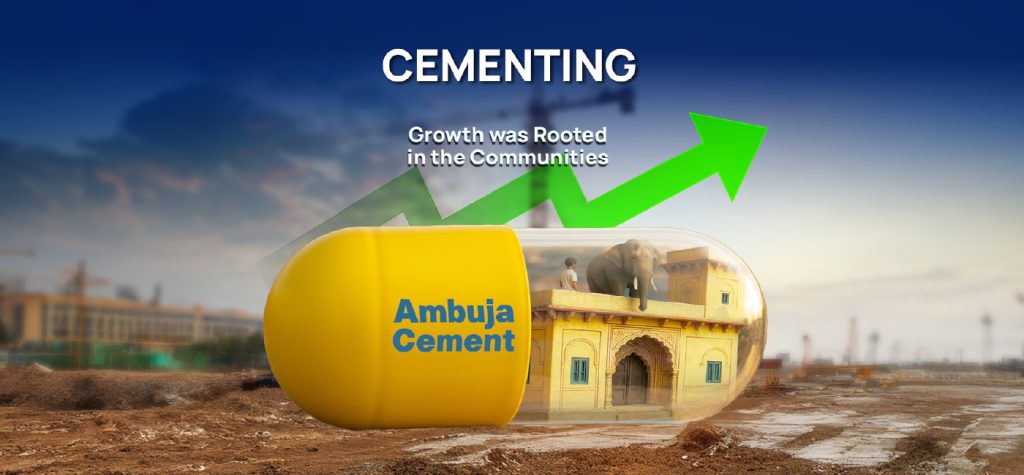
After the Mahuva experience, the founders realised one simple truth—you can’t build anything if the people around you don’t want it there.
At Kodinar, they changed their approach. Jobs were given to locals. Villages were supported with healthcare, schools, and infrastructure. The company engaged in transparent dialogue and earned not just approvals—but acceptance.
This wasn’t PR. It was a principle. Ambuja’s growth was rooted in the communities it touched, not imposed on them.

from Gujarat’s Dust
In 1986, the first plant was up and running. By 1991, Ambuja had doubled capacity. And in 1993, it stunned the market by becoming the first Indian cement company to issue Global Depository Receipts (GDRs)—raising $60 million and putting Indian cement on the world map.
The company’s eco-conscious approach—like investing in dust control systems and water conservation—came way before “green” was a buzzword. Long before mandates, Ambuja chose mindfulness.
“Tutegi kaise? Ambuja Cement se jo bani hai.”
That line cemented Ambuja into Indian households—clever, strong, and memorable. A brand that didn’t just sell cement; it sold trust.

When Cement Became Smart
As the company scaled, so did its understanding of what India needed—not just more cement, but better cement.
Ambuja rolled out Ambuja Plus, known for superior strength and long-term durability—perfect for residential projects. Then came Ambuja Kawach, designed to be water-repellent—an absolute gamechanger for monsoon-prone regions.
For specialised needs, Ambuja Certified Technology offered advanced solutions to builders working on high-performance infrastructure. These weren’t just products. They were thoughtful responses to real challenges faced on ground.
No surprise then that masons, contractors, and engineers across the country consistently rated Ambuja as one of the best cement brands in India.

Before It Was Cool
Long before “green” became a buzzword, Ambuja was already walking the talk.
The company used alternative raw materials and fuels, developed low-carbon cement, and invested in dust and air quality control systems. Around its manufacturing units, it focused on biodiversity conservation, treating nature as a partner—not collateral damage.
These efforts earned it multiple environmental awards and global certifications, making Ambuja not just a leader in scale—but in responsibility.
a New Era
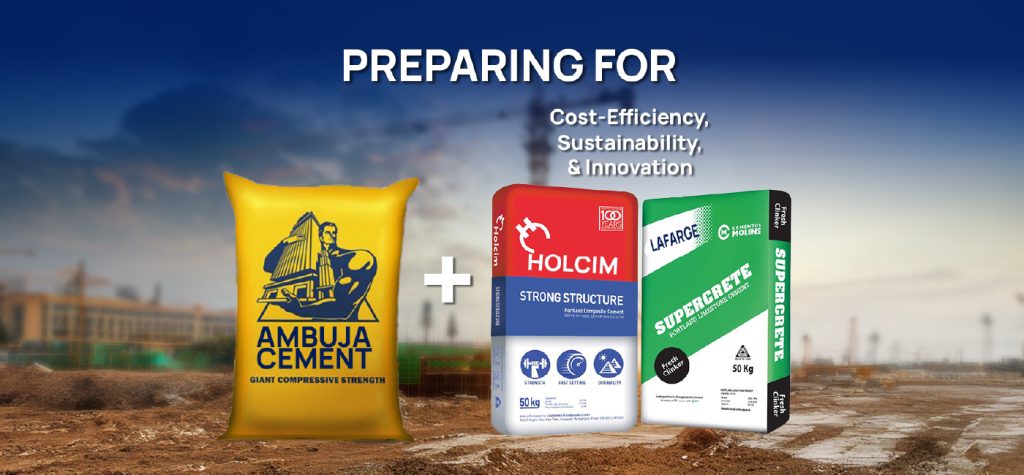
Over the decade leading up to 2006, Ambuja’s leaders—especially Narotam Sekhsaria and Suresh Neotia—built robust systems and a culture of autonomy and excellence. By the mid‑2000s, the company was strong enough to become an attractive global partner.
In 2006, Holcim increased its stake to a controlling share, officially making Ambuja Cement part of the Holcim‑Lafarge network and cementing its reputation as a benchmark in cost‑efficiency, sustainability, and innovation.

to Conglomerate Champion
In 2006, global giant Holcim entered the story. In 2022, Gautam Adani rewrote it—acquiring Ambuja in a $10.5 billion deal that shook corporate India. With acquisitions of Sanghi, Penna, and Orient Cement, Ambuja now has a jaw-dropping 100+ MTPA cement capacity.
Today, nearly 1 in 3 homes in India owes its strength to Ambuja.

Ambitious, Audacious, and Green
The mission now? 140 MTPA by 2028. The method? Strategic acquisitions, green construction materials, and generating 60% of energy from renewables.
New plants are coming up in Dahej, Sankrail, Sindri, and more. Waste heat recovery, eco-friendly clinker, smart logistics—it’s all part of the roadmap.
With Adani’s vision and capital, Ambuja is no longer just building cement plants—it’s helping build India’s future.
Built on Fire and Faith
Ambuja Cement isn’t just a brand. It’s a story. Of two outsiders who didn’t follow the path, they carved it. Of belief that turned barriers into blueprints. Of a company that started in the desert and rose to global dominance.
In a country constantly under construction, Ambuja reminds us that the strongest things are built not just with cement but with courage.

Yash Vora is a financial writer with the Informed InvestoRR team at Equentis. He has followed the stock markets right from his early college days. So, Yash has a keen eye for the big market movers. His clear and crisp writeups offer sharp insights on market moving stocks, fund flows, economic data and IPOs. When not looking at stocks, Yash loves a game of table tennis or chess.