
Editor’s Note: This coming Independence Day next week, while we celebrate 78 years of political freedom, ask yourself a simple question: is your portfolio equally free? Don’t chain your hard-earned money to WhatsApp “tips” or Telegram forwards – instead rely on a SEBI-registered stock market advisory and compound your wealth the way Tata Steel has for generations.
Read on….
Tata Steel’s Journey from Pre-Independence till Date
What’s in a name, really? For most, it’s just a label. But for a nation, this name meant something. A name that sparked India’s industrial revolution. A name that stood for vision, integrity, and ambition.
It all began with a belief, “The nation that controls iron soon controls gold.” These words weren’t just an idea; they ignited a journey that would build a company now worth over ₹2.18 lakh crores.
Behind this transformation stood real-life superheroes. Not the kind who wear capes, but those who built furnaces, founded towns, and believed in fairness and dignity. They weren’t just building steel—they were building lives, a life of dignity for every worker.
This is the story of those steel-hearted visionaries. Of a family that turned dreams into industries. And of a company that continues to shape India’s future.
Curious to know how these steel superheroes built a nation? Read on to know more about Tata Steel’s journey from pre-Independence to a powerhouse today.
A Dream of Steel
In the 19th century, while India remained under British colonial rule, one man dared to dream of a self-reliant future. Jamsetji Nusserwanji Tata, a pioneering industrialist, believed that India’s journey to progress could not begin unless the country stood on its own industrial feet.
While travelling through Europe, America, and Japan in the 1860s, Jamsetji saw how modern industries powered national growth. One evening in Manchester in 1867, he heard a speaker say, “The nation that controls iron soon controls gold.” Those words stuck with him like fire in steel. From that moment, the idea of building India’s own steel industry began to grow inside him.
It was an idea ahead of its time—there was no Indian company making steel, and few believed it was even possible. But Jamsetji wasn’t one to wait for permission. He got to work.
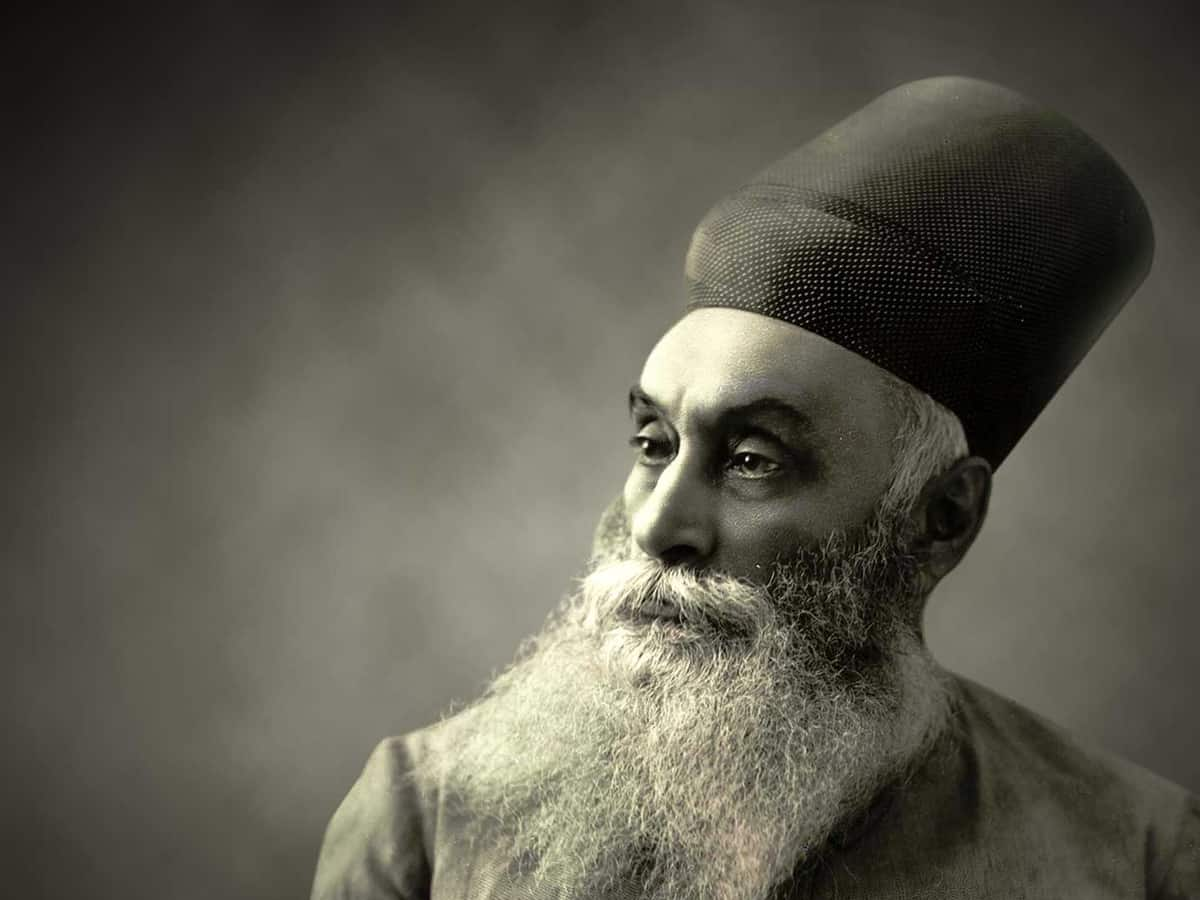
Source: Jamsetji Tata
Chasing Ore, Coal and a Dream
Steel isn’t just an idea, it needs iron ore, coal, limestone, and water. Jamsetji knew this. He assembled a team of Indian and foreign experts to explore the length and breadth of the country in search of these four essentials.
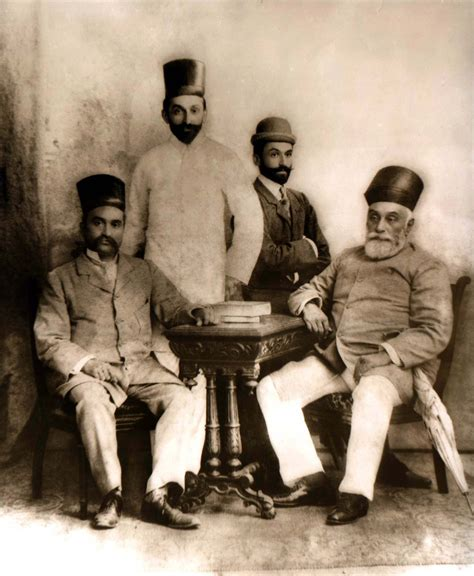
One of those explorers was his son, Dorabji Tata, who climbed hills, crossed rivers, and travelled deep into jungles, on horseback, foot, and train, examining rocks and testing samples. After years of effort, they found a promising spot: a dense forested village called Sakchi, nestled where raw materials met rivers and railways. It was remote, but it had everything a steel plant needed.
Unfortunately, Jamsetji passed away in 1904, before his dream could come alive. But he had planted the seed. His sons and cousins took up the torch.
BOOM! Tata Steel is Born
In 1907, under Dorabji’s leadership, the Tata Iron and Steel Company (TISCO) was established. Engineers from America and Germany arrived, bringing technology, but the spirit remained deeply Indian. The people of Sakchi watched their sleepy village transform into a buzzing worksite.
On February 16, 1912, the first steel ingot rolled out of the plant. India had officially entered the steel age.
But Tata’s steel wasn’t just about iron, it was about people. Dorabji carried forward his father’s belief that workers deserved dignity and care. So, from the very beginning, the company built clean housing, hospitals, schools, parks, and introduced unheard-of benefits like an eight-hour workday, free medical care, and paid leave, all long before Indian law required them.
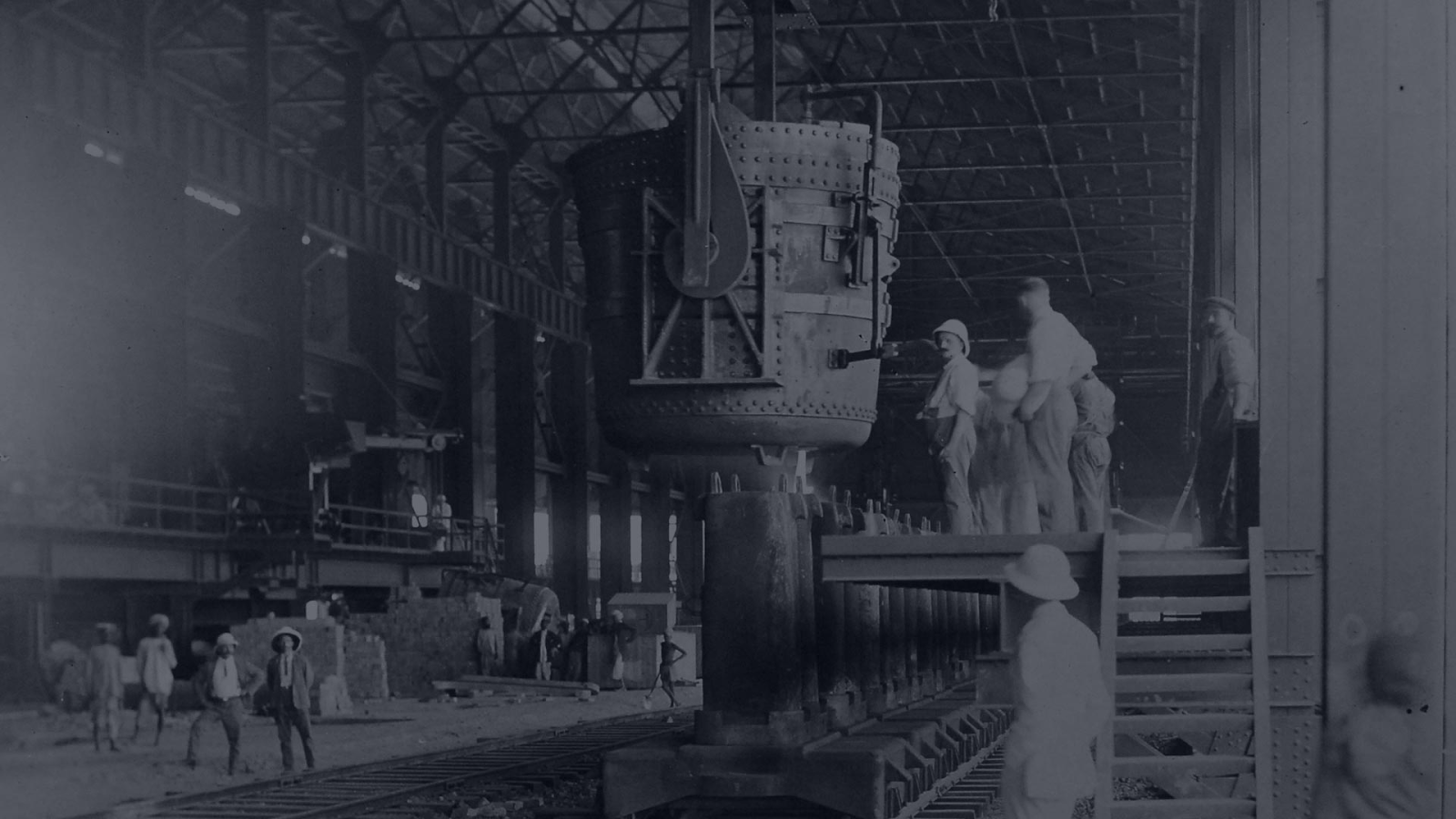
Source: Tata Steel
The City That Steel Built
As Sakchi grew, so did its sense of purpose. In 1919, it was renamed Jamshedpur, in memory of the founder who never lived to see it bloom. The township became India’s first planned industrial city, carefully designed with green spaces, drainage, public utilities, and housing that set a national benchmark.
The beloved Jubilee Park, later gifted to the people by Tata Steel on its 50th anniversary, stood as a symbol of the Tata legacy—where business, environment, and community thrived together.
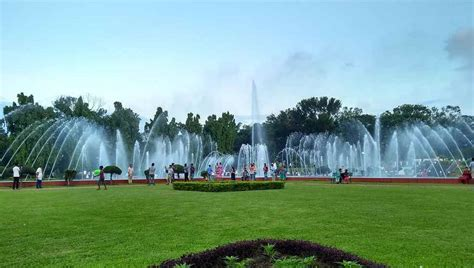
Source: Tata’s Jubilee Park
India’s First Industrial R&D
Even in its early days, Tata Steel embraced science. Inspired by Jamsetji’s visits to the West, the company believed in using research to make better steel. This spirit gave rise to India’s first industrial research laboratory in 1937—called the Research & Control Laboratory, later known as the R&D Division.
Over the decades, this division played a quiet but vital role. In the 1940s, it developed steel for armoured vehicles used in the war and corrosion-resistant steel for the Howrah Bridge. As India modernised, Tata Steel’s R&D helped improve everything—from coke-making to steel grades for the automobile sector.
By the 1970s, while many public sector giants emerged, Tata Steel’s scientists helped it stay ahead—improving energy use, refining quality, and optimising new technologies.
By 2010–11, RDSS had entered the digital age with the commissioning of “Reynolds,” Tata Steel’s fastest supercomputer, and established a bioremediation lab to focus on sustainable environmental solutions.
Through decades of scientific pursuit, RDSS has helped Tata Steel earn national and international acclaim—securing patents, ISO certifications, and prestigious awards. At its heart, this division reflects Tata Steel’s enduring commitment to progress through innovation, science, and sustainability.
Transformation & Brand Identity
The 1970s and ’80s saw Tata Steel under strong stewardship—leaders like R.S. Pande and Russi Mody modernised the plant, enhanced quality, and solidified TISCO’s reputation for excellence. In the mid‑1990s, it earned the Prime Minister’s Trophy as India’s Best Integrated Steel Plant.
In 1993, Ratan Tata took over as Chairman and sharpened the focus on global standards, innovation, and brand identity. By 2005, the company was rebranded to Tata Steel Ltd, signaling a new era.
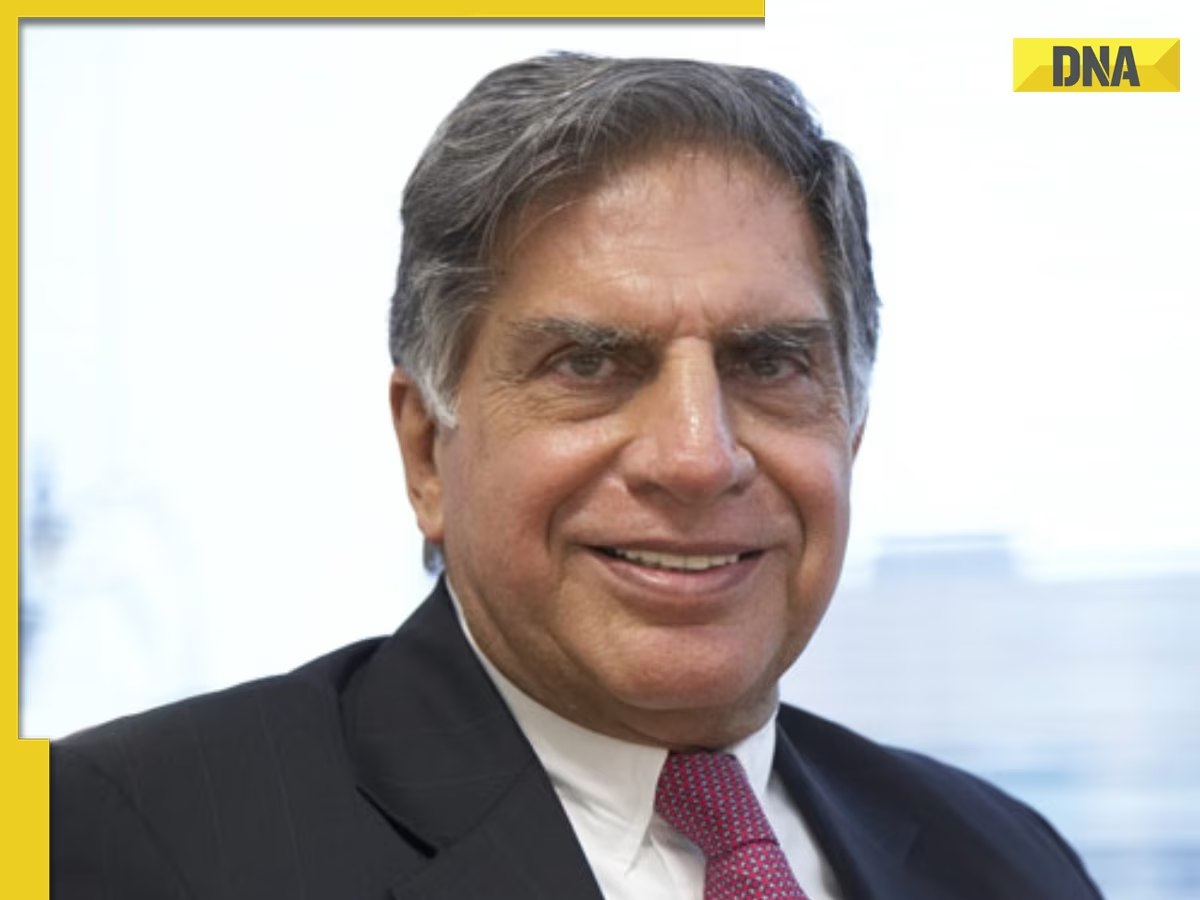
Source: DNA
Modernisation and the Human Touch
The 1980s saw sweeping change. As the Indian economy opened up, competition grew. Tata Steel invested in modernising its mills—rolling out new furnaces, automated processes, and better quality control. But it never lost sight of people.
During this time, Tata Steel’s R&D was quietly innovating new processes and products—from dent-resistant steel for cars to ultra-clean steel for construction. By the mid-1990s, it had won national awards for innovation, research, and safety.
Going Global and Going Green
A bold move came in 2007 when Tata Steel acquired Corus, a European steel giant. Overnight, it became one of the world’s top steelmakers—with a presence across continents.
But size wasn’t enough. The company started investing in sustainability and green technology. It developed the HIsarna process, which slashed carbon emissions and paved the way for low-carbon steelmaking. Tata Steel’s plants in Jamshedpur, Kalinganagar, and IJmuiden (Netherlands) were named Global Lighthouse sites by the World Economic Forum—recognised for digital excellence and innovation.
Back home, Tata Steel focused on community building, rural education, healthcare, and environment—all while staying profitable and innovative.
Tata Steel’s Industrial Lighthouse
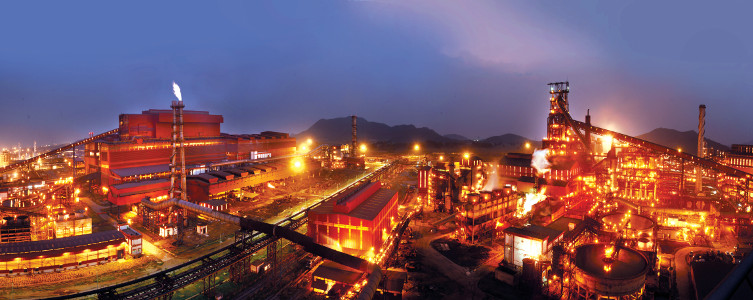
Source: Tata
Driven by Innovation
Innovation has always been at the heart of Tata Steel’s journey. From adopting AI-powered smart manufacturing to pioneering green steel technology, the company continuously turns challenges into opportunities for progress.
Even as it expands its global footprint, Tata Steel remains deeply connected to its Indian roots—uplifting lives across tribal belts and Tier-1 cities alike through education, health, and skill-building initiatives. Financially too, the company strikes the right balance between bold investments and smart savings. In FY25 alone, it saved ₹6,600 crore, all while upholding an 85+ year legacy of uninterrupted dividends—a true testament to its sound, long-term vision.
The Performance That Keeps Paying
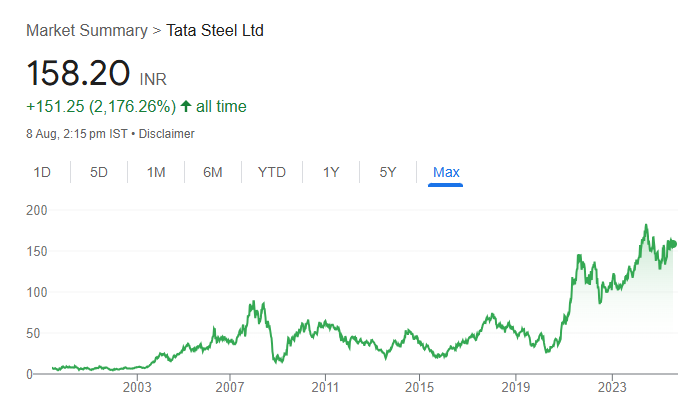
Numbers tell a story too: had you invested ₹1 lakh in Tata Steel two decades ago, it would have multiplied insanely — that too without counting dividends. That’s the power of time-tested compounding backed by real cash payouts.
Tata Steel Share Price Since 1999
Building Futures
Tata Steel is now producing over 21 million tonnes of steel annually. The company expanded capacity at Kalinganagar, investing over ₹27,000 crore. Its financial turnaround is just as impressive—posting a consolidated net profit of ₹3,174 crore and revenues over ₹2.18 lakh crore.
On the green front, Tata Steel made headlines as the first Indian company to develop hydrogen transport pipes, a critical component of the clean energy transition. With a bold commitment to Net Zero by 2045, it continues to win global awards for sustainability.
Steel in Its Soul, India in Its Heart
From a single spark in Jamsetji’s mind to a global steel powerhouse, the journey of Tata Steel is one of courage, care, and constant reinvention.
Its stock, meanwhile, has handed investors multibagger returns, generous dividends, and even a pocket-friendly split.
Tata Steel stood tall through wars, economic shocks, competition, and climate challenges—each time emerging stronger. Today, as the world pivots toward sustainability and digital transformation, Tata Steel leads the charge.
So as 15 August 2025 approaches, take a cue from this century-old champion.
Set your portfolio free—dump the noise of social-media “gurus” and partner with a trusted, SEBI-registered investment advisory. Because true financial freedom isn’t about chasing hot tips; it’s about forging wealth with discipline, research, and time—just like Tata Steel has done for India for over a hundred years.
Disclaimer Note: The securities quoted, if any, are for illustration only and are not recommendatory. This article is for education purposes only and shall not be considered as a recommendation or investment advice by Equentis – Research & Ranking. We will not be liable for any losses that may occur. Investments in the securities market are subject to market risks. Read all the related documents carefully before investing. Registration granted by SEBI, membership of BASL & certification from NISM in no way guarantee the performance of the intermediary or provide any assurance of returns to investors.

Yash Vora is a financial writer with the Informed InvestoRR team at Equentis. He has followed the stock markets right from his early college days. So, Yash has a keen eye for the big market movers. His clear and crisp writeups offer sharp insights on market moving stocks, fund flows, economic data and IPOs. When not looking at stocks, Yash loves a game of table tennis or chess.