
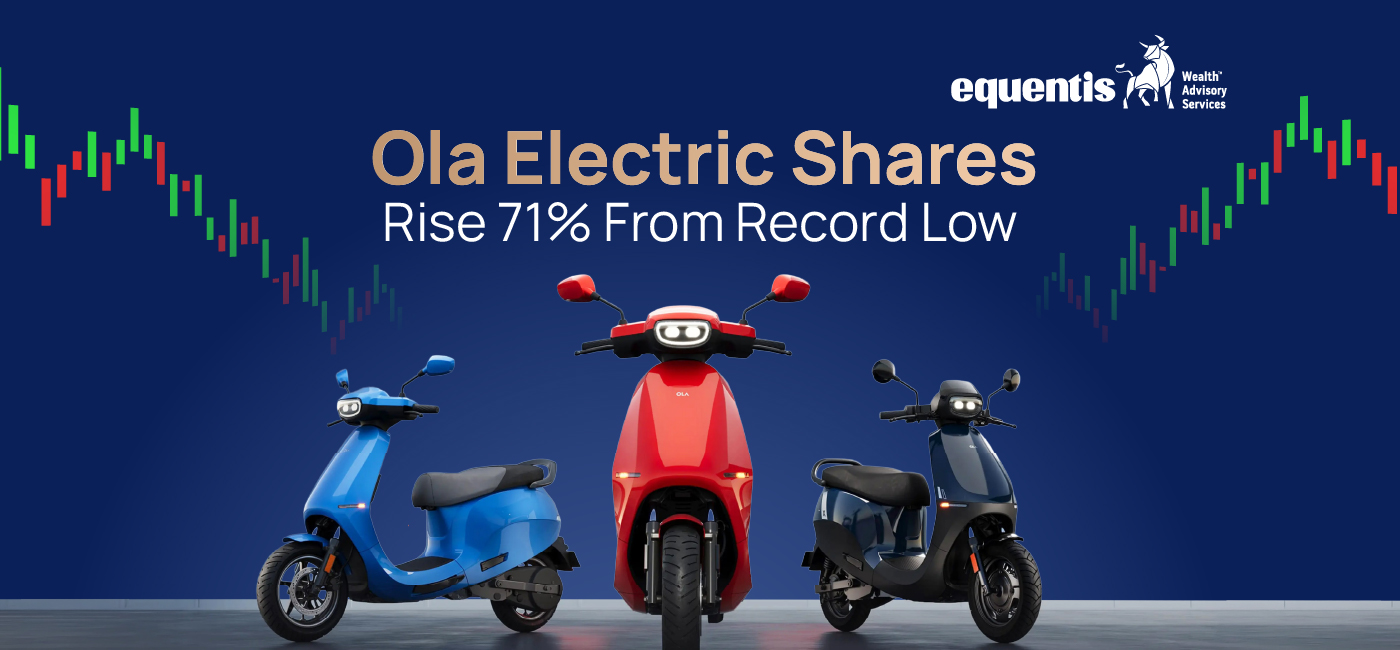

The Indian electric vehicle (EV) sector has always been a theatre of dramatic volatility, but few stories have captured the investor imagination quite like the rollercoaster journey of Ola Electric Mobility Ltd (OLAELEC). As of April 2026, the company has witnessed a staggering 71 percent recovery from the record lows it touched in late 2025. This resurgence comes after a period of intense skepticism where the stock was frequently labeled a cautionary tale of overambition and operational instability.
To understand where Ola Electric is going, we must first look at where it has been. The company’s journey from its initial public offering to its current recovery phase provides a masterclass in market sentiment, promoter strategy, and the evolving dynamics of the green energy transition in India.
The Long Road to the Bottom
The narrative of Ola Electric began with significant fanfare. Its IPO, which concluded in August 2024, saw the stock debut at an issue price of ₹76 per share. While the initial subscription levels were below the lofty expectations of some analysts, the stock managed a surprising 20 percent rally on its listing day, reaching a peak of ₹91.20. During that period, the massive trading volume, which jumped from 6 crore to over 34 crore shares in just one hour, suggested a deep, albeit speculative, interest in the EV pioneer.
However, the honeymoon period was short lived. By mid-2025, the stock had plunged nearly 45 percent from its earlier highs. This decline was fueled by a “multitude of crises,” including operational hiccups, regulatory hurdles, and increasingly fierce competition from legacy manufacturers and new startups alike.
The situation reached its nadir in December 2025. On December 18, 2025, the stock hit an all-time low after falling 13 percent in just three days. Investors were fleeing the stock as concerns mounted over promoter pledges and the company’s path to profitability. It is from this dark chapter that the current 71 percent surge began its ascent.
The Catalysts: Why the 71% Surge?
Several fundamental and technical factors have converged to drive this massive recovery. The surge is not merely a “dead cat bounce” but appears to be supported by strategic corporate actions and a shifting industry landscape.
1. Massive Debt Reduction and Promoter Confidence
The primary trigger for the initial rebound in late 2025 was a decisive move by the CEO, Bhavish Aggarwal. In mid-December 2025, the stock jumped 10 percent immediately after Aggarwal completed a stake sale specifically intended to repay a ₹260-crore loan. This action addressed one of the market’s biggest fears: the stability of the promoter’s financial position. By fully releasing ₹260 crore in promoter pledges, the leadership sent a strong signal that the “crisis of confidence” was being managed proactively.
2. Market Dominance in Electric Two-Wheelers
Despite the share price volatility, Ola Electric’s underlying business remained a powerhouse in terms of revenue generation. By FY2023, the company had already achieved the highest revenue among all Indian-based electric two-wheeler (E2W) OEMs. It famously became India’s bestselling E2W brand within only nine months of its first scooter launch in late 2021. Maintaining this lead into 2026 has provided the fundamental “floor” for the stock price.
3. Vertical Integration and Battery Cell Ambitions
One of the most significant long-term drivers for the stock is Ola’s focus on vertical integration. The company is not just assembling scooters; it is building manufacturing capabilities for battery cells and core EV components. As global supply chains remain sensitive, the ability to produce cells domestically in India is viewed by value investors as a critical competitive advantage that could lead to significant margin expansion in the coming years.
4. Institutional and Value Investor Attraction
As the stock hit record lows in December 2025, it began to appear undervalued to institutional players. Large mutual funds and hedge funds often look for “intrinsic value” that the market has temporarily ignored. The injection of substantial liquidity from these institutional buyers, combined with “short covering” (where traders who bet against the stock are forced to buy shares as the price rises), accelerated the upward momentum.
Comparing the Past and Present
| Metric | IPO Debut (Aug 2024) | Record Low (Dec 2025) | Current (Apr 2026) |
|---|---|---|---|
| Share Price Status | Listed at ₹76 | Hit All-Time Low | 71% Recovery from Low |
| Key Sentiment | Anticipation & Speculation | Crisis & Operational Hiccups | Cautious Optimism |
| Promoter Status | Pledges unknown/stable | ₹260cr Pledge Concerns | Pledges Released |
| Market Position | Top E2W Revenue | Facing Fierce Competition | Established Market Leader |
The Road Ahead: What’s Next for OLAELEC?
While a 71 percent rise is impressive, the road to sustainable profitability remains steep. The company must transition from being a revenue leader to a profit leader.
Operational Excellence and Profitability
The company’s long-term success depends on its ability to scale production while managing costs. The EV industry is highly competitive, and as legacy players like TVS and Bajaj ramp up their electric portfolios, Ola Electric can no longer rely solely on early-mover advantage. Investors are now looking for improved profit margins and a clear timeline for break-even.
Regulatory and Policy Environment
Government incentives, such as the FAME schemes, have been instrumental in driving EV adoption in India. Any shifts in these policies or changes in regulatory standards for battery safety and local sourcing will have a direct impact on Ola’s bottom line. The company’s future is intrinsically tied to the Indian government’s vision for a “Green India.”
Technological Evolution
The “India’s Tesla” moniker carries heavy expectations. Beyond scooters, the market is watching for Ola’s potential entry into the electric car segment and the successful commercialization of its battery cell gigafactory. If Ola can successfully manufacture high-quality, low-cost cells domestically, it could become a supplier to the broader industry, fundamentally changing its valuation model.
Investment Outlook: A Cautious Perspective
It is important for investors to remain grounded. The stock’s history of volatility suggests that while the 71 percent surge is a positive sign, it does not guarantee a linear path upward. Diversification remains key, as the EV sector is prone to rapid technological shifts that could render current products obsolete.
Investors should closely monitor:
- Quarterly revenue growth and narrowing losses.
- Monthly registration data on the VAHAN portal to track market share.
- Any further updates regarding promoter equity and debt levels.
Conclusion
Ola Electric has proven its resilience. The recovery from the December 2025 lows indicates that the market still believes in the company’s core mission of “charging back to the front”. By clearing promoter debt and maintaining its position as a revenue leader, the company has cleared the immediate hurdles that threatened its survival. However, the next phase of the journey will be defined by performance rather than promises. For the stock to reach new heights, Ola Electric must now deliver the profitability that has so far remained elusive.
Frequently Asked Questions (FAQs)
1. Why did Ola Electric shares surge 71% from their record low?
The surge was driven by several factors, including the CEO’s repayment of a ₹260-crore loan, the release of promoter pledges, and improved market sentiment toward the EV sector.
2. What was the record low for Ola Electric stock?
The stock hit its all-time low in mid-December 2025 after a sharp 13 percent decline over three trading days.
3. At what price did Ola Electric list on the NSE?
Ola Electric listed at its issue price of ₹76 per share in August 2024.
4. Who is the CEO of Ola Electric?
The company is led by Bhavish Aggarwal.
5. Is Ola Electric currently profitable?
Historically, the company has faced challenges with profitability due to high operational costs and competitive pressure, though it remains a revenue leader in the E2W segment.
6. What is the significance of the ₹260-crore pledge release?
The release of these pledges reduced investor concerns regarding promoter debt and financial stability, acting as a major catalyst for the stock’s recovery.
7. What is the company’s position in the electric two-wheeler market?
Ola Electric achieved the highest revenue among all Indian-based electric two-wheeler OEMs in financial year 2023.
8. What are the main risks of investing in Ola Electric?
Key risks include fierce competition, regulatory changes, supply chain disruptions, and the company’s ability to become profitable.
9. Does Ola Electric manufacture its own battery cells?
The company is building vertically integrated capabilities to manufacture its own technology and components, including battery cells.
10. How did the market react on the day of the Ola Electric IPO?
The stock saw a lukewarm initial response but jumped 20 percent during its debut session on the NSE.
11. What portal tracks Ola Electric’s monthly registrations?
The VAHAN portal, maintained by the Ministry of Road Transport and Highways, provides registration data for the company.
12. Why did the stock plunge 45% by mid-2025?
The decline was attributed to operational hiccups, regulatory challenges, and increased competition in the EV space.
13. What role do value investors play in the stock’s surge?
Value investors often buy stocks they believe are undervalued based on the company’s intrinsic value and long-term growth goals.
14. How does institutional buying affect the share price?
Large institutional investors inject significant liquidity into the market, which can drive up stock prices when they start buying in large volumes.
15. What was the subscription rate for the Ola Electric IPO?
The IPO was subscribed 4.26 times, which was considered below expectations at the time.
16. What is vertical integration in the context of Ola Electric?
It refers to the company’s strategy of manufacturing its own components and cells rather than relying solely on external suppliers.
17. Can short-term trading impact the stock price?
Yes, buying pressure from short sellers covering their positions can drive rapid increases in a stock’s price.
18. What impact do government policies have on Ola Electric?
Supportive government policies and incentives for the EV sector are crucial for the company’s future growth and market adoption.
19. How long did it take Ola Electric to become a bestselling brand?
Ola Electric became India’s bestselling E2W brand within nine months of launching its first electric scooter.
20. Is OLAELEC a good long-term investment?
This depends on an individual’s risk appetite and outlook on the EV market, as the stock remains subject to high volatility and competitive risks.
Disclaimer Note: The securities quoted, if any, are for illustration only and are not recommendatory. This article is for education purposes only and shall not be considered as a recommendation or investment advice by Equentis. We will not be liable for any losses that may occur. Investments in the securities market are subject to market risks. Read all the related documents carefully before investing. Registration granted by SEBI, membership of BASL & certification from NISM in no way guarantee the performance of the intermediary or provide any assurance of returns to investors.

Jaspreet Singh Arora is the Chief Investment Officer at Equentis, where he heads a seasoned team of equity analysts and turns two decades of market experience into portfolios that consistently beat the benchmark. A go-to voice on cement, building-materials, real-estate, and construction stocks, Jaspreet previously ran research desks at leading brokerages, honing an eye for the metrics that truly move share prices. His plain-spoken analysis helps investors cut through noise and act with conviction. When he’s not deep-diving into earnings calls, you’ll find him unwinding over sports, weekend cricket or a good history podcast.










